
Search

Gareth von Kallenbach (980 KP) rated The Little Things (2021) in Movies
Jan 26, 2021



Academy Award Winners Denzel Washington, Jared Leto, and Remi Malik star in the new thriller “The Little Things” and combine to make very gripping and memorable performances.
The script was reportedly written over thirty years ago by John Lee Hancock who has gone on to write, direct, and produce multiple films of note in the decades since he first created the screenplay.
The film is set in 1990 and involves a cop named Joe Deacon (Denzel Washington), who travels from his small California town to Los Angeles to get information on a suspect.
Joe has a history in L.A as he used to be a homicide detective for the department which combined with his meltdown while obsessing over a murder case has caused him more than a bit of notoriety.
Jim Baxter (Remi Malik) is the hotshot new Detective who has been leading the investigation into a string of unsolved murders. Joe accompanies Jim to a new crime scene and notes some similarities with his unsolved case. Joe takes some personal days and begins to do some legwork on the case and reports his findings to Jim which causes Joe to remember aspects of what drove him to his marital, health, and career issues as he is unable and unwilling to let the case drop.
When a prime suspect no longer fits into the picture; suspicions fall on a crime enthusiast named Albert (Jared Leto) who seems to check all the boxes but is also taking delight in winding up Joe which causes Jim to question if he is a viable suspect or just an oddball who gets off on crimes and winding up the cops but does not actually commit any offenses.
As the delicate dance unfolds between the characters the fact that this is an era before Cell Phones, DNA tests, GPS, and elaborate computer networks helps underscore the plight of the officers. If the film was set in a modern setting much of the suspense and uncertainty of the story and characters would be moot thanks to technology.
As the game of cat and mouse unfolds between the characters Jim learns how a person can become obsessed with a case and Joe attempts to mentor him from the success and failures of his life which includes some gray areas.
Aside from the strong performances and engaging story what makes “The Little Things” work is that it is a film that does not take the Hollywood fallbacks of extended gunfights, car chases, and over the top action scenes. What it does show is real and flawed characters that are doing what they think are right and does not attempt to wrap things up nice and tidy.
The film uses the element of doubt to not only drive the story but the actions of the characters which underscores that an element of uncertainty exists in some investigations and in with the resources available to police at the time; things are not always certain.
The film will appear in cinemas and HBO Max and is a compelling and well-crafted thriller that is not to be missed.
4.5 stars out of 5
The script was reportedly written over thirty years ago by John Lee Hancock who has gone on to write, direct, and produce multiple films of note in the decades since he first created the screenplay.
The film is set in 1990 and involves a cop named Joe Deacon (Denzel Washington), who travels from his small California town to Los Angeles to get information on a suspect.
Joe has a history in L.A as he used to be a homicide detective for the department which combined with his meltdown while obsessing over a murder case has caused him more than a bit of notoriety.
Jim Baxter (Remi Malik) is the hotshot new Detective who has been leading the investigation into a string of unsolved murders. Joe accompanies Jim to a new crime scene and notes some similarities with his unsolved case. Joe takes some personal days and begins to do some legwork on the case and reports his findings to Jim which causes Joe to remember aspects of what drove him to his marital, health, and career issues as he is unable and unwilling to let the case drop.
When a prime suspect no longer fits into the picture; suspicions fall on a crime enthusiast named Albert (Jared Leto) who seems to check all the boxes but is also taking delight in winding up Joe which causes Jim to question if he is a viable suspect or just an oddball who gets off on crimes and winding up the cops but does not actually commit any offenses.
As the delicate dance unfolds between the characters the fact that this is an era before Cell Phones, DNA tests, GPS, and elaborate computer networks helps underscore the plight of the officers. If the film was set in a modern setting much of the suspense and uncertainty of the story and characters would be moot thanks to technology.
As the game of cat and mouse unfolds between the characters Jim learns how a person can become obsessed with a case and Joe attempts to mentor him from the success and failures of his life which includes some gray areas.
Aside from the strong performances and engaging story what makes “The Little Things” work is that it is a film that does not take the Hollywood fallbacks of extended gunfights, car chases, and over the top action scenes. What it does show is real and flawed characters that are doing what they think are right and does not attempt to wrap things up nice and tidy.
The film uses the element of doubt to not only drive the story but the actions of the characters which underscores that an element of uncertainty exists in some investigations and in with the resources available to police at the time; things are not always certain.
The film will appear in cinemas and HBO Max and is a compelling and well-crafted thriller that is not to be missed.
4.5 stars out of 5

Christine A. (965 KP) rated The Secret Child (DI Amy Winter #2) in Books
Apr 2, 2019
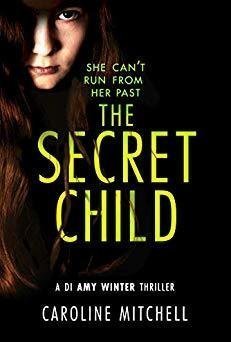
the 2nd novel in Caroline Mitchell's DI Amy Winter series
Last year I read Truth and Lies, the first novel in Caroline Mitchell's DI Amy Winter series. My eyes started to hurt so I took a break and realized I had read the first 16 chapters without stopping.
The Secret Child is the second novel in Mitchell's DI Amy Winter series. I learned my lesson from binge reading the first book and set a timer to remind myself to take a break from reading. I forced myself to take a few breaks but finished reading it in one day. It is not a very long book, 330 pags, but I just could not find a place to stop reading for the day. I just had to keep reading!
Detective Inspector Amy Winter returns with her high-priority crime unit tracking down a kidnapper. He is using the kidnappings to extract revenge on those who had used children for dangerous and illegal experimentation years ago. Also returning is Lillian Grimes, Winter's biological mother who is imprisoned for being half of a serial killer husband and wife team known as the Beasts of Brentwood.
The Secret Child is as riveting as Truth and Lies. Both are character-driven and fast-paced, suspenseful, and well written.
Review published on Philomathinphila.com, Smashbomb, Goodreads, and Amazon on or before 4/2/19. Will publish on Twitter, Facebook, and Barnes and Noble on its release date, April 18, 2019.
The Secret Child is the second novel in Mitchell's DI Amy Winter series. I learned my lesson from binge reading the first book and set a timer to remind myself to take a break from reading. I forced myself to take a few breaks but finished reading it in one day. It is not a very long book, 330 pags, but I just could not find a place to stop reading for the day. I just had to keep reading!
Detective Inspector Amy Winter returns with her high-priority crime unit tracking down a kidnapper. He is using the kidnappings to extract revenge on those who had used children for dangerous and illegal experimentation years ago. Also returning is Lillian Grimes, Winter's biological mother who is imprisoned for being half of a serial killer husband and wife team known as the Beasts of Brentwood.
The Secret Child is as riveting as Truth and Lies. Both are character-driven and fast-paced, suspenseful, and well written.
Review published on Philomathinphila.com, Smashbomb, Goodreads, and Amazon on or before 4/2/19. Will publish on Twitter, Facebook, and Barnes and Noble on its release date, April 18, 2019.

Sassy Brit (97 KP) rated Right Behind You in Books
Jun 5, 2019
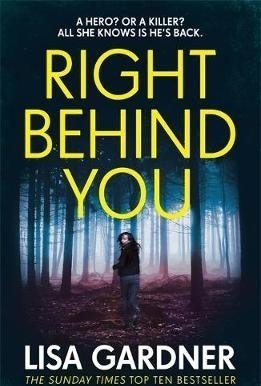
In Lisa Gardner’s next thriller following her runaway New York Times bestseller Find Her — Right Behind You sees the return of (now retired) FBI Profiler Pierce Quincy and his wife Rainie Conner who have now adopted Sharlah. Several years ago her older brother Telly Ray Nash killed their drunken father to protect them.
But when it appears that Telly has killed again, this time it can’t be for her protection, can it? Especially as it is later discovered he’s also killed his foster parents.
This story is a lot slower than other Lisa Gardner books. I still enjoyed it, but as the story unravelled I found myself more drawn to the relationships of families involved – the abuse that went on – the secrets and lies. It’s like the author has gone from fast-paced FBI police procedural crime novel to a character driven story. Nothing wrong with that, it’s just not what I expected.
Rainie and Quincy still make a great couple, the writing style is enjoyable and easy to read. It may be light on the FBI profile and police procedural aspects, but
Right Behind You still made for a great read because the characters were so endearing, and quite often physically and emotionally vulnerable.
I’m interested to see what Lisa Gardner’s next book (comes out Feb. 19 2019) titled NEVER TELL, is going to be like. It apparently features Detective D.D. Warren joining forces with vigilante Flora Dane to investigate the murder of known associate of Flora’s infamous kidnapper.
But when it appears that Telly has killed again, this time it can’t be for her protection, can it? Especially as it is later discovered he’s also killed his foster parents.
This story is a lot slower than other Lisa Gardner books. I still enjoyed it, but as the story unravelled I found myself more drawn to the relationships of families involved – the abuse that went on – the secrets and lies. It’s like the author has gone from fast-paced FBI police procedural crime novel to a character driven story. Nothing wrong with that, it’s just not what I expected.
Rainie and Quincy still make a great couple, the writing style is enjoyable and easy to read. It may be light on the FBI profile and police procedural aspects, but
Right Behind You still made for a great read because the characters were so endearing, and quite often physically and emotionally vulnerable.
I’m interested to see what Lisa Gardner’s next book (comes out Feb. 19 2019) titled NEVER TELL, is going to be like. It apparently features Detective D.D. Warren joining forces with vigilante Flora Dane to investigate the murder of known associate of Flora’s infamous kidnapper.

Phil Leader (619 KP) rated Bongo Fury Novella Collection in Books
Nov 11, 2019
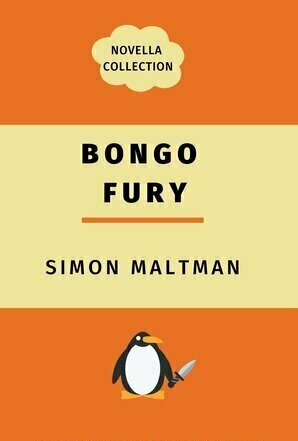
Meet Jimmy Black, a man with family connections to both organised crime and, historically, the Troubles in Northern Ireland. But apart from maybe a little light drug dealing the thing Jimmy wants most is to be left alone to run his music shop (the titular Bongo Fury), spend time with his family and maybe do a little private detective work on the side. Unfortunately fate has other plans for Jimmy as helping a friend in need spirals very much out of control.
Although this is three novellas, the first two already published separately plus a third first released in this volume, this really is a book in three parts. Plus there's a soundtrack as well, how many novels can say that? And what a book it is. Despite his slightly shady connections, Jimmy is the perfect narrator. Funny, irreverent, tough, likeable and well versed in popular music he engages right from the start, keeping his sardonic tone throughout. He might run afoul of some very dangerous characters but he is a tough customer himself.
The writing is a joy, easy to read between Jimmy's swear-word laden musings, the laugh out loud humour, the tense encounters when the stakes are raised and the rapid and efficient action scenes. And the story doesn't let up either as Jimmy's life threatens to be turned upside down from asking too many questions, the fall out from which carry the plot through all the three novellas.
Bongo Fury the Collection is one of those books that you shouldn't allow to pass you by.
Although this is three novellas, the first two already published separately plus a third first released in this volume, this really is a book in three parts. Plus there's a soundtrack as well, how many novels can say that? And what a book it is. Despite his slightly shady connections, Jimmy is the perfect narrator. Funny, irreverent, tough, likeable and well versed in popular music he engages right from the start, keeping his sardonic tone throughout. He might run afoul of some very dangerous characters but he is a tough customer himself.
The writing is a joy, easy to read between Jimmy's swear-word laden musings, the laugh out loud humour, the tense encounters when the stakes are raised and the rapid and efficient action scenes. And the story doesn't let up either as Jimmy's life threatens to be turned upside down from asking too many questions, the fall out from which carry the plot through all the three novellas.
Bongo Fury the Collection is one of those books that you shouldn't allow to pass you by.

Eleanor (1463 KP) rated Kiss the Girls (Alex Cross, #2) in Books
Aug 7, 2019
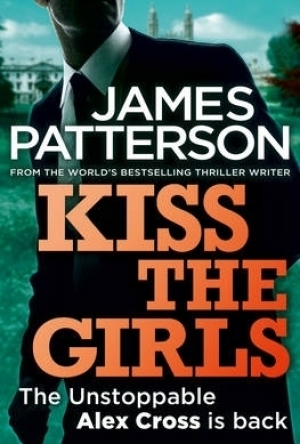

Cliche Heavy Crime Drama
I listened to the audio version narrated by Michael Kramer and it was an OK narration some accents in particular Southern American were pretty laughable but some of the dialogue in this book really didn’t help.
It all starts off strongly (if very grimly - lots of nasty murder / rape descriptions I’d certainly avoid if your triggered by that sort of thing.) The tension builds nicely with Detective Alex Cross being drawn into the investigation of the disappearance and murder of women from East Cast college campuses. However about halfway it all seems to go off the boil and become very dragged out only to be topped off with a terrible and drawn out ending.
We are constantly told how smart the bad guys are but there's very little evidence of this. As evidenced when they take on Alex Cross on their own patch and somehow don’t seem to have a very good plan at all. This book is so very dated in terms of attitudes and descriptions of women and although I give a lot of lee-way to books from a different time I don’t think this was ever very well written in terms of the female characters. As an audio book I didn't mind it but I can imagine getting wound up reading some of the cliches throughout this book.
It suffers in terms of constantly telling us what to think of characters while not supporting this very well with the poor dialogue.
It all starts off strongly (if very grimly - lots of nasty murder / rape descriptions I’d certainly avoid if your triggered by that sort of thing.) The tension builds nicely with Detective Alex Cross being drawn into the investigation of the disappearance and murder of women from East Cast college campuses. However about halfway it all seems to go off the boil and become very dragged out only to be topped off with a terrible and drawn out ending.
We are constantly told how smart the bad guys are but there's very little evidence of this. As evidenced when they take on Alex Cross on their own patch and somehow don’t seem to have a very good plan at all. This book is so very dated in terms of attitudes and descriptions of women and although I give a lot of lee-way to books from a different time I don’t think this was ever very well written in terms of the female characters. As an audio book I didn't mind it but I can imagine getting wound up reading some of the cliches throughout this book.
It suffers in terms of constantly telling us what to think of characters while not supporting this very well with the poor dialogue.

AJaneClark (3975 KP) rated A Faint Cold Fear (Grant County, #3) in Books
Apr 26, 2020
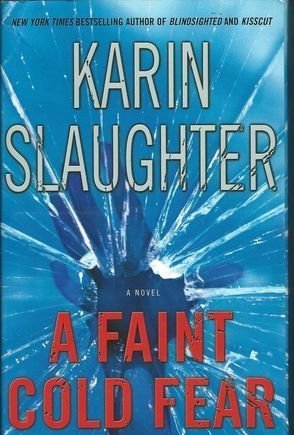

From the back of the book: Sara Linton, Oh examiner in the small town of Heartsdale, is called out to an apparent suicide on the local college campus. The mutilated body provides a little in the way of clues - And the college authorities are keen to avoid a scandal - but for Sara and police chief Jeffrey Tolliver, things don’t add up.
Two more suspicious suicides follow, and a young woman is brutally attacked. For Sara, the violence strikes far too close to home. And as Jeffrey pursues the sadistic killer, he discovers that ex-police detective Lena Adams, now a security guard on campus, may be in possession of crucial information. But, bruised and angered by her expulsion from the force, Lena seems to be barely capable of protecting herself , let alone saving the next victim…
This was my first time reading a Karin Slaughter novel. I didn’t realise until halfway through that this was the third in a series, however I was able to pick up some of the previous relationships and how it all linked together. I quite enjoyed reading this book although found it slow to start, but after about 100 pages in found myself unable to put the book down.
As an avid reader of crime and thriller novels I have to admit that even I did not pick up on who was guilty of committing the crimes. Slaughter’s writing Is very graphic and descriptive, including some very realistic forensic details would definitely like to carry on reading this series. Most enjoyable!
Two more suspicious suicides follow, and a young woman is brutally attacked. For Sara, the violence strikes far too close to home. And as Jeffrey pursues the sadistic killer, he discovers that ex-police detective Lena Adams, now a security guard on campus, may be in possession of crucial information. But, bruised and angered by her expulsion from the force, Lena seems to be barely capable of protecting herself , let alone saving the next victim…
This was my first time reading a Karin Slaughter novel. I didn’t realise until halfway through that this was the third in a series, however I was able to pick up some of the previous relationships and how it all linked together. I quite enjoyed reading this book although found it slow to start, but after about 100 pages in found myself unable to put the book down.
As an avid reader of crime and thriller novels I have to admit that even I did not pick up on who was guilty of committing the crimes. Slaughter’s writing Is very graphic and descriptive, including some very realistic forensic details would definitely like to carry on reading this series. Most enjoyable!
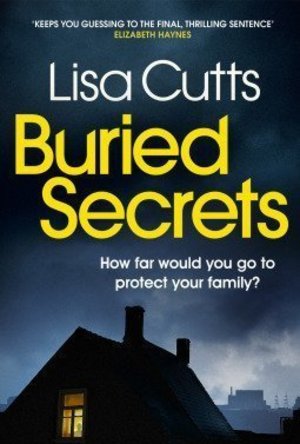
Buried Secrets
Book
The brilliant new crime novel from Lisa Cutts - the author who puts the reader at the heart of a...

ClareR (6256 KP) rated The Long Long Afternoon in Books
Mar 2, 2021
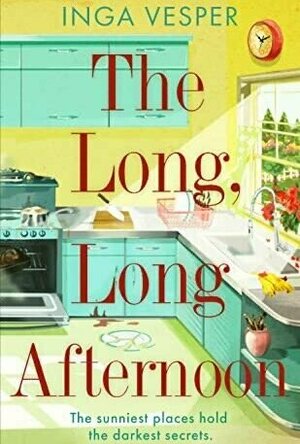
The Long, Long Afternoon really gives a sense of time and place - and I loved that about this book. We’re steeped in the 1950’s suburban world of perfect housewives, dosed up on their happy pills, trapped in their blissful domestic lives, keeping a perfect home and looking their best at all times for their hardworking husbands. Meanwhile, they employ black maids for a pitiful wage, taking advantage of them and treating them appallingly.
Ruby Wright arrives to start her afternoons work at Joyce Hanley’s house, and instead finds her young daughter outside and a screaming toddler upstairs in her bedroom. When Ruby goes in to the kitchen, she is confronted with a room awash with blood and signs of a struggle.
When the police arrive, they arrest Ruby for murder. After all, she was the first person there - and she’s black.
Detective Mick Blanke takes on the case. It’s an interesting book, because not only is Mick solving the crime (with some considerable help from Ruby), he’s also showing the social divides in the USA at this time - rich and poor, black and white. He’s clearly not comfortable about the way that white people treat black people in Santa Monica, but he’s still not quite brave enough to call people out on their racism.
This is an engaging, quick read - or perhaps I read it quickly because I didn’t want to put it down. It’s a clever, unpredictable story. In all, it’s a book I’d recommend without hesitation!
Ruby Wright arrives to start her afternoons work at Joyce Hanley’s house, and instead finds her young daughter outside and a screaming toddler upstairs in her bedroom. When Ruby goes in to the kitchen, she is confronted with a room awash with blood and signs of a struggle.
When the police arrive, they arrest Ruby for murder. After all, she was the first person there - and she’s black.
Detective Mick Blanke takes on the case. It’s an interesting book, because not only is Mick solving the crime (with some considerable help from Ruby), he’s also showing the social divides in the USA at this time - rich and poor, black and white. He’s clearly not comfortable about the way that white people treat black people in Santa Monica, but he’s still not quite brave enough to call people out on their racism.
This is an engaging, quick read - or perhaps I read it quickly because I didn’t want to put it down. It’s a clever, unpredictable story. In all, it’s a book I’d recommend without hesitation!

Eleanor Luhar (47 KP) rated Batman: Gotham After Midnight in Books
Jun 24, 2019
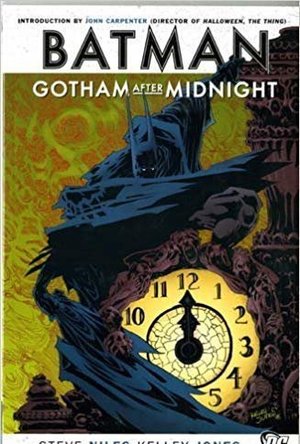
This novel contains 12 episodes of Batman stories, each full of action and crime and excitement. It includes Man-Bat, Axe-Man, Clayface, The Joker, Killer Croc, Catwoman, Scarecrow and the new villain, Midnight. At first, Batman is trying to figure out why his villains are suddenly changing their patterns. But then Midnight comes into the scene...
Batman becomes rather attached to a police officer, although Bruce Wayne has no success with her. But can he save her from this strange, crazy new murderer?
The detective side of this - especially toward the end, when Batman is close to discovering Midnight's identity - is fantastic. Full of suspense. Of course, his encounters with the enemies are great, too. I wasn't sure about his relationship with April, but I like how it all fit together in the end.
The inner monologue - and even the dialogue - wasn't great. The text that was chosen for this also wasn't the wisest. But the story got told and that's all that really matters in the end.
And Alfred... I love him! He's witty and smart, but also caring and wise when it comes to dealing with Batman. He often has to tell Batman to pull himself together and to stop being an idiot. I think he may be my favourite character.
The art was great and I liked the story, but the dodgy, clunky monologue was quite off-putting. Even so, it was an easy read still so it obviously wasn't that bad. I think I'll say 4 stars for this, though I may be being a little generous there.
Batman becomes rather attached to a police officer, although Bruce Wayne has no success with her. But can he save her from this strange, crazy new murderer?
The detective side of this - especially toward the end, when Batman is close to discovering Midnight's identity - is fantastic. Full of suspense. Of course, his encounters with the enemies are great, too. I wasn't sure about his relationship with April, but I like how it all fit together in the end.
The inner monologue - and even the dialogue - wasn't great. The text that was chosen for this also wasn't the wisest. But the story got told and that's all that really matters in the end.
And Alfred... I love him! He's witty and smart, but also caring and wise when it comes to dealing with Batman. He often has to tell Batman to pull himself together and to stop being an idiot. I think he may be my favourite character.
The art was great and I liked the story, but the dodgy, clunky monologue was quite off-putting. Even so, it was an easy read still so it obviously wasn't that bad. I think I'll say 4 stars for this, though I may be being a little generous there.
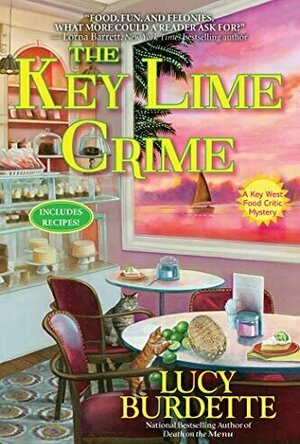
The Key Lime Crime
8.0 Rate It
Book
National bestselling author Lucy Burdette's tenth Key West Food Critic mystery is piping hot with...