
Search
Search results

Ryan Hill (152 KP) rated The Last Samurai (2003) in Movies
Jun 23, 2019


" I will tell you, how he lived"
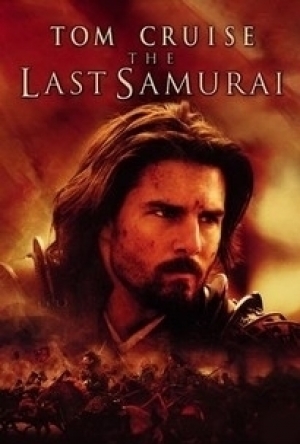
The honour and code of the samurai has always been enticing to a Western civilisation that is far removed from such customs, which perhaps makes The Last Samurai such an enticing, enigmatic film. Edward Zwick crafts quite an epic adventure rich in mythology & thematic resonance that while traditionally Hollywood in its construction still manages to exist a cut above many such movies of its ilk, a touch of class surrounding how the story of Captain Nathan Algren is put together, based as it is on several real life legendary American figures who played key roles in the Satsuma Rebellion in Japan during the late 19th century. This isn't a direct re-telling of those events but serves as a leaping off point to construct a tale about a stranger in a strange land, of a man haunted by fighting an unjust war who rediscovers his honour & place in the world through a dying culture. Zwick's film is slick, sweeping, beautifully shot and frequently involving, backed up by a strong performance by Tom Cruise in one of those roles that remind you just what a good actor he can be.
In the role of Algren, Cruise begins a dejected man living out of a bottle, bereft of purpose & suffering post-Civil War nightmares of a man touted as a hero despite feeling the guilt of slaughtering Indians crushed under the might of a military machine; in that sense, The Last Samurai is very anti-war in its message, John Logan's story painting the Americans and specifically the Imperialist Japanese not in the greatest light. Cruise takes Algren on a traditional voyage of discovery, first pitted against the samurai code & eventually becoming consumed by it, consumed by the similarity of the way of the warrior between both cultures - and Ken Watanabe's dignified samurai 'rebel' Katsumoto learns from him, as well as the other way around, with Cruise remaining stoic & only getting flashes of a chance to display the usual Cruise charm, but that's OK - Algren isn't the kind of character to benefit from that, Cruise's natural magnetism is enough here. Wit is provided thankfully through, albeit briefly, Billy Connolly as a tough old Irish veteran & chiefly Timothy Spall as our portly 'narrator' of sorts, who serves to help mythologise Algren & the legend itself. Zwick is most concerned with that, you see, the idea of legends and how men become them, exploring that concept alongside digging into the cultural rituals and practises of a changing Japan.
Algren's story is placed at a time when the old ways of Japan were shifting, under the pressures of global politics & business; the Emperor here is a naive young man, sitting on an empty throne, looking to Watanabe for validation as his advisor's push to quash a rebellion fighting to preserve the old ways, preserve Japanese interests as America knocks on the door. That's why Cruise's role here is so interesting, his character learning of the samurai code & helping those around him remember their history, and Zwick explores well the concept of national identity alongside personal ideas of myth, legend & destiny. It all boils together in a careful script, never overblown, which neatly develops the relationships involved & helps you fully believe Algren's transformation into the eponymous 'last samurai'. Along the way, Zwick doesn't forget theatrics - staging plenty of well staged & intense fight scenes which utilise the strong Japanese production design, before building to a quite epic war climax with army pitted against army, with personal stakes cutting through it, backed up indeed by another superlative score by Hans Zimmer. It becomes more than just a historical swords & armour film, reaching deeper on several levels.
What could have been a slow paced, potentially ponderous movie is avoided well by Edward Zwick, who with The Last Samurai delivers one of the stronger historical adventure epics of recent years. Beautifully shot in many places, with some excellent cinematography & production standards, not to mention an impressive script well acted in particular by Tom Cruise & Ken Watanabe, Zwick creates a recognisably Hollywood picture but for once a movie that doesn't dumb down, doesn't pander and ultimately serves as an often involving, often damn well made story. Especially one to check out if you love the way of the samurai.
In the role of Algren, Cruise begins a dejected man living out of a bottle, bereft of purpose & suffering post-Civil War nightmares of a man touted as a hero despite feeling the guilt of slaughtering Indians crushed under the might of a military machine; in that sense, The Last Samurai is very anti-war in its message, John Logan's story painting the Americans and specifically the Imperialist Japanese not in the greatest light. Cruise takes Algren on a traditional voyage of discovery, first pitted against the samurai code & eventually becoming consumed by it, consumed by the similarity of the way of the warrior between both cultures - and Ken Watanabe's dignified samurai 'rebel' Katsumoto learns from him, as well as the other way around, with Cruise remaining stoic & only getting flashes of a chance to display the usual Cruise charm, but that's OK - Algren isn't the kind of character to benefit from that, Cruise's natural magnetism is enough here. Wit is provided thankfully through, albeit briefly, Billy Connolly as a tough old Irish veteran & chiefly Timothy Spall as our portly 'narrator' of sorts, who serves to help mythologise Algren & the legend itself. Zwick is most concerned with that, you see, the idea of legends and how men become them, exploring that concept alongside digging into the cultural rituals and practises of a changing Japan.
Algren's story is placed at a time when the old ways of Japan were shifting, under the pressures of global politics & business; the Emperor here is a naive young man, sitting on an empty throne, looking to Watanabe for validation as his advisor's push to quash a rebellion fighting to preserve the old ways, preserve Japanese interests as America knocks on the door. That's why Cruise's role here is so interesting, his character learning of the samurai code & helping those around him remember their history, and Zwick explores well the concept of national identity alongside personal ideas of myth, legend & destiny. It all boils together in a careful script, never overblown, which neatly develops the relationships involved & helps you fully believe Algren's transformation into the eponymous 'last samurai'. Along the way, Zwick doesn't forget theatrics - staging plenty of well staged & intense fight scenes which utilise the strong Japanese production design, before building to a quite epic war climax with army pitted against army, with personal stakes cutting through it, backed up indeed by another superlative score by Hans Zimmer. It becomes more than just a historical swords & armour film, reaching deeper on several levels.
What could have been a slow paced, potentially ponderous movie is avoided well by Edward Zwick, who with The Last Samurai delivers one of the stronger historical adventure epics of recent years. Beautifully shot in many places, with some excellent cinematography & production standards, not to mention an impressive script well acted in particular by Tom Cruise & Ken Watanabe, Zwick creates a recognisably Hollywood picture but for once a movie that doesn't dumb down, doesn't pander and ultimately serves as an often involving, often damn well made story. Especially one to check out if you love the way of the samurai.

Ivana A. | Diary of Difference (1171 KP) rated Death in the Dojo in Books
Feb 3, 2020
<a href="https://amzn.to/2Wi7amb">Wishlist</a>; | <a
<a href="https://diaryofdifference.com/">Blog</a>; | <a href="https://www.facebook.com/diaryofdifference/">Facebook</a>; | <a href="https://twitter.com/DiaryDifference">Twitter</a>; | <a href="https://www.instagram.com/diaryofdifference/">Instagram</a>; | <a href="https://www.pinterest.co.uk/diaryofdifference/pins/">Pinterest</a>;
<img src="https://diaryofdifference.com/wp-content/uploads/2019/11/Book-Review-Banner-30.png"/>;
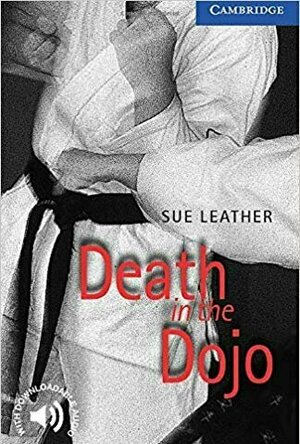
I remember reading The Death in the Dojo a few years ago. I still remember the story and the feelings it brought me. This is a story about a mystery, about karate and the love between a daughter and her dad. I need to just say that this book has and always will have a special place in my heart.
I have been in a dojo since I remember myself. And the sensei is no one else, but my dad. From the very first kata and my first wins and losses, till the days when I started becoming a national champion and travelling across countries, my dad was always the person beside me. The one to guide me and show me the right way. The one to pick me when I fall, and the one who believed in me, when everyone else didn’t.
<a href="https://www.instagram.com/p/BjcxJkkHvqM/?utm_source=ig_embed&utm_campaign=loading">View this post on Instagram</a>
<img src="https://scontent.flhr4-2.fna.fbcdn.net/v/t1.0-9/69274792_10218442591163314_2586922513925668864_n.jpg?_nc_cat=111&_nc_ohc=eAIbM8tluQsAQkJbY13yqjMs4qIoY3HOETTDejocPqnuBjqe2LvSD-gFg&_nc_ht=scontent.flhr4-2.fna&oh=d67564d709a3f04aa23cab0d245d4732&oe=5E79F277"/>;
<b><i>“I went over to the Asano dojo for the last half hour of training and saw a good fight among six black belts. I stood and watched the white gi’s moving quickly round the wooden floor, black belts flying. There was something beautiful about this, more like a dance rather than a fight. It made me feel sad, not to be there doing it. "</i></b>
Even though this book is not the best mystery you will ever read, I doubt that was its real purpose.
I believe that the purpose of this book was to show us a glimpse of what karate really means, to show us the honour, the respect, the persistence we all share in unison.
<b><i>“It was true that the great masters seemed to have an unusual sense of peace around them.”</i></b>
Death in the Dojo starts off when Kate, a journalist, is tasked to investigate the recent murder of the famous karateka Kawaguchi. It is a complete mystery how he would be killed with just one punch called gyaku zuki and die. The mystery is not behind whether it’s possible for him to die from one punch, but the mystery is why he allowed for this to happen. As a master, he is very well able to defend himself against just one punch.
On this note, I have to mention that in the book, the punch is spelled as “yaku-zuki”, which is incorrect.
When this mystery is connected to another mystery that happened many years ago, Kate is determined to find the full truth once and for all.
Even though it is quite a short book, it contains a lot of information and a couple of unexpected plot twists. It captures perfectly the cultural differences between England and Japan, which is shown through the love and relationships between daughters and their dads.
<b><i>“It was my Dad who taught me how to fight. He never treated me any differently than my brother. He showed me how to fight with my fists up when I was five and to get up quickly if I fell down. I was never allowed to give up. … It was a lesson that would be useful to me many times over the years. Whenever something bad happens in my life and I feel like giving up, I hear dad’s voice in my ears, telling me to get up off the floor.”</i></b>
I truly loved this book. It will always stay in my heart. I will keep coming to it when I miss my karate days. I recommend it if you like mysteries and martial arts. Also if you are a fan of the Japanese culture. The ending wasn't the best mystery ending ever, as the story went sort of unfinished, and we didn't truly solve one of the mysteries, but it was still a lovely read for me.
<b><i>This blog post is dedicated to my amazing and one and only dad! I love you! </i></b>
<a href="https://amzn.to/2Wi7amb">Wishlist</a>; | <a
<a href="https://diaryofdifference.com/">Blog</a>; | <a href="https://www.facebook.com/diaryofdifference/">Facebook</a>; | <a href="https://twitter.com/DiaryDifference">Twitter</a>; | <a href="https://www.instagram.com/diaryofdifference/">Instagram</a>; | <a href="https://www.pinterest.co.uk/diaryofdifference/pins/">Pinterest</a>;
<a href="https://diaryofdifference.com/">Blog</a>; | <a href="https://www.facebook.com/diaryofdifference/">Facebook</a>; | <a href="https://twitter.com/DiaryDifference">Twitter</a>; | <a href="https://www.instagram.com/diaryofdifference/">Instagram</a>; | <a href="https://www.pinterest.co.uk/diaryofdifference/pins/">Pinterest</a>;
<img src="https://diaryofdifference.com/wp-content/uploads/2019/11/Book-Review-Banner-30.png"/>;
I remember reading The Death in the Dojo a few years ago. I still remember the story and the feelings it brought me. This is a story about a mystery, about karate and the love between a daughter and her dad. I need to just say that this book has and always will have a special place in my heart.
I have been in a dojo since I remember myself. And the sensei is no one else, but my dad. From the very first kata and my first wins and losses, till the days when I started becoming a national champion and travelling across countries, my dad was always the person beside me. The one to guide me and show me the right way. The one to pick me when I fall, and the one who believed in me, when everyone else didn’t.
<a href="https://www.instagram.com/p/BjcxJkkHvqM/?utm_source=ig_embed&utm_campaign=loading">View this post on Instagram</a>
<img src="https://scontent.flhr4-2.fna.fbcdn.net/v/t1.0-9/69274792_10218442591163314_2586922513925668864_n.jpg?_nc_cat=111&_nc_ohc=eAIbM8tluQsAQkJbY13yqjMs4qIoY3HOETTDejocPqnuBjqe2LvSD-gFg&_nc_ht=scontent.flhr4-2.fna&oh=d67564d709a3f04aa23cab0d245d4732&oe=5E79F277"/>;
<b><i>“I went over to the Asano dojo for the last half hour of training and saw a good fight among six black belts. I stood and watched the white gi’s moving quickly round the wooden floor, black belts flying. There was something beautiful about this, more like a dance rather than a fight. It made me feel sad, not to be there doing it. "</i></b>
Even though this book is not the best mystery you will ever read, I doubt that was its real purpose.
I believe that the purpose of this book was to show us a glimpse of what karate really means, to show us the honour, the respect, the persistence we all share in unison.
<b><i>“It was true that the great masters seemed to have an unusual sense of peace around them.”</i></b>
Death in the Dojo starts off when Kate, a journalist, is tasked to investigate the recent murder of the famous karateka Kawaguchi. It is a complete mystery how he would be killed with just one punch called gyaku zuki and die. The mystery is not behind whether it’s possible for him to die from one punch, but the mystery is why he allowed for this to happen. As a master, he is very well able to defend himself against just one punch.
On this note, I have to mention that in the book, the punch is spelled as “yaku-zuki”, which is incorrect.
When this mystery is connected to another mystery that happened many years ago, Kate is determined to find the full truth once and for all.
Even though it is quite a short book, it contains a lot of information and a couple of unexpected plot twists. It captures perfectly the cultural differences between England and Japan, which is shown through the love and relationships between daughters and their dads.
<b><i>“It was my Dad who taught me how to fight. He never treated me any differently than my brother. He showed me how to fight with my fists up when I was five and to get up quickly if I fell down. I was never allowed to give up. … It was a lesson that would be useful to me many times over the years. Whenever something bad happens in my life and I feel like giving up, I hear dad’s voice in my ears, telling me to get up off the floor.”</i></b>
I truly loved this book. It will always stay in my heart. I will keep coming to it when I miss my karate days. I recommend it if you like mysteries and martial arts. Also if you are a fan of the Japanese culture. The ending wasn't the best mystery ending ever, as the story went sort of unfinished, and we didn't truly solve one of the mysteries, but it was still a lovely read for me.
<b><i>This blog post is dedicated to my amazing and one and only dad! I love you! </i></b>
<a href="https://amzn.to/2Wi7amb">Wishlist</a>; | <a
<a href="https://diaryofdifference.com/">Blog</a>; | <a href="https://www.facebook.com/diaryofdifference/">Facebook</a>; | <a href="https://twitter.com/DiaryDifference">Twitter</a>; | <a href="https://www.instagram.com/diaryofdifference/">Instagram</a>; | <a href="https://www.pinterest.co.uk/diaryofdifference/pins/">Pinterest</a>;

Cody Cook (8 KP) rated Writings Of Thomas Paine Volume 4 (1794 1796); The Age Of Reason in Books
Jun 29, 2018


Thomas Paine was a political theorist who was perhaps best known for his support for the American Revolution in his pamphlet Common Sense. In what might be his second best known work, The Age of Reason, Paine argued in favor of deism and against the Christian religion and its conception of God. By deism it is meant the belief in a creator God who does not violate the laws of nature by communicating through revelation or miracles The book was very successful and widely read partly due to the fact that it was written in a style which appealed to a popular audience and often implemented a sarcastic, derisive tone to make its points.
The book seems to have had three major objectives: the support of deism, the ridicule of what Paine found loathsome in Christian theology, and the demonstration of how poor an example the Bible is as a reflection of God.
In a sense, Paine's arguments against Christian theology and scripture were meant to prop up his deistic philosophy. Paine hoped that in demonizing Christianity while giving evidences for God, he would somehow have made the case for deism. But this is not so. If Christianity is false, but God exists nonetheless, we are not left only with deism. There are an infinite number of possibilities for us to examine regarding the nature of God, and far too many left over once we have eliminated the obviously false ones. In favor of deism Paine has only one argument—his dislike of supernatural revelation, which is to say that deism appeals to his culturally derived preferences. In any case, Paine's thinking on the matter seemed to be thus: if supernatural revelation could be shown to be inadequate and the development of complex theology shown to be an error, one could still salvage a belief in God as Creator, but not as an interloper in human affairs who required mediators.
That being said, in his support of deism, Paine makes some arguments to demonstrate the reasonableness in belief in, if not the logical necessity of the existence of, God which could be equally used by Christians.
For instance, just as the apostle Paul argued in his epistle to the Romans that, "what can be known about God is plain to [even pagans], because God has shown it to them. For his invisible attributes, namely, his eternal power and divine nature, have been clearly perceived, ever since the creation of the world, in the things that have been made" (Romans 1:19-20, ESV), so also Paine can say that, "the Creation speaketh an universal language [which points to the existence of God], independently of human speech or human language, multiplied and various as they be."
The key point on which Paine differs from Paul on this issue is in his optimism about man's ability to reason to God without His assisting from the outside. Whereas Paul sees the plainness of God from natural revelation as an argument against the inherent goodness of a species which can read the record of nature and nevertheless rejects its Source's obvious existence, Paine thinks that nature and reason can and do lead us directly to the knowledge of God's existence apart from any gracious overtures or direct revelation.
On the witness of nature, Paine claims, and is quite correct, that, "THE WORD OF GOD IS THE CREATION WE BEHOLD: And it is in this word, which no human invention can counterfeit or alter, that God speaketh universally to man." What is not plainly clear, however, is that man is free enough from the noetic effects of sin to reach such an obvious conclusion on his own. Indeed, the attempts of mankind to create a religion which represents the truth have invariably landed them at paganism. By paganism I mean a system of belief based, as Yehezkel Kaufmann and John N. Oswalt have shown, on continuity.iv In polytheism, even the supernatural is not really supernatural, but is perhaps in some way above humans while not being altogether distinct from us. What happens to the gods is merely what happens to human beings and the natural world writ large, which is why the gods are, like us, victims of fate, and why pagan fertility rituals have attempted to influence nature by influencing the gods which represent it in accordance with the deeper magic of the eternal universe we all inhabit.
When mankind has looked at nature without the benefit of supernatural revelation, he has not been consciously aware of a Being outside of nature which is necessarily responsible for it. His reasoning to metaphysics is based entirely on his own naturalistic categories derived from his own experience. According to Moses, it took God revealing Himself to the Hebrews for anyone to understand what Paine thinks anyone can plainly see.
The goal of deism is to hold onto what the western mind, which values extreme independence of thought, views as attractive in theism while casting aside what it finds distasteful. But as C.S. Lewis remarked, Aslan is not a tame lion. If a sovereign God exists, He cannot be limited by your desires of what you'd like Him to be. For this reason, the deism of men like Paine served as a cultural stepping stone toward the atheism of later intellectuals.
For Paine, as for other deists and atheists like him, it is not that Christianity has been subjected to reason and found wanting, but that it has been subjected to his own private and culturally-determined tastes and preferences and has failed to satisfy. This is the flipside of the anti-religious claim that those who believe in a given religion only do so because of their cultural conditioning: the anti-religionist is also conditioned in a similar way. Of course, how one comes to believe a certain thing has no bearing on whether that thing is true in itself, and this is true whether Christianity, atheism, or any other view is correct. But it must be stated that the deist or atheist is not immune from the epistemic difficulties which he so condescendingly heaps on theists.
One of the befuddling ironies of Paine's work is that around the time he was writing about the revealed religions as, “no other than human inventions set up to terrify and enslave mankind, and monopolize power and profit," the French were turning churches into “temples of reason” and murdering thousands at the guillotine (an instrument of execution now most strongly identified with France's godless reign of terror). Paine, who nearly lost his own life during the French Revolution, saw the danger of this atheism and hoped to stay its progress, despite the risk to his own life in attempting to do so.
What is odd is that Paine managed to blame this violent atheism upon the Christian faith! Obfuscated Paine:
"The Idea, always dangerous to Society as it is derogatory to the Almighty, — that priests could forgive sins, — though it seemed to exist no longer, had blunted the feelings of humanity, and callously prepared men for the commission of all crimes. The intolerant spirit of church persecution had transferred itself into politics; the tribunals, stiled Revolutionary, supplied the place of an Inquisition; and the Guillotine of the Stake. I saw many of my most intimate friends destroyed; others daily carried to prison; and I had reason to believe, and had also intimations given me, that the same danger was approaching myself."
That Robespierre's deism finally managed to supplant the revolutionary state's atheism and that peace, love, and understanding did not then spread throughout the land undermines Paine's claims. Paine felt that the revolution in politics, especially as represented in America, would necessarily lead to a revolution in religion, and that this religious revolution would result in wide acceptance of deism. The common link between these two revolutions was the idea that the individual man was sovereign and could determine for himself what was right and wrong based on his autonomous reason. What Paine was too myopic to see was that in France's violence and atheism was found the logical consequence of his individualistic philosophy. In summary, it is not Christianity which is dangerous, but the spirit of autonomy which leads inevitably into authoritarianism by way of human desire.
As should be clear by now, Paine failed to understand that human beings have a strong tendency to set impartial reason aside and to simply evaluate reality based on their desires and psychological states. This is no more obvious than in his own ideas as expressed in The Age of Reason. Like Paine's tendency to designate every book in the Old Testament which he likes as having been written originally by a gentile and translated into Hebrew, so many of his criticisms of Christian theology are far more a reflection upon himself than of revealed Christianity. One has only to look at Paine's description of Jesus Christ as a “virtuous reformer and revolutionist” to marvel that Paine was so poor at introspection so as to not understand that he was describing himself.
There is much more that could be said about this work, but in the interest of being somewhat concise, I'll end my comments here. If you found this analysis to be useful, be sure to check out my profile and look for my work discussing Paine and other anti-Christian writers coming soon.
The book seems to have had three major objectives: the support of deism, the ridicule of what Paine found loathsome in Christian theology, and the demonstration of how poor an example the Bible is as a reflection of God.
In a sense, Paine's arguments against Christian theology and scripture were meant to prop up his deistic philosophy. Paine hoped that in demonizing Christianity while giving evidences for God, he would somehow have made the case for deism. But this is not so. If Christianity is false, but God exists nonetheless, we are not left only with deism. There are an infinite number of possibilities for us to examine regarding the nature of God, and far too many left over once we have eliminated the obviously false ones. In favor of deism Paine has only one argument—his dislike of supernatural revelation, which is to say that deism appeals to his culturally derived preferences. In any case, Paine's thinking on the matter seemed to be thus: if supernatural revelation could be shown to be inadequate and the development of complex theology shown to be an error, one could still salvage a belief in God as Creator, but not as an interloper in human affairs who required mediators.
That being said, in his support of deism, Paine makes some arguments to demonstrate the reasonableness in belief in, if not the logical necessity of the existence of, God which could be equally used by Christians.
For instance, just as the apostle Paul argued in his epistle to the Romans that, "what can be known about God is plain to [even pagans], because God has shown it to them. For his invisible attributes, namely, his eternal power and divine nature, have been clearly perceived, ever since the creation of the world, in the things that have been made" (Romans 1:19-20, ESV), so also Paine can say that, "the Creation speaketh an universal language [which points to the existence of God], independently of human speech or human language, multiplied and various as they be."
The key point on which Paine differs from Paul on this issue is in his optimism about man's ability to reason to God without His assisting from the outside. Whereas Paul sees the plainness of God from natural revelation as an argument against the inherent goodness of a species which can read the record of nature and nevertheless rejects its Source's obvious existence, Paine thinks that nature and reason can and do lead us directly to the knowledge of God's existence apart from any gracious overtures or direct revelation.
On the witness of nature, Paine claims, and is quite correct, that, "THE WORD OF GOD IS THE CREATION WE BEHOLD: And it is in this word, which no human invention can counterfeit or alter, that God speaketh universally to man." What is not plainly clear, however, is that man is free enough from the noetic effects of sin to reach such an obvious conclusion on his own. Indeed, the attempts of mankind to create a religion which represents the truth have invariably landed them at paganism. By paganism I mean a system of belief based, as Yehezkel Kaufmann and John N. Oswalt have shown, on continuity.iv In polytheism, even the supernatural is not really supernatural, but is perhaps in some way above humans while not being altogether distinct from us. What happens to the gods is merely what happens to human beings and the natural world writ large, which is why the gods are, like us, victims of fate, and why pagan fertility rituals have attempted to influence nature by influencing the gods which represent it in accordance with the deeper magic of the eternal universe we all inhabit.
When mankind has looked at nature without the benefit of supernatural revelation, he has not been consciously aware of a Being outside of nature which is necessarily responsible for it. His reasoning to metaphysics is based entirely on his own naturalistic categories derived from his own experience. According to Moses, it took God revealing Himself to the Hebrews for anyone to understand what Paine thinks anyone can plainly see.
The goal of deism is to hold onto what the western mind, which values extreme independence of thought, views as attractive in theism while casting aside what it finds distasteful. But as C.S. Lewis remarked, Aslan is not a tame lion. If a sovereign God exists, He cannot be limited by your desires of what you'd like Him to be. For this reason, the deism of men like Paine served as a cultural stepping stone toward the atheism of later intellectuals.
For Paine, as for other deists and atheists like him, it is not that Christianity has been subjected to reason and found wanting, but that it has been subjected to his own private and culturally-determined tastes and preferences and has failed to satisfy. This is the flipside of the anti-religious claim that those who believe in a given religion only do so because of their cultural conditioning: the anti-religionist is also conditioned in a similar way. Of course, how one comes to believe a certain thing has no bearing on whether that thing is true in itself, and this is true whether Christianity, atheism, or any other view is correct. But it must be stated that the deist or atheist is not immune from the epistemic difficulties which he so condescendingly heaps on theists.
One of the befuddling ironies of Paine's work is that around the time he was writing about the revealed religions as, “no other than human inventions set up to terrify and enslave mankind, and monopolize power and profit," the French were turning churches into “temples of reason” and murdering thousands at the guillotine (an instrument of execution now most strongly identified with France's godless reign of terror). Paine, who nearly lost his own life during the French Revolution, saw the danger of this atheism and hoped to stay its progress, despite the risk to his own life in attempting to do so.
What is odd is that Paine managed to blame this violent atheism upon the Christian faith! Obfuscated Paine:
"The Idea, always dangerous to Society as it is derogatory to the Almighty, — that priests could forgive sins, — though it seemed to exist no longer, had blunted the feelings of humanity, and callously prepared men for the commission of all crimes. The intolerant spirit of church persecution had transferred itself into politics; the tribunals, stiled Revolutionary, supplied the place of an Inquisition; and the Guillotine of the Stake. I saw many of my most intimate friends destroyed; others daily carried to prison; and I had reason to believe, and had also intimations given me, that the same danger was approaching myself."
That Robespierre's deism finally managed to supplant the revolutionary state's atheism and that peace, love, and understanding did not then spread throughout the land undermines Paine's claims. Paine felt that the revolution in politics, especially as represented in America, would necessarily lead to a revolution in religion, and that this religious revolution would result in wide acceptance of deism. The common link between these two revolutions was the idea that the individual man was sovereign and could determine for himself what was right and wrong based on his autonomous reason. What Paine was too myopic to see was that in France's violence and atheism was found the logical consequence of his individualistic philosophy. In summary, it is not Christianity which is dangerous, but the spirit of autonomy which leads inevitably into authoritarianism by way of human desire.
As should be clear by now, Paine failed to understand that human beings have a strong tendency to set impartial reason aside and to simply evaluate reality based on their desires and psychological states. This is no more obvious than in his own ideas as expressed in The Age of Reason. Like Paine's tendency to designate every book in the Old Testament which he likes as having been written originally by a gentile and translated into Hebrew, so many of his criticisms of Christian theology are far more a reflection upon himself than of revealed Christianity. One has only to look at Paine's description of Jesus Christ as a “virtuous reformer and revolutionist” to marvel that Paine was so poor at introspection so as to not understand that he was describing himself.
There is much more that could be said about this work, but in the interest of being somewhat concise, I'll end my comments here. If you found this analysis to be useful, be sure to check out my profile and look for my work discussing Paine and other anti-Christian writers coming soon.
Ryan Hill (152 KP) rated Black Panther (2018) in Movies
May 11, 2019


"Bury me in the ocean with my ancestors who jumped from the ships, 'cause they knew death was better than bondage"
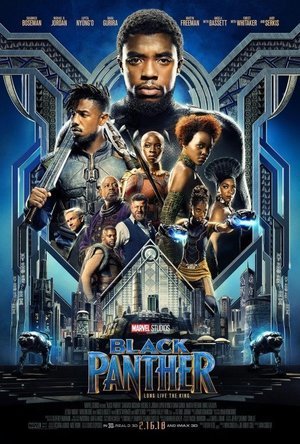
Full of life, joy, sorrow, and hilarity; Ryan Coogler's Black Panther just has a vibrancy you rarely find in the superhero scene, let alone blockbusters. Enriched with a deep, abiding love for African culture and Afrofuturism; the movie just feels purposeful. Important. Meaningful. Context matters here, as Black Panther will become one of very few films populated by African Americans not dealing with slavery or black history to thrive financially. And that cast is phenomenal. Boseman's soft-spoken panther-of-few-words is the rare MCUer to opt for a moment of silence rather than a snarky comment. Michael B Jordan brings an unmistakable swagger to the perpetually weak slate of Marvel villains, conveying a crushingly sad and challenging story that could just as easily be regarded as the true hero of the film. Letitia Wright as the genius tech maestro was a blast, a character who could give Tony Stark a run for his money both technologically and charismatically. And these are just three of Coogler's creations; drawn from a slate of inspired, unique and wonderfully represented roles for black actors...many of whom will deservingly use this as a career springboard of sorts.
I remember years ago I read a book about the cultural significance of various comic book locales, and the Wakanda entry struck me as uniquely sad and inspiring. Wakanda, a place busting with innovation, tradition, and pride...hidden from the world. Sort of an alternate-timeline Africa which wasn't poisoned irreparably by colonialism and all its horrors. There's a sad duality obvious in this Wakanda, that being for it to exist, it must be hidden. Must be quietly nurtured, developed and treasured. It's an apt metaphor in relation to black pride, culture, and history; something constantly being reworked, reshaped and reimagined to put a sordid past (and present) in the rear-view mirror by those who perpetrate it, knowingly or not. This idea, that for something to thrive it must be isolated, is at the heart of Black Panther. You can understand why T'Challa, and generations before him, sacrificed anything to preserve the myth of Wakanda. But you can also understand Killmonger's feeling of betrayal. The profound moral objections inherent in a small community turning it's back on a larger suffering population in the name of self-preservation. There's no heroes and villains when Black Panther is at it's best, just two sides to a terrifying moral question *loaded* with historical weight.
Because Killmonger isn't really a villain. The best illustration of this is the contrasting "dream" sequences, in which T'Challa shares a promise with his father within a transcendentally beautiful African landscape, and Killmonger is confronted by all his pain, suffering and moral rigidity in the vast concrete jungle of Oakland, in the tiny apartment where his father was murdered for trying to make a difference. They both wake up with tears in their eyes, some from pain and some from catharsis. Coogler marks the chasm between T'Challa's and Killmonger's pasts so perfectly, and illustrates exactly why they feel the way they do with such wisdom. Black Panther so clearly empathizes with Killmonger and understands where his pain was born, and the horrors that nurtured it.
And so there's no hero and no villain to this movie. Just two men in nearly identical black panther suits, clashing over how Wakanda ought to venture into a new era. Nobility and passion, conservation and sacrifice, incremental change against a vengeful redistribution of power and oppression. Both men are correct in their aspirations, being "right" here doesn't matter. it's tough for a good man to be king. Killmonger made T'Challa the hero he is, by instilling in him a mission, a perceived duty to turn around, face an oppressed people and finally lend a hand. But more than that, there's something miraculous here. An apology from a good man. A recognition of a sin even when it's perpetrator was, until now, helpless to prevent it. A declaration that not contributing to hate and prejudice doesn't equate to actively working to prevent it. A plea for a humble brand of superheroism, for countless ghosts of the past to be heard and change to erupt in their name. Divides to be bridged, chasms to be crossed and wrongs to be righted.
Black Panther has a complex, meaningful and profoundly challenging thematic framework; offering a fresh dissection of what it means to grapple with the sins of those who came before. Sure, there are some technical issues along the way, the machinations of Marvel storytelling are evident and errors could be found; but if you understand that superhero stories were meant to ask these sorts of questions and push boundaries since their inception; Black Panther is a dream.
I remember years ago I read a book about the cultural significance of various comic book locales, and the Wakanda entry struck me as uniquely sad and inspiring. Wakanda, a place busting with innovation, tradition, and pride...hidden from the world. Sort of an alternate-timeline Africa which wasn't poisoned irreparably by colonialism and all its horrors. There's a sad duality obvious in this Wakanda, that being for it to exist, it must be hidden. Must be quietly nurtured, developed and treasured. It's an apt metaphor in relation to black pride, culture, and history; something constantly being reworked, reshaped and reimagined to put a sordid past (and present) in the rear-view mirror by those who perpetrate it, knowingly or not. This idea, that for something to thrive it must be isolated, is at the heart of Black Panther. You can understand why T'Challa, and generations before him, sacrificed anything to preserve the myth of Wakanda. But you can also understand Killmonger's feeling of betrayal. The profound moral objections inherent in a small community turning it's back on a larger suffering population in the name of self-preservation. There's no heroes and villains when Black Panther is at it's best, just two sides to a terrifying moral question *loaded* with historical weight.
Because Killmonger isn't really a villain. The best illustration of this is the contrasting "dream" sequences, in which T'Challa shares a promise with his father within a transcendentally beautiful African landscape, and Killmonger is confronted by all his pain, suffering and moral rigidity in the vast concrete jungle of Oakland, in the tiny apartment where his father was murdered for trying to make a difference. They both wake up with tears in their eyes, some from pain and some from catharsis. Coogler marks the chasm between T'Challa's and Killmonger's pasts so perfectly, and illustrates exactly why they feel the way they do with such wisdom. Black Panther so clearly empathizes with Killmonger and understands where his pain was born, and the horrors that nurtured it.
And so there's no hero and no villain to this movie. Just two men in nearly identical black panther suits, clashing over how Wakanda ought to venture into a new era. Nobility and passion, conservation and sacrifice, incremental change against a vengeful redistribution of power and oppression. Both men are correct in their aspirations, being "right" here doesn't matter. it's tough for a good man to be king. Killmonger made T'Challa the hero he is, by instilling in him a mission, a perceived duty to turn around, face an oppressed people and finally lend a hand. But more than that, there's something miraculous here. An apology from a good man. A recognition of a sin even when it's perpetrator was, until now, helpless to prevent it. A declaration that not contributing to hate and prejudice doesn't equate to actively working to prevent it. A plea for a humble brand of superheroism, for countless ghosts of the past to be heard and change to erupt in their name. Divides to be bridged, chasms to be crossed and wrongs to be righted.
Black Panther has a complex, meaningful and profoundly challenging thematic framework; offering a fresh dissection of what it means to grapple with the sins of those who came before. Sure, there are some technical issues along the way, the machinations of Marvel storytelling are evident and errors could be found; but if you understand that superhero stories were meant to ask these sorts of questions and push boundaries since their inception; Black Panther is a dream.

Darren (1599 KP) rated Midsommar (2019) in Movies
Jul 4, 2019

Director: Ari Aster
Writer: Ari Aster (Screenplay)
Starring: Florence Pugh, Will Poulter, Jack Reynor, William Jackson Harper, Liv Mjones, Anna Astrom, Julia Ragnarsson
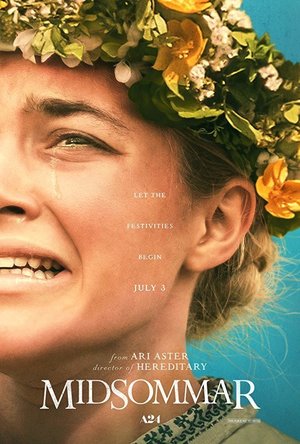
Plot: A couple travels to Sweden to visit a rural hometown's fabled mid-summer festival. What begins as an idyllic retreat quickly devolves into an increasingly violent and bizarre competition at the hands of a pagan cult.
Runtime: 2 Hours 20 Minutes
There may be spoilers in the rest of the review
Verdict: The Wicker Man on Acid
Story: Midsommar starts when young lady Dani (Pugh) has her family die suddenly, turning to the only person left in her life, her boyfriend Christian (Reynor) who has started to move away from their relationship. Christian and his friends Josh (Harper), Mark (Poulter) and Pelle (Blomgren) are planning a trip to Pelle’s home in Sweden for a special mid-summer festival.
Christian trying to do the right thing for Dani, invites her along, but it isn’t long before the festival turns into a cultural nightmare for the outsiders who have never seen the customs before.
Thoughts on Midsommar
Characters – Dani is a young lady that has suffered a heart-breaking tragedy in her life, leaving her along in the world, struggle to get over the loss of her family, she is unsure about her relationship with her boyfriend and agrees to go with him on the trip to Sweden. Dani is trying her best to get on with her life, which is seeing her have the good and bad days, while on the commune she starts to relax more in life. Christian is the student boyfriend of Dani, he is starting to question the relationship about to end it before the tragedy strikes, he invites her believing she won’t go, while also hoping to find out whether they should stay together. Josh is a student friend of Christian, who has been working on his paper on different cultures, he sees this event a major part of his studies, only he doesn’t seem to respect enough cultures. Mark is the comic relief, he wants to go to Sweden to meet women, he is quick to turn to drink or drugs, while always putting his foot in it.
Performances – Florence Pugh is the star of the show, she does show the grief required in her role, which shows us how hard to is finding life. Jack Reynor has finished turning his career around after Transformers, with one that must make people take him seriously now. Will Poulter will make you laugh with nearly everything he says, while William Jackson Harper will make you dislike his characters arrogance quickly.
Story – The story here follows a young woman dealing with grief of losing her family, trying to get away from her past by getting away from the world with the festival which soon sees her trapped with her friends with a cult that has strict rules. Much like Hereditary, we are tackling grief on a personal level, unlike Hereditary we find ourselves not seeing a timeline to make us understand the recover process that Dani is trying to go through. The story does have a huge problem for me though, is that this is a story which the people should just walk or run away after seeing the first major incident, not just calmly say ‘sure this is a different culture we should see what happens next’ this is easily one of the biggest let down in any horror. We also do spend way too much time just turning to drugs as an excuse rather than trying to solve the real problems and the students just being arrogant not seemingly wanting to do anything with their lives.
Horror/Mystery – The horror in this film comes from graphic imaginary that we see from the injuries, we do have tension growing and the make up team should be praised for just how real everything looks. The mystery comes from just what is happening with this cult and what they will do next.
Settings – The film is set in the Swedish countryside away from the world, the only type of place a cult could operate in around the modern day. The sets are the best thing about this film because they are crafted which such love and you can’t help but think everything you see is a clue to what is happening.
Special Effects – The effects in the film do bring us the graphic images of the injuries that people are going through. The make up team work wonders on this film.
Scene of the Movie – Dancing.
That Moment That Annoyed Me – Just using drugs to explain why these people are friends.
Final Thoughts – This is a horror that is set and created wonderfully on the outside, only to fall short on the story which only drags along without reaching any levels of scares.
Overall: Not reaching the potential.
Rating
Writer: Ari Aster (Screenplay)
Starring: Florence Pugh, Will Poulter, Jack Reynor, William Jackson Harper, Liv Mjones, Anna Astrom, Julia Ragnarsson
Plot: A couple travels to Sweden to visit a rural hometown's fabled mid-summer festival. What begins as an idyllic retreat quickly devolves into an increasingly violent and bizarre competition at the hands of a pagan cult.
Runtime: 2 Hours 20 Minutes
There may be spoilers in the rest of the review
Verdict: The Wicker Man on Acid
Story: Midsommar starts when young lady Dani (Pugh) has her family die suddenly, turning to the only person left in her life, her boyfriend Christian (Reynor) who has started to move away from their relationship. Christian and his friends Josh (Harper), Mark (Poulter) and Pelle (Blomgren) are planning a trip to Pelle’s home in Sweden for a special mid-summer festival.
Christian trying to do the right thing for Dani, invites her along, but it isn’t long before the festival turns into a cultural nightmare for the outsiders who have never seen the customs before.
Thoughts on Midsommar
Characters – Dani is a young lady that has suffered a heart-breaking tragedy in her life, leaving her along in the world, struggle to get over the loss of her family, she is unsure about her relationship with her boyfriend and agrees to go with him on the trip to Sweden. Dani is trying her best to get on with her life, which is seeing her have the good and bad days, while on the commune she starts to relax more in life. Christian is the student boyfriend of Dani, he is starting to question the relationship about to end it before the tragedy strikes, he invites her believing she won’t go, while also hoping to find out whether they should stay together. Josh is a student friend of Christian, who has been working on his paper on different cultures, he sees this event a major part of his studies, only he doesn’t seem to respect enough cultures. Mark is the comic relief, he wants to go to Sweden to meet women, he is quick to turn to drink or drugs, while always putting his foot in it.
Performances – Florence Pugh is the star of the show, she does show the grief required in her role, which shows us how hard to is finding life. Jack Reynor has finished turning his career around after Transformers, with one that must make people take him seriously now. Will Poulter will make you laugh with nearly everything he says, while William Jackson Harper will make you dislike his characters arrogance quickly.
Story – The story here follows a young woman dealing with grief of losing her family, trying to get away from her past by getting away from the world with the festival which soon sees her trapped with her friends with a cult that has strict rules. Much like Hereditary, we are tackling grief on a personal level, unlike Hereditary we find ourselves not seeing a timeline to make us understand the recover process that Dani is trying to go through. The story does have a huge problem for me though, is that this is a story which the people should just walk or run away after seeing the first major incident, not just calmly say ‘sure this is a different culture we should see what happens next’ this is easily one of the biggest let down in any horror. We also do spend way too much time just turning to drugs as an excuse rather than trying to solve the real problems and the students just being arrogant not seemingly wanting to do anything with their lives.
Horror/Mystery – The horror in this film comes from graphic imaginary that we see from the injuries, we do have tension growing and the make up team should be praised for just how real everything looks. The mystery comes from just what is happening with this cult and what they will do next.
Settings – The film is set in the Swedish countryside away from the world, the only type of place a cult could operate in around the modern day. The sets are the best thing about this film because they are crafted which such love and you can’t help but think everything you see is a clue to what is happening.
Special Effects – The effects in the film do bring us the graphic images of the injuries that people are going through. The make up team work wonders on this film.
Scene of the Movie – Dancing.
That Moment That Annoyed Me – Just using drugs to explain why these people are friends.
Final Thoughts – This is a horror that is set and created wonderfully on the outside, only to fall short on the story which only drags along without reaching any levels of scares.
Overall: Not reaching the potential.
Rating

Kris Karcher (10 KP) rated Jumanji: Welcome to the Jungle (2017) in Movies
Jan 5, 2018
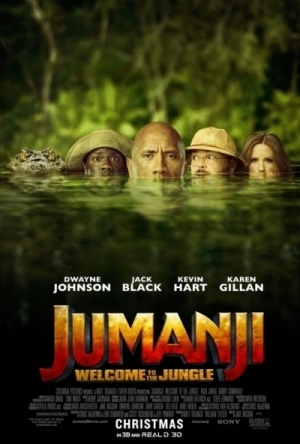
Better then it looks.
Contains spoilers, click to show
It’s been years since I’ve seen the original 1995 Jumanji, but from what I can remember as a 5-10 year old (not sure when I got around to owning the VHS) I enjoyed it. Robin Williams was on fire in the 90’s and turned in another comparable performance in this fun action adventure film. This new incarnation of the Jumanji tale changes direction a bit. For one it swaps the outdated board game that contains an entire jungle world inside it, for a more cultural relevant video game console that contains an entire jungle world inside it. I’m actually surprised they didn't use an iPad. 2017’s Jumanji also adds in a body swapping element. The teens that enter the game suddenly become adult video game characters. Complete with skills and weakness of varying degrees of usefulness.
Semantics aside, Jumanji: Welcome to the Jungle is also a serviceable blockbuster flick. It’s a fun film that moves at a decent pace and avoids a lot of the typical dull spots most popcorn flicks fall victim to. The adult cast is a fun mixture of comedic talent and have some great chemistry together. The teenage cast less so but they have a more limited role in the film. I enjoyed watching the adult cast attempt to convey the teenagers “inside” them. Dwayne Johnson does this particularly well, playing a timid nerdy teenager trapped in the body of a jacked, smoldering, elite fighting machine. The film purposefully miscast each role. Kevin Hart play’s the avatar of a 6ft football star, Jack black stands in for a Mean Chick-esc selfie obsessed teenage girl, and the bad ass Karen Gillan plays the avatar of an insecure self-conscious teenage girl. The dichotomy of the characters real-life personalities always being at odds with their avatars new physical and mental attributes provides much of the comedy. Not all of it lands, but enough does and they don’t overdo it.
Once we enter the world of Jumanji the characters attempt to figure out how the “game” works. This leads to some humorous video game style exposition. I found this method of exposition to be unique and interesting. Incorporating NPC’s (Non-playable characters) whose sole purpose is to help players figure out what is going on and how to play the game was a fun and meta way to advance the story. It sort of reminds me of some of the things I enjoyed about 2012’s Wreck-It Ralph.
Then the gang runs into the other player in the game and another star of the film, Nick Jonas. Jonas plays Jefferson "Seaplane" McDonough who is the avatar of Zack a teenage boy sucked into the game in 1997 (Jonas uses 1997 lingo frequently. Radical.) and has lived in the jungle for what he claims to be “a few months”. This leads to the biggest missed opportunity of the film. Time apparently moves differently in Jumanji. A few months in Jumanji translates to 20 years in real life. When Zack is told he has been missing 20 years this should have been a major B plot. They do try and add some weight to the situation by showing how deeply affected Zack is by this news, but I feel they could have explored this dynamic a bit further. Especially when it comes to the ending. Which is a bit anticlimactic. Once they all end up working together to escape Jumanji they all are all transported back to their respective timelines and it would appear as though no time has passed. So it sort of ditches the whole being stuck in the game for 20 years angle and instead chooses to allow Zack to live a full and complete life starting from 1997. Also, the main cast seems to be unaffected timeline wise. All of this film took place while they were down in the basement serving their detentions. It would have made for a much more interesting ending if they return to their bodies and find out that in the real world they were gone for a longer period of time. Even just a week or so would have added an interesting dynamic to the pretty flat and standard ending. They do end up meeting up with grown-up Zack (Played by Colin Hanks) and there is a nice little payoff to the quasi-romance Nick Jonas and Jack Black had throughout the film. (Yes you read that correctly.) Alex named his daughter after Bethany who saved his life in the jungle.
The four teenagers all learn valuable life lessons inside the jungle. Fridge leans to appreciate his friend Spencer. Spencer learns to man up and take risks. Bethany learns to care about something other than herself and her popularity, and Martha learns to come out of her shell a bit and open up. While I often find these types of stories to be heavy-handed and snooze-worthy Jumanji manages to keep the gushy feel good stuff to a minimum. It’s there, and it’s obvious but it’s not in your face enough to bring down the movie.
Ultimately I will go ahead and recommend Jumanji: Welcome to the Jungle if your into Action comedy that doesn't ever take itself too seriously. I repeat this is not a serious movie. But it is a mildly funny, family-friendly romp that I fully expect anyone who paid for a ticket to at least get their monies worth. Provided they came in with the right expectations.
Semantics aside, Jumanji: Welcome to the Jungle is also a serviceable blockbuster flick. It’s a fun film that moves at a decent pace and avoids a lot of the typical dull spots most popcorn flicks fall victim to. The adult cast is a fun mixture of comedic talent and have some great chemistry together. The teenage cast less so but they have a more limited role in the film. I enjoyed watching the adult cast attempt to convey the teenagers “inside” them. Dwayne Johnson does this particularly well, playing a timid nerdy teenager trapped in the body of a jacked, smoldering, elite fighting machine. The film purposefully miscast each role. Kevin Hart play’s the avatar of a 6ft football star, Jack black stands in for a Mean Chick-esc selfie obsessed teenage girl, and the bad ass Karen Gillan plays the avatar of an insecure self-conscious teenage girl. The dichotomy of the characters real-life personalities always being at odds with their avatars new physical and mental attributes provides much of the comedy. Not all of it lands, but enough does and they don’t overdo it.
Once we enter the world of Jumanji the characters attempt to figure out how the “game” works. This leads to some humorous video game style exposition. I found this method of exposition to be unique and interesting. Incorporating NPC’s (Non-playable characters) whose sole purpose is to help players figure out what is going on and how to play the game was a fun and meta way to advance the story. It sort of reminds me of some of the things I enjoyed about 2012’s Wreck-It Ralph.
Then the gang runs into the other player in the game and another star of the film, Nick Jonas. Jonas plays Jefferson "Seaplane" McDonough who is the avatar of Zack a teenage boy sucked into the game in 1997 (Jonas uses 1997 lingo frequently. Radical.) and has lived in the jungle for what he claims to be “a few months”. This leads to the biggest missed opportunity of the film. Time apparently moves differently in Jumanji. A few months in Jumanji translates to 20 years in real life. When Zack is told he has been missing 20 years this should have been a major B plot. They do try and add some weight to the situation by showing how deeply affected Zack is by this news, but I feel they could have explored this dynamic a bit further. Especially when it comes to the ending. Which is a bit anticlimactic. Once they all end up working together to escape Jumanji they all are all transported back to their respective timelines and it would appear as though no time has passed. So it sort of ditches the whole being stuck in the game for 20 years angle and instead chooses to allow Zack to live a full and complete life starting from 1997. Also, the main cast seems to be unaffected timeline wise. All of this film took place while they were down in the basement serving their detentions. It would have made for a much more interesting ending if they return to their bodies and find out that in the real world they were gone for a longer period of time. Even just a week or so would have added an interesting dynamic to the pretty flat and standard ending. They do end up meeting up with grown-up Zack (Played by Colin Hanks) and there is a nice little payoff to the quasi-romance Nick Jonas and Jack Black had throughout the film. (Yes you read that correctly.) Alex named his daughter after Bethany who saved his life in the jungle.
The four teenagers all learn valuable life lessons inside the jungle. Fridge leans to appreciate his friend Spencer. Spencer learns to man up and take risks. Bethany learns to care about something other than herself and her popularity, and Martha learns to come out of her shell a bit and open up. While I often find these types of stories to be heavy-handed and snooze-worthy Jumanji manages to keep the gushy feel good stuff to a minimum. It’s there, and it’s obvious but it’s not in your face enough to bring down the movie.
Ultimately I will go ahead and recommend Jumanji: Welcome to the Jungle if your into Action comedy that doesn't ever take itself too seriously. I repeat this is not a serious movie. But it is a mildly funny, family-friendly romp that I fully expect anyone who paid for a ticket to at least get their monies worth. Provided they came in with the right expectations.

Kirk Bage (1775 KP) rated Black Mirror - Season 3 in TV
Mar 3, 2020
Nosedive - 8
We had to wait almost another 2 years for the Netflix investment to show a product, and in time for Halloween 2016 we got the super-glossy re-boot of Nosedive, with a big name up front and lots of anticipation. The tone was instantly more playful; less British, more inclusive to a world audience. It tackled with a wry humour the universal phenomenon of popularity and everything being rated, most notably, people themselves. In a future world of sunshine and pastel shades it has become the norm to rate every interaction, from buying coffee to buying a house, in the hope of becoming one of the beautiful people rated above a 4.5. It cleverly questions the motivations for that desire, and the pitfalls of false behaviour and the manipulation from an elite standpoint. It isn’t necessary to imagine this future, as we are virtually there already, and all this episode does is heighten the idea to hyperbolic proportions. Rated down by many viewers because it is “annoying”, but that is entirely the point: the whole thing makes you want to scream!
Playtest - 6.5
Also available for Halloween (as was the whole season, in standard Netflix style) came a chance to explore what really scares us! And… they blew it. Sure, the idea that gaming and VR becomes so photo realistic it seems entirely real isn’t far away. But, making it personal to a very annoying character dissolves all tension quite early on. Some mild jump scares aside, this has to go down as a missed opportunity. Notable only for the re-occurance of the White Bear symbol.
Shut Up and Dance - 7
This is the one most likely to make you think, hmm, that is too far! An uncomfortable episode, not only because of the subject matter and ultimate revelation, but because of the intense nastiness that pervades it. No doubt that tension is intentional, and therefore effective to a degree, but for me it crosses the line of entertainment and becomes simply nasty. Being unafraid to tackle controversial subjects is to be applauded, but the execution has to be note perfect, or the risk is the backlash this episode received. A cautionary tale about surveillance, data theft, blackmail and our personal online responsibility. Not a bad piece, just a slight misjudgment on tone and delivery.
San Junipero - 9.5
Just when critics were sharpening their pens that Netflix had ruined the potential of Black Mirror in its first phase, comes an almost perfect piece of TV that is literally heavenly! Everything about San Junipero is a work of art! Another “blind” episode that takes a while to unravel; the pacing and realisation of which is so beautifully judged that, from a writing point of view, this has to be seen as the pinnacle of the show to date. Mackenzie Davis is extraordinary as the vulnerable, shy and naive Yorkie, looking for a connection in an 80s nightclub, filled with nostalgia and cultural memes galore. The music alone is not only sing aloud perfect, but chosen for storytelling reasons so clever it raises goosebumps! The relationship between Yorkie and Kelly, an equally great Gugu Mbatha-Raw, is filled with chemistry and nuance, drawing us in to a place so deep that when the penny drops on what is really going on it draws a gasp and then possibly tears – I know it did for me! The mechanics of the technology that would make this story possible does raise a lot of questions, but in the end it is better to accept it as an allegory for love, life and our ideas of “eternity”. Don’t look too deeply at the how, but marvel at the why, and this could be the best hour of TV you will ever see! So rewatchable, rich and rewarding; the only reason not to make this a feature length big budget film is that how could it possibly be improved?
Men Against Fire - 7
Revisiting yet again the technology of a brain implant that affects our vision of the world, literally and figuratively, this episode explores indoctrination and brainwashing, with the underlying themes of racism and basic human compassion. It is a fine analogy of how the media and governments would have us think of immigrants and the “dangers” of anything “not us”. A tad obvious, and doesn’t really go anywhere new once the twist is revealed. Visually quite stunning, but not as strong as other episodes that cover similar ground.
Hated in the Nation - 8.5
With a running time of 89 minutes, this is essentially what happens when Black Mirror pushes an idea to feature length. Allowing more time for character development does make a difference, and the tension build in this fine concept for a thriller also benefits from a few extra minutes. The ever reliable Kelly MacDonald is the cornerstone of a strong cast, on the hunt for the mind behind a series of killings by killer bee drones, targeted at a democratically elected “most hated” person every day, based on a public vote. An exploration of media vilification and how easy it can be to manipulate our idea of someone’s identity and judge their actions and even personalities based on one wrong thing they may have said or done. The episode is a who-dunnit? A why-doit? And, framed, with the backdrop of the inquest surrounding events, both a good cop movie and a courtroom drama. Charlie Brooker has hinted that some of these characters may return at some point. I’m all for it.
We had to wait almost another 2 years for the Netflix investment to show a product, and in time for Halloween 2016 we got the super-glossy re-boot of Nosedive, with a big name up front and lots of anticipation. The tone was instantly more playful; less British, more inclusive to a world audience. It tackled with a wry humour the universal phenomenon of popularity and everything being rated, most notably, people themselves. In a future world of sunshine and pastel shades it has become the norm to rate every interaction, from buying coffee to buying a house, in the hope of becoming one of the beautiful people rated above a 4.5. It cleverly questions the motivations for that desire, and the pitfalls of false behaviour and the manipulation from an elite standpoint. It isn’t necessary to imagine this future, as we are virtually there already, and all this episode does is heighten the idea to hyperbolic proportions. Rated down by many viewers because it is “annoying”, but that is entirely the point: the whole thing makes you want to scream!
Playtest - 6.5
Also available for Halloween (as was the whole season, in standard Netflix style) came a chance to explore what really scares us! And… they blew it. Sure, the idea that gaming and VR becomes so photo realistic it seems entirely real isn’t far away. But, making it personal to a very annoying character dissolves all tension quite early on. Some mild jump scares aside, this has to go down as a missed opportunity. Notable only for the re-occurance of the White Bear symbol.
Shut Up and Dance - 7
This is the one most likely to make you think, hmm, that is too far! An uncomfortable episode, not only because of the subject matter and ultimate revelation, but because of the intense nastiness that pervades it. No doubt that tension is intentional, and therefore effective to a degree, but for me it crosses the line of entertainment and becomes simply nasty. Being unafraid to tackle controversial subjects is to be applauded, but the execution has to be note perfect, or the risk is the backlash this episode received. A cautionary tale about surveillance, data theft, blackmail and our personal online responsibility. Not a bad piece, just a slight misjudgment on tone and delivery.
San Junipero - 9.5
Just when critics were sharpening their pens that Netflix had ruined the potential of Black Mirror in its first phase, comes an almost perfect piece of TV that is literally heavenly! Everything about San Junipero is a work of art! Another “blind” episode that takes a while to unravel; the pacing and realisation of which is so beautifully judged that, from a writing point of view, this has to be seen as the pinnacle of the show to date. Mackenzie Davis is extraordinary as the vulnerable, shy and naive Yorkie, looking for a connection in an 80s nightclub, filled with nostalgia and cultural memes galore. The music alone is not only sing aloud perfect, but chosen for storytelling reasons so clever it raises goosebumps! The relationship between Yorkie and Kelly, an equally great Gugu Mbatha-Raw, is filled with chemistry and nuance, drawing us in to a place so deep that when the penny drops on what is really going on it draws a gasp and then possibly tears – I know it did for me! The mechanics of the technology that would make this story possible does raise a lot of questions, but in the end it is better to accept it as an allegory for love, life and our ideas of “eternity”. Don’t look too deeply at the how, but marvel at the why, and this could be the best hour of TV you will ever see! So rewatchable, rich and rewarding; the only reason not to make this a feature length big budget film is that how could it possibly be improved?
Men Against Fire - 7
Revisiting yet again the technology of a brain implant that affects our vision of the world, literally and figuratively, this episode explores indoctrination and brainwashing, with the underlying themes of racism and basic human compassion. It is a fine analogy of how the media and governments would have us think of immigrants and the “dangers” of anything “not us”. A tad obvious, and doesn’t really go anywhere new once the twist is revealed. Visually quite stunning, but not as strong as other episodes that cover similar ground.
Hated in the Nation - 8.5
With a running time of 89 minutes, this is essentially what happens when Black Mirror pushes an idea to feature length. Allowing more time for character development does make a difference, and the tension build in this fine concept for a thriller also benefits from a few extra minutes. The ever reliable Kelly MacDonald is the cornerstone of a strong cast, on the hunt for the mind behind a series of killings by killer bee drones, targeted at a democratically elected “most hated” person every day, based on a public vote. An exploration of media vilification and how easy it can be to manipulate our idea of someone’s identity and judge their actions and even personalities based on one wrong thing they may have said or done. The episode is a who-dunnit? A why-doit? And, framed, with the backdrop of the inquest surrounding events, both a good cop movie and a courtroom drama. Charlie Brooker has hinted that some of these characters may return at some point. I’m all for it.

Bob Mann (459 KP) rated The Farewell (2019) in Movies
Sep 28, 2021
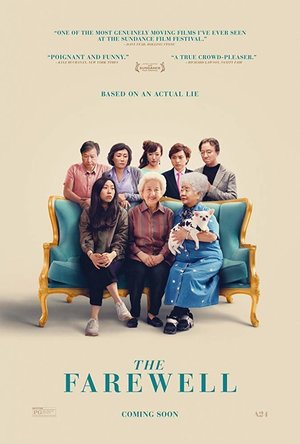
Simply brilliant. Go see it!
The Long Goodbye.
With “Downton Abbey” and now “The Farewell”, the excesses of the summer blockbusters are fading away. (Though I’m sure Rambo might have something to say about that!)
The Plot.
Billi (Awkwafina) is a young Chinese New Yorker struggling to make her way in the world. She has a place of her own to distance herself from her parents – Haiyan (“Arrival“‘s Tzi Ma) and Lu Jian (Diana Lin) – but is struggling to fund it. But despite a typically spiky teenage relationship with her parents, family is important to her.
There’s a big shock then when her beloved “Nai Nai” (Shuzhen Zhao) is diagnosed back in China with terminal cancer. The slight complication is that no-one has told her. Her younger sister (Hong Lu) has taken the decision to keep the news from her. This is in line with the Chinese saying “When people get Cancer they die”. (Based on the rationale that it is not necessarily the disease that kills you, but the fear that destroys your useful life).
The whole extended family sign up – reluctantly – to the decision. They stage a final get together back in China around the pretence of a trumped-up wedding. This is between the comically reluctant grandson Hao Hao (Han Chen) and his new Japanese girlfriend Aiko (Aoi Mizuhara).
Faced with seeing Nai Nai face-to-face, and being forced to “celebrate” together, can the family – and the emotionally attached Billi in particular – hold it together and keep the secret?
A laff a minute then?
You might naturally assume that given the subject matter that this was going to be SERIOUSLY heavy going. And in many ways you would be right. Most of us over 50 will have lost an elderly relative. And, unless it was a sudden event, you have probably been through the mental pain of having to drive away from a nursing home certain that that will be the final time you will see your loved one alive. If you are therefore not affected by this film, you are not human.
So I was frankly bracing myself.
However, the film is so beautifully put together, and the comedy – albeit some of it very dark – so brilliantly inserted that the film is an UTTER DELIGHT from start to end. There are truly insightful scenes that get under the skin of the well-developed social approach in China to family. (Like the illustrious Mrs Movie-Man, they love big family dinners around a round-table!) Although there is always the teen – Bau (Jinhang Liu) in this case – with his face permanently in his phone!
There are also scenes familiar to anyone who’s visited China. The gaggle of “helpful” taxi drivers outside the airport made me laugh out loud.
Also (unintentionally) funny are the multiple company logos at the start of the film. This is reminiscent of the classic “Family Guy” scene (I think “The Simpsons” also did a similar spoof).
Cinematic.
For such a ‘small’ film, the scale is sometimes truly cinematic. Director and writer, Lulu Wang, achieves some gloriously memorable movie moments. A stony-faced, determined march of the key players towards the camera – which could be subtitled “The Magnificent Eight” – is slo-mo’d for about 30 seconds and is utterly mesmeric.
And a scene at a cemetery is a comic masterpiece of Chinese tradition. Bau of course still has his face in his phone throughout!
This is only Lulu Wang‘s second feature, but it makes me now want to check out her first film (“Posthumous”).
Not afraid to offend either country.
What I found particularly interesting is that the film is truly multi-cultural. It’s not an American film with some local content crudely inserted to cater for the Far East markets. The film is an almost equal blend of American language and Mandarin language with subtitles.
Lulu Wang is also not afraid to upset officials in either country. Which is better: US or China? The question keeps getting posed to Billi and discussed among the family. And – as you might expect – there are positives and negatives on each side. The film doesn’t really take sides. It’s a really balanced position to take.
A quirky soundtrack.
The music is by Alex Weston, and its one of the stars of the film. It’s truly quirky with everything as diverse as a vocalised version of Beethoven’s Sonata No. 8 “Pathetique”; a karaoke version of “Killing Me Softly”; and a hugely entertaining Chinese version of Niilson’s “Without You” over the end titles.
A brilliant ensemble cast.
It’s a great ensemble cast (SAG awards, are you listening?), and everyone pulls their weight. Even the minor members of the cast are superb: Aoi Mizuhara in particular displays acute awkwardness brilliantly!
But leading the charge is Awkwafina. She was in the disappointing “Ocean’s 8” but much more memorable in “Crazy Rich Asians” as Rachel’s wacky Singapore friend. Here it’s a bravado performance that is genuinely moving. She IS the slightly sulky but emotionally crushed teen.
Sub-titles? I don’t do sub-titles.
Get a grip! Yes, this is a film that has sub-titles. But it uses them when required (unless you happen to be fluent in Mandarin that is!). There is also a large percentage of the film that is in English. It’s all eminently watchable, even for “sub-title-phobes”.
This is a feelgood film about a tough subject. The ending of the film pulls off the trick of being both devastating and uplifting at the same time.
So get yourself to the cinema and see this film! Without question, it gets my “highly recommended” tag. It’s also firmly placed itself very high up in my “Films of the Year” list.
And it’s all “based on a true lie”!
With “Downton Abbey” and now “The Farewell”, the excesses of the summer blockbusters are fading away. (Though I’m sure Rambo might have something to say about that!)
The Plot.
Billi (Awkwafina) is a young Chinese New Yorker struggling to make her way in the world. She has a place of her own to distance herself from her parents – Haiyan (“Arrival“‘s Tzi Ma) and Lu Jian (Diana Lin) – but is struggling to fund it. But despite a typically spiky teenage relationship with her parents, family is important to her.
There’s a big shock then when her beloved “Nai Nai” (Shuzhen Zhao) is diagnosed back in China with terminal cancer. The slight complication is that no-one has told her. Her younger sister (Hong Lu) has taken the decision to keep the news from her. This is in line with the Chinese saying “When people get Cancer they die”. (Based on the rationale that it is not necessarily the disease that kills you, but the fear that destroys your useful life).
The whole extended family sign up – reluctantly – to the decision. They stage a final get together back in China around the pretence of a trumped-up wedding. This is between the comically reluctant grandson Hao Hao (Han Chen) and his new Japanese girlfriend Aiko (Aoi Mizuhara).
Faced with seeing Nai Nai face-to-face, and being forced to “celebrate” together, can the family – and the emotionally attached Billi in particular – hold it together and keep the secret?
A laff a minute then?
You might naturally assume that given the subject matter that this was going to be SERIOUSLY heavy going. And in many ways you would be right. Most of us over 50 will have lost an elderly relative. And, unless it was a sudden event, you have probably been through the mental pain of having to drive away from a nursing home certain that that will be the final time you will see your loved one alive. If you are therefore not affected by this film, you are not human.
So I was frankly bracing myself.
However, the film is so beautifully put together, and the comedy – albeit some of it very dark – so brilliantly inserted that the film is an UTTER DELIGHT from start to end. There are truly insightful scenes that get under the skin of the well-developed social approach in China to family. (Like the illustrious Mrs Movie-Man, they love big family dinners around a round-table!) Although there is always the teen – Bau (Jinhang Liu) in this case – with his face permanently in his phone!
There are also scenes familiar to anyone who’s visited China. The gaggle of “helpful” taxi drivers outside the airport made me laugh out loud.
Also (unintentionally) funny are the multiple company logos at the start of the film. This is reminiscent of the classic “Family Guy” scene (I think “The Simpsons” also did a similar spoof).
Cinematic.
For such a ‘small’ film, the scale is sometimes truly cinematic. Director and writer, Lulu Wang, achieves some gloriously memorable movie moments. A stony-faced, determined march of the key players towards the camera – which could be subtitled “The Magnificent Eight” – is slo-mo’d for about 30 seconds and is utterly mesmeric.
And a scene at a cemetery is a comic masterpiece of Chinese tradition. Bau of course still has his face in his phone throughout!
This is only Lulu Wang‘s second feature, but it makes me now want to check out her first film (“Posthumous”).
Not afraid to offend either country.
What I found particularly interesting is that the film is truly multi-cultural. It’s not an American film with some local content crudely inserted to cater for the Far East markets. The film is an almost equal blend of American language and Mandarin language with subtitles.
Lulu Wang is also not afraid to upset officials in either country. Which is better: US or China? The question keeps getting posed to Billi and discussed among the family. And – as you might expect – there are positives and negatives on each side. The film doesn’t really take sides. It’s a really balanced position to take.
A quirky soundtrack.
The music is by Alex Weston, and its one of the stars of the film. It’s truly quirky with everything as diverse as a vocalised version of Beethoven’s Sonata No. 8 “Pathetique”; a karaoke version of “Killing Me Softly”; and a hugely entertaining Chinese version of Niilson’s “Without You” over the end titles.
A brilliant ensemble cast.
It’s a great ensemble cast (SAG awards, are you listening?), and everyone pulls their weight. Even the minor members of the cast are superb: Aoi Mizuhara in particular displays acute awkwardness brilliantly!
But leading the charge is Awkwafina. She was in the disappointing “Ocean’s 8” but much more memorable in “Crazy Rich Asians” as Rachel’s wacky Singapore friend. Here it’s a bravado performance that is genuinely moving. She IS the slightly sulky but emotionally crushed teen.
Sub-titles? I don’t do sub-titles.
Get a grip! Yes, this is a film that has sub-titles. But it uses them when required (unless you happen to be fluent in Mandarin that is!). There is also a large percentage of the film that is in English. It’s all eminently watchable, even for “sub-title-phobes”.
This is a feelgood film about a tough subject. The ending of the film pulls off the trick of being both devastating and uplifting at the same time.
So get yourself to the cinema and see this film! Without question, it gets my “highly recommended” tag. It’s also firmly placed itself very high up in my “Films of the Year” list.
And it’s all “based on a true lie”!

Lottie disney bookworm (1056 KP) rated As Old As Time in Books
Aug 16, 2019
Review by Disney Bookworm
I’m going to come right out and say (although you will probably be able to tell if you make it to the end of this blog) that this is, so far, my favourite book in the twisted tale series. Seriously, this is the second time I have read it and I loved it just as much as the first time. I got just as engrossed in the story and I seriously think Liz Braswell and I could be best friends!
As Old As Time is the retelling of Beauty and the Beast and opens with the familiar story of the enchantress and the young, vain prince that we all know. You can probably still picture the stained-glass scene from the original 1991 movie and the dramatic ballroom scene in the 2017 remake.
Refusing to be eclipsed by these though, Braswell follows the well-known tale with: “It was a very good story. It often entertained the woman who lay in her black hole of a room, manacled to a hard, cold bed.”
Wait! What?
There, with one fell swoop, on the second page, Braswell brings an almost gothic darkness to the fairy tale. Of course, some would say it is already dark: very few people who are cursed to become a beast are particularly jolly about the situation! However, Braswell goes one step further by both revealing the story behind the enchantress and taking us on a journey to discover the ugly truth in the present.
Liz Braswell creates a kingdom where magic and non-magic people have lived together peacefully for years but where politics and a lack of cultural understanding is threatening to tear that apart as les charmantes find themselves persecuted by les naturels. (I can’t imagine where she draws her inspiration from(!))
It is in this kingdom that we meet a young dreamer called Maurice and the enchantress Rosalind, Belle’s mother (nicknamed Rose- so clever!). Maurice is very much a younger version of the character we grew up with: loveable and devoted to his inventions. Rosalind however is much more headstrong and impulsive: even changing her appearance on a whim. Her pride is fierce and we first meet her holding her own against a large man insulting ‘her kind’, calling her unnatural and a child of the devil. The bully soon learns the error of his ways when his nose is replaced by a pig’s snout but a warning runs all the way through this tale: “magic always comes back on itself”.
Maurice and Rosalind’s life is happy and settled at first but they soon start to witness the persecution of les charmantes for themselves. Thus, when the King and Queen call on Rosalind to protect them against the advancing plague, she passionately fights for her people…only to be rejected and turned away. Maurice, always the voice of reason, convinces Rosalind to at least protect the children and servants and so it comes to pass that Rosalind later visits the young prince, on the eve of his coronation, carrying with her the simple gift of a rose.
Braswell’s character development is, as always, impressive. Belle is immediately relatable as the kooky bookworm we know and love: her story running parallel to the film until we, as readers, develop a relationship with her parents. It is then that we discover there is a slight edge to Belle. Although clearly tortured by the fact her mother cursed a 10-year-old boy, Braswell’s Belle is desperate to be adventurous and heroic like the characters in her books but soon realises an adventure is not all it is cracked up to be. Like her mother, Belle can be quite impulsive: grabbing the enchanted rose before the beast can stop her and destroying any chance of breaking the spell. However, she is also quick and cunning, tricking the wardrobe into revealing the curse’s timeline. Nevertheless, the bravery of our protagonist can never be doubted and Belle embarks on one hell of a journey to discover the truth about her family and herself.
Uniquely, within As Old As Time we slowly see side-line characters weave their way into the lives and stories of our characters. Levi and Alaric, for example, are old friends of Maurice and Rosalind and are seemingly insignificant to the story at first. However, Levi is also the godfather to Belle and the village bookseller (“If you like it that much, it’s yours!” – that guy). Alaric on the other hand has a significant link to the castle and both carry clues with them that assist Belle on her quest.
Any Beauty and the Beast tale would not be complete without LeFou and Gaston – that infamous double act- but even Gaston is ever so slightly darker than his animated counterpart. Frederic: another friend from the past and, quite frankly, odd from the start also plays a pivotal role in the story but I won’t spoil the surprise for you!
As Old As Time is true to its name: weaving two stories into its plot at different points in time: the story that we all know and the story of how that came to be. It is an ominous tale with curses, murder, creepy ivy statues and a frankly terrifying tour of the lunatic asylum.
It is not all doom and gloom however; Liz Braswell takes a very tongue-in-cheek attitude towards the infamous scenes within Beauty and the Beast: invoking a dry sense of humour into the story. From a chapter named “Be Our … Oh You Know the Rest” to a direct reference to Stockholm Syndrome: Braswell makes sure that we do not expect her novel to be a copycat, heartfelt tale with a happy ending. Belle even remarks to the Beast that hoping she would fall in love with him within a month or so was wildly unrealistic.
This is very much a novel for the cynical Disney lovers amongst us and highly deserving of its title of a twisted tale!
As Old As Time is the retelling of Beauty and the Beast and opens with the familiar story of the enchantress and the young, vain prince that we all know. You can probably still picture the stained-glass scene from the original 1991 movie and the dramatic ballroom scene in the 2017 remake.
Refusing to be eclipsed by these though, Braswell follows the well-known tale with: “It was a very good story. It often entertained the woman who lay in her black hole of a room, manacled to a hard, cold bed.”
Wait! What?
There, with one fell swoop, on the second page, Braswell brings an almost gothic darkness to the fairy tale. Of course, some would say it is already dark: very few people who are cursed to become a beast are particularly jolly about the situation! However, Braswell goes one step further by both revealing the story behind the enchantress and taking us on a journey to discover the ugly truth in the present.
Liz Braswell creates a kingdom where magic and non-magic people have lived together peacefully for years but where politics and a lack of cultural understanding is threatening to tear that apart as les charmantes find themselves persecuted by les naturels. (I can’t imagine where she draws her inspiration from(!))
It is in this kingdom that we meet a young dreamer called Maurice and the enchantress Rosalind, Belle’s mother (nicknamed Rose- so clever!). Maurice is very much a younger version of the character we grew up with: loveable and devoted to his inventions. Rosalind however is much more headstrong and impulsive: even changing her appearance on a whim. Her pride is fierce and we first meet her holding her own against a large man insulting ‘her kind’, calling her unnatural and a child of the devil. The bully soon learns the error of his ways when his nose is replaced by a pig’s snout but a warning runs all the way through this tale: “magic always comes back on itself”.
Maurice and Rosalind’s life is happy and settled at first but they soon start to witness the persecution of les charmantes for themselves. Thus, when the King and Queen call on Rosalind to protect them against the advancing plague, she passionately fights for her people…only to be rejected and turned away. Maurice, always the voice of reason, convinces Rosalind to at least protect the children and servants and so it comes to pass that Rosalind later visits the young prince, on the eve of his coronation, carrying with her the simple gift of a rose.
Braswell’s character development is, as always, impressive. Belle is immediately relatable as the kooky bookworm we know and love: her story running parallel to the film until we, as readers, develop a relationship with her parents. It is then that we discover there is a slight edge to Belle. Although clearly tortured by the fact her mother cursed a 10-year-old boy, Braswell’s Belle is desperate to be adventurous and heroic like the characters in her books but soon realises an adventure is not all it is cracked up to be. Like her mother, Belle can be quite impulsive: grabbing the enchanted rose before the beast can stop her and destroying any chance of breaking the spell. However, she is also quick and cunning, tricking the wardrobe into revealing the curse’s timeline. Nevertheless, the bravery of our protagonist can never be doubted and Belle embarks on one hell of a journey to discover the truth about her family and herself.
Uniquely, within As Old As Time we slowly see side-line characters weave their way into the lives and stories of our characters. Levi and Alaric, for example, are old friends of Maurice and Rosalind and are seemingly insignificant to the story at first. However, Levi is also the godfather to Belle and the village bookseller (“If you like it that much, it’s yours!” – that guy). Alaric on the other hand has a significant link to the castle and both carry clues with them that assist Belle on her quest.
Any Beauty and the Beast tale would not be complete without LeFou and Gaston – that infamous double act- but even Gaston is ever so slightly darker than his animated counterpart. Frederic: another friend from the past and, quite frankly, odd from the start also plays a pivotal role in the story but I won’t spoil the surprise for you!
As Old As Time is true to its name: weaving two stories into its plot at different points in time: the story that we all know and the story of how that came to be. It is an ominous tale with curses, murder, creepy ivy statues and a frankly terrifying tour of the lunatic asylum.
It is not all doom and gloom however; Liz Braswell takes a very tongue-in-cheek attitude towards the infamous scenes within Beauty and the Beast: invoking a dry sense of humour into the story. From a chapter named “Be Our … Oh You Know the Rest” to a direct reference to Stockholm Syndrome: Braswell makes sure that we do not expect her novel to be a copycat, heartfelt tale with a happy ending. Belle even remarks to the Beast that hoping she would fall in love with him within a month or so was wildly unrealistic.
This is very much a novel for the cynical Disney lovers amongst us and highly deserving of its title of a twisted tale!
Kirk Bage (1775 KP) rated Coco (2017) in Movies
Mar 3, 2020 (Updated Mar 3, 2020)
As part of my project to compile a coffee table book called 21st Century cinema: 200 Unmissable Films, I have found it interesting, but not surprising, that almost 10% of the list since the year 2000 are animated features. It is an art form that Pixar and Disney especially, but many smaller studios, are excelling in, because of technological advances, and the free range of realising an imaginative vision. The trouble often is that they aren’t my first port of call anymore now I don’t have a kid around to watch them with. So it takes me some time to catch up on the good ones these days.
Also, for every good one there are several really lame ones, designed to get families into cinemas and take their money without much concession to a good script. It only takes the bad experience of a couple of those to put you off the genre as an adult. It can be hard to remember that some are made only with 6 year olds in mind. Frozen, for example. They have their place, and the phenomenon of which ones kids are drawn to is a different study altogether. For the purposes of my list, I am looking for the ones that can entertain young and older audiences at the same time. And, to date, no one has done that better than Pixar.
The benchmark, for me, remains Monsters Inc, The Incredibles and the Toy Story series. The latter especially, have a great knack of pleasing all generations. The key is always the writing. Animation styles and techniques can impress the eye, but it is always the theme, the relationships and the words that make an animated film enduring. Music also plays a big part; as does the level of humour. Both incredibly intangible arts that you can’t just buy.
I watched Coco on a Sunday morning – the perfect time to watch an animated film, by law! Chances are you will be a little hungover (I was) and susceptible to the inevitable sentimentality you are about to experience. The first thing that struck me was the colours! Embracing a Latin American cultural canvas, I don’t think I have ever seen such a vivid rainbow attacking my senses. From the naked flames of the candles, to the warm tones of the sunlight and the almost neon glow on display around the dead and the world of the afterlife, it was a visual treat I can honestly say I have never experienced before.
Oh, yes, Coco is about dying, if you didn’t know! And to say more about the genius of their approach to it, would be classed as a spoiler! The action takes place on Diá de Muertos (the day of the dead), when family members can revisit their loved ones, as long as they have been remembered. Our hero, young Miguel, loves music. But his family have banned him from listening to, or playing, it because of the shame surrounding a long dead ancestor. The magic of the day leads him to the underworld of the dead, to find out the truth and save the day.
Of course, once there, he meets all sorts of strange characters, and is lead on a fateful journey with lots of unexpected twists. Again, we won’t go into who, or why for the sake of spoilers. Suffice to say, the ideas, emotion and sense of righteousness flow, stirred up in the mix of constant moments of humour, some that land, some that don’t quite, at a pace fitting, and demanded, by young audiences. The ultimate aim being to reveal the truth behind the family story and to allow the dead to be remembered for their real worth.
On the negatives first: it is all pitched at quite a young audience, in the same way one of Pixar’s less successful films, Cars, is. Which means a lot of the humour lacks the sophistication needed to make it a classic. Also, for a film about the love and joy of music, the songs are only OK, and not especially memorable, although the Oscar winning main theme “Remember Me” serves its purpose very well in the climax. There are also one or two dips in the pacing of scenes that break the spell; surely the cornerstone rule of animated films: don’t drop the ball! Something both Wall-E and Up do at points, spoiling the overall impression of something so glorious in their best moments.
The power of Grandmas
To be more positive, we have to acknowledge the very, very high bar that Pixar set themselves. From an animation point of view, if this film had been released in 2001, we’d be in raptures about it! It is beautiful to look at! And the attention to detail is extraordinary, allowing for many re-watches, just to see the things they have put in there to largely amuse themselves. As a vision of an idea brought to life it is a consummate success! It is, essentially, so likeable. And at its heart, once again, right on the money.
It isn’t called Miguel. It isn’t called The Day of the Dead. It is called Coco. And by the end, you realise why that is important. Death is sad. Dementia is also an awful, awful thing. The strength of Coco is taking these difficult subjects and shining a meaningful light on them, that not only comments intelligently on them, but breaks the heart with the truth of it all. It takes a while to get there with this one, but the pay-off is sublime, yet again! Remember me, a simple sentiment that goes a long, long way!
As a side note, there is a controversial, but massively effective medical technique being utilised in the real world, with alzheimers sufferers, that uses music to trigger memory. It’s application and results are astonishing, for their ability to bring people “back to life”. Which, naturally, moved me immensely. To think the best moment of Coco isn’t just wish fulfilment in a sentimental world, but a real thing that can be done!
Sentimentality aside, Coco is a good film, in every sense of the word. As a parent, I would revel in the opportunity to show this to a child, for the positive conversations it might invoke. The aspects of cinema magic needed to make it an experience worth having are all there. To fault it is only to be unnecessarily picky. Better to go on the journey and enjoy it for what it is. Which, increasingly, is my mantra for watching anything. Who would not hope that someone chooses to celebrate life, with the thought “Remember Me”?
Also, for every good one there are several really lame ones, designed to get families into cinemas and take their money without much concession to a good script. It only takes the bad experience of a couple of those to put you off the genre as an adult. It can be hard to remember that some are made only with 6 year olds in mind. Frozen, for example. They have their place, and the phenomenon of which ones kids are drawn to is a different study altogether. For the purposes of my list, I am looking for the ones that can entertain young and older audiences at the same time. And, to date, no one has done that better than Pixar.
The benchmark, for me, remains Monsters Inc, The Incredibles and the Toy Story series. The latter especially, have a great knack of pleasing all generations. The key is always the writing. Animation styles and techniques can impress the eye, but it is always the theme, the relationships and the words that make an animated film enduring. Music also plays a big part; as does the level of humour. Both incredibly intangible arts that you can’t just buy.
I watched Coco on a Sunday morning – the perfect time to watch an animated film, by law! Chances are you will be a little hungover (I was) and susceptible to the inevitable sentimentality you are about to experience. The first thing that struck me was the colours! Embracing a Latin American cultural canvas, I don’t think I have ever seen such a vivid rainbow attacking my senses. From the naked flames of the candles, to the warm tones of the sunlight and the almost neon glow on display around the dead and the world of the afterlife, it was a visual treat I can honestly say I have never experienced before.
Oh, yes, Coco is about dying, if you didn’t know! And to say more about the genius of their approach to it, would be classed as a spoiler! The action takes place on Diá de Muertos (the day of the dead), when family members can revisit their loved ones, as long as they have been remembered. Our hero, young Miguel, loves music. But his family have banned him from listening to, or playing, it because of the shame surrounding a long dead ancestor. The magic of the day leads him to the underworld of the dead, to find out the truth and save the day.
Of course, once there, he meets all sorts of strange characters, and is lead on a fateful journey with lots of unexpected twists. Again, we won’t go into who, or why for the sake of spoilers. Suffice to say, the ideas, emotion and sense of righteousness flow, stirred up in the mix of constant moments of humour, some that land, some that don’t quite, at a pace fitting, and demanded, by young audiences. The ultimate aim being to reveal the truth behind the family story and to allow the dead to be remembered for their real worth.
On the negatives first: it is all pitched at quite a young audience, in the same way one of Pixar’s less successful films, Cars, is. Which means a lot of the humour lacks the sophistication needed to make it a classic. Also, for a film about the love and joy of music, the songs are only OK, and not especially memorable, although the Oscar winning main theme “Remember Me” serves its purpose very well in the climax. There are also one or two dips in the pacing of scenes that break the spell; surely the cornerstone rule of animated films: don’t drop the ball! Something both Wall-E and Up do at points, spoiling the overall impression of something so glorious in their best moments.
The power of Grandmas
To be more positive, we have to acknowledge the very, very high bar that Pixar set themselves. From an animation point of view, if this film had been released in 2001, we’d be in raptures about it! It is beautiful to look at! And the attention to detail is extraordinary, allowing for many re-watches, just to see the things they have put in there to largely amuse themselves. As a vision of an idea brought to life it is a consummate success! It is, essentially, so likeable. And at its heart, once again, right on the money.
It isn’t called Miguel. It isn’t called The Day of the Dead. It is called Coco. And by the end, you realise why that is important. Death is sad. Dementia is also an awful, awful thing. The strength of Coco is taking these difficult subjects and shining a meaningful light on them, that not only comments intelligently on them, but breaks the heart with the truth of it all. It takes a while to get there with this one, but the pay-off is sublime, yet again! Remember me, a simple sentiment that goes a long, long way!
As a side note, there is a controversial, but massively effective medical technique being utilised in the real world, with alzheimers sufferers, that uses music to trigger memory. It’s application and results are astonishing, for their ability to bring people “back to life”. Which, naturally, moved me immensely. To think the best moment of Coco isn’t just wish fulfilment in a sentimental world, but a real thing that can be done!
Sentimentality aside, Coco is a good film, in every sense of the word. As a parent, I would revel in the opportunity to show this to a child, for the positive conversations it might invoke. The aspects of cinema magic needed to make it an experience worth having are all there. To fault it is only to be unnecessarily picky. Better to go on the journey and enjoy it for what it is. Which, increasingly, is my mantra for watching anything. Who would not hope that someone chooses to celebrate life, with the thought “Remember Me”?