Search
Search results
ClareR (6106 KP) rated The Museum of Broken Promises in Books
Sep 8, 2019
I would absolutely visit this museum!
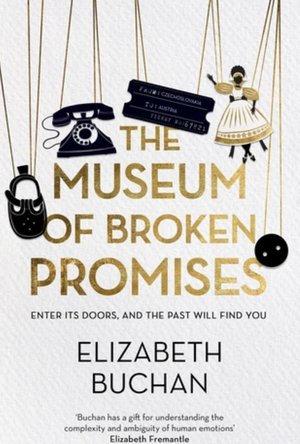
This is a story about a museum that contains the physical objects that symbolise a broken promise or a betrayal to those who have donated them (and this is SUCH a good idea for a museum!). The Museum of Broken Promises is in Paris, and its owner Laure chooses the items that go in to the museum after she either speaks to the donator, or simply reads the note that is sent with the item. Laure has experience in these matters: her own object sits in the museum.
I don’t know what I was expecting from this novel, but I was so surprised by the way this story progressed. Laure as a young woman becomes an au pair for a Czech family in Paris after her father dies. She then realises that she needs a break from university to grieve and get away from her life for a while. So when the family return to Prague for the summer, Laure goes with them. And so begins her life behind the iron curtain.
What follows is a love story between Laure and a musician and political activist, Tomas. We see how restricted people and their thoughts were, and we see why Laure becomes the woman she is in present day Paris.
I really liked the way we moved back and forth through time with Laure, and got to see Prague before its Velvet Revolution, Germany just after the Wall comes down and Paris in the present day. Laure is far more complex a character than I expected her to be at first.
I adored this book. It’s a sad story told so well - and I warn you that the end should be read with tissues to hand.
Many thanks to the publisher Corvus and NetGalley for my copy of this book, and to Pigeonhole for actually making me read it on time (I love my Pigeonhole gang!)!

I don’t know what I was expecting from this novel, but I was so surprised by the way this story progressed. Laure as a young woman becomes an au pair for a Czech family in Paris after her father dies. She then realises that she needs a break from university to grieve and get away from her life for a while. So when the family return to Prague for the summer, Laure goes with them. And so begins her life behind the iron curtain.
What follows is a love story between Laure and a musician and political activist, Tomas. We see how restricted people and their thoughts were, and we see why Laure becomes the woman she is in present day Paris.
I really liked the way we moved back and forth through time with Laure, and got to see Prague before its Velvet Revolution, Germany just after the Wall comes down and Paris in the present day. Laure is far more complex a character than I expected her to be at first.
I adored this book. It’s a sad story told so well - and I warn you that the end should be read with tissues to hand.
Many thanks to the publisher Corvus and NetGalley for my copy of this book, and to Pigeonhole for actually making me read it on time (I love my Pigeonhole gang!)!
Ivana A. | Diary of Difference (1171 KP) rated Living My Best Li(f)e in Books
Oct 2, 2020
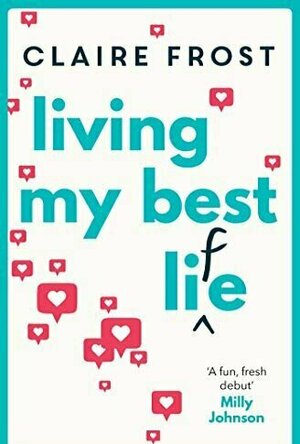
Fast and chill reads are always the hit for me. I definitely enjoy drinking my hot chocolate and cuddling my blanket while reading a chill book on my sofa. '' Living My Best Li(f)e '' was a modern-day book, that captures today's problems, and it felt familiar, because I have seen these problems in my surrounding. It focuses mostly on social media, and the differences between what we present online, and who we really are in the real world.
We have one woman - Bell - who is about to turn 40, and her comfort is broken when her man decides to leave her after years of togetherness.
We also have another woman, Millie, in her mid-thirties, and her little son Wolf (who names their child Wolf?). Millie fell in love with a football star Louis and had a child with him. To her disappointment, she realized the man she is in love with is the most unreliable parent in the world. She also happens to be an Instagram star, that only shows the world what she wants them to see.
While the followers see expensive dresses and well-behaved child, the reality shows that Millie takes a picture of the dresses and returns them to the shop, unable to afford them. She is also receiving calls from Wolfie's school that he has not be behaving in his best manners.
When these two women accidentally meet, they turn out to be besties. In fact, they became besties so fast, that I had to laugh out loud at how bizarre and unrealistic that was. Do you ever go to a coffee shop, say hi to a person, and then THE SAME DAY, THE SAME CONVERSATIONS you both start sharing your deepest secrets? Yes - it was that bizarre.
I really wanted to love '' Living My Best Li(f)e '' , as it captured a lot of problems. But it only captured the surface of these problems, then solved them instantly and moved on. And I wasn't satisfied. There were so many little plot problems that the author kept adding to the book randomly to keep the story going, and kept resolving them one by one - no anticipation, no hunger for one more chapter. Disappointing.
First of all, all the characters were not realistic. We have this woman that keeps saying she can be on her own, but she also keeps complaining every second of the day.
Then, we have this other woman, who seems like such a person that everyone is looking up to, but in fact, she is too scared to say no to her ex-love and father of her child, and she keeps up with all his nonsense on a daily bases.
Last, but not least, we have the 5-year-old Wolf boy, who talks like a 20-year-old boy, but behaves like a toddler, and I don't know how to react to that.
And finally, we have ''the rest of the characters'', who were mentioned and had their own roles in the book, but didn't have enough of a back story or air-time in order to be remembered by the audience.
The author also introduced us to a plot twist, that came out unexpectedly - but suddenly the government were about to destroy their community center and it was up to them to collect money and save this place in a record time. How convenient for the story, right? With no building up to it, the problem just raised from the ground... And you can all imagine the happy endings and soppy stories that followed with their success.
So yeah - that got me, and I didn't believe it for a second, and therefore this review. I really wanted to love Living My Best Li(f)e, but nothing worked out. Disappointing characters, plots and lack of thrill. Not a great experience for me. I wouldn't recommend it, but if you choose to read it, I would love to know what you think! <3
We have one woman - Bell - who is about to turn 40, and her comfort is broken when her man decides to leave her after years of togetherness.
We also have another woman, Millie, in her mid-thirties, and her little son Wolf (who names their child Wolf?). Millie fell in love with a football star Louis and had a child with him. To her disappointment, she realized the man she is in love with is the most unreliable parent in the world. She also happens to be an Instagram star, that only shows the world what she wants them to see.
While the followers see expensive dresses and well-behaved child, the reality shows that Millie takes a picture of the dresses and returns them to the shop, unable to afford them. She is also receiving calls from Wolfie's school that he has not be behaving in his best manners.
When these two women accidentally meet, they turn out to be besties. In fact, they became besties so fast, that I had to laugh out loud at how bizarre and unrealistic that was. Do you ever go to a coffee shop, say hi to a person, and then THE SAME DAY, THE SAME CONVERSATIONS you both start sharing your deepest secrets? Yes - it was that bizarre.
I really wanted to love '' Living My Best Li(f)e '' , as it captured a lot of problems. But it only captured the surface of these problems, then solved them instantly and moved on. And I wasn't satisfied. There were so many little plot problems that the author kept adding to the book randomly to keep the story going, and kept resolving them one by one - no anticipation, no hunger for one more chapter. Disappointing.
First of all, all the characters were not realistic. We have this woman that keeps saying she can be on her own, but she also keeps complaining every second of the day.
Then, we have this other woman, who seems like such a person that everyone is looking up to, but in fact, she is too scared to say no to her ex-love and father of her child, and she keeps up with all his nonsense on a daily bases.
Last, but not least, we have the 5-year-old Wolf boy, who talks like a 20-year-old boy, but behaves like a toddler, and I don't know how to react to that.
And finally, we have ''the rest of the characters'', who were mentioned and had their own roles in the book, but didn't have enough of a back story or air-time in order to be remembered by the audience.
The author also introduced us to a plot twist, that came out unexpectedly - but suddenly the government were about to destroy their community center and it was up to them to collect money and save this place in a record time. How convenient for the story, right? With no building up to it, the problem just raised from the ground... And you can all imagine the happy endings and soppy stories that followed with their success.
So yeah - that got me, and I didn't believe it for a second, and therefore this review. I really wanted to love Living My Best Li(f)e, but nothing worked out. Disappointing characters, plots and lack of thrill. Not a great experience for me. I wouldn't recommend it, but if you choose to read it, I would love to know what you think! <3
Dangerously Hot (Hostile Operations Team, #4)
Book
The world’s most wanted man is back from the dead. And only one woman can stop him… Former...
In Defense of the Princess: How Plastic Tiaras and Fairytale Dreams Can Inspire Smart, Strong Women
Book
It's no secret that most girls, at some point, love all things princess: the poofy dresses, the...

KatieLouCreate (162 KP) rated Pushing Daisies - Season 1 in TV
Jan 9, 2018

Favourite TV Series
This has to be one of my all time favourite television series. The story follows Ned, a man who can bring the dead back to life. But only for a minute. Any longer and something else has to die in their place. If he touches thelay person/thing again, they will die again. Forever.
This is all well for the private investigator, Emerson Cod who accidently discovered Ned's abilities. The two of them solve crime and split the earnings between them.
However, one day Emerson and Ned are given the task to find out who murdered a woman on a cruise. The women just so happens to be Ned's childhood sweetheart Charlotte Charles. Can he keep her alive for only a minute? Or will he succumb to his selfish want of needed company and love.
The series appears to be light hearted and playful. However, this contrasts with the darkness of what is actually happening. Two men solving murder mysteries.
It is humorous and playful, often using metaphors and quirky language in the characters dialogue. Overall, it is a refreshing watch compared to other television series. I highly reccomend if you like lighthearted romance, murder mysteries with laugh out loud humour.

This is all well for the private investigator, Emerson Cod who accidently discovered Ned's abilities. The two of them solve crime and split the earnings between them.
However, one day Emerson and Ned are given the task to find out who murdered a woman on a cruise. The women just so happens to be Ned's childhood sweetheart Charlotte Charles. Can he keep her alive for only a minute? Or will he succumb to his selfish want of needed company and love.
The series appears to be light hearted and playful. However, this contrasts with the darkness of what is actually happening. Two men solving murder mysteries.
It is humorous and playful, often using metaphors and quirky language in the characters dialogue. Overall, it is a refreshing watch compared to other television series. I highly reccomend if you like lighthearted romance, murder mysteries with laugh out loud humour.
TB
The Beauty of Us: A Fusion Novel
Book
New York Times bestselling author Kristen Proby delivers another sizzling novel in her delectable...
SA
Sex and Slaughter in the Tent of Jael: A Cultural History of a Biblical Story
Book
In the Hebrew Bible, Judges 4-5 tells the lurid story of the heroic figure of Jael, a woman who...
ClareR (6106 KP) rated Two Women in Rome in Books
Jun 15, 2021
Two Women in Rome is a truly captivating story set in two time periods. In the present day, Lottie is an archivist working in Rome who comes across a painting once owned by an English woman called Nina who died in the late 1970’s. The painting appears to be valuable, painted in the fifteenth century.
Lottie also finds Nina’s journal in her personal effects, and the more of it she reads, the more she wants to find out about her life.
I loved the details about Rome in both timelines - I’ve visited Rome and loved it. The strong female characters were also a big plus point for me. Lottie is a head archivist, she really knows what she’s doing and is confident in her abilities. Nina is also an assertive woman - she is often in new situations that many would find themselves floundering in (Ok, that sounds really vague, but I don’t want to give anything away!)
This is a book about secrets: about keeping them, and what happens when they are revealed - both good and bad. This isn’t a book that goes fast and hard in its revelations. Quite opposite in fact, and probably why I liked it so much. I love a well told story, and I really felt that I knew the women in this because of that feeling of not being rushed through the story.
There’s a fair amount of Italian politics in this, some of which I had never known about, so that was another plus point. I hadn’t realised that Italy had had quite such a tumultuous political life for so long after World War Two. The novel has a great mix of themes, actually: secrets, history, politics, life in Rome, betrayal, guilt. I think I’m becoming a bit of an Elizabeth Buchan fan because I really enjoyed her last book The Museum of Broken Promises, as well. Both books are set in Europe, with the aftereffects of great political upheavals, ostensibly going back to World War Two. This book is well worth reading - I’d definitely recommend it.
Many thanks to The Pigeonhole and NetGalley for my copy of this book.
Lottie also finds Nina’s journal in her personal effects, and the more of it she reads, the more she wants to find out about her life.
I loved the details about Rome in both timelines - I’ve visited Rome and loved it. The strong female characters were also a big plus point for me. Lottie is a head archivist, she really knows what she’s doing and is confident in her abilities. Nina is also an assertive woman - she is often in new situations that many would find themselves floundering in (Ok, that sounds really vague, but I don’t want to give anything away!)
This is a book about secrets: about keeping them, and what happens when they are revealed - both good and bad. This isn’t a book that goes fast and hard in its revelations. Quite opposite in fact, and probably why I liked it so much. I love a well told story, and I really felt that I knew the women in this because of that feeling of not being rushed through the story.
There’s a fair amount of Italian politics in this, some of which I had never known about, so that was another plus point. I hadn’t realised that Italy had had quite such a tumultuous political life for so long after World War Two. The novel has a great mix of themes, actually: secrets, history, politics, life in Rome, betrayal, guilt. I think I’m becoming a bit of an Elizabeth Buchan fan because I really enjoyed her last book The Museum of Broken Promises, as well. Both books are set in Europe, with the aftereffects of great political upheavals, ostensibly going back to World War Two. This book is well worth reading - I’d definitely recommend it.
Many thanks to The Pigeonhole and NetGalley for my copy of this book.
ClareR (6106 KP) rated The Dream Weavers in Books
Apr 25, 2021
The Dream Weavers is an historical fiction novel, with one foot in Saxon Mercia and the other in modern day Hereford. There’s a touch of the supernatural as well - all the better to see the past with. And I loved reading it.
Simon is writing a book of Anglo-Saxon history, and starts to hear a woman calling a name outside his rented cottage. When he goes out to look, no one is there.
The cottage owner brings in her local spiritual advisor, Bea, who hopes to put the ghost outside to rest. This is only the beginning.
The timelines alternate between King Offa’s daughter, Eadburh, and Bea’s life in Hereford with her husband who is a priest at the cathedral.
I honestly didn’t think I’d enjoy this - but I really did! It uses religion without being overly religious, and the same goes for the more Pagan elements. It was a a really interesting, highly readable book. I haven’t read much about the history around King Offa’s time, so I enjoyed the opportunity to do that. It was a book that was difficult to put down - except that was done for me, as I read a stave a day on The Pigeonhole! It’s a big book, but it really didn’t feel that way. It sent me off on little internet searches as well - namely Anchorites, and what types of dogs Anglo-Saxons kept as pets (and whether they did or not!). I like a book that interests me enough to read around it!
This is definitely one for the historical fiction fans, especially those that like a bit of the magical element as well. I loved reading it!
Many thanks to The Pigeonhole, and to HarperCollins for giving me access via NetGalley for an honest review.
Simon is writing a book of Anglo-Saxon history, and starts to hear a woman calling a name outside his rented cottage. When he goes out to look, no one is there.
The cottage owner brings in her local spiritual advisor, Bea, who hopes to put the ghost outside to rest. This is only the beginning.
The timelines alternate between King Offa’s daughter, Eadburh, and Bea’s life in Hereford with her husband who is a priest at the cathedral.
I honestly didn’t think I’d enjoy this - but I really did! It uses religion without being overly religious, and the same goes for the more Pagan elements. It was a a really interesting, highly readable book. I haven’t read much about the history around King Offa’s time, so I enjoyed the opportunity to do that. It was a book that was difficult to put down - except that was done for me, as I read a stave a day on The Pigeonhole! It’s a big book, but it really didn’t feel that way. It sent me off on little internet searches as well - namely Anchorites, and what types of dogs Anglo-Saxons kept as pets (and whether they did or not!). I like a book that interests me enough to read around it!
This is definitely one for the historical fiction fans, especially those that like a bit of the magical element as well. I loved reading it!
Many thanks to The Pigeonhole, and to HarperCollins for giving me access via NetGalley for an honest review.
Gareth von Kallenbach (980 KP) rated Arctic (2019) in Movies
Jul 2, 2019
This week has been one of the coldest on record across much of the United States. The “polar vortex” has brought with it sub-zero temps complete with snow and ice. It seems only fitting that Arctic a survival movie co-written and directed by YouTube star Joe Penna would be releasing the very same week. In his first feature film directorial debut Penna brings both the beauty and the dangers of the Arctic (Iceland in this case) to the big screen.
A lone man identified only as Overgård (Mads Mikkelsen) has crashed his cargo plane somewhere in the arctic. We don’t know how long he has been stranded there, but long enough for him to have carved out a giant S.O.S in the snow. He has converted his downed plane into his new home and goes about the same routine every day. He sets his watch alarm to keep his schedule, which involves catching fish through the ice, and setting out in a different direction each day to manually wind his transponder in the hopes that a rescue will finally come.
One day, a day like countless days before it, Overgård’s transponder turns from red to green and in the distance a helicopter appears. His lucky day soon turns into tragedy as the harsh winds of the Arctic toss the helicopter around like a kite in a hurricane, crashing it to the ground. Overgård quickly runs to the crash site only to find that one of the pilots has died in the crash, and the other (Maria Thelma Smáradôttir) is barely conscious and has a gaping wound in her side. In a scene that could almost be described as humorous (if it wasn’t for the dire situation itself), Overgård crafts a sled out of the helicopter’s sliding door to carry the woman back to the safety of his plane, only to find out the next day that inside the helicopter was an actual rescue sled.
Sadly, it isn’t long before the young pilot’s wound begins to fester that Overgård must make a choice. Stay in the little slice of heaven that he has carved up for himself or risk the forces of nature in an effort to save the woman’s life. With a map he recovered from the downed helicopter, Overgård is able to identify an outpost and carefully plots out the journey that will take them there. The journey he plans for will take several days and has numerous obstacles to overcome. Yet, with a heart that clearly is as large as the vastness of the arctic itself, he realizes he has no choice.
Arctic is a movie with very little dialog, other than an occasional comment to himself or an attempt to rouse his unconscious guest. For a movie that says so little it’s the atmosphere that says so much. The film attempts to capture the harsh conditions that Overgård faces along his journey and does it so brilliantly that you can almost feel the icy weight as it bears down. The audience struggles with every wintery step as if they are not only spectators, but active participants in the journey. The scenery is as awe inspiring as it is deadly. The music seamlessly blends into the environment to a point where you are aware it’s there but doesn’t break the immersion.
Arctic could almost be mistaken as a documentary, a film about one mans survival in one of the most inhospitable places on the planet. Its pacing is deliberate, even if it is a bit slow at times. There is little need to add extra flair or danger into the mix, because nature alone provides it in spades. Arctic is not a movie that will appeal to those looking for non-stop action. At its heart it is really a movie about man vs nature, and nature can be a beast all its own. Arctic is certainly a movie for those looking for something a bit different. For those who are looking for a survival movie that doesn’t take place on a deserted isle, then this is right up your alley. Arctic shows that sometimes realism is far more interesting than fiction.
A lone man identified only as Overgård (Mads Mikkelsen) has crashed his cargo plane somewhere in the arctic. We don’t know how long he has been stranded there, but long enough for him to have carved out a giant S.O.S in the snow. He has converted his downed plane into his new home and goes about the same routine every day. He sets his watch alarm to keep his schedule, which involves catching fish through the ice, and setting out in a different direction each day to manually wind his transponder in the hopes that a rescue will finally come.
One day, a day like countless days before it, Overgård’s transponder turns from red to green and in the distance a helicopter appears. His lucky day soon turns into tragedy as the harsh winds of the Arctic toss the helicopter around like a kite in a hurricane, crashing it to the ground. Overgård quickly runs to the crash site only to find that one of the pilots has died in the crash, and the other (Maria Thelma Smáradôttir) is barely conscious and has a gaping wound in her side. In a scene that could almost be described as humorous (if it wasn’t for the dire situation itself), Overgård crafts a sled out of the helicopter’s sliding door to carry the woman back to the safety of his plane, only to find out the next day that inside the helicopter was an actual rescue sled.
Sadly, it isn’t long before the young pilot’s wound begins to fester that Overgård must make a choice. Stay in the little slice of heaven that he has carved up for himself or risk the forces of nature in an effort to save the woman’s life. With a map he recovered from the downed helicopter, Overgård is able to identify an outpost and carefully plots out the journey that will take them there. The journey he plans for will take several days and has numerous obstacles to overcome. Yet, with a heart that clearly is as large as the vastness of the arctic itself, he realizes he has no choice.
Arctic is a movie with very little dialog, other than an occasional comment to himself or an attempt to rouse his unconscious guest. For a movie that says so little it’s the atmosphere that says so much. The film attempts to capture the harsh conditions that Overgård faces along his journey and does it so brilliantly that you can almost feel the icy weight as it bears down. The audience struggles with every wintery step as if they are not only spectators, but active participants in the journey. The scenery is as awe inspiring as it is deadly. The music seamlessly blends into the environment to a point where you are aware it’s there but doesn’t break the immersion.
Arctic could almost be mistaken as a documentary, a film about one mans survival in one of the most inhospitable places on the planet. Its pacing is deliberate, even if it is a bit slow at times. There is little need to add extra flair or danger into the mix, because nature alone provides it in spades. Arctic is not a movie that will appeal to those looking for non-stop action. At its heart it is really a movie about man vs nature, and nature can be a beast all its own. Arctic is certainly a movie for those looking for something a bit different. For those who are looking for a survival movie that doesn’t take place on a deserted isle, then this is right up your alley. Arctic shows that sometimes realism is far more interesting than fiction.