
Search
Search results

Night Reader Reviews (683 KP) rated 36 Hours in Books
Feb 4, 2020

Honest Review for Free Copy of Book
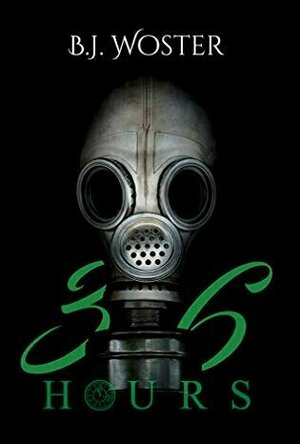
36 Hours by B. J. Woster is a thrilling crime book fro the reader who doesn't want to deal with all the legal stuff. Yes, readers follow the police search but the author has omitted writing a lengthy book about a trial.
Christian Price is a serial killer, though that is not his real name and no one has realized the deaths are all connected. Yet. Christian is not killing because he likes to kill, no, he does this because he feels he has to. In his opinion, many local police forces are incompetent or lack the drive to solve missing person cases and Christian has decided to motivate them. He does this by kidnapping a woman and called it into the police to find her within a limited amount of time or else she dies. The first one usually doses. He then continues this pattern with another woman, usually not going past three victims is one area, until the police are successful after which he moves to a different city. Things are a little bit different in Atlanta though.
Brooke Madison is terrified of parking garages, especially after her friend and co-worker Sandra McIntyre was abducted from the garage and later killed. Brooke and Sandra had both been taking self-defense classes together but it doesn't appear to help. Sadly Brooke discovers first hand how easy it was for Sandra to be abducted when it happens to her as well. Now she is trapped in a Wearhouse somewhere, the next in line in a series of experiments to jump-start the police’s interest again, Will they find her before the time is up or will Christian take yet another victim?
It would appear that the author did their homework because the book made sense. While I would have liked more details on a few things I prefer this approach compared to those who just guess and come up with situations that would never possibly work. In this case, I believe the author found a nice balance. Multiple time limits take place during this book and I was expecting just one well-detailed one. Also, the back of the book mentions how Christian suffered a tragedy that was unsolved by police and that is why he does this. The defining tragedy gets very little recognition when it is a big piece of backstory.
Young adults will enjoy this book the most. It has very little in the lines of gore or inappropriate content. Overall it is a nice mid-grade crime/mystery book. It is great for those that want a decent book without it being super long. I rate this book 2 out of 4. It was not what I was expecting. While it was a good read, the content spanned over a much longer time than what the book leads readers to believe. Also, the lack of diving into Christian’s backstory was disappointing at best.
https://nightreaderreviews.blogspot.com
https://facebook.com/nightreaderreviews
https://smashbomb.com/nightreader
Christian Price is a serial killer, though that is not his real name and no one has realized the deaths are all connected. Yet. Christian is not killing because he likes to kill, no, he does this because he feels he has to. In his opinion, many local police forces are incompetent or lack the drive to solve missing person cases and Christian has decided to motivate them. He does this by kidnapping a woman and called it into the police to find her within a limited amount of time or else she dies. The first one usually doses. He then continues this pattern with another woman, usually not going past three victims is one area, until the police are successful after which he moves to a different city. Things are a little bit different in Atlanta though.
Brooke Madison is terrified of parking garages, especially after her friend and co-worker Sandra McIntyre was abducted from the garage and later killed. Brooke and Sandra had both been taking self-defense classes together but it doesn't appear to help. Sadly Brooke discovers first hand how easy it was for Sandra to be abducted when it happens to her as well. Now she is trapped in a Wearhouse somewhere, the next in line in a series of experiments to jump-start the police’s interest again, Will they find her before the time is up or will Christian take yet another victim?
It would appear that the author did their homework because the book made sense. While I would have liked more details on a few things I prefer this approach compared to those who just guess and come up with situations that would never possibly work. In this case, I believe the author found a nice balance. Multiple time limits take place during this book and I was expecting just one well-detailed one. Also, the back of the book mentions how Christian suffered a tragedy that was unsolved by police and that is why he does this. The defining tragedy gets very little recognition when it is a big piece of backstory.
Young adults will enjoy this book the most. It has very little in the lines of gore or inappropriate content. Overall it is a nice mid-grade crime/mystery book. It is great for those that want a decent book without it being super long. I rate this book 2 out of 4. It was not what I was expecting. While it was a good read, the content spanned over a much longer time than what the book leads readers to believe. Also, the lack of diving into Christian’s backstory was disappointing at best.
https://nightreaderreviews.blogspot.com
https://facebook.com/nightreaderreviews
https://smashbomb.com/nightreader

JT (287 KP) rated Escape Plan (2013) in Movies
Mar 23, 2020

Arnie and Stallone (1 more)
Entertaining
80s action icons join forces
For those of us that grew up watching action films in the 80s, one can only stand by and admire that Stallone and Schwarzenegger were still going well into their 60s at the time of shooting. Clearly, they’re having fun, which is a good thing as we’re not expecting Oscar material here and those that are may as well leave now.
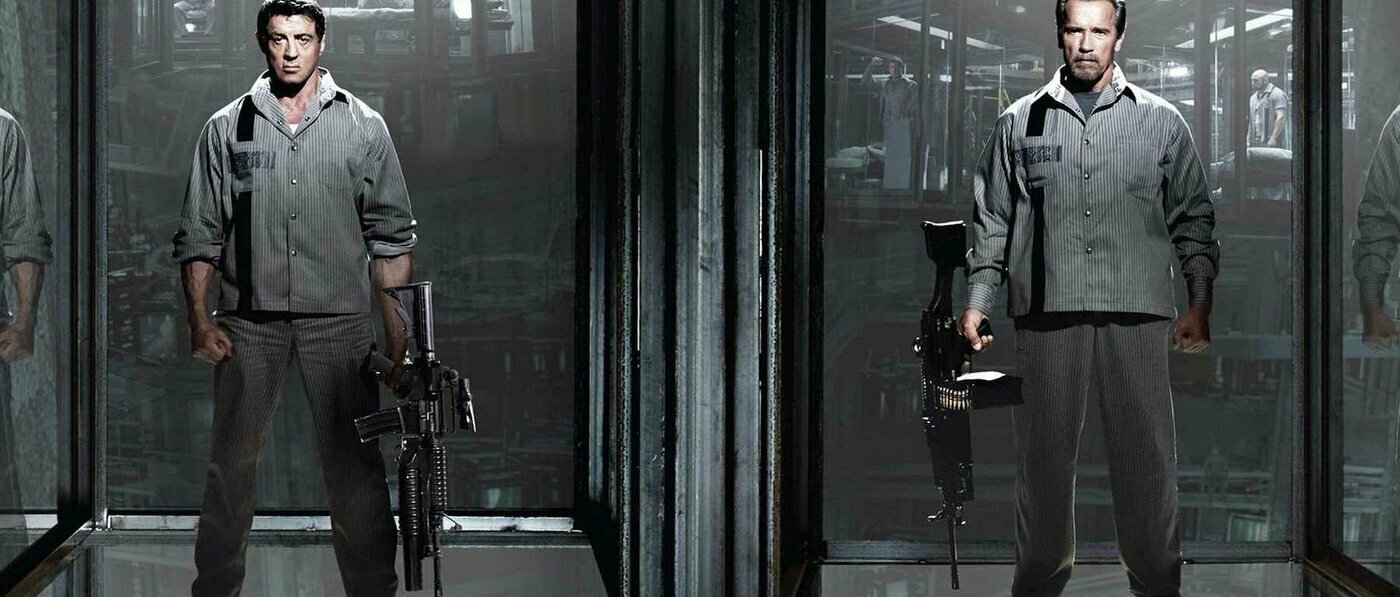
Escape Plan gives the two giants top billing opposite each other for the first time the whole way through a film (not counting The Expendables), but ultimately they’re on the same side. Ray Breslin (Stallone) breaks out of prisons for a living, making sure that those who are put behind bars have no way of ever getting out.
When a job comes up to test out a top-secret facility Breslin gleefully accepts despite his partners thinking otherwise, it leads him on to a collision course with Arnie who he needs to get onside in order to get out.
Of course once inside its clear that some people have no intention of letting him see the light of day, and Breslin is trapped behind a prison that encompasses everything he wrote the book on.
He teams up with fellow inmate Rottmayer (Schwarzenegger) in an attempt to break out and bring those responsible for setting him up, to justice, and that is where the fun begins. Schwarzenegger is enjoying himself even if the dialogue is not the best as we said, we’re not expecting Oscar material. He does, however, get the good lines and pretty much acts as the diversion as Breslin scampers around looking for breaks in the system.
Jim Caviezel is Hobbs, the warden of the facility, in what is actually quite a good turn as the classic pantomime villain, a throwback to the baddies of the mid-eighties. He plays it cold and calculating, which in some parts feels like he’s going a bit OTT. Beneath him is Vinnie Jones, typecast as the bog-standard henchmen who is not particularly needed and to make matters worse probably gets one of the worst henchmen deaths. We don’t regard that as a plot spoiler as most villain sidekicks end up biting the bullet as the stopgap between the hero and the classic ending battle.
There are no illusions going into this, you know exactly what you’re going to get right down to the obvious plot twist that you can see coming a mile off. A subplot is only touched on briefly but it’s a subplot that has been a staple part of any revenge plan. The film has a strong third act once everything has been set up and it unfolds in a pulsating twenty-minute finale which includes quite possibly the best slow motion shot for some time, nodding itself to most classic action films of the Arnie era.
It’s meat and two veg action of maybe not the highest order but certainly better than some of its more recent predecessors, Stallone and Schwarzenegger bring their action A-game and don’t disappoint for a second.
Escape Plan gives the two giants top billing opposite each other for the first time the whole way through a film (not counting The Expendables), but ultimately they’re on the same side. Ray Breslin (Stallone) breaks out of prisons for a living, making sure that those who are put behind bars have no way of ever getting out.
When a job comes up to test out a top-secret facility Breslin gleefully accepts despite his partners thinking otherwise, it leads him on to a collision course with Arnie who he needs to get onside in order to get out.
Of course once inside its clear that some people have no intention of letting him see the light of day, and Breslin is trapped behind a prison that encompasses everything he wrote the book on.
He teams up with fellow inmate Rottmayer (Schwarzenegger) in an attempt to break out and bring those responsible for setting him up, to justice, and that is where the fun begins. Schwarzenegger is enjoying himself even if the dialogue is not the best as we said, we’re not expecting Oscar material. He does, however, get the good lines and pretty much acts as the diversion as Breslin scampers around looking for breaks in the system.
Jim Caviezel is Hobbs, the warden of the facility, in what is actually quite a good turn as the classic pantomime villain, a throwback to the baddies of the mid-eighties. He plays it cold and calculating, which in some parts feels like he’s going a bit OTT. Beneath him is Vinnie Jones, typecast as the bog-standard henchmen who is not particularly needed and to make matters worse probably gets one of the worst henchmen deaths. We don’t regard that as a plot spoiler as most villain sidekicks end up biting the bullet as the stopgap between the hero and the classic ending battle.
There are no illusions going into this, you know exactly what you’re going to get right down to the obvious plot twist that you can see coming a mile off. A subplot is only touched on briefly but it’s a subplot that has been a staple part of any revenge plan. The film has a strong third act once everything has been set up and it unfolds in a pulsating twenty-minute finale which includes quite possibly the best slow motion shot for some time, nodding itself to most classic action films of the Arnie era.
It’s meat and two veg action of maybe not the highest order but certainly better than some of its more recent predecessors, Stallone and Schwarzenegger bring their action A-game and don’t disappoint for a second.

Ronnie (304 KP) rated Supernatural - Season 5 in TV
Apr 3, 2020
Contains spoilers, click to show
Supernatural follows 2 brothers, Sam and Dean Winchester, who have been raised by their dad in a lifestyle of moving across country fighting supernatural beings, ever since their mum was killed by a yellow eyed demon in Sam’s nursery when he was only 6months old. At the end of season 4 Sam accidentally frees the devil from his cage in hell, kickstarting the apocalypse and then in season 5 Sam and Dean have to try and stop the apocalypse, but the apocalypse can’t happen without Sam and Dean’s help. Sam’s body is to be the vessel used by the devil, and Dean’s body is to be the vessel of the angel Michael. Once the two angels have gotten Sam and Dean to say “yes” to being the vessels, they are to have a battle, and should the devil win, the apocalypse will begin.
I have very mixed feelings about this season. There were parts of it I loved and parts of it I disliked. The brothers have always had a rocky relationship, but in this season, we see them split up more than once, which I didn’t like, I’ve always enjoyed the two brothers being together. An element of the season that I have very mixed feelings about is the angels. The angel we see the most is Castiel, who has rebelled from heaven and is helping the brothers. He is my favourite character, but that’s where the good parts of the angels stop. The other angel we see frequently throughout the show is Zackariah, who is just annoying. And the third angel, who is only in one episode is Gabriel. He has been in the show multiple times before in earlier seasons, but he was pretending to be a Trickster, and even then, I didn’t like him. Another element I have mixed feelings about is the actual content. The main focus of the season was trying to stop the apocalypse and tracking down the horsemen. In previous seasons a large amount of the episodes were about the brothers’ encounters with supernatural beings that weren’t angels or demons. Two of my favourite episodes were “The End” and “Changing Channels”. In “The End” Dean gets sent five years into the future and in “Changing Channels” Sam and Dean get stuck in Tv shows, or TV Land as they like to call it. Although not obvious at first, these two episodes link back to the angels, which really disappoints me. Something I did like was one of the demons they introduced, called Crowley. He helped the brothers out in a couple of the episodes, and I think he might become a larger part of the show in later seasons. Another thing I liked was that there seemed to be more humour in this season. There has always been bizarre deaths and witty one liners from Dean but there was definitely more humour, which I really enjoyed. Another thing I disliked was the ending. They ended it with Sam in hell and Dean finally having the nice, normal life he always wanted, but you knew that wouldn’t last because there’s 11 more seasons. Overall, I think the season was good, but not hugely enjoyable.
I have very mixed feelings about this season. There were parts of it I loved and parts of it I disliked. The brothers have always had a rocky relationship, but in this season, we see them split up more than once, which I didn’t like, I’ve always enjoyed the two brothers being together. An element of the season that I have very mixed feelings about is the angels. The angel we see the most is Castiel, who has rebelled from heaven and is helping the brothers. He is my favourite character, but that’s where the good parts of the angels stop. The other angel we see frequently throughout the show is Zackariah, who is just annoying. And the third angel, who is only in one episode is Gabriel. He has been in the show multiple times before in earlier seasons, but he was pretending to be a Trickster, and even then, I didn’t like him. Another element I have mixed feelings about is the actual content. The main focus of the season was trying to stop the apocalypse and tracking down the horsemen. In previous seasons a large amount of the episodes were about the brothers’ encounters with supernatural beings that weren’t angels or demons. Two of my favourite episodes were “The End” and “Changing Channels”. In “The End” Dean gets sent five years into the future and in “Changing Channels” Sam and Dean get stuck in Tv shows, or TV Land as they like to call it. Although not obvious at first, these two episodes link back to the angels, which really disappoints me. Something I did like was one of the demons they introduced, called Crowley. He helped the brothers out in a couple of the episodes, and I think he might become a larger part of the show in later seasons. Another thing I liked was that there seemed to be more humour in this season. There has always been bizarre deaths and witty one liners from Dean but there was definitely more humour, which I really enjoyed. Another thing I disliked was the ending. They ended it with Sam in hell and Dean finally having the nice, normal life he always wanted, but you knew that wouldn’t last because there’s 11 more seasons. Overall, I think the season was good, but not hugely enjoyable.

Those Conspiracy Guys
Podcast
Those Conspiracy Guys is a weekly podcast where we discuss all types and genres of conspiracy...

Inside Limbo Double Pack
8.5 Rate It
Video Game
Limbo is a puzzle-platform video game developed by independent studio Playdead. The game was...
Inside Limbo

Kara Skinner (332 KP) rated The Band 4: The Air We Breathe in Books
Sep 10, 2019
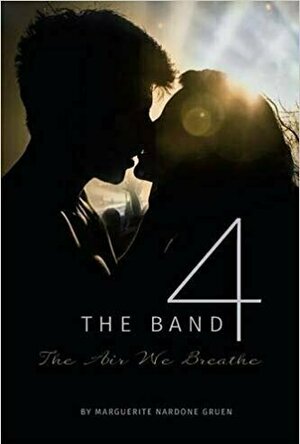

Genre: Contemporary, Inspirational
Page Count: 324 pages (of nauseation)
Average Goodreads Rating: 3/5 stars (why, Goodreads? You’re usually so tough on books)
My Rating: 1.5/ 5 stars
Truthfully, this is actually a great story. Yeah. So great. It’s the perfect backstory for its horror sequel: The Martins Trump Manson on Body Count.
As a romance it fucking sucks.
I don’t even know where to begin. This book is so full of sugary sap that it makes pasta covered in maple and chocolate syrup and marshmallows look appetizing.
original
Still not as sweet as The Air We Breathe
Here’s the thing: I’m not actually a bitter and cynical person. I like sap and fluff. I smile and giggle during romance scenes, I’ve obsessively written cute and romantic fanfiction and my boyfriend and I were arguably the most nauseatingly cute couple to ever walk the halls of John Bapst Memorial High School.
But I gagged reading this book for the amount of love-doveyness.
Marguerite is on holiday in London, recovering from the sudden deaths of her parents which liberated her from 27 years of being suffocated and controlled by them. While there, she has a random chance encounter with Chase Martin, a depressed rock star exhausted from touring with his band. Chase and Marguerite are drawn together by a strange unknown force. They don’t know why they have such a strong connection to each other, but they do know that life without the other would not be living at all.
I actually really liked the beginning and thought that it would shape up to be an interesting and sweet romance. We see them before they meet in the coffee shop, miserable and depressed, and then while sipping her drink and reading her book, Marguerite feels Chase’s anxiety. So she buys him a decaf drink and gives it to him, saying she could feel his anxiety from across the shop. That’s great.
The two of them realize they’re drawn together and can find each other happiness and Marguerite ends up spending the night at Chase’s house just so they can find comfort in having another human being near them. That’s great, too.
The beginning is by far my favorite part because it has promise for a good story and has more vivid scenes than any other part of the book.
But then it moves too quickly from there.
From that moment on, the two of them are so deep in love they make Romeo and Juliet look reserved and cautious. They are constantly “blown away” by each other and moved to tears every minute by each other. They “get a kick out of” every little joke they make to each other, and they start living together immediately after they meet. After a week (that’s right, a flipping week), Chase proposes to her.
And if I had a pin for every time one of those quoted phrases appeared in this novel, I could pulverize a voodoo doll. The repeated phrases and excessive emotion of the characters is definitely the worst part.
I’m still not that aggravated with this book, yet. Yeah, the insta love irks me, but I figure there will be a great plot with lots of trouble between the two of them after they marry. After all, they barely know each other and they need to figure out what this psychic connection means. Maybe they’re the incarnated souls of Hawkgirl and Hawkman and they’re about to get killed by an immortal psychopath (did I mention I’m a huge nerd?).
Nope. The two of them agree on everything, right down to how to decorate the house and the new rule that shoes are off upon entering. And things continue to be hunky dory for practically forever. All of Chase’s friends, and their girlfriends, love Marguerite and nobody questions their whirlwind romance. Yeah, because a severely depressed person getting engaged after a week of dating isn’t a cry for help or anything.
And there is so much to dislike about Chase’s and Marguerite’s decisions. Marguerite is forced to quit her job so she can move to London to be with Chase.
Never mind that she liked her job in Pennsylvania and didn’t express any wish to be a housewife. Never mind that Chase was getting tired of touring and thinking about quitting the band anyway. It’s her life that gets turned upside down.
Also, so much for her newfound freedom following her parents’ deaths! Now she’s shadowed by a bodyguard wherever she goes, needs to sneak into the backs of restaurant when she wants to eat out, and can’t even walk to the store for fear of being accosted by her husbands’ fans.
Yes, Chase’s life gets changed too. He now has a wife that cooks meals for him, cleans for him, furnishes and decorates his house for him, and hands him a cold towel when he walks off stage. He made some real damn sacrifices when he married Marguerite.
bitch_please_by_teslapunk-d32znko
But life goes on. With a lot of summary and over thirty years, it goes on.
Aside from dialogues and scenes peppered here and there, the book is mostly sweet and sappy summary of their lives. Dark things happen now and then but they’re glossed over and smothered in fluff.
If this storyline was done by a competent writer, this actually could have been an entertaining series about the Martin family. There is actually plenty of material between the psychic connection, Marguerite’s tragic background, a miscarriage, a huge celebrity drugging conspiracy, two sets of twins, a near death experience, and a baby on the doorstep.
But somehow it becomes boring and plotless when it’s all crammed into one book that seems to drag on forever. During all of this my main concern, the psychic connection, was never explained. It’s just a gift from God. One that turns their “perfect” (as in creepily well behaved and mature) children into kids from The Shining. Because they also have a psychic connection. They can “feel” each other and their parents. Oh, and talk to their dead sister, apparently, when their dead sister wants to tell them about babies being left on their doorstep.
“This is Baby Sarah,” Matt said.
“Baby Sarah?” Marguerite asked.
(Both sets of twins) said “Yes. We knew she was coming.”
Chase asked, “How did you know?”
“Baby Margaret told us,” Mark said.
Also, when Chase and Marguerite choose Sarah’s full name, all four children, in a different room, wake up from a dead sleep, sit up in unison, and announce that the baby is named.
May I present the newest additions to the Martin family?
If you want to read a rockstar romance, I recommend Love’s Rhythm by Lexxie Couper, which isn’t perfectly crafted, but leagues beyond The Band 4: The Air We Breathe.
Page Count: 324 pages (of nauseation)
Average Goodreads Rating: 3/5 stars (why, Goodreads? You’re usually so tough on books)
My Rating: 1.5/ 5 stars
Truthfully, this is actually a great story. Yeah. So great. It’s the perfect backstory for its horror sequel: The Martins Trump Manson on Body Count.
As a romance it fucking sucks.
I don’t even know where to begin. This book is so full of sugary sap that it makes pasta covered in maple and chocolate syrup and marshmallows look appetizing.
original
Still not as sweet as The Air We Breathe
Here’s the thing: I’m not actually a bitter and cynical person. I like sap and fluff. I smile and giggle during romance scenes, I’ve obsessively written cute and romantic fanfiction and my boyfriend and I were arguably the most nauseatingly cute couple to ever walk the halls of John Bapst Memorial High School.
But I gagged reading this book for the amount of love-doveyness.
Marguerite is on holiday in London, recovering from the sudden deaths of her parents which liberated her from 27 years of being suffocated and controlled by them. While there, she has a random chance encounter with Chase Martin, a depressed rock star exhausted from touring with his band. Chase and Marguerite are drawn together by a strange unknown force. They don’t know why they have such a strong connection to each other, but they do know that life without the other would not be living at all.
I actually really liked the beginning and thought that it would shape up to be an interesting and sweet romance. We see them before they meet in the coffee shop, miserable and depressed, and then while sipping her drink and reading her book, Marguerite feels Chase’s anxiety. So she buys him a decaf drink and gives it to him, saying she could feel his anxiety from across the shop. That’s great.
The two of them realize they’re drawn together and can find each other happiness and Marguerite ends up spending the night at Chase’s house just so they can find comfort in having another human being near them. That’s great, too.
The beginning is by far my favorite part because it has promise for a good story and has more vivid scenes than any other part of the book.
But then it moves too quickly from there.
From that moment on, the two of them are so deep in love they make Romeo and Juliet look reserved and cautious. They are constantly “blown away” by each other and moved to tears every minute by each other. They “get a kick out of” every little joke they make to each other, and they start living together immediately after they meet. After a week (that’s right, a flipping week), Chase proposes to her.
And if I had a pin for every time one of those quoted phrases appeared in this novel, I could pulverize a voodoo doll. The repeated phrases and excessive emotion of the characters is definitely the worst part.
I’m still not that aggravated with this book, yet. Yeah, the insta love irks me, but I figure there will be a great plot with lots of trouble between the two of them after they marry. After all, they barely know each other and they need to figure out what this psychic connection means. Maybe they’re the incarnated souls of Hawkgirl and Hawkman and they’re about to get killed by an immortal psychopath (did I mention I’m a huge nerd?).
Nope. The two of them agree on everything, right down to how to decorate the house and the new rule that shoes are off upon entering. And things continue to be hunky dory for practically forever. All of Chase’s friends, and their girlfriends, love Marguerite and nobody questions their whirlwind romance. Yeah, because a severely depressed person getting engaged after a week of dating isn’t a cry for help or anything.
And there is so much to dislike about Chase’s and Marguerite’s decisions. Marguerite is forced to quit her job so she can move to London to be with Chase.
Never mind that she liked her job in Pennsylvania and didn’t express any wish to be a housewife. Never mind that Chase was getting tired of touring and thinking about quitting the band anyway. It’s her life that gets turned upside down.
Also, so much for her newfound freedom following her parents’ deaths! Now she’s shadowed by a bodyguard wherever she goes, needs to sneak into the backs of restaurant when she wants to eat out, and can’t even walk to the store for fear of being accosted by her husbands’ fans.
Yes, Chase’s life gets changed too. He now has a wife that cooks meals for him, cleans for him, furnishes and decorates his house for him, and hands him a cold towel when he walks off stage. He made some real damn sacrifices when he married Marguerite.
bitch_please_by_teslapunk-d32znko
But life goes on. With a lot of summary and over thirty years, it goes on.
Aside from dialogues and scenes peppered here and there, the book is mostly sweet and sappy summary of their lives. Dark things happen now and then but they’re glossed over and smothered in fluff.
If this storyline was done by a competent writer, this actually could have been an entertaining series about the Martin family. There is actually plenty of material between the psychic connection, Marguerite’s tragic background, a miscarriage, a huge celebrity drugging conspiracy, two sets of twins, a near death experience, and a baby on the doorstep.
But somehow it becomes boring and plotless when it’s all crammed into one book that seems to drag on forever. During all of this my main concern, the psychic connection, was never explained. It’s just a gift from God. One that turns their “perfect” (as in creepily well behaved and mature) children into kids from The Shining. Because they also have a psychic connection. They can “feel” each other and their parents. Oh, and talk to their dead sister, apparently, when their dead sister wants to tell them about babies being left on their doorstep.
“This is Baby Sarah,” Matt said.
“Baby Sarah?” Marguerite asked.
(Both sets of twins) said “Yes. We knew she was coming.”
Chase asked, “How did you know?”
“Baby Margaret told us,” Mark said.
Also, when Chase and Marguerite choose Sarah’s full name, all four children, in a different room, wake up from a dead sleep, sit up in unison, and announce that the baby is named.
May I present the newest additions to the Martin family?
If you want to read a rockstar romance, I recommend Love’s Rhythm by Lexxie Couper, which isn’t perfectly crafted, but leagues beyond The Band 4: The Air We Breathe.

Hazel (1853 KP) rated The Storyteller in Books
May 30, 2017


An Ethical Question
Jodi Picoult is the bestselling author of numerous novels, with My Sister’s Keeper being the most well known, perhaps. All of her stories are well written although it is still possible to notice improvements in the writing over the years right up until now with her latest, The Storyteller, which quite possibly could be her best yet.
Arguably, The Storyteller does not quite read as a Jodi Picoult novel is known to. This is, in part, because of the nature of the story. Most of her previous books deal with medical ethics and/or court cases, whereas this story contains neither. The Storyteller contains a combination of past and present - the main focus being on the Holocaust.
Four people narrate the novel: two in the present day and two giving an account of their experience during the Second World War. It begins with Sage Singer, a 25 year old, hermit-like woman with a disfiguring facial scar – the result of a terrible accident, one that also led to the death of her mother. For the past three years Sage has been participating in a grief group – a place where people who have lost loved ones can come together and talk about their feelings. After three years surely Sage would no longer need the help of the group? However she still attends, not because she finds it helpful, but for the opposite reason. She even says herself: “If it were helpful I wouldn’t still be coming.” It unfolds that she still blames herself for her mother’s death despite the reassurances that it was an accident and not her fault.
It is through the grief group that Sage meets an elderly man, Josef Weber. After becoming friendly and discovering that Sage comes from a Jewish family, Josef confesses to something terrible – he was a Nazi during the war. He killed people. He wants Sage to represent all the Jews he killed and forgive him. Then he wants her to help him die.
Whilst, Josef recounts his experience of being part of the Nazi party, another account is also given. Minka, Sage’s grandmother, describes the terrors she faced as an imprisoned Jew suffering fates such as the deaths of all her family and friends and her time in Auschwitz. Another element to the novel is the vampire story Minka wrote as a teenager. This is interspersed between the other chapters of the book. Unwittingly, Minka’s fictional tale reflects the alienation and destruction of the Jews. The final character is Leo who, like Sage, is narrating the present day, and trying to locate ex-Nazi members in order for them to be punished by the government.
One thing to praise Picoult for, not just in The Storyteller, but also in all her novels is the amount of in-depth research she undertakes to make her stories as accurate as possible even though they are fictional. Minka’s account was written is such a way that it was almost believable that Picoult had been there and experienced it herself. She even learnt to bake bread so that she could write from the point of view of a baker. This is pure dedication!
The Storyteller is an amazing, beautiful book, which is not purely an enjoyable read. It informs, shocks and stays with you for a long time. You will question your own morals and ability to forgive. Is anyone entirely evil? Is anyone entirely good? Perhaps we are both, so why should anyone have the right to treat others as inferior from themselves?
Arguably, The Storyteller does not quite read as a Jodi Picoult novel is known to. This is, in part, because of the nature of the story. Most of her previous books deal with medical ethics and/or court cases, whereas this story contains neither. The Storyteller contains a combination of past and present - the main focus being on the Holocaust.
Four people narrate the novel: two in the present day and two giving an account of their experience during the Second World War. It begins with Sage Singer, a 25 year old, hermit-like woman with a disfiguring facial scar – the result of a terrible accident, one that also led to the death of her mother. For the past three years Sage has been participating in a grief group – a place where people who have lost loved ones can come together and talk about their feelings. After three years surely Sage would no longer need the help of the group? However she still attends, not because she finds it helpful, but for the opposite reason. She even says herself: “If it were helpful I wouldn’t still be coming.” It unfolds that she still blames herself for her mother’s death despite the reassurances that it was an accident and not her fault.
It is through the grief group that Sage meets an elderly man, Josef Weber. After becoming friendly and discovering that Sage comes from a Jewish family, Josef confesses to something terrible – he was a Nazi during the war. He killed people. He wants Sage to represent all the Jews he killed and forgive him. Then he wants her to help him die.
Whilst, Josef recounts his experience of being part of the Nazi party, another account is also given. Minka, Sage’s grandmother, describes the terrors she faced as an imprisoned Jew suffering fates such as the deaths of all her family and friends and her time in Auschwitz. Another element to the novel is the vampire story Minka wrote as a teenager. This is interspersed between the other chapters of the book. Unwittingly, Minka’s fictional tale reflects the alienation and destruction of the Jews. The final character is Leo who, like Sage, is narrating the present day, and trying to locate ex-Nazi members in order for them to be punished by the government.
One thing to praise Picoult for, not just in The Storyteller, but also in all her novels is the amount of in-depth research she undertakes to make her stories as accurate as possible even though they are fictional. Minka’s account was written is such a way that it was almost believable that Picoult had been there and experienced it herself. She even learnt to bake bread so that she could write from the point of view of a baker. This is pure dedication!
The Storyteller is an amazing, beautiful book, which is not purely an enjoyable read. It informs, shocks and stays with you for a long time. You will question your own morals and ability to forgive. Is anyone entirely evil? Is anyone entirely good? Perhaps we are both, so why should anyone have the right to treat others as inferior from themselves?

Connor Sheffield (293 KP) rated Wonder Woman (2017) in Movies
Jun 1, 2017

Beautiful visuals (3 more)
Gal Gadot is a strong and sexy Diana
A war film with comic book fantasy
The strong messages within the film
Bringing a God to a Gun Fight
So I may be a little biased as I am a huge DC fan, but that doesn't mean every DC film gets the top rating from me, because I know that most of the DC films, somewhat especially as of recent, haven't quite grasped the ability to merge comic book elements with great film elements....this film has nailed it.
Gal Gadot has brought the character of Wonder Woman, a.k.a Diana Prince, to the big screen with such power that is unmatched by any other female comic book character. She's strong, sexy, charming and innocent to the ways of the world outside of Themyscira.
The effects of this film bring to the big screen, stunning visuals, a dull colour overtone to add to the atmosphere of the effects of war on the world that really make you aware of just how important the situation of the world is, and why Diana has truly been sent to help. The team of brilliant minds behind this film have managed to bring the glowing lasso, the powers of Wonder Woman herself, and the deviating effects of war into a perfectly organized combination that makes you feel like you're watching a war film with comic book fantasy elements, not just a comic book film that contains a war.
There's humour that is brought forth via Diana's innocence of the world outside of her home on Paradise Island. She learns the deviation of the many deaths that the war has brought to the world, but through her companion, Steve Trevor, she learns of the joys of how life was before, and how it could be again, when there is no more war.
The film is full of moments that make you want to laugh, cry or watch in awe as Wonder Woman proves to the men in the war that women are not as weak and frightened as they thought at the time. It's hard for her not to in her own film, but she truly steals the show, and you want nothing more than to see her kick ass.
The choreography of the fight sequences are sleek and beautiful in themselves. The fight on Themyscira reminded me somewhat of 300, if the Spartans were all badass Amazonians with bows and arrows, and horses. The beautiful slow motion shots are used to portray the power of these beautiful warriors, and the best slow motion shot takes place in the war, at No Man's Land.
This scene is cinematic beauty! Wonder Woman steps ups the ladder and stands strong as she makes her way across No Man's Land, deflecting bullets and proving that whilst no man can cross, She can, and will! Gal Gadot's beauty shines through amongst the dim and dull overtone of the film and she truly portrays that she is a Goddess amongst the world of men.
Overall I highly recommend this film! You'll laugh, you'll cry (possibly...unless you're a robot), and you'll sit in awe of Wonder Woman as she kicks ass and proves that you shouldn't send men to do a woman's job ;)
Gal Gadot has brought the character of Wonder Woman, a.k.a Diana Prince, to the big screen with such power that is unmatched by any other female comic book character. She's strong, sexy, charming and innocent to the ways of the world outside of Themyscira.
The effects of this film bring to the big screen, stunning visuals, a dull colour overtone to add to the atmosphere of the effects of war on the world that really make you aware of just how important the situation of the world is, and why Diana has truly been sent to help. The team of brilliant minds behind this film have managed to bring the glowing lasso, the powers of Wonder Woman herself, and the deviating effects of war into a perfectly organized combination that makes you feel like you're watching a war film with comic book fantasy elements, not just a comic book film that contains a war.
There's humour that is brought forth via Diana's innocence of the world outside of her home on Paradise Island. She learns the deviation of the many deaths that the war has brought to the world, but through her companion, Steve Trevor, she learns of the joys of how life was before, and how it could be again, when there is no more war.
The film is full of moments that make you want to laugh, cry or watch in awe as Wonder Woman proves to the men in the war that women are not as weak and frightened as they thought at the time. It's hard for her not to in her own film, but she truly steals the show, and you want nothing more than to see her kick ass.
The choreography of the fight sequences are sleek and beautiful in themselves. The fight on Themyscira reminded me somewhat of 300, if the Spartans were all badass Amazonians with bows and arrows, and horses. The beautiful slow motion shots are used to portray the power of these beautiful warriors, and the best slow motion shot takes place in the war, at No Man's Land.
This scene is cinematic beauty! Wonder Woman steps ups the ladder and stands strong as she makes her way across No Man's Land, deflecting bullets and proving that whilst no man can cross, She can, and will! Gal Gadot's beauty shines through amongst the dim and dull overtone of the film and she truly portrays that she is a Goddess amongst the world of men.
Overall I highly recommend this film! You'll laugh, you'll cry (possibly...unless you're a robot), and you'll sit in awe of Wonder Woman as she kicks ass and proves that you shouldn't send men to do a woman's job ;)

postapocalypticplayground (27 KP) rated The Wicked Deep in Books
May 1, 2018
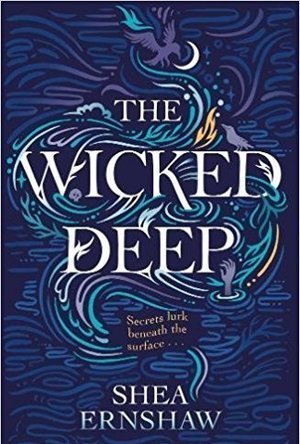

Everything a contemporary fantasy should be
I got a copy of The Wicked Deep in a book sub box, I had seen it around but didn't know much about it which is perfect because sometimes knowing can turn me away, as i'm often a creature of habit. I'm not really a fan of fantasy in a contemporary setting but this book changed my mind completely! I think that this is because the small town of Sparrow doesn't feel contemporary. Forgotten for most of the year, it's a crumbling town being slowly reclaimed by the sea. With no chain stores or high street names it's kind of trapped in time, which all ends up adding to the authenticity of Swan Season - A short time each year where it's said that the drowned witch Swan sisters return to the shore to claim the lives of men in the town. Despite there actually being annual deaths, tourists still flock to Sparrow every year. The story is also nicely interposed with chapters about the history of the town and the Swan sisters time there, which also gives it a less contemporary feel.
Before I go any further I want to cut to one thing, this book has been published by Simon and Schuster's Children's Division - so set your sights here. Yes this is a tale of darkness, murder and revenge, but don't expect it to be graphic or horrifying - I mention this as I have seen some people complain that it isn't enough of those things. YA covers a large age range and sometimes it's going to be towards the lower end and to be honest, the story telling is so fantastic that it doesn't need to be graphic or over the top. I think Shea Ernshaw does an amazing job of conveying dread without resorting to shock. That's also evident that despite the subject matter this is a really easy and captivating read, I couldn't put it down and read it in a day!
There isn't a character I disliked. The sisters were portrayed brilliantly, all reacting differently to the 200 years of vengeance and I found it a really interesting take on how they can become either weary or sharpened by this. The children of the town as well were thoughtfully considered with how they have come to accept the fate of the town they were born into, and almost embrace it like a birthright, despite knowing what the fates could have in store. I want to be careful of saying too much about the characters as there is some brilliant misdirection and a twist to this tale, which kept me on my toes.
The story feels very ethereal, from the mists of the sisters song to the decrepit lighthouse island and the run down township. Even the antics of the children at the start of Swan Season seems as if they are already under a spell rather than the elaborate dares they look to be playing - perhaps that is a spell over the whole town, in that they float along knowing what is coming yet seem in no hurry to change or move to do anything about it.
I loved this book for so many reasons and it's beautifully not afraid to be a stand alone which is so refreshing at the moment. The cover is gorgeous too! I have no hesitation in giving this book 5*
Before I go any further I want to cut to one thing, this book has been published by Simon and Schuster's Children's Division - so set your sights here. Yes this is a tale of darkness, murder and revenge, but don't expect it to be graphic or horrifying - I mention this as I have seen some people complain that it isn't enough of those things. YA covers a large age range and sometimes it's going to be towards the lower end and to be honest, the story telling is so fantastic that it doesn't need to be graphic or over the top. I think Shea Ernshaw does an amazing job of conveying dread without resorting to shock. That's also evident that despite the subject matter this is a really easy and captivating read, I couldn't put it down and read it in a day!
There isn't a character I disliked. The sisters were portrayed brilliantly, all reacting differently to the 200 years of vengeance and I found it a really interesting take on how they can become either weary or sharpened by this. The children of the town as well were thoughtfully considered with how they have come to accept the fate of the town they were born into, and almost embrace it like a birthright, despite knowing what the fates could have in store. I want to be careful of saying too much about the characters as there is some brilliant misdirection and a twist to this tale, which kept me on my toes.
The story feels very ethereal, from the mists of the sisters song to the decrepit lighthouse island and the run down township. Even the antics of the children at the start of Swan Season seems as if they are already under a spell rather than the elaborate dares they look to be playing - perhaps that is a spell over the whole town, in that they float along knowing what is coming yet seem in no hurry to change or move to do anything about it.
I loved this book for so many reasons and it's beautifully not afraid to be a stand alone which is so refreshing at the moment. The cover is gorgeous too! I have no hesitation in giving this book 5*

Movie Metropolis (309 KP) rated The Snowman (2017) in Movies
Jun 10, 2019
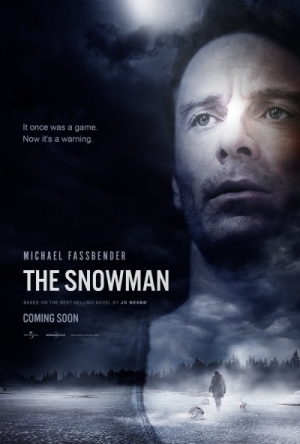

No, not that one
Nordic noir is big business at the moment, but with the incredible scenery of the locations lending themselves perfectly to film, is there any wonder?
The Girl with the Dragon Tattoo and The Hypnotist are just a couple of movies that have fallen into this massively expanding genre.
Now, Jo Nesbø’s chilling The Snowman novel gets the silver screen treatment in a film of the same name. But can this continue the thrilling trend of whodunit novels being turned into fabulous crime dramas?For Detective Harry Hole (Michael Fassbender), the death of a young woman during the first snow of winter feels like anything but a routine homicide. His investigation leads him to “The Snowman Killer,” an elusive sociopath who continuously taunts Hole with ingeniously crafted cat-and-mouse games. As the brutal deaths show no sign of slowing, Harry teams up with a new recruit (Rebecca Ferguson) to try and lure the madman out of the shadows before it’s too late.
With Michael Fassbender at the helm, director Thomas Alfredson (Tinker Tailor Soldier Spy) manages to blend gorgeous imagery with an intriguing plot and excellent performances in a film that suffers from a couple of issues that stops it from becoming a must-see event.
These R-rated thrillers are ten-a-penny these days with the bar still being set incredibly high by Gone Girl. Last year’s Girl on the Train was a decent stab at dethroning David Fincher’s masterpiece, but it just fell a little short – well the same has happened here.
Michael Fassbender is uniformly excellent as troubled detective, Harry and the actor can do no wrong in his performances, but he’s suffered this year. After Assassin’s Creed failed to ignite the box-office, it looks to be a similar story this time. While The Snowman is technically competent and filmed beautifully, it lacks the sense of originality that breeds success.
It also doesn’t help that he’s surrounded by thinly padded supporting characters like former love interest Rakel (Charlotte Gainsbourg) and new police officer Katrine (Ferguson). Elsewhere, bizarre glorified cameos for Val Kilmer and Toby Jones leave you wondering if these actors expected a little more from their parts.
Perhaps I’m being a little harsh. After all, the cast is one of the film’s strongest suits. Add J.K. Simmons to the aforementioned roster and it really does have one of the best line-ups of the year. It’s just a shame the script doesn’t do more with them.
To look at, The Snowman is absolutely gorgeous. Helped obviously by magnificent Norwegian landscapes, Alfredson shoots using steady cam in scenes reminiscent of Stanley Kubrick’s The Shining, high praise indeed. In a year populated by CGI-heavy blockbusters, this comes as a real breath of fresh air.
Unfortunately, the constant use of flashbacks and a peculiar subplot involving a Winter sporting event ruin the pacing, though at 130 minutes, this isn’t too much of an issue. The ending however, is disappointing and lacks an emotional payoff after the film’s events.
Overall, The Snowman is a gritty adaptation of Jo Nesbø’s successful novel and while some of the plot choices leave a little to be desired, a great anchor performance by Michael Fassbender and stunning cinematography mean it’s definitely worth a watch; just don’t expect too much.
https://moviemetropolis.net/2017/10/14/the-snowman-review/
The Girl with the Dragon Tattoo and The Hypnotist are just a couple of movies that have fallen into this massively expanding genre.
Now, Jo Nesbø’s chilling The Snowman novel gets the silver screen treatment in a film of the same name. But can this continue the thrilling trend of whodunit novels being turned into fabulous crime dramas?For Detective Harry Hole (Michael Fassbender), the death of a young woman during the first snow of winter feels like anything but a routine homicide. His investigation leads him to “The Snowman Killer,” an elusive sociopath who continuously taunts Hole with ingeniously crafted cat-and-mouse games. As the brutal deaths show no sign of slowing, Harry teams up with a new recruit (Rebecca Ferguson) to try and lure the madman out of the shadows before it’s too late.
With Michael Fassbender at the helm, director Thomas Alfredson (Tinker Tailor Soldier Spy) manages to blend gorgeous imagery with an intriguing plot and excellent performances in a film that suffers from a couple of issues that stops it from becoming a must-see event.
These R-rated thrillers are ten-a-penny these days with the bar still being set incredibly high by Gone Girl. Last year’s Girl on the Train was a decent stab at dethroning David Fincher’s masterpiece, but it just fell a little short – well the same has happened here.
Michael Fassbender is uniformly excellent as troubled detective, Harry and the actor can do no wrong in his performances, but he’s suffered this year. After Assassin’s Creed failed to ignite the box-office, it looks to be a similar story this time. While The Snowman is technically competent and filmed beautifully, it lacks the sense of originality that breeds success.
It also doesn’t help that he’s surrounded by thinly padded supporting characters like former love interest Rakel (Charlotte Gainsbourg) and new police officer Katrine (Ferguson). Elsewhere, bizarre glorified cameos for Val Kilmer and Toby Jones leave you wondering if these actors expected a little more from their parts.
Perhaps I’m being a little harsh. After all, the cast is one of the film’s strongest suits. Add J.K. Simmons to the aforementioned roster and it really does have one of the best line-ups of the year. It’s just a shame the script doesn’t do more with them.
To look at, The Snowman is absolutely gorgeous. Helped obviously by magnificent Norwegian landscapes, Alfredson shoots using steady cam in scenes reminiscent of Stanley Kubrick’s The Shining, high praise indeed. In a year populated by CGI-heavy blockbusters, this comes as a real breath of fresh air.
Unfortunately, the constant use of flashbacks and a peculiar subplot involving a Winter sporting event ruin the pacing, though at 130 minutes, this isn’t too much of an issue. The ending however, is disappointing and lacks an emotional payoff after the film’s events.
Overall, The Snowman is a gritty adaptation of Jo Nesbø’s successful novel and while some of the plot choices leave a little to be desired, a great anchor performance by Michael Fassbender and stunning cinematography mean it’s definitely worth a watch; just don’t expect too much.
https://moviemetropolis.net/2017/10/14/the-snowman-review/