
Search
Search results

Bob Mann (459 KP) rated Logan (2017) in Movies
Sep 29, 2021

“When the man comes around”
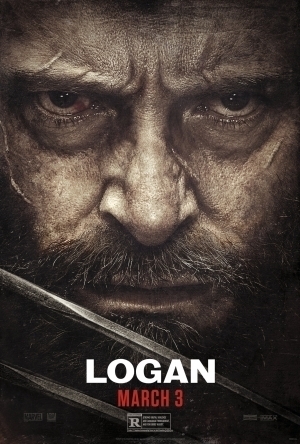
At last – a superhero movie with real heart… (and not just the chunks over the knuckle blades!). Logan is a bit of a revelation. I was reluctant to go and see it, since a) I’m a lukewarm X-Men fan at best and b) I hadn’t seen either of the previous two Wolverine spin-off films. (Seeing the other Wolverine films, by the way, is not a pre-requisite for enjoying this one). After a long day at work, my choice was “Logan” or “Kong: Skull Island”. I voted for this one, and I’m so glad I did.
It’s now 2029. Hugh Jackman plays Wolverine, but this is not a Wolverine we have seen before. This is an aged and deteriorating superhero: his self-healing powers are waning; a limp is developing; and his fighting prowess (although still legendary) doesn’t show the stamina it once did. This is a Wolverine that is also an unlikely carer, looking after a mentally degenerating Professor Xavier (Patrick Stewart), now 90 years old and finding it increasingly difficult to keep his devastating mental superpowers under control. This is a Wolverine trying desperately to avoid the limelight, working diligently as a limo-driver in an effort to save money for the dream of buying a ‘Sunseeker’ and sailing off with Xavier into the sunset, gaining true anonymity among the boating fraternity.
Life doesn’t play ball though. A brutal encounter with a gang on the highway outside El Paso advertises Wolverine’s presence and brings him into contact with a strange eleven-year-old girl (Dafne Keen) with impressive powers of her own. The girl is being pursued by a “reiver” (Boyd Holbrook, “Run all Night”) supported by a small private army. Against his will, Wolverine is forced into a memorable road trip with the old man and the young girl that leaves a trail of bloodied bodies behind them.
For, be warned, this is an *extremely* violent film, with much dismemberment and ‘blade work’ that must have kept the prosthetics department busy for months. It’s also quite emotionally brutal, particularly within a central segment set in a “Field of Dreams” style idyll (featuring Eriq La Salle from E.R.) that you know in your gut is not going to end with “Goodnight John Boy” pleasantries.
The well-choreographed and frenetic action within the road-trip segment reminded me at times of the harsh cinematography and dynamics of “Mad Max: Fury Road” – a great compliment.
But the film also takes time to pause, in uncharacteristic Marvel-ways, for character development and genuinely intelligent dialogue. These interludes allow the acting to shine, and it is first-rate. We all know (from “Les Miserables” for instance) that Hugh Jackman can act, but this is arguably his best-ever performance: a meaty role (he actually has two in the film) that affords him tremendous range and emotion. At one point towards the end of the film I thought “this has genuine Oscar show-reel potential”. He will surely never get nominated – a Marvel film? Get Away! But wouldn’t it make a refreshing change if he was? Recognizing good acting, regardless of the context.
Patrick Stewart is a great Shakespearean actor, and here he also gets given full rein to impress as he hasn’t had chance to in most of his movie roles to date.
Claiming the prize so far this year for the most unusual casting decision is Stephen Merchant as the albino helper Caliban, unrecognizable to me at first until he had some lengthy dialogue to flex his Bristol accent on! A non-comic and dramatic role, Merchant does really well with it.
Finally, I can’t leave the acting without doffing my cap to young Dafne Keen whose mesmerising feral stare would probably put the fear of God into every parent of a pre-teen girl! Even though she has only a handful of lines, this is an impressive feature film debut. I predict we will see much more of this young lady.
Less convincing to me was Richard E Grant as the evil mastermind behind the scheme, who never quite seemed nasty enough to me to be believable: in one scene he could be calling back a dog that’s run off down the beach rather than desperately trying to gain control of an out of control situation!
Directed by James Mangold (“Walk the Line”, “Knight and Day”), who co-wrote the piece with Scott Frank (“Minority Report”) and Michael Green (“Green Lantern”… yes, really!), this was a gritty and well constructed movie. If you can stomach the gore and the body count (I would see it as very lucky to have got away with its UK ’15’ certificate) this is a rollercoaster of a movie that is recommended.
By the way, to save you from sitting through the end titles (although you do get a Johnny Cash classic to enjoy) there is no “monkey” at the end of this Marvel film. (I’m no stranger to still be sitting there as the lights come up… but many of the crowd that were left looked vaguely embarrassed!)
In terms of my rating, I’m not a fanboy for Marvel or DC properties, but here I award a rating I have only previously bestowed on two superhero films before: the quirky “Ant Man” and the anarchic “Deadpool“….
It’s now 2029. Hugh Jackman plays Wolverine, but this is not a Wolverine we have seen before. This is an aged and deteriorating superhero: his self-healing powers are waning; a limp is developing; and his fighting prowess (although still legendary) doesn’t show the stamina it once did. This is a Wolverine that is also an unlikely carer, looking after a mentally degenerating Professor Xavier (Patrick Stewart), now 90 years old and finding it increasingly difficult to keep his devastating mental superpowers under control. This is a Wolverine trying desperately to avoid the limelight, working diligently as a limo-driver in an effort to save money for the dream of buying a ‘Sunseeker’ and sailing off with Xavier into the sunset, gaining true anonymity among the boating fraternity.
Life doesn’t play ball though. A brutal encounter with a gang on the highway outside El Paso advertises Wolverine’s presence and brings him into contact with a strange eleven-year-old girl (Dafne Keen) with impressive powers of her own. The girl is being pursued by a “reiver” (Boyd Holbrook, “Run all Night”) supported by a small private army. Against his will, Wolverine is forced into a memorable road trip with the old man and the young girl that leaves a trail of bloodied bodies behind them.
For, be warned, this is an *extremely* violent film, with much dismemberment and ‘blade work’ that must have kept the prosthetics department busy for months. It’s also quite emotionally brutal, particularly within a central segment set in a “Field of Dreams” style idyll (featuring Eriq La Salle from E.R.) that you know in your gut is not going to end with “Goodnight John Boy” pleasantries.
The well-choreographed and frenetic action within the road-trip segment reminded me at times of the harsh cinematography and dynamics of “Mad Max: Fury Road” – a great compliment.
But the film also takes time to pause, in uncharacteristic Marvel-ways, for character development and genuinely intelligent dialogue. These interludes allow the acting to shine, and it is first-rate. We all know (from “Les Miserables” for instance) that Hugh Jackman can act, but this is arguably his best-ever performance: a meaty role (he actually has two in the film) that affords him tremendous range and emotion. At one point towards the end of the film I thought “this has genuine Oscar show-reel potential”. He will surely never get nominated – a Marvel film? Get Away! But wouldn’t it make a refreshing change if he was? Recognizing good acting, regardless of the context.
Patrick Stewart is a great Shakespearean actor, and here he also gets given full rein to impress as he hasn’t had chance to in most of his movie roles to date.
Claiming the prize so far this year for the most unusual casting decision is Stephen Merchant as the albino helper Caliban, unrecognizable to me at first until he had some lengthy dialogue to flex his Bristol accent on! A non-comic and dramatic role, Merchant does really well with it.
Finally, I can’t leave the acting without doffing my cap to young Dafne Keen whose mesmerising feral stare would probably put the fear of God into every parent of a pre-teen girl! Even though she has only a handful of lines, this is an impressive feature film debut. I predict we will see much more of this young lady.
Less convincing to me was Richard E Grant as the evil mastermind behind the scheme, who never quite seemed nasty enough to me to be believable: in one scene he could be calling back a dog that’s run off down the beach rather than desperately trying to gain control of an out of control situation!
Directed by James Mangold (“Walk the Line”, “Knight and Day”), who co-wrote the piece with Scott Frank (“Minority Report”) and Michael Green (“Green Lantern”… yes, really!), this was a gritty and well constructed movie. If you can stomach the gore and the body count (I would see it as very lucky to have got away with its UK ’15’ certificate) this is a rollercoaster of a movie that is recommended.
By the way, to save you from sitting through the end titles (although you do get a Johnny Cash classic to enjoy) there is no “monkey” at the end of this Marvel film. (I’m no stranger to still be sitting there as the lights come up… but many of the crowd that were left looked vaguely embarrassed!)
In terms of my rating, I’m not a fanboy for Marvel or DC properties, but here I award a rating I have only previously bestowed on two superhero films before: the quirky “Ant Man” and the anarchic “Deadpool“….

Chris Sawin (602 KP) rated Lightyear (2022) in Movies
Jun 17, 2022

Visually gorgeous animation (2 more)
Sox
Designs of the insects, robots, and especially Zurg
Too much Star Wars influence (1 more)
Writing is a bit underwhelming
A Visually Gorgeous Nod to Science Fiction
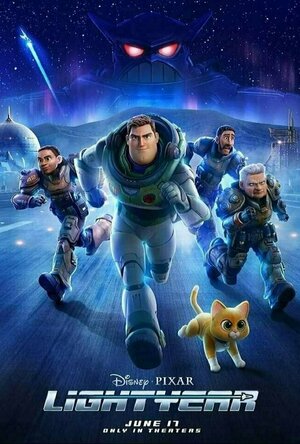
Lightyear has a simple premise that fits it into the Toy Story timeline while also giving the film the freedom to creatively do just about whatever it wants. This on-screen version of Buzz Lightyear is what inspired the toy and this film was Andy’s favorite film.
Test pilot Buzz Lightyear (now voiced by Chris Evans) wakes up from hyper sleep to research and explore a nearby planet that is off the course of his ship’s destination. The mission results in Buzz’s entire crew being marooned on a planet overrun by giant insects and bothersome vines. With guilt weighing heavily on his shoulders, Buzz takes it upon himself to be the pilot responsible for hyper speed tests.
After spending a year on the planet, there’s finally enough resources for a test flight. But the mission fails and when Buzz returns, four years have passed. Intending to finish the mission despite the consequences, Buzz pilots test flight after test flight as each mission results in years passing while he’s away. He watches his friends age and die until he finally returns to a planet that now cowers to the ominous Zurg and his battalion of relentlessly inhuman robots.
After co-directing Finding Dory and while working as an animator for Pixar since 1998’s A Bug’s Life, Lightyear is the directorial debut of Angus MacLane. Written by MacLane, Matthew Aldrich (Coco), and Jason Headley (Onward), Lightyear is receiving a lot of backlash for including a same sex relationship as well as an on-screen lesbian kiss (some countries are refusing to release the film in theaters because of it). The relationship involves another Space Ranger named Alisha Hawthorne (Uzo Aduba, Orange is the New Black, Steven Universe). Hawthorne and the life she builds on a planet she is essentially stuck on ends up being the inspiration for not only Buzz, but as well as Alisha’s granddaughter, Izzy (Keke Palmer). Even if you’re against homosexuality, Alisha’s relationship is undeniably the most sentimental aspect of the film. Lightyear wouldn’t be the same without its inclusion.
The film does some different stuff with Zurg as far as who he is and how he relates to Buzz that may or may not retcon what was established in Toy Story 2. Both the story and the writing of the film seem to play it safe as they take a predictable approach to what essentially could have been something more unique. The discussion that’s been floating around about the film is that the jokes, sillier moments, and more absurd lines of dialogue seem to always disrupt the film whenever it tries to take a step towards being a thrilling sci-fi film. It’s difficult to argue with this statement, especially since Mo Morrison’s (Taika Waititi) whole purpose in the film is to broadcast his incompetence and the film revolves around a team of misfits attempting to save the planet despite their shortcomings.
The film is visually one of the year’s best looking films; animated or otherwise. Taking inspiration from early sci-fi films and space operas like Star Wars, Angus MacLane wanted Lightyear to look, “cinematic,” and, “chunky.” If you see the film in IMAX, this is the first animated film to ever have sequences shown in the 1.43:1 aspect ratio (it’s usually 2.39:1) as visual effects supervisor Jane Yen states that a virtual IMAX camera was developed to shoot said sequences, which were then cropped to standard definition. The film is gorgeous and even looks different in comparison to other Pixar films. With its lush colors, heavy use of shadows, bright lighting for highlights, and character designs for insects and robots that seem to be directly inspired by the likes of Starship Troopers and Gundam, Lightyear is a visually delicious treat.
Angus MacLane has his love for Star Wars showcased a bit too often in Lightyear as certain sequences seem to be directly lifted from the George Lucas created franchise. Many of Zurg’s scenes are a direct homage to various Darth Vader sequences in the Star Wars films. When Buzz is carried upside down by a Zyclops as Izzy and the others try to help him free borrows heavily from The Empire Strikes Back when Luke is hanging upside down in the icy Wampa cave; Buzz is even wearing an orange and white outfit that resembles Luke’s when he pilots the X-Wing. The love for Star Wars is as much a hindrance as it is an inspiration. The film spends more time referencing its origins rather than putting more of a focus on establishing its own identity.
Sox is legitimately the most fun character of the film. He’s humorous and resourceful; a robot cat that is Buzz’s most useful tool and companion. If Disney doesn’t resurrect Teddy Ruxpin technology for a new Sox animatronic toy then it will end up being wasted potential to a soul crushing extent.
Like Toy Story 4, Lightyear is an unnecessary installment to the Toy Story franchise, but is enjoyable nevertheless. Its homage to science fiction makes the animated film feel more like a sci-fi actioner rather than an animated film the majority of the time. It has a rich and palpable atmosphere that is gorgeously animated and is filled with the laugh out loud and heartfelt moments Pixar is typically known for.
Test pilot Buzz Lightyear (now voiced by Chris Evans) wakes up from hyper sleep to research and explore a nearby planet that is off the course of his ship’s destination. The mission results in Buzz’s entire crew being marooned on a planet overrun by giant insects and bothersome vines. With guilt weighing heavily on his shoulders, Buzz takes it upon himself to be the pilot responsible for hyper speed tests.
After spending a year on the planet, there’s finally enough resources for a test flight. But the mission fails and when Buzz returns, four years have passed. Intending to finish the mission despite the consequences, Buzz pilots test flight after test flight as each mission results in years passing while he’s away. He watches his friends age and die until he finally returns to a planet that now cowers to the ominous Zurg and his battalion of relentlessly inhuman robots.
After co-directing Finding Dory and while working as an animator for Pixar since 1998’s A Bug’s Life, Lightyear is the directorial debut of Angus MacLane. Written by MacLane, Matthew Aldrich (Coco), and Jason Headley (Onward), Lightyear is receiving a lot of backlash for including a same sex relationship as well as an on-screen lesbian kiss (some countries are refusing to release the film in theaters because of it). The relationship involves another Space Ranger named Alisha Hawthorne (Uzo Aduba, Orange is the New Black, Steven Universe). Hawthorne and the life she builds on a planet she is essentially stuck on ends up being the inspiration for not only Buzz, but as well as Alisha’s granddaughter, Izzy (Keke Palmer). Even if you’re against homosexuality, Alisha’s relationship is undeniably the most sentimental aspect of the film. Lightyear wouldn’t be the same without its inclusion.
The film does some different stuff with Zurg as far as who he is and how he relates to Buzz that may or may not retcon what was established in Toy Story 2. Both the story and the writing of the film seem to play it safe as they take a predictable approach to what essentially could have been something more unique. The discussion that’s been floating around about the film is that the jokes, sillier moments, and more absurd lines of dialogue seem to always disrupt the film whenever it tries to take a step towards being a thrilling sci-fi film. It’s difficult to argue with this statement, especially since Mo Morrison’s (Taika Waititi) whole purpose in the film is to broadcast his incompetence and the film revolves around a team of misfits attempting to save the planet despite their shortcomings.
The film is visually one of the year’s best looking films; animated or otherwise. Taking inspiration from early sci-fi films and space operas like Star Wars, Angus MacLane wanted Lightyear to look, “cinematic,” and, “chunky.” If you see the film in IMAX, this is the first animated film to ever have sequences shown in the 1.43:1 aspect ratio (it’s usually 2.39:1) as visual effects supervisor Jane Yen states that a virtual IMAX camera was developed to shoot said sequences, which were then cropped to standard definition. The film is gorgeous and even looks different in comparison to other Pixar films. With its lush colors, heavy use of shadows, bright lighting for highlights, and character designs for insects and robots that seem to be directly inspired by the likes of Starship Troopers and Gundam, Lightyear is a visually delicious treat.
Angus MacLane has his love for Star Wars showcased a bit too often in Lightyear as certain sequences seem to be directly lifted from the George Lucas created franchise. Many of Zurg’s scenes are a direct homage to various Darth Vader sequences in the Star Wars films. When Buzz is carried upside down by a Zyclops as Izzy and the others try to help him free borrows heavily from The Empire Strikes Back when Luke is hanging upside down in the icy Wampa cave; Buzz is even wearing an orange and white outfit that resembles Luke’s when he pilots the X-Wing. The love for Star Wars is as much a hindrance as it is an inspiration. The film spends more time referencing its origins rather than putting more of a focus on establishing its own identity.
Sox is legitimately the most fun character of the film. He’s humorous and resourceful; a robot cat that is Buzz’s most useful tool and companion. If Disney doesn’t resurrect Teddy Ruxpin technology for a new Sox animatronic toy then it will end up being wasted potential to a soul crushing extent.
Like Toy Story 4, Lightyear is an unnecessary installment to the Toy Story franchise, but is enjoyable nevertheless. Its homage to science fiction makes the animated film feel more like a sci-fi actioner rather than an animated film the majority of the time. It has a rich and palpable atmosphere that is gorgeously animated and is filled with the laugh out loud and heartfelt moments Pixar is typically known for.
Jayme (18 KP) rated Underwater in Books
Mar 28, 2018

Plot (1 more)
Emotion
Contains spoilers, click to show
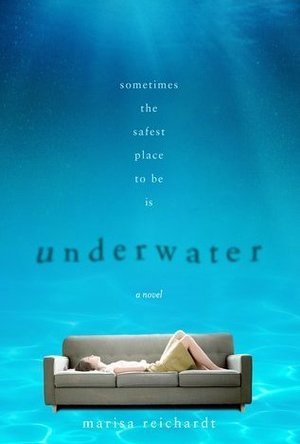
Marisa Reichardt’s debut novel Underwater is a compelling account of a teenage girl’s struggles with agoraphobia caused by a traumatic shooting taking place in her high school. The book intended for a young adult audience follows Morgan as as she tries to cope with several adversities in her life, primarily the fear of leaving her apartment. Morgan was content with wearing the same pajamas everyday while she did her schoolwork online and ate grilled cheese for lunch until a boy her age named Evan moved in next door. Evan showed up on Morgan’s door step smelling like the ocean, reminding her of summer and everything she missed outdoors. With help from Evan, her psychiatrist, her mom, and her little brother Ben, Morgan is able to finally confront her fears and take necessary steps toward recovery.
I found myself connecting to Morgan more than any other character within the book, and that connection began early on in her description of the day her younger brother was born.
"I think of Ben on the day he was born, all chubby and pink and bald. … I think of the newborn Ben next to my mom’s hospital bed and rocking him under dim lights while he slept in my arms. I fall asleep to the feeling of a love I never knew until my brother got here."
Being the youngest in my family and having no experience with anyone I knew having children, I was especially excited when my only sister got pregnant with her first child. I sat in an uncomfortable chair across the room from my sister’s hospital bed for thirteen hours while she was in labor. When she was finally ready to push, I stood at her side giving words of encouragement, and she even gave me the honor of cutting my nephew’s umbilical cord. I remember the warmth of my tears as I heard my nephew cry out, sucking in his first breaths of air. I left the hospital shortly after his delivery, allowing my sister to get some rest. I returned a few hours later and held my tiny nephew in my arms for the first time. I love plenty of people in my life, but it wasn’t until I watched my newborn nephew as he slept swaddled in the hospital-issued blanket that I fully understood the depths of the love I was capable of producing. The astonishment I felt holding my precious nephew can be compared to the feelings Morgan had toward her brother the day he was born.
What I found to be most fascinating about this book is the way the author tackles the problem of school shootings in a way that humanizes the shooter and his victims. Instead of making the shooter out to be a merciless attacker, he was demonstrated as a victim of neglect among his peers who deserves forgiveness for his mistakes. There have been one hundred and seventy-four school shootings in America since the year 2003. School shootings are a recurring issue in our society.
"Before Aaron’s Facebook was disabled, news outlets released photographs from his profile. They found the worst ones. The ones that painted the picture of a kid who was angry and alone. They interviewed neighbors who said Aaron spent weekends tinkering in the garage. His mom revealed Aaron had been in therapy since middle school. His dad revealed he kept guns in the house. For protection. From the world. Not from his son. Those were guns Aaron brought to school onOctober fifteenth. … And the only person who could give us answers, who could tell us why, was gone."
The media is quick to make the shooter out to be a monster instead of acknowledging the idea that people make drastic decisions, like one of shooting up a school, because they have no one to turn to.
Other personal accounts of shootings have been written, but there is nothing like this fictional demonstration of the aftereffects of such occurrences. Misty Bernell, the mother of a student killed in the Columbine High School shooting taking place in 1999, wrote the book She Said Yes: The Unlikely Martydom of Cassie Bernall as a way of commemorating her daughter and spreading awareness of the lives lost in the tragic massacre. Reichardt manages to establish a point of view that allows readers to show empathy toward a victim in the shooting the same way Bernell does without downplaying the internal struggles Aaron, the shooter in the novel, may have been experiencing.
The successful manner in which Reichardt explores a real-time societal issue from a unique perspective provides enough grounds for me to recommend the book. However, I was also able to find many characteristics that made me feel invested in the well-being of the each of the characters within the novel. Morgan works especially hard to go outside in order to see her brother perform in his kindergarten play, the psychiatrist meets with Morgan for free because the psychiatrist wanted Morgan to know she was being heard, Evan offering his old prepaid cell phone to Morgan so they could send text messages to communicate the problems Morgan was too afraid to talk about out loud, and the way Morgan’s mother compromises with Morgan and attempts to understand her feelings. Each character demonstrates selflessness and unconditional love while maneuvering through a situation where love and support are crucial to the mental health of everyone involved. Reading about people who truly care about each other and work to build each other up in a difficult time instead of worrying only of themselves is refreshing.
I found myself connecting to Morgan more than any other character within the book, and that connection began early on in her description of the day her younger brother was born.
"I think of Ben on the day he was born, all chubby and pink and bald. … I think of the newborn Ben next to my mom’s hospital bed and rocking him under dim lights while he slept in my arms. I fall asleep to the feeling of a love I never knew until my brother got here."
Being the youngest in my family and having no experience with anyone I knew having children, I was especially excited when my only sister got pregnant with her first child. I sat in an uncomfortable chair across the room from my sister’s hospital bed for thirteen hours while she was in labor. When she was finally ready to push, I stood at her side giving words of encouragement, and she even gave me the honor of cutting my nephew’s umbilical cord. I remember the warmth of my tears as I heard my nephew cry out, sucking in his first breaths of air. I left the hospital shortly after his delivery, allowing my sister to get some rest. I returned a few hours later and held my tiny nephew in my arms for the first time. I love plenty of people in my life, but it wasn’t until I watched my newborn nephew as he slept swaddled in the hospital-issued blanket that I fully understood the depths of the love I was capable of producing. The astonishment I felt holding my precious nephew can be compared to the feelings Morgan had toward her brother the day he was born.
What I found to be most fascinating about this book is the way the author tackles the problem of school shootings in a way that humanizes the shooter and his victims. Instead of making the shooter out to be a merciless attacker, he was demonstrated as a victim of neglect among his peers who deserves forgiveness for his mistakes. There have been one hundred and seventy-four school shootings in America since the year 2003. School shootings are a recurring issue in our society.
"Before Aaron’s Facebook was disabled, news outlets released photographs from his profile. They found the worst ones. The ones that painted the picture of a kid who was angry and alone. They interviewed neighbors who said Aaron spent weekends tinkering in the garage. His mom revealed Aaron had been in therapy since middle school. His dad revealed he kept guns in the house. For protection. From the world. Not from his son. Those were guns Aaron brought to school onOctober fifteenth. … And the only person who could give us answers, who could tell us why, was gone."
The media is quick to make the shooter out to be a monster instead of acknowledging the idea that people make drastic decisions, like one of shooting up a school, because they have no one to turn to.
Other personal accounts of shootings have been written, but there is nothing like this fictional demonstration of the aftereffects of such occurrences. Misty Bernell, the mother of a student killed in the Columbine High School shooting taking place in 1999, wrote the book She Said Yes: The Unlikely Martydom of Cassie Bernall as a way of commemorating her daughter and spreading awareness of the lives lost in the tragic massacre. Reichardt manages to establish a point of view that allows readers to show empathy toward a victim in the shooting the same way Bernell does without downplaying the internal struggles Aaron, the shooter in the novel, may have been experiencing.
The successful manner in which Reichardt explores a real-time societal issue from a unique perspective provides enough grounds for me to recommend the book. However, I was also able to find many characteristics that made me feel invested in the well-being of the each of the characters within the novel. Morgan works especially hard to go outside in order to see her brother perform in his kindergarten play, the psychiatrist meets with Morgan for free because the psychiatrist wanted Morgan to know she was being heard, Evan offering his old prepaid cell phone to Morgan so they could send text messages to communicate the problems Morgan was too afraid to talk about out loud, and the way Morgan’s mother compromises with Morgan and attempts to understand her feelings. Each character demonstrates selflessness and unconditional love while maneuvering through a situation where love and support are crucial to the mental health of everyone involved. Reading about people who truly care about each other and work to build each other up in a difficult time instead of worrying only of themselves is refreshing.

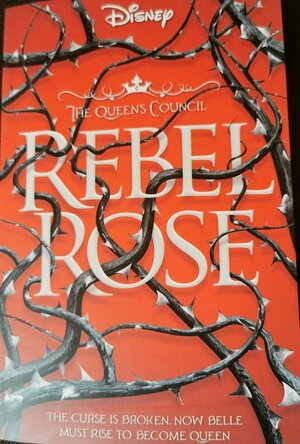
Lottie disney bookworm (1056 KP) rated Rebel Rose (The Queen's Council #1) in Books
Dec 29, 2020
Contains spoilers, click to show
Set against the backdrop of revolutionary France, ‘Rebel Rose’ continues the story of Beauty and the Beast after the curse is broken. Belle and her Prince now have to find a way to navigate married life, rank, politics and explain a 10-year absence from the French Court of Versailles.
Controversially, Emma Theriault baits the hardcore Disney fans straight out of the gates by naming her Prince Lio (Lio, Lion, beast, gettit?) rather than Adam. In the grand scheme of things this can easily be forgiven but it still seems a strange choice. Maybe Adam was too English for a French Prince?
However, the use of first person perspective ensures that our protagonist remains firmly in Belle. Belle has refused the title of Princess upon marriage in order to stay true to her roots but is constantly hiding her true self: even referring to a trip around Europe as “one last adventure before the walls of the castle close around her”. When Belle witnesses the revolutionary sparks within the city this divides her further: how can she be part of the nobility these people rally against and an avid “commoner” at the same time?
In truth, Belle as a character divided me as well. Belle has always been my favourite Disney Princess (possibly to do with that massive library) and, in the most part, I feel Theriault wrote her well and stayed true to the character. However, in the early pages Belle felt very spoilt and selfish to me: preferring to disguise herself and explore Paris rather than support Lio in explaining his decade-long disappearing act to King Louis.
I was intrigued to know what my fellow reviewers thought and was unsurprised to see a LOT of criticism of our heroine, her shunning of the title of Princess and her lack of enthusiasm to be a leader. However, I almost felt that this made the story more realistic. Just because she broke a curse and married a Prince doesn’t mean she can automatically feel ready and comfortable leading a kingdom! Maybe she just has a fondness for hairy men?
Belle’s reluctance and tentativeness to lead also fed very nicely into her passion to improve the lives of the residents of the kingdom of Aveyon. This is common sense to her and therefore doesn’t feel like ruling. Indeed, it is not seen by any of the main characters as ruling but in the end it saves them all from a revolution of their own.
I would have liked Lio to be a little bit more developed than he was. The fact that he harboured an element of PTSD from the curse was really interesting but not explored any further than his nightmares and aversion towards roses. There was undoubtedly chemistry between him and Belle but it was just a bit lacklustre in my opinion. This may be due to his absence for a lot of the book but I felt the reader could have loved him a lot more than we did.
Lio’s cousin Bastien is the slimy villain of the tale and I would have liked a bit more mystery and suspense within his character. I appreciated that Belle didn’t like him initially as he was a powdered, wig wearing noble who was close to King Louis, basically as far away from Belle as possible. Bastien is also quite snobby towards Belle in his earliest chapters so you can’t blame her for disliking him.
However, by using language to plainly show that Belle distrusts her husband’s cousin, Theriault instantly creates a flashing neon “villain” sign above his head. This would have been fine in a middle-grade book but within YA I think the reader could have been afforded to be misled a couple of times before uncovering Bastien’s real intentions.
**This section contains spoilers**
I also believe that Bastien’s eventual story arc was a tad unbelievable. At first I thought his revolutionary sympathies and further plots with various goons was a ruse in order to gain the throne for himself, particularly once he had established himself firmly with the advisory. Emma Theriault’s decision to keep Bastien true to the revolution seemed rushed, and a bit odd to be honest. This is a noble who lives in the lap of luxury and attends to King Louis himself but who then turns on his own kind after basically forcing the kingdom of Aveyon to break away from France? It didn’t seem plausible to me.
Rebel Rose is an easy to read continuation of one of our favourite Disney tales. It reintroduces us to old favourites such as Mrs Potts and Lumiere as well as introducing new characters such as Marguerite and Bastien. Belle’s journey to staying true to herself and following her gut is one anyone can empathise with and her discovery that she does not have to appease to outsider’s expectations will never cease to be important.
The magic contained within this novel is a perfect springboard for the rest of the novels within the Queen’s Council series: the next one is based on Mulan and will be written by Livia Blackburne before Jasmine’s story by Alexandra Monir follows in 2022. The majority of the action within this novel does take place towards the end so it can be a little slow paced and politics focused but I enjoyed seeing Belle and Lio break free of their fairytale life and become a little more real.
Although this isn’t my favourite Disney novel, I do appreciate the break away from the retelling genre and the move towards bringing these well-known characters into the real world. For a debut novel I think Emma Theriault should be immensely proud: the research for the historical context alone must have been a mission!
Controversially, Emma Theriault baits the hardcore Disney fans straight out of the gates by naming her Prince Lio (Lio, Lion, beast, gettit?) rather than Adam. In the grand scheme of things this can easily be forgiven but it still seems a strange choice. Maybe Adam was too English for a French Prince?
However, the use of first person perspective ensures that our protagonist remains firmly in Belle. Belle has refused the title of Princess upon marriage in order to stay true to her roots but is constantly hiding her true self: even referring to a trip around Europe as “one last adventure before the walls of the castle close around her”. When Belle witnesses the revolutionary sparks within the city this divides her further: how can she be part of the nobility these people rally against and an avid “commoner” at the same time?
In truth, Belle as a character divided me as well. Belle has always been my favourite Disney Princess (possibly to do with that massive library) and, in the most part, I feel Theriault wrote her well and stayed true to the character. However, in the early pages Belle felt very spoilt and selfish to me: preferring to disguise herself and explore Paris rather than support Lio in explaining his decade-long disappearing act to King Louis.
I was intrigued to know what my fellow reviewers thought and was unsurprised to see a LOT of criticism of our heroine, her shunning of the title of Princess and her lack of enthusiasm to be a leader. However, I almost felt that this made the story more realistic. Just because she broke a curse and married a Prince doesn’t mean she can automatically feel ready and comfortable leading a kingdom! Maybe she just has a fondness for hairy men?
Belle’s reluctance and tentativeness to lead also fed very nicely into her passion to improve the lives of the residents of the kingdom of Aveyon. This is common sense to her and therefore doesn’t feel like ruling. Indeed, it is not seen by any of the main characters as ruling but in the end it saves them all from a revolution of their own.
I would have liked Lio to be a little bit more developed than he was. The fact that he harboured an element of PTSD from the curse was really interesting but not explored any further than his nightmares and aversion towards roses. There was undoubtedly chemistry between him and Belle but it was just a bit lacklustre in my opinion. This may be due to his absence for a lot of the book but I felt the reader could have loved him a lot more than we did.
Lio’s cousin Bastien is the slimy villain of the tale and I would have liked a bit more mystery and suspense within his character. I appreciated that Belle didn’t like him initially as he was a powdered, wig wearing noble who was close to King Louis, basically as far away from Belle as possible. Bastien is also quite snobby towards Belle in his earliest chapters so you can’t blame her for disliking him.
However, by using language to plainly show that Belle distrusts her husband’s cousin, Theriault instantly creates a flashing neon “villain” sign above his head. This would have been fine in a middle-grade book but within YA I think the reader could have been afforded to be misled a couple of times before uncovering Bastien’s real intentions.
**This section contains spoilers**
I also believe that Bastien’s eventual story arc was a tad unbelievable. At first I thought his revolutionary sympathies and further plots with various goons was a ruse in order to gain the throne for himself, particularly once he had established himself firmly with the advisory. Emma Theriault’s decision to keep Bastien true to the revolution seemed rushed, and a bit odd to be honest. This is a noble who lives in the lap of luxury and attends to King Louis himself but who then turns on his own kind after basically forcing the kingdom of Aveyon to break away from France? It didn’t seem plausible to me.
Rebel Rose is an easy to read continuation of one of our favourite Disney tales. It reintroduces us to old favourites such as Mrs Potts and Lumiere as well as introducing new characters such as Marguerite and Bastien. Belle’s journey to staying true to herself and following her gut is one anyone can empathise with and her discovery that she does not have to appease to outsider’s expectations will never cease to be important.
The magic contained within this novel is a perfect springboard for the rest of the novels within the Queen’s Council series: the next one is based on Mulan and will be written by Livia Blackburne before Jasmine’s story by Alexandra Monir follows in 2022. The majority of the action within this novel does take place towards the end so it can be a little slow paced and politics focused but I enjoyed seeing Belle and Lio break free of their fairytale life and become a little more real.
Although this isn’t my favourite Disney novel, I do appreciate the break away from the retelling genre and the move towards bringing these well-known characters into the real world. For a debut novel I think Emma Theriault should be immensely proud: the research for the historical context alone must have been a mission!
Kirk Bage (1775 KP) rated Midsommar (2019) in Movies
Jan 22, 2021
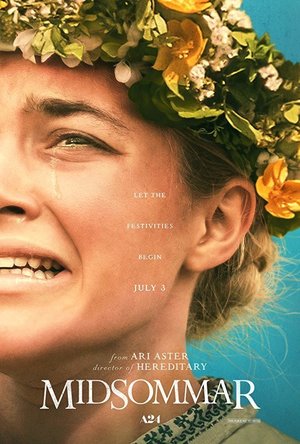

In 2017 the stale market of “horror” thrillers got a royal shake-up when Jordan Peele made Get Out. All of a sudden it seemed possible again to use the tired genre, that had been relying on gore and jump shocks alone for at least two decades, as a palette for intelligent social commentary and some seriously artistic flourishes. The following year, Ari Aster came out of nowhere with a debut feature that impressed everyone for it’s originality and bravado in this new “art-horror” model – the devisive yet always interesting Hereditary, a film that confused me on first watch, but gave me faith that I could be unnerved again, it’s secret being that you couldn’t compare it to anything since the golden days of the 70s.
So, when I saw the trailer for Midsommar in 2019 and realised it was the same director, it went straight to the top of my must see list. Add to the appeal the significant lure of the lead actress and main character, the extremely promising Florence Pugh, who blew me away for her raw ability in Lady Macbeth, and beguiled me even more in every minute of Chan-Wook Park’s superlative espionage mini-series The Little Drummer Girl, and I knew this was something I didn’t want to miss. Sometimes it only takes two projects on a CV to elevate a future star from obscurity to A-list potential. In Pugh I had already seen enough range, charisma and depth to suspect she was one of those special few. By the end of Midsommar I was convinced of it!
Plot wise, all you need to know going in cold is that Dani (Pugh) racked with grief following early scenes is dragged to Sweden to participate in the Midsommar celebrations of a small isolated community, as her relationship with boyfriend Christian is very much on the rocks and she is in need of some catharsis and release. At first the Idyllic setting, bathed in sunlight you can almost feel, seems refreshing and clean. The whites, yellows and blues of the images are so crisp you can imagine every smell and texture, and you find yourself smiling, despite the fact a creeping unease and sinister secret is already infiltrating the calm in wonderfully subtle ways.
Needless to say it goes to some very dark and strange places. So much so I gasped out loud twice and stood up from my seat involuntarily on one particularly disturbing moment. To try and explain how that unfolds and comes to be is both impossible and would need some big time spoilers, so I won’t do that. It’s enough to say that where you are emotionally at the end of this filmic experience is very, very far from where you started. Much in the same way as Hereditary, you feel you have been dragged by the hair on a very uncomfortable journey that is both strangely unsatisfying, confusing and upsetting; you can’t say you “liked” either film as much as admitting you can’t stop thinking about them and need to see them again to absorb the detail, if indeed you can bear that.
As of writing this I haven’t gone back and watched this again – I’m genuinely wary of putting myself through it a second time! But, I have gone back to Hereditary and appreciated it much more knowing the ending already, and seeing the detail that is there from the beginning, that makes it all make sense in a way it doesn’t first time around. Midsommar, I sense, is the same, in that there has been so much attention to the build up and background that you will see and hear relevant clues to the mystery much more the more times you watch it. What they are wearing, images on walls and seemingly insignificant things the camera picks up on create a tapestry of loose threads that can be woven together into deeper meaning if that is what you want to do.
Without doing that it may seem like a bewildering entity, deliberately odd for the sake of it, and as such it could put anyone off. At 2 hours and 28 minutes it is a bit of a stretch, and the last half hour, once it descends into the complete madness suggested earlier, perhaps doesn’t live up to the promises it makes. Also, despite Pugh being a mesmeric presence from start to finish, the supporting cast can’t quite go with her on the same level. Even the talented Will Poulter seems burdened by a less than three dimensional character, underwritten as are many in a script that focuses so much on Dani that everything else suffers.
My overall impression of it as a film is that it falls short of greatness by a narrow margin, but comes very close at times to genuine genius. It is the promise of Aster as a filmmaker that excites me most, even if this is not the film it could have been with a little more experience, maturity and, perhaps, budget. It is his Bottle Rocket, or Hard Eight, when you suspect he will have a Grand Budapest Hotel, or a There Will Be Blood in him at some point down the line.
In conclusion, I can’t emphasise enough how much I was drawn to every moment of what Florence Pugh was doing. Be wary of the film if a casual viewing experience is what you want, because it may infuriate you, and compel you even to switch it off, if you are not totally ready to meet it where it wants to take you. But, watch it for Pugh and see what a rare talent she is bringing to cinema into the 2020s. A very exciting prospect indeed.
So, when I saw the trailer for Midsommar in 2019 and realised it was the same director, it went straight to the top of my must see list. Add to the appeal the significant lure of the lead actress and main character, the extremely promising Florence Pugh, who blew me away for her raw ability in Lady Macbeth, and beguiled me even more in every minute of Chan-Wook Park’s superlative espionage mini-series The Little Drummer Girl, and I knew this was something I didn’t want to miss. Sometimes it only takes two projects on a CV to elevate a future star from obscurity to A-list potential. In Pugh I had already seen enough range, charisma and depth to suspect she was one of those special few. By the end of Midsommar I was convinced of it!
Plot wise, all you need to know going in cold is that Dani (Pugh) racked with grief following early scenes is dragged to Sweden to participate in the Midsommar celebrations of a small isolated community, as her relationship with boyfriend Christian is very much on the rocks and she is in need of some catharsis and release. At first the Idyllic setting, bathed in sunlight you can almost feel, seems refreshing and clean. The whites, yellows and blues of the images are so crisp you can imagine every smell and texture, and you find yourself smiling, despite the fact a creeping unease and sinister secret is already infiltrating the calm in wonderfully subtle ways.
Needless to say it goes to some very dark and strange places. So much so I gasped out loud twice and stood up from my seat involuntarily on one particularly disturbing moment. To try and explain how that unfolds and comes to be is both impossible and would need some big time spoilers, so I won’t do that. It’s enough to say that where you are emotionally at the end of this filmic experience is very, very far from where you started. Much in the same way as Hereditary, you feel you have been dragged by the hair on a very uncomfortable journey that is both strangely unsatisfying, confusing and upsetting; you can’t say you “liked” either film as much as admitting you can’t stop thinking about them and need to see them again to absorb the detail, if indeed you can bear that.
As of writing this I haven’t gone back and watched this again – I’m genuinely wary of putting myself through it a second time! But, I have gone back to Hereditary and appreciated it much more knowing the ending already, and seeing the detail that is there from the beginning, that makes it all make sense in a way it doesn’t first time around. Midsommar, I sense, is the same, in that there has been so much attention to the build up and background that you will see and hear relevant clues to the mystery much more the more times you watch it. What they are wearing, images on walls and seemingly insignificant things the camera picks up on create a tapestry of loose threads that can be woven together into deeper meaning if that is what you want to do.
Without doing that it may seem like a bewildering entity, deliberately odd for the sake of it, and as such it could put anyone off. At 2 hours and 28 minutes it is a bit of a stretch, and the last half hour, once it descends into the complete madness suggested earlier, perhaps doesn’t live up to the promises it makes. Also, despite Pugh being a mesmeric presence from start to finish, the supporting cast can’t quite go with her on the same level. Even the talented Will Poulter seems burdened by a less than three dimensional character, underwritten as are many in a script that focuses so much on Dani that everything else suffers.
My overall impression of it as a film is that it falls short of greatness by a narrow margin, but comes very close at times to genuine genius. It is the promise of Aster as a filmmaker that excites me most, even if this is not the film it could have been with a little more experience, maturity and, perhaps, budget. It is his Bottle Rocket, or Hard Eight, when you suspect he will have a Grand Budapest Hotel, or a There Will Be Blood in him at some point down the line.
In conclusion, I can’t emphasise enough how much I was drawn to every moment of what Florence Pugh was doing. Be wary of the film if a casual viewing experience is what you want, because it may infuriate you, and compel you even to switch it off, if you are not totally ready to meet it where it wants to take you. But, watch it for Pugh and see what a rare talent she is bringing to cinema into the 2020s. A very exciting prospect indeed.
Bob Mann (459 KP) rated Solo: A Star Wars Story (2018) in Movies
Sep 29, 2021

Solo? So-so.
When the whole Disney “broaden out the Star Wars universe” thing was first mooted I was NOT enthusiastic about the prospect. Then, in Christmas 2016 “Rogue One” burst onto our screens as a breath of fresh air, and I thought “OK, I can be wrong!”. But even jolted by that pleasant surprise, I always thought that the second proposed diversion off the main hyperspace highway into “Radiator Springs” – a Han Solo back-story flick – might fall short. It just didn’t float my boat.
Add into that proposition the decision to give the film initially to “The Lego Movie” directors Phil Lord and Christopher Miller (why Disney? why?); them trying to forge it as a ‘comedy’; them falling horribly short and being fired by Disney; Disney bringing Ron Howard (“Inferno“, “Rush“) in to try to salvage the project; and Howard reportedly re-shooting 75% of the film and you have the makings of a turkey of galactic proportions.
With all that being said, I was surprised I enjoyed it as much as I did. But that’s off a very low base of expectation.
As you might guess, we go back to see Han… just Han… as a delinquent youth trying to keep his head above water under the thrall of the Fagin-like Lady Proxima (who – no pun intended – keeps her head under the water for most of the time). He is desperate to pull off a con that’s lucrative enough that it will get him and his girlfriend Qi’ra (Emilia Clarke, “Me Before You“; “Terminator: Genisys“; “Game of Thrones”) off-planet and into a free life. Things don’t go to plan though and Han – now Han Solo – finds himself a trooper of the Galactic Empire. He links up with fellow rogues Beckett (Woody Harrelson, “War for the Planet of the Apes“; “Three Billboards in Ebbing, Missouri“), Val (Thandie Newton, “Westworld”, “2012”), Rio (voiced by Jon Favreau, “Spider-Man: Homecoming“; “Iron Man Three“) and their assertive and rebellious droid L3-37 (voiced by Phoebe Waller-Bridge) in a get-rich-or-die mission for vicious gang-boss Dryden Vos (Paul Bettany, “Avengers: Infinity War“).
The film has its moments for sure:
There are some nice background touches: an army recruitment video plays to the sound of John William’s empire march (played I am assured by my more musical wife in a major key to sound more uplifting and positive!);
Han’s first meeting with that famous walking carpet (played by Joonas Suotamo) is memorable, as is the introduction to that “card player, gambler and scoundrel” Lando Calrissian (Donald Glover, “The Martian“, “Spider-Man: Homecoming“): all flamboyance, self-regard and well-dressed ego;
solo2
Never count your money while you’re sitting at the table. Lando Calrissian played by Donald Glover putting his ship (you probably haven’t heard of it) on the line. (Source: Lucasfilm).
the character of L3-37 is an excellent addition to the saga, forcefully demanding equality for droids: I would have liked to have seen much more of her;
there is a nice twist on the Greedo/Han “who shot first” debate;
production design and special effects are up to standard for a Star Wars film, and I enjoyed John Powell’s score, incorporating a new ‘young Han’ theme from John Williams himself;
and Erin Kellyman (in here movie debut) is just breathtaking and strikingly brilliant as the be-freckled renegade Enfys Nest.
But overall it’s all a bit disjointed and jumbled, probably as befits its growing pains. We are introduced to Solo within five seconds of the film’s opening….. BAM! No exquisite ‘reveal’ as we saw with River Phoenix in “Indiana Jones and the Last Crusade”. I found this disconcerting and it took me ten minutes to get into the film as a result.
When it gets going it rather tries too hard to join up more Star Wars dots than it needs to. “Rogue One” did that exceedingly well, but that was because it needed to as ‘Episode 3.5’. Here there are visual and verbal references everywhere as the screenwriters (Lawrence and Jonathan Kasdan) desperately try to knit their story into the canon. As an example, the action moves to the mines of Kessel at one point. Kessel? Kessel? Wasn’t that a throwaway C3PO line from the “A New Hope” about being “smashed to who knows what” in said mines?. So obviously, in the WHOLE GALAXY that’s where the story leads us, with the local lingo for the hyperspace fuel McGuffin at the heart of the plot being “spice”! It’s all a bit too trite for my liking.
And while a key protagonist appearing near the end of the film (no spoilers) is both a startling surprise and great fun, don’t get me started on the timeline implications…. (see the spoiler section below the trailer for more).
Alden Ehrenreich, who was just brilliant in “Hail Caesar” (“Was that it t’WERRRE so simple“) for me barely makes it past bland in the lead role. One of the defining characteristics of Harrison Ford’s Solo was his swagger and bravado and unfortunately Ehrenreich barely rates a three out of ten on the scale. I also found the chemistry with Emelia Clarke to be lukewarm. Clarke still seems to be struggling to make a significant breakthrough to the big screen…. “Me Before You” still seems to be her high water mark so far. Here she has a key and complex role, but comes over as just plain unconvincing and “meh”.
Ron Howard has clearly done a good job in buffing up a poisoned chalice so it can at least share space on the Star Wars shelf without being laughed out of the Cantina. Perhaps with a more coordinated and thought-through run-up to a Solo sequel (more Enfys Nest please!) this offshoot might have legs.
Add into that proposition the decision to give the film initially to “The Lego Movie” directors Phil Lord and Christopher Miller (why Disney? why?); them trying to forge it as a ‘comedy’; them falling horribly short and being fired by Disney; Disney bringing Ron Howard (“Inferno“, “Rush“) in to try to salvage the project; and Howard reportedly re-shooting 75% of the film and you have the makings of a turkey of galactic proportions.
With all that being said, I was surprised I enjoyed it as much as I did. But that’s off a very low base of expectation.
As you might guess, we go back to see Han… just Han… as a delinquent youth trying to keep his head above water under the thrall of the Fagin-like Lady Proxima (who – no pun intended – keeps her head under the water for most of the time). He is desperate to pull off a con that’s lucrative enough that it will get him and his girlfriend Qi’ra (Emilia Clarke, “Me Before You“; “Terminator: Genisys“; “Game of Thrones”) off-planet and into a free life. Things don’t go to plan though and Han – now Han Solo – finds himself a trooper of the Galactic Empire. He links up with fellow rogues Beckett (Woody Harrelson, “War for the Planet of the Apes“; “Three Billboards in Ebbing, Missouri“), Val (Thandie Newton, “Westworld”, “2012”), Rio (voiced by Jon Favreau, “Spider-Man: Homecoming“; “Iron Man Three“) and their assertive and rebellious droid L3-37 (voiced by Phoebe Waller-Bridge) in a get-rich-or-die mission for vicious gang-boss Dryden Vos (Paul Bettany, “Avengers: Infinity War“).
The film has its moments for sure:
There are some nice background touches: an army recruitment video plays to the sound of John William’s empire march (played I am assured by my more musical wife in a major key to sound more uplifting and positive!);
Han’s first meeting with that famous walking carpet (played by Joonas Suotamo) is memorable, as is the introduction to that “card player, gambler and scoundrel” Lando Calrissian (Donald Glover, “The Martian“, “Spider-Man: Homecoming“): all flamboyance, self-regard and well-dressed ego;
solo2
Never count your money while you’re sitting at the table. Lando Calrissian played by Donald Glover putting his ship (you probably haven’t heard of it) on the line. (Source: Lucasfilm).
the character of L3-37 is an excellent addition to the saga, forcefully demanding equality for droids: I would have liked to have seen much more of her;
there is a nice twist on the Greedo/Han “who shot first” debate;
production design and special effects are up to standard for a Star Wars film, and I enjoyed John Powell’s score, incorporating a new ‘young Han’ theme from John Williams himself;
and Erin Kellyman (in here movie debut) is just breathtaking and strikingly brilliant as the be-freckled renegade Enfys Nest.
But overall it’s all a bit disjointed and jumbled, probably as befits its growing pains. We are introduced to Solo within five seconds of the film’s opening….. BAM! No exquisite ‘reveal’ as we saw with River Phoenix in “Indiana Jones and the Last Crusade”. I found this disconcerting and it took me ten minutes to get into the film as a result.
When it gets going it rather tries too hard to join up more Star Wars dots than it needs to. “Rogue One” did that exceedingly well, but that was because it needed to as ‘Episode 3.5’. Here there are visual and verbal references everywhere as the screenwriters (Lawrence and Jonathan Kasdan) desperately try to knit their story into the canon. As an example, the action moves to the mines of Kessel at one point. Kessel? Kessel? Wasn’t that a throwaway C3PO line from the “A New Hope” about being “smashed to who knows what” in said mines?. So obviously, in the WHOLE GALAXY that’s where the story leads us, with the local lingo for the hyperspace fuel McGuffin at the heart of the plot being “spice”! It’s all a bit too trite for my liking.
And while a key protagonist appearing near the end of the film (no spoilers) is both a startling surprise and great fun, don’t get me started on the timeline implications…. (see the spoiler section below the trailer for more).
Alden Ehrenreich, who was just brilliant in “Hail Caesar” (“Was that it t’WERRRE so simple“) for me barely makes it past bland in the lead role. One of the defining characteristics of Harrison Ford’s Solo was his swagger and bravado and unfortunately Ehrenreich barely rates a three out of ten on the scale. I also found the chemistry with Emelia Clarke to be lukewarm. Clarke still seems to be struggling to make a significant breakthrough to the big screen…. “Me Before You” still seems to be her high water mark so far. Here she has a key and complex role, but comes over as just plain unconvincing and “meh”.
Ron Howard has clearly done a good job in buffing up a poisoned chalice so it can at least share space on the Star Wars shelf without being laughed out of the Cantina. Perhaps with a more coordinated and thought-through run-up to a Solo sequel (more Enfys Nest please!) this offshoot might have legs.

Gareth von Kallenbach (980 KP) rated Klang in Video Games
Jun 19, 2019
Klang is a Rhythm/Platformer game and it’s the debut of the developer studio called Tinimations. The environments, visuals, story and gameplay aspects were done by one person named Tom-Ivar Arntzen while the music was done by the EDM composer bLiNd.
The Story:
The premise here is very simple. You assume the role of a tuneblade-wielding elite rave warrior called Klang who wants to free himself from the shackles of a Zeus-like figure named Soundlord Sonus. And so the game begins. There is barely any Story here and it isn’t the focus of the game and it doesn’t contribute to the game whatsoever and if the story is removed entirely, you will barely notice any difference. So if you are the type who plays a game for the story in it or a game that is accompanied by a good premise, then this game isn’t for you. The game focuses mostly on its gameplay aspects.
The Visuals:
The visuals of the game look very beautiful with its Tron-inspired aesthetics. Klang’s design is colorful and stylish. The environment looked gorgeous with all the vibrant neon colors popping out on the screen while you’re playing but on rare occasions, they can be distracting and a bit too much when there are so many things happening at once.
The Sound:
This is one of those games that are worth buying a quality headset or a subwoofer for because the sound design is excellent and the composer bLiNd did a marvelous job with it. Listening to the music with a normal headset or your TV’s sound system doesn’t do it justice. And the way the music and the beat sync with what’s on screen are perfect. The soundtrack is most definitely the best aspect of the game.
The gameplay:
The game mechanics tries to blend rhythm game mechanics and platform game mechanics into one game. That means instead of only pressing buttons that appears on the screen like you normally do in Rhythm games, you also have to traverse the levels by jumping and sliding while pressing the buttons in order to get through the stage.
The controls are fairly simple. Like most 2D games, you use the left thumbstick to move the character left and right and you use the Right thumbstick in one of the eight directions when the icon that looks like a slice of Pizza appears on the screen in one of those eight directions to deflect the incoming attacks. And you use LT to jump and RT to slide throughout the levels.
While blending those game mechanics works very well on most stages, they can also be overwhelming and frustrating at times. For instance, there is a place where you have to dodge lasers by jumping between 5 platforms that falls when the lasers make contact with them (They come back up after a few seconds) so you will have to jump left and right fast and all that combined with rhythm gameplay. It gets very confusing because there are so many things happening at once on the screen and you don’t know whether you should focus on deflecting the attacks or focus on the lasers. One mistake and you are dead so that made it a bit frustrating and annoying instead of challenging. There is a thin line between a game that put your skills to the test and a game that simply frustrates you to cover its flaws.
Unfortunately, I felt like this is the latter because the game itself is very short and if I hadn’t died in the game over 300 times, it would have lasted me an hour. So I felt like the difficulty spike was there just to mask the game’s short length which brings me to the final point in the review.
Difficulty, Length and Replay Value:
The game has three difficulty levels. Easy, Normal and Nightcore Mode. The higher the difficulty, the higher rank you can achieve when you finish a stage. On Easy mode, B Rank is the max possible rank, Normal mode, S Rank is the max possible rank and on Nightcore Mode, SSS Rank is the max possible rank. Also the higher the difficulty, the faster the game music sounds, and the faster the button prompts on screen moves
I started the game on Normal mode it took me 3 hours and 311 deaths to finish. Once you finish the game for the first time, you unlock the hardest mode in the game which is called NightCore mode where everything moves so fast and that includes the music.
In terms of Replay Value, there isn’t much to do after you finish all the stages except for collecting Pirate Tokens which are the in-game collectables that allow you to unlock the game’s Soundtrack in a special level where you can hear them without replaying the other levels just to hear that awesome track.
And you can also replay the game on Nightcore mode if you want to get the highest rank possible in the game. And if you are the Achievement Hunter type then you will find that getting all the achievements will be very time consuming. For instance, there is an achievement that requires you not to die even once throughout the whole game and that is excruciatingly difficult. So, if you are a completionist, then the game will last you for quite a while.
But if you are not, then you won’t find much to do here after you finish its short story mode because it doesn’t have much to offer after that.
Conclusion:
Klang is a great game but its short amount of content and sometimes overwhelmingly difficult levels can put you off. So for that, I give Klang 4/5. Great concept but if the gameplay was more fun and rewarding, and it had more content and unlockables, it would have been a superb game. And I give the developer Tom-Ivar Arntzen SSS for effort and for trying to innovate and do something new with the genre and I am definitely interested to see what he is going to do next.
http://sknr.net/2016/09/23/klang/
The Story:
The premise here is very simple. You assume the role of a tuneblade-wielding elite rave warrior called Klang who wants to free himself from the shackles of a Zeus-like figure named Soundlord Sonus. And so the game begins. There is barely any Story here and it isn’t the focus of the game and it doesn’t contribute to the game whatsoever and if the story is removed entirely, you will barely notice any difference. So if you are the type who plays a game for the story in it or a game that is accompanied by a good premise, then this game isn’t for you. The game focuses mostly on its gameplay aspects.
The Visuals:
The visuals of the game look very beautiful with its Tron-inspired aesthetics. Klang’s design is colorful and stylish. The environment looked gorgeous with all the vibrant neon colors popping out on the screen while you’re playing but on rare occasions, they can be distracting and a bit too much when there are so many things happening at once.
The Sound:
This is one of those games that are worth buying a quality headset or a subwoofer for because the sound design is excellent and the composer bLiNd did a marvelous job with it. Listening to the music with a normal headset or your TV’s sound system doesn’t do it justice. And the way the music and the beat sync with what’s on screen are perfect. The soundtrack is most definitely the best aspect of the game.
The gameplay:
The game mechanics tries to blend rhythm game mechanics and platform game mechanics into one game. That means instead of only pressing buttons that appears on the screen like you normally do in Rhythm games, you also have to traverse the levels by jumping and sliding while pressing the buttons in order to get through the stage.
The controls are fairly simple. Like most 2D games, you use the left thumbstick to move the character left and right and you use the Right thumbstick in one of the eight directions when the icon that looks like a slice of Pizza appears on the screen in one of those eight directions to deflect the incoming attacks. And you use LT to jump and RT to slide throughout the levels.
While blending those game mechanics works very well on most stages, they can also be overwhelming and frustrating at times. For instance, there is a place where you have to dodge lasers by jumping between 5 platforms that falls when the lasers make contact with them (They come back up after a few seconds) so you will have to jump left and right fast and all that combined with rhythm gameplay. It gets very confusing because there are so many things happening at once on the screen and you don’t know whether you should focus on deflecting the attacks or focus on the lasers. One mistake and you are dead so that made it a bit frustrating and annoying instead of challenging. There is a thin line between a game that put your skills to the test and a game that simply frustrates you to cover its flaws.
Unfortunately, I felt like this is the latter because the game itself is very short and if I hadn’t died in the game over 300 times, it would have lasted me an hour. So I felt like the difficulty spike was there just to mask the game’s short length which brings me to the final point in the review.
Difficulty, Length and Replay Value:
The game has three difficulty levels. Easy, Normal and Nightcore Mode. The higher the difficulty, the higher rank you can achieve when you finish a stage. On Easy mode, B Rank is the max possible rank, Normal mode, S Rank is the max possible rank and on Nightcore Mode, SSS Rank is the max possible rank. Also the higher the difficulty, the faster the game music sounds, and the faster the button prompts on screen moves
I started the game on Normal mode it took me 3 hours and 311 deaths to finish. Once you finish the game for the first time, you unlock the hardest mode in the game which is called NightCore mode where everything moves so fast and that includes the music.
In terms of Replay Value, there isn’t much to do after you finish all the stages except for collecting Pirate Tokens which are the in-game collectables that allow you to unlock the game’s Soundtrack in a special level where you can hear them without replaying the other levels just to hear that awesome track.
And you can also replay the game on Nightcore mode if you want to get the highest rank possible in the game. And if you are the Achievement Hunter type then you will find that getting all the achievements will be very time consuming. For instance, there is an achievement that requires you not to die even once throughout the whole game and that is excruciatingly difficult. So, if you are a completionist, then the game will last you for quite a while.
But if you are not, then you won’t find much to do here after you finish its short story mode because it doesn’t have much to offer after that.
Conclusion:
Klang is a great game but its short amount of content and sometimes overwhelmingly difficult levels can put you off. So for that, I give Klang 4/5. Great concept but if the gameplay was more fun and rewarding, and it had more content and unlockables, it would have been a superb game. And I give the developer Tom-Ivar Arntzen SSS for effort and for trying to innovate and do something new with the genre and I am definitely interested to see what he is going to do next.
http://sknr.net/2016/09/23/klang/

honingwords (32 KP) rated No Good Reason in Books
Jul 5, 2018
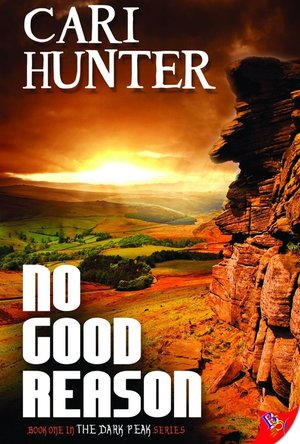
Cari Hunter is most definitely as top notch a writer as you are going to find in crime/thriller writing.
Cari Hunter’s Dark Peak crime series, starting with No Good Reason, was recommended to me by a Lesfic author. I reckon you have to be pretty good for your peers to claim you are ‘top notch’ and after reading four of her books in quick succession I can guarantee that Cari is most definitely as top notch a writer as you are going to find in crime/thriller writing.
Let me admit to you that I generally find crime novels too much hard work to follow. I like my books to be romances, and the sexier the better. I’m surprised as all get out to find I love Cari’s thrilling ride through these Police stroke Hospital novels. Especially as there is almost no juicy sex to lubricate the grit. The infrequency of sex scenes is because the main characters, Sanne and Meg, aren’t officially a couple. Or maybe they are. It’s entirely possible everyone knows they are, except themselves.
The story isn't necessarily about their sexual tension, but it was always in the back of my mind that they would see sense in the end and I patiently waited them out.
I have found in the last few years that there are many padded-out books on the market by well-respected authors, where you can skip through whole pages at a time without losing any real sense of the plot. Not so with No Good Reason which kept me riveted through each paragraph and exquisite word right from the tense prologue.
Cari definitely makes every single word count and I felt engaged in the story and with her main characters within the first few pages.
I’d already read Snowbound, which was a fantastic debut novel, but the characters in No Good Reason are one smidge more sophisticatedly written.
Sanne and Meg go back a very long time, from before their first kiss at the age of twelve, and they know each other better than they know themselves. They have generated a world around them where they are each others’ support and comfort. They are BFFs, they are Friends With Benefits, but somehow Cari has written them as even more than these things. They are each others’ absolute other halves.
These two girls have aches and bruises, and tears and emotions, and genuine exhaustion from their ridiculously long work hours.
They do things like accidentally drop perishable shopping on the floor, but eat it anyway; burn their tea; and turn the shower off when the toilet flushes for fear of being scalded.
I love details like these. I love that they can have a discussion about putting the bins out and HobNobs can fall in their tea the same as they do for you and me, without making the whole book boring and mundane. It simply endears the characters to me all the more.
They made me smile a lot. Meg prefers ham and quaver butties, for goodness sake, what’s not to love?
It doesn’t take long for Cari to completely draw you into their world in Northern England, around the Manchester area, and mainly in the Peak District which is where Cari lives and I feel like I have travelled the hills and crunched the snow and tramped through the same streets as she has now.
This area has its own accent, Northern English, and it is noticeable that she uses phrases and words particular to there. I can’t remember which words I picked up on first, probably some dialogue, but you quickly become used to the fact this is not written by an American. It’s refreshing to have only regional UK main characters: no Londoners; no Americans.
Don’t let the idea of a local accent and local characters put you off, there is nothing in the book you wouldn’t understand, it is still all ‘plain English’ and if you come across a word you can’t decipher I will more than happily translate for you!
Other than the almost-a-romance-but-so-much-more between the two girls there is also this whole other kidnapping / crime malarkey going on. Sanne is a little too personally involved in the case right from the beginning, being caught up in the initial rescue of the victim. She and her police partner, the sensitive, caring, supportive, gorgeously written Nelson, are embroiled in working the case together. Needless to say they spend a lot of time visiting Meg in her role as A&E Doctor in the local hospital for one reason or another. Nelson is a beautiful soul and just the kind of partner Sanne needs, but that writers seldom allow their straight characters to be, especially in Police fiction.
The kidnapping plot is fast paced and exciting. The characters on both sides of the investigation were all believable and there was an audible ‘Huh!’ out of me with the final twist at the end. I really didn’t see that coming. Such a simple way to pull the whole plot together. Chilling!
Cari has a remarkable flair for descriptive writing and she pays particular attention to details like sounds and how things feel against skin. You are left in no doubt every time a character is sore, almost feeling the pain and peeling off the scabs with them.
Sometimes you have to reread a passage to understand the gist of what an author means, or furrow your brow over a combination of words because they just don’t make sense or even belong together, but with Cari Hunter the only thing I can point out to her is ‘Try feeding goldfinches niger seeds instead of nuts.’ That’s it. No other tweaking or corrections required. Nothing. Cari Hunter writes sheer perfection.
My favourite line in the book is the first one I stopped at, blinked appreciatively and re-read.
“Sanne ran her fingertips across the gritstone, letting it wear away her skin like an over-keen emery board.”
From that point on I knew I was going to love not only the book, but also Cari’s style and I wasn’t disappointed with further chapters.
I have a simple test for new authors, to find out how much I like them. The test is ‘how sick has this author made me?’ By that I mean - how long did they keep me awake reading when I ought to have been asleep for work the next day. If I am awake too long it makes me sick for several days after - it shouldn’t be something I am proud of but
Let me admit to you that I generally find crime novels too much hard work to follow. I like my books to be romances, and the sexier the better. I’m surprised as all get out to find I love Cari’s thrilling ride through these Police stroke Hospital novels. Especially as there is almost no juicy sex to lubricate the grit. The infrequency of sex scenes is because the main characters, Sanne and Meg, aren’t officially a couple. Or maybe they are. It’s entirely possible everyone knows they are, except themselves.
The story isn't necessarily about their sexual tension, but it was always in the back of my mind that they would see sense in the end and I patiently waited them out.
I have found in the last few years that there are many padded-out books on the market by well-respected authors, where you can skip through whole pages at a time without losing any real sense of the plot. Not so with No Good Reason which kept me riveted through each paragraph and exquisite word right from the tense prologue.
Cari definitely makes every single word count and I felt engaged in the story and with her main characters within the first few pages.
I’d already read Snowbound, which was a fantastic debut novel, but the characters in No Good Reason are one smidge more sophisticatedly written.
Sanne and Meg go back a very long time, from before their first kiss at the age of twelve, and they know each other better than they know themselves. They have generated a world around them where they are each others’ support and comfort. They are BFFs, they are Friends With Benefits, but somehow Cari has written them as even more than these things. They are each others’ absolute other halves.
These two girls have aches and bruises, and tears and emotions, and genuine exhaustion from their ridiculously long work hours.
They do things like accidentally drop perishable shopping on the floor, but eat it anyway; burn their tea; and turn the shower off when the toilet flushes for fear of being scalded.
I love details like these. I love that they can have a discussion about putting the bins out and HobNobs can fall in their tea the same as they do for you and me, without making the whole book boring and mundane. It simply endears the characters to me all the more.
They made me smile a lot. Meg prefers ham and quaver butties, for goodness sake, what’s not to love?
It doesn’t take long for Cari to completely draw you into their world in Northern England, around the Manchester area, and mainly in the Peak District which is where Cari lives and I feel like I have travelled the hills and crunched the snow and tramped through the same streets as she has now.
This area has its own accent, Northern English, and it is noticeable that she uses phrases and words particular to there. I can’t remember which words I picked up on first, probably some dialogue, but you quickly become used to the fact this is not written by an American. It’s refreshing to have only regional UK main characters: no Londoners; no Americans.
Don’t let the idea of a local accent and local characters put you off, there is nothing in the book you wouldn’t understand, it is still all ‘plain English’ and if you come across a word you can’t decipher I will more than happily translate for you!
Other than the almost-a-romance-but-so-much-more between the two girls there is also this whole other kidnapping / crime malarkey going on. Sanne is a little too personally involved in the case right from the beginning, being caught up in the initial rescue of the victim. She and her police partner, the sensitive, caring, supportive, gorgeously written Nelson, are embroiled in working the case together. Needless to say they spend a lot of time visiting Meg in her role as A&E Doctor in the local hospital for one reason or another. Nelson is a beautiful soul and just the kind of partner Sanne needs, but that writers seldom allow their straight characters to be, especially in Police fiction.
The kidnapping plot is fast paced and exciting. The characters on both sides of the investigation were all believable and there was an audible ‘Huh!’ out of me with the final twist at the end. I really didn’t see that coming. Such a simple way to pull the whole plot together. Chilling!
Cari has a remarkable flair for descriptive writing and she pays particular attention to details like sounds and how things feel against skin. You are left in no doubt every time a character is sore, almost feeling the pain and peeling off the scabs with them.
Sometimes you have to reread a passage to understand the gist of what an author means, or furrow your brow over a combination of words because they just don’t make sense or even belong together, but with Cari Hunter the only thing I can point out to her is ‘Try feeding goldfinches niger seeds instead of nuts.’ That’s it. No other tweaking or corrections required. Nothing. Cari Hunter writes sheer perfection.
My favourite line in the book is the first one I stopped at, blinked appreciatively and re-read.
“Sanne ran her fingertips across the gritstone, letting it wear away her skin like an over-keen emery board.”
From that point on I knew I was going to love not only the book, but also Cari’s style and I wasn’t disappointed with further chapters.
I have a simple test for new authors, to find out how much I like them. The test is ‘how sick has this author made me?’ By that I mean - how long did they keep me awake reading when I ought to have been asleep for work the next day. If I am awake too long it makes me sick for several days after - it shouldn’t be something I am proud of but
Chris Sawin (602 KP) rated All the Boys Love Mandy Lane (2006) in Movies
Jun 18, 2019

Mandy Lane (Amber Heard) becomes the most desirable girl in high school over one fateful summer; she's definitely not like the other girls her age though. While most guys want to do everything imaginable to her, she's turned them all down. The only guy she really gives the time of day is her best friend, Emmet (Michael Welch). That is until a certain incident at a pool party comes between them. Now nine months later, Mandy has distanced herself from Emmet and has a group of new friends. These friends have decided to invite Mandy to a ranch out in the middle of nowhere for a few days and the guys who tag along hope to accomplish what, up to this point, has been impossible. But when people begin to turn up missing, they soon realize that they're not alone and someone is taking their obsession with Mandy Lane a little too far.
All the Boys Love Mandy Lane was like an urban myth for the longest period of time. The film debuted at the Toronto International Film Festival in 2006 and released in the UK in 2008. It seemed to be released in every country other than the US shortly thereafter and it took another excruciating five years since it didn’t debut stateside until October of 2013. For a film that was originally shot in 2006, taking seven years to finally see distribution is bizarre and disheartening. The horror film originally caught the eye of The Weinstein Company immediately after debuting at TIFF, but the Weinstein brothers couldn’t come to a decision regarding its release (Harvey wanted a wide theatrical distribution while Bob thought the “artsy” film deserved more of a limited release). Rights to the film were eventually sold to a German company called Senator Entertainment US, who released the film in Germany and Austria and had the intention of premiering the film in the US. But the US branch of Senator Entertainment US went under in 2009 and rights to the film were dead in the water until The Weinstein Company reacquired distribution rights in 2013. The film was released on demand on September 6th with a limited theatrical run October 11th the same year.
The crew for the film consisted of college students freshly graduated from the American Film Institute. Producer Chad Feehan had the film as his thesis during college as work on the project initially began in 2003. Written by Jacob Forman and directed by Jonathan Levine (50/50, Warm Bodies), the film garnered an unbelievable amount of positive buzz online that accumulated into this massive pile of insurmountable expectations. Reading about the film for so long and hearing about how good it was from the biggest of horror sites probably inadvertently hurt the film more than it escalated interest for it.
All the Boys Love Mandy Lane takes a Dazed and Confused approach to the first half of the film. Similar to how Wolf Creek had you swimming through 45-minutes of character development before the actual horror began (or how Hatchet was silly for the same amount of time before diving into awesome practical gore effects), All the Boys Love Mandy Lane is mostly high school kids getting into typical teenager shenanigans; drinking alcohol, doing drugs, and having sex. The second half of the film is pure horror and is essentially a slasher film. The horror is teased at first with little glimpses of terror before diving right back into high school mode, but the film is able to intensify its sense of dread to the point where it’s eventually beautifully horrific in every scene.
For a film that is made by first time filmmakers for less than $1 million, All the Boys Love Mandy Lane has beautiful cinematography. Vivid colors jump off the screen and seem even lusher once the film begins to cover itself in mud and dirt. Cinematographer Darren Genet has an eye for dynamic angles and utilizing when to focus and blur menacing figures in the background (or foreground) for maximum impact. The film also has a tendency to overlap shots in order to create an entirely new, which can probably be contributed to the talent of film editor Josh Noyes (The Wackness). These impressive filming techniques shine brightest when Bird (Edwin Hodge) is on-screen; when he goes to start the generator after the power goes out, when he confronts the killer, and the car chase. Like other successful film genres, horror can often become formulaic not only when it comes to its writing or how its acted but how it’s shot. It’s always a breath of fresh air when you can say a film is unique in some capacity; especially horror.
With Michael Welch mostly being associated with portraying popular high school student Mike Newton in the Twilight franchise, your expectations for a memorable performance from Welch in All the Boys Love Mandy Lane are probably fairly low. Around the time Mandy Lane was in peak hype mode, Welch was in the abysmal Day of the Dead remake. Directed by Steve Miner (Halloween H20) and also starring Nick Cannon, Day of the Dead is an atrocious remake (but maybe 2018’s remake Day of the Dead: Bloodline is worse). However, Welch’s portrayal of Emmet in Mandy Lane is exceptional. His performance, especially during the closing moments of the film, is captivating. He has this American Psycho quality to his psychotic behavior that is hauntingly mesmerizing.
All the Boys Love Mandy Lane puts a different spin on the slasher film that would have had way more of an impact had it originally been released ten years ago instead of five. The film does require patience from the audience as the film takes a slow and steady approach to its eventual slasher nature. While the outcome is likely fairly predictable, watching how everything unfolds in Mandy Lane is where it shines. The ending is the film’s crown jewel and even though the killer is revealed its open ending suits the film’s already ambiguous nature. Now that All the Boys Love Mandy Lane is readily available at your fingertips, its originality seemed much more promising when it felt like it was the holy grail of horror films (kind of like The Poughkeepsie Tapes). The film’s consistency to offer a slasher that cuts in a different direction than most horror films along with Michael Welch’s brilliantly unbalanced performance makes All the Boys Love Mandy Lane a worthwhile experience.
All the Boys Love Mandy Lane is currently free to stream on Amazon if you have Starz with Prime Video Channels. It’s also currently available to rent via Amazon Video ($2.99), Vudu ($2.99), and iTunes ($3.99). The film is can be purchased on DVD ($9.91) and Multi-Format Blu-ray ($12.99) on Amazon and is even cheaper on eBay (the Blu-ray is available for $8.99 and the DVD is $7.98, both have free shipping).
All the Boys Love Mandy Lane was like an urban myth for the longest period of time. The film debuted at the Toronto International Film Festival in 2006 and released in the UK in 2008. It seemed to be released in every country other than the US shortly thereafter and it took another excruciating five years since it didn’t debut stateside until October of 2013. For a film that was originally shot in 2006, taking seven years to finally see distribution is bizarre and disheartening. The horror film originally caught the eye of The Weinstein Company immediately after debuting at TIFF, but the Weinstein brothers couldn’t come to a decision regarding its release (Harvey wanted a wide theatrical distribution while Bob thought the “artsy” film deserved more of a limited release). Rights to the film were eventually sold to a German company called Senator Entertainment US, who released the film in Germany and Austria and had the intention of premiering the film in the US. But the US branch of Senator Entertainment US went under in 2009 and rights to the film were dead in the water until The Weinstein Company reacquired distribution rights in 2013. The film was released on demand on September 6th with a limited theatrical run October 11th the same year.
The crew for the film consisted of college students freshly graduated from the American Film Institute. Producer Chad Feehan had the film as his thesis during college as work on the project initially began in 2003. Written by Jacob Forman and directed by Jonathan Levine (50/50, Warm Bodies), the film garnered an unbelievable amount of positive buzz online that accumulated into this massive pile of insurmountable expectations. Reading about the film for so long and hearing about how good it was from the biggest of horror sites probably inadvertently hurt the film more than it escalated interest for it.
All the Boys Love Mandy Lane takes a Dazed and Confused approach to the first half of the film. Similar to how Wolf Creek had you swimming through 45-minutes of character development before the actual horror began (or how Hatchet was silly for the same amount of time before diving into awesome practical gore effects), All the Boys Love Mandy Lane is mostly high school kids getting into typical teenager shenanigans; drinking alcohol, doing drugs, and having sex. The second half of the film is pure horror and is essentially a slasher film. The horror is teased at first with little glimpses of terror before diving right back into high school mode, but the film is able to intensify its sense of dread to the point where it’s eventually beautifully horrific in every scene.
For a film that is made by first time filmmakers for less than $1 million, All the Boys Love Mandy Lane has beautiful cinematography. Vivid colors jump off the screen and seem even lusher once the film begins to cover itself in mud and dirt. Cinematographer Darren Genet has an eye for dynamic angles and utilizing when to focus and blur menacing figures in the background (or foreground) for maximum impact. The film also has a tendency to overlap shots in order to create an entirely new, which can probably be contributed to the talent of film editor Josh Noyes (The Wackness). These impressive filming techniques shine brightest when Bird (Edwin Hodge) is on-screen; when he goes to start the generator after the power goes out, when he confronts the killer, and the car chase. Like other successful film genres, horror can often become formulaic not only when it comes to its writing or how its acted but how it’s shot. It’s always a breath of fresh air when you can say a film is unique in some capacity; especially horror.
With Michael Welch mostly being associated with portraying popular high school student Mike Newton in the Twilight franchise, your expectations for a memorable performance from Welch in All the Boys Love Mandy Lane are probably fairly low. Around the time Mandy Lane was in peak hype mode, Welch was in the abysmal Day of the Dead remake. Directed by Steve Miner (Halloween H20) and also starring Nick Cannon, Day of the Dead is an atrocious remake (but maybe 2018’s remake Day of the Dead: Bloodline is worse). However, Welch’s portrayal of Emmet in Mandy Lane is exceptional. His performance, especially during the closing moments of the film, is captivating. He has this American Psycho quality to his psychotic behavior that is hauntingly mesmerizing.
All the Boys Love Mandy Lane puts a different spin on the slasher film that would have had way more of an impact had it originally been released ten years ago instead of five. The film does require patience from the audience as the film takes a slow and steady approach to its eventual slasher nature. While the outcome is likely fairly predictable, watching how everything unfolds in Mandy Lane is where it shines. The ending is the film’s crown jewel and even though the killer is revealed its open ending suits the film’s already ambiguous nature. Now that All the Boys Love Mandy Lane is readily available at your fingertips, its originality seemed much more promising when it felt like it was the holy grail of horror films (kind of like The Poughkeepsie Tapes). The film’s consistency to offer a slasher that cuts in a different direction than most horror films along with Michael Welch’s brilliantly unbalanced performance makes All the Boys Love Mandy Lane a worthwhile experience.
All the Boys Love Mandy Lane is currently free to stream on Amazon if you have Starz with Prime Video Channels. It’s also currently available to rent via Amazon Video ($2.99), Vudu ($2.99), and iTunes ($3.99). The film is can be purchased on DVD ($9.91) and Multi-Format Blu-ray ($12.99) on Amazon and is even cheaper on eBay (the Blu-ray is available for $8.99 and the DVD is $7.98, both have free shipping).


Gareth von Kallenbach (980 KP) rated The Words (2012) in Movies
Aug 7, 2019
On paper, The Words is a film that is better suited as a literary novella. In print, we, as readers, are often granted insight to our characters thoughts and motivation that is frequently lost on film or delivered in a lackluster voiceover that most critics deem as lazy film making. Furthermore, the story within a story, within a story approach in film often leaves the audience with uninteresting shells of characters and can make a story forgettable at best.
Given these reasons, it is easy to see why many would choose to undertake a less ambitious story for their directorial debut. That group does not include co-writer-directors Brian Klugman and Lee Sternthal. This duo is actually successful at tackling this dangerous story-within-a-story film device by keeping it simple. Focusing on the main characters of each story and their motivation, while tying each together with some common themes like love, what it means to write something great, and how far the need for success will drive the characters.
The movie begins with highly successful author Clay Hammond (Dennis Quaid) conducting a reading of his latest novel The Words. Among his audience is literary grad student and adoring fan, Daniella (Olivia Wilde), who has aspirations of picking the brain of the man that authored her favorite stories and perhaps getting involved romantically. As Hammond begins to read his story we are introduced to the tale of starving writer Rory Jensen (Bradley Cooper) and his wife Dora (Zoe Saldana). The two are a young couple in love, trying to get on their feet while Rory struggles with multiple rejections of his novels, until he is finally forced to come to grips with his own limitations as an artist and a writer.
As he settles into life and a job as a mail clerk at a publishing firm, he finds a lost manuscript in a vintage leather briefcase that Dora had purchased for him during their honeymoon in Paris. That story turns out to be something that moves him to tears. It is the final thing in his realization that he will never be the great writer that he thought he was, the great writer that wrote this anonymous story. In an effort to feel and try to understand what it is like to create something great, Rory decides to retype the novel word for word on his laptop if only to admire the beautiful story that he had instantly fallen in love with. When Dora mistakenly reads the novel, she encourages him to submit it to a publisher. Before he can tell her the truth, his world is transformed into the life he had always imagined he would have for himself and Dora as the novel gains him both great literary and commercial success. And finally, now that his star has risen he can get his own novel published.
Enter Jeremy Irons as the old man who reveals himself to Rory as the true author of his story. The old man feels compelled to explain to Rory the tragic origin of the story that has become the young author’s success. Irons steals every second he is on screen as his delivery of the old man oozes with the intellectual style that has been his trademark over the years. Like Rory, we are helpless to do nothing but listen and get lost in the words of his story as if he was sitting next to us and telling the story in real life.
The old man reveals that the novel is the result of great love and pain that his younger self (Ben Barnes) and the love of his life Celia (Nora Arnezeder) endured. While I am not familiar with Barnes’ and Arnezeder’s work, their performance as the younger couple in Irons’ story had a genuine connection. And while this love story does not seem to be anything new when it comes to film, it served its purpose by strengthening the other stories, showing how a great story can be mused from someplace unexpected, even if only once.
With Rory now confronted with his deceitful success, he struggles to decide how to make things right and live with himself as a fraud. It’s at this point the film subtly suggest that Hammond’s story of Rory may actually be a disguised autobiography.
As Rory, Bradley Cooper gives perhaps his best performance to date. I feel that despite his poor and deceitful decision, at no point does he lose the audience. With the help of a strong and emotionally charged performance by Zoe Saldana, we experience Cooper’s honest plight and can understand the events that unfold around him. He is effective as a man who genuinely believes he does not deserve the success that he stole. Without a doubt, this will be a surprising role for those fans who only know Cooper from the humorous characters he plays in The Hangover and most recently Hit and Run. I hope this is the beginning of growth in his craft beyond the charming, confident character we have seen in Limitless and perhaps into a deeper emotional actor.
The weakest part of this film is the story of Clay Hammond and Daniella. Dennis Quaid is quite unlikable as Hammond. He is monotone in his readings and the prose of his story is mediocre at best. While the film drops hints that Hammond’s story of Rory is autobiographical it makes sense that Quaid’s character is played this way. He succeeds in helping create the notion that Hammond is unworthy of the success his character has enjoyed. But something about his performance is so unlikable that even when his character has a redeeming moment, it is lost on an audience that may not care enough about him for it to work.
To add to this dislike of Quaid, Olivia Wilde seems out of place as the character Daniella. It is not that her performance is bad, it is just that every time they showed her as the starry-eyed fan who is love struck for Hammond, she just seemed out of place. Additionally there did not seem to be any connection between Daniella and Hammond in the way the other characters’ connections helped strengthen their performances.
In the end, I enjoyed this movie more than I expected. Visually the Montreal backdrop does an excellent job as both New York and Paris. And the continual piano score helps blend the stories. The simple focus on the main characters helped maintain the three different stories and keep the overall pacing of the movie in order. In addition, the solid to exceptional performances also helped to keep the film focused and avoided the empty shell of characters that most movies of this nature create. That being said, this movie is not for everyone, but those looking for a change of pace from the summer blockbusters season should consider this film.
Given these reasons, it is easy to see why many would choose to undertake a less ambitious story for their directorial debut. That group does not include co-writer-directors Brian Klugman and Lee Sternthal. This duo is actually successful at tackling this dangerous story-within-a-story film device by keeping it simple. Focusing on the main characters of each story and their motivation, while tying each together with some common themes like love, what it means to write something great, and how far the need for success will drive the characters.
The movie begins with highly successful author Clay Hammond (Dennis Quaid) conducting a reading of his latest novel The Words. Among his audience is literary grad student and adoring fan, Daniella (Olivia Wilde), who has aspirations of picking the brain of the man that authored her favorite stories and perhaps getting involved romantically. As Hammond begins to read his story we are introduced to the tale of starving writer Rory Jensen (Bradley Cooper) and his wife Dora (Zoe Saldana). The two are a young couple in love, trying to get on their feet while Rory struggles with multiple rejections of his novels, until he is finally forced to come to grips with his own limitations as an artist and a writer.
As he settles into life and a job as a mail clerk at a publishing firm, he finds a lost manuscript in a vintage leather briefcase that Dora had purchased for him during their honeymoon in Paris. That story turns out to be something that moves him to tears. It is the final thing in his realization that he will never be the great writer that he thought he was, the great writer that wrote this anonymous story. In an effort to feel and try to understand what it is like to create something great, Rory decides to retype the novel word for word on his laptop if only to admire the beautiful story that he had instantly fallen in love with. When Dora mistakenly reads the novel, she encourages him to submit it to a publisher. Before he can tell her the truth, his world is transformed into the life he had always imagined he would have for himself and Dora as the novel gains him both great literary and commercial success. And finally, now that his star has risen he can get his own novel published.
Enter Jeremy Irons as the old man who reveals himself to Rory as the true author of his story. The old man feels compelled to explain to Rory the tragic origin of the story that has become the young author’s success. Irons steals every second he is on screen as his delivery of the old man oozes with the intellectual style that has been his trademark over the years. Like Rory, we are helpless to do nothing but listen and get lost in the words of his story as if he was sitting next to us and telling the story in real life.
The old man reveals that the novel is the result of great love and pain that his younger self (Ben Barnes) and the love of his life Celia (Nora Arnezeder) endured. While I am not familiar with Barnes’ and Arnezeder’s work, their performance as the younger couple in Irons’ story had a genuine connection. And while this love story does not seem to be anything new when it comes to film, it served its purpose by strengthening the other stories, showing how a great story can be mused from someplace unexpected, even if only once.
With Rory now confronted with his deceitful success, he struggles to decide how to make things right and live with himself as a fraud. It’s at this point the film subtly suggest that Hammond’s story of Rory may actually be a disguised autobiography.
As Rory, Bradley Cooper gives perhaps his best performance to date. I feel that despite his poor and deceitful decision, at no point does he lose the audience. With the help of a strong and emotionally charged performance by Zoe Saldana, we experience Cooper’s honest plight and can understand the events that unfold around him. He is effective as a man who genuinely believes he does not deserve the success that he stole. Without a doubt, this will be a surprising role for those fans who only know Cooper from the humorous characters he plays in The Hangover and most recently Hit and Run. I hope this is the beginning of growth in his craft beyond the charming, confident character we have seen in Limitless and perhaps into a deeper emotional actor.
The weakest part of this film is the story of Clay Hammond and Daniella. Dennis Quaid is quite unlikable as Hammond. He is monotone in his readings and the prose of his story is mediocre at best. While the film drops hints that Hammond’s story of Rory is autobiographical it makes sense that Quaid’s character is played this way. He succeeds in helping create the notion that Hammond is unworthy of the success his character has enjoyed. But something about his performance is so unlikable that even when his character has a redeeming moment, it is lost on an audience that may not care enough about him for it to work.
To add to this dislike of Quaid, Olivia Wilde seems out of place as the character Daniella. It is not that her performance is bad, it is just that every time they showed her as the starry-eyed fan who is love struck for Hammond, she just seemed out of place. Additionally there did not seem to be any connection between Daniella and Hammond in the way the other characters’ connections helped strengthen their performances.
In the end, I enjoyed this movie more than I expected. Visually the Montreal backdrop does an excellent job as both New York and Paris. And the continual piano score helps blend the stories. The simple focus on the main characters helped maintain the three different stories and keep the overall pacing of the movie in order. In addition, the solid to exceptional performances also helped to keep the film focused and avoided the empty shell of characters that most movies of this nature create. That being said, this movie is not for everyone, but those looking for a change of pace from the summer blockbusters season should consider this film.