
Search
MaryAnn (14 KP) rated A Song of Home: A Novel of the Swing Era (Pearl Spence #3) in Books
Mar 5, 2019
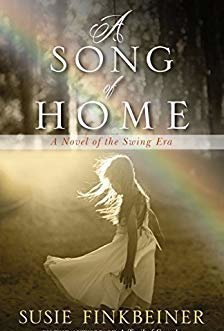

A Song of Home is the third novel in the Pearl Spence series In this novel we find Pearl living in Bliss with her father and Ray, leaving the thoughts of Red River Oklahoma and her mama far behind her.
Pearl settles into a new routine of school, helping Aunt Carrie at the farm, hanging out with Ray or getting lost in a good book and then Opal shows her how to dance. But things change when Mama comes home unexpectedly and pregnant! It isn’t the happy return that Pearl had wished for.
This is a delightful story of the great depression and the swing era. In this novel deals with a couple of issues; one is forgiveness and the other is the racial conflict that was happening at that time.
This book teaches us to reach out with love and to treat others as we would want to be treated; whether we are poor, the color of our skin or the choices we have made in life.
The author has an ability to bring the characters to life and make you feel like you are right there amongst the characters. Ms. Finkbeiner has done a brilliant job bringing the characters to life. I love how she writes the story through Pearl's eyes and makes us realize that our actions have consequences, our children watch what we do and how we react.
A very good book and a great ending to this series. This novel can be read alone by itself, but I highly recommend that the whole series be read.
I received this book free from the publisher. I was not required to write a positive review and the opinions I have expressed are my own. I am disclosing this in accordance with the Federal Trade Commission’s 16 CFR, Part 255 : “Guides Concerning the Use of Endorsements and Testimonials in Advertising.
Pearl settles into a new routine of school, helping Aunt Carrie at the farm, hanging out with Ray or getting lost in a good book and then Opal shows her how to dance. But things change when Mama comes home unexpectedly and pregnant! It isn’t the happy return that Pearl had wished for.
This is a delightful story of the great depression and the swing era. In this novel deals with a couple of issues; one is forgiveness and the other is the racial conflict that was happening at that time.
This book teaches us to reach out with love and to treat others as we would want to be treated; whether we are poor, the color of our skin or the choices we have made in life.
The author has an ability to bring the characters to life and make you feel like you are right there amongst the characters. Ms. Finkbeiner has done a brilliant job bringing the characters to life. I love how she writes the story through Pearl's eyes and makes us realize that our actions have consequences, our children watch what we do and how we react.
A very good book and a great ending to this series. This novel can be read alone by itself, but I highly recommend that the whole series be read.
I received this book free from the publisher. I was not required to write a positive review and the opinions I have expressed are my own. I am disclosing this in accordance with the Federal Trade Commission’s 16 CFR, Part 255 : “Guides Concerning the Use of Endorsements and Testimonials in Advertising.
City of Gangs: Glasgow and the Rise of the British Gangster
Book
'A new type of criminal is in our midst - a dangerous, ruthless, well-armed man, who will stick at...
Luck or Something Like it: A Memoir
Book
For more than half a century, Kenny Rogers has been recording some of the most revered and beloved...
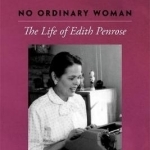
No Ordinary Woman: The Life of Edith Penrose
Book
Edith Penrose was a remarkable woman and distinguished scholar who lived through, and witnessed at...
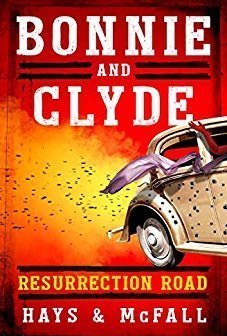
Bonnie and Clyde: Resurrection Road
Clark Hays and Kathleen McFall
Book
THE RETURN OF BONNIE AND CLYDE Saving democracy, one bank robbery at a time. In the provocative...
series adult fiction Bonnie & Clyde Bonnie and Clyde

Phillip McSween (751 KP) rated Cinderella Man (2005) in Movies
Jan 15, 2018


Classic
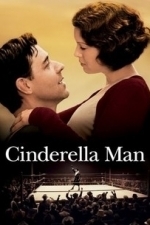
Cinderella Man is one of those films where I ask myself, "Why in the world has it taken me thirteen years to watch this?" It could be the fact that I've never had a strong love for films based on true stories or that I'm all binged out on boxing movies. Whatever the case may be, I'm glad Movies 365 has brought this film into my life and now into my heart.
There's so much to like about the movie, I'm not even sure where to start. Maybe Paul Giamati giving the performance of his life as trainer Joe Gould? Talk about playing a fabulous role. He's brash and straightforward, yet full of heart. He's not a fighter, but will go toe-to-toe with anyone to protect the people he cares about. Outshining him, however, is a stellar lead performance by legend Russell Crowe playing man of the hour James Braddock. Crowe makes you feel this guy, makes you love him. In one of the early scenes where Braddock gives his entire breakfast to his starving daughter before leaving for a strenuous day of work, you quickly realize that this is a guy you want to get behind and root for.
In the same vein, kudos to Ron Howard for using the source material to flesh out the stakes. The story could have just as easily been about a man trying to get back into boxing, but he made it about a man trying to feed his family and survive. It's painful to watch at times, but necessary. If you're not the least bit inspired after viewing this film, I don't know what will do it for you.
Howard also succeeds with excellent pace management. Seamless cuts between fights keep the action fresh and the viewer engaged. You don't get a whole lot of time to catch your breath. The cinematics are shot in a way that's gritty and real, beyond fitting for the Great Depression era when the film takes place.
Other than me almost going hoarse from screaming at the screen so much, I can't find many flaws with the film (hiccups, nothing major). I challenge you not to love this film about an aging boxer that just wants to keep his family alive. I give Cinderella Man a 95.
There's so much to like about the movie, I'm not even sure where to start. Maybe Paul Giamati giving the performance of his life as trainer Joe Gould? Talk about playing a fabulous role. He's brash and straightforward, yet full of heart. He's not a fighter, but will go toe-to-toe with anyone to protect the people he cares about. Outshining him, however, is a stellar lead performance by legend Russell Crowe playing man of the hour James Braddock. Crowe makes you feel this guy, makes you love him. In one of the early scenes where Braddock gives his entire breakfast to his starving daughter before leaving for a strenuous day of work, you quickly realize that this is a guy you want to get behind and root for.
In the same vein, kudos to Ron Howard for using the source material to flesh out the stakes. The story could have just as easily been about a man trying to get back into boxing, but he made it about a man trying to feed his family and survive. It's painful to watch at times, but necessary. If you're not the least bit inspired after viewing this film, I don't know what will do it for you.
Howard also succeeds with excellent pace management. Seamless cuts between fights keep the action fresh and the viewer engaged. You don't get a whole lot of time to catch your breath. The cinematics are shot in a way that's gritty and real, beyond fitting for the Great Depression era when the film takes place.
Other than me almost going hoarse from screaming at the screen so much, I can't find many flaws with the film (hiccups, nothing major). I challenge you not to love this film about an aging boxer that just wants to keep his family alive. I give Cinderella Man a 95.

Anne (15130 KP) rated This Tender Land in Books
Nov 4, 2019
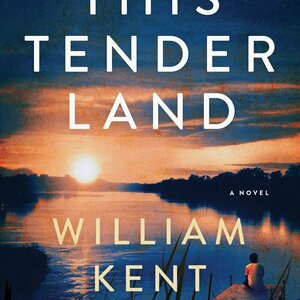
Thank you to Libro.fm and Recorded Books for letting me listen and review this book. I enjoyed this book more than I thought I would and it has a lot to digest from it. I've been thinking about it to try to formulate a review for a couple of days since I finished it.
This story is about 4 orphans on a life-changing journey during the era of the Great Depression in 1932.
In Minnesota, they are at a horrible place called The Lincoln School, where Native American children that have been separated from their families are sent to get an education. It's also where Odie is, who is the MC/one of the 4 orphans in this story. After getting in a lot of trouble and gaining the school superintendent's attention and wrath, Odie, his brother, Albert, their friend, Mose, and Emmy all run away together in a canoe they stole, going to the Missippi and to find a place of their own.
What follows is the telling of their journey during the summer, an adventure where they meet others who are wandering and on their own journeys as well. They meet all types of people like pig farmers, faith healers and others who are lost and trying to find their own way in life and to their own places to call home as well.
It's a coming of age tale, where they come across and are deciding and figuring things out for themselves like religion, belief in God, first crush/love, what's right and wrong, how to treat others with respect and love and so many things.
This story kept sucking me back in whenever I listened to it so I felt like I was there on the banks of the river watching their story or in the school or in the faith revival tents or towns along the way. I was a bit overwhelmed at times from the bigger picture they were showing and talking about along the way, but it also resonated with me a lot and reminded me a lot of Mark Twain's writing with his books about Huck Finn and Tom Sawyer that I remember loving and connecting with when I was younger.
The only thing that bothered me some was that if like me you try to go for clean reads, there's a little bit of language throughout the book, but other than that it was a really good story and the audio was great.
This story is about 4 orphans on a life-changing journey during the era of the Great Depression in 1932.
In Minnesota, they are at a horrible place called The Lincoln School, where Native American children that have been separated from their families are sent to get an education. It's also where Odie is, who is the MC/one of the 4 orphans in this story. After getting in a lot of trouble and gaining the school superintendent's attention and wrath, Odie, his brother, Albert, their friend, Mose, and Emmy all run away together in a canoe they stole, going to the Missippi and to find a place of their own.
What follows is the telling of their journey during the summer, an adventure where they meet others who are wandering and on their own journeys as well. They meet all types of people like pig farmers, faith healers and others who are lost and trying to find their own way in life and to their own places to call home as well.
It's a coming of age tale, where they come across and are deciding and figuring things out for themselves like religion, belief in God, first crush/love, what's right and wrong, how to treat others with respect and love and so many things.
This story kept sucking me back in whenever I listened to it so I felt like I was there on the banks of the river watching their story or in the school or in the faith revival tents or towns along the way. I was a bit overwhelmed at times from the bigger picture they were showing and talking about along the way, but it also resonated with me a lot and reminded me a lot of Mark Twain's writing with his books about Huck Finn and Tom Sawyer that I remember loving and connecting with when I was younger.
The only thing that bothered me some was that if like me you try to go for clean reads, there's a little bit of language throughout the book, but other than that it was a really good story and the audio was great.

Jamie (131 KP) rated The Shining Girls in Books
Jun 4, 2017
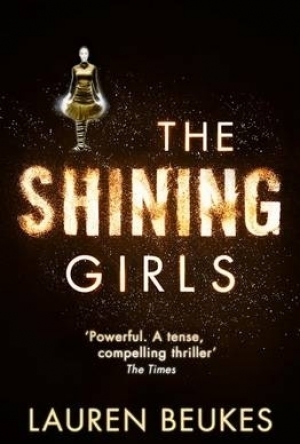

Ambitious & unique story line (1 more)
Handles the web of time paradoxes well
Mash-up of genres is disjointing (2 more)
Romance is distracting at best
Repeated murder scenes gets wearisome
A cool time travel thriller
The Shining Girls follows Harper, a crude serial killer from the 1930’s that can hop through time; and Kirby, the spunky young woman that got away. This book was incredibly ambitious in its premise and I spent a great deal of my time reading the book wondering if it could deliver and I can happily say that I wasn’t disappointed.
The story is a heavily character driven dive through recent American history, from the Great Depression in the 1930’s all the way up to the early 1990’s. I was impressed by the amount of research that was put into this book, each decade having enough detail to get a good feel for the era. Many of the characters were pretty well fleshed out for such short chapters, and I found myself liking many of them.
My favorite part of the story, though, was the tragedy that was Harper because of how very flawed and human he is. He views himself as commanding, charming, persuasive, but to many of his victims he’s just downright creepy. He thinks himself calculating yet he makes mistakes left and right. He has a drive to rise up from the trenches of poverty and starvation from his own era, to be powerful. His choice of victims are all women in a great act of femicide, because he has this dire need to feel masculine. He chooses women that he views as invincible, that shine with ambition in order to assert his dominance by snuffing them out. He thinks he has this divine purpose, a destiny to fulfill because he wants it so desperately, even though the reality is that it’s simply senseless violence with no real meaning. He obsesses over the murders, returning to the scene of the crimes over and over to get off. Harper is pathetic. It was a refreshing change from the stereotypical smooth, genius archetype that glorifies killers. I didn’t know right away that this book was meant to be a feminist novel, but that’s what I took away from not only Harper’s struggle with masculinity, but with the strong and fiercely independent female characters all throughout the book.
There were a couple of problems with the book, however, that I feel need to be addressed. The mash up of genres is both a good and bad aspect of the story. The middle chapters where romance comes into play to me was really distracting and feels out of place. The tagline describing the novel also states that “the girl who wouldn’t die hunts the killer who shouldn’t exist” but honestly, it didn’t feel much like Kirby was really hunting the killer. Looking for connections with other murder cases and investigating some wild hunches, yes, but really she spends most of the book developing her bond with Dan. I would have really liked for this to be more of a cat and mouse type of hunt between Kirby and Harper.
The chapters with Harper were much more interesting, but even those became a little repetitive. We as the reader follow Harper as he stalks his victims in childhood, waiting for the right time to strike when they reach adulthood. While it was necessary for the plot to detail the characters to both connect them to the greater chain of paradoxes and to show Harper’s descent, the violence is excessive and extremely detailed, and after a while it started to feel more like torture porn. It just got tiring after a while.
Despite its flaws, I thought this book was good, and I mean really good. I loved the way that the time paradoxes were handled, time travel stories tend to be tricky and usually end up with a couple of glaring loop holes. The loops are handled in a way that I found satisfying and this book is easily my favorite time travel novel I’ve ever read. It is truly unique and a story I won’t soon forget.
The story is a heavily character driven dive through recent American history, from the Great Depression in the 1930’s all the way up to the early 1990’s. I was impressed by the amount of research that was put into this book, each decade having enough detail to get a good feel for the era. Many of the characters were pretty well fleshed out for such short chapters, and I found myself liking many of them.
My favorite part of the story, though, was the tragedy that was Harper because of how very flawed and human he is. He views himself as commanding, charming, persuasive, but to many of his victims he’s just downright creepy. He thinks himself calculating yet he makes mistakes left and right. He has a drive to rise up from the trenches of poverty and starvation from his own era, to be powerful. His choice of victims are all women in a great act of femicide, because he has this dire need to feel masculine. He chooses women that he views as invincible, that shine with ambition in order to assert his dominance by snuffing them out. He thinks he has this divine purpose, a destiny to fulfill because he wants it so desperately, even though the reality is that it’s simply senseless violence with no real meaning. He obsesses over the murders, returning to the scene of the crimes over and over to get off. Harper is pathetic. It was a refreshing change from the stereotypical smooth, genius archetype that glorifies killers. I didn’t know right away that this book was meant to be a feminist novel, but that’s what I took away from not only Harper’s struggle with masculinity, but with the strong and fiercely independent female characters all throughout the book.
There were a couple of problems with the book, however, that I feel need to be addressed. The mash up of genres is both a good and bad aspect of the story. The middle chapters where romance comes into play to me was really distracting and feels out of place. The tagline describing the novel also states that “the girl who wouldn’t die hunts the killer who shouldn’t exist” but honestly, it didn’t feel much like Kirby was really hunting the killer. Looking for connections with other murder cases and investigating some wild hunches, yes, but really she spends most of the book developing her bond with Dan. I would have really liked for this to be more of a cat and mouse type of hunt between Kirby and Harper.
The chapters with Harper were much more interesting, but even those became a little repetitive. We as the reader follow Harper as he stalks his victims in childhood, waiting for the right time to strike when they reach adulthood. While it was necessary for the plot to detail the characters to both connect them to the greater chain of paradoxes and to show Harper’s descent, the violence is excessive and extremely detailed, and after a while it started to feel more like torture porn. It just got tiring after a while.
Despite its flaws, I thought this book was good, and I mean really good. I loved the way that the time paradoxes were handled, time travel stories tend to be tricky and usually end up with a couple of glaring loop holes. The loops are handled in a way that I found satisfying and this book is easily my favorite time travel novel I’ve ever read. It is truly unique and a story I won’t soon forget.

RəX Regent (349 KP) rated The Big Trail (1930) in Movies
Feb 19, 2019
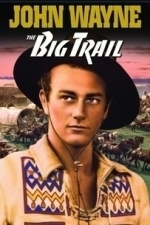

“The Indians are my friends…” Breck Coleman – John Wayne
Not exactly a statement that would exemplify the Career of a man rightly or wrongly associated as being the Cowboy of the Cowboy and Indian movies. But there is no doubt that John Wayne was certainly one of the biggest western stars of cinema.
And The Big Trail is where it really begins for Wayne, but this 1930’s classic was a box office failure, coming not only at the dawn of sound film, but at the time of The Great Depression. It would be another decade by the time “The Duke” wold be born and John Wayne would take his crown as the western superstar which we all know today.
But The Big Trail, originally entitled The Oregon Trail, is not really a John Wayne vehicle. He was a relative unknown actor alongside stage talent, many of whom were drafted into Hollywood at this time simply because they could give a decent vocal performance, as many a silent star was falling, failing to adapt the talkies.
But again, sound is not the selling point of this movie. This was one of a handful of films which pioneered the 70mm film format, in this case, Fox Grandeur, or Grandeur 70. A none anamorphic widescreen format, which whilst not the first attempt, nor the first 70mm film format, it was the nearest to which would succeed later.
2oth Century Fox would change cinema in 1953 with the release of the first CinemaScope film, The Robe, a year after the debut of Cinerama, but Grandeur more closest resembles Todd AO, a format which is still technically used today though in a somewhat different way. The secret to CinemaScope’s later success was in many ways the reason for the failure of Grandeur and that was the fact that CinemaScope was an anamorphic process, screening the image from a regular 35mm film and expanding with the lens, therefore making it a lot cheaper to adapt existing projectors and auditoriums.
Grandeur on the other hand was a larger film format and required a complete upgrade to theatres and therefore, especially at the dawn of the depression era, was financially untenable. Only two theatres in the U.S. would ever show this film in its widescreen glory, with rest showing the alternate 35mm Academy version.
And this film, had SIX versions shot simultaneously, in four different languages, 35mm and 70mm, each requiring different takes with different cameras or casts. This was an incredible feet but one which would soon be reduced with the use of audio dubbing, subtitles and ability to pan and scan.
The problem with this film is simple. It has a loose plot but no real twists and turns. This is almost a documentary following the wagon train trail across the west as group of pioneers make their way to the better life and building the United States, or at least personifying the romantic version of it.
But the film’s pacing and visual style works best through the widescreen lens, a beautiful journey with the untamed west as backdrop, but this is not the the version that most people have seen. The majority only saw the 35mm version which is 20 minutes shorter, edited more quickly and simply doesn’t have the visual flare of the Grandeur version. And without this vast visual canvas, the thousands of extras and props are almost cut from the film, a film with now feels a bit pointless and bit wayward.
Starring an unknown, though despite his hammy acting, Wayne manages to hold his own, the pacing is rushed and the fact that this is an epic journey which we are embarking on with them is somewhat lost.
The widescreen version’s main failing is the sound, which is inferior and poorly mixed in comparison to the 35mm cut, which is crisper and louder, but sound was never going to this movie’s strength and it was still rudimentary at this point. But on a visual level, considering the age of the print, the cinematography is up there as being some of the best, with scale and dare I say, “grandeur” about it.
This is an interesting film to watch now, though unless you are a strong western fan, I would say that it will not thrill, though as a peace of cinematic history, it is littered with footnotes and it very watchable.
And The Big Trail is where it really begins for Wayne, but this 1930’s classic was a box office failure, coming not only at the dawn of sound film, but at the time of The Great Depression. It would be another decade by the time “The Duke” wold be born and John Wayne would take his crown as the western superstar which we all know today.
But The Big Trail, originally entitled The Oregon Trail, is not really a John Wayne vehicle. He was a relative unknown actor alongside stage talent, many of whom were drafted into Hollywood at this time simply because they could give a decent vocal performance, as many a silent star was falling, failing to adapt the talkies.
But again, sound is not the selling point of this movie. This was one of a handful of films which pioneered the 70mm film format, in this case, Fox Grandeur, or Grandeur 70. A none anamorphic widescreen format, which whilst not the first attempt, nor the first 70mm film format, it was the nearest to which would succeed later.
2oth Century Fox would change cinema in 1953 with the release of the first CinemaScope film, The Robe, a year after the debut of Cinerama, but Grandeur more closest resembles Todd AO, a format which is still technically used today though in a somewhat different way. The secret to CinemaScope’s later success was in many ways the reason for the failure of Grandeur and that was the fact that CinemaScope was an anamorphic process, screening the image from a regular 35mm film and expanding with the lens, therefore making it a lot cheaper to adapt existing projectors and auditoriums.
Grandeur on the other hand was a larger film format and required a complete upgrade to theatres and therefore, especially at the dawn of the depression era, was financially untenable. Only two theatres in the U.S. would ever show this film in its widescreen glory, with rest showing the alternate 35mm Academy version.
And this film, had SIX versions shot simultaneously, in four different languages, 35mm and 70mm, each requiring different takes with different cameras or casts. This was an incredible feet but one which would soon be reduced with the use of audio dubbing, subtitles and ability to pan and scan.
The problem with this film is simple. It has a loose plot but no real twists and turns. This is almost a documentary following the wagon train trail across the west as group of pioneers make their way to the better life and building the United States, or at least personifying the romantic version of it.
But the film’s pacing and visual style works best through the widescreen lens, a beautiful journey with the untamed west as backdrop, but this is not the the version that most people have seen. The majority only saw the 35mm version which is 20 minutes shorter, edited more quickly and simply doesn’t have the visual flare of the Grandeur version. And without this vast visual canvas, the thousands of extras and props are almost cut from the film, a film with now feels a bit pointless and bit wayward.
Starring an unknown, though despite his hammy acting, Wayne manages to hold his own, the pacing is rushed and the fact that this is an epic journey which we are embarking on with them is somewhat lost.
The widescreen version’s main failing is the sound, which is inferior and poorly mixed in comparison to the 35mm cut, which is crisper and louder, but sound was never going to this movie’s strength and it was still rudimentary at this point. But on a visual level, considering the age of the print, the cinematography is up there as being some of the best, with scale and dare I say, “grandeur” about it.
This is an interesting film to watch now, though unless you are a strong western fan, I would say that it will not thrill, though as a peace of cinematic history, it is littered with footnotes and it very watchable.

BankofMarquis (1832 KP) rated The Sting (1973) in Movies
Mar 29, 2020
On my list of All Time Favorite Films
I'll come right out and say it - the 1973 Academy Award winning film for Best Picture, THE STING, is one of the greatest films of all time. It's well written, well acted, well directed with a memorable musical score and characters, situations, costumes and set design that become richer over time and through repeated viewings.
Set in Chicago in the gangster-ridden, depression era mid-1930's, THE STING tells the tale of two con man who join forces for the ultimate con of a vile N.Y. Gangster who is responsible for killing a friend of theirs.
From everything I have read about it, the script by David S. Ward (who won an Oscar for his work) arrived pretty much finished. He shaped the story of the con men - and the myriad pieces of misdirection - fully before shopping it around to the studios. Universal jumped all over it and tabbed veteran Director George Roy Hill (BUTCH CASSIDY AND THE SUNDANCE KID) to helm the picture. Hill - being no dummy - saw this as a vehicle to re-team Newman and Redford (stars of Butch Cassidy) and the rest...as they say...is history.
Newman and Redford are perfectly cast as veteran grifter Henry Gondorff (Newman) and up and coming grifter Johnny Hooker (Redford). They have an ease of playing off of each other - each one complimenting the other one - both giving in their scenes with the other one which makes the scenes more rich and alive. They are joined by a veritable "who's who" of late '60's/early '70's character actors - Harold Gould, Eileen Brennan, Charles Durning, Ray Walston and Dana Elcar - all of them bring their "A" game and they are fun to watch. Special notice should be made to Robert Earl Jones (father of James Earl Jones) as Luther, the character who's fate propels the plot forward.
But...none of this would work if you didn't have a "bad guy" that was interesting to watch - and to root against - and bad guys don't get much better...and badder...than Robert Shaw's Doyle Lonnegan. Shaw plays Lonnegan as a physically tough boss who doesn't suffer failure, but is smart enough to avoid obvious traps. He is a worthy adversary of Gondorff and Hooker's and it is fun to watch Newman, Redford and Shaw play off each other. One other note - it was with this performance that Universal recommended Shaw to young Director Stephen Spielberg for his "shark flick" JAWS.
Edith Head won her 8th (and last) Oscar for the magnificent period costumes in this film and Marvin Hamlisch won for the Music - a surprising hit on the pop charts of re-channeled Scott Joplin tunes. The set design won an Oscar - as did the Director, George Roy Hill. All in all, the film won 7 out of the 11 Oscars it was nominated for (Redford was nominated for Best Actor, but did not win).
THE STING is a well crafted film. One that tells a timeless story and that stands the test of time as a testament of how great of an achievement in film this is. It is one of my All Time favorites.
Letter Grade: the rare A+
5 stars (out of 5) and you can take that to the Bank(ofMarquis)
Set in Chicago in the gangster-ridden, depression era mid-1930's, THE STING tells the tale of two con man who join forces for the ultimate con of a vile N.Y. Gangster who is responsible for killing a friend of theirs.
From everything I have read about it, the script by David S. Ward (who won an Oscar for his work) arrived pretty much finished. He shaped the story of the con men - and the myriad pieces of misdirection - fully before shopping it around to the studios. Universal jumped all over it and tabbed veteran Director George Roy Hill (BUTCH CASSIDY AND THE SUNDANCE KID) to helm the picture. Hill - being no dummy - saw this as a vehicle to re-team Newman and Redford (stars of Butch Cassidy) and the rest...as they say...is history.
Newman and Redford are perfectly cast as veteran grifter Henry Gondorff (Newman) and up and coming grifter Johnny Hooker (Redford). They have an ease of playing off of each other - each one complimenting the other one - both giving in their scenes with the other one which makes the scenes more rich and alive. They are joined by a veritable "who's who" of late '60's/early '70's character actors - Harold Gould, Eileen Brennan, Charles Durning, Ray Walston and Dana Elcar - all of them bring their "A" game and they are fun to watch. Special notice should be made to Robert Earl Jones (father of James Earl Jones) as Luther, the character who's fate propels the plot forward.
But...none of this would work if you didn't have a "bad guy" that was interesting to watch - and to root against - and bad guys don't get much better...and badder...than Robert Shaw's Doyle Lonnegan. Shaw plays Lonnegan as a physically tough boss who doesn't suffer failure, but is smart enough to avoid obvious traps. He is a worthy adversary of Gondorff and Hooker's and it is fun to watch Newman, Redford and Shaw play off each other. One other note - it was with this performance that Universal recommended Shaw to young Director Stephen Spielberg for his "shark flick" JAWS.
Edith Head won her 8th (and last) Oscar for the magnificent period costumes in this film and Marvin Hamlisch won for the Music - a surprising hit on the pop charts of re-channeled Scott Joplin tunes. The set design won an Oscar - as did the Director, George Roy Hill. All in all, the film won 7 out of the 11 Oscars it was nominated for (Redford was nominated for Best Actor, but did not win).
THE STING is a well crafted film. One that tells a timeless story and that stands the test of time as a testament of how great of an achievement in film this is. It is one of my All Time favorites.
Letter Grade: the rare A+
5 stars (out of 5) and you can take that to the Bank(ofMarquis)