
Search

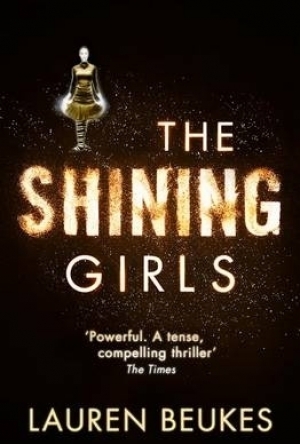
Jamie (131 KP) rated The Shining Girls in Books
Jun 4, 2017


Ambitious & unique story line (1 more)
Handles the web of time paradoxes well
Mash-up of genres is disjointing (2 more)
Romance is distracting at best
Repeated murder scenes gets wearisome
A cool time travel thriller
The Shining Girls follows Harper, a crude serial killer from the 1930’s that can hop through time; and Kirby, the spunky young woman that got away. This book was incredibly ambitious in its premise and I spent a great deal of my time reading the book wondering if it could deliver and I can happily say that I wasn’t disappointed.
The story is a heavily character driven dive through recent American history, from the Great Depression in the 1930’s all the way up to the early 1990’s. I was impressed by the amount of research that was put into this book, each decade having enough detail to get a good feel for the era. Many of the characters were pretty well fleshed out for such short chapters, and I found myself liking many of them.
My favorite part of the story, though, was the tragedy that was Harper because of how very flawed and human he is. He views himself as commanding, charming, persuasive, but to many of his victims he’s just downright creepy. He thinks himself calculating yet he makes mistakes left and right. He has a drive to rise up from the trenches of poverty and starvation from his own era, to be powerful. His choice of victims are all women in a great act of femicide, because he has this dire need to feel masculine. He chooses women that he views as invincible, that shine with ambition in order to assert his dominance by snuffing them out. He thinks he has this divine purpose, a destiny to fulfill because he wants it so desperately, even though the reality is that it’s simply senseless violence with no real meaning. He obsesses over the murders, returning to the scene of the crimes over and over to get off. Harper is pathetic. It was a refreshing change from the stereotypical smooth, genius archetype that glorifies killers. I didn’t know right away that this book was meant to be a feminist novel, but that’s what I took away from not only Harper’s struggle with masculinity, but with the strong and fiercely independent female characters all throughout the book.
There were a couple of problems with the book, however, that I feel need to be addressed. The mash up of genres is both a good and bad aspect of the story. The middle chapters where romance comes into play to me was really distracting and feels out of place. The tagline describing the novel also states that “the girl who wouldn’t die hunts the killer who shouldn’t exist” but honestly, it didn’t feel much like Kirby was really hunting the killer. Looking for connections with other murder cases and investigating some wild hunches, yes, but really she spends most of the book developing her bond with Dan. I would have really liked for this to be more of a cat and mouse type of hunt between Kirby and Harper.
The chapters with Harper were much more interesting, but even those became a little repetitive. We as the reader follow Harper as he stalks his victims in childhood, waiting for the right time to strike when they reach adulthood. While it was necessary for the plot to detail the characters to both connect them to the greater chain of paradoxes and to show Harper’s descent, the violence is excessive and extremely detailed, and after a while it started to feel more like torture porn. It just got tiring after a while.
Despite its flaws, I thought this book was good, and I mean really good. I loved the way that the time paradoxes were handled, time travel stories tend to be tricky and usually end up with a couple of glaring loop holes. The loops are handled in a way that I found satisfying and this book is easily my favorite time travel novel I’ve ever read. It is truly unique and a story I won’t soon forget.

RəX Regent (349 KP) rated The Big Trail (1930) in Movies
Feb 19, 2019

“The Indians are my friends…” Breck Coleman – John Wayne
Not exactly a statement that would exemplify the Career of a man rightly or wrongly associated as being the Cowboy of the Cowboy and Indian movies. But there is no doubt that John Wayne was certainly one of the biggest western stars of cinema.
And The Big Trail is where it really begins for Wayne, but this 1930’s classic was a box office failure, coming not only at the dawn of sound film, but at the time of The Great Depression. It would be another decade by the time “The Duke” wold be born and John Wayne would take his crown as the western superstar which we all know today.
But The Big Trail, originally entitled The Oregon Trail, is not really a John Wayne vehicle. He was a relative unknown actor alongside stage talent, many of whom were drafted into Hollywood at this time simply because they could give a decent vocal performance, as many a silent star was falling, failing to adapt the talkies.
But again, sound is not the selling point of this movie. This was one of a handful of films which pioneered the 70mm film format, in this case, Fox Grandeur, or Grandeur 70. A none anamorphic widescreen format, which whilst not the first attempt, nor the first 70mm film format, it was the nearest to which would succeed later.
2oth Century Fox would change cinema in 1953 with the release of the first CinemaScope film, The Robe, a year after the debut of Cinerama, but Grandeur more closest resembles Todd AO, a format which is still technically used today though in a somewhat different way. The secret to CinemaScope’s later success was in many ways the reason for the failure of Grandeur and that was the fact that CinemaScope was an anamorphic process, screening the image from a regular 35mm film and expanding with the lens, therefore making it a lot cheaper to adapt existing projectors and auditoriums.
Grandeur on the other hand was a larger film format and required a complete upgrade to theatres and therefore, especially at the dawn of the depression era, was financially untenable. Only two theatres in the U.S. would ever show this film in its widescreen glory, with rest showing the alternate 35mm Academy version.
And this film, had SIX versions shot simultaneously, in four different languages, 35mm and 70mm, each requiring different takes with different cameras or casts. This was an incredible feet but one which would soon be reduced with the use of audio dubbing, subtitles and ability to pan and scan.
The problem with this film is simple. It has a loose plot but no real twists and turns. This is almost a documentary following the wagon train trail across the west as group of pioneers make their way to the better life and building the United States, or at least personifying the romantic version of it.
But the film’s pacing and visual style works best through the widescreen lens, a beautiful journey with the untamed west as backdrop, but this is not the the version that most people have seen. The majority only saw the 35mm version which is 20 minutes shorter, edited more quickly and simply doesn’t have the visual flare of the Grandeur version. And without this vast visual canvas, the thousands of extras and props are almost cut from the film, a film with now feels a bit pointless and bit wayward.
Starring an unknown, though despite his hammy acting, Wayne manages to hold his own, the pacing is rushed and the fact that this is an epic journey which we are embarking on with them is somewhat lost.
The widescreen version’s main failing is the sound, which is inferior and poorly mixed in comparison to the 35mm cut, which is crisper and louder, but sound was never going to this movie’s strength and it was still rudimentary at this point. But on a visual level, considering the age of the print, the cinematography is up there as being some of the best, with scale and dare I say, “grandeur” about it.
This is an interesting film to watch now, though unless you are a strong western fan, I would say that it will not thrill, though as a peace of cinematic history, it is littered with footnotes and it very watchable.

BankofMarquis (1832 KP) rated The Sting (1973) in Movies
Mar 29, 2020


On my list of All Time Favorite Films
I'll come right out and say it - the 1973 Academy Award winning film for Best Picture, THE STING, is one of the greatest films of all time. It's well written, well acted, well directed with a memorable musical score and characters, situations, costumes and set design that become richer over time and through repeated viewings.
Set in Chicago in the gangster-ridden, depression era mid-1930's, THE STING tells the tale of two con man who join forces for the ultimate con of a vile N.Y. Gangster who is responsible for killing a friend of theirs.
From everything I have read about it, the script by David S. Ward (who won an Oscar for his work) arrived pretty much finished. He shaped the story of the con men - and the myriad pieces of misdirection - fully before shopping it around to the studios. Universal jumped all over it and tabbed veteran Director George Roy Hill (BUTCH CASSIDY AND THE SUNDANCE KID) to helm the picture. Hill - being no dummy - saw this as a vehicle to re-team Newman and Redford (stars of Butch Cassidy) and the rest...as they say...is history.
Newman and Redford are perfectly cast as veteran grifter Henry Gondorff (Newman) and up and coming grifter Johnny Hooker (Redford). They have an ease of playing off of each other - each one complimenting the other one - both giving in their scenes with the other one which makes the scenes more rich and alive. They are joined by a veritable "who's who" of late '60's/early '70's character actors - Harold Gould, Eileen Brennan, Charles Durning, Ray Walston and Dana Elcar - all of them bring their "A" game and they are fun to watch. Special notice should be made to Robert Earl Jones (father of James Earl Jones) as Luther, the character who's fate propels the plot forward.
But...none of this would work if you didn't have a "bad guy" that was interesting to watch - and to root against - and bad guys don't get much better...and badder...than Robert Shaw's Doyle Lonnegan. Shaw plays Lonnegan as a physically tough boss who doesn't suffer failure, but is smart enough to avoid obvious traps. He is a worthy adversary of Gondorff and Hooker's and it is fun to watch Newman, Redford and Shaw play off each other. One other note - it was with this performance that Universal recommended Shaw to young Director Stephen Spielberg for his "shark flick" JAWS.
Edith Head won her 8th (and last) Oscar for the magnificent period costumes in this film and Marvin Hamlisch won for the Music - a surprising hit on the pop charts of re-channeled Scott Joplin tunes. The set design won an Oscar - as did the Director, George Roy Hill. All in all, the film won 7 out of the 11 Oscars it was nominated for (Redford was nominated for Best Actor, but did not win).
THE STING is a well crafted film. One that tells a timeless story and that stands the test of time as a testament of how great of an achievement in film this is. It is one of my All Time favorites.
Letter Grade: the rare A+
5 stars (out of 5) and you can take that to the Bank(ofMarquis)

Gareth von Kallenbach (980 KP) rated King Kong (2005) in Movies
Aug 14, 2019
Following up the box office and Oscar success of the Lord of the Rings Trilogy is an undertaking that is sure to have its dangers. Expectations of the fans notwithstanding, the ability to recapture the magic of the trilogy could be akin to capturing lightning in a bottle. When it was announced that Peter Jackson would follow his Oscar success by doing yet another adaptation of King Kong, there were plenty of questions amidst the excitement.
When an earlier remake was a critical and commercial bomb, “Would Jackson be able to do justice to one of the all time classics?” was one of the biggest questions. When it was announced that comedian Jack Black would be in the film, people began to wonder what Jackson had brewing. Black, as well as Academy Award winner Adrian Brody were seen as offbeat choices. As the release date for the film neared, so did speculation over the look of the film, the running time, and its decision to follow the screenplay of the original rather than adapt to a modern setting.
The film follows a filmmaker named Carl Denham (Jack Black), who in an act of desperation flees New York for a mysterious and uncharted island in an attempt to finish his latest movie before the studio can shut him down. Amidst the backdrop of the Great Depression, it is clear that Denham knows that failure now could be the end of his livelihood and his long term future. As he embarks on his fly by night production, Denham encounters Ann Darrow (Naomi Watts), a recently unemployed Vaudeville performer who is enticed into the film in the hopes of meeting its writer Jack Driscoll (Adrian Brody). It seems that Ann has long coveted a part in Driscoll’s plays and hopes that by meeting him, she will obtain her long sought after audition.
With the cops and studio hot on their heels, the cast and crew board a tramp steamer named “The Venture” as they set off for the mysterious island that is known only to Denham via a mysterious map he obtained through methods unknown.
As the voyage unwinds, not only does Denham get the chance to film segments of the film, but Ann and a stranded Jack find themselves becoming an item. Jack is inspired by Ann, and he works like a man inspired turning out page after page of material for various projects which he hopes Ann will star.
Eventually the ship finds its way to the mysterious Skull Island surrounded in fog, and the crew venture ashore to take in the bizarre and exotic land that has previously been unexplored. Upon finding a fortified wall and settlement the crew has a run in with some dangerous natives which in turn leads to Ann being kidnapped and offered up sacrificial style to a gigantic creature the Islanders refer to as Kong. Undaunted, Jack and the crew set off to rescue Ann while Denham shoots footage along the way, as the island offers visuals the likes of which have never been seen by mankind.
Along the way, the crew encounters deadly creatures and obstacles at every turn, as does Ann who plays a dangerous game of cat and mouse with Kong as she comes to grips with her situation. Kong is taken with the lovely Ann and protects her against numerous dangers including a pack of Tyrannosauruses in one of the film’s best action sequences.
Of course few will be surprised at the final act of the film so I will leave it to say that the fish out of water nature of the previous versions remains intact as Kong finds himself dealing with an urban jungle which leads to a spectacular finale atop the Empire State Building.
In many ways Jackson’s film is three separate films. The first hour of the film is an interesting and, at times witty, character piece where the lead characters assemble. The look of the city is amazing, making it very clear that enormous amounts of effort went into crafting the look of Depression Era New York, and to remind the audience that Prohibition was also in effect. The interplay between the characters is decent.Black does standout work as the slick Denham, as does Watts as the wholesome and lovable Ann.
The second hour of the film is the special effects showcase where the mysteries of Skull Island and Kong are shown complete with all manner of CGI creatures and action sequences. While most of them are well staged, I could not help but note that on more than one occasion the CGI backdrops did not match up well with their live action counterparts. There is one scene of a stampede where it looked like the actors had been drawn in and that they were running in place as they clearly did not mesh with the spectacle behind them.
Throughout the film this occurrence happened more and more which really had me wondering if the effects house was overtaxed. A film with a budget reportedly over 100 million should not have these technical issues. Thankfully Kong himself is a wonder, with everything from his expressive eyes and facial features, captured in a remarkable way. It is just a shame that the other effects did not get the same treatment as the films namesake, as he truly is a site to behold. Andy Serkis who did the character mannerisms for the animators program did a phenomenal job. The movements of Kong progress with a strength and agility that bellies a simian rather than a skilled performer.
I do not want it to sound as if I did not enjoy the film, as much of the film worked very well, technical issues aside. What my biggest issue with the film was that at over 3 Hours, it was far too long for the material to support. We get numerous scenes of Ann and Kong flirting, bonding, fighting, running, and more. What is cute the first couple of times becomes dull the more it is repeated. It is obvious that they have a bond; we do not need to see it over and over ad nauseum to get the message. Also, the character development and interplay between the characters that was so effective in the first part of the film all but vanishes amidst the effects.
The finale of the film is a rousing success as the daring visuals and camera angles are very inventive and thrilling. This segment with its fury of motion and sound will have viewers on the edge of their seat as it certainly delivers the goods. The biggest issue again is having to sit through three hours to get to it. Anyone who has seen either version of Kong knows exactly where the film is heading, and after two hours of screen time I found myself wishing they would just hurry up and get to it.
Jackson has crafted a very entertaining and lavish film that packs its share of thrills. What the film needed is someone to reign in Jackson and his boundless enthusiasm for the project to remind him that sometimes less is more. Jackson has said that he had over 4 hours worth of material filmed but trimmed it down to its current running time. When the film is almost twice the running time of the original, I found myself thinking that minus 45 minutes the same story could have been told.
Despite the flaws and the hype, King Kong is a solid film that for me was more satisfying in many ways than any of the “Rings” films. While not quite a masterpiece, this Kong is worthy of the name and pedigree of the timeless original that inspired it.

Movie Metropolis (309 KP) rated Mary Poppins Returns (2018) in Movies
Jun 10, 2019
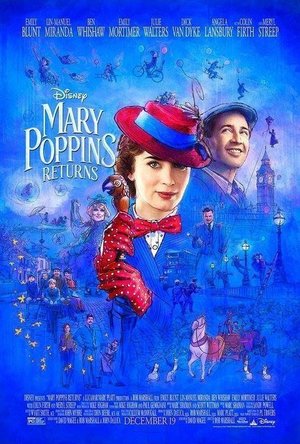
Disney knocks it out of the park
It was 1964 when the world was introduced to a practically-perfect British nanny in Walt Disney’s Mary Poppins. Back then, Julie Andrews starred as the eponymous character alongside Dick van Dyke and David Tomlinson. It was an instant hit and became one of Disney’s most-loved feature films.
That is, by everyone apart from the author of Mary Poppins, PL Travers. So incensed by what she felt was Disney’s misunderstanding of her source material, she banned all future work with the studio.
So, 54 years later and with Travers’ estate finally agreeing to a sequel (I wonder how much Disney executives had to pay for that), we get a sequel that no-one was really asking for. Mary Poppins Returns brings the titular character back into the hearts of newcomers and fans alike, but is the film as practically-perfect in every way like its lead? Or is it a bit of a dud?
Now an adult with three children, bank teller Michael Banks (Ben Whishaw) learns that his house will be repossessed in five days unless he can pay back a loan. His only hope is to find a missing certificate that shows proof of valuable shares that his father left him years earlier. Just as all seems lost, Michael and his sister Jane (Emily Mortimer) receive the surprise of a lifetime when Mary Poppins (Emily Blunt), the beloved nanny from their childhood, arrives to save the day and take the Banks family on a magical, fun-filled adventure.
Emily Blunt as Mary Poppins? You’re right to be sceptical. After all, how can an American actress bring to life a character so quintessentially British? Remarkably, she does it, with a cracking British accent to match. Blunt is, as she is in all her films, picture-perfect and oozing charisma. In fact, the entire cast is fabulous with the likes of Colin Firth and Meryl Streep joining the party as a sneaky bank manager and Mary Poppins’ cousin respectively. We’ve also got Julie Walters popping up every now and then as Ellen the housekeeper.
The new Banks children are absolutely wonderful. Pixie Davies, Nathanael Saleh and Joel Dawson show a range of emotions that would make seasoned actors blush, but here they thrive and look like they were having a blast. And that’s a trait clearly shared by the entire cast. Lin-Manuel Miranda’s plucky lamp-lighter, Jack, is obviously having the time of his life and this makes the whimsical nature of Mary Poppins Returns even more apparent.
In its hey-day, Mary Poppins was a technical revolution. Mixing live-action with colourful animation made the screen burst alive with imagination. Of course, special effects have moved on in the 50+ years that Mary has been away from our screens, but you’ll be pleased to know that each sequence feels just as magical.
From under the sea adventures to topsy-turvy houses, the ‘action’ scenes are beautifully filmed by director Rob Marshall. One scene in particular, involving hundreds of lamp-lighters is absolutely astounding and exquisitely choreographed.
The finale is typical sickly-sweet Disney, but in a movie populated by cartoon penguins, Irish dogs and the meaning of childhood, why shouldn’t it be?
The setting of Depression-era London lives and breathes before your very eyes. The CGI and practical effects used to create the capital in 1935 is astonishing, and testament to the teams behind the film. That £130million budget was clearly very well spent.
Then there are the songs. We all know the masterpieces from the original, but will there be any here that children will still be singing along to when they grow older? That’s debatable, but there are three or four that have the potential to be future classics. Look out for Trip the Light Fantastic, which makes up part of the film’s best scenes.
The finale is typical sickly-sweet Disney, but in a movie populated by cartoon penguins, Irish dogs and the meaning of childhood, why shouldn’t it be? The world is filled with such atrocities, it’s nice to sit back, relax with the family and enjoy a film that allows you to escape into your own imagination.
Any downsides? Well, while the pacing is nearly spot on, there’s no denying that Mary Poppins Returns is a long film by family film standards. At 130 minutes, it feels like this sequel is perhaps more for fans of the original than the children that the older film was clearly made for.
But these are small gripes in a sequel that pleasantly surprises on each and every turn. While lacking in the typical Disney poignancy, the film’s message is read loud and clear. There’s no doubt that Mary Poppins Returns is yet another hit for the studio and you’re sure to leave the cinema with a huge smile on your face. Mary is back and she means business.
https://moviemetropolis.net/2018/12/23/mary-poppins-returns-review-disney-knocks-it-out-of-the-park/

Bong Mines Entertainment (15 KP) rated KOD by J. Cole in Music
Jun 7, 2019
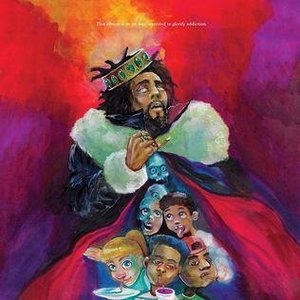

J. Cole is a popular hip-hop lyricist out of Fayetteville, North Carolina. Not too long ago, he released his long-anticipated, self-produced, fifth studio album, entitled, “KOD”.
J. Cole – “KOD Trailer”
Cole revealed via Twitter that “KOD” stands for Kids on Drugs, King Overdosed, and Kill Our Demons. The rest of the album he leaves to our interpretation. Well, let’s begin.
INTRO
The album begins with caution. Jazz bellows underneath a female voice reciting uplifting words. Her message suggests listeners should make the right decisions (choose wisely) because the past (sand in an hourglass) can provide shelter for their demons.
Also, a way to a painless existence is provided. Those in pain must choose wisely, or make healthier decisions, to avoid being tormented by their past.
KOD
The title track showcases Cole’s Kids on Drugs braggadocios side. In verse one, he utilizes his carnal mind to reply to media/fans asking him a bunch of ‘how’ questions. But instead of being humble, Cole replies to his critics in an arrogant way.
The second verse disconnects from the first and goes into a random storytelling mode with intersecting ideas that jump from one subject to another.
The outro is noteworthy. It forms a bridge between Intro and KOD songs. Also, it ends on a thought-provoking note.
If love is indeed the strongest drug like Cole stated, then why isn’t it being chased after like the drugs listed above? Why aren’t more people getting high off love? The question then becomes…is love even a drug?
That depends on who you ask. But what we all will agree on, love is an invisible element that contributes to people being addicted to drugs? It’s a fact, a strong love for something breeds addiction, dependency, et cetera.
PHOTOGRAPH
Cole uses a 2018 rhyme pattern to address a woman he follows privately on social media. He’s addicted or loves to stalk the woman online, and it’s starting to mess with his health.
Cole always excels when he tells stories about him and a woman. Women are his go-to subject to rap about and he does a pretty good job on this song.
THE CUT OFF (FEAT. KILL EDWARD)
Cole isn’t too fond of doing features on his albums. But this time, he enlists his alter ego, kiLL edward, to help him say that Heaven is a mental mind state.
edward raps that he’s stuck in his fallen ways and that’s why he keeps falling down. That’s why he drinks alcohol and uses drugs to help him cope. But keep in mind that edward is actually Cole.
Cole raps about disloyal friends that owe him an apology and what he’s gonna do to them when they meet. But all the while, edward is in Cole’s mind telling him that drinking alcohol and using drugs will help numb his pain.
ATM
ATM is an energetically poppin’ single with replay value. It begins with the album’s theme—choose wisely.
Cole praises money like it’s biblical and even states that it solved every problem he had. But after counting up all the money, he concludes that you can’t take it with you when you die.
The Scott Lazer & Cole-directed video shows the King of Drugs chauffeuring a bunch of children riding on a drug float. The storyline is dope, reminiscent of a classic video from hip-hop’s golden era.
Also, Cole literally gives his arm and leg to purchase a vehicle. That transaction signifies what people are doing nowadays to accumulate material wealth. But keep in mind, chasing money will lead to your death or downfall. Message received.
MOTIV8
Motiv8 is a good track that features a sample from Junior M.A.F.I.A.’s “Get Money” single.
Cole encourages listeners to get high and get money, even though he just said that chasing money is detrimental to their health.
Verse 2 features one of Cole’s best lyrics and flow.
KEVIN’S HEART
Cole’s continues his lyrical crusade and touches on his favorite subject.
He raps about being in a committed relationship but admits to being an addict that’s addicted to cheating. He tries to fight the temptation and remain faithful but acknowledges that he’s fake for thinking that way.
BRACKETS
The song begins with a Richard Pryor comedy skit.
Cole speaks about being a millionaire and then he receives a phone call from Uncle Sam.
Verse 2 highlights Cole’s disgust with paying higher taxes now that he’s a millionaire.
ONCE AN ADDICT – INTERLUDE
Cole shines brightly on this song, which is reminiscent of Nas’ “Project Windows” single.
He addresses his mother’s battle with alcoholism. The reason why she drank—because Cole’s step-father had a baby with another woman. So, to cope with the pain, Cole’s mother started abusing alcohol.
With no one to turn to, she used to call to talk to Cole. But he didn’t like talking to her while she was drunk.
At the end of the song, Cole regrets being that way to his mother when she needed him the most.
FRIENDS (FEAT. KILL EDWARDS)
Cole finds solace in his alter ego and cops another bag of weed to smoke. Somehow, he needs it to cope and gets aggravated when he doesn’t smoke.
He takes this time to address his friends who aren’t motivated to succeed. He tells them several things they can blame their lack of motivation on. And ends it by saying that the blame game is also an addiction that people use to not get better.
Also, he raps about depression and drug addiction.
WINDOW PAIN – OUTRO
The song begins with a girl telling Cole about the time her cousin got shot. Cole is sad, listening to the girl with tears in his eyes.
Then Cole praises the Most High. He speaks about things he wanna do like killing the man that made his mother cry and seeing his granny on the other side.
The girl ends the song with a powerful message.
1985 – INTRO TO “THE FALL OFF”
Cole ends his KOD album in battle rap mode. He addresses Lil Pump for dissing him on Pump’s “F*ck J Cole” song.
Cole’s flow is melodic and his lyrics cut deep. He foretells Pump’s future and predicts the rapper will be on Love & Hip-Hop in five years. Also, Cole wished him good luck in his career.
CONCLUSION
J. Cole gets a big thumbs up for producing a solid album with no features. Also, his evergreen message of choosing wisely has to be applauded, especially nowadays when living recklessly is being rewarded.
Listeners have different options to cope with their pain. Using drugs and drinking alcohol are just two ways of doing so. But if you choose wisely, and pick a healthier way to ease your pain, your life will change for the better.
https://www.bongminesentertainment.com/j-cole-kod/