

Sugar Counter: How to shop without sugar and follow a healthy low sugar diet or a sugar free diet
Food & Drink and Health & Fitness
App
Check and record the exact sugar content of 1400+ everyday foods! Like it or lump it, sugar is a...

350 South Beach Diet Recipes
Food & Drink and Health & Fitness
App
350 South Beach Diet Recipes *** 50% Off Today!! **************************** ABOUT SOUTH BEACH...

The Way Alex Sees Me (Aphrodite in Disguise #2)
Book
High school senior Rusty Finch is in a pickle. His grades are plummeting even though everyone...
Dark MM Contemporary Historical Paranormal Romance
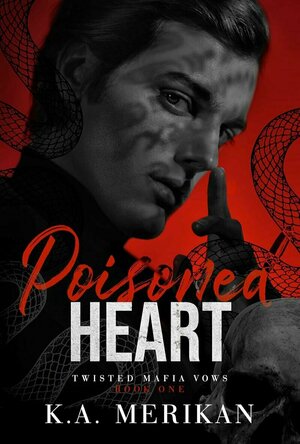
Poisoned Heart (Twisted Mafia Vows #1)
9.5 Rate It
Book
It was supposed to be blackmail. Now we’re choosing the wedding cake. I’m Corvus Van der Horn,...
Contemporary MM Mafia Dark Romance

Lyndsey Gollogly (2893 KP) rated The Darkest Minds in Books
May 12, 2022


Book
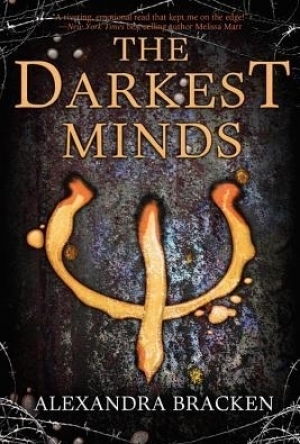
The Darkest Minds ( The Darkest Minds book 1)
By Alexandra Bracken
⭐️⭐️⭐️
When Ruby wakes up on her tenth birthday, something about her has changed. Something alarming enough to make her parents lock her in the garage and call the police. Something that gets her sent to Thurmond, a brutal government 'rehabilitation camp.' She might have survived the mysterious disease that's killed most of America's children, but she and the others have emerged with something far worse: frightening abilities they cannot control.
Now sixteen, Ruby is one of the dangerous ones.
When the truth comes out, Ruby barely escapes Thurmond with her life. Now she's on the run, desperate to find the one safe haven left for kids like her - East River. She joins a group of kids who escaped their own camp. Liam, their brave leader, is falling hard for Ruby. But no matter how much she aches for him, Ruby can't risk getting close. Not after what happened to her parents.
When they arrive at East River, nothing is as it seems, least of all its mysterious leader. But there are other forces at work, people who will stop at nothing to use Ruby in their fight against the government. Ruby will be faced with a terrible choice, one that may mean giving up her only chance at a life worth living.
This started off so well I was really enjoying it then I sort of hit a brick wall I can’t tell you at what point I just became a little bored in the middle. It was ok just I think I wanted more from the last half of the book. The concept was really interesting and in quite frightening especially if you have kids. I don’t know something was just lacking. I’m hoping book 2 is better.

Movie Metropolis (309 KP) rated Contagion (2011) in Movies
Jun 11, 2019

An all-star cast with the likes of Gwyneth Paltrow, Kate Winslet, Matt Damon and Jude Law is bolstered by excellent cinematography and nail-biting claustrophobia in a film which never forgets its purpose: to shock.
Contagion starts with a cough, a single cough from a single woman, which in turn spreads across the globe, killing over 20 million people in every country on the planet and becoming one of the worst viral epidemics the world has ever seen. The directing style is exquisite and focuses on the days after the first contraction of the deadly virus; close-ups of door knobs and drinking fountains add to the heightened panic and sense of claustrophobia and the continuous references to bird-flu bring it home how frail a race we actually are.
Soderbergh gets stuck into the details of the virus straight away and the pace never lets up, you’ll be gasping for air with the infected as you struggle to keep pace with what’s going on; it’s a relentless film, much like the disease itself. The movie is one of many recent developments that have parallel storylines running throughout; Kate Winslet is a scientist at the centre of disease research, whilst Matt Damon plays a middle aged father protecting his daughter.
Gwyneth Paltrow plays a wife and mother who has been embarking on a dangerous affair whilst away on business and it has to be said, she is excellent in her role, even though it lasts a mere 20 minutes before she pegs it. Her illness is well controlled on screen and you share the pain she is in.
Matt Damon is somehow immune to the virus after losing his wife (Paltrow) and more disturbingly, his son in scenes unbefitting of the films 12A certificate and Kate Winslet looks surprisingly angelic in her body bag… oops, didn’t mean to spoil that for you.
Alas, it’s not all good news as Jude Law pops up now and again as an annoying journalist trying to discover a cure and shame the money grabbing pharmaceutical companies, he plays the character well and you definitely buy into his sense of ‘crazy’ but out of all the stories shuffling for your attention, his is the one you care least about.
Unfortunately, some other small issues hold the film from being a complete success. Parallel storylines are all well and good but there are perhaps too many here. Whilst focusing on Winslet dealing with the fact she has contracted the virus, you forget about how Mr. Damon is coping looking after his potentially not immune daughter and the same can be said for Law’s character too. Which one are we to focus on?
Contagion is artistically, a brilliant film, but it could be said that it’s more style over substance. Yes, the characters have depth, though not as much as we’d like, the story is well written and the shots are beautifully choreographed but that good, solid story is lost about half way through as Soderbergh tries to handle all the different viewpoints. It’s a fantastic film, but not the outright success it could have been. You will however, be reaching for that anti-bacterial hand cleanser a little more often.
https://moviemetropolis.net/2011/11/08/review-contagion-2011/
Hazel (1853 KP) rated A Piece Of The World in Books
May 30, 2018
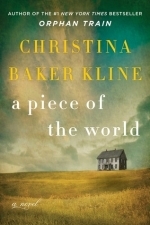
Until reading Christina Baker Kline’s note at the end of the book, it is impossible to guess that it is based on real people, although, admittedly, it is a little strange to name the main character after oneself. In fact, A Piece of the World is written around a single painting in the Museum of Modern Art, New York: Christina’s World (1948) by Andrew Wyeth, a man who appears and paints this work in the story.
Baker Cline researched thoroughly into the background story of the painting. Christina Olson, the main character of this book, was a real person who posed for Wyeth as he painted this striking picture. Although the overall story is a work of fiction, the dates and key characters are biographically accurate. Beginning in 1939, the narrative weaves too and fro, from Christina’s present day to her childhood and back again. Christina is an ageing woman who can barely walk and lives in a dilapidated cottage with her brother on a hill in the village of Cushing, Maine. Having lived in this state for so long, it is a welcome surprise to be visited by the young Andrew Wyeth who falls in love with the cottage and regularly comes to work on his canvases in their upper rooms. Through their peaceful relationship and flashbacks to her past, Christina’s character development is investigated and knitted together to explain why she has become this recluse on a hill.
Christina had problems from a very young age. After almost dying from a fever, she developed an undiagnosed degenerative disease that slowly ate away at the nerves in her arms and legs. Today, neurologists believe this to be Charcot-Marie-Tooth disease but there were no doctors able to provide this diagnosis at the time. Christina suffered aches and pains growing up and could barely walk in a straight line. Her determination to keep going is admirable and makes her a strong female protagonist.
One day in her early twenties, Christina meets a boy who pays her the kind of attention that she has never received before. Believing his promises that they will be together forever, she dares to dream of having a normal life. The reader, however, knows that the future Christina is alone with only her brother for company, making it heartbreaking to read of their developing romance knowing that it is not going to last.
There is no “happy-ever-after” to this story, nor is there a sad ending. It is an account of a woman who had been dealt a raw deal in life but continued getting on despite it. The end result, the painting Christina’s World, shows Christina as she sees herself. She may not be able to walk but she is still a woman; she made the most of her childhood, she never complained. This painting is her “letter to the World that never wrote to [Her].”
A Piece of the World is a powerful novel about purpose and determination. Christina may not have had a typical, successful life or become famous but she had her daily achievements: crawling through a field for an hour to visit a friend, cooking dinners despite not being able to stand up, carrying on after the end of a romantic relationship …
Written as gracefully as the brushstrokes of a painting with elements of Emily Dickinson thrown in here and there, A Piece of the World is a beautiful piece of work. It is something that can be enjoyed as you are mentally drawn into the storyline, leaving you wondering what happens to Christina and her brother after the completion of the painting. It is a novel the author can be proud of.
Hazel (1853 KP) rated A Piece Of The World in Books
Dec 14, 2018

Until reading Christina Baker Kline’s note at the end of the book, it is impossible to guess that it is based on real people, although, admittedly, it is a little strange to name the main character after oneself. In fact, <i>A Piece of the World</i> is written around a single painting in the Museum of Modern Art, New York: <i>Christina’s World</i> (1948) by Andrew Wyeth, a man who appears and paints this work in the story.
Baker Cline researched thoroughly into the background story of the painting. Christina Olson, the main character of this book, was a real person who posed for Wyeth as he painted this striking picture. Although the overall story is a work of fiction, the dates and key characters are biographically accurate. Beginning in 1939, the narrative weaves too and fro, from Christina’s present day to her childhood and back again. Christina is an ageing woman who can barely walk and lives in a dilapidated cottage with her brother on a hill in the village of Cushing, Maine. Having lived in this state for so long, it is a welcome surprise to be visited by the young Andrew Wyeth who falls in love with the cottage and regularly comes to work on his canvases in their upper rooms. Through their peaceful relationship and flashbacks to her past, Christina’s character development is investigated and knitted together to explain why she has become this recluse on a hill.
Christina had problems from a very young age. After almost dying from a fever, she developed an undiagnosed degenerative disease that slowly ate away at the nerves in her arms and legs. Today, neurologists believe this to be <i>Charcot-Marie-Tooth</i> disease but there were no doctors able to provide this diagnosis at the time. Christina suffered aches and pains growing up and could barely walk in a straight line. Her determination to keep going is admirable and makes her a strong female protagonist.
One day in her early twenties, Christina meets a boy who pays her the kind of attention that she has never received before. Believing his promises that they will be together forever, she dares to dream of having a normal life. The reader, however, knows that the future Christina is alone with only her brother for company, making it heartbreaking to read of their developing romance knowing that it is not going to last.
There is no “happy-ever-after” to this story, nor is there a sad ending. It is an account of a woman who had been dealt a raw deal in life but continued getting on despite it. The end result, the painting <i>Christina’s World</i>, shows Christina as she sees herself. She may not be able to walk but she is still a woman; she made the most of her childhood, she never complained. This painting is her “letter to the World that never wrote to [Her].”
<i>A Piece of the World</i> is a powerful novel about purpose and determination. Christina may not have had a typical, successful life or become famous but she had her daily achievements: crawling through a field for an hour to visit a friend, cooking dinners despite not being able to stand up, carrying on after the end of a romantic relationship …
Written as gracefully as the brushstrokes of a painting with elements of Emily Dickinson thrown in here and there, </i>A Piece of the World</i> is a beautiful piece of work. It is something that can be enjoyed as you are mentally drawn into the storyline, leaving you wondering what happens to Christina and her brother after the completion of the painting. It is a novel the author can be proud of.
<imgsrc="https://www.moma.org/media/W1siZiIsIjE2NTQ1NyJdLFsicCIsImNvbnZlcnQiLCItcmVzaXplIDIwMDB4MjAwMFx1MDAzZSJdXQ.jpg?sha=33c151dba7f8de4c"width="100"height="40"alt="ChristinasWorld"/>;

Gareth von Kallenbach (980 KP) rated 28 Weeks Later... (2007) in Movies
Aug 14, 2019
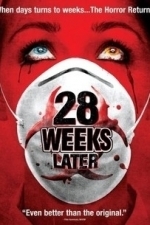
In 28 Weeks Later, society is slowing starting anew as thanks to a repopulated military zone on the Isle of Dogs. When a plane of natives arrives with two children, a sense of hope accompanies them, as the return of children is seen as a sign that the crisis is over and a better future is at hand.
The children are soon reunited with their father (Robert Carlyle), who is struggling to cope with the death of his wife, lost to the infected hordes months earlier. The fact that he panicked and left his wife to her fate is a secret that he has lived with, still he feels compelled to tell his children that their mother died despite his best efforts to help her.
As children are prone to do, the two children become bored with living in a compound and sneak past the blockade into the outer areas of London, areas that have not been fully reclaimed since the attack, declared off limits due to safety concerns.
Undaunted, the duo return to their former home to collect some of their personal items and there they make a startling discovery. Their mother is alive, and has been holding up inside their house since being left for dead by their father.
Once returned to the compound, it’s discovered the mother is a carrier of the virus, but does not manifest the disease nor it’s symptoms. Fascinated that they may have found a way to create a vaccine for the virus, the leader of the military medical community passes along her findings to her commanding officer. Unswayed by the possibility of creating a vaccine should future outbreaks occur, the commanding officer decides to follow standing orders and eradicate all signs of the virus which means killing the children’s’ mother.
Before the military can take action, a chance encounter causes the virus to spread and before long, the military is taking up arms in an effort to control the disease that is spreading like wildfire amongst the survivors. In short order, it becomes impossible to control the
infected, and the decision is made to kill anything that moves, infected or not in an effort to contain the outbreak.
During the chaos, the children are taken under protective care of a lone soldier and the doctor who is convinced that the children may hold the key to defeating the virus in their blood and must be protected at all costs. What follows is a chaotic race to get the children to safety while avoiding the infected and the soldiers in a deadly race against time for their very survival.
Following up the classic first film is a difficult task, and while not as good as the original, the sequel for the most part works. The characters and plot are paper thin, even by horror film standards, and there is little effort made to give the characters any back story or motivation beyond survival. The film is essentially one long segment of characters fleeing, yet there are some amazing visuals and chilling moments that will delight fans of the series and genre.
The images of London in desolation and of gas and fire flowing through the streets are haunting, and provide a none to subtle reference to the situation in Iraq, of a nation out of control.
Director has done a solid job of crafting a modern horror tale of a world gone mad, that raises ethical questions that will stay with viewers after the films conclusion.

Amanda (96 KP) rated Five Feet Apart in Books
Jul 7, 2019
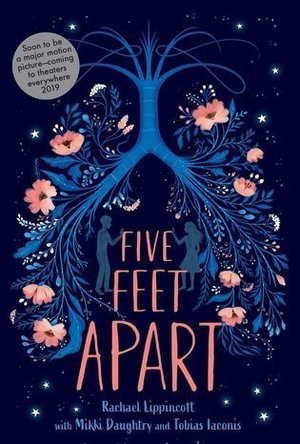
This book had/has so much hype and more so when the movie was released. I almost skipped the book and watched the movie because of who was playing the Will character, but I decided against it and went for the book first.
First and foremost, the cover is absolutely gorgeous! I wanted to get the book with the original cover and I sometimes just stare at it. I understand why there is a re-release of the book with the movie poster on the covers, but to me, it takes away from the author and the publisher. I try my best NOT to buy the books with the movie posters.
So we have two teenagers, Stella and Will, whom both have Cystic Fibrosis. In a nutshell, this disease affects the lungs and digestive system. The lungs fill rapidly with mucus and makes it difficult to breathe. The highly big part, and the main story of this novel, is that two people with the SAME disease have to stay a minimum of six feet apart. That is because one of them could get worse, or die, just from the others contamination.
Stella is optimistic and uploads YouTube videos and tries to keep her parents notified and tries to not think about her older sister being gone.
Will has not so much as given up, but more like kind of goes with the flow of his condition. So much so that he lets his friends use his hospital room as a 'hook up' area. Such a nice guy, don't you think?
Anyway, so these two don't really like each other at first but feelings are developed over bonding of memories and Stella getting Will to get back to doing his treatments on a regular basis. The story starts that they have to be six feet apart, but Stella pushes the boundary and keeps it at five feet apart - hence the title.
I hate to say this, but I had a hard time connecting with either one of these characters. The only one I really somewhat liked was Poe.
I can see the whole similarity with this book and The Fault in Our Stars, but I can't compare the two. Because, in TFIOS, they had cancer and didn't have to stay away from each other. And to me, those characters were easier to connect with than Will and Stella. I'm not saying I didn't like them, but I just couldn't connect.
Stella basically lives so her parents don't fall a part and Will is just kind of 'whatever' about the whole thing because he sees no future for himself, or a treatment that will help him.
I don't really see the hype in this story. It felt rushed to me as well. I'm not sure if it's because the story was kind of short for the plot. Maybe it's because we didn't get a lot of story. I'm not fond of how it was written. It was almost written like it was going to be a movie so it was scripted.
I'm not saying it was a bad story. It really wasn't. I just feel like there was something missing and I couldn't really feel much for these two characters. I couldn't fathom some of the decisions and through process that Stella has done.
All in all, not a terrible story, but I don't see what the hype was about and I don't think I'll be watching the movie.