
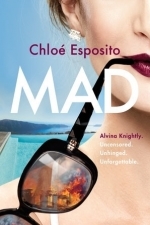
Mad: Mad, Bad and Dangerous to Know Trilogy
1.0 Rate It
Book
In this compulsively readable debut, set between London and Sicily over one blood-drenched week in...
Fiction
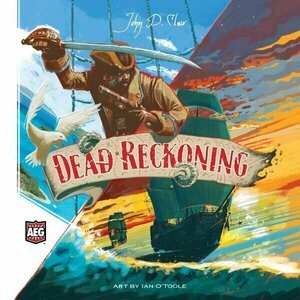
Dead Reckoning
Tabletop Game
Dead Reckoning is a game of exploration, piracy, and influence based in a Caribbean-esque setting....

AB Navigator Free (SSN-Computer)
Navigation and Travel
App
In case you are a regular car driver and have to visit numerous locations; this App provides aid in...

Kim Pook (101 KP) rated Scary Stories to Tell in the Dark (2019) in Movies
Oct 27, 2021
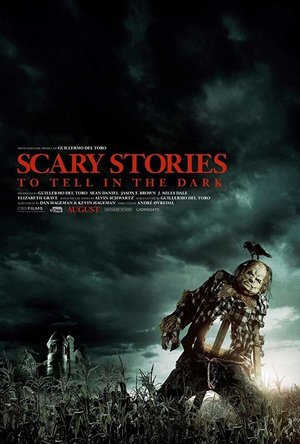


As a thank you, the teens invite the young lad to a haunted house with them. They have a look around and start to see strange things, such as an old lady and a dog. After a terrifying ordeal the teens escape and go home. One of them, Stella, had found a book of scary stories in the house which she takes home with her. Stella begins to read the book, and as she reads the scene moves to Tommy (one of jocks) and shows that what she is reading is coming true. When Stella realises this, she takes the book back to the haunted House, however it is not that easy as the book reappears in her bedroom and begins writing another story, only this time it's about her friend August.
The teens decide they must find a way to stop it before the book takes the rest of the group.
I found the start of the movie very slow paced, but once the book comes into it, it moves at a more decent pace and I started to enjoy it, I even looked forward to sei g who the book took next and how.
Word of warning, if you don't like spiders you won't like Ruth's story, I had to look away a lot during that scene. Chucks story started creepy until it showed what was after him, and it just looked ridiculous, I honestly couldn't help but laugh! And Ramones story was also pretty laughable, it made me wonder if it was meant to be a comedy. Sadly from that point I couldn't take it seriously any more.

Darren (1599 KP) rated A Time to Kill (1996) in Movies
Jun 20, 2019


Carl Lee facing a double murder charge Jake Tyler Brigance (McConaughey) takes the case having to go up against powerful DA Rufus Buckley (Spacey) in what is a case fuelled with racial tension.
When the case brings the Ku Klux Klan back from grave Jake puts his own family in danger but thanks to young law student Ellen Roark (Bullock) and his mentor Lucien Wilbanks (D.Sutherland) to help him keep his business a float and win this case.
A Time to Kill is a racial driven courtroom crime thriller that touches on everything with the nice amount of time. We get left to question what you would do if you were in any of the position between the case which is a huge plus for the film. The idea that we get the racial tension going on because of how the case could be treated differently depending on the skin colour of a character also helps drive the story. when it comes to courtroom drama this is by fair one of the best out there.
Actor Review
Matthew McConaughey: Jake Tyler Brigance is a young lawyer who has taken over a small law firm from his mentor who struggles to keep the business afloat. When this case comes his way he wants to do the right thing because he knows how this can be a difficult decision and believe he can win the case against the odds. Matthew shows early on in his career he could handle the serious films in leading role.
Sandra Bullock: Ellen Roark is a young law student who has helped on many murder cases and wants to help Jake with this case to help clear Carl Lee from the charges. She has different political beliefs to him which they do class on but their passion together can drive the case. Sandra shines in this role in her early career showing how she can pull of the serious roles too.
Samuel L Jackson: Carl Lee Hailey is the man that finds his daughter beaten and raped and decides to take justice into his own hands by killing the men involved. He doesn’t care what happens to him just as long as he makes these men pay but not faces a double murder charge. Samuel is great in this role as a man who got pushed to his limits.
Kevin Spacey: D A Rufus Buckley is the cocky DA who thinks this case is a slam dunk as he knows he can get the white man’s vote on the jury and questions Jake ability in a courtroom. Kevin while playing a standard character for the villain of the courtroom hit it ot the park in every scene.
Support Cast: A Time to Kill has a supporting cast which is filled with stars in nearly every scene and each one gives a brilliant performance throughout the film.
Director Review: Joel Schumacher – Joel gives us one of his best films that balance the racial tension with the crime case perfectly.
Crime: A Time to Kill leaves us in the middle of a court case handle a sensitive subject which poses us questions on where you would stand on such a case.
Thriller: A Time to Kill does keep us one edge wondering where the next twist will come in the story be it in the courtroom or the tension building outside the courts.
Settings: A Time to Kill keeps nearly all the settings within the Louisiana town where racial tension is still strong and you can see the difference in both sides even with the same struggles.
Suggestion: A Time to Kill is one of the most must watch courtroom dramas out there with such a sensitive subject. (Must Watch)
Best Part: Closing speech.
Worst Part: Slightly long if you are being picky.
Believability: Parts could be.
Chances of Tears: No
Chances of Sequel: No
Post Credits Scene: No
Oscar Chances: No
Budget: $40 Million
Runtime: 2 Hours 29 Minutes
Tagline: A lawyer and his assistant fighting to save a father on trial for murder. A time to question what they believe. A time to doubt what they trust. And no time for mistakes.
Overall: One of the all-time best courtroom drams out there
https://moviesreview101.com/2016/11/06/matthew-mcconaughey-weekend-a-time-to-kill-1996/

MetaMoJi Note - note taking and PDF annotation app
Productivity and Business
App
MetaMoJi Note is a note and sketchbook app, PDF annotation tool, voice memo and digital scrapbook...

Jeff Nichols recommended The Hustler (1961) in Movies (curated)

Johnny Marr recommended track Coconut Grove by The Lovin Spoonful in Very Best of the Lovin' Spoonful by The Lovin Spoonful in Music (curated)

iGigBook Sheet Music Manager
Music and Productivity
App
Say goodbye to multiple 3 ring binders, suitcases full of books, and time wasted trying to find that...

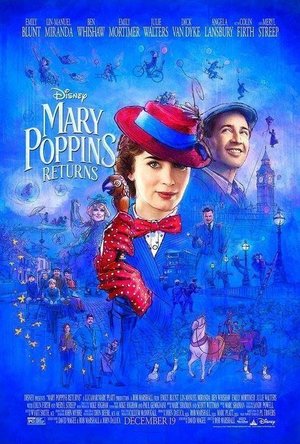
Phillip McSween (751 KP) rated Mary Poppins Returns (2018) in Movies
Jun 12, 2019
Acting: 10
Beginning: 7
Characters: 10
Cinematography/Visuals: 10
Conflict: 10
Here is what made the difference for me between the first and second movies. Consider the first film. If we’re really being honest, it primarily revolves around beautiful singing numbers with sprawling setpieces that are brilliantly brought to life on screen. Not only do you get that in the sequel, but you also get an actual conflict as well. There is an actual situation afoot that requires you to get behind the main characters and I really appreciated that aspect. Conflict is not just important, but NECESSARY to drive a story and you definitely get that here as the main family face potentially losing their home. Their struggle gives me a reason to keep watching beyond the amazing visuals and songs.
Genre: 8
This kids story is wonderful in so many different aspects. There is a magic here that’s unavoidable. As I said, I think it just edges out the original, but falls just short of other classic musicals like Singin’ In the Rain.
Memorability: 7
Pace: 7
For the most part, I was happy about the movement of the story. However, about ninety minutes in, things found themselves slowing down a bit as I was wondering when the movie was going to get to the punchline. It is refreshing that there is a solid blending of musical numbers and plot advancement and you never really feel like you’re getting too much of one or the other.
Plot: 7
Resolution: 10
Overall: 86
The musical flow of Mary Poppins Returns kicks things off properly and brings the movie to a beautiful endgame. I appreciated the attention to detail both in the real world, but especially in the alternate worlds where your imagination is really stretched. This movie is a magical reminder of why we go to movies in the first place.