
The Very Hungry Caterpillar– First Words
Games and Education
App
The Very Hungry Caterpillar™ & Friends First Words is an adorable preschool learning app for...
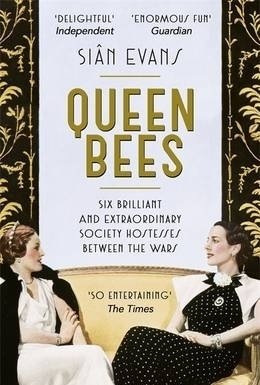

A spectacle of celebrity, talent and burning ambition, Queen Bees combines the biographical stories of six ambitious women who helped to shape the standards of British society between the two world wars. Londoner Siân Evans is a cultural historian who has previously worked with the Victoria and Albert Museum, National Trust and Design Museum, and takes great lengths to thoroughly research into her written subject in order to portray a highly accurate insight to the lives of historical figures. Due to the non-existent political status of women in the early 1900s, the women featured in this book are virtually unknown today, yet they had a great impact during the 20s and 30s and helped to shape the Britain of today.
Although not necessarily born into it, circumstances such as marriage meant these six women were regarded as upper class. In no particular order, the names impacting on the social revolution and thus featured in Queen Bees are as follows: Lady Nancy Astor, the first female MP; Lady Sybil Colefax, who became a friend of Edward VIII; Lady Emerald Cunard, also connected with the royal family; Mrs. Ronnie Greville, a rather formidable woman; Lady Edith Londonderry, the founder of the Women’s Legion; and Laura Corrigan, the youngest of the set. Evans talks the reader through these women’s careers as professional hostesses as they compete to throw the better party, entertaining famous writers and actors as well as members of royalty, both national and foreign.
What is perhaps the most interesting, and indeed the most worth learning, is the way a couple of these women altered the future of the British monarchy. Without their interference the future George VI would never have married Elizabeth Bowes-Lyon, and without their involvement in the relationship between Edward VIII and Wallis Simpson, George VI would never have come to the throne. This is such an important aspect of British history that has been widely left out and ignored. Without these hostesses influence we would all be experiencing a slightly different life.
In terms of the actual writing, Siân Evans manages fairly well to engage the reader as she relates the factual story in a more or less chronological way. A slight issue is the quick, often undetected, move from one woman to the next, resulting in a lot of confusion about who is who particularly at the beginning of the book. A lot of the narrative features other key figures from the same period and often moves away from the main characters, which, whilst interesting, is not what the reader necessarily expected from a book whose title Queen Bees suggested it was only going to be about the women’s lives.
Footnotes, quotes and extracts from letters and diaries help to make the book appear reliable, factual and believable. Some of the content, without back up, would have seemed rather fanciful or exaggerated. Queen Bees can be read as a source of entertainment or as a citation for historical research. What is found within these pages is a more unbiased account of the early twentieth century than would be found in numerous male dominated history textbooks.
Mature readers of all ages are likely to gain something from reading Queen Bees – pleasure, knowledge etc., however it is most likely to appeal to the contemporary feminist. With this in mind, be aware that the six hostesses were not feminists of their time; they were not involved in Suffragette movements and were fairly content to live off money earned by their husbands or fathers. Yet, on the other hand, they impacted on the future of Britain as much as the male politicians of the time. Highly political in content, Queen Bees is worth reading to discover our own history, but be prepared for initial confusion over who is who and rather lengthy paragraphs.
A spectacle of celebrity, talent and burning ambition, <i>Queen Bees</i> combines the biographical stories of six ambitious women who helped to shape the standards of British society between the two world wars. Londoner Siân Evans is a cultural historian who has previously worked with the <i>Victoria and Albert Museum, National Trust </i>and <i>Design Museum</i>, and takes great lengths to thoroughly research into her written subject in order to portray a highly accurate insight to the lives of historical figures. Due to the non-existent political status of women in the early 1900s, the women featured in this book are virtually unknown today, yet they had a great impact during the 20s and 30s and helped to shape the Britain of today.
Although not necessarily born into it, circumstances such as marriage meant these six women were regarded as upper class. In no particular order, the names impacting on the social revolution and thus featured in <i>Queen Bees</i> are as follows: Lady Nancy Astor, the first female MP; Lady Sybil Colefax, who became a friend of Edward VIII; Lady Emerald Cunard, also connected with the royal family; Mrs. Ronnie Greville, a rather formidable woman; Lady Edith Londonderry, the founder of the Women’s Legion; and Laura Corrigan, the youngest of the set. Evans talks the reader through these women’s careers as professional hostesses as they compete to throw the better party, entertaining famous writers and actors as well as members of royalty, both national and foreign.
What is perhaps the most interesting, and indeed the most worth learning, is the way a couple of these women altered the future of the British monarchy. Without their interference the future George VI would never have married Elizabeth Bowes-Lyon, and without their involvement in the relationship between Edward VIII and Wallis Simpson, George VI would never have come to the throne. This is such an important aspect of British history that has been widely left out and ignored. Without these hostesses influence we would all be experiencing a slightly different life.
In terms of the actual writing, Siân Evans manages fairly well to engage the reader as she relates the factual story in a more or less chronological way. A slight issue is the quick, often undetected, move from one woman to the next, resulting in a lot of confusion about who is who particularly at the beginning of the book. A lot of the narrative features other key figures from the same period and often moves away from the main characters, which, whilst interesting, is not what the reader necessarily expected from a book whose title <i>Queen Bees</i> suggested it was only going to be about the women’s lives.
Footnotes, quotes and extracts from letters and diaries help to make the book appear reliable, factual and believable. Some of the content, without back up, would have seemed rather fanciful or exaggerated. <i>Queen Bees</i> can be read as a source of entertainment or as a citation for historical research. What is found within these pages is a more unbiased account of the early twentieth century than would be found in numerous male dominated history textbooks.
Mature readers of all ages are likely to gain something from reading <i>Queen Bees</i> – pleasure, knowledge etc., however it is most likely to appeal to the contemporary feminist. With this in mind, be aware that the six hostesses were not feminists of their time; they were not involved in Suffragette movements and were fairly content to live off money earned by their husbands or fathers. Yet, on the other hand, they impacted on the future of Britain as much as the male politicians of the time. Highly political in content, <i>Queen Bees </i>is worth reading to discover our own history, but be prepared for initial confusion over who is who and rather lengthy paragraphs.
Sophia (Bookwyrming Thoughts) (530 KP) rated The Forgetting in Books
Jan 23, 2020


I am, by no means, a fan of books that involve sex trafficking. It's a terrible thing and I really don't want to bother reading about the subject (if book club chooses a certain book from the Gateway Readers Award Nominees that's related to trafficking, I'm tucking my tail between my legs and running away).
Then again, I figured Nicole Maggi's The Forgetting would be something pretty different from other thrillers, seeing as a girl goes through a heart transplant and then suddenly starts losing some of her memories while gaining some memories of the heart's original owner. In order for Georgie to actually return back to her normal life from what she calls the "Catch" though, Georgie has to unravel how her new heart's owner really died before she loses all of her memories.
<blockquote>How could I have memories that didnt belong to me? But they were there, as crystal clear as other memories I knew were mine.</blockquote>
The Forgetting faintly reminds me of a mystery show I once watched every Sunday on CBS (to which I forgot the name of, but it was always before the 10pm news), only this is just a one time thing and everything is back to normal completely (plus, I don't think that detective actually went through a transplant. More like a gut feeling. Either that, or he's a genius). It also reminded me a little of If I Stay and Where She Went, as Georgie spends a good part of the book panicking about not making into Julliard because its been her dream to go Julliard since she was a kid.
<blockquote>Would I graduate on time? Ace my Juilliard audition and start there in the fall?</blockquote>
But while Georgie seems to emphasize stressing and eventually questioning her decision to play the oboe for a lifetime after going (IF) to Julliard, it's very evenly balanced out and doesn't overshadow the overall plot of the book. (Though suddenly doing all the good stuff and whatnot is really odd unless Georgie does this on a daily basis... before the transplant.)
It is, however, pretty obvious that "Jane Doe" has unfinished business from early on in the book with the way the story plays out and how it was written (not that I mind). Some of the characters' actions do seem a little questionable how does one not go after a person that's taking a file... and not leaving a print out? Or at least go on the hunt for the file? I mean, it's a government building! Seems a little odd they would actually let a file out and don't even try to get it back, unless it's in the future and therefore not part of the book (because what happens to Georgie after doesn't matter too much after she solves the mystery of Jane Doe's death).
Though The Forgetting is a little on the paranormal side (I haven't actually heard anything similar to Georgie's situation in real life), Maggi does convey the realities and horrors of trafficking through her latest book.
---------------
Advanced copy provided by the publisher for review
Original Rating: 4.5 out of 5
Review originally posted at <a href="http://bookwyrming-thoughts.blogspot.com/2015/01/arc-review-the-forgetting-by-nicole-maggi.html">http://bookwyrming-thoughts.blogspot.com/2015/01/arc-review-the-forgetting-by-nicole-maggi.html</a>;
<a href="http://bookwyrming-thoughts.blogspot.com/"><img src="http://3.bp.blogspot.com/-cG5gfBqJVzk/VA5BIojjZ9I/AAAAAAAAD1g/7srLUfpAGEU/s1600/banner.png"; /></a>

To the farm!
Book and Education
App
* Nominated for the prestigious Cybils Awards 2012 in the Books category * Best10APPS said: "The...

MSC1: Be Confident in Who You Are
Book and Education
App
Now for iPhone and iPad! • “As you prepare for back to school, don't forget the anxiety...[this...


Acanthea Grimscythe (300 KP) rated 100 Fathoms Below in Books
Jan 31, 2019
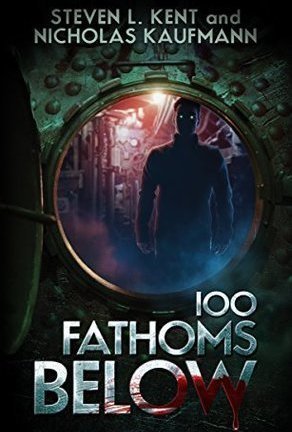
And here’s where my spoiler comes in, because I’m about to go on a mini-rant. The synopsis hints at a mysterious, evil monster hunting the crew of the ship, but it does not say what that creature is. Therefore, I feel that revealing this is a book about vampires is, in fact, a spoiler–contrary to popular belief of other reviewers. It’s pretty obvious early on, with the first hint coming in at 8%, however if I’d known this was a vampire book before I chose it, I wouldn’t have taken the time to read it. The key word there is BEFORE. Because I had it spoiled by a straight up summary of the prologue on Goodreads, coupled with a pretty hearty description about the… well, vampires. So, now that you know that overly used trope is here, let’s take a moment to discuss what Kent and Kaufmann do right, shall we?
The vampires in 100 Fathoms Below are good ol’ classic boys, in the sense that they’re bloodthirsty and want nothing more than to maim and breed more of their kind. They aren’t romanticized, either–and that’s a great thing. In fact, they’re written well enough that, despite having been spoiled by a fellow reviewer, I enjoyed the book enough to finish it. Mostly because I wanted to see how things ended.
Something else Kent and Kaufmann excel at is creating a connection between the readers and characters. I found myself sharing the hopes and dreams of many of the figures we meet. That made some of the deaths a lot more difficult on me.
The plot is quick, making it an easy read; however, the sense of intrigue isn’t really there. The whole discovering a prototype Soviet submarine takes the back burner with an occasional mention and even when it does come back into play toward the end of the book, there’s not exactly any excitement or fear of them being caught. I found that to be a bit disappointing.
Overall, it’s an entertaining read, but I probably wouldn’t take the time to re-read it. I’d like to thank NetGalley and Blackstone Publishing for providing me with a free copy of this book in exchange for an honest review.

My Little Pony: The Movie
Book and Entertainment
App
The official storybook app for MY LITTLE PONY: THE MOVIE is here! In Hasbro’s MY LITTLE PONY THE...

Mr. Potato Head: School Rush
Book and Education
App
#1 Kids App in over 20 countries! #1 Book App in over 60 countries! Are you ready for a...