

Gareth von Kallenbach (980 KP) rated Call of Duty: WWII - The War Machine in Video Games
Jun 19, 2019

The maps are available for various gameplay modes and I tried them in Hardpoint, Kill Confirmed, and Team Deathmatch modes and found I really enjoyed them.
Dunkirk
The first map I played was a highly-detailed recreation of the famous beach and seaport. Playing in Hardpoint mode, the battle featured plenty of objects to take cover behind as well as buildings with multiple levels which Snipers used to pick off anyone who came their way. I found the open area of the beach required some skillful navigation but the Ferry Terminal and abundant cover soon became my best friend during protracted battles.
Egypt
Believe it or not this is the first time a Call of Duty map has been set in this fabled locale and it is a very beautiful map complete with monuments, temples, and battle debris. The shadows in buildings give enemies a great place to hide and strike from as do the tight tunnels. I played Team Deathmatch in this mode and found myself in a constant state of run and gun as stopping to admire the scenic beauty is not advised.
V2
A rocket launch facility provides plenty of cover for those who want to stay moving but also abundant tunnels and a launch tower where sharpshooters can ply their craft. Playing Kill Confirmed was a fast and exciting experience as stopping to collect tags was highly dangerous thanks to the vast field of view from the launch tower and the abundant places for enemies to emerge from.
For The War mode of the game, the new map is called Operation Husky and it details aspects of the Allied invasion of Sicily where Allied units must locate and retrieve three key pieces of information. The Axis players must of course stop them and Trip Wires and other traps go hand in hand with the firepower one would expect.
If you are lucky enough to complete this phase, then the obtained data must be transmitted to the bomber which if successful, puts players in the cockpit of a fighter plane.
I found the plane very hard to control as it did not respond the way that I had expected it to from past flight simulators, but the action was intense and I at least was able to get a few enemy planes in my sites and unleash some damage along the way.
Of course no set would be complete without a Zombie mode, and The Shadowed Throne brings the heroes to a desolate Berlin where they must battle the unending hordes of undead in a series of locale. From a movie theater, museum, above ground and below, the enemies are fast, deadly, and just keep coming at you. Naturally you can get new weapons, abilities, and tools to help stay alive but I can tell you even after a 1hr and 25 minute match with some very skilled players, you never have enough firepower to truly be safe.
The War Machine takes the best elements of Call of Duty: WW2 and gives fans plenty to enjoy. With two more DLC packs to come and the release of Call of Duty: Black Ops IIII on October 12th, there are plenty of things coming to the series in the next few months.
http://sknr.net/2018/05/12/call-of-duty-ww2-the-war-machine-dlc-pack-2/
Gareth von Kallenbach (980 KP) rated Team America: World Police (2004) in Movies
Aug 14, 2019
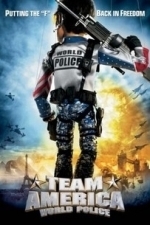
The film is a puppet movie based upon the old Thunderbirds television show about a team of specialists who fight to save the world from all manner of threats both real and imagined. The story is told entirely by puppets and miniatures which allows Stone and Parker to push the boundaries much further than they would be allowed to with live actors and in doing so, give the audience some of the deepest albeit raunchiest laughs seen in a long time.
The story opens with Team America battling the terrorists in Paris. Ever quick on the trigger, the team is able to stop the deployment of a weapon of mass destruction but in the process much of the cities famed landmarks fall from collateral damage.
Forced to find a new team member, the leader of Team America, Spottswoode recruits a stage actor named Gary Johnston to join the team and infiltrate the terrorist organization to learn what new attacks are being planned.
While this is seen as a good move by the team, there are parts of the team that are unsure of this as one in particular does not trust actors and thinks that he will escalate an already volatile situation. Undaunted, the team sets off for Cairo Egypt and eventually leaves a trail of mayhem and destruction in their path.
It is at this point that the real story of the films kicks into gear. It is learned that North Korean leader Kim Jong Il is working with the terrorists to plot the ultimate attack and have convinced a cadre of Hollywood actors to attend a peace conference with other world leaders in an attempt to undermine Team America.
In between battles, Team America has plenty of time to take on other concerns such as love, self-doubt, personal issues, and suspicions, some of which result in a side-splitting sex scene that will soon become legend, as even though it involved puppets, it has to be severely edited in order to avoid an NC-17 rating. As it stands, it is one of the funniest moments in cinematic history and worth the price of admission alone.
The film does a good job of mixing comedy and commentary without ever drawing a line and saying this is how it is. We see Team America as a gun happy bunch, but we are also shown that they are true patriots who are willing to do what it takes to keep the country safe. Such is the genius of Parker and Stone as they are able to create a biting social commentary that makes you aware of issues without pounding the audience over their heads with the creator’s viewpoints. Instead the audience is given a situation and watch things taken to highly comical levels in an effort to entertain. People are free to draw their own conclusions and interpretations of the messages in the film as despite your beliefs or political leanings, we all laugh. There will be those that take umbrage to the crude humor and language, and others will not like what they may call a right-wing message. Instead I looked at the film as a very funny comedy with solid social commentary.
The only fault I had with the film is that it does drag a bit about ¾ in before getting to the final confrontations but those are well worth the wait. The film also parodies many action films and it is fun to try to try to uncover which film is being parodied. The puppets themselves are very impressive as their movements and facial expressions are easily the best ever captured on film.

Summer Heat: A Steamy Romance Collection
Caitlyn Lynch, Christina Rose Andrews, Ariel Bishop, Líadáin Douglas, Annika Steele, Gwen Marshall, Abbigail Clark, Livvy Ward, T.D. Crawls, Ava Bari, Avery J. Heath, Tally Bane, Sera Taíno, Moxie Rivers, Siobhan Kearney, Cynthia Miller and Tricia Ramey
8.0 Rate It
Book
A collection of 17 steamy short stories (5,000 - 10,000 words) by new and established romance...
Anthology Contemporary Romance

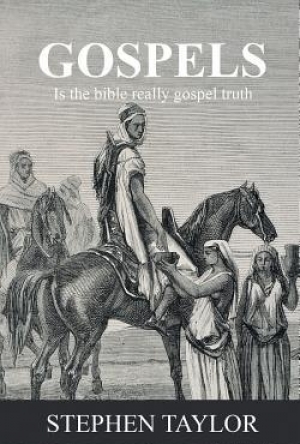


Is the Bible really gospel truth? This is the question the honourable, academic Robert Babcock aims to find out on his quest to find the earliest copies of the gospels in order to prove the reliability of the story of Jesus as recounted in the King James Bible. However, this is not the key focus of Stephen Taylor’s fictional novel, Gospels. The main character is the perfidious John Campbell-John, a rogue, imposter and swindler who flees 19th-century England in an attempt to escape from his debts.
John meets the magnanimous Robert in Venice and, despite being polar opposites, become firm friends. After being honest for the first time in his life, admitting to owing thousands of pounds in gambling debts, Robert offers John the opportunity to accompany him on his quest through the deserts of Egypt. John accepts and the pair finds themselves on an adventure of discovery and personal redemption.
John and Robert make an unlikely but excellent team. Robert’s knowledge of the Bible and ancient history is vital, however, John’s propensity for falsehoods and cunningness gets them out of a few scrapes and tricky situations. Nonetheless, it is difficult for John to give up his old ways and his insular behaviour threatens to get them in more trouble.
Fortunately, Robert’s humility begins to influence the young scoundrel, as does his penchant for historical artefacts. As the story progresses, John begins to leave his past behind and becomes interested in Robert’s work, learning new things about Egyptian culture and the origins of the Bible. However, when a new gospel comes to light that threatens the whole of Christianity, Robert does not know what to do; and only John can give him counsel.
John Campbell-John is a character that the author introduced in a previous book. However, the timelines are not sequential, therefore Gospels is a stand-alone novel. The time frame for this book needed to be set in 1835 to correspond with historical truths. Although Robert’s discovery of a Gospel of Thaddeus Jude is an invention of the author, the quest itself is based on the journeys of three 19th-century Bible hunters. Stephen Taylor has conducted an enormous amount of research, including the biographies of Robert Curzon, Constantin von Tischendorf and Émile Amélineau who, on separate occasions, sought the same knowledge as the fictional Robert Babcock.
Despite being titled Gospels, the novel, for the most part, focuses on John Campbell-John and his wicked ways. Through a first-person narrative, John explains his past, his betrayal of a friend, and his addiction to gambling. Initially, he has no qualms about his behaviour and acts only for himself and his selfish greed. Whilst Robert goes in search of knowledge, John goes on a journey of redemption, coming to terms with his previous wrongdoings. However, acknowledging these faults is not enough, he needs to turn away from these roguish ways.
It is disappointing that the narrative does not focus more on the gospels, both real and imagined. There was enormous scope for an in-depth look at the life of Jesus and the inconsistencies in the Bible. The fictitious Gospel of Thaddeus Jude evokes a similar reaction in Robert as the Non-Canonical Gospel of Thomas found in the 19th-century had on many devout Christians. There was so much potential with this direction of thought, however, the author passes over it in preference to the life of John Campbell-John.
Slow to begin but increasingly interesting as it progresses, Gospels is a book of many themes. History, both 19th-century and ancient; religion, although not a Christian story; and achievement and absolution combine together to produce a unique tale that takes the reader from the back alleys of London to the River Nile and the deserts of Sinai. A subtle clue in the prologue keeps readers alert as they await the conclusion of the adventure – an ending that ambiguously reveals whether John moves on from the follies of his past.
Is the Bible really gospel truth?</i> This is the question the honourable, academic Robert Babcock aims to find out on his quest to find the earliest copies of the gospels in order to prove the reliability of the story of Jesus as recounted in the King James Bible. However, this is not the key focus of Stephen Taylor’s fictional novel, <i>Gospels</i>. The main character is the perfidious John Campbell-John, a rogue, imposter and swindler who flees 19th-century England in an attempt to escape from his debts.
John meets the magnanimous Robert in Venice and, despite being polar opposites, become firm friends. After being honest for the first time in his life, admitting to owing thousands of pounds in gambling debts, Robert offers John the opportunity to accompany him on his quest through the deserts of Egypt. John accepts and the pair finds themselves on an adventure of discovery and personal redemption.
John and Robert make an unlikely but excellent team. Robert’s knowledge of the Bible and ancient history is vital, however, John’s propensity for falsehoods and cunningness gets them out of a few scrapes and tricky situations. Nonetheless, it is difficult for John to give up his old ways and his insular behaviour threatens to get them in more trouble.
Fortunately, Robert’s humility begins to influence the young scoundrel, as does his penchant for historical artefacts. As the story progresses, John begins to leave his past behind and becomes interested in Robert’s work, learning new things about Egyptian culture and the origins of the Bible. However, when a new gospel comes to light that threatens the whole of Christianity, Robert does not know what to do; and only John can give him counsel.
John Campbell-John is a character that the author introduced in a previous book. However, the timelines are not sequential, therefore <i>Gospels</i> is a stand-alone novel. The time frame for this book needed to be set in 1835 to correspond with historical truths. Although Robert’s discovery of a Gospel of Thaddeus Jude is an invention of the author, the quest itself is based on the journeys of three 19th-century Bible hunters. Stephen Taylor has conducted an enormous amount of research, including the biographies of Robert Curzon, Constantin von Tischendorf and Émile Amélineau who, on separate occasions, sought the same knowledge as the fictional Robert Babcock.
Despite being titled <i>Gospels</i>, the novel, for the most part, focuses on John Campbell-John and his wicked ways. Through a first-person narrative, John explains his past, his betrayal of a friend, and his addiction to gambling. Initially, he has no qualms about his behaviour and acts only for himself and his selfish greed. Whilst Robert goes in search of knowledge, John goes on a journey of redemption, coming to terms with his previous wrongdoings. However, acknowledging these faults is not enough, he needs to turn away from these roguish ways.
It is disappointing that the narrative does not focus more on the gospels, both real and imagined. There was enormous scope for an in-depth look at the life of Jesus and the inconsistencies in the Bible. The fictitious Gospel of Thaddeus Jude evokes a similar reaction in Robert as the Non-Canonical Gospel of Thomas found in the 19th-century had on many devout Christians. There was so much potential with this direction of thought, however, the author passes over it in preference to the life of John Campbell-John.
Slow to begin but increasingly interesting as it progresses, <i>Gospels</i> is a book of many themes. History, both 19th-century and ancient; religion, although not a Christian story; and achievement and absolution combine together to produce a unique tale that takes the reader from the back alleys of London to the River Nile and the deserts of Sinai. A subtle clue in the prologue keeps readers alert as they await the conclusion of the adventure – an ending that ambiguously reveals whether John moves on from the follies of his past.

Stratego® Single Player
Games and Entertainment
App
Play the best Strategy game ever! Stratego® Official Single Player from Jumbo is all about good...

Tracks4Africa Overland Navigator
Navigation and Travel
App
Tracks4Africa Overland Navigator is the iOS version of the Tracks4Africa GPS maps which has been...

Connor Sheffield (293 KP) rated Pirates of the Caribbean: Dead Men Tell No Tales (2017) in Movies
May 27, 2017
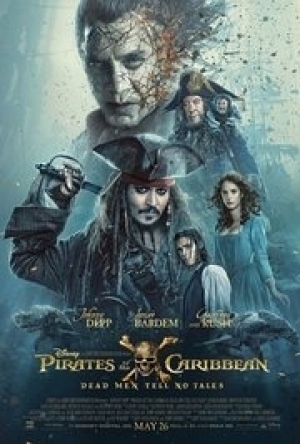

The new cast included the young and beautiful Kaya Scodelario (Maze Runner / Skins / Moon) as Carina Smith, alongside the also young Brenton Thwaites (Home and Away / Maleficent / Gods of Egypt) as Henry Turner, the son of Will Turner portrayed by Orlando Bloom, who returns to this instalment as only a minor character, but one that sets the film in motion. Both of these new young performers excel in their roles and deliver a performance that is reminiscent of their predecessors in the franchise. Watching these two was like watching Orlando Bloom and Kiera Knightly in The Curse of the Black Pearl, with moments that reminded more so of their evolved relationship in the Dead Man’s Chest. Though Carina and Henry are not (yet) together throughout the film, you can clearly see that their shared goal to reach a mysterious legend that may or may not be true, in honour of their father’s, brings them closer and closer and time goes by and events begin to unravel.
Our new villain, Captain Salazar, is portrayed by Javier Bardem (No Country For Old Men / Skyfall / The Sea Inside) and brilliantly portrayed at that. He’s menacing and ruthless, and very haunting. His goal is clear and he does not rest until he finds Jack Sparrow. This film franchise has seen plenty of cursed men chasing the drunken idiot Captain all over the world, but Salazar is one thing the others were not….he is not a pirate. In fact he is the exact opposite, he was a naval captain for the Spanish and hunted pirates. This was his life, and this was his curse. His hatred of Jack Sparrow runs deeper than any villain set before him and this is what makes the film an exciting experience.
My only issue that whilst it is hilarious and I continued to laugh, this film seemed to be bursting at the seems with jokes and gags which sometimes felt forced. Trying to live up to the humour of the first film, but instead of always being perfectly timed to the right moments now and then, it seems to be in almost every conversation. This doesn't ruin the film in any aspect, just something I picked up on.
The fifth film is, in my opinion, definitely one of the better of the franchise. It excels in being a hilarious, exciting, action packed fantasy film, which is great for an audience of almost any age. Being a Disney film, it is suitable for children under parental guidance and older audiences from the teenagers to the elderly.
The effects get better with each instalment in the franchise and this film proves it with some beautiful imagery of the seas and the events that take place. The films makeup and set design are also incredible and fantastic to witness, as we see new treasures and new ships that take you to a whole new world, right there in the cinema.
If you’re going to watch this film, which I highly recommend, then do so at the cinema because like most films, your experience with the film will not be the same if you don’t watch it on the big screen. I saw this film in IMAX and it was stunning and incredible and just an absolutely thrilling experience.
Salazar’s Revenge (or Dead Men Tell No Tales, as it’s known in America) is most certainly going to be one of my favourite films of the year.

BookblogbyCari (345 KP) rated A Short History of the World in Books
Aug 5, 2018

As I hoped, the book often reads like a novel, with 67 distinct sections, each like a mini story. In order to fit the history of the whole world into one book, by nature the story telling ranges from nice and rapid, to a little too rapid. I found it rather like a catalogue of numerous interesting little nuggets of information. Despite covering events from all over the world, the topics often flow seamlessly from one topic to the next. Due to so many overlapping topics, this history of the world isn't told in a linear purely chronological pattern, but has to go backwards a little, now and again.
At various times throughout, the stories are gripping and Wells successfully brings history to life. I particularly liked the various sections on religious leaders. Appropriately, Wells tackles religion as would any unbiased historian-become storyteller. I also enjoyed the beginning, where Wells paints a crystal clear picture of our solar system and the vast empty space that our dramas are within. His description of our galaxy sounds nothing short of beautiful.
The book was meant to be predominantly factual, but Wells did include a substantial amount of speculation and opinion. This does not distract from the storyline, but adds value in generating the concepts of the time periods.
It covers progress and prosperity as much as carnage and decimation, and provides good explanations of everything it covers. (Although it would benefit from more illustrations). At times it feels detail heavy but also gives the reader a feel for each age - the book is not limited to which country went to war with which country and when, but also examines changes in ways of thinking through the ages. Including the Ancient Greek philosophers, Arabian progress in maths and science, the advent of experimental science, and the development of political and social ideas in Wells’ time.
I was reassured to learn that despite not studying the history of the world in its entirety in school, I was already familiar with much of the book’s content. Having said that, there were also topics where I really felt I was learning something. I read Wells’ opinion on why the Roman Empire fell, and how the industrial revolution was not merely a revolution in machinery, but rather a revolution in how people conducted their everyday lives. There were also some important figures from history described that were never mentioned in my school days, particularly Charlemagne and Roger Bacon.
Towards the end of the book, Wells correctly predicts another war like that of the Great War. However his final message was one of faith and hope in humanity’s progress.
With such a huge scope, Wells must have struggled with deciding what topics to include and what to exclude. I thought he ought to have included a touch more detail on Ancient Egypt, and on the causes of the Great War (World War 1). As a British person myself I would have liked to have seen more on British history.
Likewise, if the book were written now rather than 1922 I began to speculate on what he would and wouldn’t have included. I imagine there would certainly be a section on World War 2, rockets into space, the internet, and 9/11. He would have provided an excellently conducted section on how humans are destroying the planet.
One of the beauties of this book has to be its availability. If you type “short history of the world” into Google, the free PDF of this book takes up much of the first 2 pages of results. If you’re sketchy on world history, this book will fill in the main blanks, and is worth a read if this is your aim, especially if you wish to do so quickly. The fact that it’s split up into so many succinct sections also means that you can pick up and put down the book as often as opportunity allows. It also works well as a reference book, as it does not need to be read from cover to cover in order to look up one particular event or time period.
In summary, this book would be a welcome addition to bookshelf (or ebook library) of the general non-fiction fan or historian.
Find more of my book review on www.bookblogbycari.com
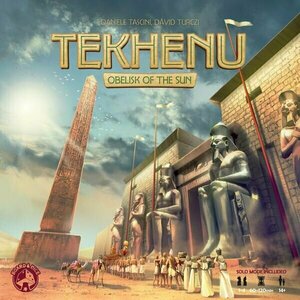
Tekhenu: Obelish of the Sun
Tabletop Game
Four millennia ago on the eastern bank of the Nile river was laid the foundation of the Temple of...