
Sophia (Bookwyrming Thoughts) (530 KP) rated These Broken Stars (Starbound, #1) in Books
Jan 23, 2020

Original Rating: 4.5 out of 5 owls
Note: Formatting may be lost due to copy and paste.
<i><b>Disclaimer:</b> Review copy provided by Disney Hyperion via Netgalley for review (thanks!)</i>
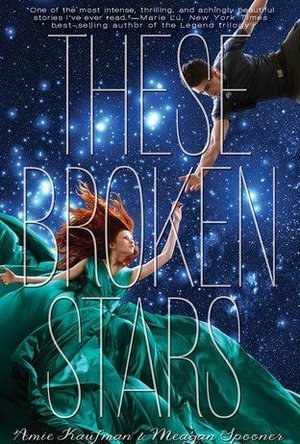
These Broken Stars follows two very different people, Lilac and Tarver, from a futuristic galaxy as they try to survive in the wilderness of an unknown planet after a ship crash in space.
I really love the way how These Broken Stars is set up and formatted. I didn't exactly understand it at first, but the beginning of each chapter is in the present (in terms of the book's timeline – not 2013), giving a very brief synopsis in a sort-of interview/interrogation style with Tarver. Then the chapter gives an elaboration, telling the story behind the interview/interrogation in Lilac's and Tarver's point of views. It sort of reminds me of If I Stay with its many flashbacks, but not as depressing (thankfully).
The romance between Lilac and Tarver is probably a little fast, but I can't really tell. In other words, compared to a lot of books I've come across that have romance, These Broken Stars is one of the ones not written in such a way that the reader may cringe. *phew*
What I didn't like though, is Tarver's personality. Usually I love it when a main character is sassy and has an attitude. Tarver's though... it just didn't bounce out really well. I mean, yes, he's sarcastic, and yes he has an attitude, but I just didn't really like it. It didn't really seem to go in with Lilac's personality.
I'm not being sexist. Otherwise, I would never have said that I liked Augustus Waters' personality from The Fault in Our Stars. In fact, I probably would have said that I hated Gus's personality.
(Oh no. With that being said, I'm bound to be the target of tomatoes for a while. *gives a very innocent look and ducks*)
It's not because it's John Green either. I can't always say an author is my favorite when it's my first time reading their work(s).
Of course, everyone's opinions, likes and dislikes of a character's attitude in a book is completely different from someone else.
For a debut novel, Kaufman writes an astronomically intriguing story. The situations Lilac and Tarver are put in aren't too exaggerated or unrealistic, and in a way, the story keeps the reader guessing until the author smoothly reveals what's really going on. I had to wonder a few times why a few horror elements were doing there, lurking about.
For anyone who likes science fiction/fantasy with a hint of romance, you might want to try out These Broken Stars. Maybe someone else will have a much better time with Tarver's personality. No guarantees, though. And no rollbacks in the process.
Sophia (Bookwyrming Thoughts) (530 KP) rated Destiny Gift (Everlast, #1) in Books
Jan 23, 2020

Marking in ebooks is the only way not to get in severe trouble. x) I pity my poor planner with the chickenly scribbles of doom.
Destiny Gift is actually a really interesting book, being set in a futuristic (though not so far from today I'm assuming) New York with a hint (okay, more like a lot) of mythology hooray! and fantasy double hooray! mixed in. So much is made clearer about halfway through the book, but Haygert manages to keep us in suspense and not confuse readers in the process, which basically shows that the author has great writing potential and hopefully a very successful writing career too!
The idea behind the Destiny Gift is also pretty intriguing, so let me toss some basic word math in: Visions + Made Up Mythology (Because then one has full control of making of legends. So much fun.) + Other Goody Elements = Cooking Up A Pretty/Really Good Story.
I hope that sums up my entire thoughts in a nutshell of good old math. No Algebra needed (YES). But I'm not exactly finished, because I still need to talk about the characters, and having no clue about the characters is pretty much a book losing an arm or leg (ouch).
Victor and Micah, the lovely guys one can go swoon over if they so choose but no thanks. I'm focusing on good old days of Finals seemed to be too perfect. Well, I take that back. They're not perfect. They just seem too perfect in looks. Not that I mind.
I also like Micah's humor. Victor seems more of a "I'm a poisonous snake. You know, red on yellow. Stay away if you want to live." type of person. Not exactly the most pleasant image, since this is the snake I'm talking about:
<img src="http://3.bp.blogspot.com/-YI9vO_3_YLQ/UqYxHxURzOI/AAAAAAAACIo/L09fY3iu8Ic/s1600/thCAIAE0RF.jpg"; />
Freaking out? It's not the actual poisonous one. I didn't really want to... "poison" my blog with snakes you know. :p
I was sort of thinking about Biology at the time the review was written.
I suppose it isn't a terrible comparison. Why? I'm not giving spoilers....
<blockquote>"All right, let's change the question. What* are you three?"
"Power Rangers, ever heard of them?"</blockquote>
--------------------
Review copy provided by author for review
Original Rating: 4.5 out of 5 Owls
This review and more can be found at <a href="http://bookwyrming-thoughts.blogspot.com/2013/12/review-destiny-gift-by-juliana-haygert.html">Bookwyrming Thoughts</a>
<img src="http://4.bp.blogspot.com/-Gi5Rk5yLloA/UtliaUbdL3I/AAAAAAAACbE/J27z92_qrYU/s1600/Official+Banner.png"; />
Hazel (1853 KP) rated In a Kingdom by the Sea in Books
Jul 31, 2019
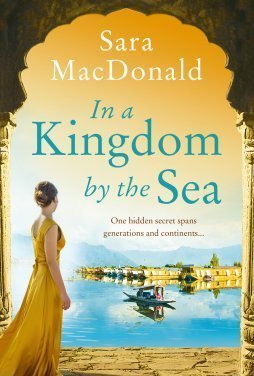

Imagine how it must feel to live in a country that is nearly always depicted negatively? How does it feel to have your country's natural beauty and landscape usurped by the violence of a small percentage of people? This is what Gabriella discovers the majority of the population of Pakistan face when she accompanies her husband Mike to Karachi where he works for Pakistan Atlantic Airways.
Gabriella and her sons have been used to Mike disappearing for months at a time on various jobs abroad, however, she is beginning to feel she and her husband are drifting apart. When Mike suggests she come and stay with him in Pakistan, she jumps at the chance, however, instead of strengthing the relationship, Gabriella feels further away than ever. Constantly left behind in a hotel while Mike attends numerous conferences, Gabriella is virtually housebound; it being too dangerous to venture outside. Not only that, she suspects Mike is having an affair and to top it all off, her half-sister Dominique reveals a devastating secret about their childhood in Cornwall.
In a Kingdom by the Sea by Sara MacDonald is essentially a contemporary love story, exploring the woes of a nearly fifty-year-old coming to the end of a long relationship. With underlying elements of mystery, for instance, what happened to Dominique in the early 1970s and what exactly is Mike up to, the novel also explores the hidden truths of a country stereotyped by violence and terrorism.
Gabriella meets dozens of kind and caring people in Pakistan who have her best interests at heart. These people are not dangerous or violent as the media often leads the western world to believe. Whilst some groups of people are content to cause death and destruction, leaving the cities a minefield to navigate, there are plenty more who wish to live peaceful lives. Gabriella is captivated by the beautiful, enchanting landscapes, unlike anything back home in England.
As the story progresses, Gabriella learns more about the lives of women in Pakistan. They are unable to live as they please, having to bow to the commands of their husbands, parents and brothers instead. The more Gabriella speaks to these women, the more she realises that cooped up in the hotel most of the day, she is in a similar situation, under the thumb of her own husband. So, she stops. Thinks. Is this the life she wants?
In a Kingdom by the Sea is a slightly long-winded but eye-opening story. Not everyone will be able to relate to the lives of Pakistani women, however, their plight will resonate with those who relish freedom. Whilst it is difficult to compare Gabriella's life with the women she meets in Karachi, readers will also be rooting for Gabriella's happy-ever-after.

Gareth von Kallenbach (980 KP) rated X-Men: Apocalypse (2016) in Movies
Aug 6, 2019


As such, I have been waiting for the films to capture the X-Men team dynamic while creating interesting fleshed out characters for the mass audiences to appreciate. I felt the franchise was headed in that direction with the last two films, X-Men: First class and X-Men: Days of Futures Past. Unfortunately, X-Men: Apocalypse takes a bit of a stumble in this department when it tries to introduce several fan favorite characters to this X-Men Universe. However it sacrifices solid character development in order to introduce them all in this one story. That’s not to say that this decision makes a bad film, it’s just that the characters are somewhat hollow and we never really connect with any of them. Not even the older characters who we already know. In the 2016 landscape of superhero/comic movies, when you have too many hollow characters the film often feels like we are just going through the motions of fan service, rather than telling a good story though film. This shallow character development makes me wish that instead of making more X-Men movies, Fox would team up with Netflix and produce an episodic series that can really dig down into the story of these characters and the missions they go on to help all of humanity…sigh…one can hope.
As for the rest of this film, it is safe to say that it is a fun popcorn adventure just in time for the summer blockbuster season. The first act suffers from a bit of pacing issues, but once the film starts to pick up steam, it becomes a full action packed adventure filled with all the mutant powers you would expect from an X-Men film. We receive excellent performances we have come to expect from James McAvoy, Michael Fassbender, Jennifer Lawrence and the rest of the standard cast. As far as the new characters added to this film, Sophie Turner (Game of Thrones) is the stand out as Jean Gery. She delivers one of the few nuanced performances of the whole film and I look forward to her continuing to build on the roll in future X-Men films.
X-Men: Apocalypse is more of what you would expect from the X-Men series. Not terrible but not all that great either. Fans will be exited and enjoy this entry to the series while casual viewers will enjoy the blockbuster elements.

Smile Designer Pro
Medical
App
*** The #1 App for digital smile design *** Don't have a Smile Designer Pro account? Sign up...

Heart Pro III - iPhone
Medical and Education
App
This app will not work on 3GS iPhones. 3D4Medical in collaboration with Stanford University School...

Fall of the Red Baron: World War I Aerial Tactics and the Death of Richthofen
Book
Fighter pilot Manfred von Richthofen (the Red Baron) lacked innate aerobatic ability. As a tyro, he...
Stickman Racer Road Draw
Games
App Watch
Stickman Racer Road Draw is a sequel to the legendary game of survival, where to make incredible...
games

From the Source - Japan
Book
Lonely Planet presents Japan's most authentic dishes - direct from the kitchens where they were...

Survivalcraft Day One
Games and Entertainment
App
You are marooned on the shores of an infinite blocky world. Explore, mine resources, craft tools and...