
Search
Search results

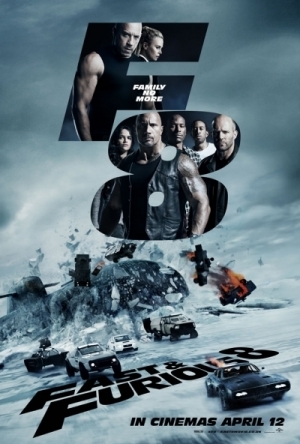
Movie Metropolis (309 KP) rated The Fate of the Furious (2017) in Movies
Jun 11, 2019


Spectacularly Dumb
With box office takings of over $1.5billion, it was obvious that Universal Pictures would never let Furious 7 be the end of a multi-billion dollar franchise, no matter what many fans truly wanted.
The previous instalment was also, surprisingly, warmly received by critics who were impressed with how sensitively the naturally bombastic series handled the death of lead star Paul Walker. Two years on, the crew are back with Fast and Furious 8; does it do enough to keep the franchise on a high?
Now that Dom (Vin Diesel) and Letty (Michelle Rodriguez) are on their honeymoon, Brian and Mia have retired from the game, and the rest of the crew have been exonerated, the plucky team of globetrotters has found a normal life of sorts. But when a mysterious woman (Charlize Theron) seduces Dom back into a world of crime that he can’t seem to escape from, the rest of the gang will face things that will test them like never before.
Newcomer to the franchise, director F. Gary Gray (Law Abiding Citizen, The Italian Job) manages to craft what is perhaps the most ridiculous entry in the series to date, plagued with tonal imbalances and plot holes so big you could fit the QE2 into them with ease. But you know what? It’s probably the most fun you’ll have in the cinema all year.
The cast are all reunited, barring Paul Walker’s Brian and those publicised rifts between Vin Diesel and Dwayne Johnson are nowhere to be seen as everyone on screen appears to be having the time of their lives. New recruit Charlize Theron adds a level of class to proceedings as steely supervillain, Cipher. She’s a cracking addition to the series and her acting prowess oozes from every pore, despite the often clunky dialogue.
Of course, successful predecessors command bigger budgets for their follow-ups and Furious 8 is no exception. $250million was spent on creating this film and it shows. It’s a feast for the eyes with explosions, shiny cars, stunning locations and breath-taking special effects. The result is frankly exceptional. From Cuba to NYC and from Berlin to Russia (actually filmed in Iceland), the vistas are nicely filmed and beautifully executed.
The action sequences are also choreographed very well, but from a franchise built on these foundations, I’d expect nothing less. In particular, a street chase through New York City is edge of your seat stuff as literally hundreds of vehicles worm their way through its congested streets.
Negatives? Well, the story is awkward despite some decent twists, the aforementioned plot holes cause a few headaches for a series that prides itself on continuity and some of the comedic elements are poorly placed, but in this eighth outing, much of that can be forgiven. After all, what other franchise could survive eight films and still prove as exciting as its first?
Overall, Fast and Furious 8 is unashamedly ridiculous but who cares? With exceptional special effects and a great new adversary in Charlize Theron, the series once again manages to surpass expectation. Each film tries its best to outdo its predecessor and before long, we’ll no doubt be heading to Mars with the gang. I’m up for that. Are you?
https://moviemetropolis.net/2017/04/13/spectacularly-dumb-fast-furious-8-review/

Glass Road
Games
App
Glass Road is the official digital version of Uwe Rosenberg's Glass Road board game. STORY: The...

Darren (1599 KP) rated Boys Don't Cry (1999) in Movies
Jul 25, 2019


Story: Boys Don’t Cry starts with Teena (Swank) a young woman that wants to become a man, she uses the name Brandon to go around small American towns looking to pick up women, which has got her in trouble in the past.
On his latest trip she finds a new group of people, with Lana (Sevigny) taking her eye, with her friends and family including John (Sarsgaard), Tom (Sexton III), Candace (Goranson) all welcoming her into the group as Brandon, when her true identity is revealed there will be shocking consequence.
Thoughts on Boys Don’t Cry
Characters – Teena is a young woman that is preparing for her sex change, before that she is going around as a young man Brandon, trying to meet women. She meets a young lady in Lana, makes new friends, but she is on the run which will soon catch up with her. This is a based on a real person that is going through the difficult process of wanting to have a sex change. Lana is the young lady that Brandon takes a shine to, she lives the dead end life that she isn’t enjoying and Brandon brings a new feeling about it, though she is left in a difficult position when the truth comes out. John and Tom are two of the group of friends that happily welcome Brandon into their group, when they learn the truth, they will go to extreme measures to get revenge.
Performances – Hilary Swank went on to win an Oscar for her role in the film, you can see why because she is fantastic in the difficult role. Chloe Sevigny shows us jus how her supporting role she can make a huge impact in the film. Peter Sarsgaard and Brendon Sexton III both are disturbing in their roles in the film which shows just how they could make to truly disgusting human beings come to life.
Story – The story here follows a young lady preparing for a sex change, that would go around looking for women, only for her secret to come back when the prejudice locals can’t deal with people somebody they can’t explain in their lives. This is a film way before it own time, even though it is only 20 years old, it is based on the real crime which would easily have been given a bigger spotlight in todays world. we do step into the world of transgenders, which is always difficult to word correctly because it is a sensitive subject. What occurs in the film is surprising and shocking that you couldn’t see happening.
Biopic/Crime/Romance – The film uses the biopic side of the film to show the romance and crime against Brandon Teena a young transgender that is still wanting to figure out how to get through the sex change.
Settings – The film keeps us in the locations which shows how the smaller towns can operate and have mindsets that don’t accept people that are different.
Scene of the Movie – The first night together.
That Moment That Annoyed Me – The actions of the men.
Final Thoughts – This is one of the most difficult movies you will see, it has a sensitive subject on the table which will show the way people can act towards people.
Overall: Must watch movie.

TodayTix – Broadway Tickets
Entertainment, Lifestyle and Stickers
App
Getting tickets to the best performances in your city has never been easier than with TodayTix, the...

Heather Cranmer (2721 KP) rated Whickering Place (Legacy of Darkness #2) in Books
Nov 22, 2019

I've been a fan of London Clarke since I read her debut novel Wildfell. I was thrilled when Whickering Place, the second novel in the Legacy of Darkness series, came out. I really enjoyed the first book in the series The Meadows. I must say that Whickering Place really blew me away!
If you're a fan of vampires, ghosts, and a touch of romance, you will love Whickering Place. I'm not going to rehash the synopsis since you will have probably read it yourself, and the synopsis does such a great job at describing this book. Even though I'm not a fan of the whole vampire movement in media, I really did enjoy Whickering Place. The plot was done brilliantly. I very much enjoyed the world building. In fact, I couldn't find one fault with the world building. Clarke does a fantastic job at making sure you're left feeling like you are a bystander amidst all the action. While there is a cliffhanger at the end of Whickering Place, this was done intentionally and will hopefully all will be revealed in the next book in the series.
The pacing was slow for about the first quarter or so of the book as the backstory and plot were being set up. I will admit that I did think about just giving up on Whickering Place, but I'm glad I kept reading because wow, the pacing definitely picked up after that! Once it picked up, there was no going back. I devoured each page. The suspense kept me on my toes! I was heavily invested in the story and all of the characters in Whickering Place.
Each and every character no matter how minor or major was written fantastically! Each character had their own personality, and it felt as if I was reading about a real flesh and blood person instead of just a character in a book. Avery was a great character. I could sort of relate to her agoraphobia. I used to be almost as bad as her. I felt bad for her, and I was always hoping she would get better so she could have more of a life. I kept thinking that Avery and myself could become great friends if she was real. It was almost as if every decision she made was one that I would have made. Pearse was definitely an interesting character. I did feel bad for him when it came to The Colony. I was always hoping he'd be able to get away from them. He seemed like he had a good heart. I also felt bad for Colin when it came to Avery. It was very obvious that he cared deeply for her. Colin definitely came across as a stand up sort of guy! I didn't really care for Maris, not because she was written poorly. She was actually written quite well! She just reminded me of those pretty mean girls I knew back when I was in school. I didn't know what to think of Cassie. I liked Cassie, and I loved her personality and how willing she was to help out, but I was never sure if I could trust her 100 percent.
Trigger warnings for Whickering Place include profanity (there's not a lot though), sexual situations (although these aren't graphic, and there aren't many sexual scenes), murder, attempted murder, alcohol, dealings with the occult, demons, and violence.
Overall, Whickering Place is a thrilling read which such a fantastic set of characters and an intense plot! This is one of those books that even though it starts out slow, it does a fantastic job at pulling you right into its pages and doesn't let you go! I would definitely recommend Whickering Place by London Clarke to everyone aged 17+ who loves getting lost in a good thriller.
Kim Pook (101 KP) rated Awake (2021) in Movies
Jun 1, 2022


This movie stars Gina Rodriguez aka Jane the virgin as Jill, a young mum who also seems to be a prescription drug dealer!?! Anyway, one day after work Jill gets into a car crash with her kids in the car, at the same time as a power cut. When she goes to the hospital, patients who were in a coma start waking up and staff are busy wondering what's happening. It is soon evident that the world is unable to sleep except for Jill's daughter matilda. They need to find a way to be able to sleep before everyone turns crazy and matilda is the key.
This film really confused me, I thought the whole being awake thing had happened during the power cut, but the way people were behaving it was like they'd been that way for a while. Jill mentions she had only been awake for 4 days, so was everyone effected at different times? How long has it been going on? Nothing made sense and I lost interest quickly. I watched to the end to see if all these answers became clear, but they didn't. That's an hour and thirty five minutes of my life I never getting back.
This film really confused me, I thought the whole being awake thing had happened during the power cut, but the way people were behaving it was like they'd been that way for a while. Jill mentions she had only been awake for 4 days, so was everyone effected at different times? How long has it been going on? Nothing made sense and I lost interest quickly. I watched to the end to see if all these answers became clear, but they didn't. That's an hour and thirty five minutes of my life I never getting back.

Russ Troutt (291 KP) rated A Beautiful Day in the Neighborhood (2019) in Movies
Dec 4, 2019
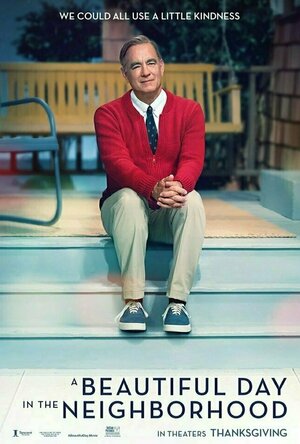
It was a beautiful night in the theater, a beautiful night in the theater, would ya go see, could ya go see, won't you go see A Beautiful Day in the Neighborhood. No shame in saying I cried throughout this whole movie. Tom Hanks is amazing as always, but the entire cast is great. I wrote a poem after watching the documentary last year and felt like it would be fitting on this review as well.
It's always a beautiful day in the neighborhood,
For in the worst of times you always made me see the good.
You would walk in with a smile on your face,
I knew that I was welcome at your place.
And no matter the weather,
You would put on your sweater.
Then you would sit down to put on more comfortable shoes,
Making me comfortable knowing I had a neighbor like you.
Together we would feed the fish,
Sometimes go to the kitchen and make a dish.
It was always my brain and heart that you were feeding,
As a kid you knew exactly what I was needing.
Messages would come from Mr. McFeely,
Who would show up with a speedy delivery.
When I'd hear the bell of the trolley,
I'd get excited and feel jolly.
For I knew we were off to visit our puppetry friends,
On the other side of the tunnel in make believe land.
You taught me what to do with my mad,
And that it was okay to be sad.
You helped in dealing with the bad and serious issues of the world,
But at the end of everyday in me the good you had restored.
In our daily meetings on television with me there is so much that you left,
I am special, amazing the way I am, and in the scary to be the one that helps.
It was in your words that I did find,
The key to success is being kind.
In many ways you were a savior whose love will always be savored,
Mister Rogers I will be forever grateful that you were my neighbor.

olive Magazine
Food & Drink and Magazines & Newspapers
App
olive magazine is now available as an interactive edition on the iPad and iPhone. Special features...

Purple Phoenix Games (2266 KP) rated Dinosaur Island in Tabletop Games
Jun 12, 2019
One of the best parts of the board gaming experience is finding a fun group of people with whom to play! Sometimes, though, coordinating a game night is easier said than done. We all must occasionally forego the group experience and face the world as the Lonely Only. But fear not! The world of solo-play is a vast and exciting realm! What follows is a chronicle of my journey into the solo-playing world – notes on gameplay, mechanics, rules, difficulty, and overall experience with solo variations of commonly multiplayer games! I hope this will provide some insight as you continue to grow your collection, or explore your already owned games!
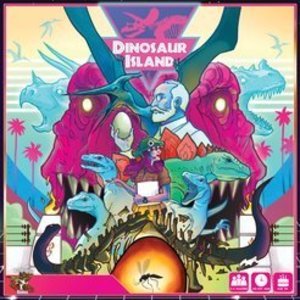
In Dinosaur Island, you have successfully created a theme park of the Jurassic variety (see what I did there?), and are now tasked with managing and supervising the day-to-day operations. Think “Zoo Tycoon” on steroids. You have to collect new DNA, upgrade your facilities, build new attractions, hire specialists, oversee your workers, and create new dinosaurs to populate your park! Make sure you manage your resources wisely for maximum benefit, and keep a close eye on the security of your park to ensure the safety of your guests! The goal is to create and maintain the most successful dinosaur park!
DISCLAIMER: An expansion exists for Dinosaur Island, and I do own it, but I have yet to incorporate it into my games. Once I get some experience with the expansion, I will either amend this review or address it in a separate post! -L
Let me first begin this review by saying that there is A LOT going on in this game. Seriously, a lot. And it can be pretty overwhelming at first. But one thing I cannot praise enough about Dinosaur Island is its rulebook. It’s kind of hefty, but it is so detailed and clear (with numerous examples) that I understood how to play the game on my first read-through. And sometimes with games that have so many moving elements, total understanding from the get-go can be rare, for me especially. The excellent rulebook makes a seemingly daunting game not so scary. I always keep the rulebook on hand when I play (just to be safe!), but once I got the hang of all of the steps, I don’t really need to refer back to it anymore!
As a solo game, Dinosaur Island plays very similarly as it does in group play with a few minor differences. For one, no regular Objective cards are used – instead you use a set of specified Solo Objective cards. Next, to simulate player interaction during the Research and Market Phases, the solo player draws a card from an AI deck and eliminates the options/discards the resources listed on the card – this mimics group play in the sense that turn order changes every round and you do not always get your first pick during these phases. The remaining 2 Phases (Worker and Park) occur simultaneously and involve no player interaction, so those are played as normal. One final difference between group and solo play is that the solo player can choose to play without Plot Twist cards. A solo game is played over the course of 7 total rounds, and the overall goal of the game remains the same – amass the most Victory Points.
The trickiest part of playing Dinosaur Island solo, for me, has to do with the Solo Objectives. You have 7 Solo Objectives to be completed throughout the game, and they reward Victory Points based on the round in which they were completed – finishing objectives in earlier rounds yields a higher number of points. If you are unable to complete any objective in a given round, you must discard one (of your choice) at the end of that round. The hard thing is that depending on which objectives are currently in play, it can be difficult to complete one each round to earn those points. Some things take time (and a couple of rounds) to be able to complete – like “Reach a threat level of 15.” If you have multiple long-term objectives in play, they can really limit the number of points you can earn from them. A nice mix of objectives (both short-term and long-term) can help balance out the game a little more, but it’s ultimately a luck of the draw.
One positive thing I can say about the objectives, though, is that they really force you to come up with a multi-faceted strategy. Depending on which objectives are in play, you have to decide on a logical strategy and order in which to complete them for maximum points. You can’t just focus on one objective – you also need to be setting yourself up to complete future objectives. I never feel like I’m just going through the motions because I always need to be thinking ahead to my future rounds.
The thing I really like about Dinosaur Island as a solo game is that it is still extremely engaging. I’m not a huge fan of “Beat your own personal best” solo games, but this one keeps me so involved that I don’t mind the fact that there’s no real ‘winner.’ Since a group game doesn’t involve that much player interaction anyway, Dinosaur Island doesn’t really even necessarily feel like a solo game. Every play requires a different strategy, and that makes it feel like a new game every time. If you enjoy Dinosaur Island in a group setting, give it a try as a solo game. There’s really not much of a gameplay difference, and I think you’ll enjoy it just as much!
https://purplephoenixgames.wordpress.com/2019/05/21/solo-chronicles-dinosaur-island/

BookblogbyCari (345 KP) rated The Naked Future in Books
Aug 5, 2018
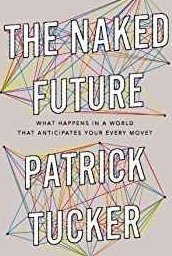
Book Review by Cari Mayhew. Rating 7.5/10
This is a book about how the digital footprint we leave behind us can be used to make predictions about our future in all aspects of our lives. But are we seeing the coming to being of a dystopian science fiction, or are we tapping into a new superpower?
Every app on every device we use leaves a digital trail about us, and this has implications in the fields of medicine and the spread of infections, education and learning, and crime prediction, through to movie preference and dating.
The book predominantly examines the value to society in general but also looks at the benefits to the individual. Of course, these benefits come at a cost to our privacy, which the book also briefly addresses. Each chapter is centered on its own topic. I will mention each but in the interests of brevity won’t go into detail on each topic.
Chapter 1 begins by describing how certain apps can be extremely useful warning providers, but by the end of the chapter, we are looking at how your smartphone apps can be used to locate you, even when your GPS is turned off and you’re not geo-tagging posts or tweets. With modern statistical models and enough data points, it’s possible to predict where you will be down to the hour and within a square block one and a half years from now. Turning off your GPS doesn't actually make you less predictable, it just makes your predictability level harder to detect - your future remains naked.
Similarly, in Chapter 2 which examines deliberate self-tracking, Tucker notes that Fitbit users who are confused or ignorant of the device’s privacy settings are inadvertently sharing the data details of their sexual activity.
This seems like frightening stuff, but then the conversation turns to more benevolent uses of such technology. Chapter 3, by way of an imagined story, examines how such technology can be used to predict the spread of dangerous infections, including the identification of new strains of virus as new mutations occur.
Chapter 4 looks at the use of such technology in weather forecasting, and how it’s been used to make way for insurance against the effects of the weather for affected businesses. Chapter 5 explores how movie/book choice and ratings can be used to predict what makes a good movie/book.
We go back to the frightening stuff in Chapter 6. Here Tucker talks about how the smartphone has become the ultimate shopping accessory. Knowing what habitual time an individual wants a coffee, cig, or beer, is ideal for online advertisers, who will be able to send you a voucher/coupon or a mere suggestion right there on the spot. There could also be surveillance systems examining what you pick up and consider buying but don't put into basket /trolley. Tucker goes on to describe how data brokers such as Acxiom have begun selling on to advertisers access to not only your data to also to your future decisions.
Chapter 7 looks at education and learning, and makes the following good points: “What telemetric education offers is the chance for all students to raise their hands and be heard, without fear of confirming some unflattering, broadly held perception about their social group.” And “Imagine for a moment the power of knowing beforehand how well you would perform on a test but how disempowered you would feel if that same future was naked to your competition, or to your future potential employers.”
I like the title of chapter 8 “When Your Phone Says You’re In Love”. Here Tucker tells how online dating sites have become a living social science lab. Again here your personal details can be sold on. In the future, you could be rating your actual get-togethers on the app. Already invented is a “sociometer” which detects unconscious biological signals which show what role you’re taking in a conversation, and can then produce predictions on how the rest of the conversation will go.
Chapters 9 and 10 look at predictions in the where, when and who of acts of crime. He discusses where it has worked so far. But on this Tucker says “Predictive policing in the wrong hands looks less like a boon to public safety and more like a totalitarian hammer.”
The book concludes with Chapter 11, titled “The World That Anticipates Your Every Move”. Here one interviewee said as “Privacy is a blip on the radar of history.” Indeed the chapter ends with an obituary to privacy, where Tucker says “we will feel increasingly powerless against the tide of transparency rendering this planet in a new form as surely as the movement of glaciers carved our canyons and valleys.”
I’ve highlighted here the more worrisome aspects of the topics, but it’s important to note that Tucker does aim to offer a prescription for the situation, though it’s spread out in occasional paragraphs here and there rather than as a useful reference at the end. That said I found the actionable advice was rather brief and unoriginal.
Tucker presents a fair and balanced view of this important and highly relevant topic of our times, and the book is clearly well-researched. Some chapters show a little humor which was fun, but although the book is aimed at the layman, I often felt like I was reading a science textbook. The book is a real eye-opener, especially if it’s something you hadn’t given much thought to. The overall message of the book is clear: our data is already out there, but it’s ours first and foremost, and we can be savvy and use it to our advantage.