
Search
Search results

Darren (1599 KP) rated Our Kind of Traitor (2016) in Movies
Sep 16, 2019
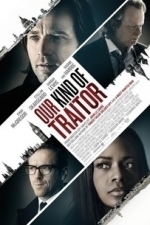

Characters – Perry is a university professor, he is trying to make amends with his wife on a romantic holiday, he reluctantly gets involved in the information trade with his good nature being used by both sides. Gail is the lawyer wife of Perry, she has become distant from him while still loving him and does question his decision to help Dima. Dima is the Russian mafia handling the accounts, but he wants out to help his own children become safe, he uses his connection with Perry to get MI6 involved in the truth. Hector is the MI6 agent that is willing to work with Dima for the information in exchange for the family, he does have his own grudge with the man they are trying to take down too.
Performances – The performances through the film show us just what Le Carre does with his characters, he gives them good moments, without making them stand out. McGregor is good, but you feel a younger up and comer would have been perfect here, Harris is good and doesn’t put a foot wrong, while Skarsgard enjoys his role, shady but loyal. Damian Lewis brings back his true English role which at times does feel weird knowing how often he has been an American character recently.
Story – The story comes from a John Le Carre novel, so instantly we know we are going to get a thriller that keeps us guessing on what everyone’s motivation will be. The idea that a normal couple get mixed up in the middle of an international information exchange is different and does work for the film because it helps us stay on edge thinking and wondering if they do have a bigger involvement. The story does feel like that one moment to make it great is missing, as everything does end up feeling just normal and good only.
Crime – The crime side of the film follows a criminal looking for a safe way out of the life for his family in exchange for bringing down the mafia’s dealings in London.
Settings – The film splits the settings between London, for the deals, Morocco for the exchanges and the final location for the next chapter of the lives, they work because they show how this world would operate.
Scene of the Movie – The escape.
That Moment That Annoyed Me – It lacks the edge of your seat style of Le Carre novels have given us.
Final Thoughts – This is a solid thriller even if it lacks that final factor to make it one of the best ones, it does the by the book material well, but never develops the characters enough to understand the situation they put themselves in.
Overall: Simple thriller.
Performances – The performances through the film show us just what Le Carre does with his characters, he gives them good moments, without making them stand out. McGregor is good, but you feel a younger up and comer would have been perfect here, Harris is good and doesn’t put a foot wrong, while Skarsgard enjoys his role, shady but loyal. Damian Lewis brings back his true English role which at times does feel weird knowing how often he has been an American character recently.
Story – The story comes from a John Le Carre novel, so instantly we know we are going to get a thriller that keeps us guessing on what everyone’s motivation will be. The idea that a normal couple get mixed up in the middle of an international information exchange is different and does work for the film because it helps us stay on edge thinking and wondering if they do have a bigger involvement. The story does feel like that one moment to make it great is missing, as everything does end up feeling just normal and good only.
Crime – The crime side of the film follows a criminal looking for a safe way out of the life for his family in exchange for bringing down the mafia’s dealings in London.
Settings – The film splits the settings between London, for the deals, Morocco for the exchanges and the final location for the next chapter of the lives, they work because they show how this world would operate.
Scene of the Movie – The escape.
That Moment That Annoyed Me – It lacks the edge of your seat style of Le Carre novels have given us.
Final Thoughts – This is a solid thriller even if it lacks that final factor to make it one of the best ones, it does the by the book material well, but never develops the characters enough to understand the situation they put themselves in.
Overall: Simple thriller.

Movie Metropolis (309 KP) rated Ghost in the Shell (2017) in Movies
Jun 10, 2019
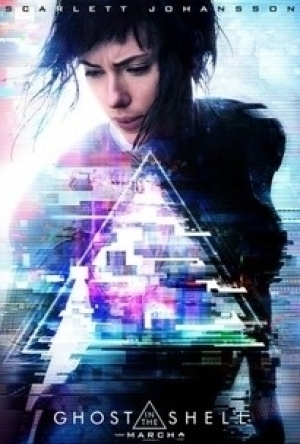

Turning the beloved Ghost in the Shell manga franchise into a Hollywood film that’ll please picky Western audiences was always going to be a tough job for director Rupert Sanders (Snow White & the Huntsman).
Casting the central lead, The Major, proved even more difficult. When Scarlett Johansson’s name was attached to play the role, Hollywood was once again accused of white-washing, a tag lobbied at Gods of Egypt last year. The finished product is now in cinemas around the globe, but is it the disaster many predicted?
In the near future, Major (Scarlett Johansson) is the first of her kind: a human who has been cyber-enhanced to create a perfect soldier devoted to stopping the world’s most dangerous criminals. When terrorism reaches a new level that includes the ability to hack into people’s minds and control them, Major is uniquely qualified to stop it. As she prepares to face a new enemy, Major finds truths about her past that changes her view on the world forever.
The greatest accolade that can be given to Ghost in the Shell is that its pre-release detractors haven’t stopped people from going to see it. The cinema was busy on its opening night, with many itching to see how such a universally loved manga could be fine-tuned for a Western palate.
Visually; the film is absolutely stunning and is best viewed on the biggest screen possible. Each frame is dripping with detail and the naturally heavy use of CGI doesn’t detract from creating a vibrant metropolis that feels every bit alive.
The story is simple to follow and easy to enjoy. It’s exciting, emotional and boosted by a fine, if slightly uninspiring performance from Johansson. The rest of the cast can also be described as fine, with only Juliette Binoche’s mother-like Dr. Ouélet creating any sort of lasting impact.
And this is Ghost in the Shell’s fundamental weakness. Outside of Binoche, the rest of the cast are largely forgettable and that’s a real shame considering the characters in its excellent source material were, for want of a better word, magical. Even the villain is devoid any sort of tyranny.
Thankfully though, the impressive set design and well-choreographed action sequences mask the disappointing array of characters well and steamroll this thrilling adventure to a very satisfying conclusion. It’s also accompanied by a gorgeous soundtrack by Clint Mansell and Lorne Balfe that compliments the futuristic nature of the film beautifully.
Sitting in the theatre, it felt at times like I was watching an updated version of Total Recall, and that’s no bad thing. Comparing it to a cult classic is probably what director Rupert Sanders was trying to achieve and despite its poor characters, Ghost in the Shell has every opportunity to succeed as a film we look back on in 30 years and think “hey, that’s actually pretty good”.
Overall, Ghost in the Shell is one hell of a good-looking film. Couple this with impressive special effects and a rollercoaster ride of a story and you have a big screen experience that’s great for 106 minutes, but probably won’t have any lasting impact once the end credits roll.
https://moviemetropolis.net/2017/03/31/not-without-its-faults-ghost-in-the-shell-review/
Casting the central lead, The Major, proved even more difficult. When Scarlett Johansson’s name was attached to play the role, Hollywood was once again accused of white-washing, a tag lobbied at Gods of Egypt last year. The finished product is now in cinemas around the globe, but is it the disaster many predicted?
In the near future, Major (Scarlett Johansson) is the first of her kind: a human who has been cyber-enhanced to create a perfect soldier devoted to stopping the world’s most dangerous criminals. When terrorism reaches a new level that includes the ability to hack into people’s minds and control them, Major is uniquely qualified to stop it. As she prepares to face a new enemy, Major finds truths about her past that changes her view on the world forever.
The greatest accolade that can be given to Ghost in the Shell is that its pre-release detractors haven’t stopped people from going to see it. The cinema was busy on its opening night, with many itching to see how such a universally loved manga could be fine-tuned for a Western palate.
Visually; the film is absolutely stunning and is best viewed on the biggest screen possible. Each frame is dripping with detail and the naturally heavy use of CGI doesn’t detract from creating a vibrant metropolis that feels every bit alive.
The story is simple to follow and easy to enjoy. It’s exciting, emotional and boosted by a fine, if slightly uninspiring performance from Johansson. The rest of the cast can also be described as fine, with only Juliette Binoche’s mother-like Dr. Ouélet creating any sort of lasting impact.
And this is Ghost in the Shell’s fundamental weakness. Outside of Binoche, the rest of the cast are largely forgettable and that’s a real shame considering the characters in its excellent source material were, for want of a better word, magical. Even the villain is devoid any sort of tyranny.
Thankfully though, the impressive set design and well-choreographed action sequences mask the disappointing array of characters well and steamroll this thrilling adventure to a very satisfying conclusion. It’s also accompanied by a gorgeous soundtrack by Clint Mansell and Lorne Balfe that compliments the futuristic nature of the film beautifully.
Sitting in the theatre, it felt at times like I was watching an updated version of Total Recall, and that’s no bad thing. Comparing it to a cult classic is probably what director Rupert Sanders was trying to achieve and despite its poor characters, Ghost in the Shell has every opportunity to succeed as a film we look back on in 30 years and think “hey, that’s actually pretty good”.
Overall, Ghost in the Shell is one hell of a good-looking film. Couple this with impressive special effects and a rollercoaster ride of a story and you have a big screen experience that’s great for 106 minutes, but probably won’t have any lasting impact once the end credits roll.
https://moviemetropolis.net/2017/03/31/not-without-its-faults-ghost-in-the-shell-review/

The Graduate Guide
Education and Magazines & Newspapers
App
Are you finishing university soon or have you finished recently? The 400 page Graduate Guide is...
Caitlin Ann Cherniak (85 KP) rated Fantasyland: How America Went Haywire in Books
Oct 22, 2018
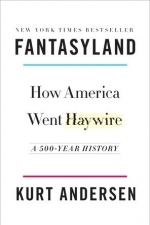

Why do I have a feeling that the guy who wrote this just went on a rant and decided to put that whole rant into one giant ass book?
Don't get me wrong. This book has a couple of points, especially when he discusses religion and the Salem witch trails. However, when he starts getting into the more modern points of fantasy, either I didn't see it at all, or he was basically really poking fun at what the whole point of fantasy really is.
The title of the book is Fantasyland: How America Went Haywire. If he's going to use the word "Haywire" in a title, he better show pretty clear examples of why America is being flushed down the toilet. Poking fun at people cosplaying, playing video games, and being able to have fun at Disneyland or Disney World is not a point to say why America seems to be failing as a society. In fact, I can make a counterargument by saying that flights of fantasy in those contexts are actually forming the culture, not destroying it. Because of the evolution of entertainment (such as film, video games, etc.), it's easier to envision fantasy stories come to life. Before that, we had books, and no one was poking fun at books throughout this entire giant essay. Not only is that missing the forest for the trees, but it makes the argument of people being shown too much fantasy through visual mass media is a very shallow take on the topic of fantasy.
Also, the premise of the book talks about how people are arguing that Trump is ruining America because of his bullshit (and they're not wrong). I expected the book to discuss politics more in depth as a way to add onto the fantasyland argument. The book doesn't even do that, not even at the end when it "comes full circle" back to the Trump argument. If anything, the book kinda let it slide that it was for Trump and his radical ideas rather than finding flaws in them as people would expect. Look, if the book ended up explaining why Trump was trying to escape the Fantasyland argument, I'm all for reading that to make my own points. However, by just simply saying that Trump is being more realistic without any real reason, that also makes this essay a shallow writing. People want to read on why Trump has realistic views or not. If the point of this essay is talking about how fantastic ideas are plaguing a great nation, why not add that into the mix?
This essay was a real hit and miss for me. For something that's as thick as War and Peace, I expected this essay to have as juicy material as War and Peace, but it doesn't. It's just a 500 year rant on how "stupid" society can be, and that lost me as I finished the book.
Don't get me wrong. This book has a couple of points, especially when he discusses religion and the Salem witch trails. However, when he starts getting into the more modern points of fantasy, either I didn't see it at all, or he was basically really poking fun at what the whole point of fantasy really is.
The title of the book is Fantasyland: How America Went Haywire. If he's going to use the word "Haywire" in a title, he better show pretty clear examples of why America is being flushed down the toilet. Poking fun at people cosplaying, playing video games, and being able to have fun at Disneyland or Disney World is not a point to say why America seems to be failing as a society. In fact, I can make a counterargument by saying that flights of fantasy in those contexts are actually forming the culture, not destroying it. Because of the evolution of entertainment (such as film, video games, etc.), it's easier to envision fantasy stories come to life. Before that, we had books, and no one was poking fun at books throughout this entire giant essay. Not only is that missing the forest for the trees, but it makes the argument of people being shown too much fantasy through visual mass media is a very shallow take on the topic of fantasy.
Also, the premise of the book talks about how people are arguing that Trump is ruining America because of his bullshit (and they're not wrong). I expected the book to discuss politics more in depth as a way to add onto the fantasyland argument. The book doesn't even do that, not even at the end when it "comes full circle" back to the Trump argument. If anything, the book kinda let it slide that it was for Trump and his radical ideas rather than finding flaws in them as people would expect. Look, if the book ended up explaining why Trump was trying to escape the Fantasyland argument, I'm all for reading that to make my own points. However, by just simply saying that Trump is being more realistic without any real reason, that also makes this essay a shallow writing. People want to read on why Trump has realistic views or not. If the point of this essay is talking about how fantastic ideas are plaguing a great nation, why not add that into the mix?
This essay was a real hit and miss for me. For something that's as thick as War and Peace, I expected this essay to have as juicy material as War and Peace, but it doesn't. It's just a 500 year rant on how "stupid" society can be, and that lost me as I finished the book.

BankofMarquis (1832 KP) rated Psycho (1960) in Movies
Oct 29, 2018
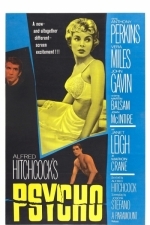

An all-time great performance by Anthony Perkins
I'm sure all of you have (at least) heard of the 1960 Alfred Hitchcock film, PSYCHO. And I'm sure most of you have seen (at least in part) the famous "shower scene". But when was the last time you really sat down and watched this film? It had been awhile for me and I walked away with the following impression:
PSYCHO is not all that scary, but it is suspenseful as heck with strong Direction by the "Master of Suspense" and very strong performances anchoring the front and back end of the film.
PSYCHO was billed when it came out as a "Janet Leigh Film". So, to give this review context, let's look at who Janet Leigh was at the time. Before shooting PSYCHO, Leigh was generally cast as the ingenue and/or love interest in mainstream fair such as LITTLE WOMEN, ANGELS IN THE OUTFIELD and HOUDINI (a modern "comp" to her might be someone like Anne Hathaway before she started doing "edgier" work). Leigh did show that there was more to her than just being an ingenue when she played the morally ambiguous wife of Charlton Heston's character in Orson Welles' TOUCH OF EVIL. This film (probably) gave Hitchcock the idea to cast Leigh in PSYCHO.
When 1960's audiences first saw Leigh on screen in PSYCHO, I'm sure that most of them were shocked for, instead of being the pure and wholesome ingenue and wife, she plays the entire first scene in a bra and slip. Her character, Marion Crane, is not morally ambiguous, she is morally corrupt - and when Leigh's character has a chance to act on her moral corruptness, she jumps at the chance. The rest of the first half of this film is Leigh trying to get away with her "crime". She is quite good in this part of the film and was nominated for an Oscar for Best Supporting Actress (deservedly so).
And then...Anthony Perkins shows up.
We are about 45 minutes into the 1 hour and 49 minute film when Perkins' Norman Bates first appears on screen and an interesting thing happened - I couldn't take my eyes off of him. I was enjoying Leigh's performance but instantly pushed her aside (and to the background) when Perkins shows up. Without giving plot away, let me say that there is much, much going behind Norman's eyes and the performance by Perkins strongly suggests this, without going over-the-top or being melodramatic. It is a perfect blend of actor, character and performance and I was shocked that he was not even NOMINATED for an Oscar (Peter Ustinov would win for SPARTACUS). Perkins performance is one of the all-time greats with one of the most interesting and unusual characters - and portrayals - of all time.
Much of the credit for Perkins' and Leigh's strong performances have to go to Director Hitchcock who was at the height of his Directing powers (and power). From the "get go", you can feel the Director's hand in this film, building suspense from scene to scene and shot to shot, first with Leigh's character and, later, with Perkins. Both characters are trying to get away with something and Hitchcock pulls his camera in close to make a point - from a distance all seems good, but when you get up close, you can tell that things are very bad, indeed.
The filming of the famous "shower scene" is well documented and is a Master Class in film and editing. It is worth the price of admission on it's own - as is a scene on a staircase with Private Detective Arbogast, played by Martin Balsam. Hitchcock chooses to heighten the realism in this scene on the staircase by going a more esoteric route (rather than traditional filming of the events) and, one can argue, it doesn't belong in this film. Until, that is, you think about it and then it makes great sense and absolutely, positively has to be in this film in that way.
Another aspect of this film that begs to be mentioned is the Film Score by the great Bernard Herrmann - Hitchcock's regular collaborator. The music in this film punctuates the action on the screen - from the persistent beat and pacing of the opening credits music - driving the audience forward into the action - that does not let go, reaching it's peak and crescendo in the shower scene and then floating down gently like an animal catching it's breath after great activity.
Does the entire film hold up almost 60 years later? Almost...but not quite. Most annoying to me was the "wrap-up" scene at the end where a character spells out everything for the audience. As if we are not smart enough to "get it" - and perhaps the audiences in 1960 weren't.
But that is a quibble for a film that is a classic and is one that, if you have not seen (or seen for awhile), begs to be seen. Check out this film, not for the scares, but rather, the suspense that is generated by Hitchcock and his performers throughout. A GREAT entree into the world of Alfred Hitchcock films.
Letter Grade: A
9 (out of 10) stars and you can take that to the Bank (ofMarquis)
PSYCHO is not all that scary, but it is suspenseful as heck with strong Direction by the "Master of Suspense" and very strong performances anchoring the front and back end of the film.
PSYCHO was billed when it came out as a "Janet Leigh Film". So, to give this review context, let's look at who Janet Leigh was at the time. Before shooting PSYCHO, Leigh was generally cast as the ingenue and/or love interest in mainstream fair such as LITTLE WOMEN, ANGELS IN THE OUTFIELD and HOUDINI (a modern "comp" to her might be someone like Anne Hathaway before she started doing "edgier" work). Leigh did show that there was more to her than just being an ingenue when she played the morally ambiguous wife of Charlton Heston's character in Orson Welles' TOUCH OF EVIL. This film (probably) gave Hitchcock the idea to cast Leigh in PSYCHO.
When 1960's audiences first saw Leigh on screen in PSYCHO, I'm sure that most of them were shocked for, instead of being the pure and wholesome ingenue and wife, she plays the entire first scene in a bra and slip. Her character, Marion Crane, is not morally ambiguous, she is morally corrupt - and when Leigh's character has a chance to act on her moral corruptness, she jumps at the chance. The rest of the first half of this film is Leigh trying to get away with her "crime". She is quite good in this part of the film and was nominated for an Oscar for Best Supporting Actress (deservedly so).
And then...Anthony Perkins shows up.
We are about 45 minutes into the 1 hour and 49 minute film when Perkins' Norman Bates first appears on screen and an interesting thing happened - I couldn't take my eyes off of him. I was enjoying Leigh's performance but instantly pushed her aside (and to the background) when Perkins shows up. Without giving plot away, let me say that there is much, much going behind Norman's eyes and the performance by Perkins strongly suggests this, without going over-the-top or being melodramatic. It is a perfect blend of actor, character and performance and I was shocked that he was not even NOMINATED for an Oscar (Peter Ustinov would win for SPARTACUS). Perkins performance is one of the all-time greats with one of the most interesting and unusual characters - and portrayals - of all time.
Much of the credit for Perkins' and Leigh's strong performances have to go to Director Hitchcock who was at the height of his Directing powers (and power). From the "get go", you can feel the Director's hand in this film, building suspense from scene to scene and shot to shot, first with Leigh's character and, later, with Perkins. Both characters are trying to get away with something and Hitchcock pulls his camera in close to make a point - from a distance all seems good, but when you get up close, you can tell that things are very bad, indeed.
The filming of the famous "shower scene" is well documented and is a Master Class in film and editing. It is worth the price of admission on it's own - as is a scene on a staircase with Private Detective Arbogast, played by Martin Balsam. Hitchcock chooses to heighten the realism in this scene on the staircase by going a more esoteric route (rather than traditional filming of the events) and, one can argue, it doesn't belong in this film. Until, that is, you think about it and then it makes great sense and absolutely, positively has to be in this film in that way.
Another aspect of this film that begs to be mentioned is the Film Score by the great Bernard Herrmann - Hitchcock's regular collaborator. The music in this film punctuates the action on the screen - from the persistent beat and pacing of the opening credits music - driving the audience forward into the action - that does not let go, reaching it's peak and crescendo in the shower scene and then floating down gently like an animal catching it's breath after great activity.
Does the entire film hold up almost 60 years later? Almost...but not quite. Most annoying to me was the "wrap-up" scene at the end where a character spells out everything for the audience. As if we are not smart enough to "get it" - and perhaps the audiences in 1960 weren't.
But that is a quibble for a film that is a classic and is one that, if you have not seen (or seen for awhile), begs to be seen. Check out this film, not for the scares, but rather, the suspense that is generated by Hitchcock and his performers throughout. A GREAT entree into the world of Alfred Hitchcock films.
Letter Grade: A
9 (out of 10) stars and you can take that to the Bank (ofMarquis)

ClareR (6256 KP) rated Eleanor Oliphant Is Completely Fine in Books
Mar 28, 2018

Not what you'll expect it to be...
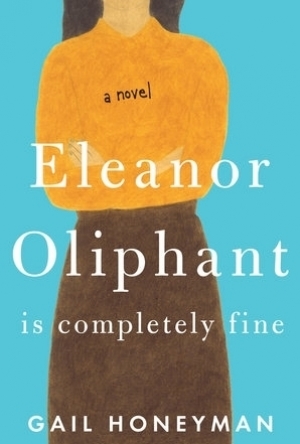
Eleanor lives by her routines. Every weekday morning she gets up at the same time, starts work at the same time, buys a newspaper at the same place which she always reads all of and completes the crossword in. She leaves work at 5.30 every day, travels home the same way and listens to The Archers as she makes pasta and pesto with salad (which requires one pan and one plate). She goes to bed at the same time, 10pm, every evening. Wednesday, ‘Mummy’ always phones and talks to her for 10 minutes.
On Friday nights after work, she buys pizza and two bottles of vodka, that she will drink over the course of the weekend, on her own. She spends all week on her own. Eleanor has no friends, she believes that she doesn’t need any either.
Then Eleanor sees him: the man who she becomes obsessed with, the man who Mummy never believes she will be able to attract, and Eleanor decides to reinvent herself so that he will become interested in her.
Some of these reinvention ‘adventures’ are hilarious, and include things that all women do: self-grooming, in particular. The waxing incident had me in stitches!
At work, things change when she meets Ray from IT when he comes to mend her computer. He’s affable, gentle and intrigues by Eleanor. She however is not at all interested, and her sights are set elsewhere. After work one day, Ray and Eleanor are walking home when they come upon an elderly man, Sammy, who has collapsed in the street. They help him, call an ambulance, and so a friendship is begun. Eleanor’s life is opened up, whether she wants it to or not.
Eleanor tells her own story, and we go along for the ride as she shares her story and learns how to actually live. Secrets she has even kept from herself for years, are revealed.
There are many funny parts to this story, and they are painfully funny. Eleanor’s lack of social skills is evident. I didn’t feel that fun was being poked at Eleanor, but we are encouraged to laugh at the situation and therefore learn about how difficult Eleanor’s life is. There are parts of the story where laughter is very far from the mind. I found parts to be very emotional and so, so sad.
I honestly didn’t want to leave Eleanor Oliphant’s world. The story really doesn’t end at the end of the book, and we are left with the impression that Eleanor’s story will continue in her ‘book universe’. Ultimately, this book is an interesting commentary of modern life and our biggest problem - loneliness. We are the generation of social media, internet and gadgets, and we have left behind our human kindness. We are a social animal that no longer seems to be social. All so wrapped up in our own little worlds, that we don’t realise we’re missing that connection with real human beings, and don’t see when there are others around us who are lonely and need the contact of others.
This is such an enjoyable, funny, heartwarming and heart wrenching and above all, hopeful book. I would heartily recommend it, particularly to those who enjoyed “A Man Called Ove’, ‘The Rosie Project’ and more recently ‘The Cactus’. It’s never overly sentimental, but it IS full of heart.
On Friday nights after work, she buys pizza and two bottles of vodka, that she will drink over the course of the weekend, on her own. She spends all week on her own. Eleanor has no friends, she believes that she doesn’t need any either.
Then Eleanor sees him: the man who she becomes obsessed with, the man who Mummy never believes she will be able to attract, and Eleanor decides to reinvent herself so that he will become interested in her.
Some of these reinvention ‘adventures’ are hilarious, and include things that all women do: self-grooming, in particular. The waxing incident had me in stitches!
At work, things change when she meets Ray from IT when he comes to mend her computer. He’s affable, gentle and intrigues by Eleanor. She however is not at all interested, and her sights are set elsewhere. After work one day, Ray and Eleanor are walking home when they come upon an elderly man, Sammy, who has collapsed in the street. They help him, call an ambulance, and so a friendship is begun. Eleanor’s life is opened up, whether she wants it to or not.
Eleanor tells her own story, and we go along for the ride as she shares her story and learns how to actually live. Secrets she has even kept from herself for years, are revealed.
There are many funny parts to this story, and they are painfully funny. Eleanor’s lack of social skills is evident. I didn’t feel that fun was being poked at Eleanor, but we are encouraged to laugh at the situation and therefore learn about how difficult Eleanor’s life is. There are parts of the story where laughter is very far from the mind. I found parts to be very emotional and so, so sad.
I honestly didn’t want to leave Eleanor Oliphant’s world. The story really doesn’t end at the end of the book, and we are left with the impression that Eleanor’s story will continue in her ‘book universe’. Ultimately, this book is an interesting commentary of modern life and our biggest problem - loneliness. We are the generation of social media, internet and gadgets, and we have left behind our human kindness. We are a social animal that no longer seems to be social. All so wrapped up in our own little worlds, that we don’t realise we’re missing that connection with real human beings, and don’t see when there are others around us who are lonely and need the contact of others.
This is such an enjoyable, funny, heartwarming and heart wrenching and above all, hopeful book. I would heartily recommend it, particularly to those who enjoyed “A Man Called Ove’, ‘The Rosie Project’ and more recently ‘The Cactus’. It’s never overly sentimental, but it IS full of heart.

Skout+ - Chat, Meet New People
Social Networking and Entertainment
App
Enjoy the AD-FREE version of Skout, the global network for meeting new people. NO ADS, all fun!...
Sophia (Bookwyrming Thoughts) (530 KP) rated Insurgent in Books
Jan 23, 2020
Original Review posted on <a href="http://bookwyrming-thoughts.blogspot.com/2013/01/review-insurgent-by-veronica-roth.html">Bookwyrming Thoughts</a>.
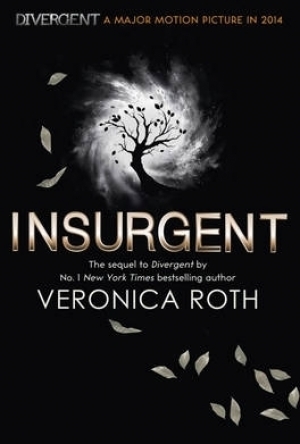
YAYYYYY. Le Book Club decided to go straight to Insurgent after reading Divergent. Of course, I probably would've read it right before the book came out so I wouldn't be all "anticipation is killing me!!!" But a bookworm never runs out of books to read, so I'll just sit back, chillax and wait. And wait. And wait. Until the 3rd and final book finally comes out at last so I can beg my mom to go to the bookstore JUST so I can buy it. (I can always wait for the library though.) I mean, come on. Drastic cliff-hanger there. It's agonizing. Too agonizing.
There are lots of shocking secrets here too. For one thing, WHY, CALEB, WHY?!?!?! I'm not even gonna say what he did for those who haven't read it. I just thought I was walking on my bedroom ceiling for a few minutes there when I read it. Of course... I wasn't. Or I would see clothes littering the ceiling and whatever's on the floor (not necessarily clothes). Oh, and Peter. Wow. Just wow. -_- But hey, without that, who knows what would've happened? But I am glad to say there are some peeps that are well, good riddance to them.
I didn't get what the title really meant at first. It didn't even make sense, in my opinion. Until later. Until it was explained (kinda). But oy, what a way to end. Totally unexpected. As much as I'm a bit exhausted with Dystopian Fiction (believe me, there are probably a lot that are lurking on my Kindle App and I have no clue about. Or do I?), I'll say Insurgent was a delightful read. On the overall end, I kinda liked Divergent more. By no means of bashing whatsoever, it was more... unique from The Hunger Games (I guess that applies to all first books in a series), in the means of corrupted government.
But what can I say? Perks to Veronica Roth for creating a unique world with it's own unique parts. :3
And now, I have to wait. And wait. And wait. For a few months. Or is it? *checks date on Goodreads* Oh facepalm. More than a few months. Oh wait, it comes out 10 days after I'm 16! Hey, when's the choosing ceremony for us? :p
YAYYYYY. Le Book Club decided to go straight to Insurgent after reading Divergent. Of course, I probably would've read it right before the book came out so I wouldn't be all "anticipation is killing me!!!" But a bookworm never runs out of books to read, so I'll just sit back, chillax and wait. And wait. And wait. Until the 3rd and final book finally comes out at last so I can beg my mom to go to the bookstore JUST so I can buy it. (I can always wait for the library though.) I mean, come on. Drastic cliff-hanger there. It's agonizing. Too agonizing.
There are lots of shocking secrets here too. For one thing, WHY, CALEB, WHY?!?!?! I'm not even gonna say what he did for those who haven't read it. I just thought I was walking on my bedroom ceiling for a few minutes there when I read it. Of course... I wasn't. Or I would see clothes littering the ceiling and whatever's on the floor (not necessarily clothes). Oh, and Peter. Wow. Just wow. -_- But hey, without that, who knows what would've happened? But I am glad to say there are some peeps that are well, good riddance to them.
I didn't get what the title really meant at first. It didn't even make sense, in my opinion. Until later. Until it was explained (kinda). But oy, what a way to end. Totally unexpected. As much as I'm a bit exhausted with Dystopian Fiction (believe me, there are probably a lot that are lurking on my Kindle App and I have no clue about. Or do I?), I'll say Insurgent was a delightful read. On the overall end, I kinda liked Divergent more. By no means of bashing whatsoever, it was more... unique from The Hunger Games (I guess that applies to all first books in a series), in the means of corrupted government.
But what can I say? Perks to Veronica Roth for creating a unique world with it's own unique parts. :3
And now, I have to wait. And wait. And wait. For a few months. Or is it? *checks date on Goodreads* Oh facepalm. More than a few months. Oh wait, it comes out 10 days after I'm 16! Hey, when's the choosing ceremony for us? :p

Sarah (7800 KP) rated Mario Kart 8 Deluxe in Video Games
Aug 20, 2018
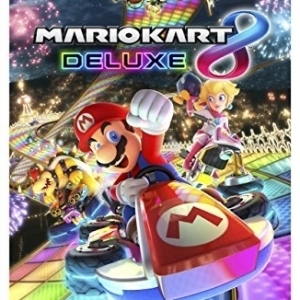
Still one of the best
Mario Kart is one of the classics. Despite now on its 8th iteration, it’s still as good as it ever was and is one of the best games out there to play. No matter which version of Mario Kart I’ve played, I never really have a bad word to say about it, and 8 is no different.
The graphics are fantastic, and a great step up to those I was previously used to on the last version available on the Wii. The gameplay is as you’d expect from Mario Kart and this isn’t a bad thing. Why fix what isn’t broken? I also love the fact that you can now play this online properly against anyone in the world - it’s such a great feature and brings a whole new level of fun to the game. It can get a little dull and predictable if you’re playing locally as a couch co-op (or at least that’s what my other half says as I always win ?), but being able to play online multiplayer is so entertaining and we can play it for hours. Yes it is very frustrating, as sadly real players are a lot more ruthless than the computer players you’re up against locally, but it’s still a lot more fun.
My only criticisms about this game are that whilst it has quite a lot of levels/courses, for me it still isn’t enough. They’re not exactly long races and you can get through them all fairly quickly, and there’s only so many times you can do the same courses. And the only other criticism relates specifically to online play. Online play gives you points, but some players have a lot more points than others (i.e. 5k+, 10k+) which indicates they’ve been playing for a lot longer. The online match ups take no account of points and you can potentially end up playing against players with a huge difference in skill and points level. It’d be nice if they could try and match players together within a certain points, as it might make it more of a fairer race and a little more challenging if players are all similarly matched.
The graphics are fantastic, and a great step up to those I was previously used to on the last version available on the Wii. The gameplay is as you’d expect from Mario Kart and this isn’t a bad thing. Why fix what isn’t broken? I also love the fact that you can now play this online properly against anyone in the world - it’s such a great feature and brings a whole new level of fun to the game. It can get a little dull and predictable if you’re playing locally as a couch co-op (or at least that’s what my other half says as I always win ?), but being able to play online multiplayer is so entertaining and we can play it for hours. Yes it is very frustrating, as sadly real players are a lot more ruthless than the computer players you’re up against locally, but it’s still a lot more fun.
My only criticisms about this game are that whilst it has quite a lot of levels/courses, for me it still isn’t enough. They’re not exactly long races and you can get through them all fairly quickly, and there’s only so many times you can do the same courses. And the only other criticism relates specifically to online play. Online play gives you points, but some players have a lot more points than others (i.e. 5k+, 10k+) which indicates they’ve been playing for a lot longer. The online match ups take no account of points and you can potentially end up playing against players with a huge difference in skill and points level. It’d be nice if they could try and match players together within a certain points, as it might make it more of a fairer race and a little more challenging if players are all similarly matched.

Docker High Performance
Book
Master performance enhancement practices for Docker, and unlock faster and more efficient container...