
Search
Search results

Bong Mines Entertainment (15 KP) rated Eargasms for Short-Sighted Post-Truth Era People by Helsinki Headnod Convention in Music
Jun 7, 2019


Helsinki Headnod Convention is a Jazz/Spoken Word band. Not too long ago, they released their debut EP, entitled, “Eargasms for Short-Sighted Post-Truth Era People”.
WHO’S MAKING YOU?
Mellow and subtle. This jazzy tune poses a series of interesting questions.
At the end of the day, it’s you and only you. You keep trying to place the blame on somebody else but it’s you. Also, you and only you are can make you or break you.
OUR TIME IS NOW
This 30 seconds clip tells listeners that their time is now. Also, it’s short, representing that time is short on earth and it shouldn’t be taken for granted.
SORROW AND PAIN
A mixture of Negro Spiritual mixed with Blues and elements of ‘60s Soul.
The black and white video shows an African-American woman walking in the evening. Also, a vehicle with its headlights on approaches and a Caucasian cop parks it.
The following scene shows the woman running away while the cop, dressed as a terrorist, is chasing her with a lit smoke screen in his hand.
The courageous woman falls to the ground, grabs a handful of snow, and throws it in her attacker’s face. Momentarily, it blinds him and she gets up and runs away.
But she can’t see where she’s going because of the smoke. Then, she’s confronted by another Caucasian man, dressed in riot gear. Also, he’s walking towards her while her other attacker is gaining ground behind her.
In the end, while snow is falling and visibility is blurry, the rioter beats the woman with the stick in his hand.
The suggestive video implies that those who are supposed to protect and serve urban communities contain an uncertain amount of national terrorists within their organizations.
Also, some things from the past have changed, but on the other hand, some things have remained the same.
SOLIDARITY
Mellow and smooth. One minute and 13 seconds of conscious therapy, which begins with a calming voice, “We glorify war when we should glorify peace.”
The title is a unity campaign that binds people together as one. Also, its aim is social change within a racist power structure.
DOWN ON BENDED KNEE
The poem is based on Colin Kaepernick’s epic gesture of bending his knee during the National Anthem to protest social injustices happening in urban communities. Also, it speaks on reasons humanity, equality, civility, decency, justice, and other rights.
ANOTHER DAY IN PARADISE
An instrument plays in solitude against a vacant backdrop, where paradise is imagined as an ordinary day in hell, where being cautious is the best way to proceed.
Also, a story is told about a woman who is begging on the street, but the man she is seeking help from doesn’t even acknowledge her.
She calls out to a man on the street, “Sir, can you help me. It’s cold and I have nowhere to sleep. Is there somewhere you can tell me?”
He walks on doesn’t look back. He pretends he can’t hear her. Starts to whistle as he crosses the street. Seems embarrassed to be there.
This story paints a perfect picture of people frowning down on the have-nots, who oftentimes get overlooked while seeking monetary help or begging for information in public.
THE BIGGER PICTURE
With so many points of views to look from, what’s really the bigger picture?
The artist raps, “Watch me step it up. Cape blowing in the wind standing tough. Can’t give up.”
The song implies what’s necessary to see the bigger picture. One must have the courage to not get blown away by the world-wind and its influences.
Also, it implies taking a step up, by elevating your mind, body, and soul. Only then, will you be able to see the bigger picture, which is quite an exquisite view?
HUMAN KINDNESS
Beings with a jazzy fiesta of affectionate sounds perfumed with love. It depicts the hustle and bustle of an inner-city boulevard. It’s fast-paced and warm like the blood flowing in our veins.
CONCLUSION
“Eargasms for Short-Sighted Post-Truth Era People” is an undiluted audible ear drop solution, perfumed with nostalgia. It’s revolutionary but its non-violence approach in combating social inequality is highly effective.
https://www.bongminesentertainment.com/helsinki-headnod-eargasms/
WHO’S MAKING YOU?
Mellow and subtle. This jazzy tune poses a series of interesting questions.
At the end of the day, it’s you and only you. You keep trying to place the blame on somebody else but it’s you. Also, you and only you are can make you or break you.
OUR TIME IS NOW
This 30 seconds clip tells listeners that their time is now. Also, it’s short, representing that time is short on earth and it shouldn’t be taken for granted.
SORROW AND PAIN
A mixture of Negro Spiritual mixed with Blues and elements of ‘60s Soul.
The black and white video shows an African-American woman walking in the evening. Also, a vehicle with its headlights on approaches and a Caucasian cop parks it.
The following scene shows the woman running away while the cop, dressed as a terrorist, is chasing her with a lit smoke screen in his hand.
The courageous woman falls to the ground, grabs a handful of snow, and throws it in her attacker’s face. Momentarily, it blinds him and she gets up and runs away.
But she can’t see where she’s going because of the smoke. Then, she’s confronted by another Caucasian man, dressed in riot gear. Also, he’s walking towards her while her other attacker is gaining ground behind her.
In the end, while snow is falling and visibility is blurry, the rioter beats the woman with the stick in his hand.
The suggestive video implies that those who are supposed to protect and serve urban communities contain an uncertain amount of national terrorists within their organizations.
Also, some things from the past have changed, but on the other hand, some things have remained the same.
SOLIDARITY
Mellow and smooth. One minute and 13 seconds of conscious therapy, which begins with a calming voice, “We glorify war when we should glorify peace.”
The title is a unity campaign that binds people together as one. Also, its aim is social change within a racist power structure.
DOWN ON BENDED KNEE
The poem is based on Colin Kaepernick’s epic gesture of bending his knee during the National Anthem to protest social injustices happening in urban communities. Also, it speaks on reasons humanity, equality, civility, decency, justice, and other rights.
ANOTHER DAY IN PARADISE
An instrument plays in solitude against a vacant backdrop, where paradise is imagined as an ordinary day in hell, where being cautious is the best way to proceed.
Also, a story is told about a woman who is begging on the street, but the man she is seeking help from doesn’t even acknowledge her.
She calls out to a man on the street, “Sir, can you help me. It’s cold and I have nowhere to sleep. Is there somewhere you can tell me?”
He walks on doesn’t look back. He pretends he can’t hear her. Starts to whistle as he crosses the street. Seems embarrassed to be there.
This story paints a perfect picture of people frowning down on the have-nots, who oftentimes get overlooked while seeking monetary help or begging for information in public.
THE BIGGER PICTURE
With so many points of views to look from, what’s really the bigger picture?
The artist raps, “Watch me step it up. Cape blowing in the wind standing tough. Can’t give up.”
The song implies what’s necessary to see the bigger picture. One must have the courage to not get blown away by the world-wind and its influences.
Also, it implies taking a step up, by elevating your mind, body, and soul. Only then, will you be able to see the bigger picture, which is quite an exquisite view?
HUMAN KINDNESS
Beings with a jazzy fiesta of affectionate sounds perfumed with love. It depicts the hustle and bustle of an inner-city boulevard. It’s fast-paced and warm like the blood flowing in our veins.
CONCLUSION
“Eargasms for Short-Sighted Post-Truth Era People” is an undiluted audible ear drop solution, perfumed with nostalgia. It’s revolutionary but its non-violence approach in combating social inequality is highly effective.
https://www.bongminesentertainment.com/helsinki-headnod-eargasms/

Sago Mini World
Education and Entertainment
App
Get unlimited access to our complete collection of 20+ award-winning games! Travel with Harvey,...

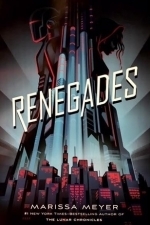

I am absolutely in love with the book and wish that I didn't have to wait another year to find out what happens. Unlike Marissa Meyer's Lunar Chronicles series, I feel that Renegades is not a series that is as universal a read. The Lunar Chronicles effortlessly blends science fiction with a fairytale retelling and I feel can draw people in even if they don't normally read either of those two. Renegades on the other hand is definitely a superhero story, with fantastic characters and an intriguing plot - but, if you're not a fan of superheroes then you're not as likely to fall in love with this book.
I personally love superheroes, I read comics and can completely see the similarities to the X-Men in this novel. The gifted in this novel are called prodigies and have such amazing (and unique) powers. My personal favourite was Adrian, who had the ability to draw and make his art come to life. Even if you're not super familiar with powers in comics, you'll not be surprised by invincibility or flight. That's why Adrian's ability was so fascinating to me. It was wholly different from the powers I've grown to know and infinitely more surprising because of how versatile it is.
I also really enjoyed that the book wasn't black and white, good and evil, right and wrong. Meyer did a brilliant job illustrating the nuances so that as a reader you could see both sides of the coin. Neither was completely the one that you wanted to root for, as they were all real, flawed people. Even Nova, who I didn't completely connect with at the beginning of the book, grew over time and learned to think more openly. I ended up liking her a lot more, and love reading the struggle she went through throughout the entire book as it helped her develop as a character.
The main characters in this story definitely felt more real than the supporting ones, but I still feel that everyone was fleshed out. I never had those moments when I couldn't remember who was who, which can happen with a large cast of characters (especially when they have both real names and aliases). Meyer allowed people to form a connection with almost all of her characters, no matter how many pages she dedicated to them. I think that is definitely where this book shone.
I've always loved Marissa Meyer's ability to build a believable world that populates in your head as you read, and this is no exception. It could see Gatlon City with its heroes and villains, ordinary people, towering base of command, filthy subway tunnels and abandoned theme park buildings. I was so intrigued by the characters and the world that the storyline took more of a backseat for me. It was still fantastic, and even though the pacing of some scenes wasn't perfect, it was a really enjoyable book.
I would highly recommend this book, especially if you like reading about superheroes (or supervillains, I won't judge). I definitely think you'll enjoy the book otherwise, but it might just not end up being your favourite. Who knows? You may discover that you actually love superheroes because of this book. Trust me, it's pretty great.
I personally love superheroes, I read comics and can completely see the similarities to the X-Men in this novel. The gifted in this novel are called prodigies and have such amazing (and unique) powers. My personal favourite was Adrian, who had the ability to draw and make his art come to life. Even if you're not super familiar with powers in comics, you'll not be surprised by invincibility or flight. That's why Adrian's ability was so fascinating to me. It was wholly different from the powers I've grown to know and infinitely more surprising because of how versatile it is.
I also really enjoyed that the book wasn't black and white, good and evil, right and wrong. Meyer did a brilliant job illustrating the nuances so that as a reader you could see both sides of the coin. Neither was completely the one that you wanted to root for, as they were all real, flawed people. Even Nova, who I didn't completely connect with at the beginning of the book, grew over time and learned to think more openly. I ended up liking her a lot more, and love reading the struggle she went through throughout the entire book as it helped her develop as a character.
The main characters in this story definitely felt more real than the supporting ones, but I still feel that everyone was fleshed out. I never had those moments when I couldn't remember who was who, which can happen with a large cast of characters (especially when they have both real names and aliases). Meyer allowed people to form a connection with almost all of her characters, no matter how many pages she dedicated to them. I think that is definitely where this book shone.
I've always loved Marissa Meyer's ability to build a believable world that populates in your head as you read, and this is no exception. It could see Gatlon City with its heroes and villains, ordinary people, towering base of command, filthy subway tunnels and abandoned theme park buildings. I was so intrigued by the characters and the world that the storyline took more of a backseat for me. It was still fantastic, and even though the pacing of some scenes wasn't perfect, it was a really enjoyable book.
I would highly recommend this book, especially if you like reading about superheroes (or supervillains, I won't judge). I definitely think you'll enjoy the book otherwise, but it might just not end up being your favourite. Who knows? You may discover that you actually love superheroes because of this book. Trust me, it's pretty great.

Merissa (14202 KP) rated Instigated (Daywalker Academy #3) in Books
Feb 21, 2020
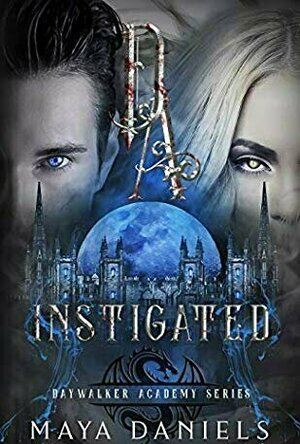
Instigated is the third book in the Daywalker Academy series and it should definitely be read as a series or you just won't get what's happening.
So, what is happening? Well, Franky is trying to figure out a way to get Zoltan back. And if that means doing a Spiderman impression then so be it. Fenrir is on hand to annoy her or help her. I'm not sure either him or Franky are ever sure which way that will go! Leo is also one with the wit and the banter between them all is as top-notch as ever. But Zoltan is missing and Franky needs to get him back even if it means sacrificing her eyeballs.
For the first three-quarters of this book, Zoltan isn't there - and that hurts, you know?! I've made no secret of the fact that HE IS MINE so for him to not be there was hard. Just when I was about to pen a strongly-worded memo to Ms. Daniels, she redeemed herself in the best way ever. ZOLTAN!!!
There is so much going on in this book, you seriously can't stop reading. This was a one-sitting book for me. No way was I doing anything apart from reading. There is danger, betrayal, tension, banter, dragons, wit, humour, and lots and lots of sexual tension (and not all of it between Franky and Zoltan!).
This world continues to amaze and delight. The fight scene at the end was outstanding and the characters continue to make me want to slap them upside the head or smile at fondly, depending on what they've just said or done.
The story itself continues to move along and, as always, it ends on one helluva cliffhanger. She kills me, she really does. Now I need to wait for the next one and I will do so (mostly) happily because a book from Maya Daniels is always worth the wait.
Do I recommend this? Do bears sh*t in the woods? Of course, I freaking do!!!
* A copy of this book was provided to me with no requirements for a review. I voluntarily read this book, and the comments here are my honest opinion. *
Merissa
Archaeolibrarian - I Dig Good Books!
So, what is happening? Well, Franky is trying to figure out a way to get Zoltan back. And if that means doing a Spiderman impression then so be it. Fenrir is on hand to annoy her or help her. I'm not sure either him or Franky are ever sure which way that will go! Leo is also one with the wit and the banter between them all is as top-notch as ever. But Zoltan is missing and Franky needs to get him back even if it means sacrificing her eyeballs.
For the first three-quarters of this book, Zoltan isn't there - and that hurts, you know?! I've made no secret of the fact that HE IS MINE so for him to not be there was hard. Just when I was about to pen a strongly-worded memo to Ms. Daniels, she redeemed herself in the best way ever. ZOLTAN!!!
There is so much going on in this book, you seriously can't stop reading. This was a one-sitting book for me. No way was I doing anything apart from reading. There is danger, betrayal, tension, banter, dragons, wit, humour, and lots and lots of sexual tension (and not all of it between Franky and Zoltan!).
This world continues to amaze and delight. The fight scene at the end was outstanding and the characters continue to make me want to slap them upside the head or smile at fondly, depending on what they've just said or done.
The story itself continues to move along and, as always, it ends on one helluva cliffhanger. She kills me, she really does. Now I need to wait for the next one and I will do so (mostly) happily because a book from Maya Daniels is always worth the wait.
Do I recommend this? Do bears sh*t in the woods? Of course, I freaking do!!!
* A copy of this book was provided to me with no requirements for a review. I voluntarily read this book, and the comments here are my honest opinion. *
Merissa
Archaeolibrarian - I Dig Good Books!


Kayleigh (12 KP) rated Newes from the Dead in Books
Jan 2, 2019
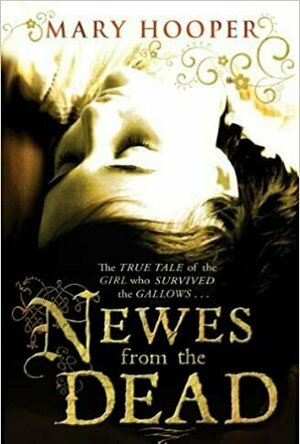
I stumbled across the blurb of this book while looking at the Totally Random Books website. It's really intriguing and, as I read around, I could see that the book is based on a true story. That was it, I had to buy it! It didn't disappoint, and I read it in a day.
While this is a YA book, it's worth pointing out that it deals with some really adult themes, which is something to consider if you're thinking of letting a teenager read it. I'll outline the main points in the next paragraph, so if you don't want any spoilers at all, skip this bit. The chapters flick between the events that led up to Anne's hanging, and what happens while she's laid on the dissecting table, apparently dead. Her downfall comes when the master's grandson promises her the world in exchange for him getting his end away, shall we say. As tends to happen, she becomes pregnant, which she manages to keep a secret until she miscarries. She has the 'audacity' to tell people who the father was, so never receives a fair trial, and is sentenced to death by hanging for the murder of her child. Her sentence is carried out, but she regains consciousness while on the dissecting table. However, she's unable to move a muscle, even to scream.
Anne is a nice girl with a promising, if humble, future, and I liked her. Even while I was willing her not to trust the father of her child, I could understand why she did what she did, and I felt really sorry for her as she lost a lot. The events of both storylines were fascinating, and in the dissection chapters I was constantly willing the doctors to notice what was going on. Although I knew they wouldn't cut into her and it was a little drawn out, some parts got quite tense, which I liked.
Being a sucker for history, I really liked the way everything was portrayed. [a:Mary Hooper|139257|Mary Hooper|http://d202m5krfqbpi5.cloudfront.net/authors/1310022486p2/139257.jpg], the author, made me realise how important it was in how you were perceived in those times - if you think gossip can be bad now, it was a million times worse in 1650, when holding someone's hand, even for an innocent reason, can potentially start a deadly rumour. I thought the book brought across everything that would have happened at the time really accurately and realistically. I know the author had true events to go on, but Anne's life before her hanging was all imagined. There's a note from Hooper at the end that specifies what records say about what happened to Anne Green after her hanging, which is also really interesting. I'll definitely be checking out more of Hooper's books!
If you liked this review please check out my <a href="http://www.a-worldofwords.com">blog!</a>;
While this is a YA book, it's worth pointing out that it deals with some really adult themes, which is something to consider if you're thinking of letting a teenager read it. I'll outline the main points in the next paragraph, so if you don't want any spoilers at all, skip this bit. The chapters flick between the events that led up to Anne's hanging, and what happens while she's laid on the dissecting table, apparently dead. Her downfall comes when the master's grandson promises her the world in exchange for him getting his end away, shall we say. As tends to happen, she becomes pregnant, which she manages to keep a secret until she miscarries. She has the 'audacity' to tell people who the father was, so never receives a fair trial, and is sentenced to death by hanging for the murder of her child. Her sentence is carried out, but she regains consciousness while on the dissecting table. However, she's unable to move a muscle, even to scream.
Anne is a nice girl with a promising, if humble, future, and I liked her. Even while I was willing her not to trust the father of her child, I could understand why she did what she did, and I felt really sorry for her as she lost a lot. The events of both storylines were fascinating, and in the dissection chapters I was constantly willing the doctors to notice what was going on. Although I knew they wouldn't cut into her and it was a little drawn out, some parts got quite tense, which I liked.
Being a sucker for history, I really liked the way everything was portrayed. [a:Mary Hooper|139257|Mary Hooper|http://d202m5krfqbpi5.cloudfront.net/authors/1310022486p2/139257.jpg], the author, made me realise how important it was in how you were perceived in those times - if you think gossip can be bad now, it was a million times worse in 1650, when holding someone's hand, even for an innocent reason, can potentially start a deadly rumour. I thought the book brought across everything that would have happened at the time really accurately and realistically. I know the author had true events to go on, but Anne's life before her hanging was all imagined. There's a note from Hooper at the end that specifies what records say about what happened to Anne Green after her hanging, which is also really interesting. I'll definitely be checking out more of Hooper's books!
If you liked this review please check out my <a href="http://www.a-worldofwords.com">blog!</a>;

Heather Cranmer (2721 KP) rated The Thousand Year Curse in Books
Jun 7, 2018

(This review can be found on my blog <a href="http://themisadventuresofatwentysomething.blogspot.com/">The (Mis)Adventures of a Twenty-Something Year Old Girl</a> towards the end of September).
When I first found out about this book, I was very interested. I couldn't wait to read it! Luckily, it totally delivered.
Ryder is a 17 year old high school student who isn't very popular. Her ex-best friend makes her life a living hell at school. When Ollie arrives, he takes an immediate interest. Ryder is thrilled and feels as if Ollie is her soul mate. Not much later, Ari turns up, and Ryder can't help but feel as if she's known him. There's also some kind of attraction there. Ryder must choose between the two boys. As if that wasn't hard enough, Ryder has just found out her mother is a Greek goddess. Ryder wants to find her mother but doing so may put everyone in danger.
The title is definitely interesting. It does go with what the books about, and I think it's an awesome choice.
To be honest, I'm not really a fan of the cover. I think it's just a personal thing simply because I'm not a big fan of symbolism. I do like the whole pretty flower in the midst of dead things, but I just don't like it for this book. It doesn't really say much about the book.
The world building is alright. There's a few things that hurt the world building. For example, it seemed to me that Ryder just accepted everything she was told at face value. Sure, a few weird things are happening to her, but it's like she's told by a boy she just met, and she believes it all. Her best friend is even worse. He's told that Ryder is a half-goddess, and he just believes it with no questions asked. Also, I don't really think this whole curse is explained well enough. In fact, I'm still a little confused about the curse. So if both guys find her, even if she chooses one, she'll die a horrible death and be reincarnated? I'm just wondering how long she has before she dies because it just seemed like the curse wasn't that imminent. There's also Ryder's powers. She's had super strength since the beginning of the book, yet later on she has another super strength episode, and she acts like it's the first one she's had and is all shocked. Another thing that I found confusing was the whole reincarnation thing. She's been reincarnated by Hades for a thousand years. This life, she is a half goddess which makes things a bit difficult for Hades. Surely if Hades is the one that put the curse on her, then he should've been able to make her human. Saying that, I don't want people to think the world building is horribly written. It's far from it actually. The world is very interesting, but I just tend to over think things, I think. (See what I mean)?
The pacing is great in this book. The pacing really picks up during the Hell scenes, I thought. These were the scenes that held my attention the most although the whole book held my attention. The Hell scenes just made me want to read faster to find out what would happen next!
The plot is definitely an interesting one. I love the infusion of Greek mythology, and Ms. Lavati does an excellent job of making mythology work in her book. I've read a few books where the author tried to use some sort of mythology, and the book was just too boring. However, The Thousand Year Curse is by no means boring! There is a love triangle, and I usually hate them, but this one works in this story. I also like the fact that the plot involved going into Hell. That was definitely a good move on Ms. Lavati's part to include it in her book. There's no cliff hangar ending, but there are questions left unanswered to make way for the second book in the series. I, personally, am looking forward to the next book in the series.
The characters were written really well. I liked Ryder, and I liked how she dealt with her problems. At times, I did get annoyed with her because I just wanted her to choose one guy. However, I would have to remind myself that without this problem, there'd be no series. Ryder felt like a real girl and not just words on a paper. Ollie was written really well, but I just didn't like him. For one, I felt like he was just too serious. I also felt like he was too distant with Ryder a lot of the time. I also wanted to see more about Ollie in the book. My favorite character was Ari. I swooned over Ari! He had enough of that bad boy personality without being too much of an annoying character. I liked how he liked to take chances, and it seemed like he knew how to have fun. I'm Team Ari all the way! I'm hoping that Ryder ends up with Ari in the long run. I can actually feel the chemistry between those two.
There are quite a lot of grammar errors in this book. I feel that it does affect the quality of the book a little bit, but not so much so that it makes it unreadable. However, the dialogue in this book is fantastic especially in the scenes that Ari is in. (Okay, so I'm a bit biased). The characters all speak like they're from this time period even though two of them are gods. I was super thankful the characters spoke like normal people. I've read a book before where the character who is a god spoke rather strangely hence why I was so happy with the dialogue in this book.
Overall, The Thousand Year Curse by Taylor Lavati is an enjoyable read. Sure, it could do with some better editing and the world building could've used a little bit of work, but it's still really interesting. Plus, I've learned that Ms. Lavati wrote this book in 30 days for the NaNoWriMo competition. After learning that, my respect for Ms. Lavati went up a lot! To write a book as good as The Thousand Year Curse in 30 days is no small feat. After saying that, I'm definitely looking forward to reading the next book in the series!
I'd recommend this book to those aged 17+ who are after a fantastic book with Greek mythology infusions.
(I was provided with a free paperback copy of this title from the author in exchange for a fair and honest review).
When I first found out about this book, I was very interested. I couldn't wait to read it! Luckily, it totally delivered.
Ryder is a 17 year old high school student who isn't very popular. Her ex-best friend makes her life a living hell at school. When Ollie arrives, he takes an immediate interest. Ryder is thrilled and feels as if Ollie is her soul mate. Not much later, Ari turns up, and Ryder can't help but feel as if she's known him. There's also some kind of attraction there. Ryder must choose between the two boys. As if that wasn't hard enough, Ryder has just found out her mother is a Greek goddess. Ryder wants to find her mother but doing so may put everyone in danger.
The title is definitely interesting. It does go with what the books about, and I think it's an awesome choice.
To be honest, I'm not really a fan of the cover. I think it's just a personal thing simply because I'm not a big fan of symbolism. I do like the whole pretty flower in the midst of dead things, but I just don't like it for this book. It doesn't really say much about the book.
The world building is alright. There's a few things that hurt the world building. For example, it seemed to me that Ryder just accepted everything she was told at face value. Sure, a few weird things are happening to her, but it's like she's told by a boy she just met, and she believes it all. Her best friend is even worse. He's told that Ryder is a half-goddess, and he just believes it with no questions asked. Also, I don't really think this whole curse is explained well enough. In fact, I'm still a little confused about the curse. So if both guys find her, even if she chooses one, she'll die a horrible death and be reincarnated? I'm just wondering how long she has before she dies because it just seemed like the curse wasn't that imminent. There's also Ryder's powers. She's had super strength since the beginning of the book, yet later on she has another super strength episode, and she acts like it's the first one she's had and is all shocked. Another thing that I found confusing was the whole reincarnation thing. She's been reincarnated by Hades for a thousand years. This life, she is a half goddess which makes things a bit difficult for Hades. Surely if Hades is the one that put the curse on her, then he should've been able to make her human. Saying that, I don't want people to think the world building is horribly written. It's far from it actually. The world is very interesting, but I just tend to over think things, I think. (See what I mean)?
The pacing is great in this book. The pacing really picks up during the Hell scenes, I thought. These were the scenes that held my attention the most although the whole book held my attention. The Hell scenes just made me want to read faster to find out what would happen next!
The plot is definitely an interesting one. I love the infusion of Greek mythology, and Ms. Lavati does an excellent job of making mythology work in her book. I've read a few books where the author tried to use some sort of mythology, and the book was just too boring. However, The Thousand Year Curse is by no means boring! There is a love triangle, and I usually hate them, but this one works in this story. I also like the fact that the plot involved going into Hell. That was definitely a good move on Ms. Lavati's part to include it in her book. There's no cliff hangar ending, but there are questions left unanswered to make way for the second book in the series. I, personally, am looking forward to the next book in the series.
The characters were written really well. I liked Ryder, and I liked how she dealt with her problems. At times, I did get annoyed with her because I just wanted her to choose one guy. However, I would have to remind myself that without this problem, there'd be no series. Ryder felt like a real girl and not just words on a paper. Ollie was written really well, but I just didn't like him. For one, I felt like he was just too serious. I also felt like he was too distant with Ryder a lot of the time. I also wanted to see more about Ollie in the book. My favorite character was Ari. I swooned over Ari! He had enough of that bad boy personality without being too much of an annoying character. I liked how he liked to take chances, and it seemed like he knew how to have fun. I'm Team Ari all the way! I'm hoping that Ryder ends up with Ari in the long run. I can actually feel the chemistry between those two.
There are quite a lot of grammar errors in this book. I feel that it does affect the quality of the book a little bit, but not so much so that it makes it unreadable. However, the dialogue in this book is fantastic especially in the scenes that Ari is in. (Okay, so I'm a bit biased). The characters all speak like they're from this time period even though two of them are gods. I was super thankful the characters spoke like normal people. I've read a book before where the character who is a god spoke rather strangely hence why I was so happy with the dialogue in this book.
Overall, The Thousand Year Curse by Taylor Lavati is an enjoyable read. Sure, it could do with some better editing and the world building could've used a little bit of work, but it's still really interesting. Plus, I've learned that Ms. Lavati wrote this book in 30 days for the NaNoWriMo competition. After learning that, my respect for Ms. Lavati went up a lot! To write a book as good as The Thousand Year Curse in 30 days is no small feat. After saying that, I'm definitely looking forward to reading the next book in the series!
I'd recommend this book to those aged 17+ who are after a fantastic book with Greek mythology infusions.
(I was provided with a free paperback copy of this title from the author in exchange for a fair and honest review).

Goddess in the Stacks (553 KP) rated Our Endless Numbered Days in Books
Sep 26, 2018


I don't like unreliable narrators. I didn't realize, at first, that Peggy was one. Even though she mentions at the start of the book that a doctor said she had Korsakoff's syndrome - meaning malnutrition has messed with her memories - I assumed that it was just because her experiences were so unbelievable that the doctor thought she'd made things up. I also don't like unreliable narrators because the author obviously knows what truly happened. Leaving the reader in the dark about it seems rude.
Peggy's narration does seem childlike, often. While at the beginning of the book, that can be excused because she is eight years old, by the end she is seventeen, yet still talking about things with a child's understanding. I thought that was the effect of Korsakoff's syndrome, not that she was entirely making some things up.
In our endless numbered days, Peggy is effectively kidnapped by her father when she is eight, and taken to some place deep in the German forest. She spends the next nine years alone in the forest with him, trapping squirrels, gathering roots and berries, and growing simple crops in a small vegetable patch. He tells her, repeatedly, making her repeat it back to him, that the rest of the world was destroyed in a massive storm. They are the last two people alive in their small, sheltered valley. She doesn't question it until she sees a man in their forest, and that eventually leads her to find civilization again. The book is told in two timelines, flashing back and forth from her memories of her time in the forest, and the present where she's attempting to re-acclimate to London.
I'm not really sure what to believe; Peggy's memory or what her mother thinks happened. There are just enough oddities to make either story plausible. I think I prefer Peggy's version. But that's the trouble with unreliable narrators; there's no way to actually know. I don't like ending a book frustrated. Books should make you feel things, yes, but frustration is an odd emotion to aim for.
This book is odd.
You can find all my reviews at http://goddessinthestacks.com
Peggy's narration does seem childlike, often. While at the beginning of the book, that can be excused because she is eight years old, by the end she is seventeen, yet still talking about things with a child's understanding. I thought that was the effect of Korsakoff's syndrome, not that she was entirely making some things up.
In our endless numbered days, Peggy is effectively kidnapped by her father when she is eight, and taken to some place deep in the German forest. She spends the next nine years alone in the forest with him, trapping squirrels, gathering roots and berries, and growing simple crops in a small vegetable patch. He tells her, repeatedly, making her repeat it back to him, that the rest of the world was destroyed in a massive storm. They are the last two people alive in their small, sheltered valley. She doesn't question it until she sees a man in their forest, and that eventually leads her to find civilization again. The book is told in two timelines, flashing back and forth from her memories of her time in the forest, and the present where she's attempting to re-acclimate to London.
I'm not really sure what to believe; Peggy's memory or what her mother thinks happened. There are just enough oddities to make either story plausible. I think I prefer Peggy's version. But that's the trouble with unreliable narrators; there's no way to actually know. I don't like ending a book frustrated. Books should make you feel things, yes, but frustration is an odd emotion to aim for.
This book is odd.
You can find all my reviews at http://goddessinthestacks.com

ClareR (6256 KP) rated The Sisters Grimm in Books
Feb 25, 2020
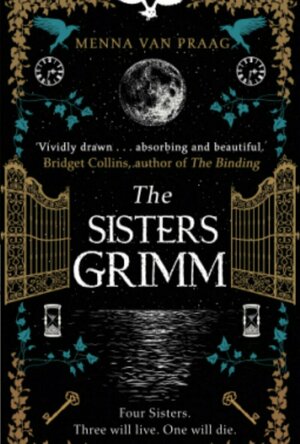
The Sisters Grimm sounds like it’s going to be a fairytale, doesn’t it? But it isn’t in the childish sense of the word. If you’ve ever read any of the original Grimm’s fairytales, they’re rather more macabre - and people don’t always get their happy endings.
Sisters Grimm don’t actually know that that’s what they are. They may have vague memories (pre-puberty - and this is important) of playing in a fairytale wood, where they can do magical, amazing things, but they put it down to dreams later. That is until they approach their 18th birthdays, and some of these dream-like abilities start to manifest themselves.
This story is based around four girls who first met at 8 years old in the fairytale dream-world, Everwhere, forget one another after their 13th birthdays, and begin to remember closer to their impending 18th birthdays. They all have a different mother, but the same father who they will meet in Everwhere on the evening of their birthday. And it’s really important that they find one another again prior to this confrontation - where they will discover the truth about themselves.
I really enjoyed this. It says on Goodreads that it’s a Young Adult novel, and whilst it’s immaterial whether I agree with this or not, I do agree that it’s about reaching an age where you are finding out more about yourself and your impending independence, and that can’t be a bad thing for young people to read about.
I liked the darkness in this book - it’s no twee fairytale. There’s death, murder in fact, as a pretty major theme. And people aren’t necessarily nice. They lie, they’re selfish and they keep secrets that are best known.
The only negative I can think of, is that I really thought that this was going to be set up for the first part of a series. The end seemed quite rushed to me, and I’d love to know more about what happens afterwards. Well, that’s not really a negative, is it? That’ll be why I gave it top marks, to be honest - it’s a great book!
Many thanks to The Pigeonhole for serialising this book - another great choice!
Sisters Grimm don’t actually know that that’s what they are. They may have vague memories (pre-puberty - and this is important) of playing in a fairytale wood, where they can do magical, amazing things, but they put it down to dreams later. That is until they approach their 18th birthdays, and some of these dream-like abilities start to manifest themselves.
This story is based around four girls who first met at 8 years old in the fairytale dream-world, Everwhere, forget one another after their 13th birthdays, and begin to remember closer to their impending 18th birthdays. They all have a different mother, but the same father who they will meet in Everwhere on the evening of their birthday. And it’s really important that they find one another again prior to this confrontation - where they will discover the truth about themselves.
I really enjoyed this. It says on Goodreads that it’s a Young Adult novel, and whilst it’s immaterial whether I agree with this or not, I do agree that it’s about reaching an age where you are finding out more about yourself and your impending independence, and that can’t be a bad thing for young people to read about.
I liked the darkness in this book - it’s no twee fairytale. There’s death, murder in fact, as a pretty major theme. And people aren’t necessarily nice. They lie, they’re selfish and they keep secrets that are best known.
The only negative I can think of, is that I really thought that this was going to be set up for the first part of a series. The end seemed quite rushed to me, and I’d love to know more about what happens afterwards. Well, that’s not really a negative, is it? That’ll be why I gave it top marks, to be honest - it’s a great book!
Many thanks to The Pigeonhole for serialising this book - another great choice!

Gangstar Vegas
Games and Entertainment
App
Roll up on a dangerous new trip through the City of Sin in the latest episode of the acclaimed...