
Search

Jordan Binkerd (567 KP) rated Gideon's Angel in Books
Aug 15, 2019

Note: this review is transposted from my personal review blog, and so was originally written several years ago. I figured if I reposted it here, someone might actually read it….
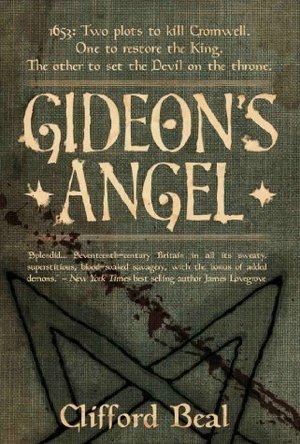
I received my copy of Gideon’s Angel through the Goodreads FirstReads program. This in no way influences my review, except to ensure that I was able to get ahold of this book and thus review it. I have to say, I really enjoyed this one. I want to describe it as “steampunk,” but my understanding is that steampunk is usually set in the 1800s (or at least that level of tech and society) whereas this work is firmly set in 1653. If there’s already a term for pseudo-historical fiction with a fantasy touch set in that timeframe, I apologize for not knowing what it is and using it accordingly.
Things are not going well for Richard Treadwell. The English Civil War is over, the King’s Cavaliers lost to the forces of Parliament and Oliver Cromwell, and Charles I has been executed. Treadwell has managed to escape the destruction of his cause, and has spent the past eight years in exile in France, performing a delicate balancing act between loyalty to his exiled king* and his employer, Cardinal Mazarin. When Mazarin informs him that someone is using the forces of Hell to tip the balance in their favor and asks him to spy on the exile court to find out if it is one of the king’s supporters, Treadwell decides that it’s time to get out of Paris. He accepts a mission for one of the king’s more militant supporters that will take him back to his beloved England–to lead a Royalist uprising, one last try to oust Cromwell and his Puritan cronies. Treadwell has other business to tend to as well, including a wife who by now probably considers herself a widow. Unfortunately for Treadwell’s simple worldview, it soon becomes clear that Cromwell’s power is the only thing preventing the more radical Puritan elements from running roughshod over the whole country. Worse still, a demon from the pits of Hell has appeared to a radical Puritan sect masquerading as an angel of light and ordering the death of Cromwell so that the Kingdom of God may be fulfilled. Now instead of assassinating Cromwell Treadwell will be forced to save him–if he can find a way to fight the forces of Hell, gain some allies in his quest, and avoid d’Artagnan, a young Musketeer dispatched by the Cardinal to bear him back to Paris….
I really enjoyed this book. It’s not exactly “high literature,” but I think I’ve very well established that I care far more about a work’s entertainment value than whatever it is critics look for. The world Beal creates here feels very real, slipping in background historical information without making you feel like you’ve been lectured. Some readers will probably wish for more background on the English Civil War, and that’s fine. If they care that much, there are numerous good books on the subject. If they don’t, there’s a Wikipedia article that should give you a good rundown on what happened. Beal manages to evoke seventeenth-century London in all its grimy glory, much as it would have actually been aside from the fact that all the magic we dismiss as superstition is actually going on behind the scenes. Moreover, this magic very much resembles what you would find depicted in the folklore of the era without obvious modern embellishment. I’m not really all that well versed in the history of the Freemasons, so I can’t accurately speak to how they were portrayed here except to say that I very much doubt their claim to date back to the builders of the pyramids. Then again, I doubt they have the tools to summon demons too, so maybe I shouldn’t be too critical. Secondary characters generally proved to be interestingly complex, especially Billy Chard, but I am seeing criticism of how the female characters in the book act. They aren’t weak characters by any means, but they are constrained by their roles in society. Treadwell’s wife has pragmatically joined her fate to that of the officer who took over Treadwell’s land when he was banished and is pregnant with his child. Is she weak for this? Or is she a strong female doing what she has to in order to protect what is left of her family? Treadwell’s Parisian mistress follows him to England rather than stay in Paris and face the scandal of their liasion alone. Weak, for needing Treadwell by her side? Or strong, for following him into whatever dangers he may be facing? Finally, Isabelle decides to follow her father and the rest of Treadwell’s band into battle against the forces of Darkness, deciding that it would be better to fall by his side than live on without him. Possibly a sign of weakness, but look at her situation realistically. She and her father were driven from Spain for their Jewish heritage, her mother dying along the way. Jews do not fare well in the Christian world of the seventeenth century, not even in England. The lot of a young woman alone in the world is already hard enough in this time without adding the burden of religious and ethnic persecution. She would have no respectable means of supporting herself, and could conceivably find herself forced into prostitution–on her own if she was lucky, as no more than a slave if she was not. Is preferring death in battle to such a fate a sign of weakness or of strength? She certainly has no trouble speaking her mind, and in fact berates Treadwell severely for endangering her father when they first meet. I suppose I can understand where some people would find these characters and their portrayal to be weak and sexist, but I respectfully disagree. I submit that instead they are strong characters reacting realistically to a world where women are not treated equally–in fact, I would have more of a problem with them if they demonstrated anachronistic modern sensibilities.** The ending was a little deus ex machina, but on the whole I didn’t mind. I would say that I want to read a sequel, but I don’t think the author could come up with anything to top this in terms of personal impact on the characters–Treadwell’s internal conflict between hating Cromwell and having to save him is very well done, and I fear Beal would prove unable to find something equally interesting as a follow up. We never really got to find out what happened to Treadwell back during the Thirty Years War that introduced him to the world of angels and demons, so I could see maybe writing that up….I’d buy it, anyway.
CONTENT: R-rated language, occasionally harsh but I would argue not gratuitous. Moderately explicit sexual content, as you would expect from a work in this vein.*** A fair amount of violence, from both man and demon. Not usually too gory in its description. There is also a good deal of occult content, as the villains are summoning a demon they believe to be an angel. This demon’s lesser minions dog Treadwell and his friends, and there are multiple encounters with them. One is implied to be a golem, others appear as strange amalgamations of beast(s) and man. For me, this is adequately balanced by the recognition that, as powerful as the forces of Darkness are, God is far more powerful than they. Bottom line: if you’re mature enough to handle the other content, I don’t believe the occult elements should prove to be an issue.
*Charles I was executed, while his son Charles II went into exile. Just in case you were concerned with the historical accuracy of the book. So far as I can tell, this is pretty accurate. You know, aside from the demons and fictional characters roaming London…..
**Please understand, I’m neither defending nor endorsing the inequality of the seventeenth century. Neither is Clifford Beal, for that matter. I’m simply pointing out that it was how it was, and this was the world the characters would have come from. I’m all for equality, but to whitewash history and pretend it was different from it was….that way lies dangerous waters.
***This evokes more than anything a supernatural-tinged Alexandre Dumas novel for me….and you know how bawdry his musketeers could be when they wanted to be.
Original post: https://jordanbinkerd.wordpress.com/2013/10/24/review-gideons-angel-by-clifford-beal/
I received my copy of Gideon’s Angel through the Goodreads FirstReads program. This in no way influences my review, except to ensure that I was able to get ahold of this book and thus review it. I have to say, I really enjoyed this one. I want to describe it as “steampunk,” but my understanding is that steampunk is usually set in the 1800s (or at least that level of tech and society) whereas this work is firmly set in 1653. If there’s already a term for pseudo-historical fiction with a fantasy touch set in that timeframe, I apologize for not knowing what it is and using it accordingly.
Things are not going well for Richard Treadwell. The English Civil War is over, the King’s Cavaliers lost to the forces of Parliament and Oliver Cromwell, and Charles I has been executed. Treadwell has managed to escape the destruction of his cause, and has spent the past eight years in exile in France, performing a delicate balancing act between loyalty to his exiled king* and his employer, Cardinal Mazarin. When Mazarin informs him that someone is using the forces of Hell to tip the balance in their favor and asks him to spy on the exile court to find out if it is one of the king’s supporters, Treadwell decides that it’s time to get out of Paris. He accepts a mission for one of the king’s more militant supporters that will take him back to his beloved England–to lead a Royalist uprising, one last try to oust Cromwell and his Puritan cronies. Treadwell has other business to tend to as well, including a wife who by now probably considers herself a widow. Unfortunately for Treadwell’s simple worldview, it soon becomes clear that Cromwell’s power is the only thing preventing the more radical Puritan elements from running roughshod over the whole country. Worse still, a demon from the pits of Hell has appeared to a radical Puritan sect masquerading as an angel of light and ordering the death of Cromwell so that the Kingdom of God may be fulfilled. Now instead of assassinating Cromwell Treadwell will be forced to save him–if he can find a way to fight the forces of Hell, gain some allies in his quest, and avoid d’Artagnan, a young Musketeer dispatched by the Cardinal to bear him back to Paris….
I really enjoyed this book. It’s not exactly “high literature,” but I think I’ve very well established that I care far more about a work’s entertainment value than whatever it is critics look for. The world Beal creates here feels very real, slipping in background historical information without making you feel like you’ve been lectured. Some readers will probably wish for more background on the English Civil War, and that’s fine. If they care that much, there are numerous good books on the subject. If they don’t, there’s a Wikipedia article that should give you a good rundown on what happened. Beal manages to evoke seventeenth-century London in all its grimy glory, much as it would have actually been aside from the fact that all the magic we dismiss as superstition is actually going on behind the scenes. Moreover, this magic very much resembles what you would find depicted in the folklore of the era without obvious modern embellishment. I’m not really all that well versed in the history of the Freemasons, so I can’t accurately speak to how they were portrayed here except to say that I very much doubt their claim to date back to the builders of the pyramids. Then again, I doubt they have the tools to summon demons too, so maybe I shouldn’t be too critical. Secondary characters generally proved to be interestingly complex, especially Billy Chard, but I am seeing criticism of how the female characters in the book act. They aren’t weak characters by any means, but they are constrained by their roles in society. Treadwell’s wife has pragmatically joined her fate to that of the officer who took over Treadwell’s land when he was banished and is pregnant with his child. Is she weak for this? Or is she a strong female doing what she has to in order to protect what is left of her family? Treadwell’s Parisian mistress follows him to England rather than stay in Paris and face the scandal of their liasion alone. Weak, for needing Treadwell by her side? Or strong, for following him into whatever dangers he may be facing? Finally, Isabelle decides to follow her father and the rest of Treadwell’s band into battle against the forces of Darkness, deciding that it would be better to fall by his side than live on without him. Possibly a sign of weakness, but look at her situation realistically. She and her father were driven from Spain for their Jewish heritage, her mother dying along the way. Jews do not fare well in the Christian world of the seventeenth century, not even in England. The lot of a young woman alone in the world is already hard enough in this time without adding the burden of religious and ethnic persecution. She would have no respectable means of supporting herself, and could conceivably find herself forced into prostitution–on her own if she was lucky, as no more than a slave if she was not. Is preferring death in battle to such a fate a sign of weakness or of strength? She certainly has no trouble speaking her mind, and in fact berates Treadwell severely for endangering her father when they first meet. I suppose I can understand where some people would find these characters and their portrayal to be weak and sexist, but I respectfully disagree. I submit that instead they are strong characters reacting realistically to a world where women are not treated equally–in fact, I would have more of a problem with them if they demonstrated anachronistic modern sensibilities.** The ending was a little deus ex machina, but on the whole I didn’t mind. I would say that I want to read a sequel, but I don’t think the author could come up with anything to top this in terms of personal impact on the characters–Treadwell’s internal conflict between hating Cromwell and having to save him is very well done, and I fear Beal would prove unable to find something equally interesting as a follow up. We never really got to find out what happened to Treadwell back during the Thirty Years War that introduced him to the world of angels and demons, so I could see maybe writing that up….I’d buy it, anyway.
CONTENT: R-rated language, occasionally harsh but I would argue not gratuitous. Moderately explicit sexual content, as you would expect from a work in this vein.*** A fair amount of violence, from both man and demon. Not usually too gory in its description. There is also a good deal of occult content, as the villains are summoning a demon they believe to be an angel. This demon’s lesser minions dog Treadwell and his friends, and there are multiple encounters with them. One is implied to be a golem, others appear as strange amalgamations of beast(s) and man. For me, this is adequately balanced by the recognition that, as powerful as the forces of Darkness are, God is far more powerful than they. Bottom line: if you’re mature enough to handle the other content, I don’t believe the occult elements should prove to be an issue.
*Charles I was executed, while his son Charles II went into exile. Just in case you were concerned with the historical accuracy of the book. So far as I can tell, this is pretty accurate. You know, aside from the demons and fictional characters roaming London…..
**Please understand, I’m neither defending nor endorsing the inequality of the seventeenth century. Neither is Clifford Beal, for that matter. I’m simply pointing out that it was how it was, and this was the world the characters would have come from. I’m all for equality, but to whitewash history and pretend it was different from it was….that way lies dangerous waters.
***This evokes more than anything a supernatural-tinged Alexandre Dumas novel for me….and you know how bawdry his musketeers could be when they wanted to be.
Original post: https://jordanbinkerd.wordpress.com/2013/10/24/review-gideons-angel-by-clifford-beal/

Bob Mann (459 KP) rated Viceroy's House (2017) in Movies
Sep 29, 2021

The 80:20 Rule.
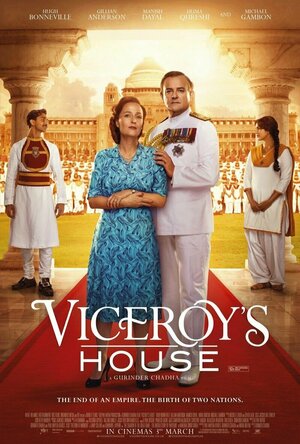
India, 1947. Churchill’s government has sent Lord Grantham – – sorry — Lord Louis Mountbatten of Burma (Hugh Bonneville, “The Monuments Men“) as the new Viceroy. His mission is to make sure he is the last ever Viceroy, for India is to be returned to independence. But racial tensions between the Hindu and minority Muslim populations are brittle and deteriorating fast. Can India survive as a single country, or will Mountbatten be forced to partition the country along religious lines to avoid civil-war and countless deaths?
Of course, there is little tension in this plot line since we know Pakistan was indeed founded by Muhammad Ali Jinnah (played by Denzil Smith) on August 14th 1947. (In reality, Jinnah’s victory was short lived as he died of TB the following year). The rest of India went on to be ruled by Jawaharlal Nehru (played by Tanveer Ghani). What the film does remind this generation of is the extreme cost of that partition, with riots, mass abductions and rapes, over a million estimated deaths and one of the biggest migrations of populations ever seen. (All of this is largely shown through original newsreel footage, which is effectively inter-weaved with the film).
So as an educational documentary it is useful. However, as an entertaining movie night out? Not so much. After coming out of the film we needed to buy some milk at Tesco and I was put on the spot by the checkout lady to sum-up the film: “Worthy but dull” was what I came up with, which with further time to reflect still seems a good summary.
This shouldn’t have been the case, since the film is directed by the well-respected Gurinder Chadha (“Bend it like Beckham) and boasts a stellar cast, with Bonneville supported by Gillian Anderson (“The X Files”) as Lady Mountbatten; Michael Gambon (“Harry Potter”) as General Ismay (Mountbatten’s chief of staff); Simon Callow (“Four Weddings and a Funeral”) as Radcliffe (the drawer of ‘the new map’); and Om Puri (“The Hundred Foot Journey“) as former political prisoner Ali Rahim Noor. Playing Mountbatten’s daughter is Lily Travers (“Kingsman: The Secret Service“): Virginia McKenna’s granddaughter.
But unfortunately, for me at least, the film lumbers from scene to scene, seldom engaging with me. Bonneville’s Mountbatten, whilst perfectly sound, was just a re-tread of Downton with added humidity and curry; Anderson’s (probably extremely accurate) crystal-glass English accent quickly becomes tiresome; and elsewhere a lot of the acting of the broader Indian cast is, I’m sorry to comment, rather sub-par. For me, only Om Puri, who sadly died in January, delivers an effective and moving performance as the blind father (literally) unable to see that the arranged marriage for his daughter Aalia (Huma Qureshi) is heading for trouble thanks to Mountbatten’s man-servant. And no, that isn’t a euphemism…. I’m talking about his real manservant, Jeet Kumar (Manish Dayal)!!
As an aside, the late Puri (probably most famous in western cinema for “East is East”) has made over 270 feature films in his prolific career, over and above his many appearances on Indian TV. And he still has another 6 films to be released! May he rest in peace.
Probably realising that the historical plot is not enough to sustain the film, the screenwriters Paul Mayeda Berges (“Bend it like Beckham”), Moira Buffini (“Tamara Drewe”) and Gurinder Chadha try to add more substance with the illicit romance between the Hindu Jeet and the Muslim Aalia. Unfortunately this is clunky at best, with an incessant 30 minutes-worth of longing looks before anything of substance happens. Even the “Lion“-style denouement (also with a railway train connection) is unconvincing.
After that, the film just tends to peter out, with a ‘real-life photograph’ segue delivering a rather tenuous connection between a character not even featured in the film and the director!
Mrs. Chadha has clearly corralled an army of extras to deliver some of the scenes in the film, in the hope of delivering a historical epic of the scale of Attenborough’s “Gandhi”. For me, she misses by a considerable margin. But that’s just my view….. if you like historical dramas, its a film you might enjoy: as the great man himself said “Honest disagreement is often a good sign of progress”.
Of course, there is little tension in this plot line since we know Pakistan was indeed founded by Muhammad Ali Jinnah (played by Denzil Smith) on August 14th 1947. (In reality, Jinnah’s victory was short lived as he died of TB the following year). The rest of India went on to be ruled by Jawaharlal Nehru (played by Tanveer Ghani). What the film does remind this generation of is the extreme cost of that partition, with riots, mass abductions and rapes, over a million estimated deaths and one of the biggest migrations of populations ever seen. (All of this is largely shown through original newsreel footage, which is effectively inter-weaved with the film).
So as an educational documentary it is useful. However, as an entertaining movie night out? Not so much. After coming out of the film we needed to buy some milk at Tesco and I was put on the spot by the checkout lady to sum-up the film: “Worthy but dull” was what I came up with, which with further time to reflect still seems a good summary.
This shouldn’t have been the case, since the film is directed by the well-respected Gurinder Chadha (“Bend it like Beckham) and boasts a stellar cast, with Bonneville supported by Gillian Anderson (“The X Files”) as Lady Mountbatten; Michael Gambon (“Harry Potter”) as General Ismay (Mountbatten’s chief of staff); Simon Callow (“Four Weddings and a Funeral”) as Radcliffe (the drawer of ‘the new map’); and Om Puri (“The Hundred Foot Journey“) as former political prisoner Ali Rahim Noor. Playing Mountbatten’s daughter is Lily Travers (“Kingsman: The Secret Service“): Virginia McKenna’s granddaughter.
But unfortunately, for me at least, the film lumbers from scene to scene, seldom engaging with me. Bonneville’s Mountbatten, whilst perfectly sound, was just a re-tread of Downton with added humidity and curry; Anderson’s (probably extremely accurate) crystal-glass English accent quickly becomes tiresome; and elsewhere a lot of the acting of the broader Indian cast is, I’m sorry to comment, rather sub-par. For me, only Om Puri, who sadly died in January, delivers an effective and moving performance as the blind father (literally) unable to see that the arranged marriage for his daughter Aalia (Huma Qureshi) is heading for trouble thanks to Mountbatten’s man-servant. And no, that isn’t a euphemism…. I’m talking about his real manservant, Jeet Kumar (Manish Dayal)!!
As an aside, the late Puri (probably most famous in western cinema for “East is East”) has made over 270 feature films in his prolific career, over and above his many appearances on Indian TV. And he still has another 6 films to be released! May he rest in peace.
Probably realising that the historical plot is not enough to sustain the film, the screenwriters Paul Mayeda Berges (“Bend it like Beckham”), Moira Buffini (“Tamara Drewe”) and Gurinder Chadha try to add more substance with the illicit romance between the Hindu Jeet and the Muslim Aalia. Unfortunately this is clunky at best, with an incessant 30 minutes-worth of longing looks before anything of substance happens. Even the “Lion“-style denouement (also with a railway train connection) is unconvincing.
After that, the film just tends to peter out, with a ‘real-life photograph’ segue delivering a rather tenuous connection between a character not even featured in the film and the director!
Mrs. Chadha has clearly corralled an army of extras to deliver some of the scenes in the film, in the hope of delivering a historical epic of the scale of Attenborough’s “Gandhi”. For me, she misses by a considerable margin. But that’s just my view….. if you like historical dramas, its a film you might enjoy: as the great man himself said “Honest disagreement is often a good sign of progress”.

Daniel Boyd (1066 KP) rated X-Men: Apocalypse (2016) in Movies
Jul 19, 2017 (Updated Apr 16, 2021)


80's setting (2 more)
Quicksilver
Oscar Isaacs
Mutants Have Mankind Divided
This movie has had the most mixed reaction that I have seen since Batman V Superman, however I do objectively believe that X Men is a better movie and to be honest I don’t understand the mixed response Apocalypse has gotten. The year is 1983, 10 years after the last x men movie, Days Of Future Past (as in the kind of 10 years where no one ages a day,) and we know that it is 1983 because some of the young mutants go and see Return Of The Jedi in the cinema. The hairstyles and fashion statements are suitably 80’s, which is an appropriate motif to choose as it adds a more comic book feel to the movie and forces it to stick to a brighter colour pallet than some of the previous X men outings. Another positive is the return of Quicksilver, who has another awesome slow motion scene, which possibly isn’t as well choreographed as the one in DOFP, but is definitely grander in scale. While the design of Apocalypse in this movie has been heavily criticised, I didn’t feel that it took me out of the movie and I felt that Oscar Isaacs’ portrayal of the ancient mutant is another great turn by the actor and proves yet again how diverse and chameleon like he really is. The one downside of his character is that he has been significantly nerfed in terms of his powers here. He does feel powerful, but never overwhelmingly so and when the final confrontation does take place, it feels like he is holding back. This could be explained in a contrived manner by saying that he doesn’t want to kill mutants, because they are all his children, but if the success of his plan depends on it then he shouldn’t even hesitate, he should just wipe all the X Men out in an instant like we know he can.
The tone is another issue I have with the movie, it is fairly inconsistent throughout and never reaches the level of threat that it is aiming for. However, this is through no fault of the cast or the performances. MacAvoy and Fassbender stand out here as you would expect, their relationship also remains one of the most interesting parts of the plot. Isaacs’ performance is also suitably threatening and sinister, the only thing lacking in his character other than the odd design choice, is how short he is next to the other mutants. He doesn’t have to be huge like in the comics and cartoons, but making him a little bit more physically imposing with clever camera tricks would have went a long way in adding to the character. Jennifer Lawrence is fine here as usual and young Cyclops and Jean Grey are perfectly serviceable, although Sophie Turner’s American accent does come and go in certain scenes. Even Peters is typically brilliant as Quicksilver and the actress who plays Storm here is also pretty convincing, as is the young English actor who plays Angel. Nightcrawler is a welcome addition to the roster as I feel that he has been criminally underused since the second X Men movie and his power set is definitely one of the most interesting in all of the X Men movies, also the actor playing him here does a good job throughout the film. However the same can’t be said for Olivia Munn who plays Psylocke in this movie, I have disliked this actress in every role I have seen her in to date and the same goes for this one, she brings nothing to the movie and she constantly has a resting bitch face that suggests she doesn’t want to be there.
Like Civil War, X Men wasn’t anything like the comic it was based on and we didn’t get what we expected, but what we did end up getting was fresh and entertaining in it’s own right, so it’s okay that the film plots aren’t 100% faithful to the source material and that is something that Singer has been preaching since he made the first X Men movie back in 2001, which incidentally wasn’t based on any comic book and was a totally original plot. Also I love how because of the alternate timeline they are now free to do whatever they want in terms of the timing of certain events. For example, (and this is a slight spoiler, but the movie has been out for a while now so deal with it,) the Phoenix Force makes an appearance in this movie, which typically isn’t something that Jean Grey acquires until later in her life. Also the fact that we saw Wolverine escaping from Weapon X again, (again spoilers but this was in the trailers anyway so again, deal with it,) was awesome and this time we saw him being broken out by the young X Men and this time he had the comic book accurate electric headgear on while he escaped and I also loved how we saw him interact with young Jean Grey and regain some of his memories. This could also could be a change in the timeline caused by the butterfly effect as a result of the events of Days Of Future Past. This would also explain why the Magneto/Quicksilver, father/son relationship has never been discussed before, because if Apocalypse never awakened in the original X Men trilogy, then Quicksilver would have never went to the X Men mansion and therefore wouldn’t have come into contact with his dad during the final battle scene. Also Mystique looks like she is now a member and potential leader of the X Men team, rather than an enemy of the team like she was in the original movies when she was played by Rebecca Romjin. The other big change in the timeline is the death of Magneto’s family and even the fact that he had a wife and another child besides Quicksilver and Scarlett Witch.
Overall I really enjoyed this movie, however I can also see why some people would take a disliking to it, as it does require a good amount of previous knowledge of the universe, but as an X Men fan, I loved it. Also another criticism I have read is that people aren’t happy with the length of the film, stating that it is too long and it drags in, but I actually thought the pacing was spot on. Anyway as an X Men fan, I loved my time would this movie and I look forward to seeing it again and I’d recommend it to anyone who is a mutant superhero fan.
The tone is another issue I have with the movie, it is fairly inconsistent throughout and never reaches the level of threat that it is aiming for. However, this is through no fault of the cast or the performances. MacAvoy and Fassbender stand out here as you would expect, their relationship also remains one of the most interesting parts of the plot. Isaacs’ performance is also suitably threatening and sinister, the only thing lacking in his character other than the odd design choice, is how short he is next to the other mutants. He doesn’t have to be huge like in the comics and cartoons, but making him a little bit more physically imposing with clever camera tricks would have went a long way in adding to the character. Jennifer Lawrence is fine here as usual and young Cyclops and Jean Grey are perfectly serviceable, although Sophie Turner’s American accent does come and go in certain scenes. Even Peters is typically brilliant as Quicksilver and the actress who plays Storm here is also pretty convincing, as is the young English actor who plays Angel. Nightcrawler is a welcome addition to the roster as I feel that he has been criminally underused since the second X Men movie and his power set is definitely one of the most interesting in all of the X Men movies, also the actor playing him here does a good job throughout the film. However the same can’t be said for Olivia Munn who plays Psylocke in this movie, I have disliked this actress in every role I have seen her in to date and the same goes for this one, she brings nothing to the movie and she constantly has a resting bitch face that suggests she doesn’t want to be there.
Like Civil War, X Men wasn’t anything like the comic it was based on and we didn’t get what we expected, but what we did end up getting was fresh and entertaining in it’s own right, so it’s okay that the film plots aren’t 100% faithful to the source material and that is something that Singer has been preaching since he made the first X Men movie back in 2001, which incidentally wasn’t based on any comic book and was a totally original plot. Also I love how because of the alternate timeline they are now free to do whatever they want in terms of the timing of certain events. For example, (and this is a slight spoiler, but the movie has been out for a while now so deal with it,) the Phoenix Force makes an appearance in this movie, which typically isn’t something that Jean Grey acquires until later in her life. Also the fact that we saw Wolverine escaping from Weapon X again, (again spoilers but this was in the trailers anyway so again, deal with it,) was awesome and this time we saw him being broken out by the young X Men and this time he had the comic book accurate electric headgear on while he escaped and I also loved how we saw him interact with young Jean Grey and regain some of his memories. This could also could be a change in the timeline caused by the butterfly effect as a result of the events of Days Of Future Past. This would also explain why the Magneto/Quicksilver, father/son relationship has never been discussed before, because if Apocalypse never awakened in the original X Men trilogy, then Quicksilver would have never went to the X Men mansion and therefore wouldn’t have come into contact with his dad during the final battle scene. Also Mystique looks like she is now a member and potential leader of the X Men team, rather than an enemy of the team like she was in the original movies when she was played by Rebecca Romjin. The other big change in the timeline is the death of Magneto’s family and even the fact that he had a wife and another child besides Quicksilver and Scarlett Witch.
Overall I really enjoyed this movie, however I can also see why some people would take a disliking to it, as it does require a good amount of previous knowledge of the universe, but as an X Men fan, I loved it. Also another criticism I have read is that people aren’t happy with the length of the film, stating that it is too long and it drags in, but I actually thought the pacing was spot on. Anyway as an X Men fan, I loved my time would this movie and I look forward to seeing it again and I’d recommend it to anyone who is a mutant superhero fan.