
Search
Search results

Merissa (14188 KP) rated In Pain and Blood (Spellster #1) in Books
Jun 15, 2018
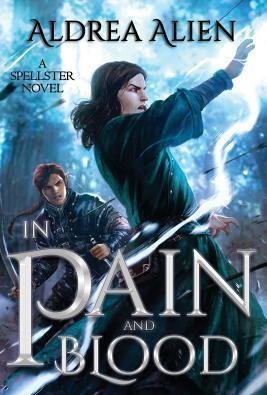


In Pain and Blood (Spellster #1) by Aldrea Alien
In Pain and Blood is the first book in the Spellster series, and has all the hallmarks of everything I enjoy - epic fantasy, m/m, romance, action, and adventure. Dylan has spent his life in 'the Tower' learning how to be a spellster. Magic comes easily to him, but his guardian keeps on telling him to stay safe in the tower, and not to make waves. However, one event shoves him to the forefront, and he sees more of life than he expected. Trying to make his way back to the Tower, he becomes part of a ragtag group and sees life in a completely different way.
This should have been a good book. I really wanted it to be a good book, but it fell short for me on a number of different levels. First of all, it's long. And I mean REALLY long. Now don't get me wrong, I love epic fantasy, and regularly read books of a thick volume. However, for this book, it felt like it needed some serious editing to get some of the monotonous repetition removed. Also, this land is supposed to be under attack, but they manage to completely miss any and every member of either army on their two month trek across the land - which we hear about in great detail. How this book started actually had me going back to check on the blurb as I thought I was reading a completely different book. It does change and become the story the blurb describes, but only after a long start. It is only the two main characters who we really meet, and I wouldn't say I 'know' them very well. Even their companions, who they spend so much time with, aren't really fleshed out. It didn't help when one of the main characters spoke to everyone as 'my dear hunter/my dear warrior/my dear spellster'. I know this was supposed to be one of his quirks, but I got it after the first dozen times. It really didn't need repeating multiple times on every page. The ending, such as it was, is the only thing in the book that felt rushed. Big events happen, something life-changing happens to a supporting character, opinions change, a lifetime's enduring love is pronounced, and it happens at the speed of light.
I struggled to finish this book. It was only my sheer stubborn nature and optimistic belief that it would get better (and if I finished it before it ended, I would never know) that kept me turning the pages to the very end. I am glad I've read it, but I wouldn't recommend it.
* A copy of this book was provided to me with no requirements for a review. I voluntarily read this book, and my comments here are my honest opinion. *
Merissa
Archaeolibrarian - I Dig Good Books!
This should have been a good book. I really wanted it to be a good book, but it fell short for me on a number of different levels. First of all, it's long. And I mean REALLY long. Now don't get me wrong, I love epic fantasy, and regularly read books of a thick volume. However, for this book, it felt like it needed some serious editing to get some of the monotonous repetition removed. Also, this land is supposed to be under attack, but they manage to completely miss any and every member of either army on their two month trek across the land - which we hear about in great detail. How this book started actually had me going back to check on the blurb as I thought I was reading a completely different book. It does change and become the story the blurb describes, but only after a long start. It is only the two main characters who we really meet, and I wouldn't say I 'know' them very well. Even their companions, who they spend so much time with, aren't really fleshed out. It didn't help when one of the main characters spoke to everyone as 'my dear hunter/my dear warrior/my dear spellster'. I know this was supposed to be one of his quirks, but I got it after the first dozen times. It really didn't need repeating multiple times on every page. The ending, such as it was, is the only thing in the book that felt rushed. Big events happen, something life-changing happens to a supporting character, opinions change, a lifetime's enduring love is pronounced, and it happens at the speed of light.
I struggled to finish this book. It was only my sheer stubborn nature and optimistic belief that it would get better (and if I finished it before it ended, I would never know) that kept me turning the pages to the very end. I am glad I've read it, but I wouldn't recommend it.
* A copy of this book was provided to me with no requirements for a review. I voluntarily read this book, and my comments here are my honest opinion. *
Merissa
Archaeolibrarian - I Dig Good Books!

Real Boxing 2 ROCKY
Games and Entertainment
App
"The boxing game we deserve." 8/10 – Gamezebo "A big, brash boxing game that's surprising tactical...

RAVENMARK: Scourge of Estellion
Games
App
50% OFF FOR WWDC! Experience the award-winning wargame, Ravenmark: Scourge of Estellion, where epic...
Hazel (1853 KP) rated The House at the Edge of the Night in Books
Oct 20, 2017


For Victoria Hislop fans
I received this book for free through Goodreads First Reads.
Castellamare, a small island off the south coast of Italy, is the perfect setting for a captivating epic tale that traces a family from the beginning of the 1900s until the more recent year of 2009. Centred at the island’s only bar ‘The House at the Edge of the Night’, the island inhabitants suffer through two world wars, fascism, tourism and recession, however, the bar determinedly stays standing. But what happens in the rest of the world is largely ignored by the island dwellers that prefer to come to the bar to learn about friendships, betrayals and love affairs.
The House at the Edge of the Night begins on the mainland where the Dr Esposito removes the foundling Amadeo from care. Following in his foster father’s footsteps, Amadea Esposito trains to be a doctor and eventually lands himself a position on Castellamare. Having never had a doctor on the island before, Amadeo is welcomed by almost everyone, however, an illicit affair puts an end to his career. Fortunately, The House at the End of the Night provides Amadeo with an income and a home for his new wife, Pina, and his four children.
The story takes the reader through the Second World War, something that is interesting to read from the Italian’s point of view. Rejecting fascism, the Islanders are enraged when their boys are called up to join the war, especially as many, including Amadeo’s three boys, never return. With only a daughter, Maria-Grazia, remaining, the Esposito’s keep the bar going for lack of anything better to do.
But war brings good things as well as bad. Washed up on sure, the British soldier Robert brings good luck to the superstitious villagers, eventually marrying the lovely Maria-Grazia. The story continues through the childhood of their unruly boys, coming to an end as their granddaughter reaches adulthood.
A doctor and a barman, Amadeo also had a love for stories. Listening to his patients and patrons fantastical tales, Amadeo keeps note of them all in his personal notebook. Split into five parts, the book contains a story at the beginning of each section that, although mythical, set the scene for the subsequent narrative.
Alienated from the rest of the world, the Islanders are stuck in their ways, attributing any luck – good and bad – to their patron saint, Sant’Agata. Whenever life gets tough, the people on Castellamare turn to prayer, which although is part of their Catholic faith, often comes across as superstitious and irrational. They refuse to believe any logical explanation, preferring to regard their island as a magical, preternatural site.
There is no specific storyline with the usual climax and conclusion; instead, it works as a biography of a fictional family. It is interesting to regard the impact of the rapidly developing world on the island, from the introduction of a building society and the eventual launch of the Europe – something that the Islanders are naturally against. The inhabitants of Castellamare come across as naïve, but their backgrounds and beliefs are far more interesting than the average person.
The House at the Edge of the Night is a story of stories. It provides more than to be expected from a novel. Catherine Banner writes of beautiful settings, compelling characters and fascinating events that both amuse and entertain in a moving way.
With Victoria Hislop’s novels such as The Island being all the rage amongst many female readers, Catherine Banner’s The House at the Edge of the Night is destined for success. It is a great book to read on holiday or at home, and perfect for book clubs. This book is the ideal escape from the stresses of everyday life.
Castellamare, a small island off the south coast of Italy, is the perfect setting for a captivating epic tale that traces a family from the beginning of the 1900s until the more recent year of 2009. Centred at the island’s only bar ‘The House at the Edge of the Night’, the island inhabitants suffer through two world wars, fascism, tourism and recession, however, the bar determinedly stays standing. But what happens in the rest of the world is largely ignored by the island dwellers that prefer to come to the bar to learn about friendships, betrayals and love affairs.
The House at the Edge of the Night begins on the mainland where the Dr Esposito removes the foundling Amadeo from care. Following in his foster father’s footsteps, Amadea Esposito trains to be a doctor and eventually lands himself a position on Castellamare. Having never had a doctor on the island before, Amadeo is welcomed by almost everyone, however, an illicit affair puts an end to his career. Fortunately, The House at the End of the Night provides Amadeo with an income and a home for his new wife, Pina, and his four children.
The story takes the reader through the Second World War, something that is interesting to read from the Italian’s point of view. Rejecting fascism, the Islanders are enraged when their boys are called up to join the war, especially as many, including Amadeo’s three boys, never return. With only a daughter, Maria-Grazia, remaining, the Esposito’s keep the bar going for lack of anything better to do.
But war brings good things as well as bad. Washed up on sure, the British soldier Robert brings good luck to the superstitious villagers, eventually marrying the lovely Maria-Grazia. The story continues through the childhood of their unruly boys, coming to an end as their granddaughter reaches adulthood.
A doctor and a barman, Amadeo also had a love for stories. Listening to his patients and patrons fantastical tales, Amadeo keeps note of them all in his personal notebook. Split into five parts, the book contains a story at the beginning of each section that, although mythical, set the scene for the subsequent narrative.
Alienated from the rest of the world, the Islanders are stuck in their ways, attributing any luck – good and bad – to their patron saint, Sant’Agata. Whenever life gets tough, the people on Castellamare turn to prayer, which although is part of their Catholic faith, often comes across as superstitious and irrational. They refuse to believe any logical explanation, preferring to regard their island as a magical, preternatural site.
There is no specific storyline with the usual climax and conclusion; instead, it works as a biography of a fictional family. It is interesting to regard the impact of the rapidly developing world on the island, from the introduction of a building society and the eventual launch of the Europe – something that the Islanders are naturally against. The inhabitants of Castellamare come across as naïve, but their backgrounds and beliefs are far more interesting than the average person.
The House at the Edge of the Night is a story of stories. It provides more than to be expected from a novel. Catherine Banner writes of beautiful settings, compelling characters and fascinating events that both amuse and entertain in a moving way.
With Victoria Hislop’s novels such as The Island being all the rage amongst many female readers, Catherine Banner’s The House at the Edge of the Night is destined for success. It is a great book to read on holiday or at home, and perfect for book clubs. This book is the ideal escape from the stresses of everyday life.
Hazel (1853 KP) rated Purple Hearts in Books
Oct 24, 2017

Reimagined History
This ARC was provided by the publisher via NetGalley in exchange for an honest review
An epic tale of a reimagined World War II comes to an explosive end in this third and final book Purple Hearts. Michael Grant created an alternative history in which women were allowed to enter the army and fight alongside the men on the front lines in Europe. Having earned accolades, promotions and the right to go home to America at the conclusion of the previous book, Rio, Frangie and Rainy decide to stay for the remains of the war. It is 6th June 1944, and the battle on the sands of Omaha Beach is about to begin – D-Day.
The story rushes into the horrors of the D-Day landings where Rio, now a Sergeant, is leading her platoon through the treacherous battleground, whilst Frangie, the medic, tries to patch up fallen comrades. The author teases the reader with the introduction of new characters who promptly get killed during this fateful day and battles further along the line. There is no sugar coating the horrific experience of soldiers and civilians, regardless of whether the scenes are fictionalized or not.
The difficulty with writing a work of fiction about the final years of World War II is that the majority of readers will already know the facts. Therefore, it was impossible for Grant to compose a drastic alternative history. Despite the inclusion of women soldiers, the main events occur exactly as they did in reality, beginning with D-Day before moving on to Liberated France, the Hürtgen Forest, the Battle of the Bulge, and, eventually, VE Day.
The three main characters have undergone complete transformations since the beginning of book one. No longer are they the innocent girls mocked for the belief they could be as strong as male soldiers. As horror after horror unfolds, readers are left with only the hope that these three survive.
Throughout book one and two, the narrative was interspersed with a commentary from an anonymous female soldier in a bed at the 107th evacuee hospital in Würzburg, Germany. As promised at the beginning of the series, readers finally find out which character this nameless voice belongs to, although it is dragged out until the final pages of the book.
The title, Purple Hearts, refers to the medal earned by soldiers injured in battle. Rio, Frangie and Rainy have each received one, along with a few other characters. Unfortunately, many are killed in the battles, some who have been in the story from the start, making this an extremely shocking book. It goes to show how dangerous war is and the brutality WWII soldiers experienced. It is a surprise that as many survived as they did.
Although at this point the main focus of the story is the war, there is still the underlying theme of equality, both for women and for black people. Frangie provides the insight into the segregation of blacks, being assigned to black-only patrols and having white patients refuse to be treated by her. However, as the war gets more violent, these lines get blurred until it is (mostly) no longer important the colour of a soldier or medic’s skin.
Purple Hearts is a brilliant end to a challenging series. Readers become invested in the characters and are drawn into a story that is so true to form that it is easy to forget that women did not actually take part in the fighting. Evidently well researched, Michael Grant has penned a series that educates whilst it entertains, opening readers’ eyes to the truth about war. This is nothing like a textbook full of facts and figures, it is a moving, personal (forget the fictional bit) account of what WWII was really like. Written with young adults in mind, this is a great series for both teens and older readers.
An epic tale of a reimagined World War II comes to an explosive end in this third and final book Purple Hearts. Michael Grant created an alternative history in which women were allowed to enter the army and fight alongside the men on the front lines in Europe. Having earned accolades, promotions and the right to go home to America at the conclusion of the previous book, Rio, Frangie and Rainy decide to stay for the remains of the war. It is 6th June 1944, and the battle on the sands of Omaha Beach is about to begin – D-Day.
The story rushes into the horrors of the D-Day landings where Rio, now a Sergeant, is leading her platoon through the treacherous battleground, whilst Frangie, the medic, tries to patch up fallen comrades. The author teases the reader with the introduction of new characters who promptly get killed during this fateful day and battles further along the line. There is no sugar coating the horrific experience of soldiers and civilians, regardless of whether the scenes are fictionalized or not.
The difficulty with writing a work of fiction about the final years of World War II is that the majority of readers will already know the facts. Therefore, it was impossible for Grant to compose a drastic alternative history. Despite the inclusion of women soldiers, the main events occur exactly as they did in reality, beginning with D-Day before moving on to Liberated France, the Hürtgen Forest, the Battle of the Bulge, and, eventually, VE Day.
The three main characters have undergone complete transformations since the beginning of book one. No longer are they the innocent girls mocked for the belief they could be as strong as male soldiers. As horror after horror unfolds, readers are left with only the hope that these three survive.
Throughout book one and two, the narrative was interspersed with a commentary from an anonymous female soldier in a bed at the 107th evacuee hospital in Würzburg, Germany. As promised at the beginning of the series, readers finally find out which character this nameless voice belongs to, although it is dragged out until the final pages of the book.
The title, Purple Hearts, refers to the medal earned by soldiers injured in battle. Rio, Frangie and Rainy have each received one, along with a few other characters. Unfortunately, many are killed in the battles, some who have been in the story from the start, making this an extremely shocking book. It goes to show how dangerous war is and the brutality WWII soldiers experienced. It is a surprise that as many survived as they did.
Although at this point the main focus of the story is the war, there is still the underlying theme of equality, both for women and for black people. Frangie provides the insight into the segregation of blacks, being assigned to black-only patrols and having white patients refuse to be treated by her. However, as the war gets more violent, these lines get blurred until it is (mostly) no longer important the colour of a soldier or medic’s skin.
Purple Hearts is a brilliant end to a challenging series. Readers become invested in the characters and are drawn into a story that is so true to form that it is easy to forget that women did not actually take part in the fighting. Evidently well researched, Michael Grant has penned a series that educates whilst it entertains, opening readers’ eyes to the truth about war. This is nothing like a textbook full of facts and figures, it is a moving, personal (forget the fictional bit) account of what WWII was really like. Written with young adults in mind, this is a great series for both teens and older readers.
Hazel (1853 KP) rated Purple Hearts in Books
Dec 7, 2018
<i>This ARC was provided by the publisher via NetGalley in exchange for an honest review </i>
An epic tale of a reimagined World War II comes to an explosive end in this third and final book <i>Purple Hearts</i>. Michael Grant created an alternative history in which women were allowed to enter the army and fight alongside the men on the front lines in Europe. Having earned accolades, promotions and the right to go home to America at the conclusion of the previous book, Rio, Frangie and Rainy decide to stay for the remains of the war. It is 6th June 1944, and the battle on the sands of Omaha Beach is about to begin – D-Day.
The story rushes into the horrors of the D-Day landings where Rio, now a Sergeant, is leading her platoon through the treacherous battleground, whilst Frangie, the medic, tries to patch up fallen comrades. The author teases the reader with the introduction of new characters who promptly get killed during this fateful day and battles further along the line. There is no sugar coating the horrific experience of soldiers and civilians, regardless of whether the scenes are fictionalized or not.
The difficulty with writing a work of fiction about the final years of World War II is that the majority of readers will already know the facts. Therefore, it was impossible for Grant to compose a drastic alternative history. Despite the inclusion of women soldiers, the main events occur exactly as they did in reality, beginning with D-Day before moving on to Liberated France, the Hürtgen Forest, the Battle of the Bulge, and, eventually, VE Day.
The three main characters have undergone complete transformations since the beginning of book one. No longer are they the innocent girls mocked for the belief they could be as strong as male soldiers. As horror after horror unfolds, readers are left with only the hope that these three survive.
Throughout book one and two, the narrative was interspersed with a commentary from an anonymous female soldier in a bed at the 107th evacuee hospital in Würzburg, Germany. As promised at the beginning of the series, readers finally find out which character this nameless voice belongs to, although it is dragged out until the final pages of the book.
The title, <i>Purple Hearts</i>, refers to the medal earned by soldiers injured in battle. Rio, Frangie and Rainy have each received one, along with a few other characters. Unfortunately, many are killed in the battles, some who have been in the story from the start, making this an extremely shocking book. It goes to show how dangerous war is and the brutality WWII soldiers experienced. It is a surprise that as many survived as they did.
Although at this point the main focus of the story is the war, there is still the underlying theme of equality, both for women and for black people. Frangie provides the insight into the segregation of blacks, being assigned to black-only patrols and having white patients refuse to be treated by her. However, as the war gets more violent, these lines get blurred until it is (mostly) no longer important the colour of a soldier or medic’s skin.
<i>Purple Hearts</i> is a brilliant end to a challenging series. Readers become invested in the characters and are drawn into a story that is so true to form that it is easy to forget that women did not actually take part in the fighting. Evidently well researched, Michael Grant has penned a series that educates whilst it entertains, opening readers’ eyes to the truth about war. This is nothing like a textbook full of facts and figures, it is a moving, personal (forget the fictional bit) account of what WWII was really like. Written with young adults in mind, this is a great series for both teens and older readers.
An epic tale of a reimagined World War II comes to an explosive end in this third and final book <i>Purple Hearts</i>. Michael Grant created an alternative history in which women were allowed to enter the army and fight alongside the men on the front lines in Europe. Having earned accolades, promotions and the right to go home to America at the conclusion of the previous book, Rio, Frangie and Rainy decide to stay for the remains of the war. It is 6th June 1944, and the battle on the sands of Omaha Beach is about to begin – D-Day.
The story rushes into the horrors of the D-Day landings where Rio, now a Sergeant, is leading her platoon through the treacherous battleground, whilst Frangie, the medic, tries to patch up fallen comrades. The author teases the reader with the introduction of new characters who promptly get killed during this fateful day and battles further along the line. There is no sugar coating the horrific experience of soldiers and civilians, regardless of whether the scenes are fictionalized or not.
The difficulty with writing a work of fiction about the final years of World War II is that the majority of readers will already know the facts. Therefore, it was impossible for Grant to compose a drastic alternative history. Despite the inclusion of women soldiers, the main events occur exactly as they did in reality, beginning with D-Day before moving on to Liberated France, the Hürtgen Forest, the Battle of the Bulge, and, eventually, VE Day.
The three main characters have undergone complete transformations since the beginning of book one. No longer are they the innocent girls mocked for the belief they could be as strong as male soldiers. As horror after horror unfolds, readers are left with only the hope that these three survive.
Throughout book one and two, the narrative was interspersed with a commentary from an anonymous female soldier in a bed at the 107th evacuee hospital in Würzburg, Germany. As promised at the beginning of the series, readers finally find out which character this nameless voice belongs to, although it is dragged out until the final pages of the book.
The title, <i>Purple Hearts</i>, refers to the medal earned by soldiers injured in battle. Rio, Frangie and Rainy have each received one, along with a few other characters. Unfortunately, many are killed in the battles, some who have been in the story from the start, making this an extremely shocking book. It goes to show how dangerous war is and the brutality WWII soldiers experienced. It is a surprise that as many survived as they did.
Although at this point the main focus of the story is the war, there is still the underlying theme of equality, both for women and for black people. Frangie provides the insight into the segregation of blacks, being assigned to black-only patrols and having white patients refuse to be treated by her. However, as the war gets more violent, these lines get blurred until it is (mostly) no longer important the colour of a soldier or medic’s skin.
<i>Purple Hearts</i> is a brilliant end to a challenging series. Readers become invested in the characters and are drawn into a story that is so true to form that it is easy to forget that women did not actually take part in the fighting. Evidently well researched, Michael Grant has penned a series that educates whilst it entertains, opening readers’ eyes to the truth about war. This is nothing like a textbook full of facts and figures, it is a moving, personal (forget the fictional bit) account of what WWII was really like. Written with young adults in mind, this is a great series for both teens and older readers.
Hazel (1853 KP) rated The House at the Edge of the Night in Books
Dec 7, 2018
<i>I received this book for free through Goodreads First Reads.</i>
Castellamare, a small island off the south coast of Italy, is the perfect setting for a captivating epic tale that traces a family from the beginning of the 1900s until the more recent year of 2009. Centred at the island’s only bar ‘The House at the Edge of the Night’, the island inhabitants suffer through two world wars, fascism, tourism and recession, however, the bar determinedly stays standing. But what happens in the rest of the world is largely ignored by the island dwellers that prefer to come to the bar to learn about friendships, betrayals and love affairs.
<i>The House at the Edge of the Night </i>begins on the mainland where the Dr Esposito removes the foundling Amadeo from care. Following in his foster father’s footsteps, Amadea Esposito trains to be a doctor and eventually lands himself a position on Castellamare. Having never had a doctor on the island before, Amadeo is welcomed by almost everyone, however, an illicit affair puts an end to his career. Fortunately, The House at the End of the Night provides Amadeo with an income and a home for his new wife, Pina, and his four children.
The story takes the reader through the Second World War, something that is interesting to read from the Italian’s point of view. Rejecting fascism, the Islanders are enraged when their boys are called up to join the war, especially as many, including Amadeo’s three boys, never return. With only a daughter, Maria-Grazia, remaining, the Esposito’s keep the bar going for lack of anything better to do.
But war brings good things as well as bad. Washed up on sure, the British soldier Robert brings good luck to the superstitious villagers, eventually marrying the lovely Maria-Grazia. The story continues through the childhood of their unruly boys, coming to an end as their granddaughter reaches adulthood.
A doctor and a barman, Amadeo also had a love for stories. Listening to his patients and patrons fantastical tales, Amadeo keeps note of them all in his personal notebook. Split into five parts, the book contains a story at the beginning of each section that, although mythical, set the scene for the subsequent narrative.
Alienated from the rest of the world, the Islanders are stuck in their ways, attributing any luck – good and bad – to their patron saint, Sant’Agata. Whenever life gets tough, the people on Castellamare turn to prayer, which although is part of their Catholic faith, often comes across as superstitious and irrational. They refuse to believe any logical explanation, preferring to regard their island as a magical, preternatural site.
There is no specific storyline with the usual climax and conclusion; instead, it works as a biography of a fictional family. It is interesting to regard the impact of the rapidly developing world on the island, from the introduction of a building society and the eventual launch of the Europe – something that the Islanders are naturally against. The inhabitants of Castellamare come across as naïve, but their backgrounds and beliefs are far more interesting than the average person.
<i>The House at the Edge of the Night</i> is a story of stories. It provides more than to be expected from a novel. Catherine Banner writes of beautiful settings, compelling characters and fascinating events that both amuse and entertain in a moving way.
With Victoria Hislop’s novels such as <i>The Island</i> being all the rage amongst many female readers, Catherine Banner’s <i>The House at the Edge of the Night </i>is destined for success. It is a great book to read on holiday or at home, and perfect for book clubs. This book is the ideal escape from the stresses of everyday life.
Castellamare, a small island off the south coast of Italy, is the perfect setting for a captivating epic tale that traces a family from the beginning of the 1900s until the more recent year of 2009. Centred at the island’s only bar ‘The House at the Edge of the Night’, the island inhabitants suffer through two world wars, fascism, tourism and recession, however, the bar determinedly stays standing. But what happens in the rest of the world is largely ignored by the island dwellers that prefer to come to the bar to learn about friendships, betrayals and love affairs.
<i>The House at the Edge of the Night </i>begins on the mainland where the Dr Esposito removes the foundling Amadeo from care. Following in his foster father’s footsteps, Amadea Esposito trains to be a doctor and eventually lands himself a position on Castellamare. Having never had a doctor on the island before, Amadeo is welcomed by almost everyone, however, an illicit affair puts an end to his career. Fortunately, The House at the End of the Night provides Amadeo with an income and a home for his new wife, Pina, and his four children.
The story takes the reader through the Second World War, something that is interesting to read from the Italian’s point of view. Rejecting fascism, the Islanders are enraged when their boys are called up to join the war, especially as many, including Amadeo’s three boys, never return. With only a daughter, Maria-Grazia, remaining, the Esposito’s keep the bar going for lack of anything better to do.
But war brings good things as well as bad. Washed up on sure, the British soldier Robert brings good luck to the superstitious villagers, eventually marrying the lovely Maria-Grazia. The story continues through the childhood of their unruly boys, coming to an end as their granddaughter reaches adulthood.
A doctor and a barman, Amadeo also had a love for stories. Listening to his patients and patrons fantastical tales, Amadeo keeps note of them all in his personal notebook. Split into five parts, the book contains a story at the beginning of each section that, although mythical, set the scene for the subsequent narrative.
Alienated from the rest of the world, the Islanders are stuck in their ways, attributing any luck – good and bad – to their patron saint, Sant’Agata. Whenever life gets tough, the people on Castellamare turn to prayer, which although is part of their Catholic faith, often comes across as superstitious and irrational. They refuse to believe any logical explanation, preferring to regard their island as a magical, preternatural site.
There is no specific storyline with the usual climax and conclusion; instead, it works as a biography of a fictional family. It is interesting to regard the impact of the rapidly developing world on the island, from the introduction of a building society and the eventual launch of the Europe – something that the Islanders are naturally against. The inhabitants of Castellamare come across as naïve, but their backgrounds and beliefs are far more interesting than the average person.
<i>The House at the Edge of the Night</i> is a story of stories. It provides more than to be expected from a novel. Catherine Banner writes of beautiful settings, compelling characters and fascinating events that both amuse and entertain in a moving way.
With Victoria Hislop’s novels such as <i>The Island</i> being all the rage amongst many female readers, Catherine Banner’s <i>The House at the Edge of the Night </i>is destined for success. It is a great book to read on holiday or at home, and perfect for book clubs. This book is the ideal escape from the stresses of everyday life.

Infinity Blade II
Games and Entertainment
App
Join our new forums: https://www.epicgames.com/infinityblade/forums/ **2011 IGN "Mobile Game of the...

Sensitivemuse (246 KP) rated Falling Kingdoms in Books
May 5, 2018

Interesting Villains, annoying heroes
Contains spoilers, click to show
***Spoilers ahead you’ve been warned***
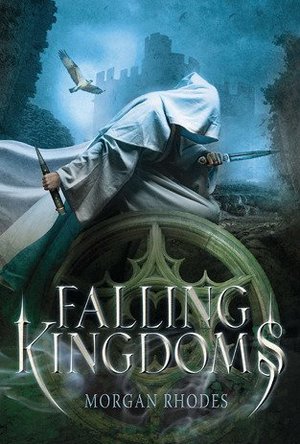
I rather enjoyed this one. Somewhat. The characters are really what drives this book (some of them that is) and while the plot moves at a medium pace, it’s understandable as this introduces you to the setting, the characters and what’s in store for us as readers.
World building is straight forward and there’s a handy guide in the beginning so you can figure out who is who and from which Kingdom (there are three). It pretty much centralizes on a small group that are central to the main plot and it’s easy to figure out who is who as you quickly start developing favorites :)
And this is where it starts getting interesting. I notice this happens sometimes with fantasy books. The good characters are downright annoying, nauseating (even more so when the love factor is involved) and induce eye rolling moments while reading. The not so nice characters are more interesting to read, you quietly cheer for them and hope they turn out for the better because you don’t want them going down that path because most likely, they’ll end up being gone and you’ll have nothing else to read but the good guys.
I tried to like Cleo. I really did. However all I see is a little naive twit who’s annoying and I don’t really see her worth in this book and I wonder why Magnus just doesn’t end her so she can join good ol dependable Theon. I am hoping she turns out better in the later books but so far she’s not looking so good and her romance with Theon was so eye rolling inducing it’s characters like these that make or break the novel.
Thankfully, I love the Magnus story arc. He’s turned into a jerk but it’s not really his fault as dad isn’t really nice. The thing with Lucia is creepy and although they’re not blood related it still gives moments of queasiness (dude, you have like so many girls in the Kingdom come on). That being said though, I love reading about Magnus and Lucia. Their story lines are interesting, they have faults, and they deal with it (albeit, perhaps not in an all too healthy manner).
The story arc with Jonas was also interesting and I wish more was written about him (I think Cleo’s got way too much time in spotlight) as he’s gone through so much to get his revenge and only to find out it just opened a giant Pandora’s box and we’re heading towards more epic battling.
The latter third of the book gets really interesting. I’m only hoping there’s going to be a good outcome for everyone and I really hope Cleo’s character improves because she’s really what could make or break my desire to continue onto this series. Sometimes it takes that one character to ruin it all. That being said, I think it’s off to a great start and I’m ready for some more! Great for those into YA fantasy.
I rather enjoyed this one. Somewhat. The characters are really what drives this book (some of them that is) and while the plot moves at a medium pace, it’s understandable as this introduces you to the setting, the characters and what’s in store for us as readers.
World building is straight forward and there’s a handy guide in the beginning so you can figure out who is who and from which Kingdom (there are three). It pretty much centralizes on a small group that are central to the main plot and it’s easy to figure out who is who as you quickly start developing favorites :)
And this is where it starts getting interesting. I notice this happens sometimes with fantasy books. The good characters are downright annoying, nauseating (even more so when the love factor is involved) and induce eye rolling moments while reading. The not so nice characters are more interesting to read, you quietly cheer for them and hope they turn out for the better because you don’t want them going down that path because most likely, they’ll end up being gone and you’ll have nothing else to read but the good guys.
I tried to like Cleo. I really did. However all I see is a little naive twit who’s annoying and I don’t really see her worth in this book and I wonder why Magnus just doesn’t end her so she can join good ol dependable Theon. I am hoping she turns out better in the later books but so far she’s not looking so good and her romance with Theon was so eye rolling inducing it’s characters like these that make or break the novel.
Thankfully, I love the Magnus story arc. He’s turned into a jerk but it’s not really his fault as dad isn’t really nice. The thing with Lucia is creepy and although they’re not blood related it still gives moments of queasiness (dude, you have like so many girls in the Kingdom come on). That being said though, I love reading about Magnus and Lucia. Their story lines are interesting, they have faults, and they deal with it (albeit, perhaps not in an all too healthy manner).
The story arc with Jonas was also interesting and I wish more was written about him (I think Cleo’s got way too much time in spotlight) as he’s gone through so much to get his revenge and only to find out it just opened a giant Pandora’s box and we’re heading towards more epic battling.
The latter third of the book gets really interesting. I’m only hoping there’s going to be a good outcome for everyone and I really hope Cleo’s character improves because she’s really what could make or break my desire to continue onto this series. Sometimes it takes that one character to ruin it all. That being said, I think it’s off to a great start and I’m ready for some more! Great for those into YA fantasy.

Lee (2222 KP) rated Wild Rose (2018) in Movies
Mar 20, 2019 (Updated Mar 20, 2019)
A Star Is Born
I've talked before about how disappointed I was with 'A Star Is Born' last year. An overrated movie of two halves, with an incredible first half and a dire second half. What I wanted from that movie was the story of a girl chasing a dream, culminating in the birth of a star and an epic singing finale. That all happened in the first half though, with the second half spiraling into boring filler territory. Wild Rose tells the story of Rose-Lynn, a down on her luck, aspiring country singer with dreams of becoming a star. It more closely follows that story I was looking for than 'A Star Is Born' did and is a much better movie overall, despite remaining fairly average throughout. If you put Sheridan Smith in the lead role, this could have just as easily been shown on ITV as their latest big weeknight drama series.
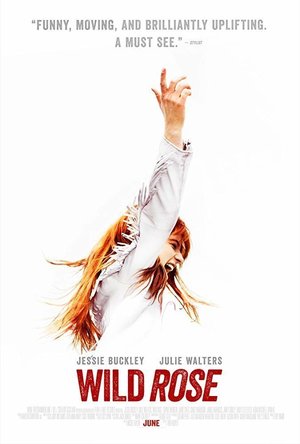
Things kick off with Rose-Lynn (Jessie Buckley) being released from a year in prison where she served time for drug charges. Before anything else, she meets up with a friend to catch up on some sex before heading over to her mums house (Julie Walters). Mum has been looking after Rose-Lynn's two young kids, aged 5 and 8, for the last year and it's clear the bond between mum and children has taken a serious hit. She doesn't exactly make any effort to reconnect with her children either, pulling on her cowboy boots and heading down to Glasgows Grand Ole Opry to try and pick up the regular singing slot she held there before winding up in jail. Rose-Lynn is a huge country music fan, and has plans to head over to Nashville in order to try and become a star.
Rose-Lynn lands a day job, cleaning for a wealthy couple in their large house. The lady of the house, Susannah (Sophie Okonedo) takes a shine to Rose-Lynn and after her children hear her belting out a song while cleaning, goes out of her way to try and help her. Using her connections to get a demo video to BBC Radio 2 legend 'Whispering' Bob Harris and even landing Rose-Lynn a gig at her 50th birthday party with a view to getting her wealthy guests to help 'crowdfund' Rose-Lynn.
Rose-Lynn is not a very likeable character for much of this movie. Selfish, annoying and with questionable life choices and actions. But that's the whole idea - to manipulate our feelings towards her. She's played wonderfully by Jessie Buckley and as her character grows and learns from life, we begin to like her that little bit more too. I was worried that if she eventually did find her way to Nashville, we'd see her become this huge star and I would have felt cheated if that were the case. Without heading too much into spoiler territory, I'll just say that things don't exactly work out that way. It's an unexpected but welcome change in direction, and leads to an incredible and emotional final number.
Things kick off with Rose-Lynn (Jessie Buckley) being released from a year in prison where she served time for drug charges. Before anything else, she meets up with a friend to catch up on some sex before heading over to her mums house (Julie Walters). Mum has been looking after Rose-Lynn's two young kids, aged 5 and 8, for the last year and it's clear the bond between mum and children has taken a serious hit. She doesn't exactly make any effort to reconnect with her children either, pulling on her cowboy boots and heading down to Glasgows Grand Ole Opry to try and pick up the regular singing slot she held there before winding up in jail. Rose-Lynn is a huge country music fan, and has plans to head over to Nashville in order to try and become a star.
Rose-Lynn lands a day job, cleaning for a wealthy couple in their large house. The lady of the house, Susannah (Sophie Okonedo) takes a shine to Rose-Lynn and after her children hear her belting out a song while cleaning, goes out of her way to try and help her. Using her connections to get a demo video to BBC Radio 2 legend 'Whispering' Bob Harris and even landing Rose-Lynn a gig at her 50th birthday party with a view to getting her wealthy guests to help 'crowdfund' Rose-Lynn.
Rose-Lynn is not a very likeable character for much of this movie. Selfish, annoying and with questionable life choices and actions. But that's the whole idea - to manipulate our feelings towards her. She's played wonderfully by Jessie Buckley and as her character grows and learns from life, we begin to like her that little bit more too. I was worried that if she eventually did find her way to Nashville, we'd see her become this huge star and I would have felt cheated if that were the case. Without heading too much into spoiler territory, I'll just say that things don't exactly work out that way. It's an unexpected but welcome change in direction, and leads to an incredible and emotional final number.