
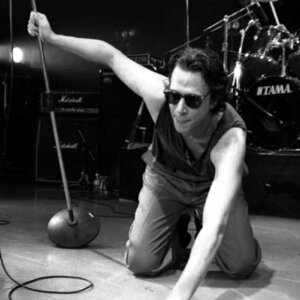
Richard Hell recommended Pickup on South Street (1953) in Movies (curated)


The Book of Designs and Plantings for Conservatories, Sunrooms and Garden Rooms: Packed with Inspirational Ideas, Expert Planning Advice and Planting Information
7.0 Rate It
Book
Diana Yakeley offers expert guidance on choosing the best size and shape conservatory for your...

The Complete Watercolorist's Essential Notebook: A Treasury of Watercolor Secrets Discovered Through Decades of Painting and Experimentation
Book
This special 10th-anniversary collection combines two of the best-loved North Light watercolor...



Runner's World Big Book of Marathon (and Half-Marathons): Winning Strategies, Inspiring Stories and the Ultimate Training Tools from the Experts at Runner's World Challenge
Amby Burfoot, Bart Yasso, Jennifer Van Allen and Pam Nisevich Bede
Book
"Runner's World Big Book of Marathons (and Half Marathons)" gives readers the core essentials of...
Salt-Water Fishing: A Step-by-Step Handbook: Expert Techniques and Advice on Successful Sea Angling from Shore or Boat, Illustrated with Over 200 Practical Photographs and Diagrams
Book
This book is a concise and comprehensive introduction to the world of sea angling. It covers the two...

Kirk Bage (1775 KP) rated Jim & Andy: The Great Beyond (2017) in Movies
Mar 3, 2020
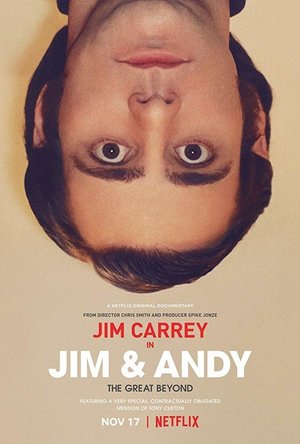

Jim and Andy: The Great Beyond, is fortunately much more of the former than the latter. However, two days after watching this mind-blowing exposé of how Jim Carrey behaved on set of the excellent Man On The Moon, playing genius / lunatic Andy Kaufman, I am still left pondering what to think of it all. Is Carrey an ego maniac who belongs in a straight-jacket, or is he a hippie genius, dedicated to his art, who would do anything to achieve a perfect performance?
It focuses on a fully bearded Carrey reliving his memories of 20 years ago. Reinforced by a plethora of behind the scenes footage, which at turns is hilarious, shocking, confusing and revealing, in uncomfortable and fascinating ways. The premise is that at the time of being cast Kaufman’s spirit inhabited Carrey, allowing him to channel the actual man, and BE him, rather than merely play him!
Whatever your thoughts on method acting, and how indulgent that can be, it is always astonishing to see just how far he went! And why everyone else allowed him to get away with it? Director Milos Forman is forced to cope with never talking to “Jim”, only to “Andy”, and seems often at the point of break-down. Fellow cast members seem to deal with it in different ways too. Danny DeVito seems in awe; Courtney Love seems to embrace it; Paul Giamatti seems very uncomfortable. But the whole show goes ahead with Carrey as king. Simply extraordinary!
The thing is, both 1999 Jim and 2017 Jim never seem entirely insane, but rather totally in control and eloquent. It seems as if every “crazy” thing he did was a choice, conscious or unconscious, that as an actor he was happy to be part of; as if the performance was all that mattered. There have always been mental health questions about Carrey, and this throws a bright spotlight on his technique, personality and self-awareness. At some point you just have to say “wow” and to a degree applaud it.
Your enjoyment of it hinges on how much of a Carrey fan you are? If you have never liked or got him as a performer then you will be screaming at the screen in consternation. If you love his work then this is indespesible viewing! Either way, there is something wondrous about it! Just consider, Carrey won a Golden Globe for this role, and remains the only person ever to do so not to be Oscar nominated…
There is also a suggestion the whole thing is a joke, in typical Kaufman style, using the footage to create a trick on the audience… Documentaries, they can’t be trusted, can they? You decide.

The Practical Illustrated Encyclopedia of 1001 Garden Questions Answered: Expert Solutions to Everyday Gardening Dilemmas, with an Easy-to-follow Directory and Over 850 Photographs and Illustrations
Book
This title includes succinct advice on site, aspect, soil, compost, lawns, fences, pruning,...