
Lyndsey Gollogly (2893 KP) rated Bloodlust (The Rise Of Iliri #1) in Books
Nov 11, 2019
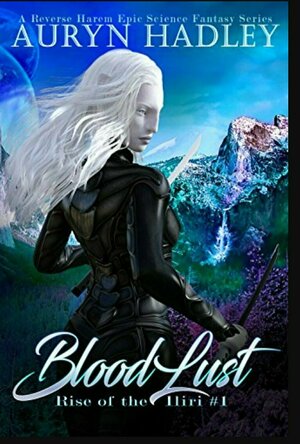


Everyone has secrets, and the Blades are no different. But acceptance into the Blades gives Sal something she never expected—the family she’s never had, and with it, the undying protection of seven of the greatest warriors the world has ever seen. It also gifts her a devoted line of potential mates. Many of her fellow warriors will submit to the bloodlust that overtakes her in the heat of battle and can only be quenched by rough, passionate lovemaking (making way for the steamiest of love scenes). Though it’s not all war and sex. Sal very gradually cultivates deeply loving, evolving relationships with each of the Black Blades, which morphs as a unit into a reverse harem as sweet as it is fierce, and as protective as it is impassioned.
But belonging has its own price. Each of the Blades would die to protect Sal. And it’s only a matter of time before the enemy moves to use this against her.
This series was recommended by a friend and I finally got round to starting it. So glad I did what a brilliant series full of action. The relationship dynamics are very well written and they don't have Sal casually sleeping around all of the men! I love how it's handled and written!
⭐⭐⭐⭐

ListeningDrill-Learn English
Education and Entertainment
App
Learn Spanish, French, Chinese, Japanese, German, Korean etc. Drama , Movies Uploading / Classical...
On Sondheim: An Opinionated Guide
Book
Stephen Sondheim's Company appeared in 1970, and the American musical theatre has never been the...

ClareR (6256 KP) rated Jewels of the Crown in Books
Nov 23, 2025 (Updated Nov 23, 2025)
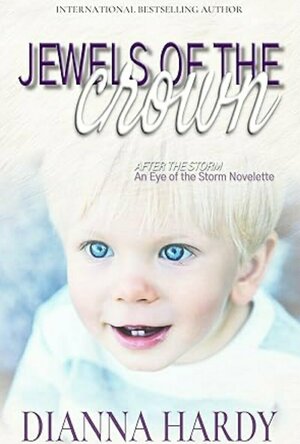

Each novelette has centred around one of the four main characters, and Jewels is all about Lawrence, the King of the werewolves, and a rather large secret that he has been keeping form his mates.
I loved finding out about how the mates are settling in to parenthood and their new lives - and the children seemed to be as mischievous as many children are! One or two also seem to have a trick or two tucked up their sleeves - which I’m sure will come out further in subsequent novels (I hope!).
I’ve been trying to work out why I like these books by Dianna Hardy so much, and I think I’ve come up with one or two reasons. I really enjoy the writing style and how we get to see what the characters are thinking “in their own words”; of course, there’s the fantastical element of werewolves and magic that relates back to my love of fairy tales, myth and legend; and then there’s the found family. This theme has snuck up on me over the years, but I seem to read a lot of books where the main characters find the people that they want to call their family, and these aren’t the people that they necessarily grew up with. And Dianna’s books do this so well.
If this sounds like something you’d like to read, I should say that there’s a touch of spice in these books, too, but if that’s likely to be a deal breaker, I wouldn’t let it put you off. There’s so much going on in such a short space of a novelette besides the sex (and it’s all in context - not gratuitous).
I look forward to every book that Dianna publishes, and I feel very lucky to have received the ARC of this book.
All opinions are, of course, my own.
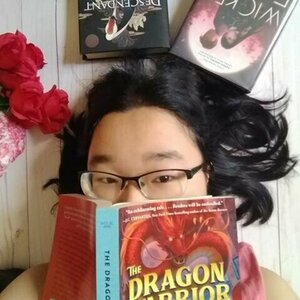
Sophia (Bookwyrming Thoughts) (530 KP) rated Cruel Beauty in Books
Jan 23, 2020
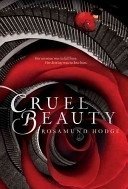


Well, Cruel Beauty is the cruel version of our beloved Disney characters. At least, that's what I thought at the very end. It's also got mythology, in which some I researched and learned new things (verification purposes). About time I'm not staring at what I learned in middle school/early high school over and over again.
Truth is, I enjoyed the concept of Cruel Beauty, but I didn't really enjoy the story... not too much. What originally caught my attention was the very fact that "Belle" is destined to marry the "Beast" ever since she was young due to a bargain her father made (reminds me of another story I can't think of currently). What I thought was even more interesting is how Rosamund Hodge bases the novel on ancient civilizations and mythology, particularly Pandora's box. Actually, I thought it was genius. I also think I've spoken too much about the book with those two words.
What started to lose my attention was this particular sentence... when Nyx – "Belle" of the story – is first married to the Gentle Lord – "Beast" of the story – and makes her entrance into his castle.
<blockquote>“I’m here!” I shouted. “Your bride! Congratulations on your marriage!”</blockquote>
I was like, really? THAT'S how you would make your entrance inside a demon's castle? Me, I would actually start plotting ways OUT of the castle, ways to avoid the Gentle Lord, etc. etc. NOT announcing, "Oh hey! I'm here! Come and feast on me!" *waves big sign*
And the Gentle Lord, no matter how much I like his humor, made a very unimpressive entrance.
<blockquote>In one moment I realized that what tickled my neck was a tuft of black hair, the blankets were a warm body, and the Gentle Lord was draped over me like a lazy cat, his head resting on my shoulder.</blockquote>
His reason?
<blockquote>“I got so bored waiting that I fell asleep too."</blockquote>
And...
<blockquote>“You were a good pillow."</blockquote>
DUDE. Sleeping on your bride when you first meet her even though you're now married? What an impressive husband you make. He could have slept next to her and not on top of her. You know, if a stranger – homeless or not – slept on top of me, I may kick said person's butt until they get off and call it self defense. I suppose some are now worried about my future. I'm completely surprised Nyx didn't mention that he was heavy, sleeping on top of her like that. Instead, this is her response shortly after:
<blockquote>“I’m sorry ,” I said, staring at the floor. “I just, my father made me promise to bring a knife, and— and—” I stuttered, acutely aware that I was half-naked in front of him. “I’m your wife! I burn for your touch! I thirst for your love!”</blockquote>
No offense, but that was so cheesy, it was bleeping hilarious. It's really obvious later from the Gentle Lord's constant mocking that Nyx should just act like herself and not the way her family wants her to act, but Nyx is completely oblivious.
Nyx, in a nutshell, is just the darker version of Belle. The semi-evil twin of Belle I may say, and it's no wonder she's named after the Greek goddess of the Night.
<blockquote>But I was a girl who had broken her sister’s heart and— for a moment— liked it. I had left somebody in torment and liked it.</blockquote>
Rosamund Hodge also implies that Nyx is well... a bit indecisive. In a conflict is more accurate. She wants to please her family – to fit in and meet up to her father's expectations even though he prefers her sister Astraia. Yet at the same time, she doesn't want to kill Ignite or whatever the Gentle Lord calls himself (the book was an e-loan and I'm basing this review off of my notes because I'm too lazy to jump on the hold list yet again) because she's in love with him. I suppose it makes sense in a way, since she wants to go with her emotions yet she's been trained her entire life to kill this one evil guy who isn't actually evil...
<blockquote>“Of course he’s evil and unforgivable.” My voice felt like it was coming from the far end of a long tunnel. “But he is the only reason I ever honored Mother with a clean heart. And if I hadn’t learnt to be kind with him, I would never have come back to beg your forgiveness and choose you over him. So gloat all you want— you deserve to watch us both suffer— but don’t you dare say I will ever be free of him. Every kindness I show you, all the rest of your life, that’s because of him. And no matter how many times I betray him, I will love him still.” </blockquote>
I mean, Nyx is living with the Gentle Lord. She could have just made her decision to live with him always and never guess his name, right?
Cruel Beauty, as much as I like the entire idea behind it, is not one of those fairy tales I find very impressive. It's very much one of those books that I roll my eyes at, especially at how the romance played out (just because I never dated a soul doesn't mean I can't tell).
------------------------
Original Rating: 3.5 out of 5
Original Review posted at <a href="http://bookwyrming-thoughts.blogspot.com/2014/09/review-cruel-beauty-by-rosamund-hodge.html">Bookwyrming Thoughts</a>
<a href="http://bookwyrming-thoughts.blogspot.com/"><img src="http://3.bp.blogspot.com/-cG5gfBqJVzk/VA5BIojjZ9I/AAAAAAAAD1g/7srLUfpAGEU/s1600/banner.png"; /></a>

English Audio Books - Librivox
Book and Education
App
English Audiobooks - Librivox Learn English by reading and listening to "Audiobooks". If you know...
Hazel (1853 KP) rated Alice Takes Back Wonderland in Books
Dec 14, 2018
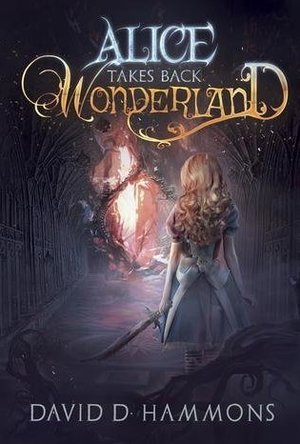
When a book starts with “‘Do you know fairy tales are real’ asked the cat,” you know you are in for a magical ride. Nearly everyone knows the tale of the seven-year-old girl from nineteenth century London who falls down a rabbit hole and spends a day of madness in the magical world of Wonderland. In David D. Hammons version, however, Alice was a young girl from twenty-first century Missouri. On her return to the real world she was diagnosed with ADHD and Schizophrenia and forced to believe that the Cheshire Cat and the Mad Hatter were figments of her imagination. But ten years later a white rabbit appears and leads Alice back to the world where nothing makes sense.
All is not well in Wonderland. The Cheshire Cat is dead and the Ace of Spades is in charge. Barely anything is the way Alice remembers. Everything looks far too “normal” and similar to the world she comes from. Ace is determined to remove the wonder from Wonderland and create a place where madness is forbidden. Alice has a big fight on her hands as she tries to end this former playing card’s tyrannous reign and restore Wonderland back to its original insanity.
<i>Alice Takes Back Wonderland</i> is not purely a retelling of Lewis Carrols famous story. Although many of the well known and loved characters appear in this book, so do others from a variety of different fairytales: <i>Peter Pan, Pinocchio</i>, and various tales from the <i>Brothers Grimm</i>. As readers will discover, all is not exactly as it should be for these characters either. Despite them being contrasting, magical stories, Hammons has successfully merged them all together in an imaginative manner resulting in a humorous young adult novel.
Although mostly focused on the goings on in Wonderland and the other fictional locations, it is also a subtle metaphor to describe what Alice’s life had been like back in present day America. For a decade Alice was forced to take medication to help her understand the difference between reality and fantasy. It got rid of most of the nonsense thoughts she picked up during her first visit to Wonderland. In a way, that is what the Ace of Spades is doing to characters he believes are mad. He is taking the wonder out of them, just like the pills to the wonder out of Alice.
Lovers of fairytales will definitely love this book, especially those who grew up loving <i>Alice in Wonderland</i> and <i>Peter Pan</i>. In some ways it is a continuation of the original tale, yet in other ways it could be viewed as an alternative way the story could have gone. Primarily targeted at young adults, <i>Alice Takes Back Wonderland</i> is much darker than Carrols version and combines a mix of real life with fantasy. It also goes to show that no one is too old for fairytales!

Kaysee Hood (83 KP) rated The Darkest Part of the Forest in Books
Jul 14, 2018
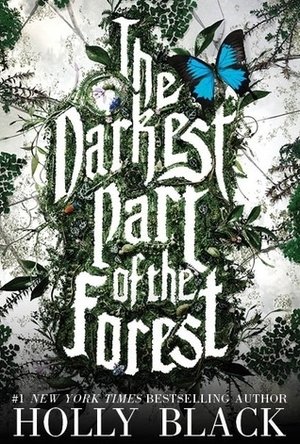

Ben and Hazel are on the hunt for their prince who's awoken from the glass coffin, but what is the cost of finding him when his freedom is the start of the town pointing fingers at Jack? Will these once duo in hunting the wild faeries drift further apart? Will Hazel be able to decide who she wants to be? Can she decide which side she must be on? Or will be betray those she loves, those who have confessed to her what they hold for her to keep her place? Will Ben betray his sister for the horned prince? Will he allow his jealousy for her to overcome him to ensure he is able to finally have what he wants? Will he ruin his friendship for all this?
And is anyone safe in town?
The flow of this book was amazing. We're introduced to our key characters, minor ones, and even less important ones within the first few pages or throughout without any of the development taking from the story or plot. It takes off into the action without pause and even though one would think not skipping a beat would be bad to convey the story it works here as there is so much occurring to piece the puzzles pieces together. The relationship between brother and sister despite what is between them is wonderful as it shows you can care for someone no matter what you believe within your own mind. Their interactions are what makes TDPOTF so great. I believe without Hazel's and Ben's siblinghood this book would have not worked.
All Things New Study Guide with DVD: A Revolutionary Look at Heaven and the Coming Kingdom
Book
All Things New is a revolutionary four-session video Bible study built on a simple idea: heaven is...
All Things New Study Guide: A Revolutionary Look at Heaven and the Coming Kingdom
Book
All Things New is a revolutionary four-session video Bible study (DVD/digital video sold separately)...