

Billionaire Capitalist Tycoon
Games and Entertainment
App
Make money in the most awesome way possible- raking in billions at a time! Welcome to the world of...

The Beast (The Beast, #1)
6.0 Rate It
Book
Dimitri Sokolov is a man scarred, physically and emotionally. From the rough streets of Moscow to...

Kingdom of Needle and Bone
Book
We live in an age of wonders. Modern medicine has conquered or contained many of the diseases...

The School Of Good And Evil
Book
The first kidnappings happened two hundred years before. Some years it was two boys taken, some...

Merissa (14224 KP) rated Prince of Frogs (Curse of the Dark Kingdom, #1) in Books
May 8, 2023


I thoroughly enjoyed this story as Alistair, with help from his 2IC, comes to realise that he is more than just his father's weapon and that things aren't just black and white. Evonna has her own trials and tribulations to contend with and I loved how both sides were worked into the story, making you care about the characters.
There is an overall story arc and a HFN ending. You don't get a marriage but I do feel these will continue to grow in the other stories. One thing I loved is that the sister is the one freed first, even though this isn't her story! I can't wait to read more in this series.
If you're a fan of fantasy romance and fairy tale retellings, then I definitely recommend you try this one!
** same worded review will appear elsewhere **
* A copy of this book was provided to me with no requirements for a review. I voluntarily read this book; the comments here are my honest opinion. *
Merissa
Archaeolibrarian - I Dig Good Books!
May 8, 2023

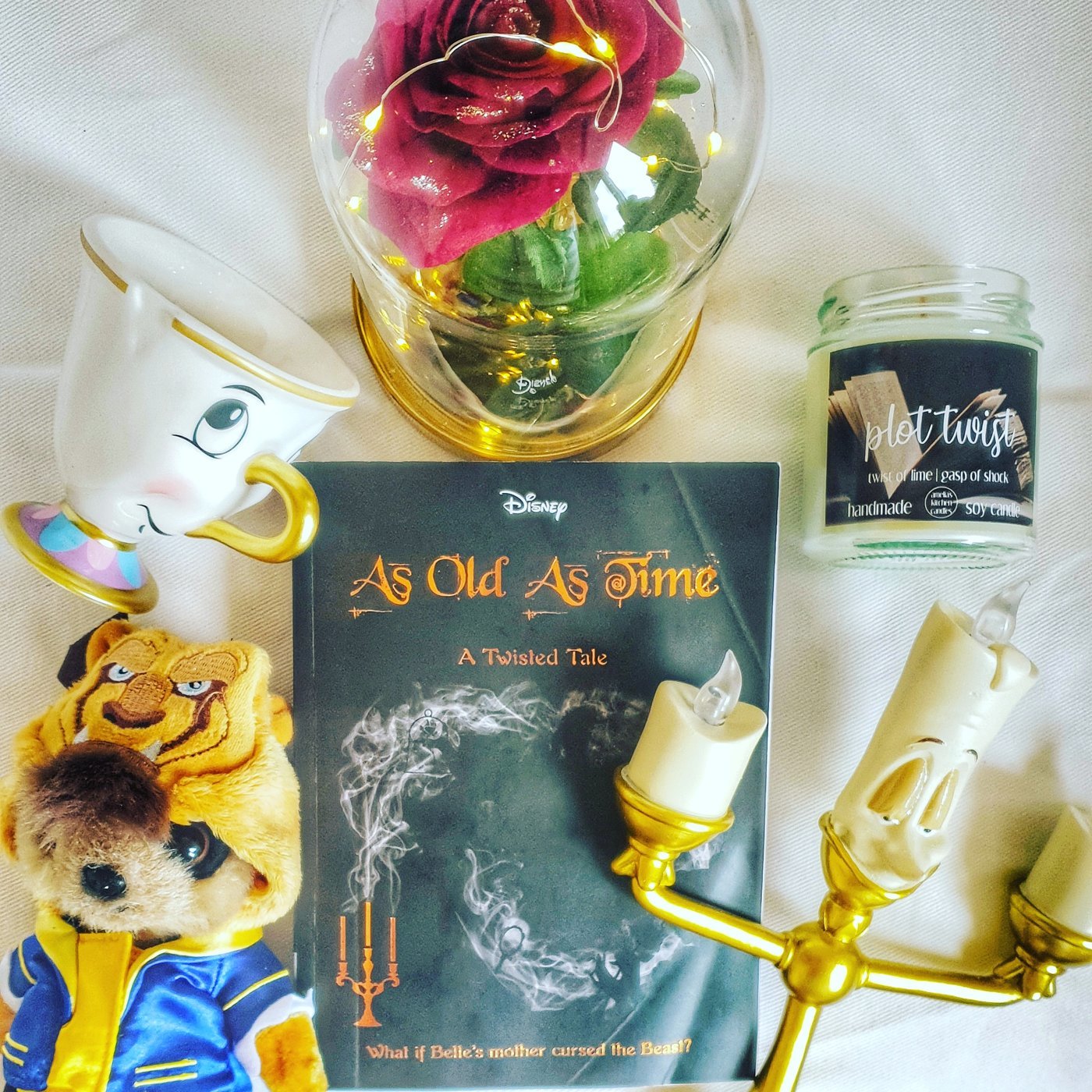
Lottie disney bookworm (1056 KP) rated As Old As Time in Books
Aug 16, 2019
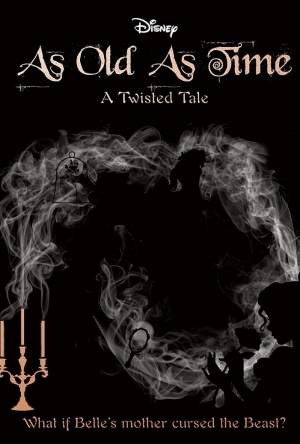

As Old As Time is the retelling of Beauty and the Beast and opens with the familiar story of the enchantress and the young, vain prince that we all know. You can probably still picture the stained-glass scene from the original 1991 movie and the dramatic ballroom scene in the 2017 remake.
Refusing to be eclipsed by these though, Braswell follows the well-known tale with: “It was a very good story. It often entertained the woman who lay in her black hole of a room, manacled to a hard, cold bed.”
Wait! What?
There, with one fell swoop, on the second page, Braswell brings an almost gothic darkness to the fairy tale. Of course, some would say it is already dark: very few people who are cursed to become a beast are particularly jolly about the situation! However, Braswell goes one step further by both revealing the story behind the enchantress and taking us on a journey to discover the ugly truth in the present.
Liz Braswell creates a kingdom where magic and non-magic people have lived together peacefully for years but where politics and a lack of cultural understanding is threatening to tear that apart as les charmantes find themselves persecuted by les naturels. (I can’t imagine where she draws her inspiration from(!))
It is in this kingdom that we meet a young dreamer called Maurice and the enchantress Rosalind, Belle’s mother (nicknamed Rose- so clever!). Maurice is very much a younger version of the character we grew up with: loveable and devoted to his inventions. Rosalind however is much more headstrong and impulsive: even changing her appearance on a whim. Her pride is fierce and we first meet her holding her own against a large man insulting ‘her kind’, calling her unnatural and a child of the devil. The bully soon learns the error of his ways when his nose is replaced by a pig’s snout but a warning runs all the way through this tale: “magic always comes back on itself”.
Maurice and Rosalind’s life is happy and settled at first but they soon start to witness the persecution of les charmantes for themselves. Thus, when the King and Queen call on Rosalind to protect them against the advancing plague, she passionately fights for her people…only to be rejected and turned away. Maurice, always the voice of reason, convinces Rosalind to at least protect the children and servants and so it comes to pass that Rosalind later visits the young prince, on the eve of his coronation, carrying with her the simple gift of a rose.
Braswell’s character development is, as always, impressive. Belle is immediately relatable as the kooky bookworm we know and love: her story running parallel to the film until we, as readers, develop a relationship with her parents. It is then that we discover there is a slight edge to Belle. Although clearly tortured by the fact her mother cursed a 10-year-old boy, Braswell’s Belle is desperate to be adventurous and heroic like the characters in her books but soon realises an adventure is not all it is cracked up to be. Like her mother, Belle can be quite impulsive: grabbing the enchanted rose before the beast can stop her and destroying any chance of breaking the spell. However, she is also quick and cunning, tricking the wardrobe into revealing the curse’s timeline. Nevertheless, the bravery of our protagonist can never be doubted and Belle embarks on one hell of a journey to discover the truth about her family and herself.
Uniquely, within As Old As Time we slowly see side-line characters weave their way into the lives and stories of our characters. Levi and Alaric, for example, are old friends of Maurice and Rosalind and are seemingly insignificant to the story at first. However, Levi is also the godfather to Belle and the village bookseller (“If you like it that much, it’s yours!” – that guy). Alaric on the other hand has a significant link to the castle and both carry clues with them that assist Belle on her quest.
Any Beauty and the Beast tale would not be complete without LeFou and Gaston – that infamous double act- but even Gaston is ever so slightly darker than his animated counterpart. Frederic: another friend from the past and, quite frankly, odd from the start also plays a pivotal role in the story but I won’t spoil the surprise for you!
As Old As Time is true to its name: weaving two stories into its plot at different points in time: the story that we all know and the story of how that came to be. It is an ominous tale with curses, murder, creepy ivy statues and a frankly terrifying tour of the lunatic asylum.
It is not all doom and gloom however; Liz Braswell takes a very tongue-in-cheek attitude towards the infamous scenes within Beauty and the Beast: invoking a dry sense of humour into the story. From a chapter named “Be Our … Oh You Know the Rest” to a direct reference to Stockholm Syndrome: Braswell makes sure that we do not expect her novel to be a copycat, heartfelt tale with a happy ending. Belle even remarks to the Beast that hoping she would fall in love with him within a month or so was wildly unrealistic.
This is very much a novel for the cynical Disney lovers amongst us and highly deserving of its title of a twisted tale!

Ross (3284 KP) rated The Nutcracker and the Four Realms (2018) in Movies
Nov 5, 2018 (Updated Nov 5, 2018)
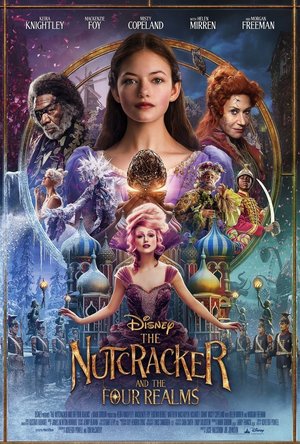
Here Disney have taken some liberties as Clara's brother and sister take the roles and names of her mother's siblings in the original, and for no apparent reason the film based on the Russian ballet that was based on the French adaptation of the German fairy tale, is set in London. I can only assume this was to up the Festive quotient, but seems a very odd choice, despite keeping a number of the German themes.
Keira Knightley is very irritating, doing an ear-piercing impression of Queenie from Blackadder.
Neither of the actors playing Clara or the Nutcracker are very good or likeable and you find yourself bored and starting to root for Mother Ginger just to end it.
The film is too long, and drags in large parts, and all three of my kids were restless for a lot of it. And there was a definite lack of large-scale special effects, some impressive scenes but audiences expect spectacles (not 3D glasses, I mean big scenes!) these days and those were lacking.
The most enjoyable scene was the use of ballet to get Clara up to date with the world she found herself in, being quite respectful to the medium it was adapting (though I can't say how authentic it was!).

The Little Mermaid ~ 3D Interactive Pop-up Book
Book and Games
App
Swim through the depths of the ocean with the Little Mermaid as she embarks on a wonderful adventure...
Hazel (1853 KP) rated The Snow Child in Books
May 30, 2017
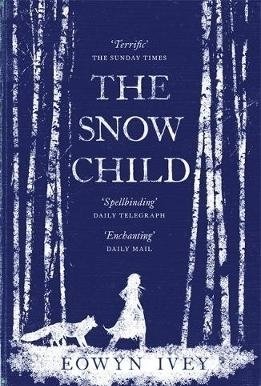

Set in Alaska during the 1920s this is the story of a couple, Jack and Mabel, who, aside from a stillbirth, have not had any children despite their desperate longing. Now that they are both approaching fifty years of age they know that they will never be able to have a son or daughter of their own. One winter, during the first snowfall, the two of them on an uncharacteristic, spur of the moment impulse build a snowman next to their cabin. Rather than building a large snowman they make a smaller one in the shape of a girl, decorating her with scarves and mittens – they have made a snow girl.
Eowyn Ivey has based her novel on a Russian fairy tale, Snegurochka, which in English translates to The Snow Maiden. It was Arthur Ransome’s retelling, Little Daughter of the Snow, which inspired Ivey, but the general storyline is essentially the same, although some versions have alternative endings. For those who are familiar with Snegurochka and its variants will know that it does not end happily therefore it seems inevitable that The Snow Child will head in the same direction. However which ending will it most resemble?
Throughout the novel it is impossible to be absolutely sure that the little girl who turns up outside the cabin the day after the snowman has been built (and destroyed) is in fact the snow girl magically transformed into flesh and bone; or whether it is a lost child and the circumstance are purely coincidental. There is a third option: Jack and Mabel could be imagining things through their desperate longing, but this is easy to rule out.
The snow is understandably a key theme throughout the story. At the beginning the anticipated Alaskan winter is imagined as a “cold on the valley like a coming death”. Not only will it be unbearably freezing, Jack and Mabel will struggle to make do with their limited amount of food and supplies. After the arrival of the child the winter becomes a happy occasion. Jack and Mabel’s relationship improves and they become less isolated after befriending some neighbours. The only heartbreak is when the girl, Faina, disappears in the spring; but as she comes back as soon as it snows, winter becomes something to look forward to. Another snowy link in the story is Faina’s name, which she claims means “the colour on snow when the sun turns” in Russian. This also makes the idea of her truly being the snow girl more convincing.
The novel does predictably have an unhappy ending but the epilogue makes up for this by revealing the contentment of the remaining characters a few years into the future.
As already mentioned, The Snow Child was not a very gripping read, but it was a beautiful tale in the way that fairy tales, even those with unhappy endings, often can be.
Hazel (1853 KP) rated The Snow Child in Books
Dec 14, 2018
Set in Alaska during the 1920s this is the story of a couple, Jack and Mabel, who, aside from a stillbirth, have not had any children despite their desperate longing. Now that they are both approaching fifty years of age they know that they will never be able to have a son or daughter of their own. One winter, during the first snowfall, the two of them on an uncharacteristic, spur of the moment impulse build a snowman next to their cabin. Rather than building a large snowman they make a smaller one in the shape of a girl, decorating her with scarves and mittens – they have made a snow girl.
Eowyn Ivey has based her novel on a Russian fairy tale, <i>Snegurochka</i>, which in English translates to <i>The Snow Maiden</i>. It was Arthur Ransome’s retelling, <i>Little Daughter of the Snow</i>, which inspired Ivey, but the general storyline is essentially the same, although some versions have alternative endings. For those who are familiar with <i>Snegurochka</i> and its variants will know that it does not end happily therefore it seems inevitable that <i>The Snow Child</i> will head in the same direction. However which ending will it most resemble?
Throughout the novel it is impossible to be absolutely sure that the little girl who turns up outside the cabin the day after the snowman has been built (and destroyed) is in fact the snow girl magically transformed into flesh and bone; or whether it is a lost child and the circumstance are purely coincidental. There is a third option: Jack and Mabel could be imagining things through their desperate longing, but this is easy to rule out.
The snow is understandably a key theme throughout the story. At the beginning the anticipated Alaskan winter is imagined as a “cold on the valley like a coming death”. Not only will it be unbearably freezing, Jack and Mabel will struggle to make do with their limited amount of food and supplies. After the arrival of the child the winter becomes a happy occasion. Jack and Mabel’s relationship improves and they become less isolated after befriending some neighbours. The only heartbreak is when the girl, Faina, disappears in the spring; but as she comes back as soon as it snows, winter becomes something to look forward to. Another snowy link in the story is Faina’s name, which she claims means “the colour on snow when the sun turns” in Russian. This also makes the idea of her truly being the snow girl more convincing.
The novel does predictably have an unhappy ending but the epilogue makes up for this by revealing the contentment of the remaining characters a few years into the future.
As already mentioned, <i>The Snow Child</i> was not a very gripping read, but it was a beautiful tale in the way that fairy tales, even those with unhappy endings, often can be.