
Search
Search results

Rachel King (13 KP) rated Ink Exchange (Wicked Lovely, #2) in Books
Feb 11, 2019
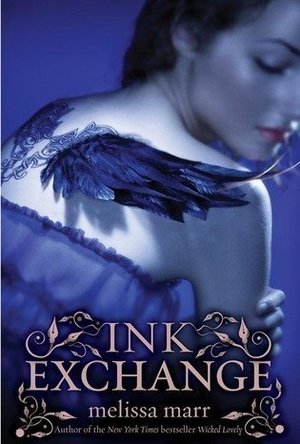


The second book in the Wicked Lovely series is decidely darker than the first book, especially as it focuses on the Dark Court. A major plot point is Leslie's struggles to deal with how her brother and father have fallen off the "deep end" and the rape that her brother allowed to happen to her. She believes a tattoo will allow her to reclaim her body as her own and stop being afraid, but the tattoo she chooses has unimaginable consequences as she becomes entangled into the drama of the faery courts that her best friend Aislinn belongs to.
I like the change in main characters, as we get to see this world through other characters' eyes as well as learn about different aspects that Keenan or Aislinn may not be familiar with. I had a difficult time finding a character to really love, as all three of the main characters, Leslie, Irial, and Niall, all seemed to have major faults that I had a hard time getting around. The theme for this book seemed to be the darker side of humanity and how deeply entrenched people can get into the "gray" area of life, while still believing that they are not doing anything wrong. Irial wants to only use Leslie, just as he has for every other mortal, but then he falls for her. Leslie wants to be her own person and hates her brother for his druggie lifestyle, but then becomes an addict just like Ren. Niall has shunned the Dark Court for all it stands for, even denying his own nature, but then wants Leslie so bad that he unknowingly uses what he is and what the Dark Court is about to try and lure her to him. In a word, they all behave like hypocrites, but Marr is such a good writer, that I find myself feeling sorry for all of them at some point. While in many fantasy genre works, the female lead often has to choose between two guys, Marr takes a completely unpredictable approach, and I think that I like this ending the best of all possibilities. Plus, since this is only the second book in a series, there is potential for Leslie to change her mind in the long run as she becomes more comfortable in her own skin.
The way that Marr approaches the horrific trauma that Leslie endured prior to this book's beginning is handled very delicately, as it should be. It is never really described in detail what exactly happens to her, and it is mostly left up to the reader's imagination, which I think is a smart move in that girls who have been in a situation similar to Leslie's can relate to her and feel like they have a voice in her words and thoughts. This alone is what makes this book both poignant and powerful. The fact that both males vying for her affection try to rescue her from this trauma in his own way is what redeems both of them for me.
Politics run heavy in this series, and while I am not really a fan of politics in real life, fantasy books often make it much more interesting, Marr's writing being no exception. The dynamics between the faery courts are quite intriguing and I think they seem to balance one another out well, even though at first glance it might seem like some should be kept over others. I find myself constantly wondering about the High Court and its Queen, Sorcha, which I can look forward to in the third installment in the series, Fragile Eternity (Wicked Lovely).
I like the change in main characters, as we get to see this world through other characters' eyes as well as learn about different aspects that Keenan or Aislinn may not be familiar with. I had a difficult time finding a character to really love, as all three of the main characters, Leslie, Irial, and Niall, all seemed to have major faults that I had a hard time getting around. The theme for this book seemed to be the darker side of humanity and how deeply entrenched people can get into the "gray" area of life, while still believing that they are not doing anything wrong. Irial wants to only use Leslie, just as he has for every other mortal, but then he falls for her. Leslie wants to be her own person and hates her brother for his druggie lifestyle, but then becomes an addict just like Ren. Niall has shunned the Dark Court for all it stands for, even denying his own nature, but then wants Leslie so bad that he unknowingly uses what he is and what the Dark Court is about to try and lure her to him. In a word, they all behave like hypocrites, but Marr is such a good writer, that I find myself feeling sorry for all of them at some point. While in many fantasy genre works, the female lead often has to choose between two guys, Marr takes a completely unpredictable approach, and I think that I like this ending the best of all possibilities. Plus, since this is only the second book in a series, there is potential for Leslie to change her mind in the long run as she becomes more comfortable in her own skin.
The way that Marr approaches the horrific trauma that Leslie endured prior to this book's beginning is handled very delicately, as it should be. It is never really described in detail what exactly happens to her, and it is mostly left up to the reader's imagination, which I think is a smart move in that girls who have been in a situation similar to Leslie's can relate to her and feel like they have a voice in her words and thoughts. This alone is what makes this book both poignant and powerful. The fact that both males vying for her affection try to rescue her from this trauma in his own way is what redeems both of them for me.
Politics run heavy in this series, and while I am not really a fan of politics in real life, fantasy books often make it much more interesting, Marr's writing being no exception. The dynamics between the faery courts are quite intriguing and I think they seem to balance one another out well, even though at first glance it might seem like some should be kept over others. I find myself constantly wondering about the High Court and its Queen, Sorcha, which I can look forward to in the third installment in the series, Fragile Eternity (Wicked Lovely).

graveyardgremlin (7194 KP) rated Ashton's Bride in Books
Feb 15, 2019


I have mixed feelings about this book. It was well-written, Margaret and Ashton were sympathetic, but I hated the way she time-traveled. It started off well enough until that point and I had a hard time getting past it. (I'll talk more about that in a hidden spoiler) Other than the time-travel, which is a big part of the book obviously, I enjoyed it. The relationship between Margaret and Ashton was pretty realistic and loving. So as far as time-travel romances, it's not one of my favorites, but it is still a good love story. In some ways, I think it might have been better strictly as historical romance.
Be warned! Massive ranting ahead!
<spoiler>
1. Like I said before, I hated her time-travel method. I don't quite get even how she time-traveled and the part I hate the absolute most is that she's in someone else's body. I just recently read a short story that had the same time-travel method, except that it was explained. I just find it disturbing and creepy, not to mention the amount of times it is said in the book how beautiful and perfect her looks are. Pretty nauseating. I just don't know how you could get used to looking in the mirror and not seeing yourself. That'd just be weird to me, even if I did happen to enter into a drop-dead gorgeous body. And Margaret acted like she was some freak of nature when she was in 1993. Boo hoo. Be happy with yourself for goodness sake! It seemed somewhat like the author was saying that you're not good enough if you're not beautiful. At least, that's the impression it gave to me.
2. It seemed to me that Ashton was infatuated with Mag. He couldn't have possibly actually loved her the way she was before Margaret entered her body, but he said he had. He really had to have fallen in love with Margaret, not Mag, and the blurriness there bothered me.
3. They're cousins. Okay so Margaret actually isn't, but the body she's in is. So what about children? Not a major point since cousins marrying isn't all that odd back then, but because of my other problems, it creeped me out more here.
4. Margaret's whole "revelation." She says now her parents and siblings never went to Cape Cod and are alive after all since they only went because of her and now she's back in time, and her parents only had two kids and not three. Umm no. If her parents never had her, then it would be impossible (yes, so is time-travel, but that's beside the point) for her to have gone back in time at all! She would have disappeared; she couldn't just be there now! Am I the only one who can see that?! Remember the photo featuring disappearing McFly's in Back to the Future? What comes around goes around. There's a few instances of that, but this is the one that bothers me most.
5. How did the papers show up? Seemed really unnecessary just to have Ashton believe her.
Had the back cover described how exactly Margaret time-traveled (like a mention of waking up in a strange body, perhaps?), maybe I wouldn't have had such a hard time with the concept and the other stuff wouldn't have bothered me as much. Who's to know?</spoiler> I promise, I'm really not crazy, even if my rants point to the contrary. I really think it could have been a great story, and I'm sure others will enjoy it, I just was left very disappointed.
Be warned! Massive ranting ahead!
<spoiler>
1. Like I said before, I hated her time-travel method. I don't quite get even how she time-traveled and the part I hate the absolute most is that she's in someone else's body. I just recently read a short story that had the same time-travel method, except that it was explained. I just find it disturbing and creepy, not to mention the amount of times it is said in the book how beautiful and perfect her looks are. Pretty nauseating. I just don't know how you could get used to looking in the mirror and not seeing yourself. That'd just be weird to me, even if I did happen to enter into a drop-dead gorgeous body. And Margaret acted like she was some freak of nature when she was in 1993. Boo hoo. Be happy with yourself for goodness sake! It seemed somewhat like the author was saying that you're not good enough if you're not beautiful. At least, that's the impression it gave to me.
2. It seemed to me that Ashton was infatuated with Mag. He couldn't have possibly actually loved her the way she was before Margaret entered her body, but he said he had. He really had to have fallen in love with Margaret, not Mag, and the blurriness there bothered me.
3. They're cousins. Okay so Margaret actually isn't, but the body she's in is. So what about children? Not a major point since cousins marrying isn't all that odd back then, but because of my other problems, it creeped me out more here.
4. Margaret's whole "revelation." She says now her parents and siblings never went to Cape Cod and are alive after all since they only went because of her and now she's back in time, and her parents only had two kids and not three. Umm no. If her parents never had her, then it would be impossible (yes, so is time-travel, but that's beside the point) for her to have gone back in time at all! She would have disappeared; she couldn't just be there now! Am I the only one who can see that?! Remember the photo featuring disappearing McFly's in Back to the Future? What comes around goes around. There's a few instances of that, but this is the one that bothers me most.
5. How did the papers show up? Seemed really unnecessary just to have Ashton believe her.
Had the back cover described how exactly Margaret time-traveled (like a mention of waking up in a strange body, perhaps?), maybe I wouldn't have had such a hard time with the concept and the other stuff wouldn't have bothered me as much. Who's to know?</spoiler> I promise, I'm really not crazy, even if my rants point to the contrary. I really think it could have been a great story, and I'm sure others will enjoy it, I just was left very disappointed.

Movie Metropolis (309 KP) rated Pompeii (2014) in Movies
Jun 11, 2019
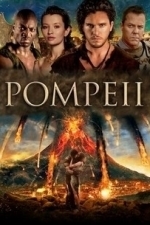
The disaster movie has always been a genre guaranteed to create incredible box-office returns. If you look at Roland Emmerich’s impressive blockbuster hit 2012, which grossed over $750million, it is clear that destroying well-known landmarks = bums on seats.
However since 2012‘s 2009 release the genre has fallen into a dormant state. Nevertheless, four years later Paul W.S. Anderson attempts to reawaken this box-office behemoth with his take on the tragic true events at Pompeii, but does the film succeed in its task?
Partially is the short answer. Anderson’s first film since 2012’s disaster Resident Evil: Retribution is as cheesy as a Dairylea triangle, but it also has some stunning special effects to give it some life.
Game of Thrones’ Kit Harington stars as Milo, a slave captured by the Romans after they wiped out his entire family. He is taken to a gloriously recreated Pompeii and immediately sets his sights on the very beautiful Lady Cassia, played by a rather dull Emily Browning, who just so happens to be the daughter of the city ruler, Severus. I’m sure you can guess the plot…
What ensues is a cheesy mess of terrible acting and stilted dialogue that jars with the period nature of the film. Only the knowing of what is to come from Mt Vesuvius, which is beautifully rendered in CGI, stops the film from grinding to a halt.
Kiefer Sutherland dons a downright ridiculous English accent for the role of Senator Corvus, the chief antagonist in the film. He is on business in Pompeii to see if trade can be established and investment can be agreed with the great city of Rome – though this plot point gets lost along the way.
Another issue is the true story which Pompeii is based on. The great tale of tragedy and mother nature showing her ruthless side is one we all know – but all we really want to see is the mountain going boom. Unfortunately we must wait whilst Anderson tries his best to make us care about the characters with their sickly back-stories, for which he fails in breathtaking fashion.
Finally after nearly an hour of what feels like a poor-mans Gladiator we are treat to a stunning spectacle, as Mt Vesuvius explodes in rip-roaring style. As the mountain blows and the fireballs rage Anderson once again tries to get us interested in the paper-thin story, thankfully not pushing too hard this time, and he lets the special effects take over.
Historical accuracy is, surprisingly, very good. According to the director, Pompeii was faithfully recreated for the film with aerial shots of the city as it stands today topped up with CGI to show the thriving metropolis we see in the film.
Unfortunately, scientific accuracy takes a back-seat for the sake of high drama, which is the case with many films of this nature. The iconic pyroclastic flow, attributed to killing the majority of Pompeii’s inhabitants due to its huge speed and massive temperatures is slowed right down to ensure the film can last another ten minutes or so – though this is perhaps to be expected.
Overall, Paul W.S. Anderson has created a film which certainly looks the part, but is lacking in so many other areas. Kiefer Sutherland’s villain is completely upstaged by the constant shots of the volcano, which are almost pantomime like in their ‘it’s behind you’ staging, and the rest of the cast are wooden and not particularly likeable.
However, what it lacks in story and acting finesse it makes up in the beautiful special effects and engaging cinematography. It’s worth a watch just to see Pompeii get obliterated – which is probably not a very nice thing to say at all.
https://moviemetropolis.net/2014/05/03/pompeii-3d-review/
However since 2012‘s 2009 release the genre has fallen into a dormant state. Nevertheless, four years later Paul W.S. Anderson attempts to reawaken this box-office behemoth with his take on the tragic true events at Pompeii, but does the film succeed in its task?
Partially is the short answer. Anderson’s first film since 2012’s disaster Resident Evil: Retribution is as cheesy as a Dairylea triangle, but it also has some stunning special effects to give it some life.
Game of Thrones’ Kit Harington stars as Milo, a slave captured by the Romans after they wiped out his entire family. He is taken to a gloriously recreated Pompeii and immediately sets his sights on the very beautiful Lady Cassia, played by a rather dull Emily Browning, who just so happens to be the daughter of the city ruler, Severus. I’m sure you can guess the plot…
What ensues is a cheesy mess of terrible acting and stilted dialogue that jars with the period nature of the film. Only the knowing of what is to come from Mt Vesuvius, which is beautifully rendered in CGI, stops the film from grinding to a halt.
Kiefer Sutherland dons a downright ridiculous English accent for the role of Senator Corvus, the chief antagonist in the film. He is on business in Pompeii to see if trade can be established and investment can be agreed with the great city of Rome – though this plot point gets lost along the way.
Another issue is the true story which Pompeii is based on. The great tale of tragedy and mother nature showing her ruthless side is one we all know – but all we really want to see is the mountain going boom. Unfortunately we must wait whilst Anderson tries his best to make us care about the characters with their sickly back-stories, for which he fails in breathtaking fashion.
Finally after nearly an hour of what feels like a poor-mans Gladiator we are treat to a stunning spectacle, as Mt Vesuvius explodes in rip-roaring style. As the mountain blows and the fireballs rage Anderson once again tries to get us interested in the paper-thin story, thankfully not pushing too hard this time, and he lets the special effects take over.
Historical accuracy is, surprisingly, very good. According to the director, Pompeii was faithfully recreated for the film with aerial shots of the city as it stands today topped up with CGI to show the thriving metropolis we see in the film.
Unfortunately, scientific accuracy takes a back-seat for the sake of high drama, which is the case with many films of this nature. The iconic pyroclastic flow, attributed to killing the majority of Pompeii’s inhabitants due to its huge speed and massive temperatures is slowed right down to ensure the film can last another ten minutes or so – though this is perhaps to be expected.
Overall, Paul W.S. Anderson has created a film which certainly looks the part, but is lacking in so many other areas. Kiefer Sutherland’s villain is completely upstaged by the constant shots of the volcano, which are almost pantomime like in their ‘it’s behind you’ staging, and the rest of the cast are wooden and not particularly likeable.
However, what it lacks in story and acting finesse it makes up in the beautiful special effects and engaging cinematography. It’s worth a watch just to see Pompeii get obliterated – which is probably not a very nice thing to say at all.
https://moviemetropolis.net/2014/05/03/pompeii-3d-review/

Kyera (8 KP) rated City of Lost Souls (The Mortal Instruments, #5) in Books
Jan 31, 2018
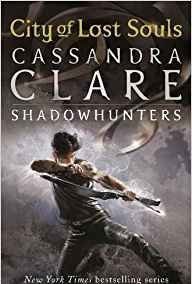


City of Lost Souls is the fifth book in the Mortal Instruments series. There wasn't as much action in this book as we normally get making its pacing seem a little slow, but the character development I feel that we receive in this book makes it worthwhile. The ending also packs a punch that the rest of the book generally does not. As this is the fifth book in a series, anything beyond this point could be considered spoilers if you have not read the rest of the series.
After the events of City of Fallen Angels, we find our heroes in disarray because they find that both Jace and Sebastian are missing. They find out that Jace and Sebastian have been linked by the dark ceremony, which means that Jace is no longer himself. He feels that anything that Sebastian does it right and assists him, despite the fact that it would go against his true nature.
I really enjoyed seeing Jace and Sebastian's interactions, because it showed a more human side of Sebastian. There were times when there was no one else around besides Jace, who was linked to him and had no free will of his own, and Sebastian seemed almost normal. He even had rare moments with Clary, which made you question just how much the demon blood affected him.
You know he is evil and that he has the ability to fake human emotions, but it was those actions that make you wonder, what if? Could the bond with Jace be affecting him, even to a small degree, in the same way that it affecting Jace? Giving him some dimension and the slightest influence of good? I loved how Clare made you question everything that you believed about Sebastian, just as Clary did in the book.
The character development also extended to our other favourite characters, which was nice to see since it's such a large cast. We see Izzy being both strong and determined, and fragile, insecure and hurt. She has a broad range of emotions and her world does not revolve around a boy, which was so refreshing to see. Simon is struggling with his change and who he thinks he is now, still the old Simon or is he cursed now?
Despite the fact that they're not the focus, Magnus and Alec's relationship is wonderfully developed in this book. They struggle with both magical and mundane things coming between them but love one another to always persevere. Alec is still very insecure, so he worries about everything that Magnus does tell him about his past and the fact that one of them is immortal and the other not. Their love and their heartbreak is very real, which was such a redeeming characterization in this book.
Although Clary/Jace is my favourite pairing overall, I definitely love the Magnus/Alec evolution throughout this book and those that come after it. They are a very close second and probably a better portrayal of a relationship in the end. In this book, I worry about the portrayal of Clary and Jace's relationship at times because it's not always healthy. Obviously, people make mistakes, so it is realistic but it can border on obsessive and controlling at times. I understand that Jace is Clary's first love, but he is not the only person in the world and sometimes she is worryingly single-minded.
The plot culminates and plans are laid for the fantastic conclusion to this series. Although the book does not end with a cliffhanger, you are still left wondering exactly what Sebastian's plans are and how our heroes are going to stop him. Or if they are going to be able to stop him. Despite the fact that this is not the most well-written of her three series, I adore it nonetheless and constantly recommend it to people.
After the events of City of Fallen Angels, we find our heroes in disarray because they find that both Jace and Sebastian are missing. They find out that Jace and Sebastian have been linked by the dark ceremony, which means that Jace is no longer himself. He feels that anything that Sebastian does it right and assists him, despite the fact that it would go against his true nature.
I really enjoyed seeing Jace and Sebastian's interactions, because it showed a more human side of Sebastian. There were times when there was no one else around besides Jace, who was linked to him and had no free will of his own, and Sebastian seemed almost normal. He even had rare moments with Clary, which made you question just how much the demon blood affected him.
You know he is evil and that he has the ability to fake human emotions, but it was those actions that make you wonder, what if? Could the bond with Jace be affecting him, even to a small degree, in the same way that it affecting Jace? Giving him some dimension and the slightest influence of good? I loved how Clare made you question everything that you believed about Sebastian, just as Clary did in the book.
The character development also extended to our other favourite characters, which was nice to see since it's such a large cast. We see Izzy being both strong and determined, and fragile, insecure and hurt. She has a broad range of emotions and her world does not revolve around a boy, which was so refreshing to see. Simon is struggling with his change and who he thinks he is now, still the old Simon or is he cursed now?
Despite the fact that they're not the focus, Magnus and Alec's relationship is wonderfully developed in this book. They struggle with both magical and mundane things coming between them but love one another to always persevere. Alec is still very insecure, so he worries about everything that Magnus does tell him about his past and the fact that one of them is immortal and the other not. Their love and their heartbreak is very real, which was such a redeeming characterization in this book.
Although Clary/Jace is my favourite pairing overall, I definitely love the Magnus/Alec evolution throughout this book and those that come after it. They are a very close second and probably a better portrayal of a relationship in the end. In this book, I worry about the portrayal of Clary and Jace's relationship at times because it's not always healthy. Obviously, people make mistakes, so it is realistic but it can border on obsessive and controlling at times. I understand that Jace is Clary's first love, but he is not the only person in the world and sometimes she is worryingly single-minded.
The plot culminates and plans are laid for the fantastic conclusion to this series. Although the book does not end with a cliffhanger, you are still left wondering exactly what Sebastian's plans are and how our heroes are going to stop him. Or if they are going to be able to stop him. Despite the fact that this is not the most well-written of her three series, I adore it nonetheless and constantly recommend it to people.

Mayhawke (97 KP) rated Bats In The Belfry in Books
Feb 26, 2018 (Updated Feb 27, 2018)
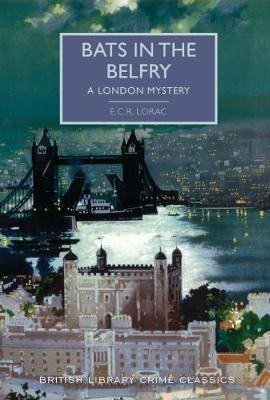
A Cosy Crime sleeper worthy of resurrection
I’m a huge fan of Cosy Crime, I cut my grown-up reading teeth on Agatha Christie and Dorothy L Sayers, so it should be no surprise that I’m a big fan of the British Library’s inspired decision to republish lost Golden Age novels.
Fifty-one re-issues in and I’m still stunned at the number of authors who had stellar careers as crime writers, were fully inducted members of the Detection Club, and had publication lists to rival Christie’s but who, within a few years of their deaths, had just vanished from the pantheon classic crime novelists.
Such a writer was E.C.R.Lorac, author of Bats In The Belfry. In his introduction Martin Edwards describes the pseudonymous Lorac (real name Edith Caroline Rivett) as enjoying a “low-key career spanning more than a quarter of a century.” It also produced a catalogue of over seventy novels, yet, cosy crime fan that I am I had never heard of her until her book turned up on my work intranet.
Bats, British Library’s inaugural Crime Classic for 2018, is also the first of Lorac’s novels to be given the British Library treatment. It couldn’t have happened to a better book! One of the dangers of republishing books that have disappeared in the mists of time, at least if you are republishing them for the mass market, is that some of them will prove to have been ‘lost’ with good cause. Not that the writing need be poor or the plotting weak, but there are social aspects that can be critical to the development or fundamental premise of the story that change over the course of half a century. When that happens there is a danger that the reader will at best be disgruntled with a puzzle they were unlikely to be able to solve because they didn’t understand the clues they were being given, or, at worst, that the whole premise will seem beyond ludicrous to modern readers. Of the twenty or so BLCC’s I have read only one has fallen into the latter category, and whilst there have been one or two which were a bit plodding thanks to such issues they have largely been a pleasure to read, and I have been able to joyfully pit my wits against the authors’ intrinsic challenge to solve the mystery before the denouement.
Bats in the Belfry most definitely falls into this class of Crime Classic, so much so that it’s a surprise to find from Edwards that it was a bit of a non-starter when it was first published in 1937.
A failing writer, his actress wife, his ward and a selection of friends are collected one evening following the funeral of the writer’s cousin. Shortly thereafter the writer himself has vanished, his suitcase and passport left in a darkly sinister studio known variously as The Belfry, and The Morgue. The story is as dark and twisty as any you could hope for from a member of the Detection Club, and it plays nicely on themes of the time. Broken marriages, financially emasculated men, and the requisite ‘strange foreign man’ all appear, and even aarchaeology gets a look in. As the main characters sit and incautiously discuss ways to bump off someone and hide the body there is brief verbal tussle over the usefulness – and even existence of – dene holes, ancient subterranean storage areas that provided writers of the time with endless possibilities, most notably in Sayers’ The Nine Tailors. Lorac’s plotting is flawless and deceptively simplistic, and she leads you back and forth from suspect to suspect. She is brutally unsympathetic to her characters, and her writing bundles you along until you finally reach the conclusion, to discover how good you are at detecting. Or not.
Fifty-one re-issues in and I’m still stunned at the number of authors who had stellar careers as crime writers, were fully inducted members of the Detection Club, and had publication lists to rival Christie’s but who, within a few years of their deaths, had just vanished from the pantheon classic crime novelists.
Such a writer was E.C.R.Lorac, author of Bats In The Belfry. In his introduction Martin Edwards describes the pseudonymous Lorac (real name Edith Caroline Rivett) as enjoying a “low-key career spanning more than a quarter of a century.” It also produced a catalogue of over seventy novels, yet, cosy crime fan that I am I had never heard of her until her book turned up on my work intranet.
Bats, British Library’s inaugural Crime Classic for 2018, is also the first of Lorac’s novels to be given the British Library treatment. It couldn’t have happened to a better book! One of the dangers of republishing books that have disappeared in the mists of time, at least if you are republishing them for the mass market, is that some of them will prove to have been ‘lost’ with good cause. Not that the writing need be poor or the plotting weak, but there are social aspects that can be critical to the development or fundamental premise of the story that change over the course of half a century. When that happens there is a danger that the reader will at best be disgruntled with a puzzle they were unlikely to be able to solve because they didn’t understand the clues they were being given, or, at worst, that the whole premise will seem beyond ludicrous to modern readers. Of the twenty or so BLCC’s I have read only one has fallen into the latter category, and whilst there have been one or two which were a bit plodding thanks to such issues they have largely been a pleasure to read, and I have been able to joyfully pit my wits against the authors’ intrinsic challenge to solve the mystery before the denouement.
Bats in the Belfry most definitely falls into this class of Crime Classic, so much so that it’s a surprise to find from Edwards that it was a bit of a non-starter when it was first published in 1937.
A failing writer, his actress wife, his ward and a selection of friends are collected one evening following the funeral of the writer’s cousin. Shortly thereafter the writer himself has vanished, his suitcase and passport left in a darkly sinister studio known variously as The Belfry, and The Morgue. The story is as dark and twisty as any you could hope for from a member of the Detection Club, and it plays nicely on themes of the time. Broken marriages, financially emasculated men, and the requisite ‘strange foreign man’ all appear, and even aarchaeology gets a look in. As the main characters sit and incautiously discuss ways to bump off someone and hide the body there is brief verbal tussle over the usefulness – and even existence of – dene holes, ancient subterranean storage areas that provided writers of the time with endless possibilities, most notably in Sayers’ The Nine Tailors. Lorac’s plotting is flawless and deceptively simplistic, and she leads you back and forth from suspect to suspect. She is brutally unsympathetic to her characters, and her writing bundles you along until you finally reach the conclusion, to discover how good you are at detecting. Or not.

Hazel (1853 KP) rated Purple Hearts in Books
Dec 7, 2018
<i>This ARC was provided by the publisher via NetGalley in exchange for an honest review </i>
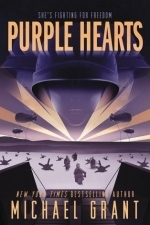
An epic tale of a reimagined World War II comes to an explosive end in this third and final book <i>Purple Hearts</i>. Michael Grant created an alternative history in which women were allowed to enter the army and fight alongside the men on the front lines in Europe. Having earned accolades, promotions and the right to go home to America at the conclusion of the previous book, Rio, Frangie and Rainy decide to stay for the remains of the war. It is 6th June 1944, and the battle on the sands of Omaha Beach is about to begin – D-Day.
The story rushes into the horrors of the D-Day landings where Rio, now a Sergeant, is leading her platoon through the treacherous battleground, whilst Frangie, the medic, tries to patch up fallen comrades. The author teases the reader with the introduction of new characters who promptly get killed during this fateful day and battles further along the line. There is no sugar coating the horrific experience of soldiers and civilians, regardless of whether the scenes are fictionalized or not.
The difficulty with writing a work of fiction about the final years of World War II is that the majority of readers will already know the facts. Therefore, it was impossible for Grant to compose a drastic alternative history. Despite the inclusion of women soldiers, the main events occur exactly as they did in reality, beginning with D-Day before moving on to Liberated France, the Hürtgen Forest, the Battle of the Bulge, and, eventually, VE Day.
The three main characters have undergone complete transformations since the beginning of book one. No longer are they the innocent girls mocked for the belief they could be as strong as male soldiers. As horror after horror unfolds, readers are left with only the hope that these three survive.
Throughout book one and two, the narrative was interspersed with a commentary from an anonymous female soldier in a bed at the 107th evacuee hospital in Würzburg, Germany. As promised at the beginning of the series, readers finally find out which character this nameless voice belongs to, although it is dragged out until the final pages of the book.
The title, <i>Purple Hearts</i>, refers to the medal earned by soldiers injured in battle. Rio, Frangie and Rainy have each received one, along with a few other characters. Unfortunately, many are killed in the battles, some who have been in the story from the start, making this an extremely shocking book. It goes to show how dangerous war is and the brutality WWII soldiers experienced. It is a surprise that as many survived as they did.
Although at this point the main focus of the story is the war, there is still the underlying theme of equality, both for women and for black people. Frangie provides the insight into the segregation of blacks, being assigned to black-only patrols and having white patients refuse to be treated by her. However, as the war gets more violent, these lines get blurred until it is (mostly) no longer important the colour of a soldier or medic’s skin.
<i>Purple Hearts</i> is a brilliant end to a challenging series. Readers become invested in the characters and are drawn into a story that is so true to form that it is easy to forget that women did not actually take part in the fighting. Evidently well researched, Michael Grant has penned a series that educates whilst it entertains, opening readers’ eyes to the truth about war. This is nothing like a textbook full of facts and figures, it is a moving, personal (forget the fictional bit) account of what WWII was really like. Written with young adults in mind, this is a great series for both teens and older readers.
An epic tale of a reimagined World War II comes to an explosive end in this third and final book <i>Purple Hearts</i>. Michael Grant created an alternative history in which women were allowed to enter the army and fight alongside the men on the front lines in Europe. Having earned accolades, promotions and the right to go home to America at the conclusion of the previous book, Rio, Frangie and Rainy decide to stay for the remains of the war. It is 6th June 1944, and the battle on the sands of Omaha Beach is about to begin – D-Day.
The story rushes into the horrors of the D-Day landings where Rio, now a Sergeant, is leading her platoon through the treacherous battleground, whilst Frangie, the medic, tries to patch up fallen comrades. The author teases the reader with the introduction of new characters who promptly get killed during this fateful day and battles further along the line. There is no sugar coating the horrific experience of soldiers and civilians, regardless of whether the scenes are fictionalized or not.
The difficulty with writing a work of fiction about the final years of World War II is that the majority of readers will already know the facts. Therefore, it was impossible for Grant to compose a drastic alternative history. Despite the inclusion of women soldiers, the main events occur exactly as they did in reality, beginning with D-Day before moving on to Liberated France, the Hürtgen Forest, the Battle of the Bulge, and, eventually, VE Day.
The three main characters have undergone complete transformations since the beginning of book one. No longer are they the innocent girls mocked for the belief they could be as strong as male soldiers. As horror after horror unfolds, readers are left with only the hope that these three survive.
Throughout book one and two, the narrative was interspersed with a commentary from an anonymous female soldier in a bed at the 107th evacuee hospital in Würzburg, Germany. As promised at the beginning of the series, readers finally find out which character this nameless voice belongs to, although it is dragged out until the final pages of the book.
The title, <i>Purple Hearts</i>, refers to the medal earned by soldiers injured in battle. Rio, Frangie and Rainy have each received one, along with a few other characters. Unfortunately, many are killed in the battles, some who have been in the story from the start, making this an extremely shocking book. It goes to show how dangerous war is and the brutality WWII soldiers experienced. It is a surprise that as many survived as they did.
Although at this point the main focus of the story is the war, there is still the underlying theme of equality, both for women and for black people. Frangie provides the insight into the segregation of blacks, being assigned to black-only patrols and having white patients refuse to be treated by her. However, as the war gets more violent, these lines get blurred until it is (mostly) no longer important the colour of a soldier or medic’s skin.
<i>Purple Hearts</i> is a brilliant end to a challenging series. Readers become invested in the characters and are drawn into a story that is so true to form that it is easy to forget that women did not actually take part in the fighting. Evidently well researched, Michael Grant has penned a series that educates whilst it entertains, opening readers’ eyes to the truth about war. This is nothing like a textbook full of facts and figures, it is a moving, personal (forget the fictional bit) account of what WWII was really like. Written with young adults in mind, this is a great series for both teens and older readers.

Gareth von Kallenbach (980 KP) rated the PC version of Battlefield V in Video Games
Jun 19, 2019
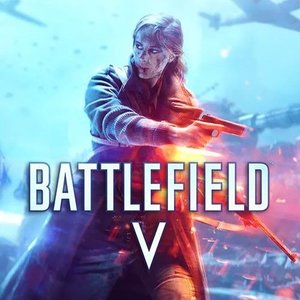
The latest chapter in the long-running Battlefield series has arrived with the release of Battlefield V. The game looks to follow up the success of Battlefield 1 with a World War 2 based game that puts players directly into the action with large and highly-detailed maps.
The solo portion of the game has players battle in some diverse locales and focuses on situations form history where the participants were not well known and did not receive much glory or attention for their deeds.
After the introduction, players have the following options as described by E.A.
The stories were very enjoyable and thought provoking though I did get a few bugs while playing like a cut-scene lock up and some clipping issues where enemy characters were lodged in walls. Thankfully issues like this were few and I was able to complete the missions as they were engrossing and kept me riveted throughout.
I especially liked the Nordlys mission where I was able to don Skis and made my way around the frozen landscapes to complete my mission.
The missions were a mix of stealth, surviving waves of enemies, and capturing objectives which is what you would expect for a game of this type. The game does allow players to have a more diverse approach to completing missions as you can use vehicles and other objects found in the game to be creative. I was able to “borrow” a plane in Under No Flag to strafe the enemy locales. When my piloting skills were not up to snuff and I crashed in a lake; I redid the mission from a direct assault approach and things went much better for me.
The game uses a regenerative health system so should you take too much damage, simply take cover until you heal up and battle on. There is also an option to heal from time to time when battling online. Players will be able to pick up new weapons and ammunition off fallen enemies as well as at various points throughout the game.
Visually the game is very appealing from the open desert to the raging blizzard in the campaigns; there is plenty of eye candy to enjoy along with the action.
The online modes were very enjoyable as there were a variety of modes for players to enjoy.
The multiplay was good and what impressed me was how fair the hit detection was. You did not have to empty an entire clip into an enemy to take them down nor did glancing shots also produce a fatal result. The maps were large and highly detailed which allowed players to try a mixture of gameplay styles to best suit their needs.
It should be noted that additional content for the game will be coming as the menus made mention of solo missions and other features that were listed as “coming soon” and we know that the Battle Royale mode for the game is not due until 2019 as an example.
It should also be noted that I did not see the Female fighter with the prosthetic arm that was featured in the announcement trailers for the game and caused division amongst fans upon the reveal for the game. If she was edited out, planned for a later date, or simply included for demonstration purposes remains to be seen. What is clear is that although fans may expect more content and be disappointed in having to wait for parts of the game to release at a later date, the game is enjoyable for fans of the series and after my experiences with the Beta; even better than expected. I look forward to seeing what the game will look like in the future once the coming updates and patches are applied, but for now; Battlefield V is a solid WW2 game with solid visuals and sound and is a worthy entry into the series.
http://sknr.net/2018/11/12/battlefield-v/
The solo portion of the game has players battle in some diverse locales and focuses on situations form history where the participants were not well known and did not receive much glory or attention for their deeds.
After the introduction, players have the following options as described by E.A.
The stories were very enjoyable and thought provoking though I did get a few bugs while playing like a cut-scene lock up and some clipping issues where enemy characters were lodged in walls. Thankfully issues like this were few and I was able to complete the missions as they were engrossing and kept me riveted throughout.
I especially liked the Nordlys mission where I was able to don Skis and made my way around the frozen landscapes to complete my mission.
The missions were a mix of stealth, surviving waves of enemies, and capturing objectives which is what you would expect for a game of this type. The game does allow players to have a more diverse approach to completing missions as you can use vehicles and other objects found in the game to be creative. I was able to “borrow” a plane in Under No Flag to strafe the enemy locales. When my piloting skills were not up to snuff and I crashed in a lake; I redid the mission from a direct assault approach and things went much better for me.
The game uses a regenerative health system so should you take too much damage, simply take cover until you heal up and battle on. There is also an option to heal from time to time when battling online. Players will be able to pick up new weapons and ammunition off fallen enemies as well as at various points throughout the game.
Visually the game is very appealing from the open desert to the raging blizzard in the campaigns; there is plenty of eye candy to enjoy along with the action.
The online modes were very enjoyable as there were a variety of modes for players to enjoy.
The multiplay was good and what impressed me was how fair the hit detection was. You did not have to empty an entire clip into an enemy to take them down nor did glancing shots also produce a fatal result. The maps were large and highly detailed which allowed players to try a mixture of gameplay styles to best suit their needs.
It should be noted that additional content for the game will be coming as the menus made mention of solo missions and other features that were listed as “coming soon” and we know that the Battle Royale mode for the game is not due until 2019 as an example.
It should also be noted that I did not see the Female fighter with the prosthetic arm that was featured in the announcement trailers for the game and caused division amongst fans upon the reveal for the game. If she was edited out, planned for a later date, or simply included for demonstration purposes remains to be seen. What is clear is that although fans may expect more content and be disappointed in having to wait for parts of the game to release at a later date, the game is enjoyable for fans of the series and after my experiences with the Beta; even better than expected. I look forward to seeing what the game will look like in the future once the coming updates and patches are applied, but for now; Battlefield V is a solid WW2 game with solid visuals and sound and is a worthy entry into the series.
http://sknr.net/2018/11/12/battlefield-v/
Hazel (1853 KP) rated Lies We Tell Ourselves in Books
Dec 17, 2018
<i>This ARC was provided by the publisher via NetGalley in exchange for an honest review</i>
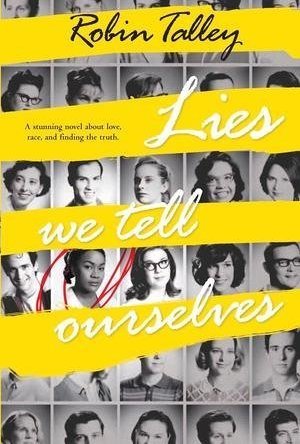
<i>Lies We Tell Ourselves</i> by Robin Talley is a realistic tale about the beginning of the integration of coloured people into white schools in late 1950s America. In Virginia it is 1959 and ten Negros are beginning their first day at Jefferson Highschool. The experience is narrated from one of the ten, Sarah’s, perspective. In other parts of the novel the voice changes to that of Linda, a particularly nasty white girl, who is one of countless students opposed to integration.
Although many young people will have been taught about the black civil right movement it is still shocking to read about the horrible things they had to endure. By writing in the first person, Talley encourages the reader to try to understand how they would feel in a similar situation. Sarah and her friends instantly become the victims of verbal and physical abuse that members of authority turn a blind eye to.
To Sarah, Linda is a nasty spoilt bully who, although does not join in with the taunting and abuse, is as bad as the rest of them. Through reading Linda’s account it becomes clear that her behaviour has a lot to do with her home life, in particularly with her father’s attitude towards her. After being forced to partner Sarah for a French project Linda begins to question why there is so much emphasis on skin colour, however not wanting to be shunned by her own friends she keeps these thoughts to herself.
Sarah is also struggling to come to terms with her sexual preference for girls. It has been drilled into her that these thoughts are a sin. She hides her true feelings from everyone and constantly berates herself mentally for being “unnatural”. But it turns out she may not be the only one with these thoughts.
The lies referred to in the title are not the blatant or harmful lies but rather the lies the characters believe or even want to believe. Each chapter begins with a lie that reflects what is occurring in the novel at that time; for example “There’s no need to be afraid” and “I don’t care what they think of me.” This is an interesting way of telling the story as it emphasizes Sarah’s determination to keep going despite what she is subjected to. It also reveals the mental struggles she faces. On the other hand the lies disclose Linda’s conflicting feelings towards the South’s current situation and segregation laws.
Although not a religious novel, each part begins with the title of a Christian hymn. It was the norm for everyone to go to church and, despite the separate churches, was something black and white people did. Sarah and Linda have faith in God yet they both use the bible’s teachings for opposing arguments. The religious aspect also highlights Sarah’s self-hatred and belief that she has fallen into sin.
Unfortunately in today’s world there are still issues with racism and homophobia however after reading <i>Lies We Tell Ourselves</i> it is evident that these situations have vastly improved, at least in the Western world, since the 1950s. Without children such as Sarah going through these horrible experiences nothing would have changed. There would still be separate schools, slavery and inaccurate opinions about race inequality. America has a lot to thank these brave students who were the first to create mixed race schools.
Overall this is a brilliant book. Well written and realistic, it really draws the reader in to the characters’ stories. Although <i>Lies We Tell Ourselves</i> is a work of fiction, it is historically accurate and can teach a lot about America’s history to young adults today.
<i>Lies We Tell Ourselves</i> by Robin Talley is a realistic tale about the beginning of the integration of coloured people into white schools in late 1950s America. In Virginia it is 1959 and ten Negros are beginning their first day at Jefferson Highschool. The experience is narrated from one of the ten, Sarah’s, perspective. In other parts of the novel the voice changes to that of Linda, a particularly nasty white girl, who is one of countless students opposed to integration.
Although many young people will have been taught about the black civil right movement it is still shocking to read about the horrible things they had to endure. By writing in the first person, Talley encourages the reader to try to understand how they would feel in a similar situation. Sarah and her friends instantly become the victims of verbal and physical abuse that members of authority turn a blind eye to.
To Sarah, Linda is a nasty spoilt bully who, although does not join in with the taunting and abuse, is as bad as the rest of them. Through reading Linda’s account it becomes clear that her behaviour has a lot to do with her home life, in particularly with her father’s attitude towards her. After being forced to partner Sarah for a French project Linda begins to question why there is so much emphasis on skin colour, however not wanting to be shunned by her own friends she keeps these thoughts to herself.
Sarah is also struggling to come to terms with her sexual preference for girls. It has been drilled into her that these thoughts are a sin. She hides her true feelings from everyone and constantly berates herself mentally for being “unnatural”. But it turns out she may not be the only one with these thoughts.
The lies referred to in the title are not the blatant or harmful lies but rather the lies the characters believe or even want to believe. Each chapter begins with a lie that reflects what is occurring in the novel at that time; for example “There’s no need to be afraid” and “I don’t care what they think of me.” This is an interesting way of telling the story as it emphasizes Sarah’s determination to keep going despite what she is subjected to. It also reveals the mental struggles she faces. On the other hand the lies disclose Linda’s conflicting feelings towards the South’s current situation and segregation laws.
Although not a religious novel, each part begins with the title of a Christian hymn. It was the norm for everyone to go to church and, despite the separate churches, was something black and white people did. Sarah and Linda have faith in God yet they both use the bible’s teachings for opposing arguments. The religious aspect also highlights Sarah’s self-hatred and belief that she has fallen into sin.
Unfortunately in today’s world there are still issues with racism and homophobia however after reading <i>Lies We Tell Ourselves</i> it is evident that these situations have vastly improved, at least in the Western world, since the 1950s. Without children such as Sarah going through these horrible experiences nothing would have changed. There would still be separate schools, slavery and inaccurate opinions about race inequality. America has a lot to thank these brave students who were the first to create mixed race schools.
Overall this is a brilliant book. Well written and realistic, it really draws the reader in to the characters’ stories. Although <i>Lies We Tell Ourselves</i> is a work of fiction, it is historically accurate and can teach a lot about America’s history to young adults today.
Gareth von Kallenbach (980 KP) rated Electric Slide (2015) in Movies
Aug 6, 2019


Today’s choice for your consideration is the 2014 film ‘Electric Slide’. A biographical crime film based on the life of antique/furniture salesman turned bank robber Eddie Dodson.
Starring Jim Sturgess, Isabel Lucas, Chloe Sevigny, Patricia Arquette, and Christopher Lambert, ‘Electric Slide’ opens in 1983 Los Angeles. Disco is nearly dead and Rock-n-Roll is putting the final nails in its coffin. By day, Eddie Dodson (Jim Sturgess) is a hip antique furniture salesman (there’s a contradiction in terms) catering to the rich and famous while in engaging in some petty thievering from his customers on the side. By night, he moves with the drug-fueled parties from one mansion to the next. A chance encounter at one of these parties introduces him to the beautiful and aloof Pauline (Isabel Lucas). Eddie and Pauline are immediately smitten with one another as though destined by fate. At about the same time, Eddie’s carefree lifestyle is coming back to haunt him as loan sharks finally catch up to him and his former benefactor Roy Fortune (Christopher Lambert) comes calling demanding the return of his money. With no other way to repay his debt, Eddie resorts to robbing banks. With Pauline in tow, Eddie uses his charm to talk the tellers at over 60 banks in the L.A. Area into handing over their cash. However, instead of paying off his debts Eddie and Pauline simply continue their life of excess with the police and the loan sharks in hot pursuit.
This film did an excellent job of depicting the ‘L.A. Lifestyle’ of the early 1980s that didn’t involve celebrities, but the folks who you would imagine would be latching on to those said celebrities.
The groupies if you will. The main character Eddie Dodson seems like he was a born con artist … a greasy slime ball who will take you for every thing you have if you let him. He is a bizarrely likable character though and his devotion to Pauline makes the viewer all the more want him to get away with just about any scheme he tries to pull. This is the first time I’ve seen Isabel Lucas in film since ‘Transformers:Revenge Of The Fallen’ or the ‘Red Dawn’ remake and I must say her performance as Pauline was brilliant. To quote another reviewer who screened this film I found myself asking ‘Who is that girl?’ From her first appearance on screen, it’s like you’re immediately drawn to her quiet/mysterious presence. It was also awesome to see Christopher Lambert in a movie once again. Although he’s portrayed a villain previously, I had personally never seen anything where he was the villain. His appearance in this film although brief had me convinced. In my opinion he should pursue more roles as the villain if they present themselves.
One of the movie’s aspects that bugged me though was the soundtrack. The only way I could describe it would be ‘hipsters trying to sound retro’ and they didn’t succeed. The music didn’t sound like it belonged in the timeframe which the movie took place in. There were also far too many clips and scenes where they kicked in the slow motion or decided to have the camera pan or zoom out in some attempt to capture more of the surroundings. They could’ve used this wasted time to include more dialogue and interaction between the main characters in my opinion. Besides the A-List actors they managed to enlist for this film the only thing that saved it in the end was the knowledge that the film was based on a true story. It kinda of fizzled about halfway though and then kicked back in 3/4s of the way through. The film is worth watching visually but the thing that killed it was that it could’ve used more dialogue. I’d give it 2.5 out of 5 stars. It’s worth watching once or twice. Nothing to write home about though.
Starring Jim Sturgess, Isabel Lucas, Chloe Sevigny, Patricia Arquette, and Christopher Lambert, ‘Electric Slide’ opens in 1983 Los Angeles. Disco is nearly dead and Rock-n-Roll is putting the final nails in its coffin. By day, Eddie Dodson (Jim Sturgess) is a hip antique furniture salesman (there’s a contradiction in terms) catering to the rich and famous while in engaging in some petty thievering from his customers on the side. By night, he moves with the drug-fueled parties from one mansion to the next. A chance encounter at one of these parties introduces him to the beautiful and aloof Pauline (Isabel Lucas). Eddie and Pauline are immediately smitten with one another as though destined by fate. At about the same time, Eddie’s carefree lifestyle is coming back to haunt him as loan sharks finally catch up to him and his former benefactor Roy Fortune (Christopher Lambert) comes calling demanding the return of his money. With no other way to repay his debt, Eddie resorts to robbing banks. With Pauline in tow, Eddie uses his charm to talk the tellers at over 60 banks in the L.A. Area into handing over their cash. However, instead of paying off his debts Eddie and Pauline simply continue their life of excess with the police and the loan sharks in hot pursuit.
This film did an excellent job of depicting the ‘L.A. Lifestyle’ of the early 1980s that didn’t involve celebrities, but the folks who you would imagine would be latching on to those said celebrities.
The groupies if you will. The main character Eddie Dodson seems like he was a born con artist … a greasy slime ball who will take you for every thing you have if you let him. He is a bizarrely likable character though and his devotion to Pauline makes the viewer all the more want him to get away with just about any scheme he tries to pull. This is the first time I’ve seen Isabel Lucas in film since ‘Transformers:Revenge Of The Fallen’ or the ‘Red Dawn’ remake and I must say her performance as Pauline was brilliant. To quote another reviewer who screened this film I found myself asking ‘Who is that girl?’ From her first appearance on screen, it’s like you’re immediately drawn to her quiet/mysterious presence. It was also awesome to see Christopher Lambert in a movie once again. Although he’s portrayed a villain previously, I had personally never seen anything where he was the villain. His appearance in this film although brief had me convinced. In my opinion he should pursue more roles as the villain if they present themselves.
One of the movie’s aspects that bugged me though was the soundtrack. The only way I could describe it would be ‘hipsters trying to sound retro’ and they didn’t succeed. The music didn’t sound like it belonged in the timeframe which the movie took place in. There were also far too many clips and scenes where they kicked in the slow motion or decided to have the camera pan or zoom out in some attempt to capture more of the surroundings. They could’ve used this wasted time to include more dialogue and interaction between the main characters in my opinion. Besides the A-List actors they managed to enlist for this film the only thing that saved it in the end was the knowledge that the film was based on a true story. It kinda of fizzled about halfway though and then kicked back in 3/4s of the way through. The film is worth watching visually but the thing that killed it was that it could’ve used more dialogue. I’d give it 2.5 out of 5 stars. It’s worth watching once or twice. Nothing to write home about though.
The How to be British Collection
Book
A perennially popular collection of colour cartoon illustrations, with accompanying texts, on the...