

Runmeter Running & Cycling GPS
Health & Fitness and Sports
App
Runmeter is the most advanced application for runners ever designed for a mobile device. Built from...

Kristy H (1252 KP) rated Fresh Complaint in Books
Jan 10, 2018
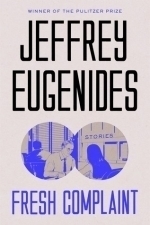

I often skip story collections, as I tend to feel a loss with them, as if the tale is unfinished, and I just want more details about each character and their motivations and end-state. I picked up FRESH COMPLAINT based solely on my love for Eugenides (Middlesex is an all-time favorite). I won't lie: I still felt that same unfinished feeling at the end of most of the stories. Clearly I just am meant more for long-form fiction. I also hadn't realized when I picked up the book that most of the stories were previously published, but luckily I am not usually reading The New Yorker and such, so I hadn't come across any of these previously.
One of the most exciting discoveries for me was, upon completing "Baster," confirming that it was indeed the premise for the silly film "The Switch" with Jason Bateman and Jennifer Aniston that is an incredibly guilty pleasure of mine. The story differs from the film, but you can clearly see how it's the base, and it's quite enjoyable.
Another favorite of mine was "Fresh Complaint," the final story in the collection, and clearly where it gets its title. We meet a young woman, Prakrtri, who is struggling with the fact that her family is trying to arrange a marriage for her, and a college professor who is traveling for work. How their paths cross is quite interesting. It's detailed, touching, and yet disturbing.
My other favorite was "Great Experiment" featuring an editor, Kendall, in his mid-thirties. He's comparing himself (unfavorably) to his peers, as he struggles financially in his job and resentfully watches his wealthy boss live well while not even providing Kendall health insurance. The story takes an interesting turn, and, as with much of Eugenides work, seems to have a greater message for us.
Overall, I didn't enjoy this as much as an Eugenides novel, because there just isn't the time to fall for his nuanced characters. I still enjoyed many of the stories and realize I probably gravitated toward "Fresh Complaint" and "Great Experiment" because they were some of the longer tales in the collection. If you like Eugenides, you may want to pick up this collection (provided you haven't already read the stories elsewhere). If you haven't read him in any form, go find Middlesex instead. 3.5 stars.

Sensitivemuse (246 KP) rated Jar City in Books
Jan 15, 2018
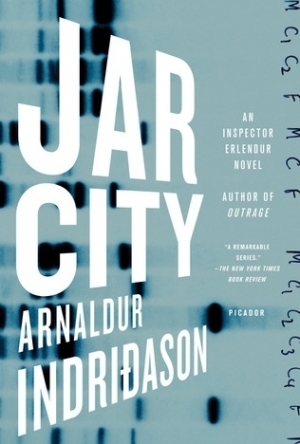

I’m still not sure what to think of Erlandur as a character. Like most protagonists in series like these they usually have an underlying personal issue (whether it be health, or family for example) which he does have, but his personality I can’t really quite make out. He doesn’t seem to have much of one except he cares for his daughter and her well being even though they are estranged. He does have some sense of humor and wit but overall he appears to be driven by his work and hard working to solve the crime (we all need police like these don’t we?.)
I’m liking how his relationship with his daughter is turning out. It’s nice to see them slowly step away from their estrangement and it shows they do truly care for each other even though it’s done through yelling (most families are like that though, aren’t they?) It shows a lot of tough love, and I’m hoping the best for Eva Lind in the next books (I hope she appears as I’m slowly starting to like her more.)
What I enjoyed the most of this book was the plot like I mentioned earlier. It went from point A to point B but in such a dramatic motion it certainly kept you reading to find out what was going to happen next. The mood of the story also, was excellent. It was dark, dreary, melancholy, and although not suspenseful like the majority of the crime novels, it didn’t have to be. It made the setting suitable for the plot and made it more enjoyable.
One little thing I do have to add though, is the side story with the bride. I’m not sure why that was mentioned as it had little to do with the main story and it seemed like a filler. It wasn’t necessary as the plot itself was fine without it. I also enjoyed the ending of the book. It was sad, but you came to the realization it had to come to an ending like this.
As this is book #3 in its native language, it’s considered book #1 in its’ English translation. It seems all right and nothing seems to be lacking. Perhaps a bit of backstory might have helped but it was comprehensible to read. Greatly recommended! It’s a great break from the usual detective novels we have out there.
Kristy H (1252 KP) rated A Good Neighborhood in Books
Mar 26, 2020
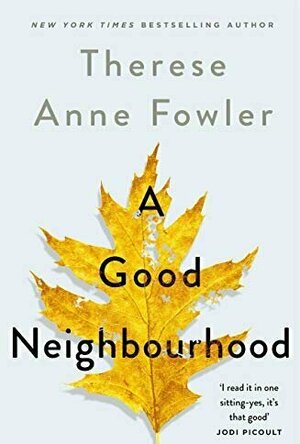
"An upscale new house in a simple old neighborhood. A girl on a chaise beside a swimming pool, who wants to be left alone. We begin our story here, in the minutes before the small event that will change everything."
This book took my heart and spit it right out again. Oh my goodness. It's a different, beautiful, and absolutely heartbreaking read. We're told from the very beginning--by our omniscient third person narrator--that something bad is going to happen. And yet, I lived in denial that this was true. I devoured this book in two halves. It's utterly engrossing, and the characters just pop off the pages. The teens, especially. Oh Juniper and Xavier. I will not easily forget either of you.
A Good Neighborhood tackles a host of timely topics, and it handles all of them deftly. Race, religion, sexism, feminism--none of these are exempt in the pages of this novel. We see whiteness as a symbolism for purity, and we watch as Juniper struggles with the set of values being pushed upon her by her mother and stepfather, including a "purity vow" to remain both a virgin and loyal to her future husband. And then there's Xavier, a talented musician, who has been raised by his strong mother after his father's death. She wants so much for her son to do anything, but yet lives in fear because he is biracial. Juniper, Xavier, and Valerie were such powerful characters.
I do not want to give much of the plot away, but I can tell you that this book is heartbreaking and beautiful. It will get you to think about racism and sexism. The strong themes of good versus evil are presented in such a unique and compelling manner. Adding the third-person piece just gives an extra piece to the story. This book is incredibly well-written and will stay with you for quite some time. 4.5 stars.

Conversation Therapy Lite - Questions for Expressive Language, Pragmatics, & Cognition
Medical and Education
App
Conversation Therapy gets people talking! Now you can try this professional speech therapy app to...
Longitudinal Analysis: Modeling Within-Person Fluctuation and Change
Book
Longitudinal Analysis provides an accessible, application-oriented treatment of introductory and...

Shirley Manson recommended Walk Across the Rooftops by The Blue Nile in Music (curated)


Battery : Battery Power Battery Charge Battery Life Battery Saver - The All in 1 Battery App Battery Magic Elite!
Business and Utilities
App
The Battery Saver,Use,Monitor and Battery Pwr app with more Data & Stats than basic Battery Info !...

The Complete Guide To Clinical Aromatherapy and The Essential Oils of The Physical Body: Essential Oils for Beginners
8.0 Rate It
Book
Let me ask you.... What's the most important thing you are looking for from your book about...