
Search
Search results

Buzz Books 2018: Young Adult Fall/Winter: Exclusive Excerpts from Forthcoming Titles by Rebecca Hanover, Julie Kagawa, Kody Keplinger, Natasha Ngan, Courtney Summers and More
6.0 Rate It
Book
Our ninth Buzz Books: Young Adult gives readers the special excitement of being among the first to...

Debbiereadsbook (1818 KP) rated Christmas Mountain in Books
Nov 18, 2021


I blooody loved this book!
Independent reviewer for Archaeolibrarian, I was gifted my copy of this book.
Ok So!
I'm not usually one for Christmas books, I'm really not, but something about the blurb pulled at me, and O>M>G I'm so freaking glad it did!
Rami and Fen work together in HMP Manchester. There is much flirting and then Fen makes a move. But life gets in the way and 18months later, Rami is driving up the mountain to see his sister with his 2-year-old nephew in the car. In a snow storm. Ill-prepared. And his car wrecks. And the Good Lord above sees fits to send an angel by the name of Fen to rescue him and Charlie who goes by the name of Fen.
What this is, right, is a beautifully written second chance at love story, it really is. I read it in one sitting and its 200 odd pages long.
Both Fen and Rami are smitten with each other, and they dance around each other for some time before life gets in the way and things happen and then Fen is gone. Rami never did know why. But finding him on his sister's mountain, is a gift sent at just the right time of year. The problem is, both Fen and Rami are carrying a huge amount of emotional and physical baggage.
It takes time for both men to fully get their stories out, and I really did like being made to wait for the full pictures to become clear. I don't like for everything to be thrown at me in one go.
I also loved being made to wait for Fen and Rami to finally, FINALLY have their moment, you know? I mean its full of emotions and steamy bits, but that's all they are for a long time: bits. But once they commit to each other, their relationship and being together, the steam level doesn't rack up too much, it just takes a slide into something more. Something deeper for these two.
I loved the connection to Rami and his sister, that Fen had and they didn't know. I LOVED the sister and her family!
I loved this book, I really did. I could rant and rave and go on and on and on and on andonandonandonandon.....but I won't cos spoilers do not a good review make.
So! For a Christmas book, with the L word bandied about quite early (something else I'm not a fan of!) I'm a big fan of this book!
5 full and shiny stars
same worded review will appear elsewhere
Ok So!
I'm not usually one for Christmas books, I'm really not, but something about the blurb pulled at me, and O>M>G I'm so freaking glad it did!
Rami and Fen work together in HMP Manchester. There is much flirting and then Fen makes a move. But life gets in the way and 18months later, Rami is driving up the mountain to see his sister with his 2-year-old nephew in the car. In a snow storm. Ill-prepared. And his car wrecks. And the Good Lord above sees fits to send an angel by the name of Fen to rescue him and Charlie who goes by the name of Fen.
What this is, right, is a beautifully written second chance at love story, it really is. I read it in one sitting and its 200 odd pages long.
Both Fen and Rami are smitten with each other, and they dance around each other for some time before life gets in the way and things happen and then Fen is gone. Rami never did know why. But finding him on his sister's mountain, is a gift sent at just the right time of year. The problem is, both Fen and Rami are carrying a huge amount of emotional and physical baggage.
It takes time for both men to fully get their stories out, and I really did like being made to wait for the full pictures to become clear. I don't like for everything to be thrown at me in one go.
I also loved being made to wait for Fen and Rami to finally, FINALLY have their moment, you know? I mean its full of emotions and steamy bits, but that's all they are for a long time: bits. But once they commit to each other, their relationship and being together, the steam level doesn't rack up too much, it just takes a slide into something more. Something deeper for these two.
I loved the connection to Rami and his sister, that Fen had and they didn't know. I LOVED the sister and her family!
I loved this book, I really did. I could rant and rave and go on and on and on and on andonandonandonandon.....but I won't cos spoilers do not a good review make.
So! For a Christmas book, with the L word bandied about quite early (something else I'm not a fan of!) I'm a big fan of this book!
5 full and shiny stars
same worded review will appear elsewhere

Daniel Boyd (1066 KP) rated Shazam! (2019) in Movies
Apr 9, 2019 (Updated Apr 9, 2019)
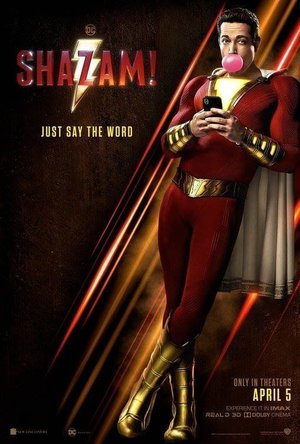

Good Fun
Being the big ol' geek that I am, I usually know the source material of the superhero movie I am going to see pretty well. Shazam is an exception to this, - other than the infamous Captain Marvel/Shazam copyright battle between Marvel and DC's lawyers over the years and the fact that he is a teenage boy who transforms into a grown man who looks like Superman with a similar power set, - I don't know much about the character. Watching Shazam, I was more so reminded of a Mark Millar comic called Superior, which bears multiple plot similarities to Shazam, to the point that I am surprised that DC have never attempted to sue Millar for blatant plagiarism.
In a word, Shazam is fun. I enjoyed my time with it and I would see it again. I enjoyed seeing Mark Strong hamming it up as the movie's villain and Zachary Levi did a great job in the titular role. Also, his chemistry with Jack Dylan Grazer's character was a huge highlight of the film for me. The SFX were on point for the most part other than the fairly cartoony representations of the 7 deadly sins monsters. There was also a charming, dumb, pure, innocence to the movie that really shone through the entire thing.
My biggest issue with the movie was Asher Angel as Billy Batson when he's not Shazam. Not necessarily because he is a bad actor or anything, but more because of how he chose to play the role. He came across as broody and introspective, almost the total opposite of how Zachary Levi came across as Shazam with his over the top playfulness and silly puns. This discrepancy was prevalent to the point where the illusion that these two actors were playing the same character was entirely broken and it was as if they were just playing two totally different characters with entirely opposite personalities that were just never in the same room. I feel like a bit of smoothing out could have been done between the actors to come to a compromise where they could both deliver their respective lines while believably playing the same character.
Also, something that you should probably know going in is that this is a comedy with lessons about family and responsibility before it is a Superhero/Action movie. It does make sense within the context of the film that there are no epic action scenes as Billy is just an untrained everyday kid that has been given a bunch of amazing powers that he is still getting to grips with, but don't expect any mind-blowing action scenes on par with MCU movies etc. Even though I guess it makes sense that there wasn't anything too impressive in terms of action scenes, I was left a little bit unfulfilled as I left the theatre that the film felt more insistent on showing us tender family moments rather than huge scale superhero battles.
Overall, Shazam is dumb fun. Don't think too hard about it and you will almost certainly have a great time watching it. I am glad that the fun factor of DC films seems to be on the up and they have dropped the dour tone of their Batman/Superman stories set up by Zack Snyder and they seem to have almost totally abandoned the idea of following in Marvel's footsteps of tying movies together in order to lead up to a team up blockbuster. This move seems to be for the best and is what they should have been doing from the start rather than trying to win a losing battle and play catch up with a franchise that has been building for an entire decade at this point.
In a word, Shazam is fun. I enjoyed my time with it and I would see it again. I enjoyed seeing Mark Strong hamming it up as the movie's villain and Zachary Levi did a great job in the titular role. Also, his chemistry with Jack Dylan Grazer's character was a huge highlight of the film for me. The SFX were on point for the most part other than the fairly cartoony representations of the 7 deadly sins monsters. There was also a charming, dumb, pure, innocence to the movie that really shone through the entire thing.
My biggest issue with the movie was Asher Angel as Billy Batson when he's not Shazam. Not necessarily because he is a bad actor or anything, but more because of how he chose to play the role. He came across as broody and introspective, almost the total opposite of how Zachary Levi came across as Shazam with his over the top playfulness and silly puns. This discrepancy was prevalent to the point where the illusion that these two actors were playing the same character was entirely broken and it was as if they were just playing two totally different characters with entirely opposite personalities that were just never in the same room. I feel like a bit of smoothing out could have been done between the actors to come to a compromise where they could both deliver their respective lines while believably playing the same character.
Also, something that you should probably know going in is that this is a comedy with lessons about family and responsibility before it is a Superhero/Action movie. It does make sense within the context of the film that there are no epic action scenes as Billy is just an untrained everyday kid that has been given a bunch of amazing powers that he is still getting to grips with, but don't expect any mind-blowing action scenes on par with MCU movies etc. Even though I guess it makes sense that there wasn't anything too impressive in terms of action scenes, I was left a little bit unfulfilled as I left the theatre that the film felt more insistent on showing us tender family moments rather than huge scale superhero battles.
Overall, Shazam is dumb fun. Don't think too hard about it and you will almost certainly have a great time watching it. I am glad that the fun factor of DC films seems to be on the up and they have dropped the dour tone of their Batman/Superman stories set up by Zack Snyder and they seem to have almost totally abandoned the idea of following in Marvel's footsteps of tying movies together in order to lead up to a team up blockbuster. This move seems to be for the best and is what they should have been doing from the start rather than trying to win a losing battle and play catch up with a franchise that has been building for an entire decade at this point.

Ivana A. | Diary of Difference (1171 KP) rated Cryptid in Books
Jul 10, 2018
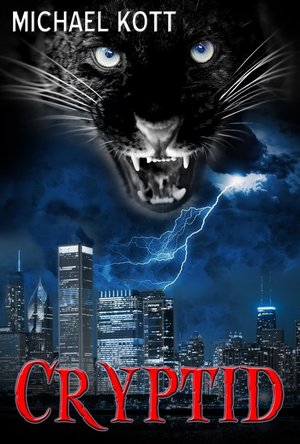
Cryptid by Michael Kott is the second book of these series. It is a sequel to the Piasa, and you can find my review on that here. I have to admit and say that I didn’t enjoy Cryptid as much as I would like to, and you’ll find out why soon.
About the book:
Cryptid continues to tell the story of Sara, a girl that survives a car accident, when all her family dies. While in the first book she meets Mike, who gets her a job as his assistant in his adventures, in this book we will see Sara still maintaining that position, but a little bit from the background. When a few cats that look like leopards will appear at the museum, people start to get scared, and the police wants to shoot the animals. Then Mike and the team come to the rescue, to try and identify what the cats are, and save them from dying.
Review:
In Cryptid, we will be introduced to a couple new characters, some of which I happened to be very fond of (Hi Xenia!). The good thing for me was, that I could get a bit of a break from all the Sara moments. The thing I didn’t like was the fact that their background was too short and untold, and they kept making decisions based on the past that we didn’t know (I will mention Shannon’s decision here).
My favourite moments of the book, were, of course, those where Sara wasn’t there. Followed by my previous review of the Piasa, I sometimes like the character of Sara. But I also couldn’t agree with her. I couldn’t understand her character, behaviour and decisions. Maybe it is because of my own childhood. I mean, luckily, I haven’t lost any of my family, but I have lived without both parents in those crucial years, raised by grandparents, while having a little sister to look after, and having an aunt similar to Pamela to guide me through my worst. But I was never this arrogant, self-centered and desperate for ME-ME-ME attention like Sara. Whoa, that lady really can push my limits sometimes.
The same goes with everyone around Sara that constantly tries to please her, and make sure she’s not upset.
And what is the reason that all of the characters are losing their shoes somewhere?
Unlike Piasa, in this book the focus is only on one big event, at two main places – the park and the museum. Apart from a few places in the introduction, the whole story keeps us around these places, which I particularly didn’t mind, but some people may or may not find it boring.
I was a bit sad because I really like Mike, and he wasn’t as present with his story as his was in the other book. I expected to see and learn a bit more of him.
Not to be all negative though, there were a few moments that I really enjoyed! I loved to read about the sisterhood of Pamela and Xenia, and the beginning of the book was fantastic. Xenia is also such an incredible character, and I really admired her. I also loved the explanations on the different kinds of cats and their latin names and meanings.
All in all, I am a bit sad to say that this will be a 3 out of 5 stars. Especially because the author, Michael Kott, is a dear friend of mine, and I greatly enjoyed the Piasa. I may have expected a bit too much of this book, that left me disappointed. But I do believe that some of you might greatly enjoy it! If you like Young-Adult fiction, and stories about mystery animals and cryptids, you will definitely enjoy this book!
Thank you Mike, for sending me a copy of the Cryptid, in exchange for an honest review.
About the book:
Cryptid continues to tell the story of Sara, a girl that survives a car accident, when all her family dies. While in the first book she meets Mike, who gets her a job as his assistant in his adventures, in this book we will see Sara still maintaining that position, but a little bit from the background. When a few cats that look like leopards will appear at the museum, people start to get scared, and the police wants to shoot the animals. Then Mike and the team come to the rescue, to try and identify what the cats are, and save them from dying.
Review:
In Cryptid, we will be introduced to a couple new characters, some of which I happened to be very fond of (Hi Xenia!). The good thing for me was, that I could get a bit of a break from all the Sara moments. The thing I didn’t like was the fact that their background was too short and untold, and they kept making decisions based on the past that we didn’t know (I will mention Shannon’s decision here).
My favourite moments of the book, were, of course, those where Sara wasn’t there. Followed by my previous review of the Piasa, I sometimes like the character of Sara. But I also couldn’t agree with her. I couldn’t understand her character, behaviour and decisions. Maybe it is because of my own childhood. I mean, luckily, I haven’t lost any of my family, but I have lived without both parents in those crucial years, raised by grandparents, while having a little sister to look after, and having an aunt similar to Pamela to guide me through my worst. But I was never this arrogant, self-centered and desperate for ME-ME-ME attention like Sara. Whoa, that lady really can push my limits sometimes.
The same goes with everyone around Sara that constantly tries to please her, and make sure she’s not upset.
And what is the reason that all of the characters are losing their shoes somewhere?
Unlike Piasa, in this book the focus is only on one big event, at two main places – the park and the museum. Apart from a few places in the introduction, the whole story keeps us around these places, which I particularly didn’t mind, but some people may or may not find it boring.
I was a bit sad because I really like Mike, and he wasn’t as present with his story as his was in the other book. I expected to see and learn a bit more of him.
Not to be all negative though, there were a few moments that I really enjoyed! I loved to read about the sisterhood of Pamela and Xenia, and the beginning of the book was fantastic. Xenia is also such an incredible character, and I really admired her. I also loved the explanations on the different kinds of cats and their latin names and meanings.
All in all, I am a bit sad to say that this will be a 3 out of 5 stars. Especially because the author, Michael Kott, is a dear friend of mine, and I greatly enjoyed the Piasa. I may have expected a bit too much of this book, that left me disappointed. But I do believe that some of you might greatly enjoy it! If you like Young-Adult fiction, and stories about mystery animals and cryptids, you will definitely enjoy this book!
Thank you Mike, for sending me a copy of the Cryptid, in exchange for an honest review.

Carma (21 KP) rated Worth the Wait (Guthrie Brothers #2) in Books
Jun 17, 2019


Worth the wait is a follow up book to Don’t Tempt Me, which was first released in July 2016. I happened upon Don’t Tempt Me after completing a book by another author. I loved it and was hungry for a continuation of the Guthrie Brothers story. After waiting for months and months its finally available to read to be transported to Clearbrook once again. Lori Foster, honestly, is one of my favorite authors. She has the ability to put you right in the middle of each and every book she writes. You feel the emotions each character feels, you can hear the sounds, almost smell the smells, and picture each character by her incredible descriptions of people and their surroundings. Worth the Wait is about main characters Hogan Guthrie and Violet Shaw. We met both characters in Don’t Tempt Me and got a muted sense of their attraction to one another. While I loved the characters of Hogan and Colt in Don’t Tempt Me, I don’t know if that transferred over to Worth the Wait where Hogan is concerned. Colt is a dream kid, funny, helpful, loves his family. But I found myself wishing I knew more about Hogan, overall his back-story seemed rushed along.
As with most Lori Foster novels we find ourselves getting involved in secondary characters and stories both separate from or including main characters. Some we hope to see get a book of their own (Barber, Colt) and some well maybe we don’t. Worth the Wait has a possible don’t with a secondary romance between Nathan Hawley and Brooklin Sweet. I enjoyed Nathan’s brief introduction in Don’t Tempt Me but I felt like his story was just randomly inserted in the book as a way to fill the pages. After finishing the book I feel like I know a little more about Nathan but mostly that his story was just a way to fill the pages between Hogan and Violet’s dance around each other. I know Nathan wasn’t a main character for this book and I know he was a friend of Hogan and Jason. I also know his story with Brooklin ties in to the story of Hogan and Violet, I just don’t feel like his time was in this book.
Seemingly I felt like the story between Hogan and Violet dragged on a little long with some interactions taking a long time on mundane things and speeding through things that may have set up a bigger connection between them. I think more time could have been spent on Violet’s family life, her connection with her uncle etc and grow that a little more for her back-story. Both main characters fell a little flat with detail on the who/what/why of their pasts. Don’t get me wrong, they definitely felt right for each other, I just didn’t get swept away by their romance as I normally do with a Lori Foster novel.
Overall I enjoyed Worth the Wait, even the parts that bug me like being able to see someone roll their eyes behind big ridiculous sunglasses, but it probably won’t be one book I go back to read and read over again (i.e. Rowdy, Trace, Zane to name a few). Sadly this book just didn’t grab my uninterrupted full interest, this time. But I know Lori Foster will grab my attention over and over again with each new book she publishes. I received Worth the Wait as an ARC in exchange for an honest review (watch out because blunt is my middle name). Hope this review helps now hurry and buy your own copy of Worth the Wait to prove me wrong, everyone loves to be right!!
As with most Lori Foster novels we find ourselves getting involved in secondary characters and stories both separate from or including main characters. Some we hope to see get a book of their own (Barber, Colt) and some well maybe we don’t. Worth the Wait has a possible don’t with a secondary romance between Nathan Hawley and Brooklin Sweet. I enjoyed Nathan’s brief introduction in Don’t Tempt Me but I felt like his story was just randomly inserted in the book as a way to fill the pages. After finishing the book I feel like I know a little more about Nathan but mostly that his story was just a way to fill the pages between Hogan and Violet’s dance around each other. I know Nathan wasn’t a main character for this book and I know he was a friend of Hogan and Jason. I also know his story with Brooklin ties in to the story of Hogan and Violet, I just don’t feel like his time was in this book.
Seemingly I felt like the story between Hogan and Violet dragged on a little long with some interactions taking a long time on mundane things and speeding through things that may have set up a bigger connection between them. I think more time could have been spent on Violet’s family life, her connection with her uncle etc and grow that a little more for her back-story. Both main characters fell a little flat with detail on the who/what/why of their pasts. Don’t get me wrong, they definitely felt right for each other, I just didn’t get swept away by their romance as I normally do with a Lori Foster novel.
Overall I enjoyed Worth the Wait, even the parts that bug me like being able to see someone roll their eyes behind big ridiculous sunglasses, but it probably won’t be one book I go back to read and read over again (i.e. Rowdy, Trace, Zane to name a few). Sadly this book just didn’t grab my uninterrupted full interest, this time. But I know Lori Foster will grab my attention over and over again with each new book she publishes. I received Worth the Wait as an ARC in exchange for an honest review (watch out because blunt is my middle name). Hope this review helps now hurry and buy your own copy of Worth the Wait to prove me wrong, everyone loves to be right!!

Ivana A. | Diary of Difference (1171 KP) rated My Trip to Adele in Books
Oct 5, 2020

My Trip To Adele is a book unlike any other. We are introduced to three different life stories, all of them connected to Adele in a wonderful way, and every one of them will teach us many lessons, bring tears or laughs on our faces and remind us who we are and why we exist in this world. This is a book of how a singer or a song can connect so many people and touch so many hearts in a way no one else could. A book about keeping traditions and breaking them, a book about love, bravery and most of all - HOPE.
Let’s meet Elias. A Moroccan man that has lived in Rome long enough to believe he is Italian, with a Moroccan dust left in his soul. Through Elias, we will find out about how many years ago, he paid a prostitute for her services and fell in love. His love for Malika is undescribable. While other men would pay hundreds to only have her body, he would pay thousands more to have her soul, even for just one night. He would never touch her body, but they would spend hours and hours talking about meaningful and meaningless things, about what it is like outside this city, outside this country, what can the world offer…
Malika has so many wishes and hopes, she sells her body so one day she would be able to leave this town, leave her family, and explore the world. Get married and have children, and be successful, and learn the English language. When life parts them from each other for eight years, Elias goes back to the same old city to look for her, and Malika has already left town. Sharing one special singer, there is only one place where he can find her - an Adele concert in Rome.
In Las Vegas, we have Yaser and Mariam, a married couple that lost its sparkle many years ago. Both are surgeons and spend a lot of time at work. And when they come home to the kids - everything is a routine. Yaser pretends to enjoy his TV Show evenings and the Prayers that Mariam wants to attend. He pretends to believe in God just to please his wife. They are not a happy family inside the house, but Mariam makes it sound perfect on the outside - they have the perfect social media photos, and they go to the most expensive places on a holiday, what could be so bad? He feels trapped inside a routine and wants to escape, but he also believes in saving his marriage, and following his marriage counselor, they are trying to revive their happiest memories, and that is when they decide to go to an Adele concert in Rome.
On the other side of the world we will meet Nadia and her son Waleed. Nadia is a strong woman that has been coping with her now ex-husband’s betrayals. She raised her son oh her own, and the love she feels for him is indescribable. Only a mother knows how much she adores her son. When her son gets hurt on her ex husband’s third wedding - Nadia decides that she would fight for her and her son, she will no longer be trapped, and she will finally enjoy a lovely holiday with her son - going to Adele’s concert in Rome.
This book is written in an amazing, fast pace, and you will never notice how you have scrolled through the pages and hours have passed. There were times where the character's description was basic, and sometimes Adele’s presence would be too exposed, but all the characters are different in their own way, and every story has its purpose and its lesson.
Let’s meet Elias. A Moroccan man that has lived in Rome long enough to believe he is Italian, with a Moroccan dust left in his soul. Through Elias, we will find out about how many years ago, he paid a prostitute for her services and fell in love. His love for Malika is undescribable. While other men would pay hundreds to only have her body, he would pay thousands more to have her soul, even for just one night. He would never touch her body, but they would spend hours and hours talking about meaningful and meaningless things, about what it is like outside this city, outside this country, what can the world offer…
Malika has so many wishes and hopes, she sells her body so one day she would be able to leave this town, leave her family, and explore the world. Get married and have children, and be successful, and learn the English language. When life parts them from each other for eight years, Elias goes back to the same old city to look for her, and Malika has already left town. Sharing one special singer, there is only one place where he can find her - an Adele concert in Rome.
In Las Vegas, we have Yaser and Mariam, a married couple that lost its sparkle many years ago. Both are surgeons and spend a lot of time at work. And when they come home to the kids - everything is a routine. Yaser pretends to enjoy his TV Show evenings and the Prayers that Mariam wants to attend. He pretends to believe in God just to please his wife. They are not a happy family inside the house, but Mariam makes it sound perfect on the outside - they have the perfect social media photos, and they go to the most expensive places on a holiday, what could be so bad? He feels trapped inside a routine and wants to escape, but he also believes in saving his marriage, and following his marriage counselor, they are trying to revive their happiest memories, and that is when they decide to go to an Adele concert in Rome.
On the other side of the world we will meet Nadia and her son Waleed. Nadia is a strong woman that has been coping with her now ex-husband’s betrayals. She raised her son oh her own, and the love she feels for him is indescribable. Only a mother knows how much she adores her son. When her son gets hurt on her ex husband’s third wedding - Nadia decides that she would fight for her and her son, she will no longer be trapped, and she will finally enjoy a lovely holiday with her son - going to Adele’s concert in Rome.
This book is written in an amazing, fast pace, and you will never notice how you have scrolled through the pages and hours have passed. There were times where the character's description was basic, and sometimes Adele’s presence would be too exposed, but all the characters are different in their own way, and every story has its purpose and its lesson.
Wheels on the Bus!
Games and Education
App
~~> "Our favorite of the Wheels on the Bus apps by far." iPad Review ~~> "Lovely for personalization...

Lee (2222 KP) rated The One and Only Ivan (2020) in Movies
Sep 2, 2020
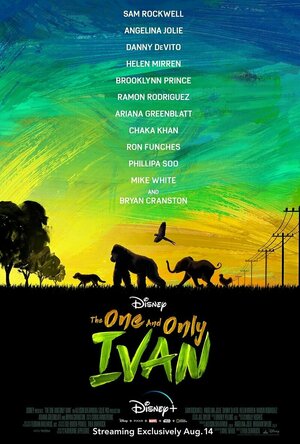

Better than most CGI talking animal Disney movies
Originally scheduled for a cinematic release, but now arriving on Disney+ instead, The One and Only Ivan is the latest in a long line of stories involving CGI animals who can talk, banding together to outsmart us humans in order to escape captivity. Only this one is actually based on a true story.
There were no talking animals in the real version of events this is based on, but there was a silverback gorilla named Ivan,
Stolen as an infant from the rainforests of Congo and made to live in a tiny cage, while regularly putting on a show for visitors to a shopping centre for 27 years in total. This being a Disney movie though, the cruelty of that is glossed over somewhat, with funny animal friends with wacky voices aiming to brighten things up. Although, the message that his captivity was wrong is certainly there for all to see, and hopefully to be appreciated.
Bryan Cranston is Mack, the showman responsible for raising Ivan and making him a star, bristling when enthusiasm and “the show must go on” spirit, despite dwindling audiences and occasional animal illness. From flashbacks, it’s clear that Mack loves Ivan, his passion for raising him having cost him his marriage. But now that Ivan is the star of the show at the mini circus in the mall, complacency has set in, and Mack cannot see that all Ivan now truly wants is his freedom.
In an attempt to try and bring in the crowds, Mack brings in a baby elephant, which takes over top billing status from Ivan, much to his disappointment. Elderly elephant Stella (Angelina Jolie) takes the new baby under her wing, and during some late night storytelling sessions between the animals, we learn that Ivan had a sister back in the jungle, and was actually a budding artist, using mud to paint on rocks. When Julia, young daughter of one of the helping hands at the circus, gives Ivan some of her old crayons and finger paints, Ivan begins drawing again, and is soon moved back up to top billing in the show.
When I first saw the trailer for The One and Only Ivan, I was totally on board. That is, until the animals started talking. I thought the CGI remake of The Lion King last year was just terrible, and the Lady and the Tramp remake which landed on Disney+ earlier this year was even worse. Realistic looking animals simply cannot convey emotions like their traditionally animated counterparts, while retaining their realistic looks. But The One and Only Ivan thankfully feels so different, much better than those movies do. And a lot of that is down to the voice cast.
Sam Rockwell is Ivan. Perfectly cast, he brings a real much needed gravitas to the sombre silverback. Along with the stray dog (Danny DeVito) that visits Ivan’s cage and sleeps on his belly at night, they form a delightful double act, discussing freedom, and the fortunes of the circus. With a lot of time being spent with the animals in their cages, the movie does drag a little at times, but then maybe that’s the whole idea – portraying the solitude and boredom experienced when you do not have your freedom.
As if it wasn’t already clear enough, The One and Only Ivan nicely drives home the important message that animals really shouldn’t be kept in pokey cages for long periods of time, and certainly not for decades either. The end of the movie reminds us that Ivan’s story is actually based on truth, as we’re shown photos of the real Ivan, who stayed with a family before becoming a circus act. Seeing the photos of his eventual release to the vastly improved setting of Atlanta zoo, where he lived out the rest of his days, certainly proves to be very emotional, and a fitting end to a surprisingly enjoyable family movie.
There were no talking animals in the real version of events this is based on, but there was a silverback gorilla named Ivan,
Stolen as an infant from the rainforests of Congo and made to live in a tiny cage, while regularly putting on a show for visitors to a shopping centre for 27 years in total. This being a Disney movie though, the cruelty of that is glossed over somewhat, with funny animal friends with wacky voices aiming to brighten things up. Although, the message that his captivity was wrong is certainly there for all to see, and hopefully to be appreciated.
Bryan Cranston is Mack, the showman responsible for raising Ivan and making him a star, bristling when enthusiasm and “the show must go on” spirit, despite dwindling audiences and occasional animal illness. From flashbacks, it’s clear that Mack loves Ivan, his passion for raising him having cost him his marriage. But now that Ivan is the star of the show at the mini circus in the mall, complacency has set in, and Mack cannot see that all Ivan now truly wants is his freedom.
In an attempt to try and bring in the crowds, Mack brings in a baby elephant, which takes over top billing status from Ivan, much to his disappointment. Elderly elephant Stella (Angelina Jolie) takes the new baby under her wing, and during some late night storytelling sessions between the animals, we learn that Ivan had a sister back in the jungle, and was actually a budding artist, using mud to paint on rocks. When Julia, young daughter of one of the helping hands at the circus, gives Ivan some of her old crayons and finger paints, Ivan begins drawing again, and is soon moved back up to top billing in the show.
When I first saw the trailer for The One and Only Ivan, I was totally on board. That is, until the animals started talking. I thought the CGI remake of The Lion King last year was just terrible, and the Lady and the Tramp remake which landed on Disney+ earlier this year was even worse. Realistic looking animals simply cannot convey emotions like their traditionally animated counterparts, while retaining their realistic looks. But The One and Only Ivan thankfully feels so different, much better than those movies do. And a lot of that is down to the voice cast.
Sam Rockwell is Ivan. Perfectly cast, he brings a real much needed gravitas to the sombre silverback. Along with the stray dog (Danny DeVito) that visits Ivan’s cage and sleeps on his belly at night, they form a delightful double act, discussing freedom, and the fortunes of the circus. With a lot of time being spent with the animals in their cages, the movie does drag a little at times, but then maybe that’s the whole idea – portraying the solitude and boredom experienced when you do not have your freedom.
As if it wasn’t already clear enough, The One and Only Ivan nicely drives home the important message that animals really shouldn’t be kept in pokey cages for long periods of time, and certainly not for decades either. The end of the movie reminds us that Ivan’s story is actually based on truth, as we’re shown photos of the real Ivan, who stayed with a family before becoming a circus act. Seeing the photos of his eventual release to the vastly improved setting of Atlanta zoo, where he lived out the rest of his days, certainly proves to be very emotional, and a fitting end to a surprisingly enjoyable family movie.

3rd Grade Non-Fiction Reading Comprehension
Education and Games
App
Improve your reading skills! 3rd Grade Non-Fiction Reading Comprehension is the most advanced...