
Search
Search results
Kirk Bage (1775 KP) rated Star Wars: Episode IX - The Rise of Skywalker (2019) in Movies
Mar 3, 2020
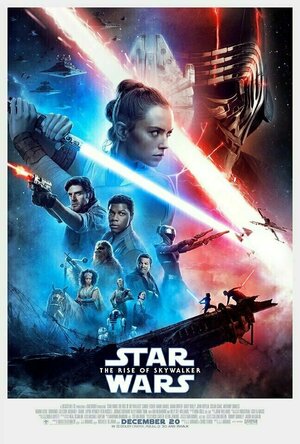


It took me over a month to get around to seeing this last night at the cinema. Not because I didn’t want to see the end of the new trilogy and say goodbye to it in style, but because I feared it just wouldn’t be very good. Put simply, it isn’t very good. Some parts, in fact, are downright awful. But it isn’t terrible either. I can’t say I hated it – I had fun; I enjoyed it for what it was, and some small moments in isolation were very well done indeed. However…
The first thing that struck me was the pace and editing style, which seemed at last to fully embrace a Disney theme park ethos of let’s get to it and keep it moving. No notion of setting mood and re-establishing character, but rather a sense of we have a lot to fit in here so let’s get it out of the way as quickly as possible. It didn’t feel to me like it was allowed to sit at any point and just be brooding, or meaningful in any way. Which may work for the short attention spans of your average 9 year old, but for older fans who have literally waited 42 years to see an ending, it felt rushed, trivial and far too flippant.
The spectacle was very much there still. The landscape of alien worlds, creatures, droids and other necessary weirdness is all there in spades! It just feels like you would need to go back and press the pause button to see it all. And before we know what is happening (or why), Palpatine is back in business and everyone is looking for some lame GPS green triangle thingy. Forget almost everything in the story that has led to this point, this is an adventure that exists in a vacuum of space, and you either shrug and go with it, or get very annoyed. I chose the shrug.
Before we really settle into what is going on, we start to see the power of The Force flowing through Rey in ways it has never done before… she can heal, she virtually flies, and she can even teleport objects to a different physical place at will. She has become more like Neo from The Matrix than anything Skywalker. More like a Marvel superhero than anything grounded in an ancient mysticism that acts subtly at moments of great need. What that does is immediately lower the stakes, because if anything is possible, and therefore probable, there is no threat of failure. And if this movie lacks anything essential it is threat.
That said, the reanimation of Emperor Palpatine was nicely creepy, at least in a visual and vocal sense. And the journey of the excellent Adam Driver as Ben Solo / Kylo Ren remained the most interesting and satisfying thing about the whole reboot. I found myself just wanting to focus on him more and more, and felt frustrated when, typically, his key progression moments were over too soon or given away too cheaply from a dramatic context.
I have mixed feelings also about the level of mirroring and call-backs to moments from previous films. Some really worked, but many fell flat. It began to feel like a greatest hits checklist, which, of course, was a criticism of JJ Abrams’ directing style in The Force Awakens, too. He has been so much more concerned with giving fans sugary little treats, as opposed to cooking up a satisfying meal that nourishes in it’s own right – indicative of a 21st century audience that often demands its pudding before it has finished its greens.
Look, I enjoy a nostalgia trip as much as the next uber-geek, but I do also like my fantasy sci-fi to be based on an idea of weight and gravitas. Eschew that aspect and the climax is going to fall a little flat… which, I think it did. Our empathy for Rey, and in fact all of the new gang, is simply not as strong as it should have been. Daisy Ridley does a decent job, and I don’t blame her at all – I have no problem with any of the supporting cast either, but what a shame too many of them almost fade away into mere scene dressing by the end.
Very telling then, that my favourite bit by far was a 15 minute giggling fit brought on by that one, already infamous detail, when tiny weirdo Babu Frik completely misses the mood of the room and screeches his “Hey Heeeeeey!” Only to pop up again later with an equally hilarious repeat. Probably the funniest moment in any Star Wars film, bar none. Worth the ticket price alone, and I am still having regular flashbacks that leave me in fits of laughter!
So, that’s it is it? Over and done with? Well, they certainly wrapped it up in a bow, coming full circle in fairly satisfying style. With just a cheeky hint that the roots of a continuation at some point are buried within shallow reach. No doubt, amateur writers everywhere have already had a pop at what happens next. The Force is balanced, the prophecy fulfilled, but it wouldn’t take much to tip the galaxy back into turmoil, as soon as Disney fancies another few billion in ticket sales.
Personally, I don’t want to be cynical about a franchise that has been a part of me since I was 3 years old, and been such a good friend. However, I am perfectly fine with having it remain as a source for backstories and origin tales. The main saga is over, so let’s leave it alone. Episodes IV – VI will always remain the best; they won’t go anywhere. So any shortcomings can be easily solved… just watch The Empire Strikes Back again, not worrying about anything else, but revelling in just how perfect it is, and how lucky we are that it is there for us.
The first thing that struck me was the pace and editing style, which seemed at last to fully embrace a Disney theme park ethos of let’s get to it and keep it moving. No notion of setting mood and re-establishing character, but rather a sense of we have a lot to fit in here so let’s get it out of the way as quickly as possible. It didn’t feel to me like it was allowed to sit at any point and just be brooding, or meaningful in any way. Which may work for the short attention spans of your average 9 year old, but for older fans who have literally waited 42 years to see an ending, it felt rushed, trivial and far too flippant.
The spectacle was very much there still. The landscape of alien worlds, creatures, droids and other necessary weirdness is all there in spades! It just feels like you would need to go back and press the pause button to see it all. And before we know what is happening (or why), Palpatine is back in business and everyone is looking for some lame GPS green triangle thingy. Forget almost everything in the story that has led to this point, this is an adventure that exists in a vacuum of space, and you either shrug and go with it, or get very annoyed. I chose the shrug.
Before we really settle into what is going on, we start to see the power of The Force flowing through Rey in ways it has never done before… she can heal, she virtually flies, and she can even teleport objects to a different physical place at will. She has become more like Neo from The Matrix than anything Skywalker. More like a Marvel superhero than anything grounded in an ancient mysticism that acts subtly at moments of great need. What that does is immediately lower the stakes, because if anything is possible, and therefore probable, there is no threat of failure. And if this movie lacks anything essential it is threat.
That said, the reanimation of Emperor Palpatine was nicely creepy, at least in a visual and vocal sense. And the journey of the excellent Adam Driver as Ben Solo / Kylo Ren remained the most interesting and satisfying thing about the whole reboot. I found myself just wanting to focus on him more and more, and felt frustrated when, typically, his key progression moments were over too soon or given away too cheaply from a dramatic context.
I have mixed feelings also about the level of mirroring and call-backs to moments from previous films. Some really worked, but many fell flat. It began to feel like a greatest hits checklist, which, of course, was a criticism of JJ Abrams’ directing style in The Force Awakens, too. He has been so much more concerned with giving fans sugary little treats, as opposed to cooking up a satisfying meal that nourishes in it’s own right – indicative of a 21st century audience that often demands its pudding before it has finished its greens.
Look, I enjoy a nostalgia trip as much as the next uber-geek, but I do also like my fantasy sci-fi to be based on an idea of weight and gravitas. Eschew that aspect and the climax is going to fall a little flat… which, I think it did. Our empathy for Rey, and in fact all of the new gang, is simply not as strong as it should have been. Daisy Ridley does a decent job, and I don’t blame her at all – I have no problem with any of the supporting cast either, but what a shame too many of them almost fade away into mere scene dressing by the end.
Very telling then, that my favourite bit by far was a 15 minute giggling fit brought on by that one, already infamous detail, when tiny weirdo Babu Frik completely misses the mood of the room and screeches his “Hey Heeeeeey!” Only to pop up again later with an equally hilarious repeat. Probably the funniest moment in any Star Wars film, bar none. Worth the ticket price alone, and I am still having regular flashbacks that leave me in fits of laughter!
So, that’s it is it? Over and done with? Well, they certainly wrapped it up in a bow, coming full circle in fairly satisfying style. With just a cheeky hint that the roots of a continuation at some point are buried within shallow reach. No doubt, amateur writers everywhere have already had a pop at what happens next. The Force is balanced, the prophecy fulfilled, but it wouldn’t take much to tip the galaxy back into turmoil, as soon as Disney fancies another few billion in ticket sales.
Personally, I don’t want to be cynical about a franchise that has been a part of me since I was 3 years old, and been such a good friend. However, I am perfectly fine with having it remain as a source for backstories and origin tales. The main saga is over, so let’s leave it alone. Episodes IV – VI will always remain the best; they won’t go anywhere. So any shortcomings can be easily solved… just watch The Empire Strikes Back again, not worrying about anything else, but revelling in just how perfect it is, and how lucky we are that it is there for us.
Purple Phoenix Games (2266 KP) rated Lair in Tabletop Games
Feb 13, 2020

Raise your hand if you’ve ever dreamed of being a superhero – fighting crime and saving lives. Great! This game is not about that. Instead, embrace your inner villain as you work to create the greatest evil lair in the world! Dig deep and put your villainy to the test as you command Henchmen to build nefarious rooms and outmaneuver the other villains vying for power in this evil organization.
Lair is a worker placement game in which players are racing to complete the construction of a secret lair for their evil boss, Mr. White. Played over a series of rounds, players select turn order and command henchmen to construct new rooms, collect supplies, interfere with your competitors’ plans, or dig deeper into the volcano in which this lair is housed. The first player to reach the core of the volcano, thus completing the lair, is the winner!
Disclaimer: We were provided a copy of Lair for the purposes of this review. I do not intend to rehash the entire rulebook, but rather provide an overview of the rules and comment on the gameplay. For a more in-depth look at the rules, find the game at your FLGS or directly from the publisher! -L
To setup, place the foundation cards at the top of the table and then place 4 elevator cards in a single line underneath the center-most foundation card, and put the Core card at the bottom of the line. Flip the top elevator card, give each player their components (Player Card, Boss token, and 2 Henchmen tokens), create a room card pool, and you are ready to go! Choose the first player as described in the rule book. To start each round, players will choose turn order. All spaces in the turn order track offer different resources/rewards (collect Work Tokens, claim room cards, etc), so going first each turn might not necessarily be best for your strategy. Once turn order is established, players take turns moving 1 worker (either a Henchmen or Boss), and possibly performing the action of the room card to which they moved. Each move costs 1 Work Token, and is paid to the “bank.” In order to perform a room’s action, you must play your Boss token to that card, and there must be a Henchmen token already in the room. Here’s the catch – if the Henchmen token belongs to an opponent, you pay THEM 1 Work Token (instead of the bank) for having moved into a room that they have claimed. Do you want to use a room action enough to justify giving an opponent another Work Token to be used against you? Or can you rework your strategy to avoid using that action? Play continues in the round as long as players have Work Tokens to spend. Once you run out of actions, or choose to stop, you ‘retire’ and pass until the next round begins. There is an incentive to retiring early, though – the first player to retire in a round is the first player to choose their turn order in the next round. Play continues until one player has reached the final spot on the elevator track, the Core. The game immediately ends, and that player is the victor!
So how does Lair play? In my opinion, it’s a great little game. There is so much strategy involved for such a small game, and that is really what takes it to the next level for me. Let’s start with selecting turn order. In most games, this means vying for first dibs in the next round. In this game, however, each different turn order slot provides different resources/rewards. Depending on your strategy, you may really need that 3rd slot, or even the last one! So going first is not necessarily always the best thing in this game. You have to balance the risk of going later in the round with the reward of your chosen resources. The next strategic part of this game has to do with Henchmen placement. As I stated earlier, in order to use a room’s action, you must move your Boss to that card, and there must already be a Henchmen present. If the Henchmen belongs to an opponent, you pay them instead of the bank. This is vital because Work Tokens are what allow you to take turns, so paying an opponent means giving them a chance for another turn next round. Is it worth rewarding an opponent for use of a room action? On the flip side – can you strategically place your Henchmen to ensure that opponents have to pay you to complete their goals? The Boss may be in charge, but the Henchmen are the underdogs in this game for sure.
Components. The components are pretty good quality in this game. The cards are nice and thick, the art is thematic, and the wooden and cardboard tokens are sturdy. No complaints there. The only qualm that we had with Lair has to do with iconography. Every possible action has a corresponding symbol, and that is what is shown on the card. The downside is that there are so many symbols and icons, so there is a bit of a learning curve when it comes to playing Lair for the first time. To alleviate some of the confusion, the game comes with some nice reference cards, and the symbols do get easier to recognize with more plays. But just be warned: at first you may be a little confused with all of the symbology.
As you can see by our ratings, we kind of had mixed feelings about this one. For a game that seems so small and light, it actually has a lot of bulk to it. Between strategic choices and learning symbology, this might not be a game we can just pull out for a quick filler, but I think that it’s good enough to stand on its own. Sometimes physically smaller games can be overlooked, but don’t let the size fool you – Lair packs a punch. Purple Phoenix Games gives Lair a nefarious 12 / 18.
Lair is a worker placement game in which players are racing to complete the construction of a secret lair for their evil boss, Mr. White. Played over a series of rounds, players select turn order and command henchmen to construct new rooms, collect supplies, interfere with your competitors’ plans, or dig deeper into the volcano in which this lair is housed. The first player to reach the core of the volcano, thus completing the lair, is the winner!
Disclaimer: We were provided a copy of Lair for the purposes of this review. I do not intend to rehash the entire rulebook, but rather provide an overview of the rules and comment on the gameplay. For a more in-depth look at the rules, find the game at your FLGS or directly from the publisher! -L
To setup, place the foundation cards at the top of the table and then place 4 elevator cards in a single line underneath the center-most foundation card, and put the Core card at the bottom of the line. Flip the top elevator card, give each player their components (Player Card, Boss token, and 2 Henchmen tokens), create a room card pool, and you are ready to go! Choose the first player as described in the rule book. To start each round, players will choose turn order. All spaces in the turn order track offer different resources/rewards (collect Work Tokens, claim room cards, etc), so going first each turn might not necessarily be best for your strategy. Once turn order is established, players take turns moving 1 worker (either a Henchmen or Boss), and possibly performing the action of the room card to which they moved. Each move costs 1 Work Token, and is paid to the “bank.” In order to perform a room’s action, you must play your Boss token to that card, and there must be a Henchmen token already in the room. Here’s the catch – if the Henchmen token belongs to an opponent, you pay THEM 1 Work Token (instead of the bank) for having moved into a room that they have claimed. Do you want to use a room action enough to justify giving an opponent another Work Token to be used against you? Or can you rework your strategy to avoid using that action? Play continues in the round as long as players have Work Tokens to spend. Once you run out of actions, or choose to stop, you ‘retire’ and pass until the next round begins. There is an incentive to retiring early, though – the first player to retire in a round is the first player to choose their turn order in the next round. Play continues until one player has reached the final spot on the elevator track, the Core. The game immediately ends, and that player is the victor!
So how does Lair play? In my opinion, it’s a great little game. There is so much strategy involved for such a small game, and that is really what takes it to the next level for me. Let’s start with selecting turn order. In most games, this means vying for first dibs in the next round. In this game, however, each different turn order slot provides different resources/rewards. Depending on your strategy, you may really need that 3rd slot, or even the last one! So going first is not necessarily always the best thing in this game. You have to balance the risk of going later in the round with the reward of your chosen resources. The next strategic part of this game has to do with Henchmen placement. As I stated earlier, in order to use a room’s action, you must move your Boss to that card, and there must already be a Henchmen present. If the Henchmen belongs to an opponent, you pay them instead of the bank. This is vital because Work Tokens are what allow you to take turns, so paying an opponent means giving them a chance for another turn next round. Is it worth rewarding an opponent for use of a room action? On the flip side – can you strategically place your Henchmen to ensure that opponents have to pay you to complete their goals? The Boss may be in charge, but the Henchmen are the underdogs in this game for sure.
Components. The components are pretty good quality in this game. The cards are nice and thick, the art is thematic, and the wooden and cardboard tokens are sturdy. No complaints there. The only qualm that we had with Lair has to do with iconography. Every possible action has a corresponding symbol, and that is what is shown on the card. The downside is that there are so many symbols and icons, so there is a bit of a learning curve when it comes to playing Lair for the first time. To alleviate some of the confusion, the game comes with some nice reference cards, and the symbols do get easier to recognize with more plays. But just be warned: at first you may be a little confused with all of the symbology.
As you can see by our ratings, we kind of had mixed feelings about this one. For a game that seems so small and light, it actually has a lot of bulk to it. Between strategic choices and learning symbology, this might not be a game we can just pull out for a quick filler, but I think that it’s good enough to stand on its own. Sometimes physically smaller games can be overlooked, but don’t let the size fool you – Lair packs a punch. Purple Phoenix Games gives Lair a nefarious 12 / 18.
Ivana A. | Diary of Difference (1171 KP) rated Romanov in Books
Oct 5, 2020
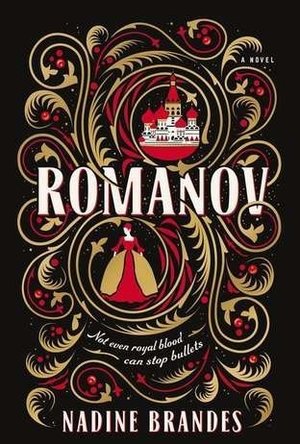

From the author of Fawkes comes a magical take on the story of Anastasia Romanov.
The history books say I died.
They don’t know the half of it.
Ever since I read Fawkes, I knew I loved Nadine’s writing, and when Romanov was announced, I couldn’t be happier. As I have spend my childhood and young adult life in the Balkans, whilst travelling across Europe, I have always admired Russia, and always enjoyed reading all the theories about the Romanov family.
As a child I would be told stories and fairy tales, I would watch the Disney adaptation of Anastasia, and as I was growing up, I would read history books and fiction on this very subject. When I got my hands on ‘’Romanov’’, I knew I would be up for an adventure, with lots of expectations, but what I never knew was that I would be blown away of how beautiful this book is!
This book is split into two main parts, before and after the Romanov’s execution, but it is also split into the first being the historical part, and the second being the fictional part. Both parts of the book are quite intense, and very different emotions come up to surface, but they are both very powerful throughout, and fitted together quite well.
In the first part, we are introduced to the Romanov family, and how they are kept as hostages by the Bolsheviks. It would’ve been much better if we had more details on the pre-hostage period, why the revolution began, why the king abducted the throne, who are the Bolsheviks and what they believed in. The book starts in the middle of this whole situation, and whilst I knew the beginning before, I am certain a lot of people wouldn’t have.
The history, as much accurate as it was, also had a personalized feeling that the author wanted to give. I have to admit, a lot of the details, especially around the family were quite accurate. The family did stick together and loved each other, they did have secrets and they did make friends with their captors. Anastasia’s brother did indeed had hemophilia and Rasputin was allegedly helping him. However, the author decided to put her personal feelings into the history as well. The king is presented as a wonderful leader that cares about the people. I understand that we see this story from Anastasia’s point of view, and as his daughter, she is supposed to see her father as the best figure in the world. But I still believe this part should be more objective, if not from Anastasia’s point of view, then at least by the king’s actions and dialogues. The other big element that bothered me was the portrayal of Rasputin. He is shown in this book as a family helper and a kind man, when in fact, he was far from that. In the history books, he is described as a madman, a creepy person, and the king was not happy of him coming in the house. The family’s secrecy and the queen’s silent domination over the king, together with Rasputin’s doings were the start of the revolution, and I believe that it one of the required truths that this books should have included, but didn’t. And that troubled me.
On top of this, is the Russian language used throughout this book. There were a lot of spelling errors, and misinterpretations. And whilst I can understand these words, many people can’t, and translation wasn’t provided in the book. Also, I really found this quote interesting, talking about the Russian culture, and how they don’t show emotions. Just a note – this is most of the time true, people won’t be nice to strangers, but actually, Russian people are quite friendly and emotional as well.
‘’We Russians weren’t required to share any amount of emotion we didn’t want to.’’
Apart from these few things that slightly bothered me, I really enjoyed this book. Anastasia is an amazing character, and through her we can see her love towards her family, her country, and even towards the people that wish her harm. We get to see her love, cry, be hurt, be afraid, forgive, and grow throughout the book, and her journey was magical.
‘’As I lay in the grass next to the spell that could rid me of heart pain, I realized that a part of forgiveness was accepting the things someone had done – and the pain that came with that – and moving on with love. Forgiveness was a personal battle that must always be fought in my heart.’’
I loved the beginning of the book the most. The setting was well-written, and I got the feel the same way as the Romanov family did. They tried to act as if everything was normal, when in fact, they were held captive, and moved out of their home. They weren’t allowed to go out in the garden often, and when they did have this opportunity, they enjoyed every single second of it. And they all had hope every single day. They kept smiling and stayed together.
There are number of scenes that will always stay close to my heart – the relationship between Zash and Anastasia (as unrealistic as it might be), always kept me on my toes, his desperation, and his guilt, and her ability to forgive and love regardless.
The brother’s illness, and his persistence through it. His motivation and his will to never give up. The love he holds for his family, and especially his sister Anastasia, and the toughness and not letting go. A few scenes were unrealistic with him, as I hardly believe anyone suffering from hemophilia can survive all those injuries mentioned in the book and the pools of blood, but above all – this character did achieve what he was meant to do – show hope where there is none.
A wonderful and magical tale, with a history behind it of a mysterious family, especially their end – this book brought tears on my eyes and made me think about the power of forgiveness and love. A true masterpiece.
Thank you to Nadine Brandes, for letting me be a part of her Ninja Team.
The history books say I died.
They don’t know the half of it.
Ever since I read Fawkes, I knew I loved Nadine’s writing, and when Romanov was announced, I couldn’t be happier. As I have spend my childhood and young adult life in the Balkans, whilst travelling across Europe, I have always admired Russia, and always enjoyed reading all the theories about the Romanov family.
As a child I would be told stories and fairy tales, I would watch the Disney adaptation of Anastasia, and as I was growing up, I would read history books and fiction on this very subject. When I got my hands on ‘’Romanov’’, I knew I would be up for an adventure, with lots of expectations, but what I never knew was that I would be blown away of how beautiful this book is!
This book is split into two main parts, before and after the Romanov’s execution, but it is also split into the first being the historical part, and the second being the fictional part. Both parts of the book are quite intense, and very different emotions come up to surface, but they are both very powerful throughout, and fitted together quite well.
In the first part, we are introduced to the Romanov family, and how they are kept as hostages by the Bolsheviks. It would’ve been much better if we had more details on the pre-hostage period, why the revolution began, why the king abducted the throne, who are the Bolsheviks and what they believed in. The book starts in the middle of this whole situation, and whilst I knew the beginning before, I am certain a lot of people wouldn’t have.
The history, as much accurate as it was, also had a personalized feeling that the author wanted to give. I have to admit, a lot of the details, especially around the family were quite accurate. The family did stick together and loved each other, they did have secrets and they did make friends with their captors. Anastasia’s brother did indeed had hemophilia and Rasputin was allegedly helping him. However, the author decided to put her personal feelings into the history as well. The king is presented as a wonderful leader that cares about the people. I understand that we see this story from Anastasia’s point of view, and as his daughter, she is supposed to see her father as the best figure in the world. But I still believe this part should be more objective, if not from Anastasia’s point of view, then at least by the king’s actions and dialogues. The other big element that bothered me was the portrayal of Rasputin. He is shown in this book as a family helper and a kind man, when in fact, he was far from that. In the history books, he is described as a madman, a creepy person, and the king was not happy of him coming in the house. The family’s secrecy and the queen’s silent domination over the king, together with Rasputin’s doings were the start of the revolution, and I believe that it one of the required truths that this books should have included, but didn’t. And that troubled me.
On top of this, is the Russian language used throughout this book. There were a lot of spelling errors, and misinterpretations. And whilst I can understand these words, many people can’t, and translation wasn’t provided in the book. Also, I really found this quote interesting, talking about the Russian culture, and how they don’t show emotions. Just a note – this is most of the time true, people won’t be nice to strangers, but actually, Russian people are quite friendly and emotional as well.
‘’We Russians weren’t required to share any amount of emotion we didn’t want to.’’
Apart from these few things that slightly bothered me, I really enjoyed this book. Anastasia is an amazing character, and through her we can see her love towards her family, her country, and even towards the people that wish her harm. We get to see her love, cry, be hurt, be afraid, forgive, and grow throughout the book, and her journey was magical.
‘’As I lay in the grass next to the spell that could rid me of heart pain, I realized that a part of forgiveness was accepting the things someone had done – and the pain that came with that – and moving on with love. Forgiveness was a personal battle that must always be fought in my heart.’’
I loved the beginning of the book the most. The setting was well-written, and I got the feel the same way as the Romanov family did. They tried to act as if everything was normal, when in fact, they were held captive, and moved out of their home. They weren’t allowed to go out in the garden often, and when they did have this opportunity, they enjoyed every single second of it. And they all had hope every single day. They kept smiling and stayed together.
There are number of scenes that will always stay close to my heart – the relationship between Zash and Anastasia (as unrealistic as it might be), always kept me on my toes, his desperation, and his guilt, and her ability to forgive and love regardless.
The brother’s illness, and his persistence through it. His motivation and his will to never give up. The love he holds for his family, and especially his sister Anastasia, and the toughness and not letting go. A few scenes were unrealistic with him, as I hardly believe anyone suffering from hemophilia can survive all those injuries mentioned in the book and the pools of blood, but above all – this character did achieve what he was meant to do – show hope where there is none.
A wonderful and magical tale, with a history behind it of a mysterious family, especially their end – this book brought tears on my eyes and made me think about the power of forgiveness and love. A true masterpiece.
Thank you to Nadine Brandes, for letting me be a part of her Ninja Team.

Lottie disney bookworm (1056 KP) rated What Once Was Mine in Books
Oct 25, 2021
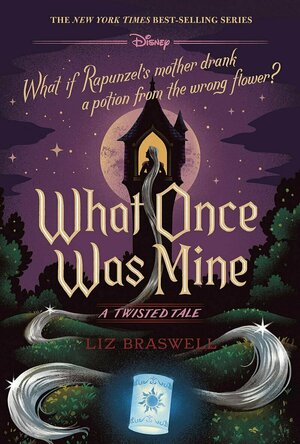
𝑾𝒉𝒂𝒕 𝒊𝒇 𝑹𝒂𝒑𝒖𝒏𝒛𝒆𝒍’𝒔 𝒎𝒐𝒕𝒉𝒆𝒓 𝒅𝒓𝒂𝒏𝒌 𝒂 𝒑𝒐𝒕𝒊𝒐𝒏 𝒇𝒓𝒐𝒎 𝒕𝒉𝒆 𝒘𝒓𝒐𝒏𝒈 𝒇𝒍𝒐𝒘𝒆𝒓?
As you will all know by now, I am in love with the Twisted Tales series and have to read each installment as they are released. What Once was Mine is the 12th Twisted Tale book and the 7th written by Liz Braswell so to say I was excited would be an understatement.
As always, TT books come with a tag line to lure you in and this one is “What if Rapunzel’s mother drank a potion from the wrong flower?” Yes, instead of the golden Sundrop flower, the ailing pregnant queen is mistakenly given a potion using the Moondrop flower, resulting in a silver-haired princess whose power kills rather than heals!
Of course, that casts the whole locking the princess in a tower concept into an entirely new light! However, many of the other elements remain the same as Disney’s ‘Tangled’ movie: Gothel is Rapunzel’s captor and “mother”, Flynn steals a crown and is on the run from the Stabbington brothers and Rapunzel is desperate to see the floating lights.
What Liz Braswell manages to do (very well, in my opinion) is to maintain all these similarities, keeping her readers rooted to the original story but also to bend the original fairytale into something a bit more mature, a bit darker and, in some cases, a bit more real.
“𝙏𝙝𝙚 𝙩𝙧𝙪𝙩𝙝 𝙖𝙗𝙤𝙪𝙩 𝙮𝙤𝙪 𝙞𝙨 𝙖𝙡𝙡 𝙩𝙖𝙣𝙜𝙡𝙚𝙙, 𝙡𝙞𝙠𝙚 𝙮𝙤𝙪𝙧 𝙗𝙧𝙖𝙞𝙙𝙨, 𝙍𝙖𝙥𝙪𝙣𝙯𝙚𝙡”
What Once was Mine is written from Rapunzel’s perspective. Now, this may be an obvious choice, but it also gives Braswell the opportunity to show her protagonist in a slightly more mature light than we are used to. Yes, Rapunzel is scatty, enthusiastic and teeth-grittingly cheerful about everything but she also believes she is dangerous and that she belongs in the tower for the safety of others.
Rapunzel has always been told that her hair killed her parents and that Gothel has been charged with her care and protection. However, what I really enjoyed about Braswell’s Rapunzel is that, although she begins with the same blind faith in Gothel as she has in the movie, she soon develops an inner turmoil of emotions with regards to her captor, questioning where she spends her days and recognising the little digs often made at the daughter’s expense.
As her journey continues, Rapunzel observes other mother-daughter relationships and her doubt and distrust of Gothel begins to build as a result. Lords, ladies and bandits alike are hunting for Rapunzel in order to claim her as their prize but this couldn’t be orchestrated by her mother, the only family she has ever known, could it?
“𝘽𝙚𝙜𝙞𝙣 𝙮𝙤𝙪𝙧 𝙣𝙞𝙣𝙚𝙩𝙚𝙚𝙣𝙩𝙝 𝙮𝙚𝙖𝙧 𝙗𝙮 𝙛𝙤𝙧𝙜𝙞𝙫𝙞𝙣𝙜 𝙮𝙤𝙪𝙧𝙨𝙚𝙡𝙛, 𝙍𝙖𝙥𝙪𝙣𝙯𝙚𝙡. 𝙏𝙝𝙖𝙩’𝙨 𝙖 𝙛𝙖𝙧 𝙗𝙚𝙩𝙩𝙚𝙧 𝙜𝙞𝙛𝙩 𝙩𝙝𝙖𝙣 𝙛𝙡𝙤𝙖𝙩𝙞𝙣𝙜 𝙡𝙖𝙣𝙩𝙚𝙧𝙣𝙨.”
I have conflicting feelings when it comes to the darker elements of What Once Was Mine. The inclusion of the very real Countess Bathory took me by surprise and was quite gruesome in places: not a problem for a grown-up Disney nerd but I’m not sure whether I will be passing this one along to the Mini Bookworm any time soon.
There is also the narrator of the story: a brother making up an alternative Rapunzel story for his sister while she is undergoing chemo. I understand this is an emotive topic for the author and I almost got it as a tool for the story-telling, enabling the use of quite modern, colloquial terms such as “murderhair” and enabling the creative inclusion of characters such as Maximus.
I really wanted this technique to be profound and make the story mean more, such as fairytales having an important place in the modern world for example. Unfortunately, it fell a little flat for me: it was an interesting tweak but it didn’t make me feel as much as I wanted it to.
It is not all doom and gloom though, Rapunzel’s perspective of the world provides comic moments: her (limited) knowledge of the world comes from the 37 books that she owns, leading to a moose that is definitely a squirrel and a cat which acts suspiciously like a fox. We are also not deprived of the regulars of The Snuggly Duckling, indeed all of your favourites from the film turn up for this novel.
Braswell’s characterisation when it came to Flynn was spot on in my opinion. The observation by Rapunzel that there is the “real” Flynn and then there is the charming, roguish mask he uses was perfect! Gina was also a great addition, desperately trying to be an adventurer/criminal and not being taken seriously just because she is a girl. The relationship between her and Flynn was adorable and, of course, Gina’s mother is just legendary.
“𝙎𝙝𝙚 𝙬𝙖𝙨𝙣’𝙩 𝙘𝙝𝙖𝙨𝙞𝙣𝙜 𝙙𝙞𝙨𝙩𝙖𝙣𝙩 𝙡𝙞𝙜𝙝𝙩𝙨; 𝙨𝙝𝙚 𝙬𝙖𝙨 𝙥𝙪𝙧𝙨𝙪𝙞𝙣𝙜 𝙖𝙣 𝙪𝙣𝙧𝙚𝙖𝙡𝙞𝙯𝙚𝙙 𝙙𝙧𝙚𝙖𝙢 𝙤𝙛 𝙣𝙤𝙧𝙢𝙖𝙡𝙘𝙮”
The writing style isn’t for everyone and, I must admit, this is the twisted tale which I have probably put down and walked away from the most. However, if you can stick it through the slow sections the story is really worth it and provides a much-admired evolution of the Disney Princess.
Don’t get me wrong - in the animated movie Rapunzel is great and all but by the end she is a princess with a haircut and a smouldering husband. Braswell’s Rapunzel has magic that she needs to study, understand and control, she is a future Queen in the making and simply has more of a purpose than her animated counterpart.
“𝙎𝙝𝙚 𝙝𝙖𝙙 𝙥𝙤𝙬𝙚𝙧 𝙖𝙣𝙙 𝙬𝙞𝙡𝙡 𝙖𝙣𝙙 𝙖 𝙨𝙩𝙪𝙗𝙗𝙤𝙧𝙣 𝙙𝙞𝙨𝙥𝙤𝙨𝙞𝙩𝙞𝙤𝙣”
What Once Was Mine brings a whole new depth to the characters of Disney’s Tangled. It gives us a new (frankly, disgusting) villain alongside all our favourite characters and definitely presents a creative twist on the traditional story. Don’t worry, Rapunzel still gets her Happily Ever After, but she fought a little harder for it this time around!
As you will all know by now, I am in love with the Twisted Tales series and have to read each installment as they are released. What Once was Mine is the 12th Twisted Tale book and the 7th written by Liz Braswell so to say I was excited would be an understatement.
As always, TT books come with a tag line to lure you in and this one is “What if Rapunzel’s mother drank a potion from the wrong flower?” Yes, instead of the golden Sundrop flower, the ailing pregnant queen is mistakenly given a potion using the Moondrop flower, resulting in a silver-haired princess whose power kills rather than heals!
Of course, that casts the whole locking the princess in a tower concept into an entirely new light! However, many of the other elements remain the same as Disney’s ‘Tangled’ movie: Gothel is Rapunzel’s captor and “mother”, Flynn steals a crown and is on the run from the Stabbington brothers and Rapunzel is desperate to see the floating lights.
What Liz Braswell manages to do (very well, in my opinion) is to maintain all these similarities, keeping her readers rooted to the original story but also to bend the original fairytale into something a bit more mature, a bit darker and, in some cases, a bit more real.
“𝙏𝙝𝙚 𝙩𝙧𝙪𝙩𝙝 𝙖𝙗𝙤𝙪𝙩 𝙮𝙤𝙪 𝙞𝙨 𝙖𝙡𝙡 𝙩𝙖𝙣𝙜𝙡𝙚𝙙, 𝙡𝙞𝙠𝙚 𝙮𝙤𝙪𝙧 𝙗𝙧𝙖𝙞𝙙𝙨, 𝙍𝙖𝙥𝙪𝙣𝙯𝙚𝙡”
What Once was Mine is written from Rapunzel’s perspective. Now, this may be an obvious choice, but it also gives Braswell the opportunity to show her protagonist in a slightly more mature light than we are used to. Yes, Rapunzel is scatty, enthusiastic and teeth-grittingly cheerful about everything but she also believes she is dangerous and that she belongs in the tower for the safety of others.
Rapunzel has always been told that her hair killed her parents and that Gothel has been charged with her care and protection. However, what I really enjoyed about Braswell’s Rapunzel is that, although she begins with the same blind faith in Gothel as she has in the movie, she soon develops an inner turmoil of emotions with regards to her captor, questioning where she spends her days and recognising the little digs often made at the daughter’s expense.
As her journey continues, Rapunzel observes other mother-daughter relationships and her doubt and distrust of Gothel begins to build as a result. Lords, ladies and bandits alike are hunting for Rapunzel in order to claim her as their prize but this couldn’t be orchestrated by her mother, the only family she has ever known, could it?
“𝘽𝙚𝙜𝙞𝙣 𝙮𝙤𝙪𝙧 𝙣𝙞𝙣𝙚𝙩𝙚𝙚𝙣𝙩𝙝 𝙮𝙚𝙖𝙧 𝙗𝙮 𝙛𝙤𝙧𝙜𝙞𝙫𝙞𝙣𝙜 𝙮𝙤𝙪𝙧𝙨𝙚𝙡𝙛, 𝙍𝙖𝙥𝙪𝙣𝙯𝙚𝙡. 𝙏𝙝𝙖𝙩’𝙨 𝙖 𝙛𝙖𝙧 𝙗𝙚𝙩𝙩𝙚𝙧 𝙜𝙞𝙛𝙩 𝙩𝙝𝙖𝙣 𝙛𝙡𝙤𝙖𝙩𝙞𝙣𝙜 𝙡𝙖𝙣𝙩𝙚𝙧𝙣𝙨.”
I have conflicting feelings when it comes to the darker elements of What Once Was Mine. The inclusion of the very real Countess Bathory took me by surprise and was quite gruesome in places: not a problem for a grown-up Disney nerd but I’m not sure whether I will be passing this one along to the Mini Bookworm any time soon.
There is also the narrator of the story: a brother making up an alternative Rapunzel story for his sister while she is undergoing chemo. I understand this is an emotive topic for the author and I almost got it as a tool for the story-telling, enabling the use of quite modern, colloquial terms such as “murderhair” and enabling the creative inclusion of characters such as Maximus.
I really wanted this technique to be profound and make the story mean more, such as fairytales having an important place in the modern world for example. Unfortunately, it fell a little flat for me: it was an interesting tweak but it didn’t make me feel as much as I wanted it to.
It is not all doom and gloom though, Rapunzel’s perspective of the world provides comic moments: her (limited) knowledge of the world comes from the 37 books that she owns, leading to a moose that is definitely a squirrel and a cat which acts suspiciously like a fox. We are also not deprived of the regulars of The Snuggly Duckling, indeed all of your favourites from the film turn up for this novel.
Braswell’s characterisation when it came to Flynn was spot on in my opinion. The observation by Rapunzel that there is the “real” Flynn and then there is the charming, roguish mask he uses was perfect! Gina was also a great addition, desperately trying to be an adventurer/criminal and not being taken seriously just because she is a girl. The relationship between her and Flynn was adorable and, of course, Gina’s mother is just legendary.
“𝙎𝙝𝙚 𝙬𝙖𝙨𝙣’𝙩 𝙘𝙝𝙖𝙨𝙞𝙣𝙜 𝙙𝙞𝙨𝙩𝙖𝙣𝙩 𝙡𝙞𝙜𝙝𝙩𝙨; 𝙨𝙝𝙚 𝙬𝙖𝙨 𝙥𝙪𝙧𝙨𝙪𝙞𝙣𝙜 𝙖𝙣 𝙪𝙣𝙧𝙚𝙖𝙡𝙞𝙯𝙚𝙙 𝙙𝙧𝙚𝙖𝙢 𝙤𝙛 𝙣𝙤𝙧𝙢𝙖𝙡𝙘𝙮”
The writing style isn’t for everyone and, I must admit, this is the twisted tale which I have probably put down and walked away from the most. However, if you can stick it through the slow sections the story is really worth it and provides a much-admired evolution of the Disney Princess.
Don’t get me wrong - in the animated movie Rapunzel is great and all but by the end she is a princess with a haircut and a smouldering husband. Braswell’s Rapunzel has magic that she needs to study, understand and control, she is a future Queen in the making and simply has more of a purpose than her animated counterpart.
“𝙎𝙝𝙚 𝙝𝙖𝙙 𝙥𝙤𝙬𝙚𝙧 𝙖𝙣𝙙 𝙬𝙞𝙡𝙡 𝙖𝙣𝙙 𝙖 𝙨𝙩𝙪𝙗𝙗𝙤𝙧𝙣 𝙙𝙞𝙨𝙥𝙤𝙨𝙞𝙩𝙞𝙤𝙣”
What Once Was Mine brings a whole new depth to the characters of Disney’s Tangled. It gives us a new (frankly, disgusting) villain alongside all our favourite characters and definitely presents a creative twist on the traditional story. Don’t worry, Rapunzel still gets her Happily Ever After, but she fought a little harder for it this time around!

Mothergamer (1658 KP) rated the PlayStation 3 version of Catherine in Video Games
Apr 3, 2019
First of all, let me say that while I know a lot of you love Atlus games as much as I do, Catherine is not a typical video game. In fact, it is a sliding block puzzle game with a great story woven in. If you're not big on puzzle games, Catherine may not be the video game for you. However, if you genuinely enjoy challenging puzzles and are a puzzle game addict like myself, Catherine definitely gives you your money's worth.
Catherine is much more than a puzzle game however. The story is definitely what brings everything together. It addresses adult situations, things that people go through or suffer such as, fear of commitment, infidelity, and about how some people are childish and won't take responsibility for their actions. It's a unique title and simply an adult video game because it involves adult situations and the issues we have as we get older.
The story centers around Vincent Brooks who has a girlfriend by the name of Katherine. They're both in their early thirties and Katherine's biological clock is ticking which she hints at to him by telling him her mother has asked where the relationship is going. Vincent isn't sure he's ready for that level of commitment yet and says as much to his buddies he hangs out with at the local bar.
One night while hanging out at the bar mulling over a sliding block nightmare he had the night before, he runs into a beautiful blonde bombshell by the name of Catherine. Apparently after blacking out, he wakes up after another nightmare to find that she has spent the night. Of course, Vincent freaks out completely. Now, Vincent has to make a choice between lust and love, have good times with Catherine or finally make a commitment to Katherine.
Vincent's nightmares continue and even worse, people actually seem to be dying in them.Healthy men in their twenties and thirties are found dead in their beds and there seems to be no reason for it. A rumor goes around that it is a woman cursing all these men for being unfaithful. Is the rumor true? Vincent has to find out, climbing for his life one nightmare at a time.
Vincent Brooks In His Nightmare
Vincent's nightmares are the heart and soul of the puzzle sections. Every night, he wakes up surrounded by sheep, with horns growing out of his head and a voice taunting him to come up. There are items along the way that help you with the puzzles, but many obstacles as well involving sheep that are trying to climb also as the world crumbles behind them. You have a reason to climb, survival and the inner demons Vincent is struggling with. If you don't climb, you die. One example of this is, there's a giant monster version of Vincent's girlfriend Katherine, trying to grab him and smash the heck out of him. If Vincent's not quick enough to climb all those blocks to the top, he will surely die.
Every night, there's a different puzzle with each nightmare and depending on how quickly you get to the top and how many points you get, you can win gold, silver, or bronze trophies. The complexity of the puzzles is very interesting and the story is well written and captures your attention perfectly. It sounds silly, but you actually feel a sense of accomplishment when you have figured out a rather difficult puzzle.
Solve The Puzzle Or Die Trying
This brings up the next point. Some of the puzzles in Catherine will make you want to punch every living thing in your path. The difficulty level is excruciatingly high on a variety of them. There's no shame in playing a game on the Easy level. I know I will try a game on Easy first, to get a feel for the controls, to see how well the game plays, and to have a chance to genuinely enjoy the story that is being told. Then I will play again working on all the achievements and trophies, and improving my game scores. This is what I did with Catherine and some of those puzzles made me want to punch whoever designed it right in the face. A challenge is all well and good and definitely in a puzzle game, but when the game is on the Easy setting and it's still making you weep bitter tears of defeat, that is a big problem. Don't believe me? Apparently the difficulty level was such a destroyer of worlds, that the Japanese gamers complained about it. Frankly, that said quite a lot to me about how high Atlus raised the bar on these puzzles. The complaints were so many, that Atlus promised to put a patch in that would make the game much less difficult on Easy. I do understand their reasoning that they wanted the game to be challenging, so that players could reap huge rewards when they solved a puzzle, but the Easy setting in a game should be just that, easy and not throw people into the deep end with a sink or swim attitude. That's what the Hard and Nightmare settings are for.
However, there is hope! There is a secret trick to get to a Very Easy mode. It's a secret that Atlus put in to make the game a cake walk for players. When you access the main menu of the game, highlight Golden Playhouse and hold the back or select button for a few seconds. The screen will flash with a prompt telling you Very Easy mode has been activated. From there, the puzzles are much easier, and you can actually enjoy the story without those resentful feelings and frustration. It is a nice touch, and I give kudos to Atlus for caring enough about fans of their games to put it in there, because they do want people to enjoy the game.
Overalll, the game is great. The story is well thought out and acted out well with a great voice cast. There are also interesting characters that Vincent meets in the bar and can talk to, even help them with their issues. There is also a fun mini game in Catherine, called Rapunzel that is a sliding block puzzle game also that gives you pretty good rewards when you beat all the levels, along with opportunities to unlock music from various Atlus games and the Catherine game to play on the jukebox in the bar.
I have always loved the artwork in Atlus video games and Catherine is no exception. Right down to the animated short cut scenes, everything is colorful, seamless, and you really appreciate how everything ties together. The music, the voice cast, and the game play all mesh into a fantastic video game. Catherine is definitely a game worth having in any gaming enthusiast's collection and absolutely worth playing more than once.
Catherine is much more than a puzzle game however. The story is definitely what brings everything together. It addresses adult situations, things that people go through or suffer such as, fear of commitment, infidelity, and about how some people are childish and won't take responsibility for their actions. It's a unique title and simply an adult video game because it involves adult situations and the issues we have as we get older.
The story centers around Vincent Brooks who has a girlfriend by the name of Katherine. They're both in their early thirties and Katherine's biological clock is ticking which she hints at to him by telling him her mother has asked where the relationship is going. Vincent isn't sure he's ready for that level of commitment yet and says as much to his buddies he hangs out with at the local bar.
One night while hanging out at the bar mulling over a sliding block nightmare he had the night before, he runs into a beautiful blonde bombshell by the name of Catherine. Apparently after blacking out, he wakes up after another nightmare to find that she has spent the night. Of course, Vincent freaks out completely. Now, Vincent has to make a choice between lust and love, have good times with Catherine or finally make a commitment to Katherine.
Vincent's nightmares continue and even worse, people actually seem to be dying in them.Healthy men in their twenties and thirties are found dead in their beds and there seems to be no reason for it. A rumor goes around that it is a woman cursing all these men for being unfaithful. Is the rumor true? Vincent has to find out, climbing for his life one nightmare at a time.
Vincent Brooks In His Nightmare
Vincent's nightmares are the heart and soul of the puzzle sections. Every night, he wakes up surrounded by sheep, with horns growing out of his head and a voice taunting him to come up. There are items along the way that help you with the puzzles, but many obstacles as well involving sheep that are trying to climb also as the world crumbles behind them. You have a reason to climb, survival and the inner demons Vincent is struggling with. If you don't climb, you die. One example of this is, there's a giant monster version of Vincent's girlfriend Katherine, trying to grab him and smash the heck out of him. If Vincent's not quick enough to climb all those blocks to the top, he will surely die.
Every night, there's a different puzzle with each nightmare and depending on how quickly you get to the top and how many points you get, you can win gold, silver, or bronze trophies. The complexity of the puzzles is very interesting and the story is well written and captures your attention perfectly. It sounds silly, but you actually feel a sense of accomplishment when you have figured out a rather difficult puzzle.
Solve The Puzzle Or Die Trying
This brings up the next point. Some of the puzzles in Catherine will make you want to punch every living thing in your path. The difficulty level is excruciatingly high on a variety of them. There's no shame in playing a game on the Easy level. I know I will try a game on Easy first, to get a feel for the controls, to see how well the game plays, and to have a chance to genuinely enjoy the story that is being told. Then I will play again working on all the achievements and trophies, and improving my game scores. This is what I did with Catherine and some of those puzzles made me want to punch whoever designed it right in the face. A challenge is all well and good and definitely in a puzzle game, but when the game is on the Easy setting and it's still making you weep bitter tears of defeat, that is a big problem. Don't believe me? Apparently the difficulty level was such a destroyer of worlds, that the Japanese gamers complained about it. Frankly, that said quite a lot to me about how high Atlus raised the bar on these puzzles. The complaints were so many, that Atlus promised to put a patch in that would make the game much less difficult on Easy. I do understand their reasoning that they wanted the game to be challenging, so that players could reap huge rewards when they solved a puzzle, but the Easy setting in a game should be just that, easy and not throw people into the deep end with a sink or swim attitude. That's what the Hard and Nightmare settings are for.
However, there is hope! There is a secret trick to get to a Very Easy mode. It's a secret that Atlus put in to make the game a cake walk for players. When you access the main menu of the game, highlight Golden Playhouse and hold the back or select button for a few seconds. The screen will flash with a prompt telling you Very Easy mode has been activated. From there, the puzzles are much easier, and you can actually enjoy the story without those resentful feelings and frustration. It is a nice touch, and I give kudos to Atlus for caring enough about fans of their games to put it in there, because they do want people to enjoy the game.
Overalll, the game is great. The story is well thought out and acted out well with a great voice cast. There are also interesting characters that Vincent meets in the bar and can talk to, even help them with their issues. There is also a fun mini game in Catherine, called Rapunzel that is a sliding block puzzle game also that gives you pretty good rewards when you beat all the levels, along with opportunities to unlock music from various Atlus games and the Catherine game to play on the jukebox in the bar.
I have always loved the artwork in Atlus video games and Catherine is no exception. Right down to the animated short cut scenes, everything is colorful, seamless, and you really appreciate how everything ties together. The music, the voice cast, and the game play all mesh into a fantastic video game. Catherine is definitely a game worth having in any gaming enthusiast's collection and absolutely worth playing more than once.
KittyMiku (138 KP) rated Her Last Goodbye in Books
May 23, 2019
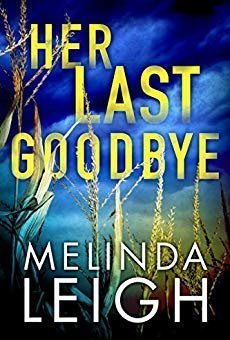

Contains spoilers, click to show
As with any mystery, it is amazing to have that suspense with a tad bit of danger. After all, the excitement is in the wondering who did what and what may have caused an event to happen. However, Her Last Goodbye is more than just that. It allows the reader to see into some of the worries and dangers it is to be a parent, how romance can lead to vulnerable states of mind (which we all know can lead to some acts of intimacy), as well as how some people have some complicated views on how a relationship should work. It was even more shocking and terrifyingly real than the first book in the Morgan Dane series. I found myself ridden with anxiety, fear, and concern through out the book. Having so many difficult situations to have to sort through and ideas, I found this book hard to put down, even when it got too intense to keep reading at the moment.
First of all, Morgan having three children is always nice to see. With her concern about her children's livelihood always about her, it wasn't hard for her to connect with the missing woman, Chelsea, who was a mother of 2 small children, and how she wasn't likely to leave her children that she adored so much. It was, however, rough for her to try to come up with clues and facts to prove that the woman just didn't run away from her family. To see Morgan struggle through that idea and then to end up having her own children threatened on multiple occasions by a variety of men, only made things worse. I found those parts exceptionally hard to read. Having a child myself, I don't think I would have been as rational or as brave as she was. Just the thought of the things she went through and the ideas of a mother just abandoning her children, has me shaken. Even though, as stated in the book, mothers sometimes do strange things like that, it still isn't easy to process or understand. Then to watch a mother go into Mama Bear mode to protect her own, kept my own mind whirling. I like to think I would do anything to protect my daughter, but my own problem with conflict would have been enough to make sure I got out of whatever situation that would put me in that rough spot. It had fuel Morgan even more though. She pushed harder to find and get rid of the person behind her own children's danger. This only makes her even more loveable. It is actually inspiring to have such a strong woman character, who would do anything to protect her loved ones. I can't help but feel more drawn to her in this book, and I feel that my admiration and love for her will grow in the future. Even so, I still found a lot of other disturbing things within the story.
We all know that there are people out there who believe women should be completely submissive to men, but it was still really hard to read and stomach a character who had this belief. To kidnap, condition, and even train another person seems extremely harsh, yet a they existed. I found it harder to read how they would torture another human being to break their mind and their spirit, just to train a woman to think and be something they weren't. Especially when said person was supposedly in love with their prey. I did find it inspiring on how, even being tortured, a woman can overcome it and try to escape and get back to her family. In fact, the thought of her family propelled her and kept her trying to get back home. It really made me happy to see that family was her motivation. Though, it was rough to get through, it made me wonder how many women could go through what she had and still find the courage and strength to keep trying to figure out a way to escape and get home. Even though, it was clear she was traumatized, it was clear she was more concerned with getting home to her children than how she could be caught and tortured and punished for trying. I found this to be a pleasant idea to have about someone who was captured. After all, wouldn't you end up within just a few days of being hurt over and over, give up and just conform to whoever was trying to condition you was ways? I probably would have. But this woman character definitely shed some light how nothing else mattered where your family is concern.
I found how strong feelings for someone and their family can really change how you view things to be a nice delight. I hadn't expected Lance to end up falling for Morgan's children the way he did to happen. It had been hinted that he loved and wanted a relationship with Morgan, but to see him fall in love with her girls and want to protect them as much as Morgan did, was really a pleasant sight. I know there are men out there like that, but its still rare and to see how his love for Morgan ends up extending to her children was just the right about of sentiment and love the book need to keeps things from going overboard. I enjoyed how he tried his best to make sure her girls were safe and even let them into his house to keep them protected, to be exhilarating and touching. It is always nice to have some wholesome love and concern to help break up some of the tension in a storyline and Leigh's way of adding this to Lance's character was a nice call. It helped keep the danger presented while showing a parental side to Lance and offering up how your friends and potential lover's can easily adore your children as much as you do.
Overall, I would rate Melinda Leigh's Her Last Goodbye 5 stars out of 5 stars for how well written and emotional filled the book was. It could stand alone as it gives refreshers on what happened in the last book, as well as had its own storyline. Though, the character developments increased and they continued to grow through out the story, the reader wouldn't feel like they missed a whole lot by reading this book first. I have to say that has to be something that is delightful. After all, wouldn't is just bite if you had to read the first book to even think about picking up the second. Sometimes you don't always realize what you are grabbing and having a series that has books that could stand alone if they needed to, makes it so much easier to start by whatever book you happen to pick up first. I definitely recommend this book to all our thrill seekers. Its not for the faint of heart, but is still extremely excellent to read.
First of all, Morgan having three children is always nice to see. With her concern about her children's livelihood always about her, it wasn't hard for her to connect with the missing woman, Chelsea, who was a mother of 2 small children, and how she wasn't likely to leave her children that she adored so much. It was, however, rough for her to try to come up with clues and facts to prove that the woman just didn't run away from her family. To see Morgan struggle through that idea and then to end up having her own children threatened on multiple occasions by a variety of men, only made things worse. I found those parts exceptionally hard to read. Having a child myself, I don't think I would have been as rational or as brave as she was. Just the thought of the things she went through and the ideas of a mother just abandoning her children, has me shaken. Even though, as stated in the book, mothers sometimes do strange things like that, it still isn't easy to process or understand. Then to watch a mother go into Mama Bear mode to protect her own, kept my own mind whirling. I like to think I would do anything to protect my daughter, but my own problem with conflict would have been enough to make sure I got out of whatever situation that would put me in that rough spot. It had fuel Morgan even more though. She pushed harder to find and get rid of the person behind her own children's danger. This only makes her even more loveable. It is actually inspiring to have such a strong woman character, who would do anything to protect her loved ones. I can't help but feel more drawn to her in this book, and I feel that my admiration and love for her will grow in the future. Even so, I still found a lot of other disturbing things within the story.
We all know that there are people out there who believe women should be completely submissive to men, but it was still really hard to read and stomach a character who had this belief. To kidnap, condition, and even train another person seems extremely harsh, yet a they existed. I found it harder to read how they would torture another human being to break their mind and their spirit, just to train a woman to think and be something they weren't. Especially when said person was supposedly in love with their prey. I did find it inspiring on how, even being tortured, a woman can overcome it and try to escape and get back to her family. In fact, the thought of her family propelled her and kept her trying to get back home. It really made me happy to see that family was her motivation. Though, it was rough to get through, it made me wonder how many women could go through what she had and still find the courage and strength to keep trying to figure out a way to escape and get home. Even though, it was clear she was traumatized, it was clear she was more concerned with getting home to her children than how she could be caught and tortured and punished for trying. I found this to be a pleasant idea to have about someone who was captured. After all, wouldn't you end up within just a few days of being hurt over and over, give up and just conform to whoever was trying to condition you was ways? I probably would have. But this woman character definitely shed some light how nothing else mattered where your family is concern.
I found how strong feelings for someone and their family can really change how you view things to be a nice delight. I hadn't expected Lance to end up falling for Morgan's children the way he did to happen. It had been hinted that he loved and wanted a relationship with Morgan, but to see him fall in love with her girls and want to protect them as much as Morgan did, was really a pleasant sight. I know there are men out there like that, but its still rare and to see how his love for Morgan ends up extending to her children was just the right about of sentiment and love the book need to keeps things from going overboard. I enjoyed how he tried his best to make sure her girls were safe and even let them into his house to keep them protected, to be exhilarating and touching. It is always nice to have some wholesome love and concern to help break up some of the tension in a storyline and Leigh's way of adding this to Lance's character was a nice call. It helped keep the danger presented while showing a parental side to Lance and offering up how your friends and potential lover's can easily adore your children as much as you do.
Overall, I would rate Melinda Leigh's Her Last Goodbye 5 stars out of 5 stars for how well written and emotional filled the book was. It could stand alone as it gives refreshers on what happened in the last book, as well as had its own storyline. Though, the character developments increased and they continued to grow through out the story, the reader wouldn't feel like they missed a whole lot by reading this book first. I have to say that has to be something that is delightful. After all, wouldn't is just bite if you had to read the first book to even think about picking up the second. Sometimes you don't always realize what you are grabbing and having a series that has books that could stand alone if they needed to, makes it so much easier to start by whatever book you happen to pick up first. I definitely recommend this book to all our thrill seekers. Its not for the faint of heart, but is still extremely excellent to read.

Dana (24 KP) rated Vanishing Girls in Books
Mar 23, 2018

I am not sure why I keep being surprised at how good books are, especially since I have read some of these authors before! This book is no different. I was thinking this book would be just okay, nothing too memorable, but I was so wrong! Oh, and I got to meet Lauren Oliver at Yallwest 2015! She was so sweet and signed my book!!
This book is interesting in its set up. It is told in a "Before and After" story line by two characters: Dara and Nick. There are also some photographs and some blog post type pages which were really interesting.
So I am going to try to write whenever there is a large spoiler, but there may be some minor plot points written throughout. So look out for SPOILERS in the review if you want to skip those.
Okay, so I'm going to start off with talking about the three main characters: Dara, Nick, and Parker.
Nick is the main character of this book and, honestly, she was very interesting. She seems quite detached throughout a good part of the book, specifically the first half. I did not like either of the sisters at first, if I am being completely honest. But then I grew to partially understand both of them separately. Nick is emotionally distant because, as seen in the beginning of the book, she sees herself as needing to be the responsible one out of the two sisters. Where Dara is wildness and spontaneity, Nick is the reserved older sister who has to keep her sister in line. Nick, however, is not all she seems. It is known that there was a bad car accident that happened before the book started, but none of the details were really disclosed. Neither person involved really wanted to talk about it. SPOILERS ARE IN THE REST OF THIS PARAGRAPH!! I wasn't a fan of how Nick treated both Dara and Parker. For Dara, it can easily be understood why she wouldn't want to talk to Nick. I would be pretty upset if that was my situation as well, but Nick seemed like she was just being petty. With Parker, she was unfair. Yes, they had been best friends and then he started dating her sister, but they were still best friends. She could have at least tried to talk to him about her feelings, but no. She didn't.
Dara was a very complex character. It seemed as if she would rebel just to do it and to see if she could get a rise out of her sister and/or her parents. She is wild and reckless because she needs to try to distance herself from her sister's shadow. I totally understand that (even if I would not take that path myself). I think her story arc was very interesting, to say the least. I will go more into the plot points a bit later, though.
Parker was just a guy who was caught in a tough situation. Yes, he was dumb in putting himself in that situation, but he seemed like a pretty good guy all in all. I enjoyed his story line because he grounded the other characters in the real world.
Okay, now onto the plot. THERE WILL BE SPOILERS IN THE REST OF THE REVIEW EXCEPT FOR THE LAST PARAGRAPH. IF YOU DO NOT WANT TO BE SPOILED, SKIP DOWN FOR MY FINAL THOUGHTS ON THE BOOK.
Okay, so the plot. Oh my goodness, that was a good story. I really liked the complexity and all of the little connections throughout the two time lines.
Let's start with the "before." We get to see a lot of how Nick and Dara's relationship had disintegrated the closer to the accident we get. I loved getting it intermittent between the "after" sections because sometimes it made the previous chapter more clear, but a lot of the time, it convoluted it just enough to keep me intrigued. Each moment up to the accident felt like it had more tension because you, as the reader, knew what was coming, but not necessarily when or how. I do wish, however, we got more of the accident itself. That would have been pretty cool.
Now onto the "after." Wow. If you want a really complex story line that you won't see coming, read this book. That freaking plot twist was not something I called, and I am normally really good at calling them! I think I was too preoccupied trying to figure out what happened in the accident to see all of the signs (and there were a lot of them) of the truth of what happened. I loved how Lauren Oliver was able to explore mental health issues that we don't normally get to see in a young adult novel. The post-traumatic stress is usually shown as being withdrawn, not all of the other symptoms that may be possible in the human mind. I don't even necessarily want to touch on the FanLand plot line because it's pretty self explanatory. I did like how those were bright moments in the otherwise very dark story. I could go on and on about this section, but I'll keep it short. If you want to talk to me more about my thoughts on it, then feel free to message me about it!
Madeline Snow's story line was really cool. Not what happened to her, of course, that was super messed up, but the unraveling of what happened was crazy! Oh, and the disappearance actually happened on my birthday. Super random fact, but hey, at least it's interesting? Okay, lets start with the fact that there was a semi-sex trafficking ring going on and that wasn't even the highlight of the book. You know it is an intense book when that happens. I thought it was really interesting that Nick's mom was so enraptured with the case, because instead of noticing her daughter's struggles, she is focused on a stranger. I do like how it ended, us learning about the truth of the accident while learning about the truth of Madeline's disappearance because they were very interconnected! I am very thankful of how it truly ended happily rather than a very horrible possibility.
Overall, I was highly impressed by this book. As I said, this has become one of my favorite books of the year! If you enjoy thriller, suspense, or mystery books, definitely check this one out!
This book is interesting in its set up. It is told in a "Before and After" story line by two characters: Dara and Nick. There are also some photographs and some blog post type pages which were really interesting.
So I am going to try to write whenever there is a large spoiler, but there may be some minor plot points written throughout. So look out for SPOILERS in the review if you want to skip those.
Okay, so I'm going to start off with talking about the three main characters: Dara, Nick, and Parker.
Nick is the main character of this book and, honestly, she was very interesting. She seems quite detached throughout a good part of the book, specifically the first half. I did not like either of the sisters at first, if I am being completely honest. But then I grew to partially understand both of them separately. Nick is emotionally distant because, as seen in the beginning of the book, she sees herself as needing to be the responsible one out of the two sisters. Where Dara is wildness and spontaneity, Nick is the reserved older sister who has to keep her sister in line. Nick, however, is not all she seems. It is known that there was a bad car accident that happened before the book started, but none of the details were really disclosed. Neither person involved really wanted to talk about it. SPOILERS ARE IN THE REST OF THIS PARAGRAPH!! I wasn't a fan of how Nick treated both Dara and Parker. For Dara, it can easily be understood why she wouldn't want to talk to Nick. I would be pretty upset if that was my situation as well, but Nick seemed like she was just being petty. With Parker, she was unfair. Yes, they had been best friends and then he started dating her sister, but they were still best friends. She could have at least tried to talk to him about her feelings, but no. She didn't.
Dara was a very complex character. It seemed as if she would rebel just to do it and to see if she could get a rise out of her sister and/or her parents. She is wild and reckless because she needs to try to distance herself from her sister's shadow. I totally understand that (even if I would not take that path myself). I think her story arc was very interesting, to say the least. I will go more into the plot points a bit later, though.
Parker was just a guy who was caught in a tough situation. Yes, he was dumb in putting himself in that situation, but he seemed like a pretty good guy all in all. I enjoyed his story line because he grounded the other characters in the real world.
Okay, now onto the plot. THERE WILL BE SPOILERS IN THE REST OF THE REVIEW EXCEPT FOR THE LAST PARAGRAPH. IF YOU DO NOT WANT TO BE SPOILED, SKIP DOWN FOR MY FINAL THOUGHTS ON THE BOOK.
Okay, so the plot. Oh my goodness, that was a good story. I really liked the complexity and all of the little connections throughout the two time lines.
Let's start with the "before." We get to see a lot of how Nick and Dara's relationship had disintegrated the closer to the accident we get. I loved getting it intermittent between the "after" sections because sometimes it made the previous chapter more clear, but a lot of the time, it convoluted it just enough to keep me intrigued. Each moment up to the accident felt like it had more tension because you, as the reader, knew what was coming, but not necessarily when or how. I do wish, however, we got more of the accident itself. That would have been pretty cool.
Now onto the "after." Wow. If you want a really complex story line that you won't see coming, read this book. That freaking plot twist was not something I called, and I am normally really good at calling them! I think I was too preoccupied trying to figure out what happened in the accident to see all of the signs (and there were a lot of them) of the truth of what happened. I loved how Lauren Oliver was able to explore mental health issues that we don't normally get to see in a young adult novel. The post-traumatic stress is usually shown as being withdrawn, not all of the other symptoms that may be possible in the human mind. I don't even necessarily want to touch on the FanLand plot line because it's pretty self explanatory. I did like how those were bright moments in the otherwise very dark story. I could go on and on about this section, but I'll keep it short. If you want to talk to me more about my thoughts on it, then feel free to message me about it!
Madeline Snow's story line was really cool. Not what happened to her, of course, that was super messed up, but the unraveling of what happened was crazy! Oh, and the disappearance actually happened on my birthday. Super random fact, but hey, at least it's interesting? Okay, lets start with the fact that there was a semi-sex trafficking ring going on and that wasn't even the highlight of the book. You know it is an intense book when that happens. I thought it was really interesting that Nick's mom was so enraptured with the case, because instead of noticing her daughter's struggles, she is focused on a stranger. I do like how it ended, us learning about the truth of the accident while learning about the truth of Madeline's disappearance because they were very interconnected! I am very thankful of how it truly ended happily rather than a very horrible possibility.
Overall, I was highly impressed by this book. As I said, this has become one of my favorite books of the year! If you enjoy thriller, suspense, or mystery books, definitely check this one out!

Jessica - Where the Book Ends (15 KP) rated Take My Hand (Take My Hand, #1) in Books
Jan 30, 2019
This is my first experience with a book by Nicola Haken. The synopsis sounded promising and I have been looking for a new series to read, so I thought I would give this one a go.
This story is of two people trying to start their lives over after terrible events that occurred in each of their lives. They get thrown together and together they learn how to love...again.
The story is primarily set in London, so that's amazing! I'm obsessed with London and all things British, so I was SOOOOO excited for this book. I wanted to fall in LOVE with this book, and these characters, but at best I only fell in LIKE with this book. Sigh.
Dexter and Emily are great characters. They have the tormented past, the rocky relationship, and undying love for one another. Okay so it sounds like this book has everything a book needs. But still... I just couldn't fall in love, and let me tell you why.
1) Dexter is from the U.S.A. so when he moves to London, he clearly doesn't understand all of the lingo and slang that the English use. Which is fine. Emily used a lot of these slang words, "ginger minger" being an example of one, and so the narrator would pause and explain what each one meant. This was very helpful throughout the story. However, this is the part that bothers me. Throughout the story when Dex would have a chapter and be talking sometimes I would get confused and he started to sound like Emily to me. I felt like the two were blending together.
2) There were several times throughout this book I wanted to literally reach into my kindle and slap Emily. I understand she's never really been in a relationship before, and I understand she's socially awkward, but my god! It's like this girl is from another planet and she doesn't understand human interactions, AT ALL! She blushes at everything - even when it's not sexual, she doesn't know how to talk to people, and she doesn't know how to be in a relationship. If the guy is a alcoholic and throws stuff at the wall, and runs out on you every time he's scared. You drop him and run. It just didn't seem realistic at all.
He drank and ran out on her when she was in a strange country with a strange woman she'd never met, and he was just like, peace out. Then she had the nerve to feel sorry. He kept secrets from her and she had the nerve to scold herself for feeling that way. It just didn't feel real to me. I felt like she gave in to him too easily. Now, before you all comment like crazy about how I don't understand alcoholics and how I don't know how they operate and how I don't understand addiction, let me just tell you this... You're wrong. I understand, and I understand better than some. I was a teenage alcoholic. It ruined my life and it took me YEARS to get it back together. SO I GET IT.
3) Now that all that's out of the way on to the next. I didn't like that Emily was so clearly afraid to say SEX or PENIS, or VAGINA. If you can't say it or talk about it, you shouldn't be doing it. She really needed to grow up. I understand that some people just don't feel comfortable talking about it, but at some point you need to draw a line. Emily was just a little too chaste for my preference and I think the description of the sex scenes from Emily's perspective were out of place for this very reason. The chapters where she was the narrator, she shouldn't have been comfortable describing what was going down. I feel like the scene should have been set up and then a fade to black would have been more appropriate.
4) Lastly, Rachel... UHHHH MOST ANNOYING CHARACTER EVER!! At first I thought she was badass! Here you have this girl who has lived her life in a wheelchair and has had to compensate for it by being independent, coloring her hair funky colors, and getting tattoos. Awesome! Right... WRONG. She then opened her mouth. OMG! She's not independent and trying to stand out, she's just down right offensive, and she didn't seem to fit at all in this story.
I know by now you're probably thinking "Why did you give this book three stars if you clearly hated it." Right? Well, I didn't hate it, at all. I liked it, it evoked emotion, it made me think and it made me feel. Those things are SOOO important when writing a book. This author has some definite promise, and I know there are a couple more books in this series. I will probably read them since this book ended on a cliffhanger (which was awesome, btw). I want to know what happens to these characters, and I'm hoping they both grow up a bit in the upcoming books.
My one last thing I'd like to point out is the editing. Now, I don't know if I got a pre-edited copy or if I got the final draft. So, I'm not considering the editing in my rating, because I can't be certain. I do feel that this book needs some serious proofreading, but again it may not be that way in a purchased copy so again don't hold that minor detail against the author, because no one is perfect.
I will definitely read other books by this author. She has a great writing style, her story flows very nicely, there aren't any dull moments, and her story is one that tears at the heartstrings. I in no way mean this review to sound as if I'm attacking her, when in fact its the complete opposite. I commend her for writing this book, and I think she did it well. Plus, the most important thing EVER, her writing made me think and feel which is what good writing should do. So, I implore you to give this book a chance don't let my feelings and observations deter you from reading a book with great potential that you may absolutely love!
This story is of two people trying to start their lives over after terrible events that occurred in each of their lives. They get thrown together and together they learn how to love...again.
The story is primarily set in London, so that's amazing! I'm obsessed with London and all things British, so I was SOOOOO excited for this book. I wanted to fall in LOVE with this book, and these characters, but at best I only fell in LIKE with this book. Sigh.
Dexter and Emily are great characters. They have the tormented past, the rocky relationship, and undying love for one another. Okay so it sounds like this book has everything a book needs. But still... I just couldn't fall in love, and let me tell you why.
1) Dexter is from the U.S.A. so when he moves to London, he clearly doesn't understand all of the lingo and slang that the English use. Which is fine. Emily used a lot of these slang words, "ginger minger" being an example of one, and so the narrator would pause and explain what each one meant. This was very helpful throughout the story. However, this is the part that bothers me. Throughout the story when Dex would have a chapter and be talking sometimes I would get confused and he started to sound like Emily to me. I felt like the two were blending together.
2) There were several times throughout this book I wanted to literally reach into my kindle and slap Emily. I understand she's never really been in a relationship before, and I understand she's socially awkward, but my god! It's like this girl is from another planet and she doesn't understand human interactions, AT ALL! She blushes at everything - even when it's not sexual, she doesn't know how to talk to people, and she doesn't know how to be in a relationship. If the guy is a alcoholic and throws stuff at the wall, and runs out on you every time he's scared. You drop him and run. It just didn't seem realistic at all.
He drank and ran out on her when she was in a strange country with a strange woman she'd never met, and he was just like, peace out. Then she had the nerve to feel sorry. He kept secrets from her and she had the nerve to scold herself for feeling that way. It just didn't feel real to me. I felt like she gave in to him too easily. Now, before you all comment like crazy about how I don't understand alcoholics and how I don't know how they operate and how I don't understand addiction, let me just tell you this... You're wrong. I understand, and I understand better than some. I was a teenage alcoholic. It ruined my life and it took me YEARS to get it back together. SO I GET IT.
3) Now that all that's out of the way on to the next. I didn't like that Emily was so clearly afraid to say SEX or PENIS, or VAGINA. If you can't say it or talk about it, you shouldn't be doing it. She really needed to grow up. I understand that some people just don't feel comfortable talking about it, but at some point you need to draw a line. Emily was just a little too chaste for my preference and I think the description of the sex scenes from Emily's perspective were out of place for this very reason. The chapters where she was the narrator, she shouldn't have been comfortable describing what was going down. I feel like the scene should have been set up and then a fade to black would have been more appropriate.
4) Lastly, Rachel... UHHHH MOST ANNOYING CHARACTER EVER!! At first I thought she was badass! Here you have this girl who has lived her life in a wheelchair and has had to compensate for it by being independent, coloring her hair funky colors, and getting tattoos. Awesome! Right... WRONG. She then opened her mouth. OMG! She's not independent and trying to stand out, she's just down right offensive, and she didn't seem to fit at all in this story.
I know by now you're probably thinking "Why did you give this book three stars if you clearly hated it." Right? Well, I didn't hate it, at all. I liked it, it evoked emotion, it made me think and it made me feel. Those things are SOOO important when writing a book. This author has some definite promise, and I know there are a couple more books in this series. I will probably read them since this book ended on a cliffhanger (which was awesome, btw). I want to know what happens to these characters, and I'm hoping they both grow up a bit in the upcoming books.
My one last thing I'd like to point out is the editing. Now, I don't know if I got a pre-edited copy or if I got the final draft. So, I'm not considering the editing in my rating, because I can't be certain. I do feel that this book needs some serious proofreading, but again it may not be that way in a purchased copy so again don't hold that minor detail against the author, because no one is perfect.
I will definitely read other books by this author. She has a great writing style, her story flows very nicely, there aren't any dull moments, and her story is one that tears at the heartstrings. I in no way mean this review to sound as if I'm attacking her, when in fact its the complete opposite. I commend her for writing this book, and I think she did it well. Plus, the most important thing EVER, her writing made me think and feel which is what good writing should do. So, I implore you to give this book a chance don't let my feelings and observations deter you from reading a book with great potential that you may absolutely love!

Becs (244 KP) rated Monster Catchers in Books
Jul 6, 2019
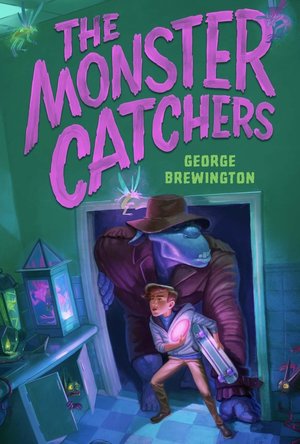
Captivating middle grade novel!
You can also find this review on my blog: bookingwayreads.wordpress.com
Thank you to Smith Publicity and the author, George Brewington, for allowing me the wonderful opportunity to be a part of the Monster Catchers blog tour and for sending me a copy to read and review.
TRIGGER WARNINGS: death, kidnapping
"We can't always think of ourselves. There are so many creatures in the world that need love."
Main Characters:
Bailey Buckleby - the main character and co-owner of Buckleby and Sons. He's a monster catcher like his father, but questions how his father goes about the business. Very compassionate and has a good Frisbee throwing arm.
Dougie Buckleby - Bailey's father and the owner of Buckleby and Sons. He has taught Bailey everything he knows about being a monster catcher. A bit selfish by not really listening to Bailey, even though he always ends up being right.
Savannah - schoolmate of Bailey's turned friend. A part of the Bullhead Brigade, which Nikos is also a part of.
Henry - baby Swiss troll that is taken in by Dougie. But is he?
Candycane Boom - a loan shark that ends up teaming up with Axel Pazuzu. Later become an alley to Bailey, Savannah, and Nikos.
Nikos - a Minotaur that is hired to take down Bailey and his father but after being beaten, he joins forces.
Axel Pazuzu - a cynocephaly (part human, part dog that is a god). Known for scamming people worse than Candycane Boom. Ends up causing a lot of problems for Bailey, Savannah, and Dougie.
"Sometimes passion makes one do really, really stupid things. You mustn't beat yourself up about it."
Review:
**Possible spoilers ahead**
Monster Catchers is a middle grade novel about friendship, adventure, sacrifices, saving the ones you love, with a hint of romance and drama. It starts with Bailey sitting at the register in the family shop, rereading In the Shadows of Monsters by his favorite monster catcher. Some teenage boys come in looking for trouble, but Bailey scares them off by showing them the monitor that shows the back room. This very back room is where the real business of Buckleby and Sons take place: monster catching.
Soon after the group of teenage boys leave, a customer comes in needing to have a 'pest' taken care of. Once the Buckleby's are hired, Candycane Boom comes in looking for another fairy friend for his current fairy. He picks on out while Bailey walks Henry on Whalefat Beach. This is where the two meet Axel Pazuzu a cynocephaly, which is a half human, half dog god creature. Axel tries buying Henry from Bailey, but he refuses because he doesn't want to loose this best friend. Bailey quickly heads home with Henry before Axel tries stealing Henry away.
That night, Dougie and Bailey head out to the customer's home to catch the little rascal that has been stealing all of the lights. Well, things don't go according to plane and instead of catching just one little goblin, they catch two and encounter about ten others. This doesn't turn out for Dougie as one of the goblins bites his finger off!
After they returned home, Bailey fell asleep. The next morning, he headed to school to give the report that was due but that he wasn't ready for. So he improvised and told about one of the real stories from In the Shadow of Monsters. Now, the thing with people within Monster Catchers, is that they don't believe that the monsters are real. They are in a constant denial, even when they've seen the monsters themselves. This sparks some major debate in Bailey's class.
Savannah ends up following Bailey back to the store where she is introduced to all the monsters in the back room and even eventually meets Axel Pazuzu when they head to the beach to walk Henry. Axel hires Candycane to get Henry from the Buckleby's. Well, this causes a bunch of different action packed scenes that will leave you turning the pages until the ending.
When you think monsters, you don't think of a father-son duo saving California. But that's just what Dougie and Bailey Buckleby do. For the right price, they will capture anything from goblins and trolls to harpies and fairies. If it's a monster of any sort, the Buckleby's are the one's to call. But, Bailey soon finds out that his father has been lying to him all of his life and it must be he who saves the people of the world. Monster Catcher is a fast-paced, action-packed adventure that will capture young hearts everywhere.
Character/ Story background and development -
I was generally surprised at how much development was within this little novel. Especially for it being book one in a series and a debut! Bailey's and his fathers development were some of the best. The two go from best buds to Bailey questioning everything about him to having to sacrifice him for the sake of the world. It just blew me away the relationship that the duo had as they were massively different, but brought very similar aspects to the relationship.
Plot -
George Brewington weaves lessons of friendship, morals, and action into this fantasy filled debut. Bailey's interest in monsters is heartwarming, especially when he finds out that monsters have feelings and all aren't bad like they are perceived to be.
Spelling/ Grammatical errors -
I honestly didn't seem to find any spelling or grammatical errors that popped out or took away from the overall story. Monster Catchers is a very well-written novel.
Enjoyment -
I really enjoyed going on an adventure with Bailey and all the lovable monsters. I will most defiantly be rereading this. One thing I rather enjoyed, that I have to point out, is how George Brewington mixed extremely important world issues like: environmental issues, understanding differences, and sacrifices along with adding that fantasy aspect that is common among middle-grade novels.
Overall -
With the interwoven lessons and morals, the fun and quirky lines, the cliff hangers, discovering oneself, understanding differences, Monster Catchers encourages the reader to think beyond the words that are written.
Do I recommend? -
Yes! I highly recommend The Monster Catchers by George Brewington. It was such a cute little novel and I need more!!
"We either try or die, Bailey Boy."
Thank you to Smith Publicity and the author, George Brewington, for allowing me the wonderful opportunity to be a part of the Monster Catchers blog tour and for sending me a copy to read and review.
TRIGGER WARNINGS: death, kidnapping
"We can't always think of ourselves. There are so many creatures in the world that need love."
Main Characters:
Bailey Buckleby - the main character and co-owner of Buckleby and Sons. He's a monster catcher like his father, but questions how his father goes about the business. Very compassionate and has a good Frisbee throwing arm.
Dougie Buckleby - Bailey's father and the owner of Buckleby and Sons. He has taught Bailey everything he knows about being a monster catcher. A bit selfish by not really listening to Bailey, even though he always ends up being right.
Savannah - schoolmate of Bailey's turned friend. A part of the Bullhead Brigade, which Nikos is also a part of.
Henry - baby Swiss troll that is taken in by Dougie. But is he?
Candycane Boom - a loan shark that ends up teaming up with Axel Pazuzu. Later become an alley to Bailey, Savannah, and Nikos.
Nikos - a Minotaur that is hired to take down Bailey and his father but after being beaten, he joins forces.
Axel Pazuzu - a cynocephaly (part human, part dog that is a god). Known for scamming people worse than Candycane Boom. Ends up causing a lot of problems for Bailey, Savannah, and Dougie.
"Sometimes passion makes one do really, really stupid things. You mustn't beat yourself up about it."
Review:
**Possible spoilers ahead**
Monster Catchers is a middle grade novel about friendship, adventure, sacrifices, saving the ones you love, with a hint of romance and drama. It starts with Bailey sitting at the register in the family shop, rereading In the Shadows of Monsters by his favorite monster catcher. Some teenage boys come in looking for trouble, but Bailey scares them off by showing them the monitor that shows the back room. This very back room is where the real business of Buckleby and Sons take place: monster catching.
Soon after the group of teenage boys leave, a customer comes in needing to have a 'pest' taken care of. Once the Buckleby's are hired, Candycane Boom comes in looking for another fairy friend for his current fairy. He picks on out while Bailey walks Henry on Whalefat Beach. This is where the two meet Axel Pazuzu a cynocephaly, which is a half human, half dog god creature. Axel tries buying Henry from Bailey, but he refuses because he doesn't want to loose this best friend. Bailey quickly heads home with Henry before Axel tries stealing Henry away.
That night, Dougie and Bailey head out to the customer's home to catch the little rascal that has been stealing all of the lights. Well, things don't go according to plane and instead of catching just one little goblin, they catch two and encounter about ten others. This doesn't turn out for Dougie as one of the goblins bites his finger off!
After they returned home, Bailey fell asleep. The next morning, he headed to school to give the report that was due but that he wasn't ready for. So he improvised and told about one of the real stories from In the Shadow of Monsters. Now, the thing with people within Monster Catchers, is that they don't believe that the monsters are real. They are in a constant denial, even when they've seen the monsters themselves. This sparks some major debate in Bailey's class.
Savannah ends up following Bailey back to the store where she is introduced to all the monsters in the back room and even eventually meets Axel Pazuzu when they head to the beach to walk Henry. Axel hires Candycane to get Henry from the Buckleby's. Well, this causes a bunch of different action packed scenes that will leave you turning the pages until the ending.
When you think monsters, you don't think of a father-son duo saving California. But that's just what Dougie and Bailey Buckleby do. For the right price, they will capture anything from goblins and trolls to harpies and fairies. If it's a monster of any sort, the Buckleby's are the one's to call. But, Bailey soon finds out that his father has been lying to him all of his life and it must be he who saves the people of the world. Monster Catcher is a fast-paced, action-packed adventure that will capture young hearts everywhere.
Character/ Story background and development -
I was generally surprised at how much development was within this little novel. Especially for it being book one in a series and a debut! Bailey's and his fathers development were some of the best. The two go from best buds to Bailey questioning everything about him to having to sacrifice him for the sake of the world. It just blew me away the relationship that the duo had as they were massively different, but brought very similar aspects to the relationship.
Plot -
George Brewington weaves lessons of friendship, morals, and action into this fantasy filled debut. Bailey's interest in monsters is heartwarming, especially when he finds out that monsters have feelings and all aren't bad like they are perceived to be.
Spelling/ Grammatical errors -
I honestly didn't seem to find any spelling or grammatical errors that popped out or took away from the overall story. Monster Catchers is a very well-written novel.
Enjoyment -
I really enjoyed going on an adventure with Bailey and all the lovable monsters. I will most defiantly be rereading this. One thing I rather enjoyed, that I have to point out, is how George Brewington mixed extremely important world issues like: environmental issues, understanding differences, and sacrifices along with adding that fantasy aspect that is common among middle-grade novels.
Overall -
With the interwoven lessons and morals, the fun and quirky lines, the cliff hangers, discovering oneself, understanding differences, Monster Catchers encourages the reader to think beyond the words that are written.
Do I recommend? -
Yes! I highly recommend The Monster Catchers by George Brewington. It was such a cute little novel and I need more!!
"We either try or die, Bailey Boy."
Ivana A. | Diary of Difference (1171 KP) rated Children of Blood and Bone: Book 1 in Books
Jan 25, 2019
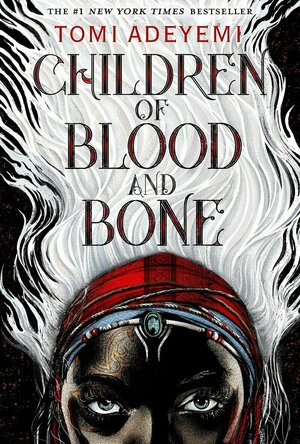
Children of Blood and Bone
‘’In the beginning, Orisha was a land where the rare and sacred maji thrived. Each of the ten clans was gifted by the gods above and given a different power to land.’’
It is not every day that you encounter a book that lets you dive in a world of magic, with such intensity as Children of Blood and Bone. A story so beautifully written, that you forget this is not the real world and you are in a fantasy story. This is one of the books I wish I could keep reading it for the first time again and again.
When majis are born with white hair, it means that they are touched by the Gods. They are called Diviners, and when they celebrate their thirteenth birthday, they have the ability to use magic.
Zelie still remembers how Orisha used to have magic. Different clans existed, and they could all control different things: air, water, earth… But Zelie also remembers the night when everything went wrong. When the king and the army came and killed hundreds of people. Zelie remembers, like it was yesterday, how on that night they brutally killed her mother. The night when magic disappeared forever.
And when Zelie realises that she is one of the very few people that can still use magic, and return magic in Orisha, she goes on a quest with her brother. With the help of a princess that escapes the castle, she has to learn to control her magic powers, and also her feelings for an enemy she mustn’t trust.
‘’I longed for the day I would feel the magic of the dead in my bones, but right now all I can feel is an unnerving tingle in my veins.’’
The world is so well created, and the characters are all loveable and adorable. The magic story in this book is unique and I loved getting to know more about all clans, what they can do, and reading about people realising they have magic in themselves.
Zelie, as a character, is the protagonist, as all adventures are revolved around her, but the other characters are as much as important, if not in some cases, more important than her. She is a character that many of us can relate to. A person that has been denied the sole purpose of existing. A person that has suffered, because of other people’s choices. For Zelie, this was the denial of magic to her and her people, but for others it could be just anything. What I loved the most was the bravery that she showed, even though inside her she would be so scared. It felt as if fear itself made her to be brave. And I have felt that many times. Sometimes, you don’t really have a choice, but to be brave, no matter how scared you might be.
Then, we have Zelie’s brother, Tzain, who is always the more cautious one and tries to (unsuccessfully) keep Zelie out of trouble. He has so much love for Zelie in his heart and is always the one throwing himself out there to protect her. If I ever had a brother, I would wish for him to be Tzain. I couldn’t explain the love and connection they have together with Zelie. It’s so beautiful!
Then there is Amari, the princess that doesn’t agree with her father’s choices, and decides to follow her heart. I think I loved Amari the most out of all characters, as she was my true hero. Raised in a world of ruthless cruelty, and forced to do things she doesn’t want, her father, the king, always believes that she is weak, and incapable of defending herself and ruling a kingdom. And out there, with Zelie and Tzain, is where Amari finds her true self, and the moment she does is the best scene in this whole book, the beauty of a woman being so powerful, only because she was being belittled her whole life.
‘’It’s like seeing her for the first time: the human behind the maji. Fear embedded in the pain. Tragedy caused in Father’s name.’’
And in the end, we have Inan, the most controversial character in this book. The son of the king, and brother of Amari, dedicated to follow his father and rule the kingdom, but struggling between what is right and wrong. When he realises he has magic as well, he can’t confess, as his father kills those who have magic, but meeting Zelie, he is not so sure anymore of what really is happening in his kingdom, and has to make a decision on whose side he wants to be.
‘’The truth cuts like the sharpest knife I’ve ever known.’’
I loved how the story is focused on both worlds:
The world of Zelie and Tzain, where they live in small town with their father, they have to pay incredible amount of diviner tax, and the taxes get more and more expensive, and become impossible to be paid, so people have to go and do free labor for the king, never to be free again. They are faced with such unfairness and cruelty, but their families and the people in the village are sticking together to survive through everything.
And then we have the world of Amari and Inan, and the King. A world where magic is forbidden and all people that can use magic are being slaughtered. A world where being fierceless and cruel means that you are strong enough to lead a kingdom, and protect Orisha.
The only remark I have on this book were the acknowledgements. As much as I respect that story being told, and appreciate it with all my heart, I also really wished I haven’t read that part as it changed the story in the end for me, in a negative way. As I truly believe that every single person has the ability of magic in themselves. Every single person is powerful, and we all should be Diviners! And Inan having the ability himself proves my point on this as well.
A story about the battle of magic and friendships, a story about wins and losses, a world where magic lives in every single one of us. A world where we all belong. A masterpiece, this is. And a powerful one as well.
It is not every day that you encounter a book that lets you dive in a world of magic, with such intensity as Children of Blood and Bone. A story so beautifully written, that you forget this is not the real world and you are in a fantasy story. This is one of the books I wish I could keep reading it for the first time again and again.
When majis are born with white hair, it means that they are touched by the Gods. They are called Diviners, and when they celebrate their thirteenth birthday, they have the ability to use magic.
Zelie still remembers how Orisha used to have magic. Different clans existed, and they could all control different things: air, water, earth… But Zelie also remembers the night when everything went wrong. When the king and the army came and killed hundreds of people. Zelie remembers, like it was yesterday, how on that night they brutally killed her mother. The night when magic disappeared forever.
And when Zelie realises that she is one of the very few people that can still use magic, and return magic in Orisha, she goes on a quest with her brother. With the help of a princess that escapes the castle, she has to learn to control her magic powers, and also her feelings for an enemy she mustn’t trust.
‘’I longed for the day I would feel the magic of the dead in my bones, but right now all I can feel is an unnerving tingle in my veins.’’
The world is so well created, and the characters are all loveable and adorable. The magic story in this book is unique and I loved getting to know more about all clans, what they can do, and reading about people realising they have magic in themselves.
Zelie, as a character, is the protagonist, as all adventures are revolved around her, but the other characters are as much as important, if not in some cases, more important than her. She is a character that many of us can relate to. A person that has been denied the sole purpose of existing. A person that has suffered, because of other people’s choices. For Zelie, this was the denial of magic to her and her people, but for others it could be just anything. What I loved the most was the bravery that she showed, even though inside her she would be so scared. It felt as if fear itself made her to be brave. And I have felt that many times. Sometimes, you don’t really have a choice, but to be brave, no matter how scared you might be.
Then, we have Zelie’s brother, Tzain, who is always the more cautious one and tries to (unsuccessfully) keep Zelie out of trouble. He has so much love for Zelie in his heart and is always the one throwing himself out there to protect her. If I ever had a brother, I would wish for him to be Tzain. I couldn’t explain the love and connection they have together with Zelie. It’s so beautiful!
Then there is Amari, the princess that doesn’t agree with her father’s choices, and decides to follow her heart. I think I loved Amari the most out of all characters, as she was my true hero. Raised in a world of ruthless cruelty, and forced to do things she doesn’t want, her father, the king, always believes that she is weak, and incapable of defending herself and ruling a kingdom. And out there, with Zelie and Tzain, is where Amari finds her true self, and the moment she does is the best scene in this whole book, the beauty of a woman being so powerful, only because she was being belittled her whole life.
‘’It’s like seeing her for the first time: the human behind the maji. Fear embedded in the pain. Tragedy caused in Father’s name.’’
And in the end, we have Inan, the most controversial character in this book. The son of the king, and brother of Amari, dedicated to follow his father and rule the kingdom, but struggling between what is right and wrong. When he realises he has magic as well, he can’t confess, as his father kills those who have magic, but meeting Zelie, he is not so sure anymore of what really is happening in his kingdom, and has to make a decision on whose side he wants to be.
‘’The truth cuts like the sharpest knife I’ve ever known.’’
I loved how the story is focused on both worlds:
The world of Zelie and Tzain, where they live in small town with their father, they have to pay incredible amount of diviner tax, and the taxes get more and more expensive, and become impossible to be paid, so people have to go and do free labor for the king, never to be free again. They are faced with such unfairness and cruelty, but their families and the people in the village are sticking together to survive through everything.
And then we have the world of Amari and Inan, and the King. A world where magic is forbidden and all people that can use magic are being slaughtered. A world where being fierceless and cruel means that you are strong enough to lead a kingdom, and protect Orisha.
The only remark I have on this book were the acknowledgements. As much as I respect that story being told, and appreciate it with all my heart, I also really wished I haven’t read that part as it changed the story in the end for me, in a negative way. As I truly believe that every single person has the ability of magic in themselves. Every single person is powerful, and we all should be Diviners! And Inan having the ability himself proves my point on this as well.
A story about the battle of magic and friendships, a story about wins and losses, a world where magic lives in every single one of us. A world where we all belong. A masterpiece, this is. And a powerful one as well.