
Search
Search results

Kristy H (1252 KP) rated A Means to an End in Books
Sep 13, 2019
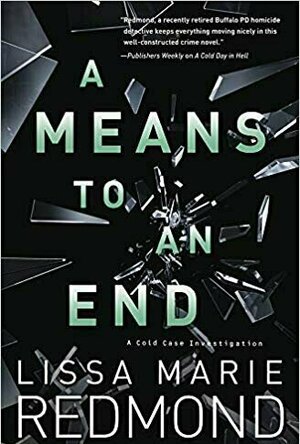
Cold Case Detective Lauren Riley is back on the job after being stabbed in the line of duty. She and her partner, Shane Reese, find themselves investigating a body dumped in the woods in the exact same site as a victim from one of Lauren's previous cases. She quickly recognizes the tie to David Spencer, a clever kid whom Lauren helped get off on a murder charge while she was working as a Private Investigator. Once he was acquitted, Lauren realized he was a cold-blooded psychopath, and she's been haunted by it (and him) ever since. Lauren is put on a Task Force investigating the killing--and the unsolved murders of two cops--but she quickly realizes she may be the only one who can stop David, for once and for all.
I really like the character of Lauren Riley--she's a tough yet vulnerable cop who knows her stuff, and I've been following her since the beginning of this series. This book tied up some things, but left others hanging, and I have to admit, I hope there is a book four out there? I also have to say, to prove my devotion to Lauren, my ARC copy had issues with the "f"s in the book (e.g. Sheriff = Sheri; office = offce; files = les, etc.) and none of the text messages were in there, and I still read it, because I needed to know what was happening to Lauren. A final copy will be fine--just pointing out how much I care about these characters!
We have a small cast here, but do get some new blood, mainly in the form of the task force gents. Two, of course, suspect Lauren for the cop killings that happened in the second novel, but one, Jack Nolan, seems to be a good guy. Poor Lauren, she can't catch a break. I would mention that this book will make more sense if you've read the first two. Redmond explains things, but the backstory is easier to comprehend (and those first two books are good). Still, don't let that scare you away from this one.
These cases are personal for Lauren, and I found some of this book stressful, as I care about her and Reese, and I was worried about them both! If you're less invested, you may not be as concerned. No matter what, it's an interesting book--we think we know our suspect (David), but we're never quite sure, and there's a lot of angst and intrigue in trying to track him down. I always enjoy how the city of Buffalo is almost another character in these books, and it's very clear that Redmond knows her police procedures.
"She'd been waging a one-person war against him, and she was losing. She had to take this further before anyone else got hurt."
Overall, I definitely recommend this one, especially if you've read the earlier books, enjoy a good police procedural, or are on the hunt for a strong female protagonist. Redmond's stories are always interesting and sure to suck you in. 4 stars.
I really like the character of Lauren Riley--she's a tough yet vulnerable cop who knows her stuff, and I've been following her since the beginning of this series. This book tied up some things, but left others hanging, and I have to admit, I hope there is a book four out there? I also have to say, to prove my devotion to Lauren, my ARC copy had issues with the "f"s in the book (e.g. Sheriff = Sheri; office = offce; files = les, etc.) and none of the text messages were in there, and I still read it, because I needed to know what was happening to Lauren. A final copy will be fine--just pointing out how much I care about these characters!
We have a small cast here, but do get some new blood, mainly in the form of the task force gents. Two, of course, suspect Lauren for the cop killings that happened in the second novel, but one, Jack Nolan, seems to be a good guy. Poor Lauren, she can't catch a break. I would mention that this book will make more sense if you've read the first two. Redmond explains things, but the backstory is easier to comprehend (and those first two books are good). Still, don't let that scare you away from this one.
These cases are personal for Lauren, and I found some of this book stressful, as I care about her and Reese, and I was worried about them both! If you're less invested, you may not be as concerned. No matter what, it's an interesting book--we think we know our suspect (David), but we're never quite sure, and there's a lot of angst and intrigue in trying to track him down. I always enjoy how the city of Buffalo is almost another character in these books, and it's very clear that Redmond knows her police procedures.
"She'd been waging a one-person war against him, and she was losing. She had to take this further before anyone else got hurt."
Overall, I definitely recommend this one, especially if you've read the earlier books, enjoy a good police procedural, or are on the hunt for a strong female protagonist. Redmond's stories are always interesting and sure to suck you in. 4 stars.

Debbiereadsbook (1821 KP) rated Restrained Desires (Rehoboth Pact #3) in Books
Apr 9, 2022

Saved the best for last!
Independent reviewer for Archaeolibrarian, I was gifted my copy of this book.
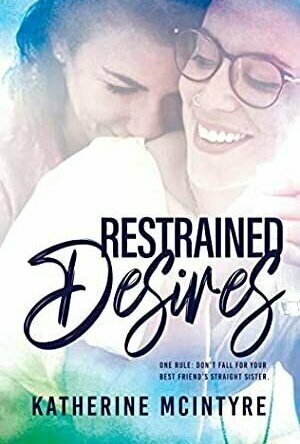
This is the final book in the Rehoboth Pact trilogy. It CAN be read as a stand alone, however I STRONGLY recommend you read the other two books first. It will give you a better picture of Kyle and how, up to now, she has been kind of in the background. Confined got 4 stars, Opposed crept up to 4.5 stars.
But this one? Knocked it out the park, baby, and it gets the full and shiny 5 star rating! Saving the best for last was the right thing to do!
Chelsea is Aubrey's sister (from Opposed) and is newly divorced from her husband. Kyle is, well, at best, plodding along. Her mother (and I use the term very loosely!) pushes Kyle to say she is bringing a date to the family gathering and then panics because she doesn't have one. Chelsea, being all single, steps up to the plate to help Kyle. And there follows a journey of self discovery, and learning to love yourself, and that found families can be so much more than blood families.
Kyle. . .oh! i wanted to wrap her up and give her a big cuddle cos that parental female unit was not a nice person! Wanted to punch the b*tch a time or two! But Chelsea? She really SEES Kyle, and Kyle does struggle a bit with that, at first. Once she and Chelsea take their fake relationship up a notch, Kyle really benefits for having someone in her corner. And Chelsea? She's different to Aubs, but not less a force to be reckoned with. Once she gets her hands on Kyle, there was no going back.
Til someone does something stoopid and then there is a fight to be had.
Aubs nearly got a punch, here, along with that parental unit. She didn't take too well to Chelsea and Kyle getting together and deals with it badly. She DOES redeem herself, giving Chelsea the means to win the fight for Kyle, but still.
It is again, HEAVY on the emotional aspect, but for Kyle dealing with that parental unit b*tch and feelings of inadequacy, and Chelsea, dealing with her divorce, but her father's betrayal cuts deep. He does come out the other side, but faced with losing both his daughters will make anyone turnaround rapidly!
The smexy stuff? Oh! My! Days! steamiest of the three. Mostly because Kyle pushes every single button of Chelsea's and then some. And Chelsea pushes buttons in Kyle she never knew she needed pushing!
Obviously, Aubs and Selina play a part here, but also Mia and Sky, and it was lovely to catch up with them all.
I again commend Ms McIntyre on her writing skills. Switching from MF, to MM and then to FF can't be easy, but McIntyre NAILS it with the final book in this trilogy. Keep 'em coming, please!
As I said . .
5 full and shiny stars!
*same worded review will appear elsewhere
This is the final book in the Rehoboth Pact trilogy. It CAN be read as a stand alone, however I STRONGLY recommend you read the other two books first. It will give you a better picture of Kyle and how, up to now, she has been kind of in the background. Confined got 4 stars, Opposed crept up to 4.5 stars.
But this one? Knocked it out the park, baby, and it gets the full and shiny 5 star rating! Saving the best for last was the right thing to do!
Chelsea is Aubrey's sister (from Opposed) and is newly divorced from her husband. Kyle is, well, at best, plodding along. Her mother (and I use the term very loosely!) pushes Kyle to say she is bringing a date to the family gathering and then panics because she doesn't have one. Chelsea, being all single, steps up to the plate to help Kyle. And there follows a journey of self discovery, and learning to love yourself, and that found families can be so much more than blood families.
Kyle. . .oh! i wanted to wrap her up and give her a big cuddle cos that parental female unit was not a nice person! Wanted to punch the b*tch a time or two! But Chelsea? She really SEES Kyle, and Kyle does struggle a bit with that, at first. Once she and Chelsea take their fake relationship up a notch, Kyle really benefits for having someone in her corner. And Chelsea? She's different to Aubs, but not less a force to be reckoned with. Once she gets her hands on Kyle, there was no going back.
Til someone does something stoopid and then there is a fight to be had.
Aubs nearly got a punch, here, along with that parental unit. She didn't take too well to Chelsea and Kyle getting together and deals with it badly. She DOES redeem herself, giving Chelsea the means to win the fight for Kyle, but still.
It is again, HEAVY on the emotional aspect, but for Kyle dealing with that parental unit b*tch and feelings of inadequacy, and Chelsea, dealing with her divorce, but her father's betrayal cuts deep. He does come out the other side, but faced with losing both his daughters will make anyone turnaround rapidly!
The smexy stuff? Oh! My! Days! steamiest of the three. Mostly because Kyle pushes every single button of Chelsea's and then some. And Chelsea pushes buttons in Kyle she never knew she needed pushing!
Obviously, Aubs and Selina play a part here, but also Mia and Sky, and it was lovely to catch up with them all.
I again commend Ms McIntyre on her writing skills. Switching from MF, to MM and then to FF can't be easy, but McIntyre NAILS it with the final book in this trilogy. Keep 'em coming, please!
As I said . .
5 full and shiny stars!
*same worded review will appear elsewhere

Gareth von Kallenbach (980 KP) rated The little mermaid (2023) in Movies
May 26, 2023


(By my wife Genevieve)I must admit that I may be biased about this movie, being a huge fan of all things Disney. However, the popular and beloved original The Little Mermaid was released in November 1989, about 6 months before I graduated high school. Not really the age to be that interested in an animated movie about a mermaid who trades her voice away to be able to live where the people are. But of course, I still watched it and I, like many, definitely loved the songs. The storyline? Not so much.
When I first heard a live-action version was in the works, my initial response was tepid, "That's nice." Only when I heard a person of color would play Ariel was my curiosity really piqued. As a minority, when many asked, "Why?", I thought, "Why not?" I was very moved when I saw the videos of young Black girls reacting excitedly to the first trailer when they discovered Ariel looked like them, further answering the many still asking "Why?" with "This. This is why."
If you've seen the animated version, then you know the gist of the story - young mermaid Ariel, played beautifully by Halle Bailey, is fascinated by the world above the water and collects all the human thingamabobs that litter the sea floor. She rebels against her father, King Triton, the handsome Javier Bardem, by giving in to her curiosity and ends up rescuing the merchant Prince Eric from drowning when the ship he's sailing is caught in a treacherous storm. Ariel is instantly smitten and Prince Eric, played by the perfectly-cast Jonah Hauer-King, is equally obsessed with the voice he heard as he was revived by Ariel’s siren song.
While obviously geared towards a younger audience, I found much to love about this movie. Jodi Benson’s original version will always be perfection, but Halle Bailey’s emotional rendition of “Part of Your World”, coupled with her luminous and expressive face, was just phenomenal. I had to temper my applause after her performance while a few appreciative “Whooo!” sounded through the audience. Melissa McCarthy’s Ursula and her iconic “Poor Unfortunate Souls” was definitely a highlight. Daveed Diggs as Sebastian (also inspired casting) and Awkwafina as Scuttle need their own spinoff. They’re hilarious together.
Alan Menken’s classic songs from the original were given new life by McCarthy, Bailey, and Diggs, and Lin Manuel Miranda’s signature touch is easily identifiable in the new ballads for Ariel and Prince Eric, and a Hamilton-style rap by Awkwafina and Diggs.
I appreciated the parallel stories with the prince just as curious about the world beyond his island as Ariel is about the world beyond her ocean, both bound by duty to their parents and their people, while yearning to explore the great “out there”. In all my Disney and Pixar movie-watching experiences, it has consistently been Pixar movies that get me emotionally compromised, so I was a bit surprised to find myself reaching for a napkin at the end of this movie, after a scene between Ariel and her dad. I will blame it on the nostalgia.
4 out of 5 stars just for the musical performances alone.
When I first heard a live-action version was in the works, my initial response was tepid, "That's nice." Only when I heard a person of color would play Ariel was my curiosity really piqued. As a minority, when many asked, "Why?", I thought, "Why not?" I was very moved when I saw the videos of young Black girls reacting excitedly to the first trailer when they discovered Ariel looked like them, further answering the many still asking "Why?" with "This. This is why."
If you've seen the animated version, then you know the gist of the story - young mermaid Ariel, played beautifully by Halle Bailey, is fascinated by the world above the water and collects all the human thingamabobs that litter the sea floor. She rebels against her father, King Triton, the handsome Javier Bardem, by giving in to her curiosity and ends up rescuing the merchant Prince Eric from drowning when the ship he's sailing is caught in a treacherous storm. Ariel is instantly smitten and Prince Eric, played by the perfectly-cast Jonah Hauer-King, is equally obsessed with the voice he heard as he was revived by Ariel’s siren song.
While obviously geared towards a younger audience, I found much to love about this movie. Jodi Benson’s original version will always be perfection, but Halle Bailey’s emotional rendition of “Part of Your World”, coupled with her luminous and expressive face, was just phenomenal. I had to temper my applause after her performance while a few appreciative “Whooo!” sounded through the audience. Melissa McCarthy’s Ursula and her iconic “Poor Unfortunate Souls” was definitely a highlight. Daveed Diggs as Sebastian (also inspired casting) and Awkwafina as Scuttle need their own spinoff. They’re hilarious together.
Alan Menken’s classic songs from the original were given new life by McCarthy, Bailey, and Diggs, and Lin Manuel Miranda’s signature touch is easily identifiable in the new ballads for Ariel and Prince Eric, and a Hamilton-style rap by Awkwafina and Diggs.
I appreciated the parallel stories with the prince just as curious about the world beyond his island as Ariel is about the world beyond her ocean, both bound by duty to their parents and their people, while yearning to explore the great “out there”. In all my Disney and Pixar movie-watching experiences, it has consistently been Pixar movies that get me emotionally compromised, so I was a bit surprised to find myself reaching for a napkin at the end of this movie, after a scene between Ariel and her dad. I will blame it on the nostalgia.
4 out of 5 stars just for the musical performances alone.

Purple Phoenix Games (2266 KP) rated Corsairs of Valeria in Tabletop Games
Apr 2, 2021

If you look at my current Top 10 List (at date of publication), you will see that my #1 game is Valeria Card Kingdoms. I just love the lore, mechanics, artwork, and gameplay so much that it easily rose to my #1 spot after just 1 play! So I am definitely a sucker for all things Valeria. Quests of Valeria, Villagers of Valeria – you name it, I’ve got it. So when the latest VCK expansion was on Kickstarter, with the option to add a new little Valeria-verse themed dice game, I knew I was all in. Does Corsairs of Valeria live up to the hype of its predecessors?
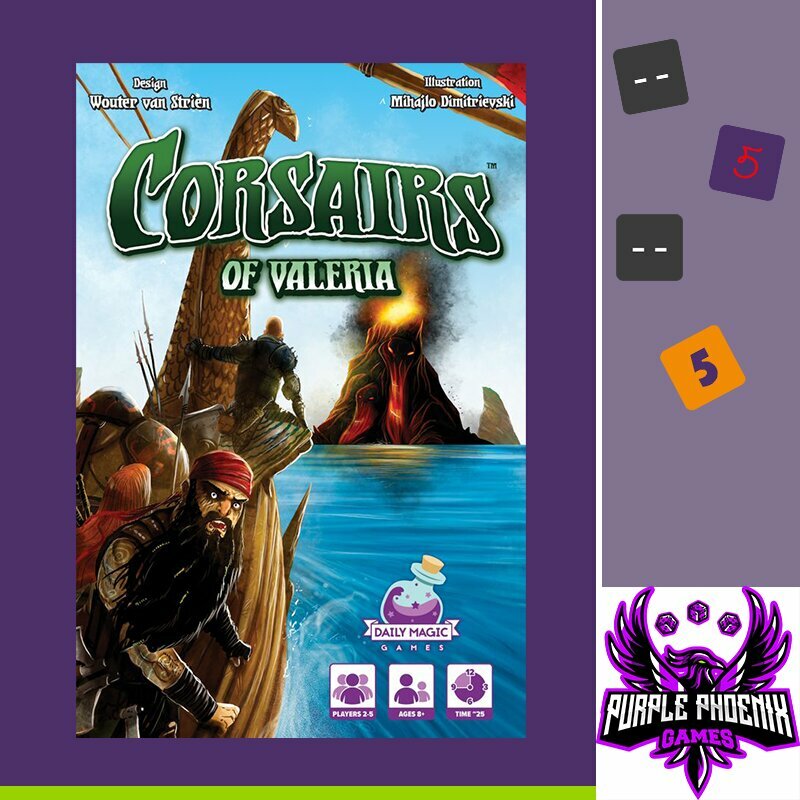
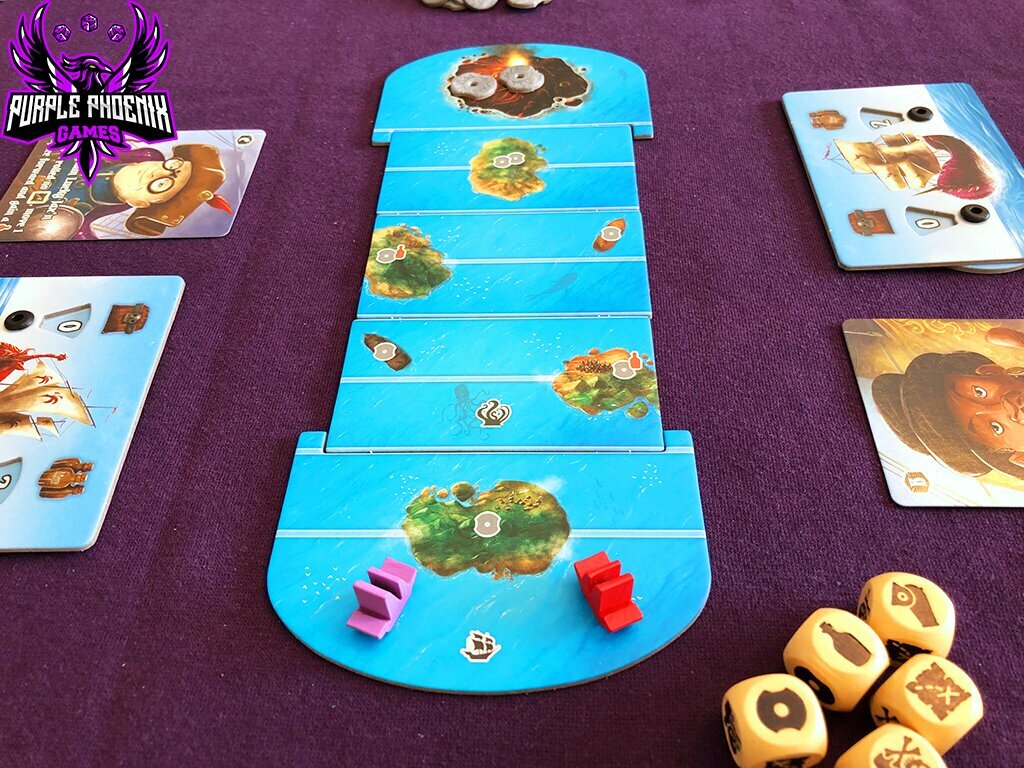
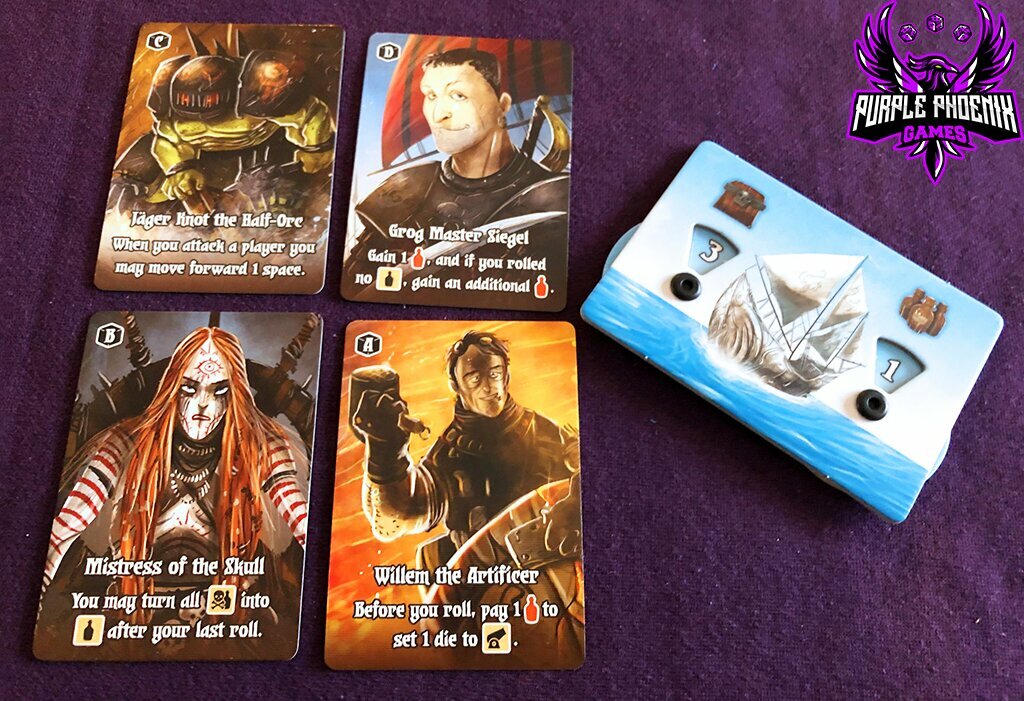
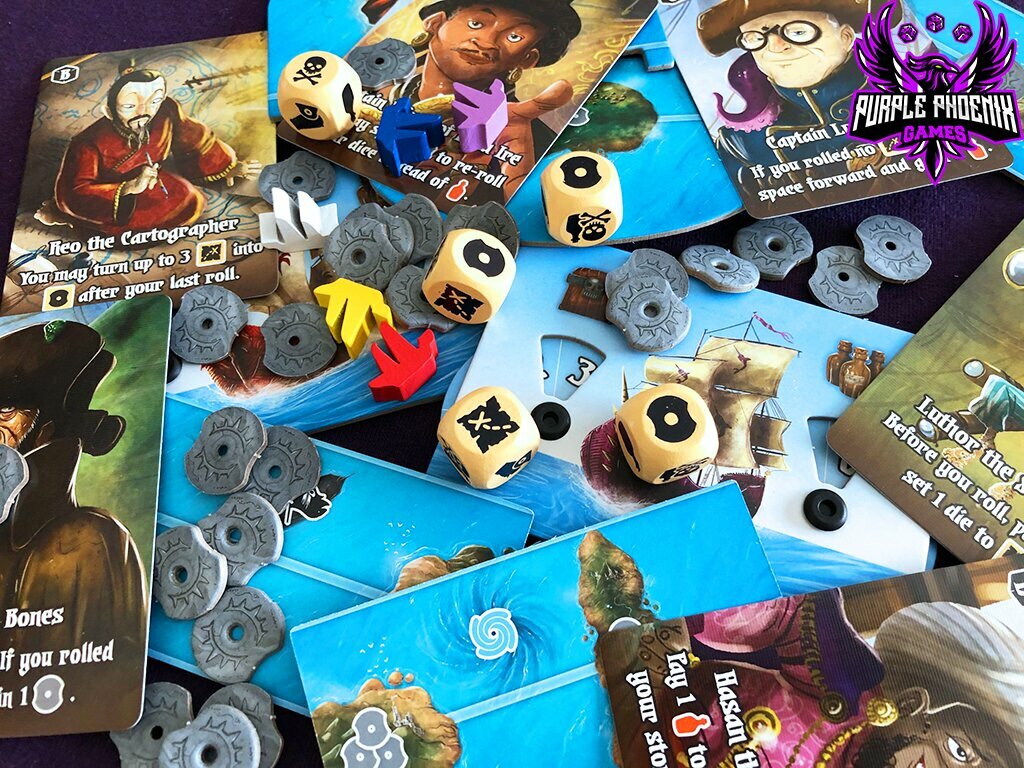
Corsairs of Valeria is a dice rolling game in which players are racing to sail the Valerian islands and collect 6 treasure chests before any of the other pirate captains do. The first person to do so will claim the position of Commodore, and its associated status and power! To setup the game, each player receives a Ship board and ship meeple in their chosen color, 2 silver, and is randomly given a Captain card for the game. Each Captain card gives players a different special power to be used throughout the game. Ship boards have 2 dials to track Treasures and Grog. Set up the Start Island, shuffle and select 3 island Tracks to be placed above the Start, and finally end the lineup with Skull Island. Place 2 silver on Skull Island, and the game is ready to begin!
Each turn has four phases: Roll, Re-roll, Actions, End turn. First, gather all 5 dice and roll them. In the Re-roll phase, players may pay 1 Grog to re-roll any or all of their dice. You may re-roll as many times as you wish per turn, as long as you have Grog to spend. Once you are satisfied with your die rolls, you perform the actions shown on each die. Cursed dice must be executed first – for any dice that have a Skull on them, you must pay 1 silver to Skull Island per skull face shown. After Skulls are resolved, the rest of the die faces may be executed in any order you wish, as long as you resolve all the same symbols at the same time. The Grog symbol allows you to gain 1 Grog, the Silver symbol allows you to gain 1 silver, and the Map symbols allows you to move your ship meeple 1 space on the island track. Certain islands on the track provide additional resources once they are passed, so collect those as applicable. A Cannon symbol allows you to attack – either an opponent or a Merchant ship. To attack an opponent, you must roll at least 3 cannon symbols, and the chosen opponent then must give you all of their silver. To attack a Merchant ship, you must be sharing a space on the track with a Merchant ship, and you collect the resources printed on the ship for the number of cannons you spend to attack. After you have executed all of your dice actions, pass the dice to the next player and your turn is over.
At any point during the game, when you acquire 5 silver, you immediately trade them in for 1 treasure. Treasure is tracked on your ship board. The first player to reach 6 treasures wins the game! If, during the game, a player reaches Skull Island before 6 treasures have been claimed, a few things happen. First, that player receives all of the silver on Skull Island. Next, all ships are moved back to the Start Island, the 3 island Tracks are flipped to their opposite sides, and 2 silver are once again placed on Skull Island. The game continues in turn order, just now with new Tracks in play. If any player reaches Skull Island for a second time during the game, then the game ends once that player finishes their turn. In that case, if 6 treasures still have not been claimed, the player with the most Treasure wins.
I’m just going to start this off by saying that I love Corsairs of Valeria. Just like the other members of the Valeria family, this one checks off all the boxes that I love: great artwork, solid mechanics, and enjoyable immersion in the universe of Valeria. Let’s talk about gameplay first. At its core, Corsairs of Valeria is a dice rolling game, which is a luck-based mechanic. However, this game does provide options to employ strategies through the Captain powers and re-roll phase that give the player a little bit more control over what they can do each turn. Maybe you’re bad at rolling dice, but having the option to pay 1 Grog to re-roll any/all dice can get you out of a bad jam. Or maybe you have a powerful Captain ability that can really dictate your strategy and offer a path to success. It’s not just about the dice rolls, but about what you do to use those rolls to your benefit. So overall that just makes the game feel more engaging and enjoyable to me because I as a player have the ability to strategize each turn, I am not just at the mercy of the dice.
Another thing that I love about Corsairs of Valeria is that it is so simple, quick, and light to play. The rules seem a little involved at first, but ultimately here’s how a turn plays out: roll dice, re-roll if desired, perform actions/collect resources, end turn. The symbology is straight-forward, the turn phases are logical and concise, and there really is no down-time between turns. It requires strategy but still feels light enough to be a good palate cleanser or introductory game for newer gamers. And an awesome thing with quick games is that it is so easy to play several games in a row. I play at least 3 games of Corsairs before I decide to move on to the next game in my queue.
The consistency and continuity between all of the Valeria games is a huge plus for me. I love the artwork and appreciate that Daily Magic Games keeps bring back the same artist to create a cohesive universe! All of the Valeria games stand alone from each other, but the style and artwork make them all feel like a united entity.
Maybe I am a bit biased because VCK is my #1 game right now, but I think that Corsairs of Valeria is great. It is easily in my Top 20 games, and could continue moving up the list with more plays. It’s fast and light, yet strategic and engaging enough that it keeps me excited and energized throughout. There’s not a down moment when playing this game because ultimately, it’s a race! Keep an eye on the opponents, decide which strategy is best with your given die roll, and get a move on to get those treasures and best your rival captains. Purple Phoenix Games gives Corsairs of Valeria a sea-worthy 10 / 12.
Corsairs of Valeria is a dice rolling game in which players are racing to sail the Valerian islands and collect 6 treasure chests before any of the other pirate captains do. The first person to do so will claim the position of Commodore, and its associated status and power! To setup the game, each player receives a Ship board and ship meeple in their chosen color, 2 silver, and is randomly given a Captain card for the game. Each Captain card gives players a different special power to be used throughout the game. Ship boards have 2 dials to track Treasures and Grog. Set up the Start Island, shuffle and select 3 island Tracks to be placed above the Start, and finally end the lineup with Skull Island. Place 2 silver on Skull Island, and the game is ready to begin!
Each turn has four phases: Roll, Re-roll, Actions, End turn. First, gather all 5 dice and roll them. In the Re-roll phase, players may pay 1 Grog to re-roll any or all of their dice. You may re-roll as many times as you wish per turn, as long as you have Grog to spend. Once you are satisfied with your die rolls, you perform the actions shown on each die. Cursed dice must be executed first – for any dice that have a Skull on them, you must pay 1 silver to Skull Island per skull face shown. After Skulls are resolved, the rest of the die faces may be executed in any order you wish, as long as you resolve all the same symbols at the same time. The Grog symbol allows you to gain 1 Grog, the Silver symbol allows you to gain 1 silver, and the Map symbols allows you to move your ship meeple 1 space on the island track. Certain islands on the track provide additional resources once they are passed, so collect those as applicable. A Cannon symbol allows you to attack – either an opponent or a Merchant ship. To attack an opponent, you must roll at least 3 cannon symbols, and the chosen opponent then must give you all of their silver. To attack a Merchant ship, you must be sharing a space on the track with a Merchant ship, and you collect the resources printed on the ship for the number of cannons you spend to attack. After you have executed all of your dice actions, pass the dice to the next player and your turn is over.
At any point during the game, when you acquire 5 silver, you immediately trade them in for 1 treasure. Treasure is tracked on your ship board. The first player to reach 6 treasures wins the game! If, during the game, a player reaches Skull Island before 6 treasures have been claimed, a few things happen. First, that player receives all of the silver on Skull Island. Next, all ships are moved back to the Start Island, the 3 island Tracks are flipped to their opposite sides, and 2 silver are once again placed on Skull Island. The game continues in turn order, just now with new Tracks in play. If any player reaches Skull Island for a second time during the game, then the game ends once that player finishes their turn. In that case, if 6 treasures still have not been claimed, the player with the most Treasure wins.
I’m just going to start this off by saying that I love Corsairs of Valeria. Just like the other members of the Valeria family, this one checks off all the boxes that I love: great artwork, solid mechanics, and enjoyable immersion in the universe of Valeria. Let’s talk about gameplay first. At its core, Corsairs of Valeria is a dice rolling game, which is a luck-based mechanic. However, this game does provide options to employ strategies through the Captain powers and re-roll phase that give the player a little bit more control over what they can do each turn. Maybe you’re bad at rolling dice, but having the option to pay 1 Grog to re-roll any/all dice can get you out of a bad jam. Or maybe you have a powerful Captain ability that can really dictate your strategy and offer a path to success. It’s not just about the dice rolls, but about what you do to use those rolls to your benefit. So overall that just makes the game feel more engaging and enjoyable to me because I as a player have the ability to strategize each turn, I am not just at the mercy of the dice.
Another thing that I love about Corsairs of Valeria is that it is so simple, quick, and light to play. The rules seem a little involved at first, but ultimately here’s how a turn plays out: roll dice, re-roll if desired, perform actions/collect resources, end turn. The symbology is straight-forward, the turn phases are logical and concise, and there really is no down-time between turns. It requires strategy but still feels light enough to be a good palate cleanser or introductory game for newer gamers. And an awesome thing with quick games is that it is so easy to play several games in a row. I play at least 3 games of Corsairs before I decide to move on to the next game in my queue.
The consistency and continuity between all of the Valeria games is a huge plus for me. I love the artwork and appreciate that Daily Magic Games keeps bring back the same artist to create a cohesive universe! All of the Valeria games stand alone from each other, but the style and artwork make them all feel like a united entity.
Maybe I am a bit biased because VCK is my #1 game right now, but I think that Corsairs of Valeria is great. It is easily in my Top 20 games, and could continue moving up the list with more plays. It’s fast and light, yet strategic and engaging enough that it keeps me excited and energized throughout. There’s not a down moment when playing this game because ultimately, it’s a race! Keep an eye on the opponents, decide which strategy is best with your given die roll, and get a move on to get those treasures and best your rival captains. Purple Phoenix Games gives Corsairs of Valeria a sea-worthy 10 / 12.

Hazel (1853 KP) rated Thirteen Reasons Why in Books
May 23, 2017
Trigger Warning
This eBook was provided by the publisher via NetGalley in exchange for an honest review
Recently filmed as a thirteen-part Netflix drama executively produced by Selena Gomez, Thirteen Reasons Why was the first novel by the award-winning author, Jay Asher. It is the type of book readers will either love or hate, but it should definitely come with a warning. This story is NOT an accurate representation of depression and suicide.
Yes, suicide. A teenaged girl has committed suicide, shocking everyone who knew her. No one could understand why, but thirteen people are going to find out. Clay Jensen is the ninth person to receive a box of thirteen audiotapes from Hannah Baker. However, Hannah died two weeks ago. As she premeditated taking her life, Hannah recorded thirteen stories involving people from her school that caused her to snowball into deep depression and despair. Desperate to find out why his name features in Hannah’s story, Clay begins listening to the tapes in order, putting together the events that led to Hannah’s death.
What follows is a heart-breaking story showing the impact individuals have on other people’s lives, often without realising it. In some cases, the characters only played a minor role in Hannah’s life, whereas others caused significant damage. The saddest thing is, Clay could have helped Hannah, but she had pushed him away.
At times, Hannah seemed like the horrible person, calling all these people out on petty little things, but these things, along with the more horrible ones, all built up to create a life that did not feel worth living. It is eye opening how much a small action, comment or rumour can so drastically alter someone’s future.
Bearing in mind that depression affects everyone differently and has numerous causes, some readers may feel disgusted at Hannah’s extreme action, but this is the fault of the author. Jay Asher fails to completely describe the emotional torment that Hannah felt, and only someone who may have been through a similar situation, or worse, will fully be able to understand the impact everything has had on her mental health.
As Hannah beleaguers her listeners, the thirteen people start to feel like the victims rather than the “attackers”, which is most probably not what the author was intending. Now, these people will have to live their lives believing they caused a girl to commit suicide when really they were only 1/13th of the reason. Although, before criticising this novel, keep in mind it is a work of fiction.
What is most painful about Thirteen Reasons Why, is not Hannah’s plight, but the reaction Clay has to hearing Hannah’s story. Unlike the other people Hannah accuses, Clay is not one of her antagonists; all Hannah wants to do is to say sorry.
It is up to the reader to judge whether Thirteen Reasons Why is worthy of praise or not. Those without an understanding of depression may dislike it on account of misunderstanding Hannah’s reasons, whereas others may feel insulted that she killed herself over things that could have been eased had she told someone. Personally, I understand where Hannah is coming from, and although I would not go to the extremes Hannah did, I do not think she was selfish or stupid or any other insult that may befall her.
The reason I give this book a good rating lies in the quality of writing. Asher seamlessly alternates between two narratives – Hannah’s story and Clay’s reaction and reflection. Although the author may not have clearly expressed Hannah’s emotions, he successful emphasises the grief and despair Clay feels listening to the cassettes. My main concern is that Thirteen Reasons Why will only be short lived. Audiotapes were already obsolete when the book was published, but soon will there be any new readers who know what a tape is?
Recently filmed as a thirteen-part Netflix drama executively produced by Selena Gomez, Thirteen Reasons Why was the first novel by the award-winning author, Jay Asher. It is the type of book readers will either love or hate, but it should definitely come with a warning. This story is NOT an accurate representation of depression and suicide.
Yes, suicide. A teenaged girl has committed suicide, shocking everyone who knew her. No one could understand why, but thirteen people are going to find out. Clay Jensen is the ninth person to receive a box of thirteen audiotapes from Hannah Baker. However, Hannah died two weeks ago. As she premeditated taking her life, Hannah recorded thirteen stories involving people from her school that caused her to snowball into deep depression and despair. Desperate to find out why his name features in Hannah’s story, Clay begins listening to the tapes in order, putting together the events that led to Hannah’s death.
What follows is a heart-breaking story showing the impact individuals have on other people’s lives, often without realising it. In some cases, the characters only played a minor role in Hannah’s life, whereas others caused significant damage. The saddest thing is, Clay could have helped Hannah, but she had pushed him away.
At times, Hannah seemed like the horrible person, calling all these people out on petty little things, but these things, along with the more horrible ones, all built up to create a life that did not feel worth living. It is eye opening how much a small action, comment or rumour can so drastically alter someone’s future.
Bearing in mind that depression affects everyone differently and has numerous causes, some readers may feel disgusted at Hannah’s extreme action, but this is the fault of the author. Jay Asher fails to completely describe the emotional torment that Hannah felt, and only someone who may have been through a similar situation, or worse, will fully be able to understand the impact everything has had on her mental health.
As Hannah beleaguers her listeners, the thirteen people start to feel like the victims rather than the “attackers”, which is most probably not what the author was intending. Now, these people will have to live their lives believing they caused a girl to commit suicide when really they were only 1/13th of the reason. Although, before criticising this novel, keep in mind it is a work of fiction.
What is most painful about Thirteen Reasons Why, is not Hannah’s plight, but the reaction Clay has to hearing Hannah’s story. Unlike the other people Hannah accuses, Clay is not one of her antagonists; all Hannah wants to do is to say sorry.
It is up to the reader to judge whether Thirteen Reasons Why is worthy of praise or not. Those without an understanding of depression may dislike it on account of misunderstanding Hannah’s reasons, whereas others may feel insulted that she killed herself over things that could have been eased had she told someone. Personally, I understand where Hannah is coming from, and although I would not go to the extremes Hannah did, I do not think she was selfish or stupid or any other insult that may befall her.
The reason I give this book a good rating lies in the quality of writing. Asher seamlessly alternates between two narratives – Hannah’s story and Clay’s reaction and reflection. Although the author may not have clearly expressed Hannah’s emotions, he successful emphasises the grief and despair Clay feels listening to the cassettes. My main concern is that Thirteen Reasons Why will only be short lived. Audiotapes were already obsolete when the book was published, but soon will there be any new readers who know what a tape is?

BankofMarquis (1832 KP) rated Hotel Artemis (2018) in Movies
Feb 10, 2019


Not as interesting as it wanted to be
On my airplane ride from Mpls to San Diego I was able to catch up with gritty, action-noir thriller BAD TIMES AT THE EL ROYALE and was really surprised by how much I enjoyed it. So, I was excited to see that another gritty,, action-noir film, HOTEL ARTEMIS was showing on the flight back.
Well...HOTEL ARTEMIS is no EL ROYALE and maybe that's not fair to Artemis, for I was constantly comparing the two films, so let me see if I can separate the 2 and hold HOTEL ARTEMIS up to it's own scrutiny.
Telling the tale of a JOHN WICK-type world where - instead of a safehouse Hotel for crooks, the HOTEL ARTEMIS is a safehouse HOSPITAL for crooks where the rules are that the crooks cannot hurt each other on the premises. When a riot breaks out in downtown Los Angeles, the rules go out the window and mayhem - and violence - ensue.
Well...this film is no JOHN WICK either. Oh shoot, I've done it again. I've compared this film to another film.
And that's the problem with HOTEL ARTEMIS, it treads ground that has been trod better - and with more style - before. So this film, no matter how well intention-ed, falls short in originality, style and substance. I was still entertained, but not as entertained as I was by JOHN WICK or EL ROYALE.
Jodie Foster (in her first acting role since 2013's ELYSIUM) stars as the person who runs the Artemis. She has a mysterious background (of course) and runs the Artemis with an emotional-less efficiency. Her performance is quirky and interesting and almost holds the film together - almost. She is joined by Sterling K. Brown, Charlie Day, Brian Tyree Henry and Sofia Boutella as patients in the Hotel - none of which were interesting or unusual. They all were playing variants of the characters they usually play, almost as if Director/Writer Drew Pearce said "Get my a Charlie Day-type and a Sterling K. Brown-type", and the Casting Director thought they "scored" by getting the original person - each of whom looks like they are coasting through this film at about 70% output.
Only Dave Bautista shines as the "Health Care Professional" who works with Foster. He brings an interesting charisma to his character and was almost the high point in the film.
Almost. All of the performances pale in comparison to the Mob Boss who shows up about 2/3 of the way through the film. This character is talked about in reverential and scary terms throughout the film. The build-up was huge for this character and I was prepared for the inevitable let down when the mob boss finally shows up, but when the elevator door opens up and I saw that is was Jeff Goldblum in "full Goldblum" mode, I was thrilled and he did not disappoint. He commanded the screen at a time that the film was getting tiresome and he wound up the characters, the energy of the film and the action to help it ride to its inevitable, bloody conclusion.
Ultimately, Pearce delivered a solid B- film, one that has moments of quirk and interest, but set against a backdrop - and supporting actors - that are subdued and not memorable. This is a cardinal sin for this kind of film, instead of subduing those parts, Pearce needed to enhance those and he just plainly did not.
If you want to see a good, stylized, gritty action film, with interesting locales and supporting players, check out JOHN WICK or BAD TIMES AT THE EL ROYALE. If you've seen these, HOTEL ARTEMIS is fine, but the other two do it better.
Letter Grade: B-
6 (out of 10) stars and you can take that to the Bank(ofMarquis)
Well...HOTEL ARTEMIS is no EL ROYALE and maybe that's not fair to Artemis, for I was constantly comparing the two films, so let me see if I can separate the 2 and hold HOTEL ARTEMIS up to it's own scrutiny.
Telling the tale of a JOHN WICK-type world where - instead of a safehouse Hotel for crooks, the HOTEL ARTEMIS is a safehouse HOSPITAL for crooks where the rules are that the crooks cannot hurt each other on the premises. When a riot breaks out in downtown Los Angeles, the rules go out the window and mayhem - and violence - ensue.
Well...this film is no JOHN WICK either. Oh shoot, I've done it again. I've compared this film to another film.
And that's the problem with HOTEL ARTEMIS, it treads ground that has been trod better - and with more style - before. So this film, no matter how well intention-ed, falls short in originality, style and substance. I was still entertained, but not as entertained as I was by JOHN WICK or EL ROYALE.
Jodie Foster (in her first acting role since 2013's ELYSIUM) stars as the person who runs the Artemis. She has a mysterious background (of course) and runs the Artemis with an emotional-less efficiency. Her performance is quirky and interesting and almost holds the film together - almost. She is joined by Sterling K. Brown, Charlie Day, Brian Tyree Henry and Sofia Boutella as patients in the Hotel - none of which were interesting or unusual. They all were playing variants of the characters they usually play, almost as if Director/Writer Drew Pearce said "Get my a Charlie Day-type and a Sterling K. Brown-type", and the Casting Director thought they "scored" by getting the original person - each of whom looks like they are coasting through this film at about 70% output.
Only Dave Bautista shines as the "Health Care Professional" who works with Foster. He brings an interesting charisma to his character and was almost the high point in the film.
Almost. All of the performances pale in comparison to the Mob Boss who shows up about 2/3 of the way through the film. This character is talked about in reverential and scary terms throughout the film. The build-up was huge for this character and I was prepared for the inevitable let down when the mob boss finally shows up, but when the elevator door opens up and I saw that is was Jeff Goldblum in "full Goldblum" mode, I was thrilled and he did not disappoint. He commanded the screen at a time that the film was getting tiresome and he wound up the characters, the energy of the film and the action to help it ride to its inevitable, bloody conclusion.
Ultimately, Pearce delivered a solid B- film, one that has moments of quirk and interest, but set against a backdrop - and supporting actors - that are subdued and not memorable. This is a cardinal sin for this kind of film, instead of subduing those parts, Pearce needed to enhance those and he just plainly did not.
If you want to see a good, stylized, gritty action film, with interesting locales and supporting players, check out JOHN WICK or BAD TIMES AT THE EL ROYALE. If you've seen these, HOTEL ARTEMIS is fine, but the other two do it better.
Letter Grade: B-
6 (out of 10) stars and you can take that to the Bank(ofMarquis)
Hazel (1853 KP) rated Thirteen Reasons Why in Books
Dec 7, 2018
<i>This eBook was provided by the publisher via NetGalley in exchange for an honest review </i>
Recently filmed as a thirteen-part Netflix drama executively produced by Selena Gomez, <i>Thirteen Reasons Why</i> was the first novel by the award-winning author, Jay Asher. It is the type of book readers will either love or hate, but it should definitely come with a warning. This story is NOT an accurate representation of depression and suicide.
Yes, suicide. A teenaged girl has committed suicide, shocking everyone who knew her. No one could understand why, but thirteen people are going to find out. Clay Jensen is the ninth person to receive a box of thirteen audiotapes from Hannah Baker. However, Hannah died two weeks ago. As she premeditated taking her life, Hannah recorded thirteen stories involving people from her school that caused her to snowball into deep depression and despair. Desperate to find out why his name features in Hannah’s story, Clay begins listening to the tapes in order, putting together the events that led to Hannah’s death.
What follows is a heart-breaking story showing the impact individuals have on other people’s lives, often without realising it. In some cases, the characters only played a minor role in Hannah’s life, whereas others caused significant damage. The saddest thing is, Clay could have helped Hannah, but she had pushed him away.
At times, Hannah seemed like the horrible person, calling all these people out on petty little things, but these things, along with the more horrible ones, all built up to create a life that did not feel worth living. It is eye opening how much a small action, comment or rumour can so drastically alter someone’s future.
Bearing in mind that depression affects everyone differently and has numerous causes, some readers may feel disgusted at Hannah’s extreme action, but this is the fault of the author. Jay Asher fails to completely describe the emotional torment that Hannah felt, and only someone who may have been through a similar situation, or worse, will fully be able to understand the impact everything has had on her mental health.
As Hannah beleaguers her listeners, the thirteen people start to feel like the victims rather than the “attackers”, which is most probably not what the author was intending. Now, these people will have to live their lives believing they caused a girl to commit suicide when really they were only 1/13th of the reason. Although, before criticising this novel, keep in mind it is a work of fiction.
What is most painful about <i>Thirteen Reasons Why</i>, is not Hannah’s plight, but the reaction Clay has to hearing Hannah’s story. Unlike the other people Hannah accuses, Clay is not one of her antagonists; all Hannah wants to do is to say sorry.
It is up to the reader to judge whether <i>Thirteen Reasons Why</i> is worthy of praise or not. Those without an understanding of depression may dislike it on account of misunderstanding Hannah’s reasons, whereas others may feel insulted that she killed herself over things that could have been eased had she told someone. Personally, I understand where Hannah is coming from, and although I would not go to the extremes Hannah did, I do not think she was selfish or stupid or any other insult that may befall her.
The reason I give this book a good rating lies in the quality of writing. Asher seamlessly alternates between two narratives – Hannah’s story and Clay’s reaction and reflection. Although the author may not have clearly expressed Hannah’s emotions, he successful emphasises the grief and despair Clay feels listening to the cassettes. My main concern is that <i>Thirteen Reasons Why</i> will only be short lived. Audiotapes were already obsolete when the book was published, but soon will there be any new readers who know what a tape is?
Recently filmed as a thirteen-part Netflix drama executively produced by Selena Gomez, <i>Thirteen Reasons Why</i> was the first novel by the award-winning author, Jay Asher. It is the type of book readers will either love or hate, but it should definitely come with a warning. This story is NOT an accurate representation of depression and suicide.
Yes, suicide. A teenaged girl has committed suicide, shocking everyone who knew her. No one could understand why, but thirteen people are going to find out. Clay Jensen is the ninth person to receive a box of thirteen audiotapes from Hannah Baker. However, Hannah died two weeks ago. As she premeditated taking her life, Hannah recorded thirteen stories involving people from her school that caused her to snowball into deep depression and despair. Desperate to find out why his name features in Hannah’s story, Clay begins listening to the tapes in order, putting together the events that led to Hannah’s death.
What follows is a heart-breaking story showing the impact individuals have on other people’s lives, often without realising it. In some cases, the characters only played a minor role in Hannah’s life, whereas others caused significant damage. The saddest thing is, Clay could have helped Hannah, but she had pushed him away.
At times, Hannah seemed like the horrible person, calling all these people out on petty little things, but these things, along with the more horrible ones, all built up to create a life that did not feel worth living. It is eye opening how much a small action, comment or rumour can so drastically alter someone’s future.
Bearing in mind that depression affects everyone differently and has numerous causes, some readers may feel disgusted at Hannah’s extreme action, but this is the fault of the author. Jay Asher fails to completely describe the emotional torment that Hannah felt, and only someone who may have been through a similar situation, or worse, will fully be able to understand the impact everything has had on her mental health.
As Hannah beleaguers her listeners, the thirteen people start to feel like the victims rather than the “attackers”, which is most probably not what the author was intending. Now, these people will have to live their lives believing they caused a girl to commit suicide when really they were only 1/13th of the reason. Although, before criticising this novel, keep in mind it is a work of fiction.
What is most painful about <i>Thirteen Reasons Why</i>, is not Hannah’s plight, but the reaction Clay has to hearing Hannah’s story. Unlike the other people Hannah accuses, Clay is not one of her antagonists; all Hannah wants to do is to say sorry.
It is up to the reader to judge whether <i>Thirteen Reasons Why</i> is worthy of praise or not. Those without an understanding of depression may dislike it on account of misunderstanding Hannah’s reasons, whereas others may feel insulted that she killed herself over things that could have been eased had she told someone. Personally, I understand where Hannah is coming from, and although I would not go to the extremes Hannah did, I do not think she was selfish or stupid or any other insult that may befall her.
The reason I give this book a good rating lies in the quality of writing. Asher seamlessly alternates between two narratives – Hannah’s story and Clay’s reaction and reflection. Although the author may not have clearly expressed Hannah’s emotions, he successful emphasises the grief and despair Clay feels listening to the cassettes. My main concern is that <i>Thirteen Reasons Why</i> will only be short lived. Audiotapes were already obsolete when the book was published, but soon will there be any new readers who know what a tape is?

Night Reader Reviews (683 KP) rated The Boy Who Talks to Animals in Books
Feb 29, 2020


Honest Review for Free Copy of Book
The Boy Who Talks To Animals by Nic Carey is a hard book to describe. The best way I can come up with is to offer a quote from the book:
“Where does legend end and reality begin? Perhaps all reality has root in legend and the two are intertwined.” - Professor Lofthouse page 140
Ben has worked at the zoo for years and had always wanted to be a zookeeper ever since he was a child. He loves animals and has dedicated his life to their care and happiness. Sometimes this means going into work super early and at times staying all night long. One night he started to notice strange things happening at the zoo restaurant, making him believe someone is breaking in and getting into the food. Concerned about the security of the zoo and the safety of not only the animals but also for the person breaking in, Ben sets a trap and waits to see who it is.
Much to Ben’s surprise, the culprit is a young boy about twelve years old. This boy appears to be a runaway and has been getting his food from the zoo for quite a while now. Slowly Ben befriends the boy and discovers something odd and wondrous about him. While this boy either can’t or won’t talk to people, he can talk to animals. All the animals in the zoo love this boy, even the most dangerous ones consider him to be one of their own. The people that spend a lot of time around the boy also start to notice some changes within themselves. Now all Be can hope for is that the zoo can offer this special boy the shelter, protection, love, and life that he deserves.
What I liked best was the Professor's description of hidden skills and his explanation of Autism was one of the best I have ever heard. He suggests that our ancestors had abilities like the boy in the story but since we lost our connection with the planet we lost those abilities. At times that extra chromosome shows up, giving a person access to these ancient abilities, but they must give up something else such as the ability to speak in order to access it. Honestly, my biggest problem occurs before the book actually starts. There is a four-page synopsis at the beginning of the book. While a synopsis in itself is not a problem this one was so long and detailed that after reading it I lost interest in reading the book. This was because the synopsis contains major spoilers and tells the reader how the book ends. I highly recommend if anyone decides to read this book that you do not read the synopsis.
Content-wise this book is safe for just about anyone to read. Aside from kissing the only thing that could be classified as inappropriate is a primate grabbing at a woman’s butt in one short area. The book is a bit long which may discourage some younger readers. I rate this book 2 out of 4. The story itself is really good but the delivery isn’t all that great. Besides the synopsis (which ruined the book for me) inside the book which tells everything of importance that happens. Also, the book drags, nothing really happens until the last few chapters and the first half of the book is really slow to progress.
https://www.facebook.com/nightreaderreviews/
https://smashbomb.com/nightreader
https://nightreaderreviews.blogspot.com/
“Where does legend end and reality begin? Perhaps all reality has root in legend and the two are intertwined.” - Professor Lofthouse page 140
Ben has worked at the zoo for years and had always wanted to be a zookeeper ever since he was a child. He loves animals and has dedicated his life to their care and happiness. Sometimes this means going into work super early and at times staying all night long. One night he started to notice strange things happening at the zoo restaurant, making him believe someone is breaking in and getting into the food. Concerned about the security of the zoo and the safety of not only the animals but also for the person breaking in, Ben sets a trap and waits to see who it is.
Much to Ben’s surprise, the culprit is a young boy about twelve years old. This boy appears to be a runaway and has been getting his food from the zoo for quite a while now. Slowly Ben befriends the boy and discovers something odd and wondrous about him. While this boy either can’t or won’t talk to people, he can talk to animals. All the animals in the zoo love this boy, even the most dangerous ones consider him to be one of their own. The people that spend a lot of time around the boy also start to notice some changes within themselves. Now all Be can hope for is that the zoo can offer this special boy the shelter, protection, love, and life that he deserves.
What I liked best was the Professor's description of hidden skills and his explanation of Autism was one of the best I have ever heard. He suggests that our ancestors had abilities like the boy in the story but since we lost our connection with the planet we lost those abilities. At times that extra chromosome shows up, giving a person access to these ancient abilities, but they must give up something else such as the ability to speak in order to access it. Honestly, my biggest problem occurs before the book actually starts. There is a four-page synopsis at the beginning of the book. While a synopsis in itself is not a problem this one was so long and detailed that after reading it I lost interest in reading the book. This was because the synopsis contains major spoilers and tells the reader how the book ends. I highly recommend if anyone decides to read this book that you do not read the synopsis.
Content-wise this book is safe for just about anyone to read. Aside from kissing the only thing that could be classified as inappropriate is a primate grabbing at a woman’s butt in one short area. The book is a bit long which may discourage some younger readers. I rate this book 2 out of 4. The story itself is really good but the delivery isn’t all that great. Besides the synopsis (which ruined the book for me) inside the book which tells everything of importance that happens. Also, the book drags, nothing really happens until the last few chapters and the first half of the book is really slow to progress.
https://www.facebook.com/nightreaderreviews/
https://smashbomb.com/nightreader
https://nightreaderreviews.blogspot.com/

My Movies Pro - Movie & TV
Reference and Shopping
8.5 Rate It
App
Important! The application is not for downloading or watching content. My Movies allows you to...

My Movies - Movie & TV
Shopping and Reference
7.3 Rate It
App
Important! The application is not for downloading or watching content. My Movies allows you to...