
Search
Search results

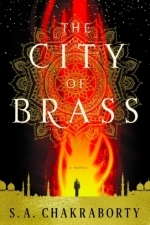
Goddess in the Stacks (553 KP) rated The City of Brass: Daevabad Trilogy in Books
Mar 25, 2018


Fantastic world-building (1 more)
Character Development
So much to say about this outstanding debut novel! First I'd like to address the issues around the author, then I'll delve into the book itself. (It's fantastic, though!)
So the book has been touted as an "own voices" novel, seemingly much to the author's chagrin. She is Muslim, but she's a white convert (Chakraborty is her married name). She has striven to correct the misconception about her ethnicity when she finds it, tweeting about it and talking about it in interviews. (This interview is a good example.) Because the book is pure fantasy, in a fantasy realm after the first few chapters, I'm not too worried about it not actually being written by a middle-eastern author. She does note in the interview I linked that she's not qualified to write some stories because of her ethnicity, and I appreciate that recognition of privilege. As far as I can tell, (as a white person myself) she did justice to the bits of mythology that she included. (Given the reception by people who were so excited about it being an Own Voices book, I think I'm probably right.) Her twitter (@SChakrabs) is FULL of links to minority authors and retweets about their books. I am very impressed by the level of her advocacy for minority authors.
So that aside, I LOVED THIS BOOK. I almost always enjoy fantasy inspired by non-western mythology: Children of Blood and Bone was fantastic, and though Forest of a Thousand Lanterns had a western fairytale at its heart, being reimagined through an Asian lense was really neat to read. The Bear and The Nightingale and The Girl in the Tower were Russian inspired, as were The Crown's Game/The Crown's Fate. I really do try to pick up non-western inspired fantasy when I can. City of Brass scratched that itch perfectly.
City of Brass opens in Cairo, where our heroine, Nahri, is a con-woman with small healing magics. When a ritual goes awry, she's thrust into the world of the djinn. It's when Nahri and her accidental bodyguard, Dara, arrive at the Djinns' city of Daevabad that the story really gets started.
I'm still a little confused about the difference between djinn and Daeva; Daeva seem to be one of the tribes but also the name for the entire race, and some of them get offended at being called djinn but some of them don't? I'm not really sure about that distinction. There is a clear line between djinn and Ifrit, though - Ifrit are immensely powerful, immortal beings who refused to subject themselves to punishment many centuries ago. I'm not sure I actually see a downside to being Ifrit, other than the djinn all think they're evil. The Ifrit, however, are out to get Nahri, and Dara's not having any of THAT.
I love Dara - he's a fascinating character, with a violent, mysterious backstory. I'm very eager to read more about him and figure out exactly what's up with his background. Nahri is also awesome - a little arrogant, but by the end of the book she's starting to learn she might need help from those around her. Unfortunately, also by the end of the book she doesn't know who to trust. The naive djinn prince, Ali, is the third main character of the book, and while I can see him having an interesting story, his personality is still a little flat. Hopefully the second book will see advancement in all three of these characters' personalities.
And I can't WAIT for the second book! City of Brass didn't exactly end on a cliffhanger, but it did leave many questions unanswered and our main characters' fates uncertain. Unfortunately, I can't find any information on the sequel, just that it's being edited. No release date or title yet.
Read this book. It's fantastic.
You can find all my reviews at http://goddessinthestacks.wordpress.com
So the book has been touted as an "own voices" novel, seemingly much to the author's chagrin. She is Muslim, but she's a white convert (Chakraborty is her married name). She has striven to correct the misconception about her ethnicity when she finds it, tweeting about it and talking about it in interviews. (This interview is a good example.) Because the book is pure fantasy, in a fantasy realm after the first few chapters, I'm not too worried about it not actually being written by a middle-eastern author. She does note in the interview I linked that she's not qualified to write some stories because of her ethnicity, and I appreciate that recognition of privilege. As far as I can tell, (as a white person myself) she did justice to the bits of mythology that she included. (Given the reception by people who were so excited about it being an Own Voices book, I think I'm probably right.) Her twitter (@SChakrabs) is FULL of links to minority authors and retweets about their books. I am very impressed by the level of her advocacy for minority authors.
So that aside, I LOVED THIS BOOK. I almost always enjoy fantasy inspired by non-western mythology: Children of Blood and Bone was fantastic, and though Forest of a Thousand Lanterns had a western fairytale at its heart, being reimagined through an Asian lense was really neat to read. The Bear and The Nightingale and The Girl in the Tower were Russian inspired, as were The Crown's Game/The Crown's Fate. I really do try to pick up non-western inspired fantasy when I can. City of Brass scratched that itch perfectly.
City of Brass opens in Cairo, where our heroine, Nahri, is a con-woman with small healing magics. When a ritual goes awry, she's thrust into the world of the djinn. It's when Nahri and her accidental bodyguard, Dara, arrive at the Djinns' city of Daevabad that the story really gets started.
I'm still a little confused about the difference between djinn and Daeva; Daeva seem to be one of the tribes but also the name for the entire race, and some of them get offended at being called djinn but some of them don't? I'm not really sure about that distinction. There is a clear line between djinn and Ifrit, though - Ifrit are immensely powerful, immortal beings who refused to subject themselves to punishment many centuries ago. I'm not sure I actually see a downside to being Ifrit, other than the djinn all think they're evil. The Ifrit, however, are out to get Nahri, and Dara's not having any of THAT.
I love Dara - he's a fascinating character, with a violent, mysterious backstory. I'm very eager to read more about him and figure out exactly what's up with his background. Nahri is also awesome - a little arrogant, but by the end of the book she's starting to learn she might need help from those around her. Unfortunately, also by the end of the book she doesn't know who to trust. The naive djinn prince, Ali, is the third main character of the book, and while I can see him having an interesting story, his personality is still a little flat. Hopefully the second book will see advancement in all three of these characters' personalities.
And I can't WAIT for the second book! City of Brass didn't exactly end on a cliffhanger, but it did leave many questions unanswered and our main characters' fates uncertain. Unfortunately, I can't find any information on the sequel, just that it's being edited. No release date or title yet.
Read this book. It's fantastic.
You can find all my reviews at http://goddessinthestacks.wordpress.com
Heather Cranmer (2721 KP) rated The Looking Glass (The Looking Glass, #1) in Books
Jun 7, 2018


(This review can be found on my blog <a href="http://themisadventuresofatwentysomething.blogspot.com/">The (Mis)Adventures of a Twenty-Something Year Old Girl</a>).
When I read the blurb to this book, I didn't really know what to expect. I liked that it dealt with mirrors and ghosts. That's what drew me in. Luckily, I found this book to be super interesting!
I do like the title of this book. It pays homage to Lewis Carroll, and even some scenes in the book do the same.
I'm not a big fan of the cover although it does have to do with the story. I would've liked to see something spooky on the cover such as Elizabeth Blackwell staring out from the mirror or something similar, but that is just a personal opinion.
I did enjoy the world building and found it to be believable. However, I was a bit confused as to why and how Alice always ended up at the hotel's swimming pool at midnight for just an hour every night. Perhaps that could've been explained better. I was also a little big confused about the fog and how it differed for the witch and for Alice, but I won't go into details as I don't want to give away any spoilers. I do like how Alice's version of the hotel is different from the actual hotel and how she sees the real world through mirrors.
The pacing was brilliant in The Looking Glass! I'll be honest. I wasn't expecting this book to instantly catch my attention from the very first page, but it did just that. From the first sentence, I was hooked and couldn't wait to find out what would happen next to Alice.
I enjoyed the plot very much, and I felt it was fairly original. (Don't worry, the next few sentences aren't spoilers). Alice dives into the hotel swimming pool and hits her head. She almost drowns and ends up in a coma. However, her spirit is stuck at the hotel where she must figure out the mystery of Elizabeth Blackwell if she's to reunite her body with her spirit. While I didn't feel that there were any major plot twists in the story, I still really enjoyed it. Oh, and don't worry. There's no cliff hangars either.
I found the characters to be very well written and likable. Alice is a very down to Earth, normal teenage girl. She was easy to relate to and had a likable personality. She is a very curious about everything, but that ultimately comes to her advantage. I also really liked Tony and how he was so willing to help Alice. He came across as a real sweetheart and a very brave person. George is another character who I wasn't really sure of to begin with but ended up liking.
I enjoyed the dialogue and felt it was appropriate for a young adult book. It flowed smoothly and never once felt forced. My favorite bits of dialogue were when Alice was thinking to herself. There's no swearing in this book, but there is some minor violence.
Overall, The Looking Glass by Jessica Arnold is a highly interesting read. The plot will keep readers very much immersed in the book. The world building is very detailed albeit some minor confusing details.
I'd recommend this book to those aged 13+ who are after a book that's a little bit scary but not too much and for those who are after a book with a brilliant story line.
<b>I'd give The Looking Glass by Jessica Arnold a 4.5 out of 5.</b>
(I received an free ebook of this title from the tour host in exchange for a fair and honest review).
When I read the blurb to this book, I didn't really know what to expect. I liked that it dealt with mirrors and ghosts. That's what drew me in. Luckily, I found this book to be super interesting!
I do like the title of this book. It pays homage to Lewis Carroll, and even some scenes in the book do the same.
I'm not a big fan of the cover although it does have to do with the story. I would've liked to see something spooky on the cover such as Elizabeth Blackwell staring out from the mirror or something similar, but that is just a personal opinion.
I did enjoy the world building and found it to be believable. However, I was a bit confused as to why and how Alice always ended up at the hotel's swimming pool at midnight for just an hour every night. Perhaps that could've been explained better. I was also a little big confused about the fog and how it differed for the witch and for Alice, but I won't go into details as I don't want to give away any spoilers. I do like how Alice's version of the hotel is different from the actual hotel and how she sees the real world through mirrors.
The pacing was brilliant in The Looking Glass! I'll be honest. I wasn't expecting this book to instantly catch my attention from the very first page, but it did just that. From the first sentence, I was hooked and couldn't wait to find out what would happen next to Alice.
I enjoyed the plot very much, and I felt it was fairly original. (Don't worry, the next few sentences aren't spoilers). Alice dives into the hotel swimming pool and hits her head. She almost drowns and ends up in a coma. However, her spirit is stuck at the hotel where she must figure out the mystery of Elizabeth Blackwell if she's to reunite her body with her spirit. While I didn't feel that there were any major plot twists in the story, I still really enjoyed it. Oh, and don't worry. There's no cliff hangars either.
I found the characters to be very well written and likable. Alice is a very down to Earth, normal teenage girl. She was easy to relate to and had a likable personality. She is a very curious about everything, but that ultimately comes to her advantage. I also really liked Tony and how he was so willing to help Alice. He came across as a real sweetheart and a very brave person. George is another character who I wasn't really sure of to begin with but ended up liking.
I enjoyed the dialogue and felt it was appropriate for a young adult book. It flowed smoothly and never once felt forced. My favorite bits of dialogue were when Alice was thinking to herself. There's no swearing in this book, but there is some minor violence.
Overall, The Looking Glass by Jessica Arnold is a highly interesting read. The plot will keep readers very much immersed in the book. The world building is very detailed albeit some minor confusing details.
I'd recommend this book to those aged 13+ who are after a book that's a little bit scary but not too much and for those who are after a book with a brilliant story line.
<b>I'd give The Looking Glass by Jessica Arnold a 4.5 out of 5.</b>
(I received an free ebook of this title from the tour host in exchange for a fair and honest review).
Heather Cranmer (2721 KP) rated The Treachery of Beautiful Things in Books
Jun 7, 2018
(This review can also be found on my blog <a href="http://themisadventuresofatwentysomething.blogspot.co.uk">The (Mis)Adventures of a Twenty-Something Year Old Girl</a>).
I had been wanting to read this book since I had first heard about it. I was lucky enough to win it in a blog competition. I'm so glad I did because I loved every second of this book!! It reminded me a little bit like Snow White; not the Disney version but the Grimm's Fairy Tales version.
Jenny is 10 years old when she sees the forest swallow her older brother into the ground. She tries to tell everyone around her that the forest took her brother, but yet, no one believes her. Seven years later, Jenny is walking by the forest when she hears flute music like her brother used to play. Thinking she may be able to find him, she ventures into the very same forest. Little does she know what danger lurks in the forest. Will she be able to save her brother or will she be too late?
The Treachery of Beautiful Things is such a wonderful title for this book! Beautiful things can be dangerous despite their beauty, and how right that is!! The forest is full of beautiful creatures, but not everything is as it seems.
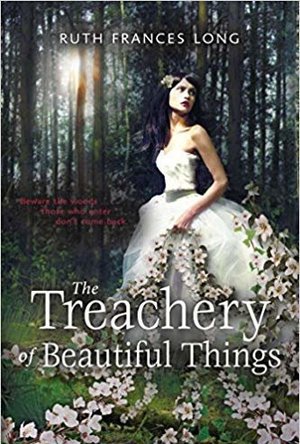
The cover of this book is absolutely gorgeous!! Instead of being just some random picture on the cover, the cover is from a scene in the book, and it fits in beautifully with the title. Well done to the cover artist and the author for choosing this cover. I am entranced by it!
The world building and setting of the forest where the majority of this story takes place is done really well. The author uses great descriptions to make the reader feel as if he/she is a part of it. I easily lost myself in this book and in the forest thanks to the fantastic world building.
The pacing in The Treachery of Beautiful Things is absolutely fantastic! Not once in the story did I feel my attention waning. I was enthralled in the story from the very first page. I reluctantly had to put the book down to do real life things. However, when I had free time, I was devouring this book!
The dialogue is perfect for readers of teen years on up. The dialogue between the characters was very interesting. I especially loved the dialogue between Puck and Jenny.
The author does a great job with character building. I felt the characters were well-developed, and each had their own unique personalities. I loved the character of Jenny. I loved how determined she was to stop at nothing to protect those she loved. Jack was a fantastic character as well. I love how the author made him out to be conflicted but in a believable way. Jack comes across as being a real person instead of a character in a book. Puck was definitely my favourite character by far. He was the one who interjected a lot of humour into this story. I'm thinking the author got the inspiration for Puck from A Midsummer's Night's Dream by Shakespeare. Puck was loyal to a fault to the king, yet he has a heart of gold. Tatania/Mab made an excellent baddie. She reminded me a lot of the queen from Snow White. Oberon was a great baddie as well although he didn't feature as much as Tatania/Mab. We don't learn much about his character until towards the end of the book.
The Treachery of Beautiful Things by Ruth Frances Long is a fantastic story of romance, fairy tale, and suspense. It will keep you wanting more long after you've finished the book.
I'd recommend this book to everyone aged 13+. It's such a lovely read!
I had been wanting to read this book since I had first heard about it. I was lucky enough to win it in a blog competition. I'm so glad I did because I loved every second of this book!! It reminded me a little bit like Snow White; not the Disney version but the Grimm's Fairy Tales version.
Jenny is 10 years old when she sees the forest swallow her older brother into the ground. She tries to tell everyone around her that the forest took her brother, but yet, no one believes her. Seven years later, Jenny is walking by the forest when she hears flute music like her brother used to play. Thinking she may be able to find him, she ventures into the very same forest. Little does she know what danger lurks in the forest. Will she be able to save her brother or will she be too late?
The Treachery of Beautiful Things is such a wonderful title for this book! Beautiful things can be dangerous despite their beauty, and how right that is!! The forest is full of beautiful creatures, but not everything is as it seems.
The cover of this book is absolutely gorgeous!! Instead of being just some random picture on the cover, the cover is from a scene in the book, and it fits in beautifully with the title. Well done to the cover artist and the author for choosing this cover. I am entranced by it!
The world building and setting of the forest where the majority of this story takes place is done really well. The author uses great descriptions to make the reader feel as if he/she is a part of it. I easily lost myself in this book and in the forest thanks to the fantastic world building.
The pacing in The Treachery of Beautiful Things is absolutely fantastic! Not once in the story did I feel my attention waning. I was enthralled in the story from the very first page. I reluctantly had to put the book down to do real life things. However, when I had free time, I was devouring this book!
The dialogue is perfect for readers of teen years on up. The dialogue between the characters was very interesting. I especially loved the dialogue between Puck and Jenny.
The author does a great job with character building. I felt the characters were well-developed, and each had their own unique personalities. I loved the character of Jenny. I loved how determined she was to stop at nothing to protect those she loved. Jack was a fantastic character as well. I love how the author made him out to be conflicted but in a believable way. Jack comes across as being a real person instead of a character in a book. Puck was definitely my favourite character by far. He was the one who interjected a lot of humour into this story. I'm thinking the author got the inspiration for Puck from A Midsummer's Night's Dream by Shakespeare. Puck was loyal to a fault to the king, yet he has a heart of gold. Tatania/Mab made an excellent baddie. She reminded me a lot of the queen from Snow White. Oberon was a great baddie as well although he didn't feature as much as Tatania/Mab. We don't learn much about his character until towards the end of the book.
The Treachery of Beautiful Things by Ruth Frances Long is a fantastic story of romance, fairy tale, and suspense. It will keep you wanting more long after you've finished the book.
I'd recommend this book to everyone aged 13+. It's such a lovely read!
Heather Cranmer (2721 KP) rated Precious Blood (The Blessed, #1) in Books
Jun 7, 2018 (Updated May 18, 2019)
Precious Blood was a book I'd been dying to read since it first became available to buy. Everything about it sounded super interesting. Whilst a lot of other reviewers didn't really care for the book, I absolutely loved it! This book had so many feels for me, and it's definitely one of my favorites so far this year.
Agnes, Cecilia, and Lucy are all admitted to the emergency room on the same night. Agnes has slit her wrists, Cecilia had drowned (and has been resuscitated), and Lucy has overdosed on some pills. On that fateful night, they are all given bracelets by the mysterious Sebastian. They seek him out and find him at a church. Sebastian tells the girls they are saints, but Sebastian has escaped from a mental institution and is listed as being very dangerous. Is Sebastian telling the truth or are the girls' lives in danger?
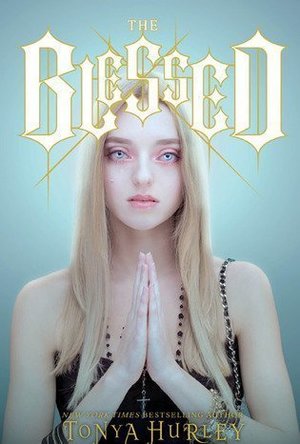
The world building, like the cover, was creepy and beautiful all at the same time. For the most part, it was easy to picture everything that was happening to Sebastian, the girls, and everyone else in my head. I love how Hurley makes it seem like something such as what happened in Precious Blood could actually happen at any time. The one thing that sort of bothered me was the insta-love between Sebastian and the girls. Perhaps it was more of hero worship, but it still happened quite quickly.
The pacing is what lets Precious Blood down a bit, but not by much. The pacing is not slow at all, yet it's the opposite. There are a few times where the pacing just totally takes off which left me feeling very confused and wondering what had just happened. In fact, I counted this happening as three times during the story. Maybe I just wasn't paying enough attention, but the story did seem to be missing some leeway those few times. Other then those times, the pacing really worked and definitely held my attention especially during the first two-thirds of the story.
I loved the plot! It was super interesting reading about these three girls' lives. They each brought their own baggage to the table. I was constantly wondering if Sebastian was delusional when he told the girls that they were reincarnated as martyred saints and were in danger or if he was actually being serious. I really enjoyed the way the story played out.
I thought the characters were very well written. I loved the innocence that Agnes seemed to have. The only thing I didn't like about Agnes was how she treated her mother. She was very rude to her. I don't know if there's more of a back story between Agnes and her mother, but if there was, it wasn't mentioned much in the book. My favorite character was Cecelia. She came across as being very hardcore and like she didn't care about many things, but she was actually quite a loving and caring person. Even when she had no money, she'd still buy some food and a drink for the homeless guy who lived on the top of her building. Cecelia had a very big heart. Lucy started off being selfish, but even she has a change of heart. Sebastian was very charismatic. I like how dedicated he was to his cause and how he was willing to risk everything for it.
Trigger warnings include profanity, death, and some graphic violence.
Overall, Precious Blood is a very creepy but beautifully written book. Yes, there were some pacing problems but nothing too serious. I would definitely recommend Precious Blood by Tonya Hurley to those aged 17+. The plot is interesting and the characters are likable. I loved this book so much that I bought the next in the series after finishing this one.
Agnes, Cecilia, and Lucy are all admitted to the emergency room on the same night. Agnes has slit her wrists, Cecilia had drowned (and has been resuscitated), and Lucy has overdosed on some pills. On that fateful night, they are all given bracelets by the mysterious Sebastian. They seek him out and find him at a church. Sebastian tells the girls they are saints, but Sebastian has escaped from a mental institution and is listed as being very dangerous. Is Sebastian telling the truth or are the girls' lives in danger?
The world building, like the cover, was creepy and beautiful all at the same time. For the most part, it was easy to picture everything that was happening to Sebastian, the girls, and everyone else in my head. I love how Hurley makes it seem like something such as what happened in Precious Blood could actually happen at any time. The one thing that sort of bothered me was the insta-love between Sebastian and the girls. Perhaps it was more of hero worship, but it still happened quite quickly.
The pacing is what lets Precious Blood down a bit, but not by much. The pacing is not slow at all, yet it's the opposite. There are a few times where the pacing just totally takes off which left me feeling very confused and wondering what had just happened. In fact, I counted this happening as three times during the story. Maybe I just wasn't paying enough attention, but the story did seem to be missing some leeway those few times. Other then those times, the pacing really worked and definitely held my attention especially during the first two-thirds of the story.
I loved the plot! It was super interesting reading about these three girls' lives. They each brought their own baggage to the table. I was constantly wondering if Sebastian was delusional when he told the girls that they were reincarnated as martyred saints and were in danger or if he was actually being serious. I really enjoyed the way the story played out.
I thought the characters were very well written. I loved the innocence that Agnes seemed to have. The only thing I didn't like about Agnes was how she treated her mother. She was very rude to her. I don't know if there's more of a back story between Agnes and her mother, but if there was, it wasn't mentioned much in the book. My favorite character was Cecelia. She came across as being very hardcore and like she didn't care about many things, but she was actually quite a loving and caring person. Even when she had no money, she'd still buy some food and a drink for the homeless guy who lived on the top of her building. Cecelia had a very big heart. Lucy started off being selfish, but even she has a change of heart. Sebastian was very charismatic. I like how dedicated he was to his cause and how he was willing to risk everything for it.
Trigger warnings include profanity, death, and some graphic violence.
Overall, Precious Blood is a very creepy but beautifully written book. Yes, there were some pacing problems but nothing too serious. I would definitely recommend Precious Blood by Tonya Hurley to those aged 17+. The plot is interesting and the characters are likable. I loved this book so much that I bought the next in the series after finishing this one.
Ivana A. | Diary of Difference (1171 KP) rated Beast: A Tale of Love and Revenge in Books
Jul 16, 2018

Almost ruined my childhood favorite
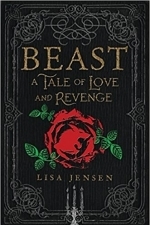
One of my favorite books while I was growing up was the Beauty and the Beast. I usually love retellings,as they show me a different side of the story that might be, that I have never considered before. This book, however, almost ruined it all for me. The only reason it didn't was because I wouldn't let one bad retelling to ruin my childhood favorite!
The story is about Lucie, who is a servant in Jean Leup's palace. Through Lucie's story, we see Jean Leup as a horrible person who only cares about money and the respect he received from his aristocratic community. He treats the servants badly and doesn't even bother to look at them.
Lucie likes the thought of him. He is a very handsome man, and all she dreams about is for him to notice her. And one day, he does. And something really bad happens. Jean Leup does something horrible to Lucie.
[SPOILER - PLEASE CONTINUE CAUTIOUSLY]
He rapes her. And not only that this scene was very disturbing, it was also three pages long, with broad descriptions and it made be cringe badly. It made me hate everything and this was the part where I almost quit on reading this book.
[SPOILER FINISHED - YOU CAN CONTINUE READING]
After this big spoiler scene, the first reaction Lucie has is to kill herself. I am aware that this was a huge trauma for her, and people react differently, but if the author gives me this as a solution to her problem, do I want to continue reading? Is this really the lesson she learns?
With a bit of help of magic and wisdom words, she decides that now she wants for Jean Leup to suffer, and she wants to be able to see this happen. Suddenly, wish becomes a reality and the next thing we know, she is a candle that can't move, and Jean Leup has turned into a Beast.
Do you get the Beauty and the Beast reference now? We see the story from the candle's point of view, who is Lucie.
Well - not really!
Because here's the twist - the Beast doesn't remember what happened before. He doesn't know he was Jean Leup. He doesn't know he was bad in the past. The Beast is good by default, and a bit sad that he's alone in a big castle. So I have to ask again - Where is the lesson? Where is the punishment? If he can't remember he was bad, he'll never learn why he is a Beast.
To continue and shorten the story - Lucie (the candle) can talk to the Beast through her mind. The Beauty (Rose) comes to the castle and the story goes on. Lucie decides that she is in love with the Beast, and I won't reveal the rest, in case you want to read the book and see for yourself.
Now - I know that the author's point wasn't the lesson that the Beast learns as in the original story. Her point was to tell the story of the Beast, and Lucie, and how this tale can have a different plot, and ending, and back story. But I really believe that this was the wrong way of saying it, and it didn't leave a clear message.
The writing was poor, and it went from one moment to another, leaving me there in the middle, wondering what happened. One scene begins, and another starts before anything is finished. It was disorientated, and I felt lost in the first 40 pages.
This is a no from me, and I will give it 2 stars because I managed to finish it.
Thanks to Candlewick Press for providing me with an ARC e-copy via NetGalley in exchange for an honest review.
The story is about Lucie, who is a servant in Jean Leup's palace. Through Lucie's story, we see Jean Leup as a horrible person who only cares about money and the respect he received from his aristocratic community. He treats the servants badly and doesn't even bother to look at them.
Lucie likes the thought of him. He is a very handsome man, and all she dreams about is for him to notice her. And one day, he does. And something really bad happens. Jean Leup does something horrible to Lucie.
[SPOILER - PLEASE CONTINUE CAUTIOUSLY]
He rapes her. And not only that this scene was very disturbing, it was also three pages long, with broad descriptions and it made be cringe badly. It made me hate everything and this was the part where I almost quit on reading this book.
[SPOILER FINISHED - YOU CAN CONTINUE READING]
After this big spoiler scene, the first reaction Lucie has is to kill herself. I am aware that this was a huge trauma for her, and people react differently, but if the author gives me this as a solution to her problem, do I want to continue reading? Is this really the lesson she learns?
With a bit of help of magic and wisdom words, she decides that now she wants for Jean Leup to suffer, and she wants to be able to see this happen. Suddenly, wish becomes a reality and the next thing we know, she is a candle that can't move, and Jean Leup has turned into a Beast.
Do you get the Beauty and the Beast reference now? We see the story from the candle's point of view, who is Lucie.
Well - not really!
Because here's the twist - the Beast doesn't remember what happened before. He doesn't know he was Jean Leup. He doesn't know he was bad in the past. The Beast is good by default, and a bit sad that he's alone in a big castle. So I have to ask again - Where is the lesson? Where is the punishment? If he can't remember he was bad, he'll never learn why he is a Beast.
To continue and shorten the story - Lucie (the candle) can talk to the Beast through her mind. The Beauty (Rose) comes to the castle and the story goes on. Lucie decides that she is in love with the Beast, and I won't reveal the rest, in case you want to read the book and see for yourself.
Now - I know that the author's point wasn't the lesson that the Beast learns as in the original story. Her point was to tell the story of the Beast, and Lucie, and how this tale can have a different plot, and ending, and back story. But I really believe that this was the wrong way of saying it, and it didn't leave a clear message.
The writing was poor, and it went from one moment to another, leaving me there in the middle, wondering what happened. One scene begins, and another starts before anything is finished. It was disorientated, and I felt lost in the first 40 pages.
This is a no from me, and I will give it 2 stars because I managed to finish it.
Thanks to Candlewick Press for providing me with an ARC e-copy via NetGalley in exchange for an honest review.

Gareth von Kallenbach (980 KP) rated Rise of the Triad in Video Games
Jun 19, 2019

Back in 1993 The Internet was mainly confined to college campuses and would not start to arrive in homes for another year. Those who went online used dial up modems to access local bulletin boards to share pictures, play social games, and use chat programs in the early precursors to social networks.
With the success of the Doom games, First Person Shooters were all the rage and numerous companies cranked out games in this genre trying to appeal to a consumer base eager for games of this type and who wanted to experience to get in on the fairly new concepts of online play with their friends.
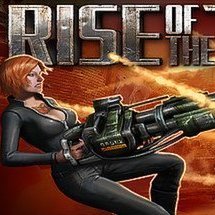
One such game was Rise of the Triad. Originally planned as a Wolfenstein sequel by Apogee Software the game cast players as a member of a United Nations special forces team who is dispatched to an island to take down a dangerous cult that has arisen.
Gameplay was frantic and fast as players had to mow down as many bad guys as they could with all manner of weapons and gear. The game was innovative in that there were all sorts of traps and objects that players could bounce from and they could even become a dog during power ups as they took the fight to the bad guys in both offline and online modes.
Jump forward to 2013, Rise of the Triad is back with a slick makeover that while looking more contemporary is still very much a retro game loaded with throwback elements.
The plot is essentially the same and aside from the improved graphics and physics, the game looks and plays very much like the original. The graphics are not eye popping examples of modern technology, rather they are improved and take advantage of graphic cards which were not widely in use back in 1993.
My first reaction was how much it played like a game of old. Aside from being faster and smoother than games of that era, the combat mechanics and techniques were very much as they were back in games of the day.
I enjoyed the nostalgia as I took down enemies and used the bounce pads to ascend to upper levels of buildings and collect power up coins that were littered throughout the map. I also enjoyed the over the top gore and humor of the game such as being rewarded with a pair of eyeballs splattered on the screen after I dispatched an enemy with a rocket launcher.
My biggest frustration was with the check point save system as having to replay elements of a game over and over when you die is not my favorite thing. Many times I would make solid progress only to be killed and forced to replay the previous segments over and over.
Enemies still come at you fairly directly when they attack but they can be very effective and deadly so players will need to be on their toes art all times.
The amount of firepower you can deploy is great from dual pistols to machines guns and rocket launchers, carnage is the way of the game.
I also had some issues getting matched online during my earlier attempts but as time went on, this became easier and I was able to enjoy the online nostalgia.
Rise of the Triad is great for those who remember the original and that era of gaming but for those who are accustomed to the mechanics and polish of modern shooters, they may find elements of the game frustrating and best left in the past.
For the rest of us, it was a welcome trip to the past that helped illustrate just how far games have evolved in the last twenty years.
http://sknr.net/2013/09/22/rise-of-the-triad/
With the success of the Doom games, First Person Shooters were all the rage and numerous companies cranked out games in this genre trying to appeal to a consumer base eager for games of this type and who wanted to experience to get in on the fairly new concepts of online play with their friends.
One such game was Rise of the Triad. Originally planned as a Wolfenstein sequel by Apogee Software the game cast players as a member of a United Nations special forces team who is dispatched to an island to take down a dangerous cult that has arisen.
Gameplay was frantic and fast as players had to mow down as many bad guys as they could with all manner of weapons and gear. The game was innovative in that there were all sorts of traps and objects that players could bounce from and they could even become a dog during power ups as they took the fight to the bad guys in both offline and online modes.
Jump forward to 2013, Rise of the Triad is back with a slick makeover that while looking more contemporary is still very much a retro game loaded with throwback elements.
The plot is essentially the same and aside from the improved graphics and physics, the game looks and plays very much like the original. The graphics are not eye popping examples of modern technology, rather they are improved and take advantage of graphic cards which were not widely in use back in 1993.
My first reaction was how much it played like a game of old. Aside from being faster and smoother than games of that era, the combat mechanics and techniques were very much as they were back in games of the day.
I enjoyed the nostalgia as I took down enemies and used the bounce pads to ascend to upper levels of buildings and collect power up coins that were littered throughout the map. I also enjoyed the over the top gore and humor of the game such as being rewarded with a pair of eyeballs splattered on the screen after I dispatched an enemy with a rocket launcher.
My biggest frustration was with the check point save system as having to replay elements of a game over and over when you die is not my favorite thing. Many times I would make solid progress only to be killed and forced to replay the previous segments over and over.
Enemies still come at you fairly directly when they attack but they can be very effective and deadly so players will need to be on their toes art all times.
The amount of firepower you can deploy is great from dual pistols to machines guns and rocket launchers, carnage is the way of the game.
I also had some issues getting matched online during my earlier attempts but as time went on, this became easier and I was able to enjoy the online nostalgia.
Rise of the Triad is great for those who remember the original and that era of gaming but for those who are accustomed to the mechanics and polish of modern shooters, they may find elements of the game frustrating and best left in the past.
For the rest of us, it was a welcome trip to the past that helped illustrate just how far games have evolved in the last twenty years.
http://sknr.net/2013/09/22/rise-of-the-triad/
Hazel (1853 KP) rated In a Land of Paper Gods in Books
Dec 17, 2018
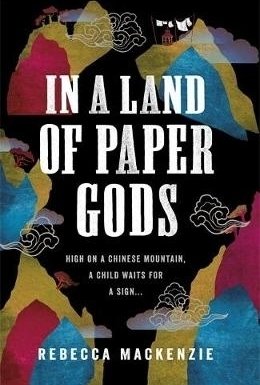
<i>I received this book for free through Goodreads First Reads.
“My name is Henrietta S. Robertson. That’s my English name… My Chinese name is Ming-Mei.”</i>
As the child of members of the Interior Alliance Mission, Henrietta has grown up between two cultures: English and Chinese. From the age of six she was sent to boarding school on a mountain in the Jiangxi Province, where four years later she remains as a small, pale, lonely girl.
For a girl as young as ten, Etta has a big imagination. She decides that God has called her to be a prophetess, and encourages the other girls in Dormitory A to join her in a Prophetess Club. This results is Etta getting into all sorts of trouble as she naively goes about inventing prophecies; all the while the Second Sino-Japanese War gets closer and closer to their mountain sanctuary.
Told mostly from Etta’s point of view, <i>In a Land of Paper Gods</i> is a hilarious historical novel about a young girl’s innocence. A large part of the story is about the missionary school rather than the ongoing war, therefore the focus is on Etta’s interpretation of the bible and her understanding of the differences between Western Christian and Chinese culture. However, once America joins the war effort, it is shockingly quick how the tale can go from humorous to heartbreaking.
The other character who plays a large part in this novel is Muriel, a dorm aunty, whom Etta regards highly. Muriel wanted to be a missionary but instead has found herself working at the Lushan school, keeping an eye on the ten and eleven year old girls. Although most of the book is written in Etta’s first person narrative, Rebecca Mackenzie has also included the occasional diary entry from Aunty Muriel. Since these are so few, it is not clear what their purpose is, as the story could easily continue without them.
Despite being an historical novel, <i>In a Land of Paper Gods </i>focuses less on fact and more on the impact the times had on a young girl. It is interesting to see the character development of Etta as she goes from a naughty, attention-seeking schoolgirl, to a young woman who must fend for herself. All the while she has her belief in God to resort to for explanations about the world she is living in. The reader also witnesses the growth of a relationship between Aunty Muriel and Etta. To begin with it is that of an adult and child, however it ends with them being equals in their suffering.
<i>In a Land of Paper Gods</i> is a pleasure to read. It is comically entertaining to begin with as the reader grows to love the characters, particularly mischievous Etta. It is hard to put the book down due to pure delight of the storyline, yet when the story turns darker it is just as difficult to put down, as we want to find out if the characters are going to be okay.
For some people, the Christian content will not mean anything, however it is possible to enjoy the novel without a religious background. For those, like myself, who do have a Christian upbringing, this aspect makes the story even better. Readers may recognize themselves or of their childhood in Etta, particularly her understanding of the bible.
Overall I loved this book. I was not sure what to expect, and have often found historical novels set in China to be rather dull. Therefore I was pleasantly surprised to discover how good this book was. I encourage others to read <i>In a Land of Paper Gods</i>, and I look forward to reading what Mackenzie writes next.
“My name is Henrietta S. Robertson. That’s my English name… My Chinese name is Ming-Mei.”</i>
As the child of members of the Interior Alliance Mission, Henrietta has grown up between two cultures: English and Chinese. From the age of six she was sent to boarding school on a mountain in the Jiangxi Province, where four years later she remains as a small, pale, lonely girl.
For a girl as young as ten, Etta has a big imagination. She decides that God has called her to be a prophetess, and encourages the other girls in Dormitory A to join her in a Prophetess Club. This results is Etta getting into all sorts of trouble as she naively goes about inventing prophecies; all the while the Second Sino-Japanese War gets closer and closer to their mountain sanctuary.
Told mostly from Etta’s point of view, <i>In a Land of Paper Gods</i> is a hilarious historical novel about a young girl’s innocence. A large part of the story is about the missionary school rather than the ongoing war, therefore the focus is on Etta’s interpretation of the bible and her understanding of the differences between Western Christian and Chinese culture. However, once America joins the war effort, it is shockingly quick how the tale can go from humorous to heartbreaking.
The other character who plays a large part in this novel is Muriel, a dorm aunty, whom Etta regards highly. Muriel wanted to be a missionary but instead has found herself working at the Lushan school, keeping an eye on the ten and eleven year old girls. Although most of the book is written in Etta’s first person narrative, Rebecca Mackenzie has also included the occasional diary entry from Aunty Muriel. Since these are so few, it is not clear what their purpose is, as the story could easily continue without them.
Despite being an historical novel, <i>In a Land of Paper Gods </i>focuses less on fact and more on the impact the times had on a young girl. It is interesting to see the character development of Etta as she goes from a naughty, attention-seeking schoolgirl, to a young woman who must fend for herself. All the while she has her belief in God to resort to for explanations about the world she is living in. The reader also witnesses the growth of a relationship between Aunty Muriel and Etta. To begin with it is that of an adult and child, however it ends with them being equals in their suffering.
<i>In a Land of Paper Gods</i> is a pleasure to read. It is comically entertaining to begin with as the reader grows to love the characters, particularly mischievous Etta. It is hard to put the book down due to pure delight of the storyline, yet when the story turns darker it is just as difficult to put down, as we want to find out if the characters are going to be okay.
For some people, the Christian content will not mean anything, however it is possible to enjoy the novel without a religious background. For those, like myself, who do have a Christian upbringing, this aspect makes the story even better. Readers may recognize themselves or of their childhood in Etta, particularly her understanding of the bible.
Overall I loved this book. I was not sure what to expect, and have often found historical novels set in China to be rather dull. Therefore I was pleasantly surprised to discover how good this book was. I encourage others to read <i>In a Land of Paper Gods</i>, and I look forward to reading what Mackenzie writes next.

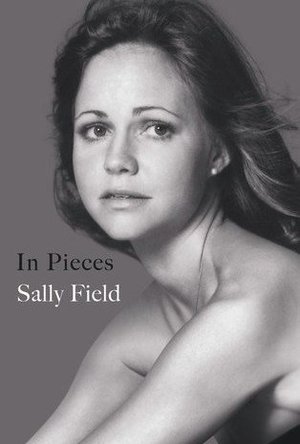
The daughter (and stepdaughter) of actors, Sally Field earned her first acting role at seventeen and was quickly on television in shows such as "Gidget" and "The Flying Nun." Those roles showcased Sally's youth and smiling personality. But, behind the scenes, Sally had a tumultuous childhood: her parents divorced when she was young, and her relationships with them and her stepfather were not easy. She found happiness, in many ways, as an actress, but also struggled to find roles that challenged her. In this, her first memoir, she tells the story of her childhood and her early years as an actress.
I listened to the majority of this (and then switched over to the book, I'm weird), and I'm not going to lie: this wasn't always a fun listen for me. This book is sort of depressing and stressful a lot of the time. I will be honest that I didn't know a lot about Sally Field going in--I knew of Gidget, her roles with Burt Reynolds, "Forrest Gump," and honestly, most recently, "Brothers & Sisters." I knew one of her sons was gay, and she supported him.
I did not know her mother was an actress. I did not know that a lot of really bad things happened to her. Seriously, this memoir contains a lot of Sally Field telling us all the awful memories of her childhood, and, later, her early acting days. I'm not saying that's bad--it's truly brave and powerful stuff. But, man, as you're in the car driving 2+ hours to work? It's draining. I felt horrible for her, I felt proud that she'd overcome it, and I felt a little exhausted by it all. I also was appalled by how much she had to deal with (alone) and the state of the acting community for women during that time period.
It did, however, seem to make the beginning of the book go by rather slowly. Or maybe that's just the audio format--this was only the second audiobook I've ever listened to and, coincidentally, the second audiobook I found slow. When Field got to the time period where she became a mom, it picked up for me, perhaps because I could relate better to her. I felt an odd kinship--I was headed off, leaving behind my kids for a work project, and many times, so was she. (Alas, I was doing a rather boring job and she was a famous actress, but hey, you try to find parallels where you can, right?)
No matter what, I applaud her for being unafraid to tell the truth about her life, including admitting her own faults. She supplements her memories with her journal entries, newspaper articles, letters, and more. The result is a very detailed and personal account of her life--up until about "Norma Rae." After that, it glosses over most of her career following that film, which is a little sad for anyone who enjoyed all her subsequent films. This memoir is clearly focused more on Field's personal growth versus a celebrity tell-all. And I get that, I do, but you can't help but wish for a few more juicy details.
In the end, this wasn't an easy read/listen, but it was a good one. I learned a great deal about Field's life, and I admire her so much more as a person now. She had to go through a great deal to get the acting career and overall life she desired. If you enjoy memoirs and autobiographies, you will probably like this one, especially if you like them detailed, versus just focused on celebrity fluff and laughs (though Field is very witty). 4 stars.
I listened to the majority of this (and then switched over to the book, I'm weird), and I'm not going to lie: this wasn't always a fun listen for me. This book is sort of depressing and stressful a lot of the time. I will be honest that I didn't know a lot about Sally Field going in--I knew of Gidget, her roles with Burt Reynolds, "Forrest Gump," and honestly, most recently, "Brothers & Sisters." I knew one of her sons was gay, and she supported him.
I did not know her mother was an actress. I did not know that a lot of really bad things happened to her. Seriously, this memoir contains a lot of Sally Field telling us all the awful memories of her childhood, and, later, her early acting days. I'm not saying that's bad--it's truly brave and powerful stuff. But, man, as you're in the car driving 2+ hours to work? It's draining. I felt horrible for her, I felt proud that she'd overcome it, and I felt a little exhausted by it all. I also was appalled by how much she had to deal with (alone) and the state of the acting community for women during that time period.
It did, however, seem to make the beginning of the book go by rather slowly. Or maybe that's just the audio format--this was only the second audiobook I've ever listened to and, coincidentally, the second audiobook I found slow. When Field got to the time period where she became a mom, it picked up for me, perhaps because I could relate better to her. I felt an odd kinship--I was headed off, leaving behind my kids for a work project, and many times, so was she. (Alas, I was doing a rather boring job and she was a famous actress, but hey, you try to find parallels where you can, right?)
No matter what, I applaud her for being unafraid to tell the truth about her life, including admitting her own faults. She supplements her memories with her journal entries, newspaper articles, letters, and more. The result is a very detailed and personal account of her life--up until about "Norma Rae." After that, it glosses over most of her career following that film, which is a little sad for anyone who enjoyed all her subsequent films. This memoir is clearly focused more on Field's personal growth versus a celebrity tell-all. And I get that, I do, but you can't help but wish for a few more juicy details.
In the end, this wasn't an easy read/listen, but it was a good one. I learned a great deal about Field's life, and I admire her so much more as a person now. She had to go through a great deal to get the acting career and overall life she desired. If you enjoy memoirs and autobiographies, you will probably like this one, especially if you like them detailed, versus just focused on celebrity fluff and laughs (though Field is very witty). 4 stars.

Chris Sawin (602 KP) rated World's Greatest Dad (2009) in Movies
Jun 22, 2019
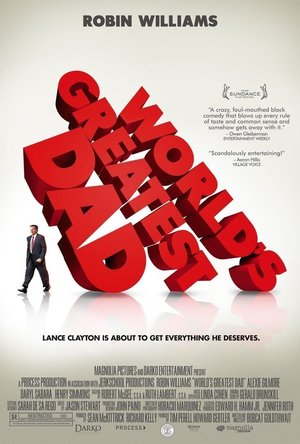

Lance Clayton is a pretty well-established writer, in a sense. He's written several novels and children's books. The problem is none of his work has ever been published. Every submission to publishers has been denied. So Lance tells himself that if his next novel is rejected, he'll give up writing. Lance is also a high school poetry teacher that's on the verge of losing his course due to not having enough student interest. During all of this, Lance has his hands full with his son Kyle. Kyle doesn't seem too interested in much of anything other than the most disturbing type of pornographic videos while continually acting out at school and is on the verge of being transferred to a school for students with special needs. Then, as if that wasn't enough, Lance is seeing the art teacher, Claire, who wants to keep their relationship a secret while not getting too serious. So, it's safe to say that Lance has his hands full. On top of it all though, he's afraid of dying alone. Lance winds up getting everything he's ever wanted after a certain situation presents itself, but soon realizes having all of that doesn't automatically make you happy.
World's Greatest Dad hooked me the first time I read about it debuting at Sundance. I heard, "dark comedy," and, "Robin Williams," and was instantly interested. Then the trailer and plot summary really reeled me in. The result is a film that not only surpassed expectations, but also went in an unexpected direction. When a film is described as a dark comedy, it has usually still stuck to specific guidelines. Maybe it still followed a similar formula to what other comedies did before it. These other films that are labeled as dark comedies don't really break any new ground. World's Greatest Dad goes beyond that. It breaks any ground rules that were laid before it and doesn't follow any sort of formula. When they say, "dark," they aren't kidding. The subject content is pretty disturbing yet is somehow still humorous.
Robin Williams plays the role of a dad who's trying to do his best with the obstacles life has thrown at him incredibly well. With everything that's going on in his life, even in the moments of the film where he doesn't speak, it looks like he's constantly thinking about something. Always dwelling on what's going on around him with the people who are close to him in his life and trying to decide how he's going to handle this situation he's gotten himself into. While his role does show a bit of his comedic side, Robin Williams proves he can handle serious roles rather well with this performance.
While I obviously can't say much about what direction the film goes in without completely spoiling the film, I will say that the trailer does a good job of not giving any of that away. Once the film makes that turn though, it really follows through with it and doesn't let up. One of the best parts of the experience of watching this film for the first time is seeing how far the concept of the film is going to go. As Lance buries himself in this, people begin to say the actions that were taken changed their life for the better. If you told a lie that did that to not just one person, but practically an entire high school...how would you tell them the truth?
World's Greatest Dad is not going to be for everyone. Some people will love it and others will just downright hate it. The film isn't just dark, it's DARK. That and it's a very different kind of comedy with an unexpected turn of events. Most of the humor is very dry, so if that's not your thing then I wouldn't recommend it. For me personally though, it's one of the most interesting films I've seen in quite some time.
World's Greatest Dad hooked me the first time I read about it debuting at Sundance. I heard, "dark comedy," and, "Robin Williams," and was instantly interested. Then the trailer and plot summary really reeled me in. The result is a film that not only surpassed expectations, but also went in an unexpected direction. When a film is described as a dark comedy, it has usually still stuck to specific guidelines. Maybe it still followed a similar formula to what other comedies did before it. These other films that are labeled as dark comedies don't really break any new ground. World's Greatest Dad goes beyond that. It breaks any ground rules that were laid before it and doesn't follow any sort of formula. When they say, "dark," they aren't kidding. The subject content is pretty disturbing yet is somehow still humorous.
Robin Williams plays the role of a dad who's trying to do his best with the obstacles life has thrown at him incredibly well. With everything that's going on in his life, even in the moments of the film where he doesn't speak, it looks like he's constantly thinking about something. Always dwelling on what's going on around him with the people who are close to him in his life and trying to decide how he's going to handle this situation he's gotten himself into. While his role does show a bit of his comedic side, Robin Williams proves he can handle serious roles rather well with this performance.
While I obviously can't say much about what direction the film goes in without completely spoiling the film, I will say that the trailer does a good job of not giving any of that away. Once the film makes that turn though, it really follows through with it and doesn't let up. One of the best parts of the experience of watching this film for the first time is seeing how far the concept of the film is going to go. As Lance buries himself in this, people begin to say the actions that were taken changed their life for the better. If you told a lie that did that to not just one person, but practically an entire high school...how would you tell them the truth?
World's Greatest Dad is not going to be for everyone. Some people will love it and others will just downright hate it. The film isn't just dark, it's DARK. That and it's a very different kind of comedy with an unexpected turn of events. Most of the humor is very dry, so if that's not your thing then I wouldn't recommend it. For me personally though, it's one of the most interesting films I've seen in quite some time.
Heather Cranmer (2721 KP) rated Recursion in Books
Jul 15, 2019
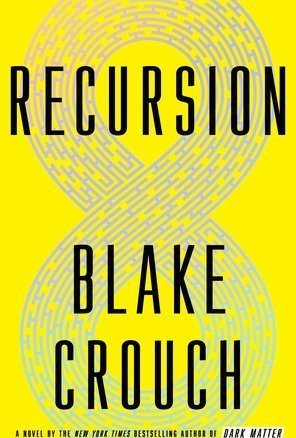
I want to start this review by saying that science fiction isn't my usual genre that I love to read. However, I loved Dark Matter by Blake Crouch, so I decided that I'd give Recursion by Blake Crouch a read since the synopsis intrigued me. I was absolutely blown away by Recursion!
Helena, a nueroscientist is working on a chair to help people with memory loss like her mother who suffers from Alzheimer's. She has it almost all figured out, but she lacks the funding to make her dream a reality. Funding comes in the form of Marcus Slade. Together, Slade and Helena work together to create a chair that can send people back in the past and change memories. However, when people start suffering from False Memory Syndrome due to the changing of memories, Helena wants to stop. Slade won't allow it. Together with Barry, who was forced to have his memories changed, Helena will stop at nothing to stop her memory chair from being used for bad, even if it means dying again and again.
I'm not a very scientific person. (In fact, science and math were my worse subjects in school.) This book does use a lot of scientific jargon that went way over my head at times, yet I was still very intrigued. There are enough context clues to figure out what's going on without all the scientific speak. I felt the plot was solid for Recursion, and scarily enough, I could actually picture this becoming a reality in the not too distant future. Blake Crouch has a knack for writing books that seem so lifelike and in the moment. There is plenty of action in Recursion, and there's also enough mystery to make the reader wonder what is going to happen next. Due to being able to go back to different memories and plotting different outcomes, Recursion is full of little plot twists. There's no cliff hangers in this book, and all my questions were answered by the last page.
The characters in Recursion were so very lifelike! Barry reminded me at first of a dad who loved his family, especially his daughter, very much. He seems like a down to Earth guy and just very well rounded. I admired tenacity to always want to make things right. I also loved Helena's character. I loved how she was willing to do whatever it took, including death and extreme pain, to try to make things right. Helena was an extremely intelligent woman, but she wasn't conceited about it. I felt like Slade's heart was in the right place, but greed took over. I felt like Slade was the perfect antagonist, and his personality reminded me of many people in power and those with a lot of money. I enjoyed reading about each character's story in each memory. I found that to be extremely interesting.
The pacing for Recursion was perfect. This book held my attention from the very first page until the very last word in the book. Not once did I ever become bored or lost while reading this book. I was hooked from the get-go, and I couldn't wait to read more of Recursion every time I was interrupted.
Trigger warnings for Recursion include profanity, mentions of drug use, alcohol use, profanity, sexual references (non graphic), death, violence, some gore, and murder.
Overall, Recursion is quite the read! It's got a thrilling plot and memorable characters throughout! I would love to see this book made into a movie. I think it would do very well! I would definitely recommend Recursion by Blake Crouch to anyone looking for a book that will keep them hooked from the beginning. Regardless of if you're a science fiction fan or not, Recursion is the kind of book that will please any reader.
Helena, a nueroscientist is working on a chair to help people with memory loss like her mother who suffers from Alzheimer's. She has it almost all figured out, but she lacks the funding to make her dream a reality. Funding comes in the form of Marcus Slade. Together, Slade and Helena work together to create a chair that can send people back in the past and change memories. However, when people start suffering from False Memory Syndrome due to the changing of memories, Helena wants to stop. Slade won't allow it. Together with Barry, who was forced to have his memories changed, Helena will stop at nothing to stop her memory chair from being used for bad, even if it means dying again and again.
I'm not a very scientific person. (In fact, science and math were my worse subjects in school.) This book does use a lot of scientific jargon that went way over my head at times, yet I was still very intrigued. There are enough context clues to figure out what's going on without all the scientific speak. I felt the plot was solid for Recursion, and scarily enough, I could actually picture this becoming a reality in the not too distant future. Blake Crouch has a knack for writing books that seem so lifelike and in the moment. There is plenty of action in Recursion, and there's also enough mystery to make the reader wonder what is going to happen next. Due to being able to go back to different memories and plotting different outcomes, Recursion is full of little plot twists. There's no cliff hangers in this book, and all my questions were answered by the last page.
The characters in Recursion were so very lifelike! Barry reminded me at first of a dad who loved his family, especially his daughter, very much. He seems like a down to Earth guy and just very well rounded. I admired tenacity to always want to make things right. I also loved Helena's character. I loved how she was willing to do whatever it took, including death and extreme pain, to try to make things right. Helena was an extremely intelligent woman, but she wasn't conceited about it. I felt like Slade's heart was in the right place, but greed took over. I felt like Slade was the perfect antagonist, and his personality reminded me of many people in power and those with a lot of money. I enjoyed reading about each character's story in each memory. I found that to be extremely interesting.
The pacing for Recursion was perfect. This book held my attention from the very first page until the very last word in the book. Not once did I ever become bored or lost while reading this book. I was hooked from the get-go, and I couldn't wait to read more of Recursion every time I was interrupted.
Trigger warnings for Recursion include profanity, mentions of drug use, alcohol use, profanity, sexual references (non graphic), death, violence, some gore, and murder.
Overall, Recursion is quite the read! It's got a thrilling plot and memorable characters throughout! I would love to see this book made into a movie. I think it would do very well! I would definitely recommend Recursion by Blake Crouch to anyone looking for a book that will keep them hooked from the beginning. Regardless of if you're a science fiction fan or not, Recursion is the kind of book that will please any reader.