
Merissa (14152 KP) rated Lord of the Last Heartbeat (The Sacred Dark #1) in Books
Sep 10, 2019
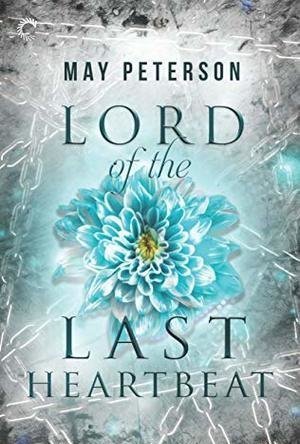
What a fantastical world Ms Peterson has invented, with a hint of American Civil War era, coupled with the English Victorian period, this was a great combination of worlds. And yes, I realise I may have the time periods wrong, but that is what it reminded me of!
I loved how the story for both Rhodry and Mio came out slowly, the reader learning bits and pieces of it until it all fell together. Their relationship was the same way, a slow burner with temptation and resistance.
This was an intriguing tale, with plenty of mystery and misdirection thrown in. An amazing cast of characters helps to move the story along.
A wonderful start to the series, and I can't wait to see what happens next. Absolutely recommended by me.
The Woman Who Had Two Navels and Tales of the Tropical
Book
Nick Joaquin is widely considered one of the greatest Filipino writers, but he has remained...
Fiction
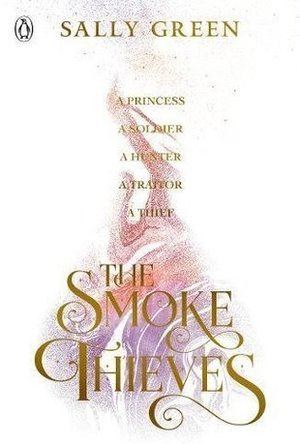
The Smoke Thieves
7.0 Rate It
Book
**The first book in the new historical fantasy series from the author of Half Bad** A princess, a...
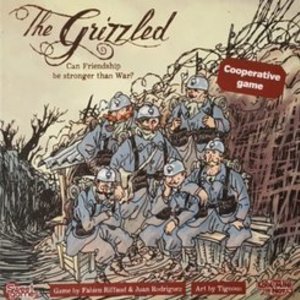
The Grizzled
8.7 Rate It
Tabletop Game
he Grizzled is a cooperative game about survival in the trenches during the first World War where...
Harvest (Hyddenworld, #3)
6.0 Rate It
Book
ONLY SACRIFICE CAN SET THEM FREE It is August, time of the first harvest, traditional time of...
Peace and Chaos
Book
A modern-day yin-yang, push-pull of human mind on internet. Internet was supposed to be the...
fiction romance drama
Destiny's Way (The Doomed Earth #2)
6.0
Rate It
Book
Lieutenant Selene Genji is hurled into the past to try and save a world that doesn’t want her in...
Hazel (2934 KP) rated The Silence Before Dawn (WW2 Resistance Series Book 1) [Audiobook] in Books
Oct 9, 2022
![The Silence Before Dawn (WW2 Resistance Series Book 1) [Audiobook]](/uploads/profile_image/e1b/7f40e687-8bd3-42f4-ad91-b230424c3e1b.jpg?m=1665321953)
As you can imagine, there is an abundance of tension as the Resistance and SOE (Special Operations Executive) undertake their dangerous missions with the ever present threat of being discovered by the Gestapo.
The main character of Marianne is excellent and such a strong character as, in fact, are the rest of the cast. What I particularly liked is that the central focus is on the female protagonists and it depicted their bravery, commitment and sense of duty excellently.
The story, as you can imagine given the subject matter, is intense but riveting and compelling and I cannot praise the narrator enough - what an excellent job Sofia Zervudachi has done; there are quite a lot of characters, both male and female, and she made each one unique.
This is the first in a series and I very much look forward to finding out what happens next and I must give my thanks to Bookouture Audio and NetGalley for enabling me to listen to and share my thoughts of The Silence Before Dawn.

BankofMarquis (1832 KP) rated Fantastic Beasts: The Secrets of Dumbledore (2022) in Movies
Apr 30, 2022
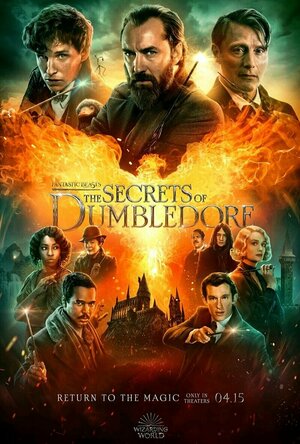
The 3rd installment of the Fantastic Beasts saga, THE SECRETS OF DUMBLEDORE is satisfying enough for fans of the ongoing Wizarding World of Harry Potter universe and will be time well spent for those of you that have watched all 8 Harry Potter films and the first 2 FANTASTIC BEASTS films, but it is nothing…magical.
Picking up where the 2nd film (THE CRIMES OF GRINDEWALD) left off, the arch-nemesis of Dumbledore (a game Jude Law) is in power and looking to start a war with the Muggles (non-magic folk). A ragtag group of heroes (are there any other kind) led by Newt Scamander (Eddie Redmayne) are humanity’s only hope.
And…while this worked well in the first series of film…this setup falls rather flat as it has a “been there done that” feel to it that is not really elevated above the ordinary.
The reason are numerous:
First, Newt Scamander is no Harry Potter. While Eddie Redymayne plays an interesting, quirky, central character - a character who’s unique skills were needed to defeat the bad guy in the first film - he is, really, a secondary character, yet he is the one we follow throughout the film. Kind of like watching the Harry Potter films through the eyes of Neville Longbottom.
Secondly, Grindewald (this time played by Mads Mikkelsen, replacing Johnny Depp) is no Voldemort. Grindewald was an interesting character set up in the first film, but by this film, he is pretty bland (and pretty blandly played by Mikkeslen who is, frankly, miscast).
Thirdly, Dumbledore (Jude Law in a very good performance, one that needed to be larger and more central) is sidelined for most of this film - a film about the battle between Grindewald and Dumbledore, a stumble (plotwise) to be sure in an awkward attempt to keeping the Newt Scamander character front and center.
Fortunately, the supporting cast is strong from Dan Fogler’s muggle, Jacob Kowalski to his love, Queenie (Alison Sudol) to Newt’s brother, Theseus (Callum Turner) to Newt’s assistant Bunty (Victoria Yeates) to Dumbledore’s brother, Aberforth (Richard Coyle) - all have their moments and are interesting (enough) to watch.
Unfortunately, Ezra Miller’s conflicted villain, Credence is poorly written with a crescendo to his character that lands with a thud. And, the inexplicable reason that Katherine Waterston’s main character of Tina is sidelined (rumors are she conflicted with J.K. Rowling) just doesn’t land, so, consequently, 2 major pieces from the first 2 films just don’t work.
What does work in this film is the magical sequences, as handled by Harry Potter veteran David Yates (who has now helmed 6 films in the Wizarding World franchise), the magical scenes are truly…magical. They are fun to watch and the real reason to watch this film, but the story is weak with a misguided viewpoint character that diminishes the fantasy for all.
Rumors are that this was supposed to be a 5 film franchise, but with box office diminishing for each successive Fantastic Beasts films, the filmmakers wisely decided to wrap up most storylines in this film.
It’s time to say goodbye to FANTASTIC BEASTS, but it should be time for the Wizarding World to go the way of Star Wars, Marvel and Star Trek - streaming TV series that breathes new life - and new, interesting characters - to a sagging franchise.
In the meantime, FANTASTIC BEASTS: THE SECRETS OF DUMBLEDORE is “good enough” and since it is all we have at the moment, it will have to do.
Letter Grade: B
7 stars (out of 10) - and you can take that to the Bank(ofMarquis)

James Koppert (2698 KP) rated Into The Crooked Place (Into The Crooked Place #1) in Books
Nov 13, 2019
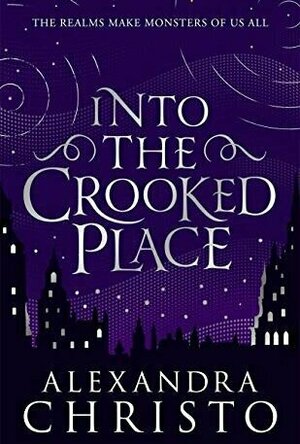
The setting, the characters and the basic plot really does work. This is a book about organised crime in a post war world full of different races of people, some of whom who craft magic who have been all but wiped out, warriors who protected them and ordinary people all of whom sit underneath the organised crime of the kingpin and his underbosses. The story focuses on the underboss Wesley and his crew of strong female characters, the warrior Karam, the secret crafter Saxony and Tavia the busker who sells the boss' magic and all of whom are pretty good in a scrap.
The characters are well created and you can visualise them easily on the pages. The adventure they go on has you rooting for them and the world is an exciting one that does hold enormous potential to be lost in. It is all however a little too dragged out.
As you can see this is the first in the series and the book very much does just tell the first part of the adventure, which is full of magic, betrayal, violence and even some glimmers of romance and yes, it does get very exciting and page turning in some parts, but considering this is only part of the story it could have done with being 150 pages shorter than it was. It just all seemed far more drawn out than it needed to be and let it down slightly. Because of this I was pleased to reach the end instead of being excited to pick up the next part which is a shame because Christo has created characters and a world which deserve to be explored and travelled in. Lets hope Into the Crooked Place number 2 allows this to become the cake it should be.