
Search
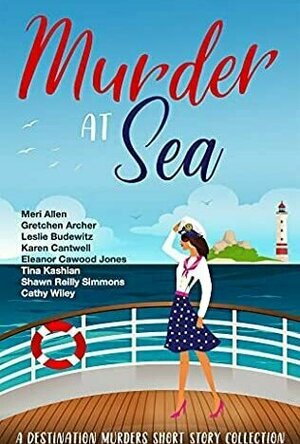
Murder at Sea
10.0 Rate It
Book
Fear naut, the next Destinations Murder collection is here: Murder at Sea. Third in this...

Hadley (567 KP) rated In Cold Blood: A True Account of a Multiple Murder and Its Consequences in Books
Aug 2, 2020

The writing (1 more)
The flow
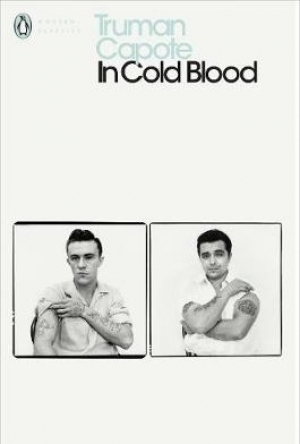
In the 'Introduction' of Capote's true crime novel In Cold Blood, American writer Bob Colacello states: "Capote was one of the first who dared to elevate journalism to the level of art. In Cold Blood is a work of great discipline and even greater restraint, a tale of fate, as spare and elegiac as a Greek tragedy, as rich in its breadth and depth as the classic French novels of Stendhal and Flaubert. 'We all have our souls and we all have facades,' Truman Capote told his friend Kay Meehan a year or so before he came upon the news that would inspire his masterpiece, 'and then there's something in between that makes us function as people. That's what I have the ability to communicate.' "
The novel, which was published in 1965, is an eyewitness account of Capote's visitation to the scene of the murder as well as meetings with the murderers and townspeople- - - a retelling of the crime and aftermath, mostly from the eyes of those affected, by hundreds of hours of interviews and interrogations. The novel, ultimately, was the end of Capote which led him to alcoholism that took his life in 1984.
Like most small-town murders, a tension between residences is created when a well-known and well-liked family of four is brutally murdered, and everyone begins to point a finger at the other: "But afterward the townspeople, theretofore sufficiently unfearful of each other to seldom trouble to lock their doors, found fantasy re-creating them over and again - - - those somber explosions that stimulated fires of mistrust in the glare of which many old neighbors viewed each other strangely, and as strangers." Fortunately, the KBI (Kansas Bureau of Investigation) didn't allow these accusations to keep them from finding the real killers.
" 'Deep down,' Perry continued, 'way, way rock bottom, I never thought I could do it. A thing like that.' " Perry Smith, one of the murderers, confesses to his cohort and partner-in-crime, Richard Hickock, about murdering the Clutter family. "Presently, he said, 'Know what it is that really bugs me? About that other thing[Clutter murder]? It's just I don't believe it- - - that anyone can get away with a thing like that.' And he suspected that Dick [Richard] didn't, either. For Dick was at least partly inhabited by Perry's mystical-moral apprehensions. Thus: 'Now, just shut up!' "
Capote writes clearly of the impact that Smith's and Hickock's past may have played leading up to the murders, mostly focusing on Smith's traumatic childhood. During the trial portion of the book, a psychologist is brought in to point out how the two murderers may not have been responsible for their actions due-to instances in their past - - - a horrific car crash in Hickock's that left him with a lop-sided face and black-out spells, as well as Smith being physically and emotional abused by his alcoholic mother and father. In exploring these traumas, In Cold Blood leaves the impression that these two men were merely ticking time bombs and that the Clutter family, unfortunately, had to pay for it.
The trauma shared by Hickock and Smith help to shape the two murderers into actual human beings rather than monsters throughout the novel: one scene, where we get to read a letter to Smith from his last living sister, readers get to see how he was perceived by his family members, as his sister goes on to degrade him to the maturity level of a child and that she is above him because of that- - -but she also reveals her jealousy of their father loving him more than he ever loved her (despite the excessive abuse). A close friend of Smith's tells him to be careful writing her anymore because he believes that: 'they can only serve to increase your already dangerous anti-social instincts.'
Part of the narrative, too, is the KBI agent in-charge of the Clutter murder, Alvin Dewey: One day while visiting Holcomb's well-known cafe (Hartman's) where Dewey is told he looks awful from weight loss and fatigue - - - Dewey recalls that he had spent: 'two wearying and wasted days trying to trace that phantom pair, the Mexicans sworn by Paul Helm to have visited Mr. Clutter on the eve of the murders.' And then he gets heckled by a local, who wants to know why he hasn't found the people responsible yet,but Dewey simply smiles and walks away, having put up with numerous people being angry that the murders were taking so long to solve.
But it wasn't footwork that got the pair arrested, it was an old cellmate who had given Hickock the idea that there was $10,000 in a safe at the Clutter farm that came forward: (read this on my blog because I had to cut it out since my review was too long!).
Meanwhile, readers also get to experience Hickock and Smith's troubles as they are on the run after the murders which is done masterfully by Capote. And although one would assume that the killers would stay as far away from Kansas as possible, the two end up back there, only to miraculously get out before the police can catch up with them. The pair decide to head to Florida, where, on December 19, 1959, an entire family was murdered in the exact same way as the Clutters; Hickock and Smith both adamantly denied that they were involved with it - - - and back in 2012- - - Hickock and Smith's bodies were exhumed to compare their DNA with a profile found on one of the victim's clothing: they were not a match. The case remains unsolved til this day.
" Presently he[Smith] came across an inner-page story that won his entire attention. It concerned murder, the slaying of a Florida family, a Mr. and Mrs. Clifford Walker, their four-year-old son, and their two-year-old daughter. Each of the victims, though not bound or gagged, had been shot through the head with a .22 weapon. The crime, clueless and apparently motiveless, had taken place Saturday night, December 19, at the Walker home, on a cattle-raising ranch not far from Tallahassee."
Not soon after the pair leave the Florida beaches, they are arrested on what they believe to be parole violations, but it's clear, when the arresting officers are KBI agents that they had been caught for the Clutter murders. " 'Listen good, Perry. Because Mr. Duntz[KBI agent] is going to tell you where you really were...' Midway in the questioning, after he'd[Smith] begun to notice the number of allusions to a particular November weekend, he'd nerved himself for what he knew was coming, yet when it did, when the big cowboy with the sleepy voice said, 'You were killing the Clutter family' - - - well, he'd damn near died. That's all. "
The confession that follows is the most intense part of the book, given in it's entirety, readers finally get to know what happened to the Clutter family that cold night in November, 1959. Smith reveals that he never had the intention to kill anyone in the home, and that when the safe hadn't been found, he had fully intended to leave, even without Hickock, but what kept him there was Hickock threatening to rape Nancy Clutter. Smith states that he hates people who can't control themselves sexually, and that he didn't allow his partner to touch her at all. He also reveals that he thought about killing Hickock afterwards,stating: " no witnesses."
Capote didn't write 'In Cold Blood' until after Hickock and Smith were executed. The amount of interviews, court room appearances, and even witnessing the executions of both murderers shines through in this novel. But the book has also brought about doubters; a handful of people have since come forward to state that Capote's masterpiece is either 'not the full story' or 'completely wrong.' Just as recent as 2017, a man came forward with a 'manuscript' of a book that Hickock was writing, that contained a different confession on how and why the murders took place- - - Hickock states in this unpublished manuscript that a man by the name 'Roberts' had hired him and Smith to kill the Clutters.
Whether or not you believe that Capote wrote the whole truth or some of the truth, this novel is flawless and beautiful. The writing is poetic and the flow of the story keeps moving, page after page, never stopping long enough to bore the reader. I highly recommend this book as a MUST READ for anyone who loves the True Crime genre.
The novel, which was published in 1965, is an eyewitness account of Capote's visitation to the scene of the murder as well as meetings with the murderers and townspeople- - - a retelling of the crime and aftermath, mostly from the eyes of those affected, by hundreds of hours of interviews and interrogations. The novel, ultimately, was the end of Capote which led him to alcoholism that took his life in 1984.
Like most small-town murders, a tension between residences is created when a well-known and well-liked family of four is brutally murdered, and everyone begins to point a finger at the other: "But afterward the townspeople, theretofore sufficiently unfearful of each other to seldom trouble to lock their doors, found fantasy re-creating them over and again - - - those somber explosions that stimulated fires of mistrust in the glare of which many old neighbors viewed each other strangely, and as strangers." Fortunately, the KBI (Kansas Bureau of Investigation) didn't allow these accusations to keep them from finding the real killers.
" 'Deep down,' Perry continued, 'way, way rock bottom, I never thought I could do it. A thing like that.' " Perry Smith, one of the murderers, confesses to his cohort and partner-in-crime, Richard Hickock, about murdering the Clutter family. "Presently, he said, 'Know what it is that really bugs me? About that other thing[Clutter murder]? It's just I don't believe it- - - that anyone can get away with a thing like that.' And he suspected that Dick [Richard] didn't, either. For Dick was at least partly inhabited by Perry's mystical-moral apprehensions. Thus: 'Now, just shut up!' "
Capote writes clearly of the impact that Smith's and Hickock's past may have played leading up to the murders, mostly focusing on Smith's traumatic childhood. During the trial portion of the book, a psychologist is brought in to point out how the two murderers may not have been responsible for their actions due-to instances in their past - - - a horrific car crash in Hickock's that left him with a lop-sided face and black-out spells, as well as Smith being physically and emotional abused by his alcoholic mother and father. In exploring these traumas, In Cold Blood leaves the impression that these two men were merely ticking time bombs and that the Clutter family, unfortunately, had to pay for it.
The trauma shared by Hickock and Smith help to shape the two murderers into actual human beings rather than monsters throughout the novel: one scene, where we get to read a letter to Smith from his last living sister, readers get to see how he was perceived by his family members, as his sister goes on to degrade him to the maturity level of a child and that she is above him because of that- - -but she also reveals her jealousy of their father loving him more than he ever loved her (despite the excessive abuse). A close friend of Smith's tells him to be careful writing her anymore because he believes that: 'they can only serve to increase your already dangerous anti-social instincts.'
Part of the narrative, too, is the KBI agent in-charge of the Clutter murder, Alvin Dewey: One day while visiting Holcomb's well-known cafe (Hartman's) where Dewey is told he looks awful from weight loss and fatigue - - - Dewey recalls that he had spent: 'two wearying and wasted days trying to trace that phantom pair, the Mexicans sworn by Paul Helm to have visited Mr. Clutter on the eve of the murders.' And then he gets heckled by a local, who wants to know why he hasn't found the people responsible yet,but Dewey simply smiles and walks away, having put up with numerous people being angry that the murders were taking so long to solve.
But it wasn't footwork that got the pair arrested, it was an old cellmate who had given Hickock the idea that there was $10,000 in a safe at the Clutter farm that came forward: (read this on my blog because I had to cut it out since my review was too long!).
Meanwhile, readers also get to experience Hickock and Smith's troubles as they are on the run after the murders which is done masterfully by Capote. And although one would assume that the killers would stay as far away from Kansas as possible, the two end up back there, only to miraculously get out before the police can catch up with them. The pair decide to head to Florida, where, on December 19, 1959, an entire family was murdered in the exact same way as the Clutters; Hickock and Smith both adamantly denied that they were involved with it - - - and back in 2012- - - Hickock and Smith's bodies were exhumed to compare their DNA with a profile found on one of the victim's clothing: they were not a match. The case remains unsolved til this day.
" Presently he[Smith] came across an inner-page story that won his entire attention. It concerned murder, the slaying of a Florida family, a Mr. and Mrs. Clifford Walker, their four-year-old son, and their two-year-old daughter. Each of the victims, though not bound or gagged, had been shot through the head with a .22 weapon. The crime, clueless and apparently motiveless, had taken place Saturday night, December 19, at the Walker home, on a cattle-raising ranch not far from Tallahassee."
Not soon after the pair leave the Florida beaches, they are arrested on what they believe to be parole violations, but it's clear, when the arresting officers are KBI agents that they had been caught for the Clutter murders. " 'Listen good, Perry. Because Mr. Duntz[KBI agent] is going to tell you where you really were...' Midway in the questioning, after he'd[Smith] begun to notice the number of allusions to a particular November weekend, he'd nerved himself for what he knew was coming, yet when it did, when the big cowboy with the sleepy voice said, 'You were killing the Clutter family' - - - well, he'd damn near died. That's all. "
The confession that follows is the most intense part of the book, given in it's entirety, readers finally get to know what happened to the Clutter family that cold night in November, 1959. Smith reveals that he never had the intention to kill anyone in the home, and that when the safe hadn't been found, he had fully intended to leave, even without Hickock, but what kept him there was Hickock threatening to rape Nancy Clutter. Smith states that he hates people who can't control themselves sexually, and that he didn't allow his partner to touch her at all. He also reveals that he thought about killing Hickock afterwards,stating: " no witnesses."
Capote didn't write 'In Cold Blood' until after Hickock and Smith were executed. The amount of interviews, court room appearances, and even witnessing the executions of both murderers shines through in this novel. But the book has also brought about doubters; a handful of people have since come forward to state that Capote's masterpiece is either 'not the full story' or 'completely wrong.' Just as recent as 2017, a man came forward with a 'manuscript' of a book that Hickock was writing, that contained a different confession on how and why the murders took place- - - Hickock states in this unpublished manuscript that a man by the name 'Roberts' had hired him and Smith to kill the Clutters.
Whether or not you believe that Capote wrote the whole truth or some of the truth, this novel is flawless and beautiful. The writing is poetic and the flow of the story keeps moving, page after page, never stopping long enough to bore the reader. I highly recommend this book as a MUST READ for anyone who loves the True Crime genre.

Steven Sklansky (231 KP) rated Live By Night (2017) in Movies
Sep 10, 2017


Cast (2 more)
Gun play
Costumes and Sets
Gangsters, Guns and Money. What more is there?
To me Ben Affleck has always been a good actor. It doesn't matter if it is a good movie or a bad one, he seems to make his acting ability known. Live by Night was no different, he played gangster very well. It might be because he was also directing himself. Some movies you can tell that the movie is being directed by the actor in the movie, but in this one you could not see that line. The senses he was in you could tell they were done with the same quality as a director sitting in a chair.
Ben Affleck really does love Boston, because once again that where this whole thing begins. I didn't live in the 20's but the Boston accent must not have been established yet. It was quite refreshing not to hear it in a movie. I really didn't know Boston's backstory but I guess like everywhere on the East Coast there was a mob presence. They did a really good job showing the life of someone in the mob. It wasn't just the killing and booze. It really went deep with the love story of both women and what he had to go though to keep the love and them alive. Even though one of them turned out to be a backstabbing bitch.
When the story progressed to Tampa it was interesting to see something that I don't think has been portrayed in movies. Or I have never seen it. The mob in Florida. The interactions between the Irish and Italian mob in a world of Mexicans and Cubans was done very well. There was a lot going on and it never got boring. The only part of the story that got a little off was rivalry of the mob in Tampa and Miami. You never saw the fights between them until the end. I just thought it was over and done with after the Italians were run out of town. Or maybe I just missed it.
I won't tell you what happened to anyone at the end but the gun fight was amazing. So may parts put in and the chirography was done very well. I think the very end could have been done differently. To me it was very off putting and didn't understand why they choose to go that direction. Granted it was based off a book that I never read and maybe that's the way it had to be. But it could have been written better in the book too. Books seem to get the point across better anyway.
If you like gangster movies, see it. If you like Ben Affleck, see it. If you just want to watch a movie not to be bored, see it.
Ben Affleck really does love Boston, because once again that where this whole thing begins. I didn't live in the 20's but the Boston accent must not have been established yet. It was quite refreshing not to hear it in a movie. I really didn't know Boston's backstory but I guess like everywhere on the East Coast there was a mob presence. They did a really good job showing the life of someone in the mob. It wasn't just the killing and booze. It really went deep with the love story of both women and what he had to go though to keep the love and them alive. Even though one of them turned out to be a backstabbing bitch.
When the story progressed to Tampa it was interesting to see something that I don't think has been portrayed in movies. Or I have never seen it. The mob in Florida. The interactions between the Irish and Italian mob in a world of Mexicans and Cubans was done very well. There was a lot going on and it never got boring. The only part of the story that got a little off was rivalry of the mob in Tampa and Miami. You never saw the fights between them until the end. I just thought it was over and done with after the Italians were run out of town. Or maybe I just missed it.
I won't tell you what happened to anyone at the end but the gun fight was amazing. So may parts put in and the chirography was done very well. I think the very end could have been done differently. To me it was very off putting and didn't understand why they choose to go that direction. Granted it was based off a book that I never read and maybe that's the way it had to be. But it could have been written better in the book too. Books seem to get the point across better anyway.
If you like gangster movies, see it. If you like Ben Affleck, see it. If you just want to watch a movie not to be bored, see it.

Kristy H (1252 KP) rated Hold Still in Books
Feb 13, 2018

Maya is an English professor (her specialty is Woolf) dealing with her daughter Ellie's drug addiction and general disinterest with life. The daughter of two college professors, Ellie has never lived up to her familial expectations. Instead, she's drifting, experimenting, and causing her mother great angst. So Maya sends Ellie to Florida, to stay with her friend, Annie and her family: husband Stephen and five-year-old son, Jack. Annie is having her own issues with Jack and looking for some help. But Maya doesn't tell her friend all of Ellie's woes. Then one day, disaster strikes on Ellie's watch, and things will never be the same again. Now, both Ellie and Maya must confront the aftermath of their actions.
This was an interesting book. It's told in chapters that alternate between Ellie's perspective and Maya's; they also alternate in time: before the event and after. The before chapters lead right up to said event. You know generally what has happened, but not how, so it's surprisingly suspenseful for a book that's mainly about emotions and feelings. As such, the novel conveys a stressful tension immediately. It also does an excellent job of delving into the frightening ramifications of becoming a parent. How much do we influence what our kids become? We see Maya--herself so influenced by her own family situation--and then realize her own effects on Ellie. It's startling and humbling.
However, there is a little bit of a "been there, done that" feeling when reading, of experiencing yet another novel of well-off New York parents screwing up their kids. Neither Maya nor Ellie are really likable in any capacity, and while that's not a problem per se, they are harder to relate to than one would think. (Also not likable: her husband. I felt great sympathy for the younger son, Ben.) There were moments I found myself drawn to Maya, but overall, she was too distant and too horrible to really feel any connection to whatsoever. That fact that she's nearly as immature as her daughter was perhaps the point, but I'm not sure it was one I enjoyed or felt was worth making. Also, the plotlines related to Maya's teaching assistant and other friends seem odd and inserted into the story at times.
Still, it was a well-written novel and the somewhat parallel storylines of a lost and drifting mother and daughter were well-done. I'm not sure about the ending, though. In fact, for a good part of the book, I found myself wondering more about Maya's friend, Annie. I think her story might have been one I would have enjoyed more. Overall, the novel certainly makes you feel and the parenting elements resonate. But will it stay with me? I don't think so.
I received an ARC of this novel from Netgalley (thank you!); it is available for U.S. publication on 3/21/16. You can check out a review of this novel and many others on my <a href="http://justacatandabookatherside.blogspot.com/">blog</a>;.
This was an interesting book. It's told in chapters that alternate between Ellie's perspective and Maya's; they also alternate in time: before the event and after. The before chapters lead right up to said event. You know generally what has happened, but not how, so it's surprisingly suspenseful for a book that's mainly about emotions and feelings. As such, the novel conveys a stressful tension immediately. It also does an excellent job of delving into the frightening ramifications of becoming a parent. How much do we influence what our kids become? We see Maya--herself so influenced by her own family situation--and then realize her own effects on Ellie. It's startling and humbling.
However, there is a little bit of a "been there, done that" feeling when reading, of experiencing yet another novel of well-off New York parents screwing up their kids. Neither Maya nor Ellie are really likable in any capacity, and while that's not a problem per se, they are harder to relate to than one would think. (Also not likable: her husband. I felt great sympathy for the younger son, Ben.) There were moments I found myself drawn to Maya, but overall, she was too distant and too horrible to really feel any connection to whatsoever. That fact that she's nearly as immature as her daughter was perhaps the point, but I'm not sure it was one I enjoyed or felt was worth making. Also, the plotlines related to Maya's teaching assistant and other friends seem odd and inserted into the story at times.
Still, it was a well-written novel and the somewhat parallel storylines of a lost and drifting mother and daughter were well-done. I'm not sure about the ending, though. In fact, for a good part of the book, I found myself wondering more about Maya's friend, Annie. I think her story might have been one I would have enjoyed more. Overall, the novel certainly makes you feel and the parenting elements resonate. But will it stay with me? I don't think so.
I received an ARC of this novel from Netgalley (thank you!); it is available for U.S. publication on 3/21/16. You can check out a review of this novel and many others on my <a href="http://justacatandabookatherside.blogspot.com/">blog</a>;.

BankofMarquis (1832 KP) rated Wind River (2017) in Movies
Mar 14, 2018
Thoughtful, provocative murder mystery
The back 1/2 of August has traditionally been a dumping ground for bad motion pictures. One exception to this was last year when the deserved Oscar nominated film HELL OR HIGH WATER was released (if you still haven't caught up with this, I highly recommend you do). So when I saw that the writer of HHW, Taylor Sheridan, was coming out with another modern sheriff murder mystery, I was intrigued to say the least.
And, I am happy to report, that this film did not disappoint. While it is not at the level of HHW, it certainly is a thoughtful, provocative murder mystery that is a refreshing change from the normal SuperHero, GGI-fests that festoon the cineplex throughout the course of the summer months.
Written and Directed by Sheridan (the screenwriter of HHW and SICARIO), WIND RIVER tells the tale of a murder on the Wind River Indian Reservation in Wyoming. Coming in to investigate is young, city girl, Florida native, Elizabeth Olsen who teams up with aTribal Police Captain (Graham Greene) and a veteran tracker (Jeremy Renner) to find out what happened.
This could have been a by-the-book murder mystery with the naive, "fish-out-of-water" Olsen learning to love and understand the world she is thrust into, but in the hands (and pen) of Sheridan, it is much, much more. Sheridan creates a mood throughout this film, one of slow, lingering dread and hopelessness - and how he accomplishes this was intriguing to me. He uses the setting of the Indian Reservation to show the "smallness" of the people living there, juxtaposing scenes of vast, wild, cold wilderness with scenes of squalor in the settlement of Native American people living there.
The acting is solid - Olsen is turning into a very good actress and her performance sets the right tone. Greene is, as always, a steady hand on the screen with a pragmatic approach to the inhabitants of the Reservation, but it is Jeremy Renner as the quiet, taciturn tracker who has a loss of his own that parallels the murder investigation, that shines. I've always liked Renner and was high on his potential after his breakout performance in THE HURT LOCKER in 2008. While his performances in the blockbusters that followed have been solid, but not spectacular - you saw glimpses of it in films like THE TOWN - but I've felt that he never quite lived up to that potential - until now. This is a very strong performance (falling just short of Oscar material) but one that anchors this film and mirrors the mood that Sheridan sets up through the location of WIND RIVER.
Not the fastest moving of films, but a thoughtful, intelligent mystery that left me grateful for a film with some meat on the bone after a summer of "Cotton Candy" action flicks
Letter Grade: B+
8 (out of 10) stars and you can take that to the Bank (ofMarquis)
And, I am happy to report, that this film did not disappoint. While it is not at the level of HHW, it certainly is a thoughtful, provocative murder mystery that is a refreshing change from the normal SuperHero, GGI-fests that festoon the cineplex throughout the course of the summer months.
Written and Directed by Sheridan (the screenwriter of HHW and SICARIO), WIND RIVER tells the tale of a murder on the Wind River Indian Reservation in Wyoming. Coming in to investigate is young, city girl, Florida native, Elizabeth Olsen who teams up with aTribal Police Captain (Graham Greene) and a veteran tracker (Jeremy Renner) to find out what happened.
This could have been a by-the-book murder mystery with the naive, "fish-out-of-water" Olsen learning to love and understand the world she is thrust into, but in the hands (and pen) of Sheridan, it is much, much more. Sheridan creates a mood throughout this film, one of slow, lingering dread and hopelessness - and how he accomplishes this was intriguing to me. He uses the setting of the Indian Reservation to show the "smallness" of the people living there, juxtaposing scenes of vast, wild, cold wilderness with scenes of squalor in the settlement of Native American people living there.
The acting is solid - Olsen is turning into a very good actress and her performance sets the right tone. Greene is, as always, a steady hand on the screen with a pragmatic approach to the inhabitants of the Reservation, but it is Jeremy Renner as the quiet, taciturn tracker who has a loss of his own that parallels the murder investigation, that shines. I've always liked Renner and was high on his potential after his breakout performance in THE HURT LOCKER in 2008. While his performances in the blockbusters that followed have been solid, but not spectacular - you saw glimpses of it in films like THE TOWN - but I've felt that he never quite lived up to that potential - until now. This is a very strong performance (falling just short of Oscar material) but one that anchors this film and mirrors the mood that Sheridan sets up through the location of WIND RIVER.
Not the fastest moving of films, but a thoughtful, intelligent mystery that left me grateful for a film with some meat on the bone after a summer of "Cotton Candy" action flicks
Letter Grade: B+
8 (out of 10) stars and you can take that to the Bank (ofMarquis)

Gareth von Kallenbach (980 KP) rated Anacondas: The Hunt for the Blood Orchid (2004) in Movies
Aug 14, 2019
Deep in the dense jungles of Borneo, a research team has come hoping to succeed where famed explorer Ponce De Leon once failed. History notes that De Leon ventured to Florida looking for the fabled Fountain of Youth that would endow all who drank from it with eternal youth and life.
The modern quest is taken up by a research team who believe that the rare Blood Orchid, which blooms every seven years is the key to eternal youth, as the small samples they obtained shows that the plant allows for greater cell reproduction and thus an end to aging.
With visions of billions of dollars in their heads, the team sets off to collect several samples of the orchid, as they only have a week to do so before they must wait another seven years for the flower to bloom again. Complicating matters is that the team has arrived during rainy season, and as such there is only one boat captain named Johnson (Johnny Messner), who will attempt to take the team down river in the dangerous conditions. The trip turns out to be even more dangerous than expected, and the team leader Dr. Byron (Matthew Marsden), offers and additional $50,00 to Johnson unbeknownst to his team to push on, no matter what.
When the boat jams a rudder due to debris and ends up on the bad side of a waterfall, the team finds themselves without any transportation and forced to trek across the jungle to not only catch other transportation, but to reach the Orchids in time. Unbeknownst to the team, they have entered an area of the jungle that is teaming with giant and deadly anacondas and the team is soon under attack by the large and deadly creatures that strike without warning and vanish almost as quickly as they appear.
Fractions soon arise as many in the team want to abandon the quest for the orchid and return to safety, while Byron insists that to give up now would be crazy and despite the risk, the prize the orchid promises is well worth the risk.
What follows is the typical cat and mouse game that while short on suspense does have some surprises and laughs along the way.
The snake effects are done via CGI this time out instead of animatronics, and the technology allows an even greater range of motion for the snakes, which adds to the suspense factor, as the snakes are able to appear as full body creatures rather then a simple head. The cast is solid especially Messner and Kadee Strickland as a scientist named Sam. The remainder of the cast has a bit of depth even those whose entire purpose is to become snake chow. Yes, the film is a B-Movie, and is light on plot, realism, and depth, but for late summer entertainment, “Anacondas” has enough bite to keep you interested.
The modern quest is taken up by a research team who believe that the rare Blood Orchid, which blooms every seven years is the key to eternal youth, as the small samples they obtained shows that the plant allows for greater cell reproduction and thus an end to aging.
With visions of billions of dollars in their heads, the team sets off to collect several samples of the orchid, as they only have a week to do so before they must wait another seven years for the flower to bloom again. Complicating matters is that the team has arrived during rainy season, and as such there is only one boat captain named Johnson (Johnny Messner), who will attempt to take the team down river in the dangerous conditions. The trip turns out to be even more dangerous than expected, and the team leader Dr. Byron (Matthew Marsden), offers and additional $50,00 to Johnson unbeknownst to his team to push on, no matter what.
When the boat jams a rudder due to debris and ends up on the bad side of a waterfall, the team finds themselves without any transportation and forced to trek across the jungle to not only catch other transportation, but to reach the Orchids in time. Unbeknownst to the team, they have entered an area of the jungle that is teaming with giant and deadly anacondas and the team is soon under attack by the large and deadly creatures that strike without warning and vanish almost as quickly as they appear.
Fractions soon arise as many in the team want to abandon the quest for the orchid and return to safety, while Byron insists that to give up now would be crazy and despite the risk, the prize the orchid promises is well worth the risk.
What follows is the typical cat and mouse game that while short on suspense does have some surprises and laughs along the way.
The snake effects are done via CGI this time out instead of animatronics, and the technology allows an even greater range of motion for the snakes, which adds to the suspense factor, as the snakes are able to appear as full body creatures rather then a simple head. The cast is solid especially Messner and Kadee Strickland as a scientist named Sam. The remainder of the cast has a bit of depth even those whose entire purpose is to become snake chow. Yes, the film is a B-Movie, and is light on plot, realism, and depth, but for late summer entertainment, “Anacondas” has enough bite to keep you interested.

Lonely Planet Route 66 Road Trips
Lonely Planet, Amy C. Balfour, Karla Zimmerman and Nate Cavalieri
Book
Lonely Planet: The world's leading travel guide publisher Whether exploring your own backyard or...
An honest and emotional YA read
Grace Welles is fifteen, trapped at a third-rate boarding school in Florida, and pretty much resigned to a lonely and miserable life. Her father has another (real) family in California, sneaking away to occasionally remember that Grace and her beautiful, flighty mother exist. Grace has no friends. But one day she helps a fellow student, Wade, who is being attacked by a group of popular boys. The two form a strange friendship that eventually blossoms into more. Suddenly, life has meaning. But with this meaning, comes feelings, and the realization that there may be more to Wade than his kind and cool exterior.
I've been sitting on this review, because I honestly cannot tell if this book was amazing or terrible. I know, I know--how is that possible? Helnwein has written something very different here, in many ways: a raw, awkward story that often makes you cringe and want to look away. She spares no detail (or language) when covering Gracie's forays into friendship, drinking, and sex. You forget she's fifteen/sixteen, which is probably what makes it so hard, at times. Yes, she's alone at boarding school, but still? Is this what happens at boarding school? Perhaps that's my problem with all boarding school tales. (At least no one gets murdered.) It's a paradox. Grace falls in love with her biology teacher, which seems sweetly realistic. But when he rejects her, she curses him, destroys his property, and more--is this truly allowed, even at a third rate school? Every thing is excused as "needing the tuition money." Not so realistic.
If you're able to overlook the terrifying behavior of these young students (perhaps made all the more frightening to me, as the mother of young daughters, one of whom is actually named Grace), there are some poignant moments here. Helnwein really does capture the beauty and absolute fear of falling in love for the first time, and Grace and Wade's relationship is pretty magical. The self-centeredness of adolescence--how the world revolves around nothing else. Much of Grace's coming of age is realizing that a great big world exists beyond her. But it's tender and sweet watching her fall. There are some cute friendships too.
At many times, this is a funny and heartbreaking book. There are a lot of serious topics hidden between the craziness. Gracie and Wade are truly lovely characters, and I cared for both of them deeply. I think I was just thrown by some of the characters acting/speaking older than their age and the fact that the book truly tells it how it is, right in your face. It takes a bit of an adjustment. I'm not sure this book is for everyone, but there's a tenderness and beauty to it, and I think many teens would enjoy it. 3 stars.
I've been sitting on this review, because I honestly cannot tell if this book was amazing or terrible. I know, I know--how is that possible? Helnwein has written something very different here, in many ways: a raw, awkward story that often makes you cringe and want to look away. She spares no detail (or language) when covering Gracie's forays into friendship, drinking, and sex. You forget she's fifteen/sixteen, which is probably what makes it so hard, at times. Yes, she's alone at boarding school, but still? Is this what happens at boarding school? Perhaps that's my problem with all boarding school tales. (At least no one gets murdered.) It's a paradox. Grace falls in love with her biology teacher, which seems sweetly realistic. But when he rejects her, she curses him, destroys his property, and more--is this truly allowed, even at a third rate school? Every thing is excused as "needing the tuition money." Not so realistic.
If you're able to overlook the terrifying behavior of these young students (perhaps made all the more frightening to me, as the mother of young daughters, one of whom is actually named Grace), there are some poignant moments here. Helnwein really does capture the beauty and absolute fear of falling in love for the first time, and Grace and Wade's relationship is pretty magical. The self-centeredness of adolescence--how the world revolves around nothing else. Much of Grace's coming of age is realizing that a great big world exists beyond her. But it's tender and sweet watching her fall. There are some cute friendships too.
At many times, this is a funny and heartbreaking book. There are a lot of serious topics hidden between the craziness. Gracie and Wade are truly lovely characters, and I cared for both of them deeply. I think I was just thrown by some of the characters acting/speaking older than their age and the fact that the book truly tells it how it is, right in your face. It takes a bit of an adjustment. I'm not sure this book is for everyone, but there's a tenderness and beauty to it, and I think many teens would enjoy it. 3 stars.

Hidden Mickeys: Walt Disney World Edition
Travel and Entertainment
App
•THIS APPLICATION IS FOR DISNEY WORLD IN FLORIDA. IF YOU ARE LOOKING FOR DISNEYLAND IN CALIFORNIA,...

Hazel (1853 KP) rated Timmy Failure: The Cat Stole My Pants in Books
Sep 12, 2017
Amusing ... If you are a child
I received this book for free through Goodreads First Reads.
For fans of Diary of a Wimpy Kid (Kinney, 2004) is a juvenile series by American author, Stephan Pastis, about a young boy who believes he is the world’s greatest detective. A series that is continually growing, the sixth Timmy Failure story is now available for fans and new readers. Subtitled The Cat Stole My Pants, Timmy Failure embarks on an adventure of mystery and crime solving whilst getting himself into all sorts of mischief.
Emulating both real and fictional detectives, Timmy has established his own agency, Failure, Inc., of which he is the sole employee after the flight of his (imaginary) ex-business partner, Total the polar bear, who is currently seeking political asylum in Cuba. Unfortunately, Timmy has been forced to join his mother and Doorman Dave on their honeymoon in Key West, Florida, along with Doorman Dave’s nephew, Emilio.
“Crime doesn’t take a holiday. Neither does greatness.” Determined to continue solving crimes, Timmy hires Emilio as an unpaid intern and sets off searching for crimes, greatly over exaggerating every little piece of “evidence” he finds. However, it soon appears that someone is out to get Timmy and he, along with Emilio, is determined to find out whom.
Timmy is a melodramatic, unconventional child with a large ego and is constantly getting told off. From annoying adults to having his pants stolen by a polydactyl cat – or so he claims – there is no end to the hilarious situations he causes.
The cat that stole Timmy’s pants only makes a brief appearance in the book, therefore the subtitle is more to attract the attention of young readers with its silliness rather than be suggestive of a certain storyline.
Despite his grand claims, Timmy is not a very good detective and a lot of his unsolved crimes have been invented by his overactive imagination. This adds to the humour because, although he seems like an intelligent child, his ideas are completely silly.
Adorned with childish drawings and diagrams, Timmy Failure narrates the story from his subjective point of view, inflating his successes and blaming any failure on poor Emilio. No one takes Timmy seriously, which is something many of the target readers may appreciate, although they should also understand how futile Timmy’s attempts are at being a detective.
The storyline is not particularly clear until the final chapters of the book. Up until that moment, the book is full of disastrous, imaginary detective endeavours that prove Timmy to be nothing more than an annoying, inventive boy.
Some of the language may be above children’s reading capabilities, however, the humour is directly on their level. Whereas an adult may not find the idea of a cat stealing someone’s pants amusing, a child would find that hysterical.
There is no reason to read the Timmy Failure books in order, so if you, like me, read book six first, there is no problem. The stories are particularly aimed at young boys and will hopefully encourage the demographic to start reading more. Whilst it may not be a great feat of literature, it is a good enough introduction to the world of books.
For fans of Diary of a Wimpy Kid (Kinney, 2004) is a juvenile series by American author, Stephan Pastis, about a young boy who believes he is the world’s greatest detective. A series that is continually growing, the sixth Timmy Failure story is now available for fans and new readers. Subtitled The Cat Stole My Pants, Timmy Failure embarks on an adventure of mystery and crime solving whilst getting himself into all sorts of mischief.
Emulating both real and fictional detectives, Timmy has established his own agency, Failure, Inc., of which he is the sole employee after the flight of his (imaginary) ex-business partner, Total the polar bear, who is currently seeking political asylum in Cuba. Unfortunately, Timmy has been forced to join his mother and Doorman Dave on their honeymoon in Key West, Florida, along with Doorman Dave’s nephew, Emilio.
“Crime doesn’t take a holiday. Neither does greatness.” Determined to continue solving crimes, Timmy hires Emilio as an unpaid intern and sets off searching for crimes, greatly over exaggerating every little piece of “evidence” he finds. However, it soon appears that someone is out to get Timmy and he, along with Emilio, is determined to find out whom.
Timmy is a melodramatic, unconventional child with a large ego and is constantly getting told off. From annoying adults to having his pants stolen by a polydactyl cat – or so he claims – there is no end to the hilarious situations he causes.
The cat that stole Timmy’s pants only makes a brief appearance in the book, therefore the subtitle is more to attract the attention of young readers with its silliness rather than be suggestive of a certain storyline.
Despite his grand claims, Timmy is not a very good detective and a lot of his unsolved crimes have been invented by his overactive imagination. This adds to the humour because, although he seems like an intelligent child, his ideas are completely silly.
Adorned with childish drawings and diagrams, Timmy Failure narrates the story from his subjective point of view, inflating his successes and blaming any failure on poor Emilio. No one takes Timmy seriously, which is something many of the target readers may appreciate, although they should also understand how futile Timmy’s attempts are at being a detective.
The storyline is not particularly clear until the final chapters of the book. Up until that moment, the book is full of disastrous, imaginary detective endeavours that prove Timmy to be nothing more than an annoying, inventive boy.
Some of the language may be above children’s reading capabilities, however, the humour is directly on their level. Whereas an adult may not find the idea of a cat stealing someone’s pants amusing, a child would find that hysterical.
There is no reason to read the Timmy Failure books in order, so if you, like me, read book six first, there is no problem. The stories are particularly aimed at young boys and will hopefully encourage the demographic to start reading more. Whilst it may not be a great feat of literature, it is a good enough introduction to the world of books.