Search

Search only in certain items:

The Day the Earth Froze (Sampo) (1959)
1959 | Action, International, Classics
7.0 (1 Ratings)
Movie Favorite

"This is directed by Alexander Ptushko. I think he was Russian but he did all his films in Finland because they actually had money. This is like an amalgam of Norse folk tales poured into a film. The special effects are stunning for the time of the film, and yet it is so whacked out. It’s indescribable. It seems like it was filmed with an alien culture. Nothing makes any sense of any iteration of myth or culture that you can think up in this world. It’s actually quite beautiful, and it has a hero whose name is Lemminkäinen who tries to be a hero and just continues to fail in every respect and yet he comes home and it’s “hail to the conquering hero” even though he’s a total failure. And we actually sing a song in the Riff Trax about what a failure he is."

Source
  
Once In A Very Blue Moon by Nanci Griffith
1984 | Country
(0 Ratings)
Album Favorite

"Texan singer-novelist Nanci Griffith doesn't compromise with her audience. I once heard her reverse-heckle a fan shouting out requests, retorting in her Tweety-Bird voice, "I don't come to where you work and yell at you!" Like all her first several albums this one is lyrics-heavy, with folk-country accompaniment (Dobros, lap steel, Bela Fleck's banjo), and the stories take precedence over the genre, to the point where she actually criticises country. The black housewife narrating 'Mary & Omie' reports "And I thank my Omie for taking me out of the South." Take that, Stephen Foster! Like the very different Mother Fist, this 1986 album is dedicated to Truman Capote (among others), and every song is a story song, full of car-jumping daredevils, lovelorn young widows, and of course touring musicians bored in buses, staring out into the endless falling snow. "

Source
  
40x40

Morgan Sheppard (1037 KP) created a post

Oct 20, 2026  
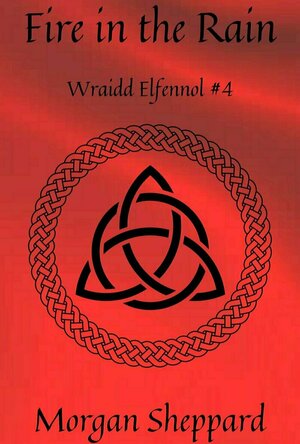
Trouble has found the island of Wraidd Elfennol once more.

One of the Water Partners has told of a problem with the waterways, a fault that could affect the land and its folk for generations to come if no solution is found. Afon and Necia, together with their partners Meinwen and Dai, are called as Chosen; with friends and mentors close at hand, they must find the inner confidence in themselves and their Element to win the day.

Will the Chosen of Fire and Water succeed, or is the island doomed to live forever beneath the shadows of Cysgod?

Full of myth and magic, with a strong Welsh theme, FIRE IN THE RAIN brings the Wraidd Elfennol series to its close. The finale is free to read on Kindle Unlimited.

Read the finale here 👉 https://books2read.com/FireintheRain

#YA #Epic #Myth #Magic #Fantasy #BookSeriesFinale #FREE on #KU #WraiddElfennol #WelshFolklore
     
40x40

Morgan Sheppard (1037 KP) created a post

Nov 1, 2026 - 2:18 PM  
It's #FolkloreFriday Special, on a Sunday!❄️

This week’s focus marks the brutal opening of the Welsh winter on Nos Galan Gaeaf by looking at the terrifying lore of the Hwch Ddu Gwta (the Tailless Black Sow). While other spirits guard the borders, this ancient beast actively hunts them. In the old traditions, once the community bonfire died out, anyone who lingered behind was considered entirely at the mercy of this red-eyed monster, who would drag the solitary wanderer down to the underworld.

Welsh folk belief treated this seasonal transition with absolute gravity; being the last person on the mountain path after dark was a fatal error in judgment. The old stories remind us that the dark half of the year moves fast and strikes hard; if you don't move with intention, the winter will catch you unprepared. ⛰️

#FolkloreFriday #WelshFolklore #TalesFromWales #HwchDduGwta
     
40x40

James Dean Bradfield recommended Steeltown by Big Country in Music (curated)

 
Steeltown by Big Country
2014 | Punk
6.0 (2 Ratings)
Album Favorite

"I'm gonna go for a topical one... Obviously Stuart Adamson came out of The Skids. John Peel called him the Scottish Hendrix, and I loved The Skids. Absolutely loved them. Then he went on to form Big Country. And first of all I had to take a step back from it, but I just loved the way he put myths and folklore - Scottish folklore - into music, but he also linked it up with the modern day era. All those myths and belief systems were very prescient of modern day culture: how people use music to deal with loss, how people use music to deal with lostness in society, with poverty, with trying to strive to remain above the dignity level. And I thought that was quite a noble ambition for a musician, really. Lots of musicians have done that in different guises, but because Big Country was wrapped up in a certain Scottishness in the music, and what some people have called the Celtic mist in their music, they were utterly pilloried in the press. I love the music press and I love music journalism, but sometimes the music press have to be called to account, and they should give the musical kudos and reparations to Big Country and Stuart Adamson, who's sadly not with us. I also used to think, why is it that Billy Bragg's allowed to have a folk edge to him? The Men They Couldn't Hang had a folk edge to them; The Pogues were allowed to have a folklore edge to them, and people find it acceptable with The Pogues because they could get drunk to it. But Big Country were mercilessly slammed for being Scottish, whining, bagpipes… I look back and think it's a music journalism crime, what happened to them, and what happened to Stuart Adamson. You look at the album and you've just got so many songs which just touch upon the post-Thatcher unemployment that was going on in Scotland at the time... And the English-based press just absolutely slammed him for it; they just thought he was a man dealing in myth and outdated folklore and I think it's disgusting. I remember, in the sleevenotes, he said he understood the power of music way before he understood its language, and that's what he was trying to do with Big Country. It was a noble, amazing achievement which was treated with… what would you call it? Just London-dominated disdain. I'd like to redress that just by picking it. A folk influence is very much allowed in English music today, whether it be fucking Frank Bloke or Mumford And Sons with their Cath Kidston version of it. It's allowed through the gate; it's allowed to sell millions; it's allowed to have a voice. So there is a symbolism there. It's enough to make you want to be independent, the way Big Country were treated by the music press!"

Source