Search

Search only in certain items:

鬼婆 [Onibaba] (1964)
1964 | Fantasy, Horror, Thriller
7.4 (5 Ratings)
Movie Favorite

"Horrors and desire, death and lust go hand in hand in Onibaba and Kuroneko, a perverse, sweaty double bill from Kaneto Shindo. I saw these two films at age ten, and they did some serious damage to my psyche. Both are perfect fables rooted in Japanese folklore but distinctly modern in their approach to violence and sexuality. As exuberant and exquisite as a netsuke carving, these atmospheric jewels show mankind trapped in a cosmically evil world. The tales seem to fit together so perfectly that they fuse into one as time goes by. Onibaba and Kuroneko make a perfect double bill for the second circle of hell."

Source
  
40x40

Guillermo Del Toro recommended Kuroneko (1968) in Movies (curated)
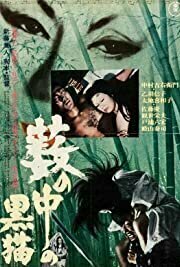
 
Kuroneko (1968)
Kuroneko (1968)
1968 | Drama, Horror
(0 Ratings)
Movie Favorite

"Horrors and desire, death and lust go hand in hand in Onibaba and Kuroneko, a perverse, sweaty double bill from Kaneto Shindo. I saw these two films at age ten, and they did some serious damage to my psyche. Both are perfect fables rooted in Japanese folklore but distinctly modern in their approach to violence and sexuality. As exuberant and exquisite as a netsuke carving, these atmospheric jewels show mankind trapped in a cosmically evil world. The tales seem to fit together so perfectly that they fuse into one as time goes by. Onibaba and Kuroneko make a perfect double bill for the second circle of hell."

Source
  
40x40

James Dean Bradfield recommended Steeltown by Big Country in Music (curated)

 
Steeltown by Big Country
2014 | Punk
6.0 (2 Ratings)
Album Favorite

"I'm gonna go for a topical one... Obviously Stuart Adamson came out of The Skids. John Peel called him the Scottish Hendrix, and I loved The Skids. Absolutely loved them. Then he went on to form Big Country. And first of all I had to take a step back from it, but I just loved the way he put myths and folklore - Scottish folklore - into music, but he also linked it up with the modern day era. All those myths and belief systems were very prescient of modern day culture: how people use music to deal with loss, how people use music to deal with lostness in society, with poverty, with trying to strive to remain above the dignity level. And I thought that was quite a noble ambition for a musician, really. Lots of musicians have done that in different guises, but because Big Country was wrapped up in a certain Scottishness in the music, and what some people have called the Celtic mist in their music, they were utterly pilloried in the press. I love the music press and I love music journalism, but sometimes the music press have to be called to account, and they should give the musical kudos and reparations to Big Country and Stuart Adamson, who's sadly not with us. I also used to think, why is it that Billy Bragg's allowed to have a folk edge to him? The Men They Couldn't Hang had a folk edge to them; The Pogues were allowed to have a folklore edge to them, and people find it acceptable with The Pogues because they could get drunk to it. But Big Country were mercilessly slammed for being Scottish, whining, bagpipes… I look back and think it's a music journalism crime, what happened to them, and what happened to Stuart Adamson. You look at the album and you've just got so many songs which just touch upon the post-Thatcher unemployment that was going on in Scotland at the time... And the English-based press just absolutely slammed him for it; they just thought he was a man dealing in myth and outdated folklore and I think it's disgusting. I remember, in the sleevenotes, he said he understood the power of music way before he understood its language, and that's what he was trying to do with Big Country. It was a noble, amazing achievement which was treated with… what would you call it? Just London-dominated disdain. I'd like to redress that just by picking it. A folk influence is very much allowed in English music today, whether it be fucking Frank Bloke or Mumford And Sons with their Cath Kidston version of it. It's allowed through the gate; it's allowed to sell millions; it's allowed to have a voice. So there is a symbolism there. It's enough to make you want to be independent, the way Big Country were treated by the music press!"

Source
  
40x40

Morgan Sheppard (1033 KP) created a post

Jun 26, 2026  
#FolkloreFriday 🌩️

The Cŵn Annwn are among the most enduring presences in Welsh folklore, and are one of the most consistently misunderstood.

They are the hounds of Annwn, the Welsh Otherworld, white-bodied and red-eared in the oldest descriptions, running with Arawn their master across the night sky and through the storms that gather after midsummer. They are associated with the Wild Hunt in the broader Celtic tradition, though the Welsh understanding of them is its own distinct and carefully considered thing. They don't simply terrorise. They have purpose, direction, and a sovereignty entirely their own.

The piece of their folklore I find most compelling is the detail about sound. The Cŵn Annwn are loudest at a distance and grow quieter as they approach. To hear them clearly and close is not a warning. It is already too late for warnings. That inversion of the expected, of danger growing quieter rather than louder as it nears, says something very precise about the nature of the Otherworld in Welsh tradition. It operates by different rules and doesn't announce itself the way the mortal world does.

They were heard in storms, in the depths of winter, on the old roads between places. They ran where the boundaries were thinnest. And they were not cruel, in the tradition's own terms. They were simply doing what they had always done, moving through the world on business that was not the living's to question. 🌩️

#FolkloreFriday #WelshFolklore #TalesFromWales