

Halifax Express Sign-in
Finance
App
Express Sign in for iPad gives you quick, convenient access to Online Banking through your tablet,...

Reverso translation dictionary
Reference and Education
App
Translate and learn millions of words and expressions and express yourself as if you were a native...

Portuguese Video Dictionary - Learn and Speak with Video Phrasebook
Travel and Reference
5.5 Rate It
App
Do you ever wish when traveling that you could have someone who could teach you their local language...

Dutch Video Dictionary - Translate, Learn and Speak with Video Phrasebook
Travel and Reference
App
Do you ever wish when traveling that you could have someone who could teach you their local language...

PROMT Translator Spanish-English offline
Travel and Reference
App
- Quick and high-quality translation without the internet - New “Dialog” mode for easy...

ELSA Speak - Accent Reduction
Education and Games
App
Learn to speak English doesn’t have to be scary and lonely anymore. With ELSA - your English...

Dic-Dic. Dictado multilingüe para la práctica de la escritura y de la correspondencia entre sonido y grafía
Education and Games
App
***App featured and recommended by Apple in the App Store Kids section in more than 20 countries*** ...

Offline Mongolian to English Language Dictionary
Education and Book
App
This Mongolian to English Language Dictionary with a glossary of well over six hundred thousand...

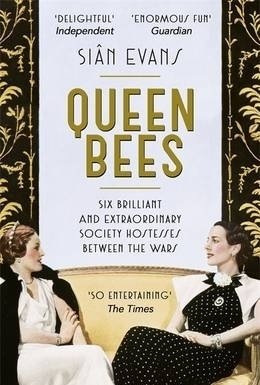

A spectacle of celebrity, talent and burning ambition, Queen Bees combines the biographical stories of six ambitious women who helped to shape the standards of British society between the two world wars. Londoner Siân Evans is a cultural historian who has previously worked with the Victoria and Albert Museum, National Trust and Design Museum, and takes great lengths to thoroughly research into her written subject in order to portray a highly accurate insight to the lives of historical figures. Due to the non-existent political status of women in the early 1900s, the women featured in this book are virtually unknown today, yet they had a great impact during the 20s and 30s and helped to shape the Britain of today.
Although not necessarily born into it, circumstances such as marriage meant these six women were regarded as upper class. In no particular order, the names impacting on the social revolution and thus featured in Queen Bees are as follows: Lady Nancy Astor, the first female MP; Lady Sybil Colefax, who became a friend of Edward VIII; Lady Emerald Cunard, also connected with the royal family; Mrs. Ronnie Greville, a rather formidable woman; Lady Edith Londonderry, the founder of the Women’s Legion; and Laura Corrigan, the youngest of the set. Evans talks the reader through these women’s careers as professional hostesses as they compete to throw the better party, entertaining famous writers and actors as well as members of royalty, both national and foreign.
What is perhaps the most interesting, and indeed the most worth learning, is the way a couple of these women altered the future of the British monarchy. Without their interference the future George VI would never have married Elizabeth Bowes-Lyon, and without their involvement in the relationship between Edward VIII and Wallis Simpson, George VI would never have come to the throne. This is such an important aspect of British history that has been widely left out and ignored. Without these hostesses influence we would all be experiencing a slightly different life.
In terms of the actual writing, Siân Evans manages fairly well to engage the reader as she relates the factual story in a more or less chronological way. A slight issue is the quick, often undetected, move from one woman to the next, resulting in a lot of confusion about who is who particularly at the beginning of the book. A lot of the narrative features other key figures from the same period and often moves away from the main characters, which, whilst interesting, is not what the reader necessarily expected from a book whose title Queen Bees suggested it was only going to be about the women’s lives.
Footnotes, quotes and extracts from letters and diaries help to make the book appear reliable, factual and believable. Some of the content, without back up, would have seemed rather fanciful or exaggerated. Queen Bees can be read as a source of entertainment or as a citation for historical research. What is found within these pages is a more unbiased account of the early twentieth century than would be found in numerous male dominated history textbooks.
Mature readers of all ages are likely to gain something from reading Queen Bees – pleasure, knowledge etc., however it is most likely to appeal to the contemporary feminist. With this in mind, be aware that the six hostesses were not feminists of their time; they were not involved in Suffragette movements and were fairly content to live off money earned by their husbands or fathers. Yet, on the other hand, they impacted on the future of Britain as much as the male politicians of the time. Highly political in content, Queen Bees is worth reading to discover our own history, but be prepared for initial confusion over who is who and rather lengthy paragraphs.

Mayhawke (97 KP) rated Bats In The Belfry in Books
Feb 26, 2018 (Updated Feb 27, 2018)
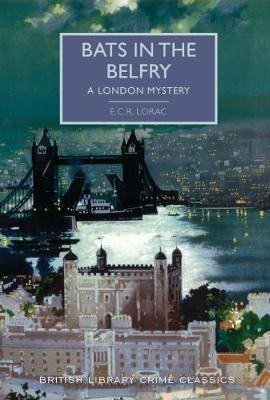

Fifty-one re-issues in and I’m still stunned at the number of authors who had stellar careers as crime writers, were fully inducted members of the Detection Club, and had publication lists to rival Christie’s but who, within a few years of their deaths, had just vanished from the pantheon classic crime novelists.
Such a writer was E.C.R.Lorac, author of Bats In The Belfry. In his introduction Martin Edwards describes the pseudonymous Lorac (real name Edith Caroline Rivett) as enjoying a “low-key career spanning more than a quarter of a century.” It also produced a catalogue of over seventy novels, yet, cosy crime fan that I am I had never heard of her until her book turned up on my work intranet.
Bats, British Library’s inaugural Crime Classic for 2018, is also the first of Lorac’s novels to be given the British Library treatment. It couldn’t have happened to a better book! One of the dangers of republishing books that have disappeared in the mists of time, at least if you are republishing them for the mass market, is that some of them will prove to have been ‘lost’ with good cause. Not that the writing need be poor or the plotting weak, but there are social aspects that can be critical to the development or fundamental premise of the story that change over the course of half a century. When that happens there is a danger that the reader will at best be disgruntled with a puzzle they were unlikely to be able to solve because they didn’t understand the clues they were being given, or, at worst, that the whole premise will seem beyond ludicrous to modern readers. Of the twenty or so BLCC’s I have read only one has fallen into the latter category, and whilst there have been one or two which were a bit plodding thanks to such issues they have largely been a pleasure to read, and I have been able to joyfully pit my wits against the authors’ intrinsic challenge to solve the mystery before the denouement.
Bats in the Belfry most definitely falls into this class of Crime Classic, so much so that it’s a surprise to find from Edwards that it was a bit of a non-starter when it was first published in 1937.
A failing writer, his actress wife, his ward and a selection of friends are collected one evening following the funeral of the writer’s cousin. Shortly thereafter the writer himself has vanished, his suitcase and passport left in a darkly sinister studio known variously as The Belfry, and The Morgue. The story is as dark and twisty as any you could hope for from a member of the Detection Club, and it plays nicely on themes of the time. Broken marriages, financially emasculated men, and the requisite ‘strange foreign man’ all appear, and even aarchaeology gets a look in. As the main characters sit and incautiously discuss ways to bump off someone and hide the body there is brief verbal tussle over the usefulness – and even existence of – dene holes, ancient subterranean storage areas that provided writers of the time with endless possibilities, most notably in Sayers’ The Nine Tailors. Lorac’s plotting is flawless and deceptively simplistic, and she leads you back and forth from suspect to suspect. She is brutally unsympathetic to her characters, and her writing bundles you along until you finally reach the conclusion, to discover how good you are at detecting. Or not.