
Pango is dreaming
Games and Book
App
Discover 5 unpublished PANGO stories ! An interactive book to share with your child. Pango is...
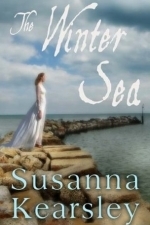
The Winter Sea (Slains #1)
7.3 Rate It
Book
In the spring of 1708, an invading Jacobite fleet of French and Scottish soldiers nearly succeeded...
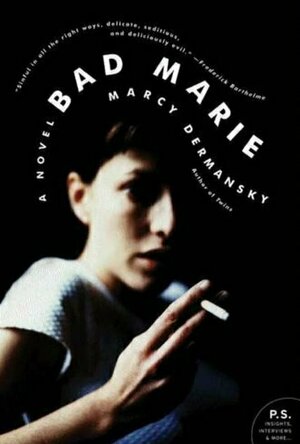
Bad Marie
Book
“Reading Marcy Dermansky’s Bad Marie is like spending a rainy afternoon in a smaller, older...
Claude Monet, the exhibition at Grand Palais Paris
Catalogs and Book
App
● AN ART BOOK OPTIMIZED FOR IPAD ● ● Images of unsurpassed quality: very high resolution up to...

Portfolio Manager App
Finance and Business
App
Fastest and safest way to control your shares Portfolio Manager let you quickly view all your...
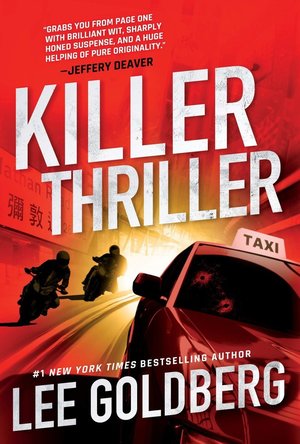
Killer Thriller
8.0 Rate It
Book
Everybody loves Ian Ludlow’s action novels—especially the CIA—because the spies know something...
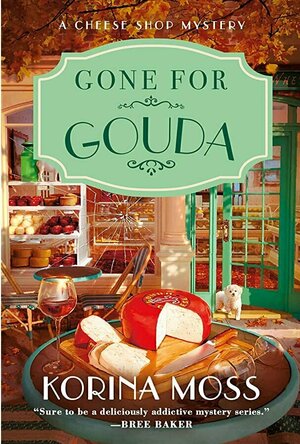
Gone for Gouda
10.0 Rate It
Book
Things are going from gouda to bad to ugly for cheesemonger Willa Bauer in Gone for Gouda. Yarrow...

David McK (3883 KP) rated How the French Won Waterloo (Or think they did) in Books
Jul 5, 2026
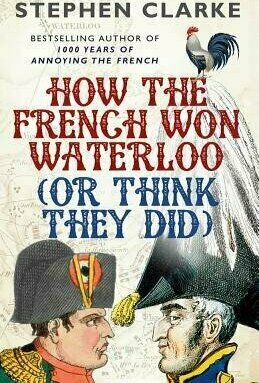

No, the French did NOT win Waterloo.
Or, rather (as the author posits), the Battle of Waterloo itself - instead, they won the "P.R." aspect of it all, with Napoleon undeniably more of a familiar historical figure to most than his counterpart, Arthur Wellesley, the future Duke of Wellington.
I did learn some stuff whilst reading this, and did have a chuckle or two at the thought of the 'accounting system' (treat each component of a victory as a victory in its own right, but each defeat as one defeat in total) that Bonapartists - apparently - use, and so, in that regard at least, it was a worthwhile read even if not earth-shattering.

Ross (3284 KP) rated Season of Storms in Books
Apr 23, 2018 (Updated Apr 25, 2018)
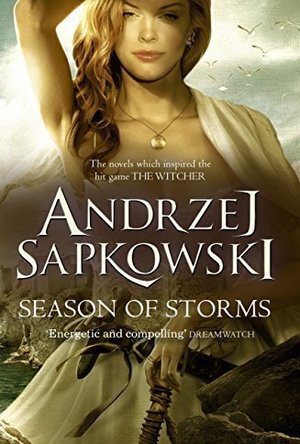
To my knowledge, the books of The Witcher are split into the short story collection prequels (one of which I have read) and the full books (which I have not read). This book is somewhere in between being neither strictly a collection of short stories nor a focussed standalone novel in its own right. Chronologically, this book falls in between the stories contained in The Last Wish) though it is impossible to say quite where it falls (as mention of the stryga is made near the end, which begins the Last Wish I have to assume it comes after the flashback stories from that tome but before the overarching story linking them all).
It may be because I haven't read the full novels, but I find the Witcher to be a thoroughly bland and unexciting character and I have no connection with him. He has next to no personality and contributes nothing to the dialogue of the book. Similarly, all other characters are very disposable - they are either supposedly strong-willed sorceresses (who smell of flowers and throw themselves at the Witcher and are bedded instantly) or they are otherwise instantly forgettable.
I think Sapkwoski was trying to give the sorcerers a sense of academic snobbery but they frequently use Latin phrases, which just gets irritating very quickly. Similarly French words and phrases are thrown in willy-nilly without translation which gets annoying as well. This seems even more unusual when you realise the story was written in Polish and translated into English, with some parts kept in French or Latin. And then further when it is meant to be in a different world where French wouldn't be a thing.
The story essentially follows Geralt of Rivia (The Witcher) who loses his swords and goes on a quest to get them back, and just happens along the way to meet people who need his skills (like on Neighbours where one character leaves and another comes in through the door at exactly the same moment). This aspect makes me think this was meant to be a series of short stories stitched together. But unfortunately here those short stories are not finished up within themselves and you have a number of unsatisfying loose ends in the back of your head throughout.
As with The Last Wish, I found the ending very confusing and had no idea what had happened. It may be that other works fill in the gap and I will have that filled in time, but if so that makes this not a satisfying read in its own right.
Overall, I don't mind Sapkowski's writing in general, other than a few irritating bad habits and I like the overriding idea of the stories but find the execution, character development and overall world-building somewhat clumsy and throw-away. But as I say, this may be because (I think) I have read these in chronological order, rather than published order. I will fill in the gaps and work out if that is the case.