Search

Search only in certain items:

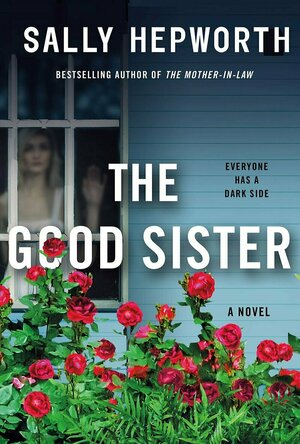
The Good Sister
The Good Sister
Sally Hepworth | 2021 | Crime, Fiction & Poetry, Mystery, Philosophy, Psychology & Social Sciences
6
7.5 (2 Ratings)
Book Rating
A predictable yet oddly thrilling read
Fern and Rose are extremely close sisters and incredibly dependent on one other. Rose has always been the responsible one and Fern, with her sensory-processing issues, the one people look at a bit oddly. Their mother was abusive, scarring Rose, who saw through to her true nature. Fern, who always looks to the good side of people, remembers her more fondly. But Rose has always protected her sister, especially since, as children, Fern did something horrible. Rose has faithfully kept her sister's secret, even though both girls wonder if it made Fern a terrible person. Now Rose and her husband are having trouble conceiving. Fern realizes she could finally do something for Rose: give her a child. However, Rose worries that Fern could make some disastrous choices if pregnant, just as she did so many years ago.

"Most people think of me as Fern's protector. But the truth is, in her own funny way, she's always been mine."

This is an excellent book in terms of the page-turner element. I was madly flipping the pages. It is especially remarkable because the story was actually fairly predictable. I kept waiting for some big twist, but I felt the plot was pretty well telegraphed from the beginning.

What kept me spellbound was the characters, particularly Fern. There was just something about her--you couldn't help but become attached. The cast here is small: the sisters, Rose's husband, Fern's acquaintance Wally, but they are quite well-drawn. Hepworth does a fantastic job with the two sisters, both depicting their childhood and then their current state, as Fern becomes determined to do something for Rose, her long-time protector, and Rose struggles with what Fern's choice means.

It's best to go into this one blind. To me, the story felt pretty straightforward and nothing really surprising happened, but it was still well-written and exciting. Yes, I would have loved a great twist or two to push this thriller from good into great territory. I still think it's worth a read, though, especially if you don't read a ton of mysteries and are more likely to be surprised. The relationship and dynamic between Fern and Rose is really worth a read by itself. 3 stars.

  
Everything, Everything (2017)
2017 | Drama
Eighteen-year-old Maddy's world is small. It's the size of a house.

Maddy has a rare form of SCID, an immuno-deficiency disease that means she can't leave the house because a chance encounter could kill her. The only people she sees are her mother, her nurse Carla, Carla's daughter Rosa and members of an online support group.

When as family move in next door, Maddy is bewitched by the son. He's friendly, he's funny, and he's handsome. Communicating through their bedroom windows, they exchange numbers and start texting. Carla notices the difference in Maddy, and is persuaded to let Olly in the house, but only under her condition that they stay on opposite sides of the room.

Maddy wants to see the ocean more than anything else in the world. She has to see what's out there to truly know she's alive, even if it kills her. But when she buys two plane tickets to Hawaii for herself and Olly, she doesn't realise how much it will change her life.


This one is based on the YA novel Everything, Everything by Nicola Yoon... you guessed it, haven't read this one either. I didn't know anything about it when I went to see it, mainly picked this one up because of the fact it was book related.

This was a beautiful film. (Yes, of course I cried) There's friendship, love, heartache. One of the problems was that there were really only two ways this film was going, and writers/movie makers aren't quite a cynical about things as I am when it comes to endings, so there wasn't really much chance that she was going to die for love.

Amandla Stenberg in the lead also wasn't quite my cup of tea. She played the naive side of the character well, but at the beginning when she was narrating... I just didn't find her a very good orator.

The subject matter was very different, and I really think the diversity in YA books has taken a massive step in that respect. It's touching on topics that very rarely see mainstream attention and that's a great thing. It also does one of my favourite things, which is enticing people to pick up books, so this one is a winner all round for me.
  
Sir Apropos of Nothing
Peter David | 2001 | Science Fiction/Fantasy
10
10.0 (1 Ratings)
Book Rating
Shelf Life – Sir Apropos of Nothing Skewers the Hero’s Journey
Contains spoilers, click to show
Fantasy and satire are two of my favorite genres in any medium, but especially so in books. Satirical fantasy, then, holds a special place on my shelves. I grew up on Sir Terry Pratchett’s Discworld series, and desire to imitate him and his style is what led me in middle school to begin writing in earnest, for fun, and for myself rather than just for my teachers and their assignments.

So when I picked up Sir Apropos of Nothing, I did so based on the title pun and the back-of-the-book synopsis that promised “a berserk phoenix, murderous unicorns, mutated harpies, homicidal warrior kings, and – most problematic of all – a princess who may or may not be a psychotic arsonist.” I expected another lighthearted riff on the familiar archetypes. Murderous unicorns? Unicorns are not typically described as such! Oh teehee, how unexpectedly humorous!

Sir Apropos of Nothing is a satirical fantasy, just like it promised, though at times it’s hard to tell how much of the story is played for laughs and how much is played straight. See, the thing about satire that’s easy to forget at times is that it’s not synonymous with buffoonery. Make no mistake – Apropos is a funny book, full of witty dialogue and groan-inducing puns. It’s a book that takes great delight in lampshading traditional fantasy tropes and archetypes, as well as the entirety of Joseph Campbell’s Hero’s Journey idea. But it is not always a silly lampshade; sometimes a cliche or trope is pointed out to have its inherit ridiculousness laughed at, and sometimes it is pointed out because it is causing real and lasting pain or damage, either to the society in which it is set or, more often, to the titular Apropos himself and his ever-degrading esteem of both the people around him and himself.

The tone, at first, is hard to pin down. The story starts in media res with the main character being caught by a knight while in mid-coitus with that knight’s wife and escalates from there. The second chapter opens with a fourth wall-breaking narrative admission by Apropos himself that this was done with the express purpose of catching your attention, and now we’re going back to cover Apropos’s childhood, which ends up being equal parts dark, tragic, punny, and conveniently trope-filled – all of which Apropos, as narrator, approaches with the same resigned, blasé outlook.

If this sounds a bit jarring, well, it kind of is. Early on, I wasn’t sure what to think of where the story was trying to go or what I was expected to feel about it. After the first turn from cliché to dark and visceral to light and punny, all within a few pages, I caught myself thinking, “Crap, is this book gonna try and mix goofy jokes with serious drama and thoughtful moral quandary?”

The answer is yes. And it pulls it off fantastically.

This is due in large part to the interesting depths of the antihero, Apropos, who seems to be so named purely for the joke in the title. In Apropos we see a deep sense of justice and rightness that is entirely eclipsed by an even deeper cynicism and an unshakeable instinct for self-preservation. His life is objectively terrible, but rather than brood and lament, he adjusts. He keeps his head down when he can, weathers abuse when he can’t, and learns to deal with the constant shit storm, all the while bottling his growing anger and resentment at a world that would allow such amounts of suffering and hypocrisy to go unchecked. The fact that he himself becomes a selfish, hypocritical, and generally awful person is not lost on him, and the result is a flawed, unheroic, pathetic coward of a protagonist, a magnificently multifaceted bastard who doesn’t spare even himself from his vast and withering contempt.

And it’s a blast. It really is. Apropos is refreshingly pragmatic and unabashedly pessimistic, a welcome change from the typical righteous-yet-humble heroes of traditional fantasy, or even the loveable and untalented everyman in over his head of traditional fantasy spoofs. Despite a portentous birthmark (on his ass, no less) and beginnings that are not “humble” so much as “poverty of the dirtiest kind,” Apropos is everything a hero should not be short of outright evil.

And this, as it turns out, is entirely the point. This is where the satire, funny or otherwise, really shines through. This is the crux that elevates Sir Apropos of Nothing from a generically self-aware fantasy story to an original and memorable subversion of storytelling as a whole.

Without giving too much away, there comes a point in the plot where Apropos realizes that the events surrounding his miserable life are part of a heroic tale that has been preordained by Fate and is now being epically written out by Destiny. And despite his birthmark, his tragic past, and his mother’s constant reassurances that he has some sort of great destiny hovering over him, he is not the hero. He is only a minor character. A walk-on role on the hero’s stage. A brief pit-stop along the hero’s journey. An NPC whose dreams, desires, and continued existence are so far below importance to the story as to be utterly negligible.

And once this finally clicks with him, he violently, brazenly rebels against it. He gives an emphatic middle finger to Fate’s ideas and sets about making Destiny sit up and take notice of him again. He momentarily and violently overcomes his own abject cowardice just long enough to find a way to completely wreck the traditional heroic ballad in which he lives, all on the basis that, dammit, the world owes him more than this, and nobody should be so miserably cursed as to live their entire life as a foil character.

At this point in my own reading, I didn’t know whether to cheer him on or worry about the repercussions of his actions, because he doesn’t suddenly become heroic when this happens. He’s exactly as much of a selfish, lying bastard as before, and however bad you feel for him, you can completely understand why he was never cast for this role in the first place. Add to this the complete disregard of the author for following what seems to be the obvious progression of events in favor of twists that take you completely by surprise, but still make complete sense and arise organically from the story itself, and you eventually give up thinking that you have any sense of where the story’s going or how any event is going to play out. From beginning to end, it feeds you familiar ideas and then completely subverts them, introduces clichés and then proceeds to tear them apart, and you laugh and pity and feel something the entire way through.

In short, Sir Apropos of Nothing is a book that will keep you turning page after page – not necessarily because of the gripping drama (although it has that) or because of any breezy humor (although it has that too), or because the narration itself oozes suspense (although it often does), but because, with the rapid infusion of new and creative ideas and the hidden depths of character constantly bubbling to the surface in everyone involved, you honestly never know what’s going to happen next. If you like fantasy and can stand to have your expectations messed with, Apropos is certainly apropos.
  
40x40

Hadley (567 KP) rated The Haunted in Books

Jun 23, 2019  
The Haunted
The Haunted
Danielle Vega | 2019 | Horror, Mystery, Paranormal
6
6.5 (4 Ratings)
Book Rating
Ghosts (0 more)
A lot of inconsistencies (1 more)
Stereo-typical characters
A murder begins the story of 'The Haunted,' where Vega starts with every parent's nightmare:
 a little girl named Maribeth is killed in the cellar of the Steele House by an unseen force. We jump to three years later, where our main character, Hendricks, is moving into this house with her parents and baby brother- - - a family that is unaware of the murder that took place in the cellar. Vega does a wonderful job of steering the paranormal aspects away from the usual ones that most readers are used to. But although the story is good, the writing is poorly executed.

Starting with the teenaged girl Hendricks, she tells us that she refuses to be a stereo-type, but her first thoughts on the ride to school are of her ex-boyfriend, Grayson. But this is a young adult book, so a young girl obsessing over her ex is to be expected. Yet, when Hendricks gets to her new high school, she quickly begins to stereo-type everyone she meets by what they are wearing. Unfortunately, every character in this story, including Hendricks parents, are stereo-types. Eddie, who wears nothing but black clothing, is the outcast; Portia, who wears too short of skirts and too tight of shirts, is the makeup obsessed girly-girl; Raven, who tries to be funny, is the sporty best friend, and, Connor, who seems to be the only character that Vega tried to keep away from his stereo-type, is a friendly jock who loves his large family.

Readers learn early on that Hendricks' break-up with her ex, Grayson, was a traumatic event for her- - - as Hendricks releases more and more memories, it's soon easy to see that the relationship was an emotional abusive one; from Grayson telling her how to dress to him influencing the way she acted around other people, including who she was allowed to be around. In the middle of all this, Hendricks begins to learn the history of the Steele House, and we find out that Maribeth may not have been the only one murdered there. When Hendricks isn't trying to drink alcohol in almost every chapter, she begins experiencing strange things in the house, including one very similar to Maribeth's experience, but sadly, the paranormal aspect is the only good part of this book.

'The Haunted' could have been a great story, but there are so many inconsistencies, some even on the very next page. Such as, on page 44, Hendricks sees a singing doll waking up her baby brother inside his room (Vega literally states 'in the middle of his room'), but the very next page, Hendricks is suddenly scooping up the doll outside of her brother's room to put it away. On page 157, Hendricks is being pinned against a wall in the cellar by an unseen force, one of her arms is against her back, but suddenly she is able to use both hands to push off the wall, but it was never stated that her arm became unpinned.

One of Vega's biggest mistakes in 'The Haunted' was using the same handful of descriptions for emotions with every single character throughout the entire book. Such as, if a character was trying to make a decision, they always bit their lip; if a character was confused, they always furrowed their brow; if a character was embarrassed, they always had a reddening face. Vega never took advantage of other body language to convey these emotions, causing the story to come up short.

As I have said, the only good part of this book was the paranormal aspect, and the ghosts happen to be the only interesting characters. If I had to choose my favorite part of this story, I would have to choose when Eddie and Hendricks bring in the occult store owner, Ileana. Following this chapter, the best part of the paranormal aspects happen, but I don't want to spoil that for anyone who may want to read this. Vega is crafty in keeping up the suspense throughout this entire time, this is apparently where her strength in writing occurs. She amazingly describes scenes where readers can easily imagine them happening in reality. Her take on hauntings is one that is rarely seen and I think should be utilized in paranormal fiction more often.

'The Haunting' just didn't add up for me. It seems the story was written too hastily that beginning writer mistakes were made and overlooked, but most young adult readers may be able to look past this. Like Stephen King, Vega has great story-telling power in the horror genre, but in 'The Haunting,' I don't feel she was fully able to display this because the focus on Hendricks' life drama took over most of it. If I were to recommend this to anyone, I would only recommend it to people who like teenaged drama mixed in with a ghost story.