
Hazel (1853 KP) rated In Picardy's Fields in Books
Nov 27, 2020
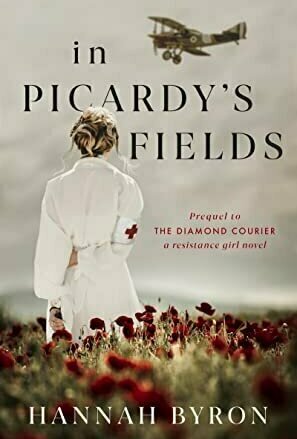
The author, Hannah Byron, accurately describes the devastation and dangers the characters faced both in Paris and at the front. Flowing seamlessly from scene to scene, Byron paints a dark picture of life in wartorn France at the same time as weaving a captivating story. Agnès is a reticent but strong woman, a stark contrast from the stuck-up Madeleine, used to getting her way. Yet both characters develop, forced to face horrifying circumstances. While Agnès becomes more confident, Madeleine uses her head-strong determination to secretly help the allied soldiers, even if it means putting herself in danger.
Whilst the war is the main feature of the novel, the author weaves themes of friendship and romance into the narrative. Although only two people narrate the story, In Picardy's Fields shows the importance of working together and putting aside prejudices. The undercurrent of a developing romance brings a sense of hope that everything will end happily, yet the reader also knows nothing is safe during wartime. With each turn of the page, disaster could befall the characters, which makes for a gripping read.
Hannah Byron admits she is not a medic or war expert, yet she undertook extensive research to make In Picardy's Fields as accurate as possible. She also confesses it is unlikely a female doctor went to the front lines, yet as a work of fiction, this does not matter, especially as Agnès's profession is key to the story.
Authors have written novels about the World Wars ad nauseum to the point that writing an original story seems impossible, but Hannah Byron proves this assumption wrong. In Picardy's Fields feels almost modern in some respects, despite being set in the 1910s, which adds a freshness to the story. These women, these characters are just like you and me, living in a time we could not possibly understand.
In Picardy's Fields is a fantastic debut novel and Hannah Byron is a writer to keep an eye on.

Clue Period Tracker
Health & Fitness and Medical
9.0 Rate It
App
**Rated the top free period and ovulation tracker app by the journal Obstetrics & Gynecology, a...

French English Dictionary +
Travel and Reference
App
The #1 French English Dictionary for iPhone, iPad & iPod touch - Offline Dictionary with over...

MakeFriends on Twitter - Add New Friends for Me
Social Networking and Utilities
App
The community for interesting people around the world. Handsome male friends, pretty female friends,...

JustDating
Social Networking and Lifestyle
App
At JustDating, thousands of members are looking to match with sensual people to chat, flirt, and...

101 Positions of KamaSutra - Sex Positions Guide and Diary Premium
Lifestyle and Entertainment
App
$ EXCLUSIVE SALE *** 50% OFF*** LIMITED TIME ONLY! $ • More then 1 million downloads • 2...

Azar - Video Chat, Discover
Social Networking
App
Azar allows you to talk and make friends with people from over 190 countries. • Over 100 million...

Kristy H (1252 KP) rated The Stars Are Fire in Books
Feb 13, 2018


<i>This was an amazing book. </i> I'm not always an historical fiction fan (the story is based on actual fire that occurred in Maine), but I'll make an exception for Shreve, whom I've loved since her beautiful novel, [b:The Pilot's Wife|5191|The Pilot's Wife|Anita Shreve|https://images.gr-assets.com/books/1435011220s/5191.jpg|3131254]. There is just something poignant and touching about this novel. I was immediately drawn into Grace's story, and I read the novel quickly over the course of a day or so. Shreve creates a fierce and wonderful character in Grace, and you cannot help but root for her.
Grace is held back by so much in her life: her gender, her financial circumstances, her husband. After experiencing such a terrible loss: her entire town is basically burned to the ground, including her home, it's amazing to watch her resilience in the face of such horror. In many ways, it's not as if a lot happens in this novel, yet I feel like so much occurs during Grace's journey. I so loved her spirit, and I also wanted to swoop in and take away all the horrible things that occurred in her life.
I don't want to go into much detail and ruin the details of the plot, but I'll just say that this is a lovely book, with well-drawn characters--led by the tough and wonderful Grace. I was captivated by the story, and I would certainly recommend the novel. 4 stars.
<center><a href="http://justacatandabookatherside.blogspot.com/">Blog</a>; ~ <a href="https://twitter.com/mwcmoto">Twitter</a>; ~ <a href="https://www.facebook.com/justacatandabook/">Facebook</a>; ~ <a href="https://plus.google.com/u/0/+KristyHamiltonbooks">Google+</a></center>;

Goddess in the Stacks (553 KP) rated Autonomous: A Novel in Books
Dec 22, 2018
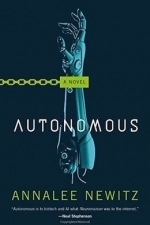

Meanwhile, Eliasz is a conflicted military agent who is sexually attracted to robots. Or at least to his partner, Paladin, though a flashback shows what might have been the start of his attraction to robots. Paladin is probably the single most interesting character in the entire book, as she muses on the nature of being indentured, and searches through her memories and the internet for information about her situation.
The book does have LGBT content - Jack is bisexual, and Eliasz is - robosexual? Is that a thing? Paladin could be called nonbinary or trans; she repeatedly mentions that gender isn't a thing to robots, but because she's a military robot, most people call her a he at the beginning of the book. She learns the brain inside her is female, and to make Eliasz more comfortable with his attraction, she decides to use female pronouns. Eliasz does use the F word to refer to himself being attracted to the robot at the beginning, when they were using male pronouns. This puzzles Paladin for a while, causing her to search the term and figure out what Eliasz meant by its use.
There's a lot of complex world-building in this book that is barely brushed past. From the corporations who own patents covering everything, to the system of indenture that covers humans as well as robots, to the bio-domes that cover cities (but it's livable outside the biodomes, so why are they needed?), to the new federations that cover continents that used to be divided into several countries - there's a LOT going on. And there's not just robots, but also some pretty advanced cybernetics implanted in humans as well as an everpresent network of data that can be tapped into with implants that everyone has.
Ultimately, for as complex as the world is, and cohesive as the plot is, I'm left wondering who, if anyone, was in the right in this story. I'm not sure if we're supposed to be happy with the ending or not. I've seen other reviews saying Neuromancer was a way better book in a similar vein, and I actually have copy of that waiting to be read. So we'll see.
You can find all my reviews at http://goddessinthestacks.com