
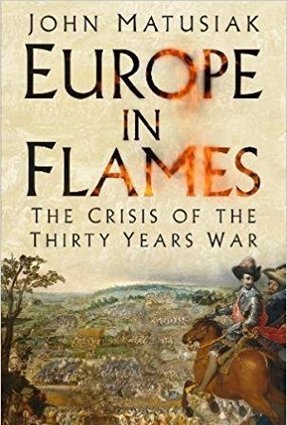
Europe in Flames: The Crisis of the Thirty Years War
Book
`War,' wrote Cardinal Richelieu, `is one of the scourges with which it has pleased God to afflict...
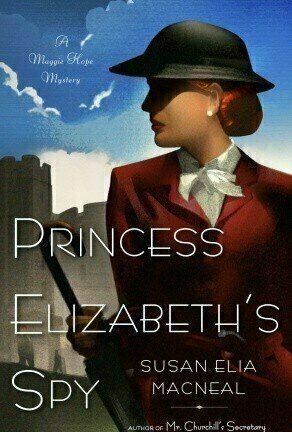
Princess Elizabeth's Spy (Maggie Hope Mystery, #2)
8.7 Rate It
Book
As World War II sweeps the continent and England steels itself against German attack, Maggie Hope,...

The True Story of Hansel and Gretel
7.0 Rate It
Book
A poignant and suspenseful retelling of a classic fairy tale set in a war-torn world In the last...
Historical Fiction Nazi WW

Under A Cloud (The Rival Courts #2)
Book
Vicky's father, Albert, the Prince Consort, has just died, leaving her and her family under a heavy...
Historical Fiction Victorian German History
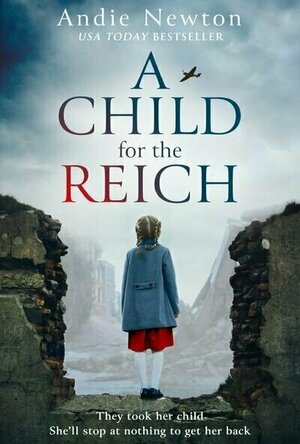
A Child for the Reich
8.0
Rate It
Book
Rumours of the Nazis coming for Czech children swept through the villages like a breeze through the...

Hazel (2934 KP) rated We Fly Beneath the Stars [Audiobook] in Books
Dec 4, 2022
![We Fly Beneath the Stars [Audiobook]](/uploads/profile_image/802/80aa1332-831c-401a-87dd-f91c5a08d802.jpg?m=1670160938)
The book follows the lives of Nadia and Tasha, sisters who join the Russian Airforce during World War II and who become fighter pilots in the much-feared by the Germans and all-female squadron known as "The Night Witches."
Given inferior equipment and less training than their male counterparts as well as having to put up with their harassment all whilst trying to stay alive and get back safely following their night sorties over the advancing German army; this is a story of tremendous bravery however it also a tale of sibling rivalry, love, loss and choices.
The narrator, Lauryn Allman, was excellent; her voice totally immersed me into the story; one of the best I have come across so far and my thanks to Bookouture and NetGalley for enabling me to listen to and share my thoughts of We Fly Beneath the Stars.
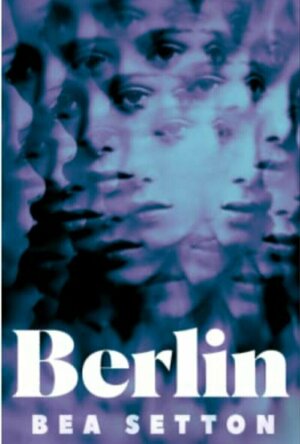
Berlin
9.0 Rate It
Book
*FOR FANS OF MY YEAR OF REST AND RELAXATION, EXCITING TIMES AND WRITERS & LOVERS * When Daphne...
Literary fiction Germany Berlin
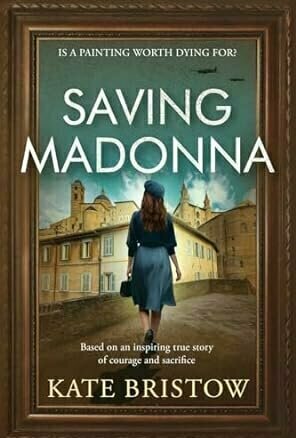
Saving Madonna
Book
Inspired by real events, an unforgettable story of love, courage and sacrifice to save a country’s...
Historical Fiction

David McK (3854 KP) rated The Imitation Game (2014) in Movies
Feb 26, 2022
This flits back and forth between three timelines: the 1950s (just before Turing committed society, after being found guilty of Homosexual behaviour, which was outlawed at the time), the late 30s/early 40s (his work at Bletchley) and the 1920s (his childhood at a public boarding school, where he was bullied).
Cumberbatch manages to bring a different aura to his portrayal of Turing than he did previously to Sherlock - even though both are geniuses who struggle with a low EQ (Emotional Quotient) - while Kiera Knightley does her period piece acting as his fellow (perhaps even smarter) codebreaker Joan, who has to also put up with the misogynistic attitudes of the time.
And yes, the Imitation Game of the title is a real philosophical conundrum (which is described during the movie itself).
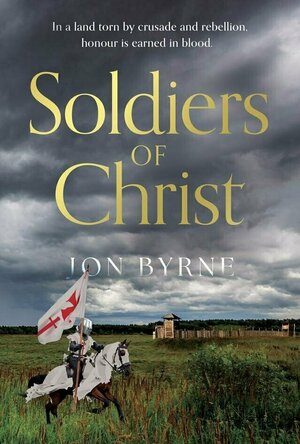
Soldiers of Christ (The Northern Crusader Chronicles #2)
Book
In a land torn by crusade and rebellion, honour is earned in blood. 1205. Richard Fitz Simon has...
Historical Fiction