

Perfect OCR
Productivity
App
Perfect OCR gives you both an accurate general purpose OCR app and a quality document scanner. Now...

Office Reader: For Microsoft Office
Business and Productivity
App
SPECIAL HOLIDAY PRICE TODAY!!! REGULAR PRICE $6.99 Office Reader is a powerful files and documents...

Kurio – App Berita Indonesia
News and Lifestyle
App
Want to read more news that is more accurate and "sane"? Kurio is the place. Enjoy completeness of...

Heather Cranmer (2721 KP) rated Miss Peregrine's Home for Peculiar Children in Books
Jun 7, 2018
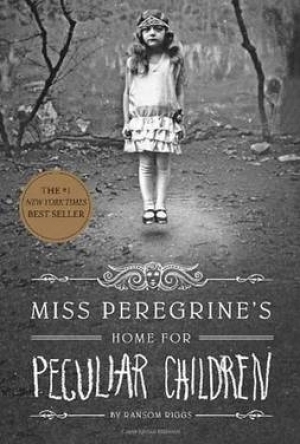


I feel the synopsis of what the book is about makes it sound a lot better than what it is. I wanted to like this book, I really did. I had high hopes for it. Unfortunately, it didn't do much for me. I was expecting more of a ghost story. Instead I got more of a sci-fi story, and one that wasn't very good.
Jacob's grandfather tells him of a magical island of which he spent his childhood. He shows him photos and tells him stories about the peculiar children he grew up with. As Jacob becomes a teenager, he stops believing in his grandfather's ridiculous stories until something awful happens. Jacob travels to the mysterious island to find out about his grandfather. Little does he know that by going to that island he's put himself and many others in danger.
First off, I thought the word building/setting were fantastic. The author made me feel as if I was on the island. I'll give him props there. The description of the world was beautifully described.
I couldn't relate very much to the characters. I can't really place why that is. I just couldn't connect. I found myself not caring what happened to any of them. Perhaps the author should've spent a bit more time character building to make me relate to at least one the characters. The characters just felt a bit one dimensional. There wasn't even one that I could remotely say that I favourited. Okay, that's a lie. I liked Fiona, the Irish girl, but I only liked her because she was Irish, and I love all things Irish. That's it.
I found the pacing to be a bit slow. I'd read a chapter, then I'd get bored with it and go off to do something else. I really struggled with this book. There are a couple of chapters that the pacing is great in, but it's not until the last two chapters that the pacing definitely picks up.
The dialogue was easy to understand although some Americans may not get all the slang British terms. There was one scene where a character says "I was taking a piss" where he meant that he was joking around. The phrase he meant was "taking the piss" which is a British slang phrase for joking. "Taking a piss" isn't a typo either as it's mentioned a few more times. This annoyed me because taking a piss, is just that, it means urinating. "Taking the piss" means to be joking around. Other than that, the dialogue was good.
The best part of the book was the photographs found within the book. I loved that little touch! I found myself studying the photos and enjoying them a million times better than the actual book.
The cover is also something I loved about the book. How freaky does that little girl look??? The German cover looks even better. It's the same photo, just with a green hue. If I was marking the book based on the cover alone, it'd get 5 out of 5 for me.
The title of the book doesn't really leave anything to make you wonder what the books about. It says exactly what the book is about - a home for peculiar children.
All in all, this book left me feeling empty. I didn't really feel much of anything reading it until I got to the last two chapters where it got exciting. However, I will not put myself through the torture of reading the second book in the series especially as I don't care about the characters or what happens to them. I'm just glad I won this book in a competition and didn't buy it.
I was going to give this book a 2 - 2.5 star rating but the ending saved it a bit.

The Elements by Theodore Gray
Book and Education
App
Of all the periodic table apps, there is only one which Stephen Fry described as “Alone worth the...

Scanner Pro by Readdle
Business and Productivity
App
Scanner Pro is the best app for quickly scanning and saving a digital version of a paper document....

Hadley (567 KP) rated The Ghost of Villa Winter in Books
Mar 12, 2021

We begin our journey with Clarissa ,our main character, boarding a tour bus where she lets her personality shine through, which turns out to be extremely judgmental of anyone who isn't like her, or doesn't fit into the categories she places them in. For example, the driver of the tour bus is automatically labeled by Clarissa as a bad man because he has an uneven face and a French accent, and much of the same is said about the other seven passengers, as well. When she finally manages to stop judging the passengers, readers find out that Clarissa is somewhat of a psychic: "Ghosts spoke a language of their own and if a member of the spirit world inhabited the abandoned abode, she was sure to pick up on it. She was never wrong in these matters. Only three of the thirty or more premises she'd investigated on so-called ghost tours had contained a legitimate ghost. She prided herself on her mediumistic prowess. She was apt to pick up on preternatural inhabitants of places said not to be haunted. Sometimes she thought she could singlehandedly re-write history based on information she had gleaned, but that was being arrogant. She followed her dreams and her visions and her intuition, that was all. A natural psychic and a cynic to boot. "
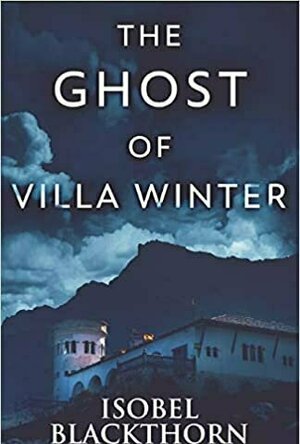
It turns out that Clarissa is on the tour to see if she can encounter any spirits that may be at the infamous Villa Winter; a place that is believed to have been a secret Nazi base, as well as a place for human experiments - - - the tower was also believed to have been used as a lighthouse for German U-boats - - - which, in reality, Villa Winter is an actual place that exists on the Canary Islands in Spain.
The Ghost of Villa Winter is the fourth book in Blackthorn's Canary Islands Mysteries series, but it can be easily read as an introduction to it because you don't need any background information to understand what is going on. The novel takes on the usual tropes of a murder-mystery plot (a body is found, people are stranded and trying to figure out who among them is the murderer). Agatha Christie is one of the best authors of the murder-mystery genre who loved using her knowledge of poisons in her stories - - - Blackthorn treats the tropes with the right amount of respect which makes The Ghost of Villa Winter a pretty good story.
My major complaint for the Ghost of Villa Winter are the characters, which I found every single one quite unlikable, and even by the end, I couldn't bring myself to care at all for Clarissa. The way that she judged everyone so harshly, and her viewpoint that if no one acted the way she wanted them to, she would believe something was wrong with them that needed to be addressed in a rude manner: "He was the most anxious man she had come across in a long time. Anxious, unsure of himself and preoccupied. Far too self-conscious. The way he'd aligned his plate at lunch. That was obsessive-compulsive. And he certainly couldn't handle Fred Spice. She was sure he could be charming with pretty young ladies, patronizing even, but around her he was awkward. It was clear, too, that he was broken. It wouldn't be easy being an author knowing as you aged that all of your success was behind you and your future held nothing but diminishment. Writing was one of those activities you could pursue until you dropped and many successful authors did just that. As irritating as he could be, she felt sorry for him. "
The other characters are all seen from Clarissa's viewpoint, so they come off quite annoying, but at one point it seemed like Blackthorn was trying to redeem Clarissa's negative qualities by making her an advocate for a possibly wrongly convicted man. This story line didn't come off as redemption for me, but rather to fuel Clarissa's need to be important and in the right. Blackthorn failed to make any of the characters grow above pettiness. If a reader doesn't have a character to root for, the story becomes unenjoyable - - - which is the main reason I gave the book such a low rating; the murder-mystery was interesting, but the characters were not.
The murder, a woman who may have been part of a cult, is found inside a nailed-up crate with a tattoo of a number on her body being one of the only clues that puts Clarissa into sleuth-mode. After believing that one of the tourists is the killer, she decides to keep the discovery of the murder between her and Richard - - - a crime author who came to Villa Winter in hopes of a book inspiration. The two slowly begin to investigate their fellow tourists to figure out who had the mind and motive to kill the young woman, but this doesn't seem to be as easy as it is in Richard's books. I did have a problem though with the ending which ends up being very reminiscent of a majority of short stories: the ending came abruptly and the pieces fell into a place that was unbelievable.
I had never read any of Blackthorn's books before, so I didn't have much of an expectation reading the Ghost of Villa Winter. Unfortunately, I came away from this one pretty dissatisfied because all of the interesting points in the story (such as the cult) are rarely shown/explored further. Also, the fact that 'ghost' is in the title, I was pretty let down with only a couple of scenes where a ghost actually shows up, one such short-lived scene: "She [Clarissa] was about to carry on when a figure appeared in one of the uppermost tower windows. Appeared, and then was gone. At least, what she thought to be a figure. Could have been a ghost. " The scenes are so short that I believe 'ghost' shouldn't be in the title because it's misleading.
With quite a few amateur writing mistakes, and unlikable characters, I don't think I will read anymore of the books in this series. I loved the idea of a cult murder and a haunting in a possible Nazi base, but too much of the focus in the story was on Clarissa's judgmental outlook on everything that it ended up not being the story it could have been. I can only recommend this book to people who want a quick murder-mystery (what most call the genre 'cozy mystery'), but for paranormal lovers, the ghosts practically disappeared within a few pages.

FearlessLover (27 KP) rated Dunkirk (2017) in Movies
Jul 31, 2017
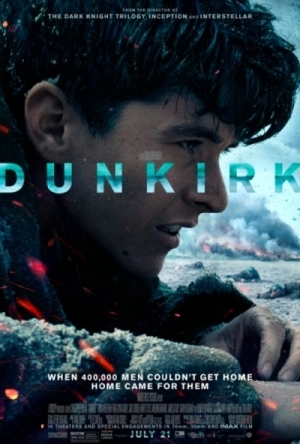


An opening frame invites us to join a group of soldiers. Next, the loudest onslaught of gunfire kicks the film into another gear. We are given as much pause for thought as the soldiers we follow. We run with Tommy, played here by a Fionn Whitehead, and like him, we are aware of comrades falling dead next to us, but it is all panic and no time; we will lament their loss later. Set to the ticking of a watch, we feel Tommy's heart pounding with ours, and we know the tone for this audacious movie has been set.
We see the event from different perspectives and from within different time frames. Right now, not many directors can build momentum like Nolan. The jumping to and from different characters' point of view, the corkscrewing impression of the editing, events echoed and mirrored by Hans Zimmer's Shepherd's Tones and persistent, all enveloping score, acting at times more like sound design than music; it all results in a constant rise in tension, to the point of almost being exhaustive.
This said, the editing also serves another purpose. The "Miracle of Dunkirk" is a grand story, with every soldier, every pilot, and every civilian having their own point of view. Nolan wants us to build up an overall picture of the event purely through subjective experience, so of course we spend a tiring week with the terrified boys. Of course we spend a desperate day with a fisherman as he and his familial crew sail their way into action. Lastly, given the fuel constraints of the RAF, whose decisions had to be immediate and impulsive, always a choice between defending the beach or getting home, why would we spend any more that an edge-of-your-seat, quickly-cut hour in the cockpit of a Spitfire, as they do their duty and enter into dogfights to keep the German aircraft at bay? Each timeline is contracted or dilated to give everybody equal measure and importance, whilst staying true to and very much in their situation. Yes, this means we're kept on our toes; we have moments of confusion as timelines cross over and we see the same thing happening from another point of view, but as we head into the finale, as well as the aforementioned tension and release (which is just exciting cinema), we also get to see how, despite very different perspectives, everyone was working together, and how sacrifice and struggle for duty were par for the course for all involved, whether other people knew it or not. It is important that we the audience recognise this bigger picture, and as everything clicks together in an emotive final convergence of efforts, we not only see the justification for the techniques adopted, but struggle to imagine the story told another way. That is, at least, without going down a standard route, with objective storytelling employed.
A proper review not being complete without comment on the elephant in the room, it must be said that Harry Styles does not stand out like the proverbial sore thumb at all. Frankly, he carries his scenes with aplomb, and surely, following the Heath Ledger lesson, and now this, it is time we learned that, maybe, Christopher Nolan just knows what he's doing better that we do? As to the other big names, there are moments from that remain with me so long after having seen it: Kenneth Brannagh and Mark Rylance can say so much with so little, their faces and gestures doing the heavy lifting to deliver a lot of the human emotion, and it would appear Tom Hardy has Oscar-worthy eyes! You need see nothing more through the course of his drama to have a complete sense of the type of man his Farrier is. We talk about great acting and achieving realism through imagination, but with the knowledge that Nolan actually took everyone to Dunkirk, sank real ships, sailed real ships, flew real Spitfires overhead, employed real explosions on the beach, and even rejected green screen and CGI in favour of cardboard cut-outs, it seems imagination wasn't too necessary for these already consummate actors.
Nolan's principle fan base will be well prepared for what they get; but with his insistence on holding back from the audience any perspective not afforded his characters, ala 'Memento', some knowledge of the "Miracle Of Dunkirk" might put the more casual viewer in better stead. Regardless of which camp you fall into, or indeed of whether or not the movie does it for you, certain things are for sure: With no melodrama or cheese, and no superfluous fluff or emotional subterfuge, 'Dunkirk' is a purely experiential movie, a technical marvel of a war film unlike any other I can name. It also stands as a beacon in Nolan's career, characterised by his desire to cultivate an audience willing to keep up with him. And perhaps most importantly, this is a key moment in world history that is often overlooked; a disaster averted which, had it not been, would have seen the history books written very differently. That this event has been marshalled by a confident and sincere director, who has surely by now cemented his name alongside those of his own heroes, is reason enough to see 'Dunkirk'.