
Search

Phil Leader (619 KP) rated Bloodrush (The Scarlet Star Trilogy #1) in Books
Nov 8, 2019
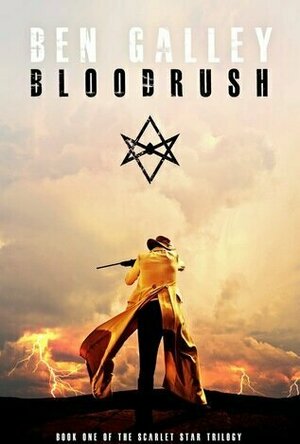

It is hard to describe this book purely because it appears to try to do too much.
It is set in an alternate universe where much is familiar but some things are very different.
It is a western, mostly set in an frontier town in Wyoming with the usual cast of restless townspeople, lone prospectors and ruthless land owners.
It is a fantasy involving faeries and magick
Yet in Galley's capable hands these elements are moulded into a seamless and thrilling story. All the different aspects fit together neatly and consistently producing a terrific platform for the characters and plot.
The main character is 13 year old Tonmerion Hark (known as Merion), son of the Prime Lord (think Prime Minister) of an alternate version of Victorian Britain. When his father is murdered by assailants unknown he is sent to his last remaining relative - an aunt living in Wyoming. Travelling with him is is best friend, a faerie called Rhin who is a fugitive from the rest of the Fae. Desperate to get back to London to find his father's killer and rescue his inheritance, Merion is instead drawn into conflict and underhand dealings in the small town of Fell Falls where is aunt is the undertaker.
The alternate universe is particularly striking. Very nearly everything is familiar but with important differences. The biggest of these is clearly that creatures such as the Fae exist (even if few people have ever seen one) but other changes include the natives of America, the Shohari, not being quite human and a lot of clever differences in London that really make it clear what kind of world Merion inhabits. The magick is also well thought out with a lot of thought and imagination given to its mechanics and its implications.
Galley's writing is a joy. It is clear and concise yet conveys the scene to the reader with impressive ease. The hot sun and gritty sand of the desert feel very real indeed. The characters are very well described and a great deal of care has been taken to express them. These are not cardboard cliches, which would have been easy. Merion is the hero but at heart is still a 13 year old boy, a boy who is impetuous and complains how life is unfair. All through the book there is a subtle undercurrent of wry humour.
What this whole book reminded me of - both in the writing and in the almost but not quite like our world setting - was a slightly darker Terry Pratchett. That is not an exaggeration, This book really is up there with the very best Discworld books in terms of story and inventiveness. It is darker in tone than anything Pratchett would write and not quite as laugh out loud funny in places but it is damn close.
The story itself unfolds at a fast pace - which is good because there is a lot to get through with several plots running intertwined through the narrative and sparking off each other as they twist and turn through every reveal. The final showdown is suitably climactic and the prose as well as the magick crackles off the page in a breathless rush towards the final chapter.
I do like to balance my reviews with maybe some small point that counts against the book but I really can't think of one for Bloodrush. It simply is a magnificent piece of work. You may not have known you wanted a alternate reality fantasy western but once you have read this you will wonder where the next one is coming from.
Very very highly recommended and the 5 star rating was easy to give.
Rated: Strong language so not for the youngest of young adults
It is set in an alternate universe where much is familiar but some things are very different.
It is a western, mostly set in an frontier town in Wyoming with the usual cast of restless townspeople, lone prospectors and ruthless land owners.
It is a fantasy involving faeries and magick
Yet in Galley's capable hands these elements are moulded into a seamless and thrilling story. All the different aspects fit together neatly and consistently producing a terrific platform for the characters and plot.
The main character is 13 year old Tonmerion Hark (known as Merion), son of the Prime Lord (think Prime Minister) of an alternate version of Victorian Britain. When his father is murdered by assailants unknown he is sent to his last remaining relative - an aunt living in Wyoming. Travelling with him is is best friend, a faerie called Rhin who is a fugitive from the rest of the Fae. Desperate to get back to London to find his father's killer and rescue his inheritance, Merion is instead drawn into conflict and underhand dealings in the small town of Fell Falls where is aunt is the undertaker.
The alternate universe is particularly striking. Very nearly everything is familiar but with important differences. The biggest of these is clearly that creatures such as the Fae exist (even if few people have ever seen one) but other changes include the natives of America, the Shohari, not being quite human and a lot of clever differences in London that really make it clear what kind of world Merion inhabits. The magick is also well thought out with a lot of thought and imagination given to its mechanics and its implications.
Galley's writing is a joy. It is clear and concise yet conveys the scene to the reader with impressive ease. The hot sun and gritty sand of the desert feel very real indeed. The characters are very well described and a great deal of care has been taken to express them. These are not cardboard cliches, which would have been easy. Merion is the hero but at heart is still a 13 year old boy, a boy who is impetuous and complains how life is unfair. All through the book there is a subtle undercurrent of wry humour.
What this whole book reminded me of - both in the writing and in the almost but not quite like our world setting - was a slightly darker Terry Pratchett. That is not an exaggeration, This book really is up there with the very best Discworld books in terms of story and inventiveness. It is darker in tone than anything Pratchett would write and not quite as laugh out loud funny in places but it is damn close.
The story itself unfolds at a fast pace - which is good because there is a lot to get through with several plots running intertwined through the narrative and sparking off each other as they twist and turn through every reveal. The final showdown is suitably climactic and the prose as well as the magick crackles off the page in a breathless rush towards the final chapter.
I do like to balance my reviews with maybe some small point that counts against the book but I really can't think of one for Bloodrush. It simply is a magnificent piece of work. You may not have known you wanted a alternate reality fantasy western but once you have read this you will wonder where the next one is coming from.
Very very highly recommended and the 5 star rating was easy to give.
Rated: Strong language so not for the youngest of young adults

365Flicks (235 KP) rated V.S. (2019) in Movies
Nov 20, 2019
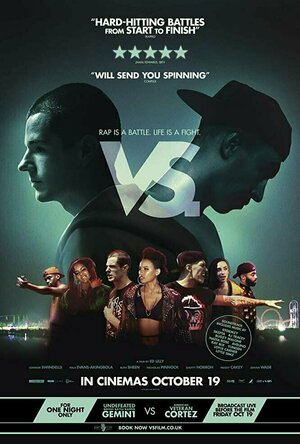

That is the synopsis for VS. on the IMDB. I am here to tell you that this movie is so so much more than this. This is one of the most powerful, thought provoking, superbly acted, respectfully told and emotionally driven movies I personally have had the pleasure of seeing in quite some time. I will get into the plot and subject matter now in a minute, but up front I would like to admit that this movie spoke to my heart and broke through a wall I didn’t think needed broken through. Yes a low budget independent movie from a debut director about the underground battle rap scene in Britain reduced this 34 year old man to being about 10 again (and not in a Jurassic park seeing dinosaurs on screen for the first time nostalgia kind of way).
Director:
Ed Lilly (debut feature film)
Cast:
Connor Swindells (The Vanishing, Netflixs Sex Education) Adam ‘Shotty Horroh’ Rooney
Fola Evans-Akingbola (Game of Thrones, Death in Paradise) Nicholas Pinnock (Fortitude, Marcella)
Ruth Sheen (Another Year, Vera Drake) Emily Taaffe (War & Peace)
First time Director Ed Lilly has put together an amazing group of young and fresh, up and coming stars and crafted a truly beautiful, gritty and raw tale of one mans use of the lyrical poetry that is Battle rap to simultaneously mask his pain and anger while working through his inner demons, only to discover a true family and camaraderie in the last place he expected. That’s just whats on the surface. Here is the trailer…
Adam has spent a life in the foster care system and it hasn’t been great to him, passed from home to home and never truly settling in wherever he is. His next stop is Southend and this could be the last chance saloon for Adam. Enter Makayla a young idealistic woman trying to make the best of it. Adam instantly takes a liking to Makayla as she introduces him to the underground Rap Battle scene. While Makayla sees this outlet as a way of making a better more tolerable life for herself and the colourful competitors, Adam sees a place he can truly let his hurt, pain and rage flow. While Adam proves to be a rising talent on the scene he is also dealing with the re-introduction to the woman who gave him away aged four… Both of Adams worlds are on a collision course and we are about to find out the type of man he wants to be.
Out Now
VOD 4th Feb. 2019
DVD 11th Feb. 2019
It is very easy to say that this is trying to be the Brit equivalent of 8-Mile (and people have been) but while I love that movie it can only wish to have the heart of Vs. I do love the rap battle sequences and having Shotty Horroh (legend on the UK Rap Battle scene, Youtube him for an education) in the movie really adds to the sense of them trying to portray this life properly. However this movie lives and breathes with the Outstandingly raw and real performances from the core cast.
Connor Swindells as Adam is unbelievable. A true revelation, A 10 out of 10 performance. Now I have to put it out there and be honest, I myself grew up in the system and while I didn’t exactly have the worst time of it I can absolutely relate to the portrayal put in by Connor. This is also a testament to the writing team of Director Ed Lilly and Daniel Hayes, they hit the nail on the head completely, The writing is so visceral that one scene in particular was a gut punch to this reviewer because I had legitimately lived the conversation and Connors performance in that scene is on another level (no spoilers but its the first real conversation he has with his mum). Swindells makes this movie an intense but rewarding journey to be part of.
Fola Evans-Akingbola is wonderful as Makayla and really holds the key to this movie. Most of the choices made by Adam revolve around her actions, while we are more focused on what is happening in his life Akingbola pushes her performance forward to show us she also is struggling through. Nicholas Pinnock, Ruth Sheen and Emily Taaffe round out the care system aspect of the movie as Adams care worker, foster carer and biological mum respectively. These sections of the movie are dealt with a great deal of attention and respect which was refreshing because here in the UK we tend to be very harsh on the system (especially in the media) but this movie shows both sides of the story. Then there is the scene I briefly spoke of earlier… Emily Taaffe, take a bow because damn you are incredible in this scene.
On the Rap Battle side of things we have massively talented Adam “Shotty Horroh” Rooney in his acting debut, I will admit when I first saw him I was dubious but he is essentially playing a version of himself and the moments that he gets to do something other than rap well he holds his own. The same can be said about MC Paige “Paigey Cakes” Meade as Miss Quotes to be fair though this isn’t her first time.
Okay then I guess its no surprise to anyone by now that I would hugely recommend this movie. I went in expecting to see 8-Mile or Bodied set in the UK but what followed was a story I just did not expect, performances that blew me away. Then again though I am a bit of sissy when movies hit me where I live. Is it perfect? Not at all what film is but hey its pretty damn close. See this movie soon as you can.
Director:
Ed Lilly (debut feature film)
Cast:
Connor Swindells (The Vanishing, Netflixs Sex Education) Adam ‘Shotty Horroh’ Rooney
Fola Evans-Akingbola (Game of Thrones, Death in Paradise) Nicholas Pinnock (Fortitude, Marcella)
Ruth Sheen (Another Year, Vera Drake) Emily Taaffe (War & Peace)
First time Director Ed Lilly has put together an amazing group of young and fresh, up and coming stars and crafted a truly beautiful, gritty and raw tale of one mans use of the lyrical poetry that is Battle rap to simultaneously mask his pain and anger while working through his inner demons, only to discover a true family and camaraderie in the last place he expected. That’s just whats on the surface. Here is the trailer…
Adam has spent a life in the foster care system and it hasn’t been great to him, passed from home to home and never truly settling in wherever he is. His next stop is Southend and this could be the last chance saloon for Adam. Enter Makayla a young idealistic woman trying to make the best of it. Adam instantly takes a liking to Makayla as she introduces him to the underground Rap Battle scene. While Makayla sees this outlet as a way of making a better more tolerable life for herself and the colourful competitors, Adam sees a place he can truly let his hurt, pain and rage flow. While Adam proves to be a rising talent on the scene he is also dealing with the re-introduction to the woman who gave him away aged four… Both of Adams worlds are on a collision course and we are about to find out the type of man he wants to be.
Out Now
VOD 4th Feb. 2019
DVD 11th Feb. 2019
It is very easy to say that this is trying to be the Brit equivalent of 8-Mile (and people have been) but while I love that movie it can only wish to have the heart of Vs. I do love the rap battle sequences and having Shotty Horroh (legend on the UK Rap Battle scene, Youtube him for an education) in the movie really adds to the sense of them trying to portray this life properly. However this movie lives and breathes with the Outstandingly raw and real performances from the core cast.
Connor Swindells as Adam is unbelievable. A true revelation, A 10 out of 10 performance. Now I have to put it out there and be honest, I myself grew up in the system and while I didn’t exactly have the worst time of it I can absolutely relate to the portrayal put in by Connor. This is also a testament to the writing team of Director Ed Lilly and Daniel Hayes, they hit the nail on the head completely, The writing is so visceral that one scene in particular was a gut punch to this reviewer because I had legitimately lived the conversation and Connors performance in that scene is on another level (no spoilers but its the first real conversation he has with his mum). Swindells makes this movie an intense but rewarding journey to be part of.
Fola Evans-Akingbola is wonderful as Makayla and really holds the key to this movie. Most of the choices made by Adam revolve around her actions, while we are more focused on what is happening in his life Akingbola pushes her performance forward to show us she also is struggling through. Nicholas Pinnock, Ruth Sheen and Emily Taaffe round out the care system aspect of the movie as Adams care worker, foster carer and biological mum respectively. These sections of the movie are dealt with a great deal of attention and respect which was refreshing because here in the UK we tend to be very harsh on the system (especially in the media) but this movie shows both sides of the story. Then there is the scene I briefly spoke of earlier… Emily Taaffe, take a bow because damn you are incredible in this scene.
On the Rap Battle side of things we have massively talented Adam “Shotty Horroh” Rooney in his acting debut, I will admit when I first saw him I was dubious but he is essentially playing a version of himself and the moments that he gets to do something other than rap well he holds his own. The same can be said about MC Paige “Paigey Cakes” Meade as Miss Quotes to be fair though this isn’t her first time.
Okay then I guess its no surprise to anyone by now that I would hugely recommend this movie. I went in expecting to see 8-Mile or Bodied set in the UK but what followed was a story I just did not expect, performances that blew me away. Then again though I am a bit of sissy when movies hit me where I live. Is it perfect? Not at all what film is but hey its pretty damn close. See this movie soon as you can.

Gareth von Kallenbach (980 KP) rated Cloud Atlas (2012) in Movies
Aug 7, 2019

While I am not familiar with the novel, I was not excited to review the film adaptation of David Mitchell’s Cloud Atlas. Though the Screenplay was written and directed by the Wachowskis (The Matrix) and Tom Tykwer (Run Lola Run) I did not know exactly what I was getting into. The trailer shows it as an epic sci-fi film crossing the time and lives of several stories and how everything and everyone is connected. Needless to say my curiosity was piqued. But I was nervous because I knew it would take a grand effort to keep this epic and ambitious project from falling flat. And well, I can honestly say that I am not quite sure if the combined effort succeeded.
Allow me to explain. About an hour into the film I had a young film reviewer to my left and I noticed he started to nod his head in approval at each new developing story throughout the film. To my right was a friend of mine, I would consider as an average film viewer, who at this same time I could tell was counting the minutes till the lights came up but felt trapped with nowhere to go but forward. And for me, I can see both sides of these reactions.
The plot is comprised of a multi-narrative of six stories, each with a complete beginning, middle and end. These stories are told from different timelines following a group of souls throughout the ages to show how everything is woven together and the connection between them; From the 1849 slave trader, to a young composer in 1936 Britain, to a 1973 journalist attempting to uncover corruption of the big business ruling class, to a 2012 literary publisher who’s life becomes a daring escape from a geriatric home, to a 2144 Neo-Soul synthetic learning to become human, to a post-apocalyptic tribesman trying to save his world and family… Lost yet? Believe me you will want to focus during the first hour of this film as we are introduced to the sudden shift of timelines. All of the main actors appear as varying characters of significance in every narrative, each with different accents and types of language. It is a bit of an unexpected bother to keep everything straight at first, however if you pay attention it is fairly easy to follow. This first hour is where I feel the film becomes a make or break for those actively thinking about what they are watching and the average movie viewer who is just there to be entertained and see the new Tom Hanks (Extremely Loud and Incredibly Close) or Halle Berry (Perfect Stanger) movie. For those who make it through that first hour still engaged, the film moves along at a steady pace and provides everything from romance to action that keeps you guessing and intrigued at what is next to come.
The Wachowskis and Tykwer do an outstanding job of visually fleshing out each timeline in its own visual style, especially the futuristic ones, which subtlety organize each narrative for the viewer. Additionally, there are so many talented actors in this film and it is somewhat fascinating to try and pick them out throughout the film. It is almost like a giant game of Where’s Waldo on screen as the makeup and special effects artists do a fantastic job of making the actors fit each character in every timeline. In fact, during the fourth or fifth timeline a lady in my row asked her partner if the man on screen was Forrest Gump, which was surprising because Hanks was the easiest character to pick out among them all.
Tom Hanks delivers one of his better performances in years. We watch his character’s soul transition from a sinister and vile doctor to a tribesman making the righteous choice while struggling with that inkling of evil that is the devil within us all. It was refreshing to see Hanks play parts that were not just an “everyman” that he has played in recent years.
Halle Berry’s performance is mostly average in her parts with the exception of 1973 journalist role where she is the main protagonist. Hugo Weaving channels a bit of his Agent Smith role from The Matrix as he plays a villain throughout the timelines. Hugh Grant (Love Actually) makes unexpected soild appearances throughout the timelines. With Jim Sturgess (One Day), James D’Arcy (Mansfield Park) and Ben Whishaw (who is the new Q in the upcoming James Bond film Skyfall) rounding out the cast with a young contrast to the already heavy acting handled by the bigger names of this film. Each of these young actors hold’s their own against their older more notable counterparts. Whishaw’s performance as the lead in the 1936 composer role is especially noteworthy.
The other stand out performance in the film comes from Jim Broadbent best known in the states as Professor Slughorn in the Harry Potter Films. His performance in the 1936 composer and 2012 literary publisher are excellent. The Publisher story was my favorite timeline throughout the film. Not only did it deliver some much needed comic relief to an emotionally engaging and heavy film, but it also made me care the most about the elderly characters trying to escape the clutches of the geriatric prison of a nursing home. Unfortunately, other than the aforementioned comic relief this timeline seemed the most unnecessary to the overarching story at hand.
When I left the film and talked it over with my friend I was indifferent to the film. It was not great, it was not bad either. As my friend described it, it was a movie that was trying too hard. We agreed that somewhere in the six storylines there may be a great film, but we were not sure if we watched it.
However as the days have passed I have found myself thinking about the stories constantly. More specifically about how the main protagonist played by a different actor in each narrative has the same birthmark of a shooting star that in some way symbolizes some universal soul encompassing a new shell of a body in each timeline. Like some kind of reincarnation of that soul is fighting the same revolution throughout the ages against the powerful class and illusion of natural order. Additionally how each of the central characters found themselves connected with the main characters in the stories that preceded them through some kind of medium; whether it was by an old journal, or love letters, or a written story, or film, or message of hope. These subtle insights of growth and change for this main soul leaping into a new life in each timeline has caused me to examine our world and how we as people can be truly connected to one another not only today, but throughout the ages. I want to view the film again and am inspired to read the novel in some sort of effort to better understand these concepts.
Nevertheless as a film that is almost three hours long it does its best to be an epic sci-fi film and give something for everyone. And while it succeeds in many aspects of feel, it also falls short in aspects that are probably best accomplished in a literary form. As I said above, somewhere in the six storylines there may be a great film, but I am not sure if I watched it. Or maybe I am not intelligent enough to comprehend it. Because of that I can only give it an average score. Though I believe if you ask me after a second viewing, I may be inclined to raise it.
Allow me to explain. About an hour into the film I had a young film reviewer to my left and I noticed he started to nod his head in approval at each new developing story throughout the film. To my right was a friend of mine, I would consider as an average film viewer, who at this same time I could tell was counting the minutes till the lights came up but felt trapped with nowhere to go but forward. And for me, I can see both sides of these reactions.
The plot is comprised of a multi-narrative of six stories, each with a complete beginning, middle and end. These stories are told from different timelines following a group of souls throughout the ages to show how everything is woven together and the connection between them; From the 1849 slave trader, to a young composer in 1936 Britain, to a 1973 journalist attempting to uncover corruption of the big business ruling class, to a 2012 literary publisher who’s life becomes a daring escape from a geriatric home, to a 2144 Neo-Soul synthetic learning to become human, to a post-apocalyptic tribesman trying to save his world and family… Lost yet? Believe me you will want to focus during the first hour of this film as we are introduced to the sudden shift of timelines. All of the main actors appear as varying characters of significance in every narrative, each with different accents and types of language. It is a bit of an unexpected bother to keep everything straight at first, however if you pay attention it is fairly easy to follow. This first hour is where I feel the film becomes a make or break for those actively thinking about what they are watching and the average movie viewer who is just there to be entertained and see the new Tom Hanks (Extremely Loud and Incredibly Close) or Halle Berry (Perfect Stanger) movie. For those who make it through that first hour still engaged, the film moves along at a steady pace and provides everything from romance to action that keeps you guessing and intrigued at what is next to come.
The Wachowskis and Tykwer do an outstanding job of visually fleshing out each timeline in its own visual style, especially the futuristic ones, which subtlety organize each narrative for the viewer. Additionally, there are so many talented actors in this film and it is somewhat fascinating to try and pick them out throughout the film. It is almost like a giant game of Where’s Waldo on screen as the makeup and special effects artists do a fantastic job of making the actors fit each character in every timeline. In fact, during the fourth or fifth timeline a lady in my row asked her partner if the man on screen was Forrest Gump, which was surprising because Hanks was the easiest character to pick out among them all.
Tom Hanks delivers one of his better performances in years. We watch his character’s soul transition from a sinister and vile doctor to a tribesman making the righteous choice while struggling with that inkling of evil that is the devil within us all. It was refreshing to see Hanks play parts that were not just an “everyman” that he has played in recent years.
Halle Berry’s performance is mostly average in her parts with the exception of 1973 journalist role where she is the main protagonist. Hugo Weaving channels a bit of his Agent Smith role from The Matrix as he plays a villain throughout the timelines. Hugh Grant (Love Actually) makes unexpected soild appearances throughout the timelines. With Jim Sturgess (One Day), James D’Arcy (Mansfield Park) and Ben Whishaw (who is the new Q in the upcoming James Bond film Skyfall) rounding out the cast with a young contrast to the already heavy acting handled by the bigger names of this film. Each of these young actors hold’s their own against their older more notable counterparts. Whishaw’s performance as the lead in the 1936 composer role is especially noteworthy.
The other stand out performance in the film comes from Jim Broadbent best known in the states as Professor Slughorn in the Harry Potter Films. His performance in the 1936 composer and 2012 literary publisher are excellent. The Publisher story was my favorite timeline throughout the film. Not only did it deliver some much needed comic relief to an emotionally engaging and heavy film, but it also made me care the most about the elderly characters trying to escape the clutches of the geriatric prison of a nursing home. Unfortunately, other than the aforementioned comic relief this timeline seemed the most unnecessary to the overarching story at hand.
When I left the film and talked it over with my friend I was indifferent to the film. It was not great, it was not bad either. As my friend described it, it was a movie that was trying too hard. We agreed that somewhere in the six storylines there may be a great film, but we were not sure if we watched it.
However as the days have passed I have found myself thinking about the stories constantly. More specifically about how the main protagonist played by a different actor in each narrative has the same birthmark of a shooting star that in some way symbolizes some universal soul encompassing a new shell of a body in each timeline. Like some kind of reincarnation of that soul is fighting the same revolution throughout the ages against the powerful class and illusion of natural order. Additionally how each of the central characters found themselves connected with the main characters in the stories that preceded them through some kind of medium; whether it was by an old journal, or love letters, or a written story, or film, or message of hope. These subtle insights of growth and change for this main soul leaping into a new life in each timeline has caused me to examine our world and how we as people can be truly connected to one another not only today, but throughout the ages. I want to view the film again and am inspired to read the novel in some sort of effort to better understand these concepts.
Nevertheless as a film that is almost three hours long it does its best to be an epic sci-fi film and give something for everyone. And while it succeeds in many aspects of feel, it also falls short in aspects that are probably best accomplished in a literary form. As I said above, somewhere in the six storylines there may be a great film, but I am not sure if I watched it. Or maybe I am not intelligent enough to comprehend it. Because of that I can only give it an average score. Though I believe if you ask me after a second viewing, I may be inclined to raise it.

Lee (2222 KP) rated The Kid Who Would Be King (2019) in Movies
Feb 18, 2019
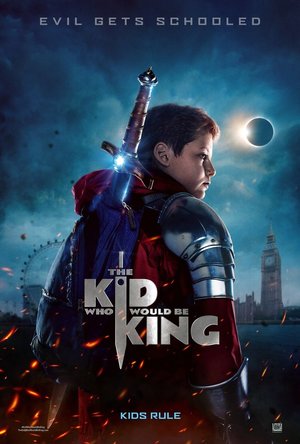

We've had plenty of spins on the legend of King Arthur over the years. Probably the most enjoyable for me was BBC show 'Merlin', which ran for 5 seasons between 2008 and 2012, focusing on the early life of the famous sorcerer and King Arthur. Probably the worst take on it all was Guy Ritchie's god awful 'Legend Of The Sword' back in 2017. Joe Cornish, writer/director of the brilliant 2011 movie 'Attack The Block', follows that movie with a fresh spin of his own in 'The Kid Who Would Be King'.
For those of us who are unfamiliar with the legend of Arthur, or who had it's memory tarnished by Mr Guy Ritchie, it's recapped for us here in a nice little animated sequence right at the start of the movie. It tells how the evil Morgana was banished to the underworld, vowing to return once more when the world is again divided and at its weakest.
We then join Alex (played by Louis Serkis, son of Andy Serkis), a 12 year old schoolboy living with his mother. He's having some trouble with bullies at school, made worse by his attempts to stand up to them as they terrorise his friend Bedders. One night, while fleeing from bullies Lance and Kay, he stumbles into a building site where he discovers a sword set in stone. He manages to pull it free and takes it home in his backpack, where he and Bedders determine that the sword is in fact the legendary Excalibur.
The next day a mysterious new boy joins them at school. Turns out, he is in fact Merlin, taking the form of a younger boy. He informs Alex and Bedders that they must form a team of knights in order to prepare for the imminent return of Morgana and her army of dead soldiers. They have just 4 days, with her arrival taking place during an upcoming solar eclipse. If they cannot stop her, then she will enslave the Earths inhabitants.
Alex believes that his father is key to all of this, and that he is in fact descended from Arthur, so he decides to go on a quest to Tintagel, the last place that he saw his father. Alex leaves a note for his mum - "Gone on quest to save Britain, don’t worry!” and begins 'knighting' Bedders, and eventually bullies Lance and Kay, as only those that have been knighted are able to see and fight the dead soldiers that come at night.
Their journey takes them via coach, through a portal at Stone Henge, and on a trek across the English countryside where they stop to allow Merlin time to provide them with the sword training they need in order to stand any chance of defeating Morgana. Merlin regularly changes his form, switching between young boy, an owl and his true elderly self (played by Patrick Stewart). In the form of a boy, Merlin is a little bit wacky, performing his magic with a series of clicking hand movements, something which became very annoying for me after the first few times. I get that this is a story about kids banding together and overcoming evil, but part of me just wishes that Merlin had stayed in his adult form of Patrick Stewart as I really wasn't so keen on the younger version at all.
It's also around this time, for a fairly lengthy period in the middle, that I felt the movie slowed and struggled a little. Thankfully though, things improved considerably for the final act, pulling everything together and delivering a hugely enjoyable finale. As the solar eclipse plunges their school into darkness, an army of armour clad school children battle the flame engulfed skeletal warriors and attempt to defeat the dragon-like Morgana. It's the kind of movie you'd love to watch as a child - no adults, just the kids rising up and overpowering evil. In fact, my daughter enjoyed this a lot more than I did, offering up her own 4.5 rating, so there you go!
I would have liked a little more from the great Patrick Stewart, and Rebecca Ferguson as Morgana isn't quite evil enough for me, but overall this is a really fun family movie and that's largely down to it's young stars, who are all fantastic. As shown in Attack the Block, Joe Cornish has a real skill for blending the ordinary with the fantastical and empowering his young characters with the traits of a hero or a leader.
For those of us who are unfamiliar with the legend of Arthur, or who had it's memory tarnished by Mr Guy Ritchie, it's recapped for us here in a nice little animated sequence right at the start of the movie. It tells how the evil Morgana was banished to the underworld, vowing to return once more when the world is again divided and at its weakest.
We then join Alex (played by Louis Serkis, son of Andy Serkis), a 12 year old schoolboy living with his mother. He's having some trouble with bullies at school, made worse by his attempts to stand up to them as they terrorise his friend Bedders. One night, while fleeing from bullies Lance and Kay, he stumbles into a building site where he discovers a sword set in stone. He manages to pull it free and takes it home in his backpack, where he and Bedders determine that the sword is in fact the legendary Excalibur.
The next day a mysterious new boy joins them at school. Turns out, he is in fact Merlin, taking the form of a younger boy. He informs Alex and Bedders that they must form a team of knights in order to prepare for the imminent return of Morgana and her army of dead soldiers. They have just 4 days, with her arrival taking place during an upcoming solar eclipse. If they cannot stop her, then she will enslave the Earths inhabitants.
Alex believes that his father is key to all of this, and that he is in fact descended from Arthur, so he decides to go on a quest to Tintagel, the last place that he saw his father. Alex leaves a note for his mum - "Gone on quest to save Britain, don’t worry!” and begins 'knighting' Bedders, and eventually bullies Lance and Kay, as only those that have been knighted are able to see and fight the dead soldiers that come at night.
Their journey takes them via coach, through a portal at Stone Henge, and on a trek across the English countryside where they stop to allow Merlin time to provide them with the sword training they need in order to stand any chance of defeating Morgana. Merlin regularly changes his form, switching between young boy, an owl and his true elderly self (played by Patrick Stewart). In the form of a boy, Merlin is a little bit wacky, performing his magic with a series of clicking hand movements, something which became very annoying for me after the first few times. I get that this is a story about kids banding together and overcoming evil, but part of me just wishes that Merlin had stayed in his adult form of Patrick Stewart as I really wasn't so keen on the younger version at all.
It's also around this time, for a fairly lengthy period in the middle, that I felt the movie slowed and struggled a little. Thankfully though, things improved considerably for the final act, pulling everything together and delivering a hugely enjoyable finale. As the solar eclipse plunges their school into darkness, an army of armour clad school children battle the flame engulfed skeletal warriors and attempt to defeat the dragon-like Morgana. It's the kind of movie you'd love to watch as a child - no adults, just the kids rising up and overpowering evil. In fact, my daughter enjoyed this a lot more than I did, offering up her own 4.5 rating, so there you go!
I would have liked a little more from the great Patrick Stewart, and Rebecca Ferguson as Morgana isn't quite evil enough for me, but overall this is a really fun family movie and that's largely down to it's young stars, who are all fantastic. As shown in Attack the Block, Joe Cornish has a real skill for blending the ordinary with the fantastical and empowering his young characters with the traits of a hero or a leader.

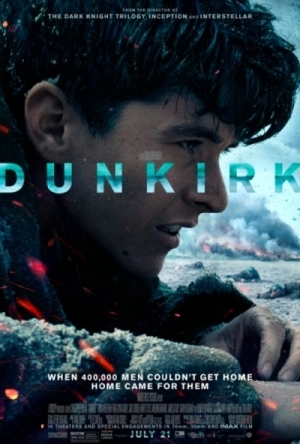
Bob Mann (459 KP) rated Dunkirk (2017) in Movies
Sep 29, 2021

A war vehicle running low on fuel.
The words “Christopher Nolan” and “disappointment” are not words I would naturally associate… but for me, they apply where “Dunkirk” is concerned.
It promised so much from the trailer: a historical event of epic proportions; Kenneth Branagh; Tom Hardy; Mark Rylance; Hans Zimmer on the keys; the director of such classics as “The Dark Knight”; “Inception” and “Interstellar” : what could go wrong?
But it just doesn’t work and I’ve spent the last 24 hours trying to unpick why.
A key problem for me was the depiction of the beach itself. The film eschews CGI effects – a move that I would normally approve of – in favour of the use of “practical effects” and the involvement of “thousands of extras” (as the rather glutinously positive Wiki entry declares). Unfortunately for the movie, there were some 400,000 troops marooned in this last patch of civilisation ahead of the Nazi hoard, and all of the shots refuse to acknowledge this scale of potential human tragedy. Yes, there are individual scenes of horror, such as the soldier walking into the sea against the impassive stares of the young heroes. But nothing of scale. At times I thought I’d seen more people on the beach on a winter’s day in Bournemouth! In the absence of a co-production with China, and the provision of the volume of extras as in “The Great Wall“, CGI becomes a necessary evil to make the whole exercise believable.
What it was really like…. one of the famous paintings by Charles Cundall (Crown copyright).
My disquiet at this deepened when we got to the sharp end of the rescue by the “small boats”. In my mind (and I’m NOT quite old enough to remember this!) I imagine a sea full of them. A sight to truly merit Branagh’s awed gaze. But no. They might have been “original” vessels…. but there was only about half a dozen of them. A mental vision dashed.
Did I feel a spot of rain? Looking to unfriendly skies on the River Mole.
The film attempts to tell the story from three perspectives: from the land; from the sea and from the air. The sea though gets the lion’s share of the film, and there is much drowning that occurs that (I am aware) was distressing for some in the audience.
Styles going in One Direction…. down.
Nolan also pushes his quirky “timeline” manipulation too far for an audience that largely expects a linear telling of a classic tale. It’s day; it’s night; the minesweeper’s sailing; then sunk; then sailing again; a Spitfire crashes, then crashes again from a different perspective. I know many in the audience just didn’t ‘get’ that: leaving them presumably very confused!
That being said, the film is not a write off, and has its moments of brilliance. Kenneth Branagh (“Jack Ryan: Shadow Recruit“, “Valkyrie”) – although having a range of Nolan’s clipped and cheesy lines to say – is impressive as the commanding officer. Mark Rylance (“Bridge of Spies“, “The BFG“) also shines as the captain of the “Moonstone”: one of the small boats out of Weymouth (although here there is a grievous lack of backstory for the civilian efforts). And Tom Hardy (“The Revenant“, “Legend“), although having limited opportunity to act with anything other than his eyes, is impressive as RAF pilot Farrier. His final scene of stoic heroism is memorable.
Fionn Whitehead is also impressive in his movie debut, and even Harry Styles (“This is Us“) equips himself well.
A surfeit of horror leads to a lack of compassion. Harry Styles, Aneurin Barnard and Fionn Whitehead look on as the death toll mounts.
The cinematography by Hoyte Van Hoytema (“Interstellar“) is stunning with some memorable shots: a burning plane on a beach being a highspot for me.
And Hans Zimmer’s score is Oscar-worthy, generating enormous tension with a reverberating score, albeit sometimes let down by unsuitable cutaways (for example, to scenes of boat loading). Elsewhere in the sound department though I had major issues, with a decent percentage of the dialogue being completely inaudible in the sound mix.
Kenneth Branagh, impressive as Commander Bolton RN.
I really wanted this to be a “Battle of Britain”. Or a “Bridge Too Far”. Or even a “Saving Private Ryan”. Unfortunately, for me it was none of these, and this goes down as one of my movie disappointments of the year so far.
It promised so much from the trailer: a historical event of epic proportions; Kenneth Branagh; Tom Hardy; Mark Rylance; Hans Zimmer on the keys; the director of such classics as “The Dark Knight”; “Inception” and “Interstellar” : what could go wrong?
But it just doesn’t work and I’ve spent the last 24 hours trying to unpick why.
A key problem for me was the depiction of the beach itself. The film eschews CGI effects – a move that I would normally approve of – in favour of the use of “practical effects” and the involvement of “thousands of extras” (as the rather glutinously positive Wiki entry declares). Unfortunately for the movie, there were some 400,000 troops marooned in this last patch of civilisation ahead of the Nazi hoard, and all of the shots refuse to acknowledge this scale of potential human tragedy. Yes, there are individual scenes of horror, such as the soldier walking into the sea against the impassive stares of the young heroes. But nothing of scale. At times I thought I’d seen more people on the beach on a winter’s day in Bournemouth! In the absence of a co-production with China, and the provision of the volume of extras as in “The Great Wall“, CGI becomes a necessary evil to make the whole exercise believable.
What it was really like…. one of the famous paintings by Charles Cundall (Crown copyright).
My disquiet at this deepened when we got to the sharp end of the rescue by the “small boats”. In my mind (and I’m NOT quite old enough to remember this!) I imagine a sea full of them. A sight to truly merit Branagh’s awed gaze. But no. They might have been “original” vessels…. but there was only about half a dozen of them. A mental vision dashed.
Did I feel a spot of rain? Looking to unfriendly skies on the River Mole.
The film attempts to tell the story from three perspectives: from the land; from the sea and from the air. The sea though gets the lion’s share of the film, and there is much drowning that occurs that (I am aware) was distressing for some in the audience.
Styles going in One Direction…. down.
Nolan also pushes his quirky “timeline” manipulation too far for an audience that largely expects a linear telling of a classic tale. It’s day; it’s night; the minesweeper’s sailing; then sunk; then sailing again; a Spitfire crashes, then crashes again from a different perspective. I know many in the audience just didn’t ‘get’ that: leaving them presumably very confused!
That being said, the film is not a write off, and has its moments of brilliance. Kenneth Branagh (“Jack Ryan: Shadow Recruit“, “Valkyrie”) – although having a range of Nolan’s clipped and cheesy lines to say – is impressive as the commanding officer. Mark Rylance (“Bridge of Spies“, “The BFG“) also shines as the captain of the “Moonstone”: one of the small boats out of Weymouth (although here there is a grievous lack of backstory for the civilian efforts). And Tom Hardy (“The Revenant“, “Legend“), although having limited opportunity to act with anything other than his eyes, is impressive as RAF pilot Farrier. His final scene of stoic heroism is memorable.
Fionn Whitehead is also impressive in his movie debut, and even Harry Styles (“This is Us“) equips himself well.
A surfeit of horror leads to a lack of compassion. Harry Styles, Aneurin Barnard and Fionn Whitehead look on as the death toll mounts.
The cinematography by Hoyte Van Hoytema (“Interstellar“) is stunning with some memorable shots: a burning plane on a beach being a highspot for me.
And Hans Zimmer’s score is Oscar-worthy, generating enormous tension with a reverberating score, albeit sometimes let down by unsuitable cutaways (for example, to scenes of boat loading). Elsewhere in the sound department though I had major issues, with a decent percentage of the dialogue being completely inaudible in the sound mix.
Kenneth Branagh, impressive as Commander Bolton RN.
I really wanted this to be a “Battle of Britain”. Or a “Bridge Too Far”. Or even a “Saving Private Ryan”. Unfortunately, for me it was none of these, and this goes down as one of my movie disappointments of the year so far.

Chris Sawin (602 KP) rated Doomsday (2008) in Movies
Jun 18, 2019
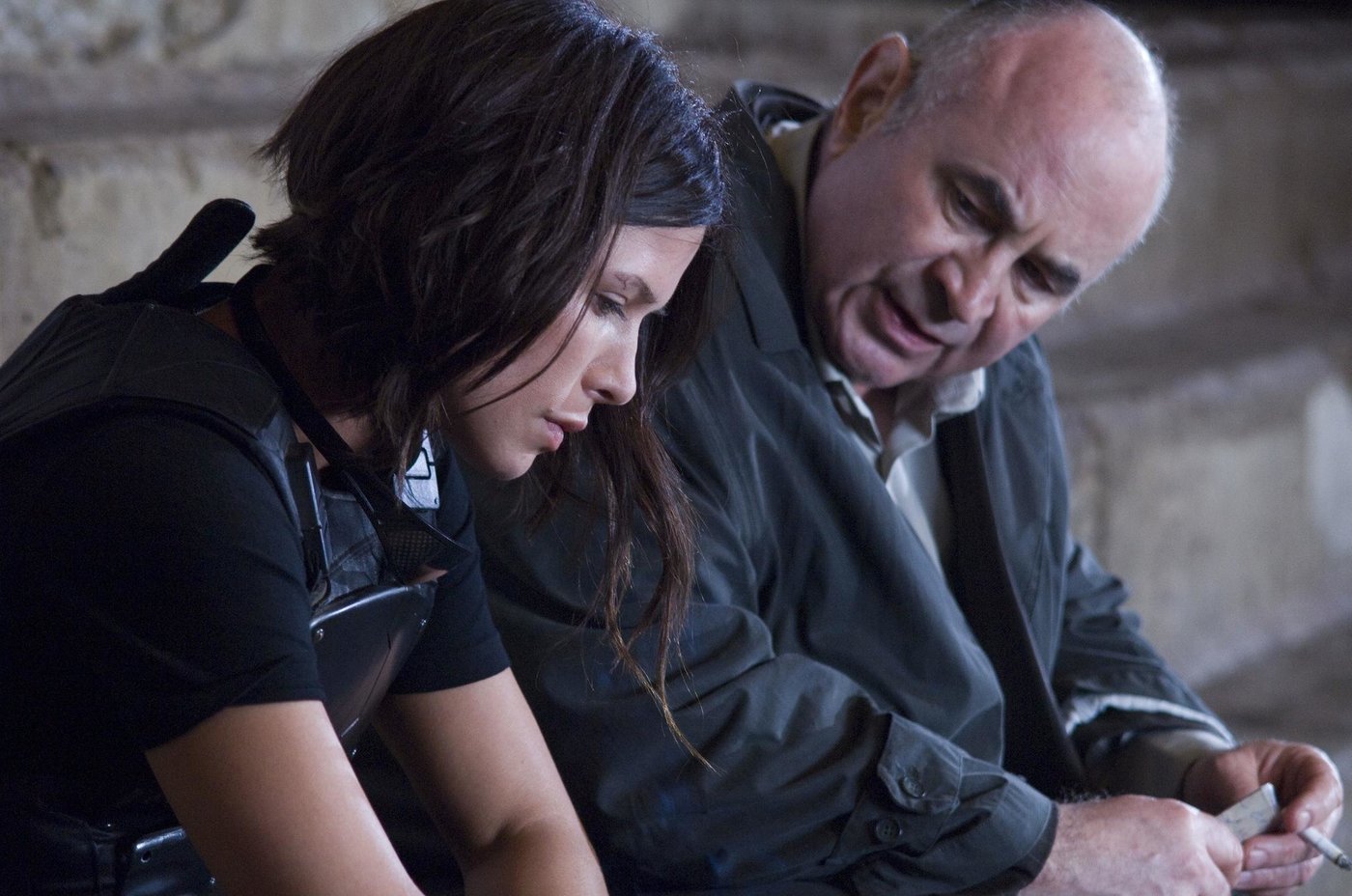
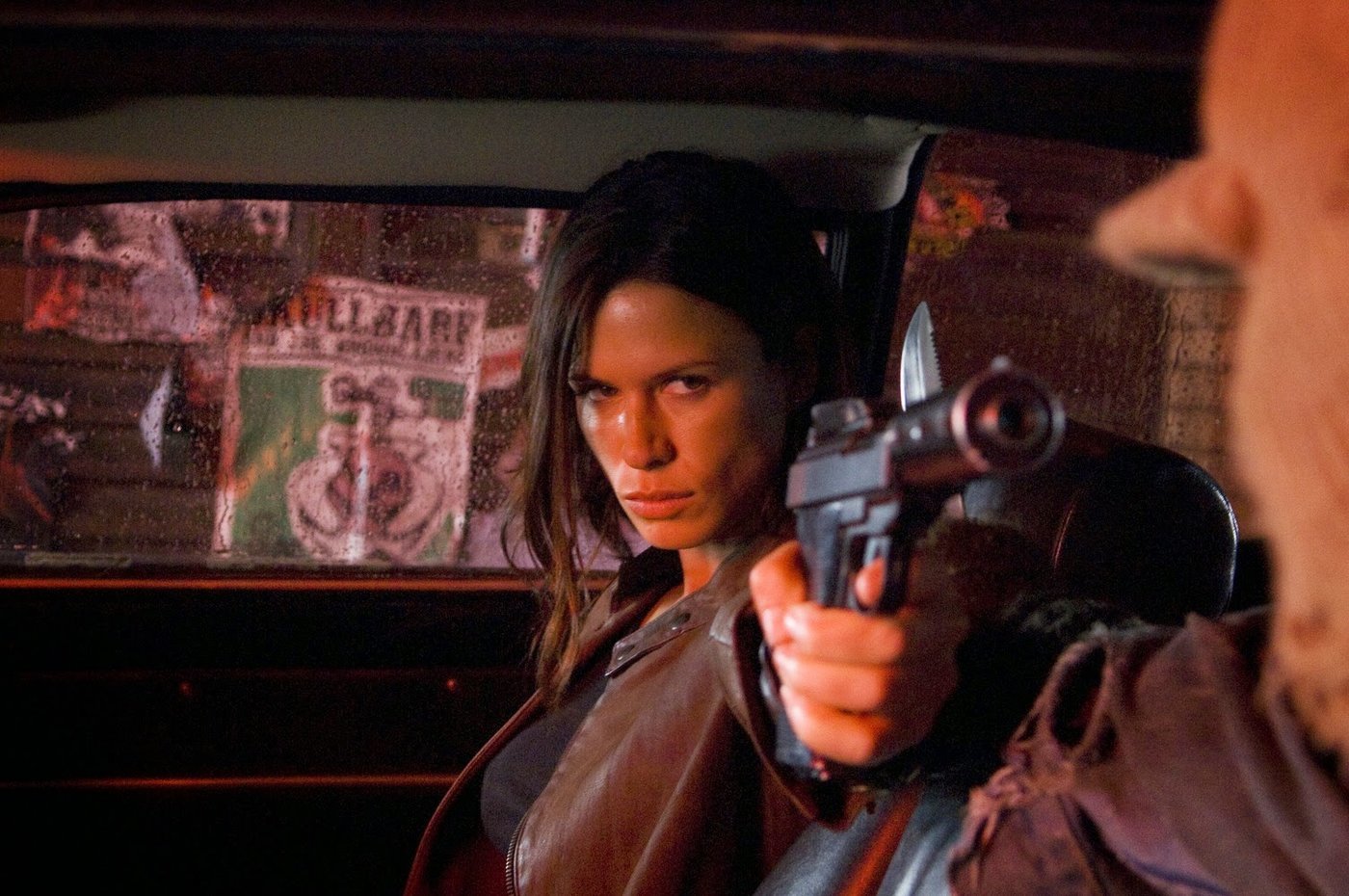
The Reaper Virus has made its way across Great Britain. The uninfected are evacuated while a wall is built in an effort to quarantine the virus and it’s worked up until now. 30 years later, the virus has broken out again. Survivors are discovered on the other side of the wall, which brings hope for a cure. A team of special forces including Eden Sinclair (Rhona Mitra) are sent to the other side of the wall to try to find this cure. The survivors aren’t like normal people though as they’ve become cannibalistic savages and will kill or eat anyone who stands in their way. Even if a cure is found, it’s unlikely Sinclair and her team will be able to make it back in one piece.
Doomsday is probably not the best movie. It has a 6.0/10 on IMDb based off of 66,848 user ratings and a 51 on both Metacritic and Rotten Tomatoes. It’s a jumbled mess of a film, but it’s one where the first time viewing a decade ago triggered some sort of happiness in the cynical brain and barely beating heart attached to the decrepit fingers that type these halfhearted reviews (writing is more important than asthmatic breathing, so just pretend you understood the sarcasm here). There’s still a fondness for Doomsday despite its reputation and a soft spot for Neil Marshall who will hopefully blow us away with his Hellboy film in 2019. So sit back, relax, and enjoy a positive review for what is likely a nonsensical excuse of a film that is fairly enjoyable anyway.
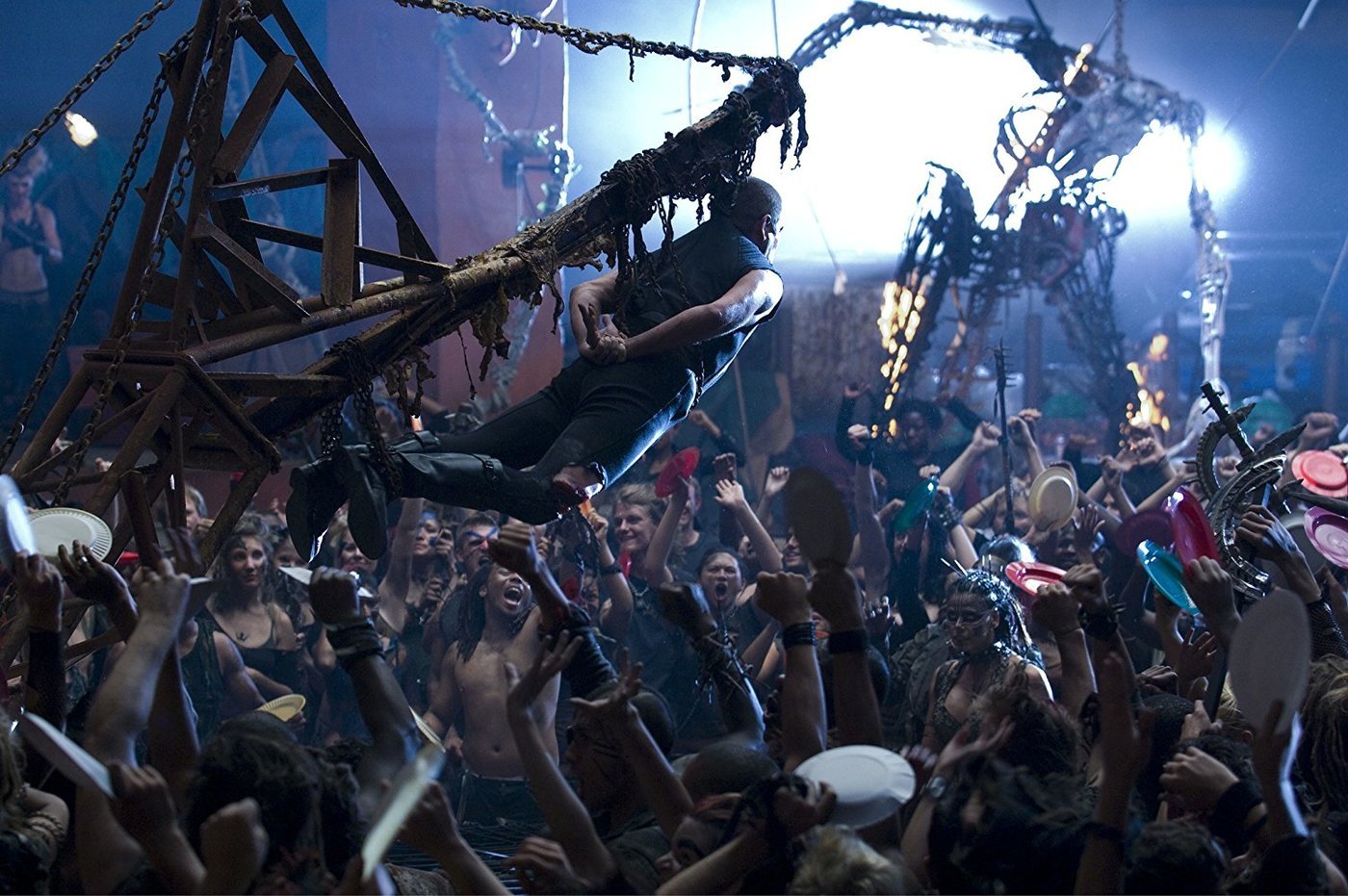
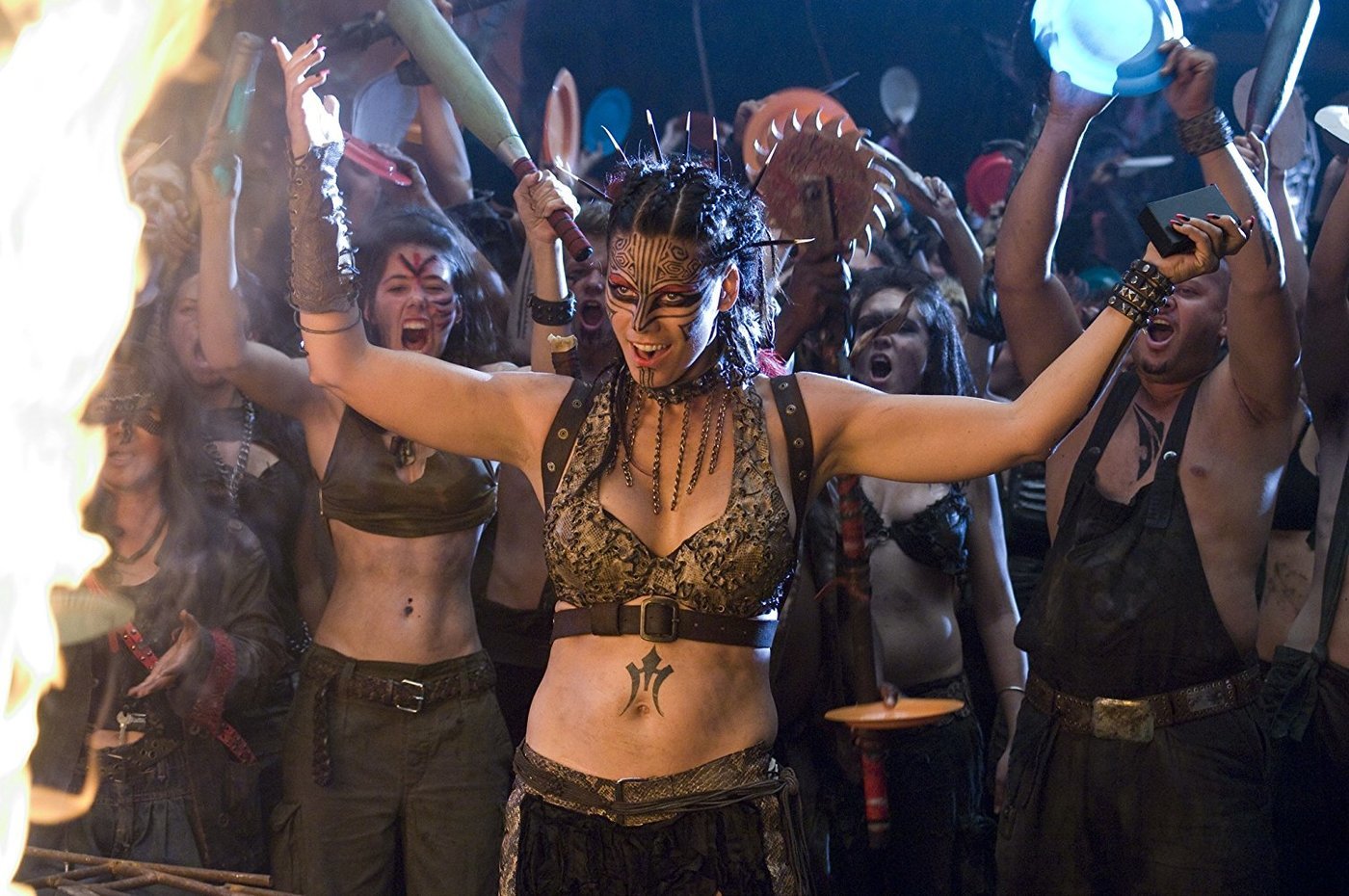
It’s odd that the massive amount of inconsistencies in Dance of the Dead made the film practically unbearable and yet that’s half the charm of Doomsday. Written and directed by Neil Marshall (The Descent, Dog Soldiers), Doomsday is a sci-fi film that has heavy elements of films you likely already love. Judging by the screenshots alone, the film already has a Mad Max and even a Beyond Thunderdome aspect to its post-apocalyptic setting. Doomsday also seems to borrow elements from films such as Aliens, Gladiator, 28 Days Later, and The Warriors.
Sol, played by Craig Conway who was also the main crawler in The Descent, is an extremely violent and hardcore character. Sol is always seething with anger and with that kind of passion and energy he tends to steal nearly every scene he’s in. He pales in comparison to Rhona Mitra’s Sinclair character though. She doesn’t seem to care about anything and always manages to find a way to get out of whatever situation she finds herself in. Back in 2008, Sinclair came off as one of the fiercest and most dominant female on-screen characters that a 24-year-old rookie film critic had ever come across.
Watching the way the savages live and what they do to survive is disgustingly mesmerizing. Malcolm McDowell puts in a convincing performance as Kane. You hear him more than you see him over the course of the film, but his words are felt rather than just heard. Bob Hoskins is rather tame as Sinclair’s boss Bill Nelson. Neil Marhsall had the intention of having Hoskins mimic his bulldog role from The Long Good Friday, but he mostly sits on the sidelines while Sinclair does all of the dirty work.
Doomsday has an impressive amount of gore and the scenes where all hell breaks loose are the most fun. Witnessing the battle sequences, the deaths, and especially the car chase at the end makes Doomsday a worthwhile experience. One could make the argument that Doomsday is a chaotic mess that can’t pick a genre and stick with it for longer than a few minutes at a time, but it’s also difficult to take that to heart when a film is this much fun. It may have an A.D.D. method of filmmaking, but at least you’re never bored and the film manages to hold your interest and entertain you from beginning to end.
Doomsday won’t be for everyone, but it’s a wild, bloody ride at its core and it’s incredibly easy to enjoy the film as a one hour and 45 minute thrill ride in the vein of Mad Max: Fury Road. Horror, science fiction, and action collide along with a massive amalgamation of outbreak, post-apocalyptic, and medieval storylines in the utterly blood-soaked pandemonium known as Neill Marshall’s Doomsday.
Doomsday is currently available to stream on Amazon Prime, YouTube, Vudu, and Google Play for $2.99 and iTunes for $3.99. It’s also currently free on Amazon Prime with Starz and Prime Video Channels. The Multi-Format Blu-ray is $9.81 on Amazon while a two-disc Blu-ray packaged with Arnold Schwarzenegger’s End of Days will set you back $34.98. The DVD is available in brand new condition with free shipping for $6.02 on eBay while a pre-owned Blu-ray is $4.99 with free shipping.
Doomsday is probably not the best movie. It has a 6.0/10 on IMDb based off of 66,848 user ratings and a 51 on both Metacritic and Rotten Tomatoes. It’s a jumbled mess of a film, but it’s one where the first time viewing a decade ago triggered some sort of happiness in the cynical brain and barely beating heart attached to the decrepit fingers that type these halfhearted reviews (writing is more important than asthmatic breathing, so just pretend you understood the sarcasm here). There’s still a fondness for Doomsday despite its reputation and a soft spot for Neil Marshall who will hopefully blow us away with his Hellboy film in 2019. So sit back, relax, and enjoy a positive review for what is likely a nonsensical excuse of a film that is fairly enjoyable anyway.
It’s odd that the massive amount of inconsistencies in Dance of the Dead made the film practically unbearable and yet that’s half the charm of Doomsday. Written and directed by Neil Marshall (The Descent, Dog Soldiers), Doomsday is a sci-fi film that has heavy elements of films you likely already love. Judging by the screenshots alone, the film already has a Mad Max and even a Beyond Thunderdome aspect to its post-apocalyptic setting. Doomsday also seems to borrow elements from films such as Aliens, Gladiator, 28 Days Later, and The Warriors.
Sol, played by Craig Conway who was also the main crawler in The Descent, is an extremely violent and hardcore character. Sol is always seething with anger and with that kind of passion and energy he tends to steal nearly every scene he’s in. He pales in comparison to Rhona Mitra’s Sinclair character though. She doesn’t seem to care about anything and always manages to find a way to get out of whatever situation she finds herself in. Back in 2008, Sinclair came off as one of the fiercest and most dominant female on-screen characters that a 24-year-old rookie film critic had ever come across.
Watching the way the savages live and what they do to survive is disgustingly mesmerizing. Malcolm McDowell puts in a convincing performance as Kane. You hear him more than you see him over the course of the film, but his words are felt rather than just heard. Bob Hoskins is rather tame as Sinclair’s boss Bill Nelson. Neil Marhsall had the intention of having Hoskins mimic his bulldog role from The Long Good Friday, but he mostly sits on the sidelines while Sinclair does all of the dirty work.
Doomsday has an impressive amount of gore and the scenes where all hell breaks loose are the most fun. Witnessing the battle sequences, the deaths, and especially the car chase at the end makes Doomsday a worthwhile experience. One could make the argument that Doomsday is a chaotic mess that can’t pick a genre and stick with it for longer than a few minutes at a time, but it’s also difficult to take that to heart when a film is this much fun. It may have an A.D.D. method of filmmaking, but at least you’re never bored and the film manages to hold your interest and entertain you from beginning to end.
Doomsday won’t be for everyone, but it’s a wild, bloody ride at its core and it’s incredibly easy to enjoy the film as a one hour and 45 minute thrill ride in the vein of Mad Max: Fury Road. Horror, science fiction, and action collide along with a massive amalgamation of outbreak, post-apocalyptic, and medieval storylines in the utterly blood-soaked pandemonium known as Neill Marshall’s Doomsday.
Doomsday is currently available to stream on Amazon Prime, YouTube, Vudu, and Google Play for $2.99 and iTunes for $3.99. It’s also currently free on Amazon Prime with Starz and Prime Video Channels. The Multi-Format Blu-ray is $9.81 on Amazon while a two-disc Blu-ray packaged with Arnold Schwarzenegger’s End of Days will set you back $34.98. The DVD is available in brand new condition with free shipping for $6.02 on eBay while a pre-owned Blu-ray is $4.99 with free shipping.

JT (287 KP) rated Skyfall (2012) in Movies
Mar 10, 2020
I wondered recently who my favourite Bond is? Do I enjoy the comical quips of Roger Moore or the smooth suave debonair approach of Sean Connery. But everytime I think about it, I keep coming full circle to Daniel Craig, in particularly Skyfall.
After the somewhat disappointment of Quantum of Solace Oscar winning director Sam Mendes has taken Bond 23 and given it a grittier more emotional look while paying homage to some of the past Bond classics. The opening credits are an explosive introduction as we see Bond give chase through a Turkish bazaar which includes an impressive motor bike pursuit and a brilliantly choreographed fist fight on top of a moving train.
After being shot Bond is seen falling to his certain death and the film explodes into its trademark opening credits, complete with Adele’s powerful voice, a song that really evokes everything Bond. When 007 finally returns from the grave having spent time away partaking in scorpion drinking games, post shag Heineken’s and ultimately ’enjoying death’ he comes back to find that MI6 has moved deep into subterranean London after an attack on MI6.
He’s unshaven, disheveled and is a shadow of the former agent, not even able to shoot straight or do a succession of chin-ups without collapsing. Skyfall scratches deep beneath the emotional undertones of both Bond and M as their pasts are dragged up for all to see. Judi Dench in her seventh Bond outing gets a much bigger slice of the action, she is without question the main Bond girl here. Joined by Naomie Harris and Bérénice Marlohe who both take a relative back seat.
The Bond franchise has always had a rich tradition of producing menacing and iconic villains, Bloefeld, Scaramanga and Goldfinger to name a few, but the introduction of Javier Bardem will now have a place in Bond folk-law as one of the best modern day baddies.
His entrance was perfect, with Bond tied to a chair Bardem’s Silva (himself a former agent) entered from an elevator at the far side of the room, and in one take slowly walked forward as he produced a monologue about rats in a barrel, proceeding to taunt 007 about his own past and the connections that they both have with M.
The last few films have also lacked any real gadgetry in terms of Q branch, something which after being around for so long was definitely missing. Ben Wishaw’s appearance as a much younger Q, “you’ve still got spots” points out 007, was a much needed injection as he hands out Bond his new Walter PPK and radio transmitter (they don’t go in for exploding pens anymore).
It’s simple stuff but it was great to see that character back where he belongs.
There is subtle humour throughout and light hearted moments, Bond himself throwing a few winks here and there as Roger Moore used to do so well back in the day. The action of course is another high point, believable or not it’s stunning but then this is what we have come to expect from one of the longest running franchises in film history.
The locations and cinematography were sublime, from the depths of the London underground to the Scottish highlands in the film’s pulsating climax; Skyfall brought Bond back to Britain. The scenes set in Shanghai where also exceptional, the highlight for me, the neon lit skyscraper fight in which Bond fails to hang onto the information he needs, quite literally.
Ralph Fiennes bureaucratic Mallory is another casting masterstroke, Albert Finney ads some touching moments of his own, while MI6 agent Eve who after shooting 007 by mistake and takes a back seat from active duty will no doubt please many fans with her new role.
Skyfall, of which I was not sure what on earth the title meant at the time is all the more clear in the third act. Bond chooses to revisit his child hood home and use that against Silva in a make shift home defense that even MacAulay Culkin would be proud of. It is fantastically shot and is the perfect ending to a film that has been top draw all the way through.
Some comparisons have been drawn to this and The Dark Knight in that the main characters are lost and then re-born in some way, both have a past that haunts them as well as dead parents. Mendes and the writers have taken this film down a darker route but an emotive one as well and that is credit to them, it all made sense and the story flowed well.
Skyfall is nothing short of a triumph and has given Bond fans everything they could have asked for and so much more.
After the somewhat disappointment of Quantum of Solace Oscar winning director Sam Mendes has taken Bond 23 and given it a grittier more emotional look while paying homage to some of the past Bond classics. The opening credits are an explosive introduction as we see Bond give chase through a Turkish bazaar which includes an impressive motor bike pursuit and a brilliantly choreographed fist fight on top of a moving train.
After being shot Bond is seen falling to his certain death and the film explodes into its trademark opening credits, complete with Adele’s powerful voice, a song that really evokes everything Bond. When 007 finally returns from the grave having spent time away partaking in scorpion drinking games, post shag Heineken’s and ultimately ’enjoying death’ he comes back to find that MI6 has moved deep into subterranean London after an attack on MI6.
He’s unshaven, disheveled and is a shadow of the former agent, not even able to shoot straight or do a succession of chin-ups without collapsing. Skyfall scratches deep beneath the emotional undertones of both Bond and M as their pasts are dragged up for all to see. Judi Dench in her seventh Bond outing gets a much bigger slice of the action, she is without question the main Bond girl here. Joined by Naomie Harris and Bérénice Marlohe who both take a relative back seat.
The Bond franchise has always had a rich tradition of producing menacing and iconic villains, Bloefeld, Scaramanga and Goldfinger to name a few, but the introduction of Javier Bardem will now have a place in Bond folk-law as one of the best modern day baddies.
His entrance was perfect, with Bond tied to a chair Bardem’s Silva (himself a former agent) entered from an elevator at the far side of the room, and in one take slowly walked forward as he produced a monologue about rats in a barrel, proceeding to taunt 007 about his own past and the connections that they both have with M.
The last few films have also lacked any real gadgetry in terms of Q branch, something which after being around for so long was definitely missing. Ben Wishaw’s appearance as a much younger Q, “you’ve still got spots” points out 007, was a much needed injection as he hands out Bond his new Walter PPK and radio transmitter (they don’t go in for exploding pens anymore).
It’s simple stuff but it was great to see that character back where he belongs.
There is subtle humour throughout and light hearted moments, Bond himself throwing a few winks here and there as Roger Moore used to do so well back in the day. The action of course is another high point, believable or not it’s stunning but then this is what we have come to expect from one of the longest running franchises in film history.
The locations and cinematography were sublime, from the depths of the London underground to the Scottish highlands in the film’s pulsating climax; Skyfall brought Bond back to Britain. The scenes set in Shanghai where also exceptional, the highlight for me, the neon lit skyscraper fight in which Bond fails to hang onto the information he needs, quite literally.
Ralph Fiennes bureaucratic Mallory is another casting masterstroke, Albert Finney ads some touching moments of his own, while MI6 agent Eve who after shooting 007 by mistake and takes a back seat from active duty will no doubt please many fans with her new role.
Skyfall, of which I was not sure what on earth the title meant at the time is all the more clear in the third act. Bond chooses to revisit his child hood home and use that against Silva in a make shift home defense that even MacAulay Culkin would be proud of. It is fantastically shot and is the perfect ending to a film that has been top draw all the way through.
Some comparisons have been drawn to this and The Dark Knight in that the main characters are lost and then re-born in some way, both have a past that haunts them as well as dead parents. Mendes and the writers have taken this film down a darker route but an emotive one as well and that is credit to them, it all made sense and the story flowed well.
Skyfall is nothing short of a triumph and has given Bond fans everything they could have asked for and so much more.
5 Minute Movie Guy (379 KP) rated Blinded by the Light (2019) in Movies
Sep 16, 2019

Based on a true story, Blinded by the Light follows the life of Javed, a down-on-his-luck Pakistani teenager living in Great Britain in the 1980s, who is in a social stranglehold by his strict father. He just wants to live a life like any other kid his age, and hang out with his friends, and go to parties, and maybe even meet a girl, but his overbearing dad has other expectations and plans for him. Being that they’re minorities in a foreign country in a time of racism, Javed’s father wants him to keep his head down and put his family first and foremost. That means living the life his father chooses for him, and not being able to live the life he desires. Feeling trapped by his circumstances, Javed’s bleak outlook becomes changed completely after he makes a new friend at school who introduces him to the music of the All-American legend, Bruce Springsteen.
One stormy night, fueled by his frustrations with his family, Javed turns to the cassette tapes he borrowed from his friend, and listens to “The Boss” for the very first time. It’s an instantly cathartic and unforgettably life-changing experience. The words speak to him in a way that no song ever has before. The lyrics speak of his ambitions and know his struggles and pain. It’s as if suddenly through the songs of Springsteen, Javed has found his voice and a guiding light. He’s instantly transformed by it, and is given a purpose and a passion to pursue it. For him, the music is the spark to light the fire to his ambitions; to leave his small town, to escape poverty, to resist his father’s oppression, to live on his own accord, to become a writer, and to feed his hungry heart.
As a writer and a lover of Springsteen myself, I connected with Blinded by the Light on a profoundly personal level. Springsteen’s music has spoken to me in a similar fashion as it does to Javed in the film. While I’m not the super fan that he is, I like to think we all have comparable experiences with certain musical artists who resonate with us deep in our souls. Bruce’s music in particular speaks to the common man, and it rallies against the injustices of the world in the pursuit of the American dream. I can’t think of a single musician that I personally find to be more motivational than him. It is my hope that people will watch this movie, particularly those who are unfamiliar with the music of Bruce Springsteen, and they’ll have a reaction to it much like Javed in this movie.
It goes without saying that the soundtrack in Blinded by the Light is fantastic. It has a nice mix of classic hits as well as some lesser known Springsteen songs, including some live versions, and they’re all put to good use here. Out of all of the recent movies inspired by real-life musicians, including Bohemian Rhapsody, Rocketman, and Yesterday, Blinded by the Light is by far my personal favorite. There are no poor cover songs nor bad lip synching to be found here. What you get is 100% The Boss. In a few parts, the movie even breaks out into full-on dancing musical numbers. While they’re a little cheesy and even feel a bit out of place, I found that they remained true to the music and were simply too much fun not to enjoy.
Director Gurinder Chadha does a fine job crafting Javed’s story and all of its complexities while also paying homage to The Boss. The movie explores our innate desire for freedom and finding ourselves, while also exposing the sacrifices we often must make in life for those we love. The film additionally explores social issues of the era, including political turmoil, fascist movements, and racism, which Javed faces first-hand as a Pakistani in England, and which unfortunately still feel uncomfortably relevant today. Javed is played by Viveik Kalra in his motion-picture debut, and he is immensely likable and relatable in his performance. The cast as a whole is pretty good, with the standouts being Hayley Atwell as Javed’s teacher, Ms. Clay, who encourages him to continue with his writing, as well as Kulvinder Ghir, who plays Javed’s controlling father. I also liked Aaron Phagura as Roops, Javed’s loyal Bruce-Springsteen-cassette-tape-sharing friend. We all could use more friends like him!
Overall, Blinded by the Light is a loving tribute to the music of Bruce Springsteen, but more than anything, it’s an emotional, identifiable, and uplifting tale about reaching for your dreams. The struggles that Javed faces resonate brilliantly with the messages of the music, and his story is an inspiring one worth hearing. Springsteen fans in particular definitely won’t want to miss this movie, but I think regardless of your interest or familiarity with Springsteen and his music, you’re likely to find something to enjoy here. And maybe, just maybe, you’ll even walk out of the theater as a fan.
One stormy night, fueled by his frustrations with his family, Javed turns to the cassette tapes he borrowed from his friend, and listens to “The Boss” for the very first time. It’s an instantly cathartic and unforgettably life-changing experience. The words speak to him in a way that no song ever has before. The lyrics speak of his ambitions and know his struggles and pain. It’s as if suddenly through the songs of Springsteen, Javed has found his voice and a guiding light. He’s instantly transformed by it, and is given a purpose and a passion to pursue it. For him, the music is the spark to light the fire to his ambitions; to leave his small town, to escape poverty, to resist his father’s oppression, to live on his own accord, to become a writer, and to feed his hungry heart.
As a writer and a lover of Springsteen myself, I connected with Blinded by the Light on a profoundly personal level. Springsteen’s music has spoken to me in a similar fashion as it does to Javed in the film. While I’m not the super fan that he is, I like to think we all have comparable experiences with certain musical artists who resonate with us deep in our souls. Bruce’s music in particular speaks to the common man, and it rallies against the injustices of the world in the pursuit of the American dream. I can’t think of a single musician that I personally find to be more motivational than him. It is my hope that people will watch this movie, particularly those who are unfamiliar with the music of Bruce Springsteen, and they’ll have a reaction to it much like Javed in this movie.
It goes without saying that the soundtrack in Blinded by the Light is fantastic. It has a nice mix of classic hits as well as some lesser known Springsteen songs, including some live versions, and they’re all put to good use here. Out of all of the recent movies inspired by real-life musicians, including Bohemian Rhapsody, Rocketman, and Yesterday, Blinded by the Light is by far my personal favorite. There are no poor cover songs nor bad lip synching to be found here. What you get is 100% The Boss. In a few parts, the movie even breaks out into full-on dancing musical numbers. While they’re a little cheesy and even feel a bit out of place, I found that they remained true to the music and were simply too much fun not to enjoy.
Director Gurinder Chadha does a fine job crafting Javed’s story and all of its complexities while also paying homage to The Boss. The movie explores our innate desire for freedom and finding ourselves, while also exposing the sacrifices we often must make in life for those we love. The film additionally explores social issues of the era, including political turmoil, fascist movements, and racism, which Javed faces first-hand as a Pakistani in England, and which unfortunately still feel uncomfortably relevant today. Javed is played by Viveik Kalra in his motion-picture debut, and he is immensely likable and relatable in his performance. The cast as a whole is pretty good, with the standouts being Hayley Atwell as Javed’s teacher, Ms. Clay, who encourages him to continue with his writing, as well as Kulvinder Ghir, who plays Javed’s controlling father. I also liked Aaron Phagura as Roops, Javed’s loyal Bruce-Springsteen-cassette-tape-sharing friend. We all could use more friends like him!
Overall, Blinded by the Light is a loving tribute to the music of Bruce Springsteen, but more than anything, it’s an emotional, identifiable, and uplifting tale about reaching for your dreams. The struggles that Javed faces resonate brilliantly with the messages of the music, and his story is an inspiring one worth hearing. Springsteen fans in particular definitely won’t want to miss this movie, but I think regardless of your interest or familiarity with Springsteen and his music, you’re likely to find something to enjoy here. And maybe, just maybe, you’ll even walk out of the theater as a fan.

Daniel Boyd (1066 KP) rated Fantastic Beasts and Where to Find Them (2016) in Movies
Jul 19, 2017

Some of the lighting is well implemented (1 more)
Colin Farrell
Bad CGI (2 more)
The movies 3 leads are extremely annoying
Johnny 'oooh' Depp
Fantastic Beasts and Where To Find Them - Or JK Rowling and the Never Ending Quest for More Money
Contains spoilers, click to show
First off, full disclosure, I have never been a fan of the Harry Potter franchise. I’ve read a few of the books and seen a few of the movies and it just isn’t my thing. Honestly, I’m not even a fan of fantasy in general, I think Lord Of The Rings is nonsense and Game Of Thrones is vastly overrated and the last Harry Potter movie I saw was the fourth one. However, I was willing to go into this movie with a clean slate and hopefully have it win me over and unfortunately it didn’t. Also this review will contain spoilers if you care about that sort of thing.
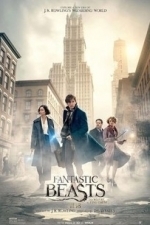
This film is a prequel to the other Harry Potter movies, this time set in America rather than Britain and telling the story of the events that led to the great wizarding war between Dumbledore and Grindlewald. The film did have potential, to see what would have essentially been WWII fought with magic could be really cool but unfortunately all we get here is setup and that actual event we want to see will probably take place 4 or 5 movies down the line. The film opens with Eddie Redmayne’s character, Newt Scamander going to New York from London to set free one of the beasts that he keeps inside his Tardis-like brief case. Then he ends up in a bank and meets a ‘Nomaj,’ which is this film’s lazy version of a ‘muggle,’ who we learn is a simple lonely guy that just wants to open his own bakery and that’s another character cliché ticked off the list. We now have the double act of the nerdy, sniveling protagonist and the overweight sympathetic sidekick. Also, for the rest of this review I will be referring to the baker character as fat bloke and this isn’t to be derogatory, but is purely because the script relies on the, ‘fat, jolly, sympathetic, pathetic loner’ stereotype and passes it off as a character arc. If the script isn’t treating the character with any respect, then why should I? So fat bloke it is then.
So the two of them of course have the exact same briefcase and after some cartoony looking CGI animals escape from Redmayne’s case in the bank the suitcases predictably get mixed up and then the fat bloke gets his bakery loan declined and returns home with Redmayne’s suitcase, then more bad CGI animals open the case and attack the fat bloke. Redmayne’s character then gets arrested by some wizarding inspector for letting the, ‘Nomaj,’ (urgh) get away after seeing the animals in the case and is taken to the New York Wizards base, I guess? Then it’s revealed that the wizarding inspector that arrested Redmayne is a bit of a shit inspector and she is trying to redeem herself in the eyes of her superiors, so in front of this high wizard council, she confiscates the case from Redmayne and opens it only to reveal a bunch of cakes inside. Yes, really… Who writes this shit? Rowling is doing to Harry Potter what Lucas did to Star Wars during the prequels at this point.
So Redmayne gets set free and he goes to fat bloke’s house to find him lying on the floor, then some more bad CGI later the inspector turns up and they take him back to her house to meet her sister? Friend? Does it matter? She ends up becoming the love interest for fat bloke. Then for no apparent reason Redmayne and fat bloke enter the case and he shows fat bloke all this crazy shit that apparently humans aren’t supposed to see and then Redmayne does some more sniveling and decides they have to sneak out of the girls’ apartment and recapture the animals that escaped in the bank and from fat bloke’s apartment. They get a couple of the beasts back then they go to central park to find Redmayne’s horny rhino and they dress fat bloke up in a leather rhino costume and use him as rape bait then they ice skate for a bit and capture the rhino. Again, really… I am not making this shit up for satirical reasons.
Then we see a real life prick Ezra Miller playing some sort of weird emo child who is beat by his mother and we see he is working with Colin Farrell to find a big bad dark spirit that is killing people around New York. Colin Farrell is definitely the best thing about the film at this point. After this a bunch of other stupid shit happens, like Ron Perlman and John Voight coming into the movie, showing a ray of potential then being totally wasted. The movie drags in the middle, but eventually after some more fat jokes, bad CGI and sniveling, all of the creatures are captured and Ezra Miller turns into a black death cloud or some such nonsense. Then he is boosting around New York, fucking up shit as he goes and so Redmayne and Farrell follow him down to the subway to stop him. Redmayne seems to be talking him down and then Farrell shows up and essentially tells him to join the dark side. Then there is a CGI wand battle and the council from earlier show up out of nowhere and kill the black cloud of death. Then Colin Farrell gets pissed off and in the best scene in the movie murders half of the council members before he gets arrested by Eddie Redmayne with some magic handcuffs.
Then the worst part in the movie takes place. It is revealed that Colin Farrell is actually Johnny Depp in disguise. I mean he is Grindlewald in disguise but the important part for me is the replacement of Colin Farrell with Johnny Depp. Now I’m not the world’s biggest Colin Farrell fan, he is great in, ‘In Bruges,’ but other than that he is pretty meh, but he was definitely the best thing that this movie had going for it and they fucking swapped him out! With fucking Johnny-‘ooh’-Depp. As if this movie wasn’t shit enough they swapped out the best thing about it for Johnny Depp, the biggest joke in Hollywood. I’m done, fuck this movie, fuck Johnny Depp, fuck JK Rowling, fuck Harry Potter, I’m out.
Okay, let’s briefly talk about the technical side of the film before I score this thing. The whole cast of this movie is phoning it in, so the acting is fine but nothing to write home about, Farrell is the best thing in this movie, but I feel that in the sequels it will just be an ‘ooh,’ off between Depp and Redmayne. The direction is okay as the movie plods along sufficiently, but the writing is wildly inconsistent and the plot as stated above is all over the place. The lighting and cinematography in one scene are fantastic, when Farrell and Miller are conversing in a dark alleyway but other than that they are pretty mundane too. The score is suitably Harry Potter like and the CGI is also to a similar standard of the Harry Potter films. The problem with that is that the CGI was ropey and of a fairly poor standard in the Harry Potter movies 10 years ago and it doesn’t seem like it has improved much since then. This movie isn’t for me, but even from an objective standpoint, based solely from a moviemaking perspective this movie is poor.
This film is a prequel to the other Harry Potter movies, this time set in America rather than Britain and telling the story of the events that led to the great wizarding war between Dumbledore and Grindlewald. The film did have potential, to see what would have essentially been WWII fought with magic could be really cool but unfortunately all we get here is setup and that actual event we want to see will probably take place 4 or 5 movies down the line. The film opens with Eddie Redmayne’s character, Newt Scamander going to New York from London to set free one of the beasts that he keeps inside his Tardis-like brief case. Then he ends up in a bank and meets a ‘Nomaj,’ which is this film’s lazy version of a ‘muggle,’ who we learn is a simple lonely guy that just wants to open his own bakery and that’s another character cliché ticked off the list. We now have the double act of the nerdy, sniveling protagonist and the overweight sympathetic sidekick. Also, for the rest of this review I will be referring to the baker character as fat bloke and this isn’t to be derogatory, but is purely because the script relies on the, ‘fat, jolly, sympathetic, pathetic loner’ stereotype and passes it off as a character arc. If the script isn’t treating the character with any respect, then why should I? So fat bloke it is then.
So the two of them of course have the exact same briefcase and after some cartoony looking CGI animals escape from Redmayne’s case in the bank the suitcases predictably get mixed up and then the fat bloke gets his bakery loan declined and returns home with Redmayne’s suitcase, then more bad CGI animals open the case and attack the fat bloke. Redmayne’s character then gets arrested by some wizarding inspector for letting the, ‘Nomaj,’ (urgh) get away after seeing the animals in the case and is taken to the New York Wizards base, I guess? Then it’s revealed that the wizarding inspector that arrested Redmayne is a bit of a shit inspector and she is trying to redeem herself in the eyes of her superiors, so in front of this high wizard council, she confiscates the case from Redmayne and opens it only to reveal a bunch of cakes inside. Yes, really… Who writes this shit? Rowling is doing to Harry Potter what Lucas did to Star Wars during the prequels at this point.
So Redmayne gets set free and he goes to fat bloke’s house to find him lying on the floor, then some more bad CGI later the inspector turns up and they take him back to her house to meet her sister? Friend? Does it matter? She ends up becoming the love interest for fat bloke. Then for no apparent reason Redmayne and fat bloke enter the case and he shows fat bloke all this crazy shit that apparently humans aren’t supposed to see and then Redmayne does some more sniveling and decides they have to sneak out of the girls’ apartment and recapture the animals that escaped in the bank and from fat bloke’s apartment. They get a couple of the beasts back then they go to central park to find Redmayne’s horny rhino and they dress fat bloke up in a leather rhino costume and use him as rape bait then they ice skate for a bit and capture the rhino. Again, really… I am not making this shit up for satirical reasons.
Then we see a real life prick Ezra Miller playing some sort of weird emo child who is beat by his mother and we see he is working with Colin Farrell to find a big bad dark spirit that is killing people around New York. Colin Farrell is definitely the best thing about the film at this point. After this a bunch of other stupid shit happens, like Ron Perlman and John Voight coming into the movie, showing a ray of potential then being totally wasted. The movie drags in the middle, but eventually after some more fat jokes, bad CGI and sniveling, all of the creatures are captured and Ezra Miller turns into a black death cloud or some such nonsense. Then he is boosting around New York, fucking up shit as he goes and so Redmayne and Farrell follow him down to the subway to stop him. Redmayne seems to be talking him down and then Farrell shows up and essentially tells him to join the dark side. Then there is a CGI wand battle and the council from earlier show up out of nowhere and kill the black cloud of death. Then Colin Farrell gets pissed off and in the best scene in the movie murders half of the council members before he gets arrested by Eddie Redmayne with some magic handcuffs.
Then the worst part in the movie takes place. It is revealed that Colin Farrell is actually Johnny Depp in disguise. I mean he is Grindlewald in disguise but the important part for me is the replacement of Colin Farrell with Johnny Depp. Now I’m not the world’s biggest Colin Farrell fan, he is great in, ‘In Bruges,’ but other than that he is pretty meh, but he was definitely the best thing that this movie had going for it and they fucking swapped him out! With fucking Johnny-‘ooh’-Depp. As if this movie wasn’t shit enough they swapped out the best thing about it for Johnny Depp, the biggest joke in Hollywood. I’m done, fuck this movie, fuck Johnny Depp, fuck JK Rowling, fuck Harry Potter, I’m out.
Okay, let’s briefly talk about the technical side of the film before I score this thing. The whole cast of this movie is phoning it in, so the acting is fine but nothing to write home about, Farrell is the best thing in this movie, but I feel that in the sequels it will just be an ‘ooh,’ off between Depp and Redmayne. The direction is okay as the movie plods along sufficiently, but the writing is wildly inconsistent and the plot as stated above is all over the place. The lighting and cinematography in one scene are fantastic, when Farrell and Miller are conversing in a dark alleyway but other than that they are pretty mundane too. The score is suitably Harry Potter like and the CGI is also to a similar standard of the Harry Potter films. The problem with that is that the CGI was ropey and of a fairly poor standard in the Harry Potter movies 10 years ago and it doesn’t seem like it has improved much since then. This movie isn’t for me, but even from an objective standpoint, based solely from a moviemaking perspective this movie is poor.