
Search

Heather Cranmer (2721 KP) rated Finding Esme in Books
Jan 25, 2020


I love reading middle grade fiction, so when the chance to read and review Finding Esme by Suzanne Crowley came up, I jumped at the chance! I was really glad I got a chance to read Finding Esme because it was such an amazing book!
Esme is a 12 year old girl growing up in the 1970's. Her home life isn't very traditional. Her dad is out somewhere being a wanderer, and her mom is too busy worrying about her dad to look after Esme. The only person that really looks after Esme is her grandma Bee. When Esme finds dinosaur bones (which she'd like to keep secret) on a hill by her house, things start changing for Esme.
I really loved the plot of Finding Esme. There is a touch of magical realism within this book that written very well. Esme and her grandmother have certain gifts. They can find lost things and/or people usually. There's also sightings of ghosts although not spooky ghostly sightings. Suzanne Crowley does such a fantastic job of making the magical realism element seem like it's an every day happening in real life. She also does a fantastic job with Esme's dealing of loss and just with the whole plot overall. Although Finding Esme does start out a bit slow, as well as a bit confusing with a bunch of different names, it quickly picks up the pacing. Also, it because clear which character is which quickly. The wording may be confusing for some as it's written in semi-heavy Texas twang and slang throughout. However, context clues help. It was easyish for me to understand being as I was born and raised in Texas.
I must gush now on the characters found in Finding Esme! They were all so fleshed out and felt like they were actual people I was reading about instead of just being fictitious characters. Bee, Esme's grandmother, was probably my favorite character because I loved her no-nonsense approach to things. June Rain was always in la la land since her husband was always up and missing. My heart ached for her, but at the same time, I was angry with her for not paying more attention to her children, Esme and Bo. Sweetmaw was another great character, and I loved her for watching out for Esme when Esme felt she had no one. Finch, Esme's best friend, cared for Esme very much, and it was obvious throughout the novel. He only wanted what was best for Esme even if she had a hard time figuring that out. I loved little Bo, Esme's younger brother. I can't remember if Bo's age is ever mentioned in Finding Esme. I guessed Bo to be around 7 or so based on how he acted. Esme was a fantastically written main character. I could relate to her on so many levels especially when it came to not feeling loved or wanted. I'm sure we've all felt like this at some point in our lives. Esme was wanting to keep her dinosaur bones (which she endearingly refers to as Louella Goodbones) secret just so she could have at least one thing that was just hers. I was angered when her secret bones were no longer her secret (not a spoiler). I just wanted to hug Esme to let her know that she wasn't alone. She seemed like such a sweet girl who had already had to put up with more things than most children her age.
One main thing I feel that I must mention is this is Finding Esme is listed as being a middle grade book. I guess this is because the main character is 12 years old. I felt like this wasn't a typical middle grade read as it lacks a middle grade feel. The wording and narrative seemed to be written towards more of an older audience especially with mentions of things that happened in the past that a middle grade audience may not know about or understand. I feel like Finding Esme would probably go over most middle grader's head with the language and events that happened. Even though Esme is only 12, I feel like adults would enjoy this more or at least a young adult audience.
Trigger warnings for Finding Esme include death, depression, gun violence (although not graphic), an absent father, and profanity (although it was just the word damnation used once).
Overall, Finding Esme is a fantastical read which will tug at your heartstrings and leave you breathless. It's a quick read that you won't want to put down. At least, I didn't! I never wanted it to end if I'm being honest. I would definitely recommend Finding Esme by Suzanne Crowley to those aged 15+. Yes, it's supposed to be a middle grade read, but as I mentioned before, I really think adults and possibly teens would enjoy it more.
--
(A special thank you to Suzanne Crowley for sending me a hardback of Finding Esme in exchange for an honest and unbiased review.)

Gareth von Kallenbach (980 KP) rated Jimmy's Hall (2015) in Movies
Aug 6, 2019
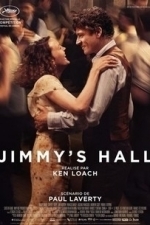

It’s not to often that we folks in America have the opportunity to catch any movies from Ireland.
The few that do come along almost certainly rate high on the scale of exceptional movies that one would want to see. I myself can’t remember a ‘bad’ Irish film. Perhaps one of the reasons for that is the fact that this country has a solid history of countless Irish immigrants coming here and helping to build the foundations for America. Well, today’s film for your consideration doesn’t go back THAT far. It doesn’t even take place in America. However, the history of Irish immigrants (specifically one immigrant) does play a role. Only it involves an Irish immigrant how came to America and then several years later returned to Ireland only to be forcibly deported back to America. I know I know. That explanation makes it sound like a comedy and although the film has many lighthearted moments, I can assure you it’s NOT a comedy. In fact, it deals with an influential figure in one of the more politically turbulent periods in Ireland’s history just before the beginning of the Second World War.
‘Jimmy’s Hall’ is a 2014 Irish-British drama directed by English television and film director Kenneth ‘Ken’ Loach. The film focuses on the events leading up to the deportation from Ireland of Jimmy Gralton, who led a precursor to Ireland’s communist party in the county Leitrim.
Starring Barry Ward, Simone Kirby, and Irish character actor Jim Norton, the film opens in 1932. Jimmy (Ward) has just returned to his home to help his mother tend the family farm after spending 10 years in the United States in the midst of the Great Depression coinciding with the establishment of a new government in the aftermath of the Civil War between pro-British and anti-British forces.
Reluctant to anger his old enemies, the church and the landowners who forced him to leave Ireland, but eager to meet the needs of the people of Leitrim, Jimmy (Ward) decides to reopen the ‘Hall’, a center for young people where they can meet to study, talk, dance, play music, learn to read, debate issues of the day. Free to all and open to anyone who wishes to learn while respecting the views and opinions of others, the ‘Hall’ is an immediate success. Not everyone is pleased to see Jimmy resuming his old activities. In particular the church and local priest (Norton) who see Gralton as not only a ‘bad influence’, but also as a follower of Stalin who as history knows sent countless millions (including religious leaders) to their deaths.
Despite the complaints and at times violent reactions on the part of the supporters of the church and the landowners, Gralton tries desperately to make them realize he has absolutely no connection to Stalin and has no desire to bring down the church. Only to better the situation for everyone. Jimmy even invites the local priest to take a leadership role in the Hall’s committee. In the end though, the fears of the church and the state go unchanged. Jimmy is a communist and although he has no connection Stalin the church and the government see them as one in the same. The police take Jimmy into custody at his family’s farm and forcibly deport him back to America even so much as denying him on last chance to see his ailing mother.
In education systems there are books and films which are considered ‘required reading’ or in this case ‘required viewing’. This film should be required viewing. It is not just an excellent film about a historical Irish political figure or as I mentioned earlier a film about a turbulent point in Irish history. It’s an example of the greater ‘world conflict’ between what became the western bloc and the eastern bloc. Both sides in that grater conflict saw each other the same way the two sides in the Irish countryside of the 1930s saw each other. The ones that meant well and only wanted to better the situation for everyone including themselves inspired fear in those who had power and those who had the power inspired fear in those who meant well. This movie showed that not all political figures are evil … nor are all religious figures. It’s the individual or several individuals within those groups that are reluctant to change.
I would highly recommend this film. Regardless of the content it’s an excellent film. If this film is as good as most films made in Ireland, they definitely need to start exporting them on a grander scale. I’d give this film 4 out of 5 stars.
This is your friendly neighborhood photographer ‘The CameraMan’ and on behalf of my fellows at ‘Skewed & Reviewed’ I’d like to say thanks for reading and we’ll see you at the movies

Bob Mann (459 KP) rated Downsizing (2017) in Movies
Sep 29, 2021
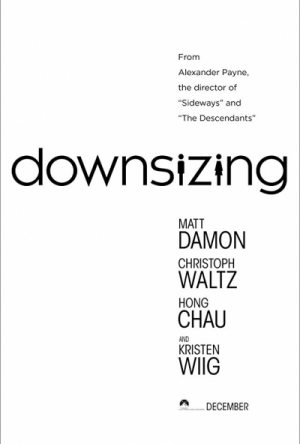


Tiny People, Big Mess.
From the trailer this film looked quirky, funny and interesting and has been on my “looking forward to” list for many months. Oh dear, what a let down.
Matt Damon (“The Martian“, “The Great Wall“, “Jason Bourne“) and Kristen Wiig (“mother!“, “Ghostbusters“) play Paul and Audrey Safranek. Paul is a laid-back and hardworking occupational therapist; Audrey has materialistic ambitions over and above their available finances. The two decide to “downsize” making use of a revolutionary Norwegian invention that reduces humans, and most other lifeforms, to a fraction of their normal size. This offers huge wealth to the normal American, since the cost of living in downsized form within the mini-estate called LeisureLand is tiny in comparison to “big folks”. But all does not go well in the transition (unlike the trailer, no spoilers here) and Paul needs to find a new purpose in life as bigger problems loom.
It’s clearly written to be a social satire, and there are some clever angles to be explored here: everyone publicly positions their downsizing based on ‘environmental issues’ and ‘saving the planet’, but most everyone’s real reason is the lifestyle benefits. Also lightly touched on, but never deeply explored, are the impacts that the downsizing initiative is having on the broader American economy and property markets, with the ‘big people’ questioning why small people should have the same rights and votes as them.
But the film never really gets into the meat of any of this. Worse than that, the movie never settles on what it is trying to be. I think we can write off “Sci-Fi” pretty early on. But is it a drama? A comedy? A love story? A socialist rant? An environmental cri de coeur? The film jumbles all these aspects together and treats each so halfheartedly that none of them get properly addressed.
Not only are the audience confused: none of the actors seem to be too sure why they’re there either. Damon – never Mr Personality – should have been able to develop some chemistry with the feisty and dynamic Ms Wiig, but even these early scenes plod along with you thinking “what a dull film”. Things perk up slightly at the LeisureLand sales fair, where Neil Patrick Harris (“Gone Girl“) and a naked Laura Dern (“Star Wars: The Last Jedi“) glibly try to sell a luxury doll’s house to the assembled crowd. American consumerism in miniature.
But post-downsizing the film crashes back to ‘Dullesville Arizona’ again, but with added depression, requiring Christophe Waltz (“Django Unchanined”, “Spectre“), as a dodgy Serbian entrepreneur Dusan Mirkovic, to over-act manically to try to add any sort of energy into the film (which he is only mildly successful at doing). There’s a rather bizarre supporting role from Udo Kier – looking for all the world like Terence Stamp – as Mirkovic’s ship-owning pal, and an almost cameo performance from Jason Sudeikis (“Colossal“).
Enter stage-left Thai-born Hong Chau as Ngoc Lan Tran, a Vietnamese cleaner. There’s a clever angle here: where “average American Joes” like Safranek can live like kings, but the poor still have to scrape by, living in ‘skyscraper Portacabins’, as the menial classes: there’s no escaping class structures, even when 5 inches tall. Chau sums up the uneven nature of the film, as she mostly plays her lines for laughs but then (in a spectacularly good bit of acting in the midst of, I have to say, some pretty poor hamming) bursts into uncontrollable tears.
Just when you think things are going to limp to a unmemorable close, the film ups and leaves LeisureLand to add a completely bizarre final act. (It’s pretty unusual in the UK for people to walk out of a cinema mid-film, but a couple did so at this point). This segment bears no relationship to the downsizing theme whatsoever, since all the players at this point could be full-sized. Aside from an amusing “50 shades of f**k” speech from Ngoc Lan Tran and a “massive explosion”, this story goes nowhere, says nothing (at least not to me) and merely irritates. Throw in a completely anti-climatic non-ending and I genuinely shared a “WTF look” with the stranger sat next to me!
This is all very strange, since this comes from Alexander Payne, who also directed and co-wrote “The Descendants”, one of the most impressive films of the decade. Jim Taylor co-writes (as he has co-written numerous other films with Payne).
I note that in this morning’s London Times that their film critic, Kevin Maher – someone who’s views I am generally pretty well aligned with – gave it 4 *’s out of 5. I can only assume that he either saw a completely different cut of the film, or he is a lot cleverer than I am and understood amazing sub-texts that completely passed me by! Maybe… but I have a sneaking suspicion that the general viewing public will more share my opinion on this than his.
I was tempted to give this just one star as it was such a disappointment to me, but the underlying concept is a good one: it is just one that has, in my humble opinion, been implemented in a bizarrely slipshod manner.
Definitely not recommended. Go and see “Coco” instead!