
PDF Splitter
Business and Productivity
App
Split large PDF document into small ones quickly and flexibly! PDF Splitter is a stand-alone app...

Speak & Translate Premium
Reference and Travel
App
Speak & Translate Premium is an indispensable voice and text translator that allows you to...

PocketSword
Reference and Book
App
PocketSword is a Bible Study app for the iPad, iPhone & iPod touch (iOS 8.0 and above) that is built...


Translator 42 Languages
Travel and Reference
App
Translator Pro is a convenient, indispensable and useful application for any individuals. It break...

Takeaway.com - Eten bestellen
Food & Drink and Lifestyle
App
Order food online with your iPhone or iPad using the Takeaway.com-app. Super easy! Time for some...

The Art Newspaper
Art & Design, Lifestyle and Magazines & Newspapers
8.0 Rate It
App
The Art Newspaper, founded in 1990, is the leading reporter of art news worldwide. Unique in its...
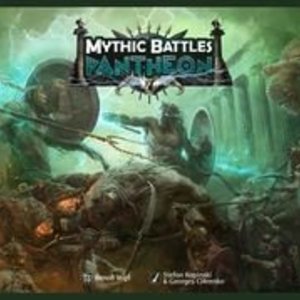
Mythic Battles: Pantheon
8.0
Rate It
Tabletop Game
Hera, tired of Zeus' infidelity, decides to take her revenge and releases the Titans on Mount...

Murder at Sea
10.0 Rate It
Book
Fear naut, the next Destinations Murder collection is here: Murder at Sea. Third in this...

Rachel King (13 KP) rated A Short History of Myth in Books
Feb 11, 2019



In seven chapters, Armstrong takes a simplified stroll through history, focusing on the concept of myth and its impact on civilization. All throughout the book, she attempts to support her claim that a person can believe in myths without believing that the myths are actually true, and that the failure of modern society is by not following her specific edict. While this notion strikes me as absurd, I keep reading because, hey, it's a short book.
While I know only bits and pieces about many of the world's religions, I do know both the history and the holy book of my religion, Christianity. It becomes apparent to me early in the text that she is masking her opinions and interpretations of this religion as actual fact, so I can only imagine how she misconstrues other religions.
Her citations were lacking to me, with many claims going unsupported, others only partially supported, such as citation #84 and #30, and some citations simply not even applying to the specified text, such as citation #87. In citation #55, she claims that the Bible contains a Creation myth in which God brings the world into being by killing a sea monster, but one of the four verses she cites make no reference to anything of the sort (Job 3:12), and the other three (Isaiah 27:1, Job 26:13, Psalm 74:14) that do mention a leviathan cannot be interpreted that way when read in context. Isaiah is describing the end of days, while Job merely says that God created the serpent, and the verse in Psalm is within the context of a song about God rescuing the Hebrews from Egyptian slavery -- no relevancy to Creation. She makes the claim that Paul "was not much interested in Jesus's teachings, which he rarely quotes, or in the events of his earthly life." This claim is easily disproved by examining how Paul's words line up with Jesus's in John 5:21 vs. 1 Corinthians 15:22, Matthew 6:25 vs. Philippians 4:6, and many other passages.
While going through the citations, I got the feeling that the author depended on secondary sources for her information without actually studying the original source of her information. The book struck me as highly opinionated, vague, and too general for the topic being addressed. I have no doubt that there are better and more thorough books available on the topic of myth. I do not believe that I will be reading any more of Armstrong's works in the future.