
Search
Search results

Bob Mann (459 KP) rated Love, Simon (2018) in Movies
Sep 29, 2021

Time to Exhale.
I saw this as a Cineworld “Secret Unlimited Screening” event (for non-UK readers, Cineworld is one of the main movie-theater chains), so went in – like the majority of the audience I suspect – predicting early sight of Lara Croft in skin tight shorts! This was a bit different! A secret screening is an interesting concept, and really tests the metal of a film in engaging its audience early. This one failed to some degree, with seven people (I was counting) walking out in the first 10 minutes. (To be fair on those seven, the film’s first 20 minutes are rather laborious; and to be fair on the film, this was a pretty full auditorium so as a percentage drop out it was low).
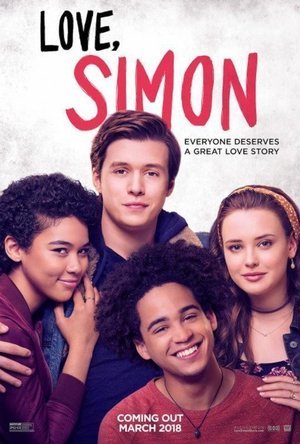
Teen heartthrob Nick Robinson (the older brother from “Jurassic World“) plays the eponymous hero who has a well-buried secret: he’s gay. Growing up in Pleasantville (I almost expected someone to yell “Cat!” and the fire brigade turn up) he feels unable to come out to either his high-school friends or his loving family (“Apple pie cooling on the window-sill anyone?”). But striking up an email relationship with another closeted male from the same high school – nicknamed “Blue” – allows him to explore his feelings about his sexuality and fall in love all at the same time. But neither coming out or love run terribly smoothly for Simon…
Happy families. From left, Nick Robinson, Talitha Bateman, Jennifer Garner and Josh Duhamel.
I am forty years adrift from being able to directly relate to the stresses and strains of modern high-school life (though I AM still 17 on the inside people!) But even to me, this film doesn’t feel like it should be set in the present day. While it needs to be for its tweeting and blogging story-line, surely there are few backwaters in either America or Western Europe where gay people have to stay so silent? An 80’s or early 90’s setting would, I think, have worked so much better. (Ironically, its not his gay-ness or otherwise that his friends get upset by, but something far more fundamental in the human condition).
Definitely set in the present day.
That aside, this is a sweet and ultimately quite engaging film that I’m sure will be a big hit with a teenage audience. While for me it didn’t come close to ticking all of the coming-of-age boxes that the inestimable “Lady Bird” did, it does cover old ground in a new and refreshing way, and I’m sure it WILL be very helpful for many gay people in getting the courage to come out. Times are different today, but I still can imagine few things requiring more bravery than declaring you are gay to your parents and closest friends (even though, deep down, they surely already suspect).
So, it’s sweet, but also for me (although far from its target audience) rather flat. As a comedy drama, the moments of comedy are few and far between, with only one or two of the lines making me chuckle rather than smile. A quiet auditorium is not a good sign for a film with “Comedy” in its imdb description. It does however occasionally break through with something memorable: a full on college “La La Land” scene (“Not that gay” – LoL) is a case in point. And all of the scenes featuring comedy actress Natasha Rothwell as drama teacher Ms Allbright add much needed energy and humour to the film.
Someone should tell him… regardless of gender preference, sex is never going to work like this.
Of the teen actors, Robinson is fine but it is Katherine Langford as Simon’s friend Leah who stood out for me. Talitha Eliana Bateman (“The 5th Wave“; looking a whole lot younger than her 16 years!) is also impressive as Simon’s culinary sister Nora. Simon’s parents are played by Jennifer Garner (“Dallas Buyers Club“) and Josh Duhamel (a new one on me… he’s been in the “Transformers” films apparently).
Simon says walk this way. From left, Jorge Lendeborg Jr., Nich Robinson, Alexandra Shipp and Katherine Langford.
The screenplay is by movie virgins Elizabeth Berger and Isaac Aptaker, and is a slightly patchy affair. There are scenes that worked well (a cringe inducing sports stadium scene for example) but other times where it seems to be trying too hard for T-shirt captions…. a line from Ethan (Clark Moore) about hate crime was a “Ye-what?” moment.
Some of the characters really don’t quite work either: Tony Hale (so memorable as the useless PA in “Veep”) plays almost a school-ified version of Stephen Stucker’s Johnny from “Airplane”. Perhaps that would work as some sort of whacky hall monitor guy… but it transpires that he is the headmaster. No, I don’t think so.
A bit OTT. Veep’s Tony Hale as the principal with a surfeit of bonhomie.
So, in summary, after a bit of a bumpy start, its a pleasant watch that culminates in a feel-good ending. Feel good, that is, providing you have liberal views: I can’t see it pleasing many Trump supporters. I also can’t see it getting a cinema release in Gambia or Nigeria, though God only knows they could use one. If I could give half stars I would give this one an extra half as I applaud both the theme its trying to promote and for bringing something fresh to the screen…
Teen heartthrob Nick Robinson (the older brother from “Jurassic World“) plays the eponymous hero who has a well-buried secret: he’s gay. Growing up in Pleasantville (I almost expected someone to yell “Cat!” and the fire brigade turn up) he feels unable to come out to either his high-school friends or his loving family (“Apple pie cooling on the window-sill anyone?”). But striking up an email relationship with another closeted male from the same high school – nicknamed “Blue” – allows him to explore his feelings about his sexuality and fall in love all at the same time. But neither coming out or love run terribly smoothly for Simon…
Happy families. From left, Nick Robinson, Talitha Bateman, Jennifer Garner and Josh Duhamel.
I am forty years adrift from being able to directly relate to the stresses and strains of modern high-school life (though I AM still 17 on the inside people!) But even to me, this film doesn’t feel like it should be set in the present day. While it needs to be for its tweeting and blogging story-line, surely there are few backwaters in either America or Western Europe where gay people have to stay so silent? An 80’s or early 90’s setting would, I think, have worked so much better. (Ironically, its not his gay-ness or otherwise that his friends get upset by, but something far more fundamental in the human condition).
Definitely set in the present day.
That aside, this is a sweet and ultimately quite engaging film that I’m sure will be a big hit with a teenage audience. While for me it didn’t come close to ticking all of the coming-of-age boxes that the inestimable “Lady Bird” did, it does cover old ground in a new and refreshing way, and I’m sure it WILL be very helpful for many gay people in getting the courage to come out. Times are different today, but I still can imagine few things requiring more bravery than declaring you are gay to your parents and closest friends (even though, deep down, they surely already suspect).
So, it’s sweet, but also for me (although far from its target audience) rather flat. As a comedy drama, the moments of comedy are few and far between, with only one or two of the lines making me chuckle rather than smile. A quiet auditorium is not a good sign for a film with “Comedy” in its imdb description. It does however occasionally break through with something memorable: a full on college “La La Land” scene (“Not that gay” – LoL) is a case in point. And all of the scenes featuring comedy actress Natasha Rothwell as drama teacher Ms Allbright add much needed energy and humour to the film.
Someone should tell him… regardless of gender preference, sex is never going to work like this.
Of the teen actors, Robinson is fine but it is Katherine Langford as Simon’s friend Leah who stood out for me. Talitha Eliana Bateman (“The 5th Wave“; looking a whole lot younger than her 16 years!) is also impressive as Simon’s culinary sister Nora. Simon’s parents are played by Jennifer Garner (“Dallas Buyers Club“) and Josh Duhamel (a new one on me… he’s been in the “Transformers” films apparently).
Simon says walk this way. From left, Jorge Lendeborg Jr., Nich Robinson, Alexandra Shipp and Katherine Langford.
The screenplay is by movie virgins Elizabeth Berger and Isaac Aptaker, and is a slightly patchy affair. There are scenes that worked well (a cringe inducing sports stadium scene for example) but other times where it seems to be trying too hard for T-shirt captions…. a line from Ethan (Clark Moore) about hate crime was a “Ye-what?” moment.
Some of the characters really don’t quite work either: Tony Hale (so memorable as the useless PA in “Veep”) plays almost a school-ified version of Stephen Stucker’s Johnny from “Airplane”. Perhaps that would work as some sort of whacky hall monitor guy… but it transpires that he is the headmaster. No, I don’t think so.
A bit OTT. Veep’s Tony Hale as the principal with a surfeit of bonhomie.
So, in summary, after a bit of a bumpy start, its a pleasant watch that culminates in a feel-good ending. Feel good, that is, providing you have liberal views: I can’t see it pleasing many Trump supporters. I also can’t see it getting a cinema release in Gambia or Nigeria, though God only knows they could use one. If I could give half stars I would give this one an extra half as I applaud both the theme its trying to promote and for bringing something fresh to the screen…

Gareth von Kallenbach (980 KP) rated Kick-Ass 2 (2013) in Movies
Jun 19, 2019
After answering the call and brutally taking down a crime boss, self-proclaimed superhero and a high school student Dave Lizewski (Aaron Taylor-Johnson), has settled into a mundane life. The thrill of taking on bad guys has been replaced with hanging out with his friends, going to class, and pondering his future. His former cohort Mindy/ Hit Girl (Chloe Grace Moretz), however has not abandoned her vigilante ways as she still haunted by the death of her father in the previous film. This is the backdrop against which the new film “Kick-Ass 2” takes place and it delivers a funnier and well-paced film that is a worthy but less ultraviolent offering than its predecessor.
Dave eventually convinces Mindy to help train him as he’s itching to get back out on the streets. In a hysterical opening run, things go very well at the start but soon turned bad for Kick Ass which forces Mindy to come to his aid brutally dispatching a group of thugs. This catches the attention of Mindy’s Guardian (Morris Chestnut), who after serving as her father’s partner for several years, insist that Mindy have a normal upbringing and this includes giving up her vigilante persona and embracing life as a high school student.
Mindy agrees to do this and soon finds herself firmly in the sites of the ultra-chic clique in high school. The group of girls decides that it’s time to take Mindy under their wings and make her one of the in crowd which often causes Mindy to question her identity. At the same time, Dave seeks out a group of like-minded heroes under the leadership of Col. Stars & Stripes(Jim Carrey), who himself is a former enforcer for crime syndicate who found religion and now seeks to make up for his past misdeeds.
Their early efforts are highly successful and soon catch the attention of Chris D’Amico, (Christopher Mintz-Plasse), who is still haunted by the death of his father at the hands of Kick Ass. When fate steps in and suddenly puts them in control of the family fortune and resources, Chris reinvents himself as a super villain and proceeds to use his family wealth and influence to put together a team of heavy hitters as he attempts to bring mayhem and chaos to the city with the ultimate goal of destroying Dave and his group of heroes.
Toward that end, the awkwardly but inevitably moves forward and brings his plan of revenge forward which causes Dave and his l friends to realize the consequences of their actions and to question their duty as well as place in the world.
What follows is a solidly entertaining action fast complete with some surprisingly good humor as well as touching and effective moments between the two leads. Donald Faison does some fantastic supporting work and although I would’ve loved to have seen more of his character Jim Carrey deals the scenes whenever he is in them yet manages to stay remarkably in character to the point that one reviewer at the end of the film expressed to me that he could not believe that was the maniacal actor playing such an off character part.
Johnson and Moertz are the backbone of the series and naturally depend upon a strong villain which Mintz-Plasse is more than able to provide. The expanded roster of heroes and villains certainly propels the series forward and it was interesting for me to see that although the film has exceptional amounts of violence it was actually considerably toned down from what I had been expecting after the events of the last film. It was my understanding that the studio wish the film to be more mainstream and while not wanting to harm the message and tone of the film to rein in the violence in order to up the character development and storytelling.
Director Jeff Wadlow has done a great job following up Matthew Vaughn who is stayed on this time to produce the film. The crowd was laughing and sharing and enthralled throughout and I found myself absolutely captivated by the film and enjoying every minute of it. For me, this was without a doubt the most satisfying and enjoyable of the summer offerings this year and I am seriously looking forward and hoping to a third outing in the series.
http://sknr.net/2013/08/16/kick-ass-2/
Dave eventually convinces Mindy to help train him as he’s itching to get back out on the streets. In a hysterical opening run, things go very well at the start but soon turned bad for Kick Ass which forces Mindy to come to his aid brutally dispatching a group of thugs. This catches the attention of Mindy’s Guardian (Morris Chestnut), who after serving as her father’s partner for several years, insist that Mindy have a normal upbringing and this includes giving up her vigilante persona and embracing life as a high school student.
Mindy agrees to do this and soon finds herself firmly in the sites of the ultra-chic clique in high school. The group of girls decides that it’s time to take Mindy under their wings and make her one of the in crowd which often causes Mindy to question her identity. At the same time, Dave seeks out a group of like-minded heroes under the leadership of Col. Stars & Stripes(Jim Carrey), who himself is a former enforcer for crime syndicate who found religion and now seeks to make up for his past misdeeds.
Their early efforts are highly successful and soon catch the attention of Chris D’Amico, (Christopher Mintz-Plasse), who is still haunted by the death of his father at the hands of Kick Ass. When fate steps in and suddenly puts them in control of the family fortune and resources, Chris reinvents himself as a super villain and proceeds to use his family wealth and influence to put together a team of heavy hitters as he attempts to bring mayhem and chaos to the city with the ultimate goal of destroying Dave and his group of heroes.
Toward that end, the awkwardly but inevitably moves forward and brings his plan of revenge forward which causes Dave and his l friends to realize the consequences of their actions and to question their duty as well as place in the world.
What follows is a solidly entertaining action fast complete with some surprisingly good humor as well as touching and effective moments between the two leads. Donald Faison does some fantastic supporting work and although I would’ve loved to have seen more of his character Jim Carrey deals the scenes whenever he is in them yet manages to stay remarkably in character to the point that one reviewer at the end of the film expressed to me that he could not believe that was the maniacal actor playing such an off character part.
Johnson and Moertz are the backbone of the series and naturally depend upon a strong villain which Mintz-Plasse is more than able to provide. The expanded roster of heroes and villains certainly propels the series forward and it was interesting for me to see that although the film has exceptional amounts of violence it was actually considerably toned down from what I had been expecting after the events of the last film. It was my understanding that the studio wish the film to be more mainstream and while not wanting to harm the message and tone of the film to rein in the violence in order to up the character development and storytelling.
Director Jeff Wadlow has done a great job following up Matthew Vaughn who is stayed on this time to produce the film. The crowd was laughing and sharing and enthralled throughout and I found myself absolutely captivated by the film and enjoying every minute of it. For me, this was without a doubt the most satisfying and enjoyable of the summer offerings this year and I am seriously looking forward and hoping to a third outing in the series.
http://sknr.net/2013/08/16/kick-ass-2/

Lee (2222 KP) rated Spider-Man: Far From Home (2019) in Movies
Jul 3, 2019

I think I was one of the few people that was ultimately disappointed by Spider-Man: Homecoming. After Spider-Man's impressive and thrilling introduction to the Marvel universe during Captain America: Civil War, I felt Homecoming to be somewhat lacking - set pieces that had already been shown in the trailer, bigger set pieces that were difficult to follow on screen and, to quote my review, "too much awkward teen, not enough action hero". I even used the phrase "superhero fatigue", which funnily enough is a phrase currently being bandied around by some for this next Spider-Man venture, Far From Home, particularly in the wake of the intense Avengers: Endgame earlier this year. So, let's just say I was cautiously optimistic heading in to see this movie.
We kick off with a brief introduction to what will dominate the rest of the movie - Nick Fury and Maria Hill arrive in Mexico, where "a cyclone with a face" has completely destroyed a small town. As this new threat returns to wreak even more havoc, a mysterious new hero arrives to face it square on in battle, dramatically declaring to the startled S.H.I.E.L.D agents, "you don't want any part of this". From there, we switch to a lighthearted wrap up of the devastating events surrounding Infinity War/Endgame, in the form of an amateur high school news report. Mourning the loss of fallen heroes (accompanied by Whitney Houston singing 'I Will Always Love You'!), the report goes on to explain how "The Blip" - the term many are using to describe the effects of the 5 year period where half of the population were wiped from existence. Having the population age 5 years while the returning half haven't aged at all naturally has humorous consequences when it comes to students and their school life, but essentially humanity has managed to move on and has learnt to deal with it. Someone who is struggling to move on though, particularly from the loss of mentor/surrogate father, Tony Stark, is young Peter Parker. Desperately in need of a summer vacation, and a break from being Spider-Man, Parker cannot wait to join the rest of his friends, and crucially MJ (Zendaya), on an upcoming school trip which will take them to various European destinations.
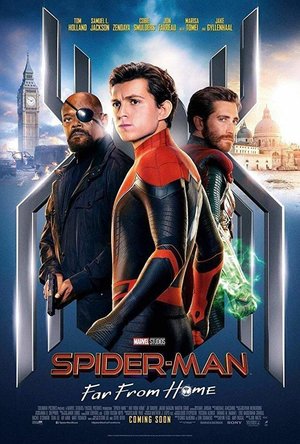
But there's no chance of any kind of break for Spider-Man just yet, as Nick Fury has other plans for him. Peter does the unthinkable though and ignores the many phone calls from Fury, until he eventually tracks him down for a face to face meeting in his Venice hotel room. Since the incident in Mexico, S.H.I.E.L.D have been working with the mysterious new hero, Quentin Beck, or 'Mysterio' as he has now been dubbed, and Peter (along with us) are now brought up to speed on the origins of Quentin and these new global threats. Quentin actually comes from an alternate Earth where these creatures, known as The Elementals (monstrous versions of wind, fire, water and air), were responsible for the destruction of not only his world but his entire family too. The most powerful Elemental, fire, is yet to appear on our Earth and Mysterio, along with the help of S.H.I.E.L.D and Spider-Man, need to locate and stop it before it becomes too powerful for them to defeat.
Peter isn't initially interested though, being more concerned about jeopardising his school trip and exposing his identity, not to mention ruining his chances of finally hooking up with MJ. So, the rest of the movie nicely splits itself between teen high school banter/comedy drama and international superhero action. Happy Hogan (Jon Favreau) features prominently throughout the movie, helping to guide and mentor Peter in the absence of his old boss Tony Stark, and providing plenty of comic relief along the way too. He also passes onto Peter, a gift from Tony Stark - a pair of Jarvis-like talking shades called EDITH (Even Dead I'm The Hero!) - which initially act as a funny and poignant accessory for Peter, but proves to be a hugely important part of how the rest of the movie plays out.
Beyond that, I'm struggling to avoid spoilers. And there are a lot of them. If you're familiar with the comics though (and despite having some vague familiarity with them, I'd completely forgotten everything!), you'll be able to predict a lot of what comes next anyway. But, once again, I have to say how amazed I am that Marvel managed to produce trailers for this movie which not only mislead you into believing that you know exactly which direction this movie is heading in, but also feature scenes which aren't in the final movie! As a result, I found Far From Home to be a truly wonderful surprise, and even if you know how it's all going to play out, you should still manage to get a huge amount of enjoyment from seeing the masters of storytelling at work yet again. This movie gave me Endgame-level thrills and goose-bump moments, over and over again throughout. Visually, it's outstanding - with impressive action scenes and trippy sequences the likes of which we haven't seen since Doctor Strange. Jake Gyllenhaal is perfect as Mysterio too, really bringing the character to life, and by the end of it all I was just completely blown away. So when the mid credit sequence hit, opening up some shocking possibilities for future movies, I was almost hyperventilating with excitement!
We kick off with a brief introduction to what will dominate the rest of the movie - Nick Fury and Maria Hill arrive in Mexico, where "a cyclone with a face" has completely destroyed a small town. As this new threat returns to wreak even more havoc, a mysterious new hero arrives to face it square on in battle, dramatically declaring to the startled S.H.I.E.L.D agents, "you don't want any part of this". From there, we switch to a lighthearted wrap up of the devastating events surrounding Infinity War/Endgame, in the form of an amateur high school news report. Mourning the loss of fallen heroes (accompanied by Whitney Houston singing 'I Will Always Love You'!), the report goes on to explain how "The Blip" - the term many are using to describe the effects of the 5 year period where half of the population were wiped from existence. Having the population age 5 years while the returning half haven't aged at all naturally has humorous consequences when it comes to students and their school life, but essentially humanity has managed to move on and has learnt to deal with it. Someone who is struggling to move on though, particularly from the loss of mentor/surrogate father, Tony Stark, is young Peter Parker. Desperately in need of a summer vacation, and a break from being Spider-Man, Parker cannot wait to join the rest of his friends, and crucially MJ (Zendaya), on an upcoming school trip which will take them to various European destinations.
But there's no chance of any kind of break for Spider-Man just yet, as Nick Fury has other plans for him. Peter does the unthinkable though and ignores the many phone calls from Fury, until he eventually tracks him down for a face to face meeting in his Venice hotel room. Since the incident in Mexico, S.H.I.E.L.D have been working with the mysterious new hero, Quentin Beck, or 'Mysterio' as he has now been dubbed, and Peter (along with us) are now brought up to speed on the origins of Quentin and these new global threats. Quentin actually comes from an alternate Earth where these creatures, known as The Elementals (monstrous versions of wind, fire, water and air), were responsible for the destruction of not only his world but his entire family too. The most powerful Elemental, fire, is yet to appear on our Earth and Mysterio, along with the help of S.H.I.E.L.D and Spider-Man, need to locate and stop it before it becomes too powerful for them to defeat.
Peter isn't initially interested though, being more concerned about jeopardising his school trip and exposing his identity, not to mention ruining his chances of finally hooking up with MJ. So, the rest of the movie nicely splits itself between teen high school banter/comedy drama and international superhero action. Happy Hogan (Jon Favreau) features prominently throughout the movie, helping to guide and mentor Peter in the absence of his old boss Tony Stark, and providing plenty of comic relief along the way too. He also passes onto Peter, a gift from Tony Stark - a pair of Jarvis-like talking shades called EDITH (Even Dead I'm The Hero!) - which initially act as a funny and poignant accessory for Peter, but proves to be a hugely important part of how the rest of the movie plays out.
Beyond that, I'm struggling to avoid spoilers. And there are a lot of them. If you're familiar with the comics though (and despite having some vague familiarity with them, I'd completely forgotten everything!), you'll be able to predict a lot of what comes next anyway. But, once again, I have to say how amazed I am that Marvel managed to produce trailers for this movie which not only mislead you into believing that you know exactly which direction this movie is heading in, but also feature scenes which aren't in the final movie! As a result, I found Far From Home to be a truly wonderful surprise, and even if you know how it's all going to play out, you should still manage to get a huge amount of enjoyment from seeing the masters of storytelling at work yet again. This movie gave me Endgame-level thrills and goose-bump moments, over and over again throughout. Visually, it's outstanding - with impressive action scenes and trippy sequences the likes of which we haven't seen since Doctor Strange. Jake Gyllenhaal is perfect as Mysterio too, really bringing the character to life, and by the end of it all I was just completely blown away. So when the mid credit sequence hit, opening up some shocking possibilities for future movies, I was almost hyperventilating with excitement!


Lecturio: Med School Study App
Medical and Education
App
Lecturio is the most comprehensive single-point resource for medical school: Get ready to ace your...

Laura (40 KP) rated Moxie: A Novel in Books
Oct 21, 2017

The Feminist Novel I wish I had as a teen.
Moxie, the book that I wish had been around when I was younger. The book that smashed my reading slump to smithereens. The book that I fiercely related to. Moxie is such an important read, a YA book that looks at everyday sexism, rape culture and feminism, while also telling a good story.
Something I really liked is that Vivian is not some perfect all-knowing feminist. She listens and learns to people, after the Moxie zine starts the conversation. Through these conversations between various characters, so much is discussed, taking advantage of different perspectives. There is this wonderful feeling of community, of support and safe spaces. The very concept of feminism is analysed, challenging the misconception held my many that feminism equals men hating, and exploring the stigma attached to the word ‘feminist’.
There is also a romance plotline running through the book. Vivian is attracted to new boy Seth, and she is even more interested when she realised that he is actually a nice guy, unlike so many other boys at school. He actually likes the Moxie zines, and shows his support for the movement. However he is not perfect, and sometimes he just does not get certain things. This opens the discussion that while a man can be a feminist, it is important to listen and learn about how everyday sexism effects women.
The overall message is about girls supporting each other, and Moxie being an inclusive movement for everyone. I loved that there was next to no girl hate in the novel, and that the way women and girls are pitted against each other was brought up and addressed. There are so many wonderful, empowering moments in this book, I used a lot of sticky notes to mark them all. Having said that, obviously this book deals with sexism, but it also covers sexual harassment, and sexual assault/attempted rape, which may be triggering for some readers. Please be aware of this going in, it’s addressed, there is an overall atmosphere of female empowerment and overcoming, but I don’t want anyone to get caught by surprise.
I wish this book had been around when I was in high school. I really wish it had been around for my younger sister, who had a similar experience with dress-code enforcement as shown in the book. This book is so powerful, and so important.
Something I really liked is that Vivian is not some perfect all-knowing feminist. She listens and learns to people, after the Moxie zine starts the conversation. Through these conversations between various characters, so much is discussed, taking advantage of different perspectives. There is this wonderful feeling of community, of support and safe spaces. The very concept of feminism is analysed, challenging the misconception held my many that feminism equals men hating, and exploring the stigma attached to the word ‘feminist’.
There is also a romance plotline running through the book. Vivian is attracted to new boy Seth, and she is even more interested when she realised that he is actually a nice guy, unlike so many other boys at school. He actually likes the Moxie zines, and shows his support for the movement. However he is not perfect, and sometimes he just does not get certain things. This opens the discussion that while a man can be a feminist, it is important to listen and learn about how everyday sexism effects women.
The overall message is about girls supporting each other, and Moxie being an inclusive movement for everyone. I loved that there was next to no girl hate in the novel, and that the way women and girls are pitted against each other was brought up and addressed. There are so many wonderful, empowering moments in this book, I used a lot of sticky notes to mark them all. Having said that, obviously this book deals with sexism, but it also covers sexual harassment, and sexual assault/attempted rape, which may be triggering for some readers. Please be aware of this going in, it’s addressed, there is an overall atmosphere of female empowerment and overcoming, but I don’t want anyone to get caught by surprise.
I wish this book had been around when I was in high school. I really wish it had been around for my younger sister, who had a similar experience with dress-code enforcement as shown in the book. This book is so powerful, and so important.

Hazel (1853 KP) rated What We Left Behind in Books
Dec 7, 2018


<i>This eBook was provided by the publisher via NetGalley in exchange for an honest review </i>
Gretchen and Toni are high school sweethearts who believe they will be together forever, but will they cope being apart at different universities? Toni is off to Harvard and Gretchen to New York where they plan to meet up every weekend however things get in the way, and not just coursework.
The main theme of<i> What We Left Behind</i> is sexual orientation and gender. Both Gretchen and Toni are attracted to girls, however Toni identifies as genderqueer. Throughout school, this never bothered Gretchen, though when Toni begins feeling a connection with a group of transgender students, Gretchen begins to question her position in Toni’s life.
Unlike Talley’s previous novel <i>Lies We Tell Ourselves</i>, which deals with ethnic minorities and homosexuality during a time when it was seen as completely unacceptable, <i>What We Left Behind</i> is set in the present day where peoples’ sexual preferences are accepted in society – mostly. What Talley is attempting to prove with this novel is that everyone, regardless of gender, can experience love, and that long distance relationships can be difficult for everyone. Most importantly this story expresses how difficult it is to understand trans sexuality, genderqueer, gender nonconforming etc. There are characters that are horrified by the idea, comfortable with it, or, like Gretchen, confused about how it effects themselves and their relationship. And then there is Toni. Toni is probably the most confused of all: who is s/he really?
Talley tries to make the reader experience the difficulties the main characters face with the use, or lack of pronouns. For someone who identifies as neither he nor she, Toni has a very hard time trying to find a label Toni feels comfortable with.
I did not enjoy <i>What We Left Behind</i> as much as <i>Lies We Tell Ourselves</i>, not because it was not good – it was – but I am not that into romance novels. After a while the story began to feel boring and repetitive, particularly in terms of Gretchen and Toni’s relationship. It is, however, worth a read. There are not many novels that focus on transgender issues, especially in such a positive way. Therefore I am sure this young adult novel is going to interest a large amount of readers.
Gretchen and Toni are high school sweethearts who believe they will be together forever, but will they cope being apart at different universities? Toni is off to Harvard and Gretchen to New York where they plan to meet up every weekend however things get in the way, and not just coursework.
The main theme of<i> What We Left Behind</i> is sexual orientation and gender. Both Gretchen and Toni are attracted to girls, however Toni identifies as genderqueer. Throughout school, this never bothered Gretchen, though when Toni begins feeling a connection with a group of transgender students, Gretchen begins to question her position in Toni’s life.
Unlike Talley’s previous novel <i>Lies We Tell Ourselves</i>, which deals with ethnic minorities and homosexuality during a time when it was seen as completely unacceptable, <i>What We Left Behind</i> is set in the present day where peoples’ sexual preferences are accepted in society – mostly. What Talley is attempting to prove with this novel is that everyone, regardless of gender, can experience love, and that long distance relationships can be difficult for everyone. Most importantly this story expresses how difficult it is to understand trans sexuality, genderqueer, gender nonconforming etc. There are characters that are horrified by the idea, comfortable with it, or, like Gretchen, confused about how it effects themselves and their relationship. And then there is Toni. Toni is probably the most confused of all: who is s/he really?
Talley tries to make the reader experience the difficulties the main characters face with the use, or lack of pronouns. For someone who identifies as neither he nor she, Toni has a very hard time trying to find a label Toni feels comfortable with.
I did not enjoy <i>What We Left Behind</i> as much as <i>Lies We Tell Ourselves</i>, not because it was not good – it was – but I am not that into romance novels. After a while the story began to feel boring and repetitive, particularly in terms of Gretchen and Toni’s relationship. It is, however, worth a read. There are not many novels that focus on transgender issues, especially in such a positive way. Therefore I am sure this young adult novel is going to interest a large amount of readers.
Bringing Apollo Home
Book
Like a lot of people, Clay Boyce led an interesting life. The difference is, he’s a natural...
Thick as Thieves (Aster Valley #4)
8.0 Rate It
Book
Julian: I've been in love with my best friend since forever. Okay, fine. Like, kindgergarten. It...
Contemporary MM Romance

Kristy H (1252 KP) rated Always and Forever, Lara Jean in Books
Feb 1, 2018

In the final book of Jenny Han's "To All the Boys I've Loved Before" series, we find our heroine, Lara Jean, in her senior year of high school and facing some big changes: college choices; her dad's impending marriage (yay, Mrs. Rothschild!); and figuring out the fate of her relationship with her handsome high school sweetheart, Peter K. The plan, of course, is for Lara Jean and Peter to head to UVA together. Peter already has a lacrosse scholarship there, and Lara Jean's acceptance email should be arriving any day. Still, Lara Jean is worried about the possibility of change and if things do not go exactly according to her plans.
I can't remember how I stumbled across this series, beloved to me (a mid-thirties lesbian) and teen girls everywhere, but I do have such a soft spot for Lara Jean. My girl is all grown up now! *sniff sniff* I love this series even more because it's basically set in my hometown, and I get to read about references to Bodo's Bagels, UVA and the Rotunda, BBQ Exchange, and more.
The strength of Han's series certainly centers around Lara Jean. She's such a realistic and endearing character, and she's grown and progressed over the three books. I adore her spirit, her love of baking, and her fierce devotion to her family. Indeed, Lara Jean's family is very well fleshed out, and you can so easily visualize each of her sisters and their poor, beleaguered father. Everyone--even our additional supporting characters--feels like family by now.
The hardest part of this book was that it felt a bit like filler. Don't get me wrong, I'm glad Han wrote a third book, and I'm happy to see what happened to Lara Jean, Peter, and the rest of the gang, but it sort of feel like we were killing time for the sake of killing time. There's no major plot impetus beyond college decisions and Mr. Covey's wedding preparations. It ties back to a thread in the first book involving Lara Jean's mom warning about not going to college with a boyfriend (remember Margot and Josh?), but it's a tenuous thread.
Still, this is a sweet book, and I enjoyed most of it, though Peter didn't always seem like his usual self. (I don't enjoy when "stress" is an excuse for guys to treat girls poorly.) I was glad to see Lara Jean stay true to her Lara Jean self: she's just so fun, spunky, and adorable. Han says definitively at the end that she won't write anymore about Lara Jean and even though I felt like this book was a little bit of fluff, I still felt sad reading that, because darnit, it was Lara Jean fluff, and I love her.
You can find my review of the first book <a href="https://www.goodreads.com/review/show/1521015379?book_show_action=false&from_review_page=1">here</a>; and the second <a href="https://www.goodreads.com/review/show/1521018057?book_show_action=false&from_review_page=1">here</a>;.
<center><a href="http://justacatandabookatherside.blogspot.com/">Blog</a>; ~ <a href="https://twitter.com/mwcmoto">Twitter</a>; ~ <a href="https://www.facebook.com/justacatandabook/">Facebook</a>; ~ <a href="https://plus.google.com/u/0/+KristyHamiltonbooks">Google+</a></center>;
I can't remember how I stumbled across this series, beloved to me (a mid-thirties lesbian) and teen girls everywhere, but I do have such a soft spot for Lara Jean. My girl is all grown up now! *sniff sniff* I love this series even more because it's basically set in my hometown, and I get to read about references to Bodo's Bagels, UVA and the Rotunda, BBQ Exchange, and more.
The strength of Han's series certainly centers around Lara Jean. She's such a realistic and endearing character, and she's grown and progressed over the three books. I adore her spirit, her love of baking, and her fierce devotion to her family. Indeed, Lara Jean's family is very well fleshed out, and you can so easily visualize each of her sisters and their poor, beleaguered father. Everyone--even our additional supporting characters--feels like family by now.
The hardest part of this book was that it felt a bit like filler. Don't get me wrong, I'm glad Han wrote a third book, and I'm happy to see what happened to Lara Jean, Peter, and the rest of the gang, but it sort of feel like we were killing time for the sake of killing time. There's no major plot impetus beyond college decisions and Mr. Covey's wedding preparations. It ties back to a thread in the first book involving Lara Jean's mom warning about not going to college with a boyfriend (remember Margot and Josh?), but it's a tenuous thread.
Still, this is a sweet book, and I enjoyed most of it, though Peter didn't always seem like his usual self. (I don't enjoy when "stress" is an excuse for guys to treat girls poorly.) I was glad to see Lara Jean stay true to her Lara Jean self: she's just so fun, spunky, and adorable. Han says definitively at the end that she won't write anymore about Lara Jean and even though I felt like this book was a little bit of fluff, I still felt sad reading that, because darnit, it was Lara Jean fluff, and I love her.
You can find my review of the first book <a href="https://www.goodreads.com/review/show/1521015379?book_show_action=false&from_review_page=1">here</a>; and the second <a href="https://www.goodreads.com/review/show/1521018057?book_show_action=false&from_review_page=1">here</a>;.
<center><a href="http://justacatandabookatherside.blogspot.com/">Blog</a>; ~ <a href="https://twitter.com/mwcmoto">Twitter</a>; ~ <a href="https://www.facebook.com/justacatandabook/">Facebook</a>; ~ <a href="https://plus.google.com/u/0/+KristyHamiltonbooks">Google+</a></center>;

Night Reader Reviews (683 KP) rated Micro in Books
Jan 9, 2020
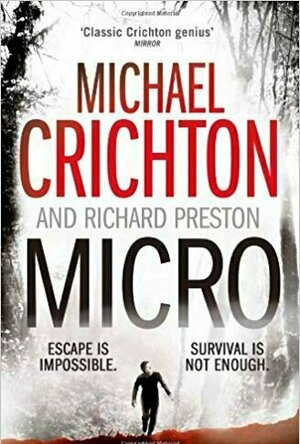
The book Micro by Michael Crichton and Richard Prestom was great. I may be a little biased because Michael Crichton is one of my favorite authors but at the same time I hold his work to a specific standard that he must meet or else I'm disappointed. Like most of his work Micro touches on some topics that as a society we should be aware of. It warns us of some disasters that new technology, being worked on or possibly already created, can cause. It id also an eye opener to the dangers of that our inventions pose.
In Micro a group of young graduate students at a college or approached by the head of a company called Nanigen. The graduate students are invited out to the Nanigen lab in Hawaii to see for themselves the work being done there and to see if they want to work for the company. Out of curiosity all the approached graduate students agree to go but their trip to Hawaii becomes more than what they bargain for.
Nanigen is studying the micro world mainly looking for chemicals that micro animals are making that could be useful to humans in some way. Also like many scientific companies in the private sector Nanigen is doing top secret work for the government. Greed gets in the way for some of the scientist already working for the company and the trip becomes extremely dangerous and even deadly for the graduate students. Having to deal with micro-bots and new technology never heard of before the students must fight to survive a world very different from our own.
What I like most about the book was one of the same features that keeps me reading Michael Crichton's work. The author does his research very thoroughly. The book may be a work of science fiction but there is a bibliography in the back for the curious reader to be able to learn more about the fascinating topics brought up in the book. For being a work of fiction the animals, plants, chemicals, technology,and scientific concepts are not. What I liked least about the book was how similar to another one of his books it was and how predictable some parts felt to me. Again though, I am very familiar with Michael Crichton's work and that would probably explain why it felt so predictable. I cannot hold that against the book.
Overall I would rate this book a 4 out of 4 and would highly recommend it. It has a very strong story and is believable which is an important factor for science fiction. The target readers for this book would start around high school age if not older. I feel like high school students will get the basic concept of what book was talking about but they might be lost on some of the finer detail. It all just depends on if the book is being read for the story or if the reader is interested in science specifically microbiology and nanotechnology.
I feel like I need to note on here that Richard Preston finishing the book did not harm it in any way.
In Micro a group of young graduate students at a college or approached by the head of a company called Nanigen. The graduate students are invited out to the Nanigen lab in Hawaii to see for themselves the work being done there and to see if they want to work for the company. Out of curiosity all the approached graduate students agree to go but their trip to Hawaii becomes more than what they bargain for.
Nanigen is studying the micro world mainly looking for chemicals that micro animals are making that could be useful to humans in some way. Also like many scientific companies in the private sector Nanigen is doing top secret work for the government. Greed gets in the way for some of the scientist already working for the company and the trip becomes extremely dangerous and even deadly for the graduate students. Having to deal with micro-bots and new technology never heard of before the students must fight to survive a world very different from our own.
What I like most about the book was one of the same features that keeps me reading Michael Crichton's work. The author does his research very thoroughly. The book may be a work of science fiction but there is a bibliography in the back for the curious reader to be able to learn more about the fascinating topics brought up in the book. For being a work of fiction the animals, plants, chemicals, technology,and scientific concepts are not. What I liked least about the book was how similar to another one of his books it was and how predictable some parts felt to me. Again though, I am very familiar with Michael Crichton's work and that would probably explain why it felt so predictable. I cannot hold that against the book.
Overall I would rate this book a 4 out of 4 and would highly recommend it. It has a very strong story and is believable which is an important factor for science fiction. The target readers for this book would start around high school age if not older. I feel like high school students will get the basic concept of what book was talking about but they might be lost on some of the finer detail. It all just depends on if the book is being read for the story or if the reader is interested in science specifically microbiology and nanotechnology.
I feel like I need to note on here that Richard Preston finishing the book did not harm it in any way.