
Search
Search results

Kristy H (1252 KP) rated The Beautiful Dead in Books
Feb 8, 2018


Eve Singer is a beleaguered TV crime reporter dealing with a pushy boss who wants Eve to be everything: younger, covering every story, and on top of every lead. In her personal life, Eve goes home to her childhood home and her father, Duncan, who is suffering from dementia. When Eve winds up covering the murder of a young woman, she doesn't realize she will soon be entwined with the girl's killer, someone who is obsessed with death, and the desire to be recognized for his "killing performances." As the killer pulls Eve deeper into his twisted web, she has some startling choices to make.
I have to say, my last book of 2016 surprised me. This novel was certainly creepy, but also had a certain nuance and depth to it that I wasn't expecting. Eve is a complicated and likeable character, and the book doesn't just cover murder and gore, it goes into her personal life, and the struggles she has caring for her father and his failing memory. The bits with her father are often both sad and humorous; they are very real and give the book a true humanity. Indeed, there's a real depth to Eve, who is stuck in a man's world and the pressures and unfairness that brings to to her career-wise (there's always a younger, prettier reporter waiting in the wings, as her boss never hesitates to remind her), as well as the burdens a woman feels as a caretaker. After all, it's not her brother taking care of her dad. Further, the book looks at an interesting psychological conundrum: how our society seems to need murder and the way it feeds on the social media aspect of it, as of late. Without society's interest in murder and death, Eve has no job.
Overall, I really enjoyed this one. It lost me slightly for a bit near the end, but managed to get back on track, and even threw in a very interesting twist I didn't see coming. Although I admit, I kept wondering where the police's behavioral scientist was. Why was the poor Lead Detective reading and deciphering everything from a serial killer alone? However, I digress. This was a well-done thriller with a different and engaging plot. I really found myself drawn to Eve, and her father, Duncan. It was an enjoyable novel with which to end the year.
I received a copy of this book from the publisher and Netgalley (thank you!); it's available in the U.S. as of 01/03/2017.
I have to say, my last book of 2016 surprised me. This novel was certainly creepy, but also had a certain nuance and depth to it that I wasn't expecting. Eve is a complicated and likeable character, and the book doesn't just cover murder and gore, it goes into her personal life, and the struggles she has caring for her father and his failing memory. The bits with her father are often both sad and humorous; they are very real and give the book a true humanity. Indeed, there's a real depth to Eve, who is stuck in a man's world and the pressures and unfairness that brings to to her career-wise (there's always a younger, prettier reporter waiting in the wings, as her boss never hesitates to remind her), as well as the burdens a woman feels as a caretaker. After all, it's not her brother taking care of her dad. Further, the book looks at an interesting psychological conundrum: how our society seems to need murder and the way it feeds on the social media aspect of it, as of late. Without society's interest in murder and death, Eve has no job.
Overall, I really enjoyed this one. It lost me slightly for a bit near the end, but managed to get back on track, and even threw in a very interesting twist I didn't see coming. Although I admit, I kept wondering where the police's behavioral scientist was. Why was the poor Lead Detective reading and deciphering everything from a serial killer alone? However, I digress. This was a well-done thriller with a different and engaging plot. I really found myself drawn to Eve, and her father, Duncan. It was an enjoyable novel with which to end the year.
I received a copy of this book from the publisher and Netgalley (thank you!); it's available in the U.S. as of 01/03/2017.

Mayhawke (97 KP) rated This is Going to Hurt: Secret Diaries of a Junior Doctor in Books
Feb 13, 2018
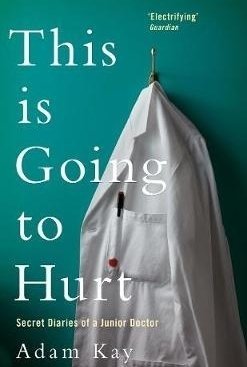


A Trip tThrough the NHS in Easy, Accessible Anecdotes
On the surface of it this is an engaging and often hilarious collection of anecdotes from someone who worked as a doctor in the NHS for several years. There is an abundance of stories for those who love to hear about the quirks and peculiarities of humanity. Dark and funny things that will make you laugh out loud whilst simultaneously making your toes curl. The de-gloved penis. The dehydrated cocaine users. The homeless man who preferred to go back out on the streets rather than run the risk of MRSA.
Referring to the diaries he was obliged to keep during his years as an obstetrician, Kay has pulled together a raft of stories and thoughts ranging from simple one line 'notes-to-self' to more lengthy tales of patients he cared for. The happy, the funny and the occasional simply uplifting make for an easy and read that clips along nicely. I had this in audio book form and it was a little over six hours long. It is easy to pick up, slightly less easy to put down.
You may also have seen this book referred to as 'heart-breaking'.
And it is. Because in writing a highly entertaining memoir Kay has found the perfect vehicle to deliver some brutal truths about the state of our NHS these days. To highlight the lies being pedalled by the Secretary of State for Health and the government.This is not a treatise on the issues facing the National Health Service and the people who work there-in delivering health care, there is no lengthy analysis - he simply punctuates the usually funny, sometimes tragic stories with brutal realities he has experienced first-hand:
- being told that he would have to come back for a weekend halfway through a two-week holiday abroad because the cover he had had to arrange himself fell through.
- falling asleep in his car in the hospital car park before he even managed to start it and waking up the next morning only to find he'd slept so long he was still late for work. On Christmas Eve.
- working out that with the unpaid overtime he was expected to put in his actual wage was £6.60ph - less than if he'd worked in McDonalds.
This is far more important book than it is really given credit for. It should be mandatory reading for anyone who has ever nodded their head when Jeremy Hunt's lips have been flapping.
Referring to the diaries he was obliged to keep during his years as an obstetrician, Kay has pulled together a raft of stories and thoughts ranging from simple one line 'notes-to-self' to more lengthy tales of patients he cared for. The happy, the funny and the occasional simply uplifting make for an easy and read that clips along nicely. I had this in audio book form and it was a little over six hours long. It is easy to pick up, slightly less easy to put down.
You may also have seen this book referred to as 'heart-breaking'.
And it is. Because in writing a highly entertaining memoir Kay has found the perfect vehicle to deliver some brutal truths about the state of our NHS these days. To highlight the lies being pedalled by the Secretary of State for Health and the government.This is not a treatise on the issues facing the National Health Service and the people who work there-in delivering health care, there is no lengthy analysis - he simply punctuates the usually funny, sometimes tragic stories with brutal realities he has experienced first-hand:
- being told that he would have to come back for a weekend halfway through a two-week holiday abroad because the cover he had had to arrange himself fell through.
- falling asleep in his car in the hospital car park before he even managed to start it and waking up the next morning only to find he'd slept so long he was still late for work. On Christmas Eve.
- working out that with the unpaid overtime he was expected to put in his actual wage was £6.60ph - less than if he'd worked in McDonalds.
This is far more important book than it is really given credit for. It should be mandatory reading for anyone who has ever nodded their head when Jeremy Hunt's lips have been flapping.

Hazel (1853 KP) rated Nirvana (Nirvana #1) in Books
Dec 7, 2018



<i>This ARC was provided by the publisher via NetGalley in exchange for an honest review </i>
Imagine a world without any bees. That is the world that J. R. Stewart conjures up in this new dystopian series, <i>Nirvana</i>. Twenty years from now, the bees have become extinct. There are no more trees, flowers, fruits or vegetables; and more animals have become extinct as a result. Young adult, Larissa, is living in a world that seems unimaginable, but not only is she dealing with this new way of life, she is also grieving the loss of her husband, Andrew.
Andrew was a scientist, an occupation that earned himself and Larissa a place in the Barracks where he could continue with his important research. They both believed they were lucky to receive this opportunity, but then Andrew went out on a mission and never came back. No matter how hard people try to convince her, Larissa cannot accept that her husband is dead, especially as she has seen him in <i>Nirvana</i> – a virtual reality world. As she struggles to piece together what is real and what is not, secrets are being uncovered that blur the lines between reality and the cybernetic domain.
<i>Nirvana </i>is an interesting concept. Firstly, the issue with the extinction of the bees is a very real concern for scientists at the moment. If bees were to die out there would be no pollination of the vital plants that humans use daily. Humanity would be faced with a future not unlike Larissa’s. Secondly, with the advance in computer technology, virtual reality has become a popular phenomenon in contemporary society, and with more expansion it is likely that something similar to Nirvana will be produced.
As a story, however, nothing exciting really happened. There was no major build up to the ending. Characters were suspected of hiding the truth from the very beginning and therefore it was no surprise when certain facts came to light later in the novel. <i>Nirvana</i> is also a very short first installment of the series, which does not give the story much chance to develop at an adequate pace, thus it is difficult to get our heads around the virtual reality concept that Stewart writes about.
Despite these misgivings there is the chance that the following novels in this series will become more thrilling as the truth begins to unravel about Andrew’s disappearance or death.
Imagine a world without any bees. That is the world that J. R. Stewart conjures up in this new dystopian series, <i>Nirvana</i>. Twenty years from now, the bees have become extinct. There are no more trees, flowers, fruits or vegetables; and more animals have become extinct as a result. Young adult, Larissa, is living in a world that seems unimaginable, but not only is she dealing with this new way of life, she is also grieving the loss of her husband, Andrew.
Andrew was a scientist, an occupation that earned himself and Larissa a place in the Barracks where he could continue with his important research. They both believed they were lucky to receive this opportunity, but then Andrew went out on a mission and never came back. No matter how hard people try to convince her, Larissa cannot accept that her husband is dead, especially as she has seen him in <i>Nirvana</i> – a virtual reality world. As she struggles to piece together what is real and what is not, secrets are being uncovered that blur the lines between reality and the cybernetic domain.
<i>Nirvana </i>is an interesting concept. Firstly, the issue with the extinction of the bees is a very real concern for scientists at the moment. If bees were to die out there would be no pollination of the vital plants that humans use daily. Humanity would be faced with a future not unlike Larissa’s. Secondly, with the advance in computer technology, virtual reality has become a popular phenomenon in contemporary society, and with more expansion it is likely that something similar to Nirvana will be produced.
As a story, however, nothing exciting really happened. There was no major build up to the ending. Characters were suspected of hiding the truth from the very beginning and therefore it was no surprise when certain facts came to light later in the novel. <i>Nirvana</i> is also a very short first installment of the series, which does not give the story much chance to develop at an adequate pace, thus it is difficult to get our heads around the virtual reality concept that Stewart writes about.
Despite these misgivings there is the chance that the following novels in this series will become more thrilling as the truth begins to unravel about Andrew’s disappearance or death.

Ross (3284 KP) rated The Court of Broken Knives in Books
Aug 7, 2018
Finally, well executed, gritty literary fantasy
I had skimmed some reviews of this book after seeing glowing recommendations of it in different facebook groups. I was warned the tone of the narrative was off-putting and very different to the genre. I have read a few authors who try and put a more literary, almost poetic slant on the narrative in fantasy books and I always found it a bit flowery and took me out of the story.
Not so here. I'll admit the tone took me a couple of chapters to get to grips with, but I am so glad I stuck with it. The lyrical poetry contained within the narrative is so good that it adds to the story being told, it puts some emotion into the storytelling, something that is so sorely lacking from many books in third-person narrative.
Descriptions of people, places, feelings, events take on a whole new level of tangibility so rarely felt in fantasy fiction (without going down the Stephen King route of describing everything, and avoiding the Robert Jordan horse/riding dress description pratfalls).
The only place this becomes an issue is at times in the action scenes. On occasion I had to re-read a passage to work out what had actually happened - while I enjoyed the words I had struggled to pick up on what had occurred.
The story itself is not overly elaborate and unfolds before you with little warning. It felt like a natural, flowing journey than a series of events loosely tied together. We have the gritty mercenary company en route to unleash hell on the Empire, the great priestess of the God of living and dying (who has to sacrifice someone every few days to ensure life and death continue to operate properly) and we have the political manoeuvrings of the high lords within the Empirical council. This is all weaved together in the first third of the book to an excellent, surprising conclusion (in what many authors would have filled a whole book with ad nauseum), with the remainder of the book being a journey through wild country while everyone double-crosses everyone else.
This is of the grim-dark sub-genre, which basically means everyone is a bit of a shit, and bad things happen to nice people. There are no heroes here. There are characters you come to rout for (or despise) but you know it is wrong to do so as they are all so nasty and flawed in so many ways, like humanity itself.
Don't be expecting a happy ending!
Not so here. I'll admit the tone took me a couple of chapters to get to grips with, but I am so glad I stuck with it. The lyrical poetry contained within the narrative is so good that it adds to the story being told, it puts some emotion into the storytelling, something that is so sorely lacking from many books in third-person narrative.
Descriptions of people, places, feelings, events take on a whole new level of tangibility so rarely felt in fantasy fiction (without going down the Stephen King route of describing everything, and avoiding the Robert Jordan horse/riding dress description pratfalls).
The only place this becomes an issue is at times in the action scenes. On occasion I had to re-read a passage to work out what had actually happened - while I enjoyed the words I had struggled to pick up on what had occurred.
The story itself is not overly elaborate and unfolds before you with little warning. It felt like a natural, flowing journey than a series of events loosely tied together. We have the gritty mercenary company en route to unleash hell on the Empire, the great priestess of the God of living and dying (who has to sacrifice someone every few days to ensure life and death continue to operate properly) and we have the political manoeuvrings of the high lords within the Empirical council. This is all weaved together in the first third of the book to an excellent, surprising conclusion (in what many authors would have filled a whole book with ad nauseum), with the remainder of the book being a journey through wild country while everyone double-crosses everyone else.
This is of the grim-dark sub-genre, which basically means everyone is a bit of a shit, and bad things happen to nice people. There are no heroes here. There are characters you come to rout for (or despise) but you know it is wrong to do so as they are all so nasty and flawed in so many ways, like humanity itself.
Don't be expecting a happy ending!

LilyLovesIndie (123 KP) rated Matronly Duties in Books
Nov 5, 2018
In a new ice age, the inhabitants of the world have gone underground, hiding from the freezing temperatures on the surface and as always happens in this type of situation, those in control become power crazy at the expense of their nation.
The premise of the story is well developed and is a very believable kind of future. This being said, it gives it a familiar kind of feeling when you're reading. The idea of humanity being restricted and having to survive in a relatively small space is something familiar in futuristic stories, but that's not saying this book is cliche, Kendall includes just enough unique twists to keep you on your toes.
As for characters, Beth is a good lead. She's level headed, naive but a very engaging kind of character. The reader is as naive in this world as Beth, and so it is excellent to learn vicariously through her as Howard opens her eyes to the injustices of the world in which she lives. Howard is very attractive to read, not just in looks, but in his personality which seems to ooze from the pages and infect the reader with their own desire to do something to make their own world better. All the intrigue and mystery is an excellent hook into the story, with the letters to one another being a useful tool to move the story on and develop their relationship.
The plot has a good pace, all be it a little slow to begin with, but it does develop smoothly as the story develops. It has a traditional kind of 'snowball down a hill' approach, with the revelations coming thick and fast as the characters are hurled into the next issue to deal with. Personally, I'd have liked to have seen a little more detail in the ending as it felt a little rushed. The epilogue did help to tidy some loose ends, but I do feel like there was more to discover there.
In conclusion, this books was a very good read, it captured my attention and held it, and is a book I found very enjoyable. I'd definitely recommend it to anyone who enjoys a romance with a difference. I am looking forward to reading more from this author, and I do hope this group of characters are explored again in the future as there are definitely legs left in this universe.
*This book was first reviewed on Lily Loves Indie as part of a blog tour, for which an ARC was received in return for an honest review*
The premise of the story is well developed and is a very believable kind of future. This being said, it gives it a familiar kind of feeling when you're reading. The idea of humanity being restricted and having to survive in a relatively small space is something familiar in futuristic stories, but that's not saying this book is cliche, Kendall includes just enough unique twists to keep you on your toes.
As for characters, Beth is a good lead. She's level headed, naive but a very engaging kind of character. The reader is as naive in this world as Beth, and so it is excellent to learn vicariously through her as Howard opens her eyes to the injustices of the world in which she lives. Howard is very attractive to read, not just in looks, but in his personality which seems to ooze from the pages and infect the reader with their own desire to do something to make their own world better. All the intrigue and mystery is an excellent hook into the story, with the letters to one another being a useful tool to move the story on and develop their relationship.
The plot has a good pace, all be it a little slow to begin with, but it does develop smoothly as the story develops. It has a traditional kind of 'snowball down a hill' approach, with the revelations coming thick and fast as the characters are hurled into the next issue to deal with. Personally, I'd have liked to have seen a little more detail in the ending as it felt a little rushed. The epilogue did help to tidy some loose ends, but I do feel like there was more to discover there.
In conclusion, this books was a very good read, it captured my attention and held it, and is a book I found very enjoyable. I'd definitely recommend it to anyone who enjoys a romance with a difference. I am looking forward to reading more from this author, and I do hope this group of characters are explored again in the future as there are definitely legs left in this universe.
*This book was first reviewed on Lily Loves Indie as part of a blog tour, for which an ARC was received in return for an honest review*

Gareth von Kallenbach (980 KP) rated the PC version of Remember Me in Video Games
Jun 19, 2019
Cyberpunk is a phrase that has been tossed around often to describe a futuristic theme where technology becomes a necessity for survival along the lines of food, shelter, and water. Games ranging from Deus EX and System Shock as well as movies such as “Blade Runner” and “Total Recall” have depicted a future where humanity and technological integrations have overlapped into all elements of life and society including the replacement of biological appendages and functions.
In the new game Remember Me, players are set in Paris in 2084 where technology has allowed the population to upload their memories to the net. Not only can people share memories, but unpleasant memories can be removed as well.
The company behind this technology, Memorize is using the memories to control the population through never ending surveillance of a person’s memories. There are also individuals who have absorbed too many memories and have become mutated as a result.
The result of this is the rise of a resistance movement named Errorists who strive to bring down Memorize.
Players play as a female character named Nilin who escapes from Memorize detention before the last of her memories can be wiped away. Blessed with a gift to steal and remix memories, Nilin becomes part of a plan to capture the head of Memorize in an effort to alter his memories and save society.
Being able to replay and modify memories is a big part of the game as well as combat which can be upgraded from a Combo Lab to upgrade various fighting moves and styles.
With thousands of possible combos, being able to customize a style that works best for you is one of the great aspects of the game.
The platforming and combat in the game may become a bit repetitive for some and others may find it a bit frustrating. There are at times issues with save games as death can remove progress earned between save points.
The game has solid graphics and is to be praised for taking a new narrative to the genre and the introduction of memory manipulations was a nice touch. I also loved the characters in the game that despite some uneven writing and storylines stood out. In the end, Remember Me is a fun game and a great concept but falls short of being a classic due to several issues mentioned previously as well as camera and control issues.
http://sknr.net/2013/06/11/remember-me/
In the new game Remember Me, players are set in Paris in 2084 where technology has allowed the population to upload their memories to the net. Not only can people share memories, but unpleasant memories can be removed as well.
The company behind this technology, Memorize is using the memories to control the population through never ending surveillance of a person’s memories. There are also individuals who have absorbed too many memories and have become mutated as a result.
The result of this is the rise of a resistance movement named Errorists who strive to bring down Memorize.
Players play as a female character named Nilin who escapes from Memorize detention before the last of her memories can be wiped away. Blessed with a gift to steal and remix memories, Nilin becomes part of a plan to capture the head of Memorize in an effort to alter his memories and save society.
Being able to replay and modify memories is a big part of the game as well as combat which can be upgraded from a Combo Lab to upgrade various fighting moves and styles.
With thousands of possible combos, being able to customize a style that works best for you is one of the great aspects of the game.
The platforming and combat in the game may become a bit repetitive for some and others may find it a bit frustrating. There are at times issues with save games as death can remove progress earned between save points.
The game has solid graphics and is to be praised for taking a new narrative to the genre and the introduction of memory manipulations was a nice touch. I also loved the characters in the game that despite some uneven writing and storylines stood out. In the end, Remember Me is a fun game and a great concept but falls short of being a classic due to several issues mentioned previously as well as camera and control issues.
http://sknr.net/2013/06/11/remember-me/

Jessica - Where the Book Ends (15 KP) rated Harp's Song (Harp's Song, #1) in Books
Jan 30, 2019
***I received this book in exchange for an honest review ***
Harp's Song is a beautifully written breathtaking account of a young girl named Harp and her story of coming to terms with the abuse she suffered at the hands of her mother as well as first love.
When we first meet Harp she is a bit of a band geek who just so happens to be best friends with the high school jock Connor. Connor and Harp have been friends through thick and thin, and really Connor and his mom Catherine are the only people that know about the truth surrounding Harp's home life. Harp isn't part of any social group at school really, and her main focus is to play her Cello and to get out of Iowa, away from her mom, and to music school.
Harp's mother has always been lacking in the motherly department. She is constantly verbally abusing Harp and a couple of times even physically abusing her. Harp just knows she doesn't deserve the life that's been dealt to her and she has to get out. The way this book is written is that instead of having your typical chapters, the author uses them as a countdown to graduation. It's a very different approach to take and I love the way the author uses her "chapters" as a timeline for the reader. It helps you immerse yourself in the story even more. Not only that but your senior year I bet you counted down the days too, I know I did.
Connonr lets it slip that he wants to be more than friends with Harp, and how he's cared about her for so long. He doesn't want to see anything bad happen to her, and what he really wants is to do nothing but protect her. For the most part their relationship is comfortable and easy for them until Vincent shows up, and he becomes a snag in an otherwise smooth relationship. Connor perseveres and swears his love to Harp.
These characters are so beautifully written and so vibrant that I feel as though I know them outside of their pages. Harp's story is one that rips your heart out, and then replenishes your faith in humanity, and along the way raises awareness about abuse (both verbal and physical).
If you haven't read Harp's Song yet, or if you're debating about possibly reading it, let me do you a solid... Read it... I'm begging you. You won't be sorry. This story is both beautiful and poignant. This book will definitely make my top list of the year, maybe even ever. Bravo Cassie Shine, bravo!
Harp's Song is a beautifully written breathtaking account of a young girl named Harp and her story of coming to terms with the abuse she suffered at the hands of her mother as well as first love.
When we first meet Harp she is a bit of a band geek who just so happens to be best friends with the high school jock Connor. Connor and Harp have been friends through thick and thin, and really Connor and his mom Catherine are the only people that know about the truth surrounding Harp's home life. Harp isn't part of any social group at school really, and her main focus is to play her Cello and to get out of Iowa, away from her mom, and to music school.
Harp's mother has always been lacking in the motherly department. She is constantly verbally abusing Harp and a couple of times even physically abusing her. Harp just knows she doesn't deserve the life that's been dealt to her and she has to get out. The way this book is written is that instead of having your typical chapters, the author uses them as a countdown to graduation. It's a very different approach to take and I love the way the author uses her "chapters" as a timeline for the reader. It helps you immerse yourself in the story even more. Not only that but your senior year I bet you counted down the days too, I know I did.
Connonr lets it slip that he wants to be more than friends with Harp, and how he's cared about her for so long. He doesn't want to see anything bad happen to her, and what he really wants is to do nothing but protect her. For the most part their relationship is comfortable and easy for them until Vincent shows up, and he becomes a snag in an otherwise smooth relationship. Connor perseveres and swears his love to Harp.
These characters are so beautifully written and so vibrant that I feel as though I know them outside of their pages. Harp's story is one that rips your heart out, and then replenishes your faith in humanity, and along the way raises awareness about abuse (both verbal and physical).
If you haven't read Harp's Song yet, or if you're debating about possibly reading it, let me do you a solid... Read it... I'm begging you. You won't be sorry. This story is both beautiful and poignant. This book will definitely make my top list of the year, maybe even ever. Bravo Cassie Shine, bravo!
Gareth von Kallenbach (980 KP) rated WarGames The Dead Code (2008) in Movies
Aug 14, 2019
It is hard to believe that 25 years have passed since a computer took the world to the edge of nuclear annihilation in “War Games” The film starring Matthew Broderick and Ally Sheedy was a cautionary tale about the dangers of taking the human factor about military decisions, and like films such as “The Terminator” a cautionary warning about dependence on technology.
As the two and a half decades unfolded, many films have emerged that feature a central theme of technology run amuck, and how despite our frailties, humanity in the end is the ultimate master of its own fate.
In the new film “Wargames: The Dead Code”, audiences are given an updated retelling of the classic tale with more than a few reverent nods to the original.
The film stars Matt Lanter as Will Farmer, a good natured techie who is as eager to help his neighbor fix his computer as he is to play online games with his friend Dennis (Nicholas Wright). When Will decides to take on a new game that features terrorist attack scenarios he inadvertently triggers a series of events that will soon cause hundreds of thousands of lives to hang in the balance.
The game is actually a top secret project that is designed to locate, test, and remove any potential threats and is overseen by a computer system named Ripley.
Will embarks on a school trip to Montreal hoping to spend more time with the lovely Annie (Amanda Walsh), and is unaware that forces are at play that thanks to a unfortunate series of events, will soon have Amanda and Will not only running for their lives but locked in a race against time to prevent a catastrophe of epic proportion.
The film has a good premise, but asks you to take several leaps of faith as it progresses and uses logic that at times is absurd even for a genre film. Much of the film unfolds as a movie of the week rather than a taut action thriller that should be expected with the talent attached to the film, as many of the characters are not developed enough for the audience to truly care about their fates.
The film is also surprisingly short in the suspense department, though it does try to make up for this with some nice chase sequences.
It is a shame that the talented cast could not be given a script worth of their talents or the premise of the film.
As the two and a half decades unfolded, many films have emerged that feature a central theme of technology run amuck, and how despite our frailties, humanity in the end is the ultimate master of its own fate.
In the new film “Wargames: The Dead Code”, audiences are given an updated retelling of the classic tale with more than a few reverent nods to the original.
The film stars Matt Lanter as Will Farmer, a good natured techie who is as eager to help his neighbor fix his computer as he is to play online games with his friend Dennis (Nicholas Wright). When Will decides to take on a new game that features terrorist attack scenarios he inadvertently triggers a series of events that will soon cause hundreds of thousands of lives to hang in the balance.
The game is actually a top secret project that is designed to locate, test, and remove any potential threats and is overseen by a computer system named Ripley.
Will embarks on a school trip to Montreal hoping to spend more time with the lovely Annie (Amanda Walsh), and is unaware that forces are at play that thanks to a unfortunate series of events, will soon have Amanda and Will not only running for their lives but locked in a race against time to prevent a catastrophe of epic proportion.
The film has a good premise, but asks you to take several leaps of faith as it progresses and uses logic that at times is absurd even for a genre film. Much of the film unfolds as a movie of the week rather than a taut action thriller that should be expected with the talent attached to the film, as many of the characters are not developed enough for the audience to truly care about their fates.
The film is also surprisingly short in the suspense department, though it does try to make up for this with some nice chase sequences.
It is a shame that the talented cast could not be given a script worth of their talents or the premise of the film.
Gareth von Kallenbach (980 KP) rated Black Mass (2015) in Movies
Aug 6, 2019
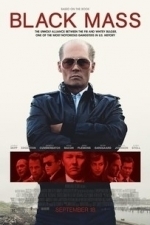

He was one of the most dangerous men and most notorious gangsters in American history. For over sixteen years he evaded the FBI and law enforcement until his eventual capture in 2011. Black Mass tells the story of James “Whitey” Bulger and his alliance with the FBI. The film delves deep into the relationship that is built between Bulger and FBI agents which allows him to expand his power beyond the Boston area. Audiences will be awestruck by the actions permitted and overlooked on the part of FBI agents working with Bulger which fall in line with the advice that Bulger gives his son: “If no one saw it, it didn’t happen.”
Johnny Depp (Pirates of the Caribbean, Sleepy Hollow, Edward Scissorhands) assumes the role of Bulger and audiences will not be able to take their eyes off of him in this film. Every movement, word, and action that he provides on screen demonstrates his versatility and ability to wear the skin and assume identity of those that he portrays. His portrayal of Whitey Bulger separates him from the “Jack Sparrow” identity that his audiences have become accustomed to. Even more impressive about his acting is the way in which the film’s direction displays more of a human element to this monster. The audience is shown countless acts of brutality undertaken by Bulger or on his orders, but there are moments in which you feel a sense of sorrow for the character. In no way do the moments allow for redemption or offer excuses for his actions, but it allows for the portrayal of a more human element. Humanizing Bulger allows for a much fuller picture of what took place during his life and demonstrates that crime was not the only factor.
The film takes all of us into a very dark place. We see a monster in action. We see countless people fall victim to Bulger and his organization. Depp intimidates not only the other characters being portrayed, but the audience in the way that his eyes always seem so cold and heartless. It is said that when you look into someone’s eyes, you can see their soul. With Whitey Bulger, his soul is absent whenever he is portrayed onscreen. This helps to solidify Depp’s portrayal of Bulger and the way that he lived his life. He was a cold, heartless monster. The only sense of a soul or any humanity comes with the direction of the film to make this monster human.
Johnny Depp (Pirates of the Caribbean, Sleepy Hollow, Edward Scissorhands) assumes the role of Bulger and audiences will not be able to take their eyes off of him in this film. Every movement, word, and action that he provides on screen demonstrates his versatility and ability to wear the skin and assume identity of those that he portrays. His portrayal of Whitey Bulger separates him from the “Jack Sparrow” identity that his audiences have become accustomed to. Even more impressive about his acting is the way in which the film’s direction displays more of a human element to this monster. The audience is shown countless acts of brutality undertaken by Bulger or on his orders, but there are moments in which you feel a sense of sorrow for the character. In no way do the moments allow for redemption or offer excuses for his actions, but it allows for the portrayal of a more human element. Humanizing Bulger allows for a much fuller picture of what took place during his life and demonstrates that crime was not the only factor.
The film takes all of us into a very dark place. We see a monster in action. We see countless people fall victim to Bulger and his organization. Depp intimidates not only the other characters being portrayed, but the audience in the way that his eyes always seem so cold and heartless. It is said that when you look into someone’s eyes, you can see their soul. With Whitey Bulger, his soul is absent whenever he is portrayed onscreen. This helps to solidify Depp’s portrayal of Bulger and the way that he lived his life. He was a cold, heartless monster. The only sense of a soul or any humanity comes with the direction of the film to make this monster human.

Al-Quran-ul-Kareem
Book and Education
App
Al-Quran-ul-Kareem Application Technology: In order to facilitate Islamic brothers, the IT...