
Search
Search results
Merissa (14188 KP) rated Unlike Any Other by Ed Londergan in Books
May 18, 2022 (Updated Jun 19, 2023)
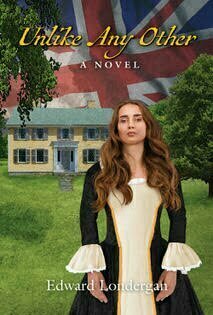

UNLIKE ANY OTHER is the story of Bathsheba Spooner, the first woman to be executed in the new United States of America. You find out, through her eyes, what it was like to live a life of privilege, to be passed on in an arranged marriage, to have all her hopes and dreams dashed, to a point where murder is the only way out.
Bathsheba was brought up to speak her mind, to be strong-spirited. She had dreams of marrying a wealthy man from Boston and joining Society. So when she finds out her father has arranged a marriage to a local merchant, she's not happy but eventually agrees to it. Her marriage isn't a happy one, with Joshua frequenting the local taverns more than he does his home. That doesn't stop him from his conjugal rights though. When a young man, half of Bathsheba's age, stays at their home to recover from an illness, she feels the stirrings of desire she hasn't felt for a long time.
This was a well-written piece of history that I thoroughly enjoyed. I found out more about what it was like for the people of America at that time, as well as the Boston Tea Party! Bathsheba's options were so limited at a time when a woman's rights were close to zero. I do wonder why she didn't contact her brother but, at a time when the war was dividing families, I guess I'm not 100% surprised.
I would have liked to have heard a little from Ezra Ross but maybe there isn't enough written from his account to tell his story.
A historical fiction based on a true story that I have no hesitation in recommending.
** same worded review will appear elsewhere **
* A copy of this book was provided to me with no requirements for a review. I voluntarily read this book, and the comments here are my honest opinion. *
Merissa
Archaeolibrarian - I Dig Good Books!
May 12, 2022
Bathsheba was brought up to speak her mind, to be strong-spirited. She had dreams of marrying a wealthy man from Boston and joining Society. So when she finds out her father has arranged a marriage to a local merchant, she's not happy but eventually agrees to it. Her marriage isn't a happy one, with Joshua frequenting the local taverns more than he does his home. That doesn't stop him from his conjugal rights though. When a young man, half of Bathsheba's age, stays at their home to recover from an illness, she feels the stirrings of desire she hasn't felt for a long time.
This was a well-written piece of history that I thoroughly enjoyed. I found out more about what it was like for the people of America at that time, as well as the Boston Tea Party! Bathsheba's options were so limited at a time when a woman's rights were close to zero. I do wonder why she didn't contact her brother but, at a time when the war was dividing families, I guess I'm not 100% surprised.
I would have liked to have heard a little from Ezra Ross but maybe there isn't enough written from his account to tell his story.
A historical fiction based on a true story that I have no hesitation in recommending.
** same worded review will appear elsewhere **
* A copy of this book was provided to me with no requirements for a review. I voluntarily read this book, and the comments here are my honest opinion. *
Merissa
Archaeolibrarian - I Dig Good Books!
May 12, 2022

Debbiereadsbook (1832 KP) rated Dante and his Dragon (Colorado Dragons #3) in Books
Jul 5, 2026


loving these!
I was gifted my copy of this book, direct from the author.
This is book 3 in the Colorado Dragons series, and it can be read as a stand alone book, but personally, I think you'll get a better enjoyment of these ice hockey player slash dragons if you read them all in order. There is something going on in the wider dragon world, and I'm not sure you'd pick that up from one book.
Dante is traded to the Dragons on the last day. For something he did not do. Finding himself thousands of miles from his family, he throws himself into his hockey. Coach Theron watches the newbie, and what he's been told does not fit with what he sees. His dragon is rather taken by Dante too. But Theron lost someone close to him a long time ago, so Theron pushes Dante away. Then Dante is taken, and Theron's dragon is all out to find his mate.
What I loved about this book, was that I found it a bit more emotional, I think is the word, than the other books. Heavy on the emotions, this one. But also, deeper. Both Theron and Dante have suffered, differently, and they are only trying to protect themselves from being hurt again. But they are constantly drawn to the other and it's only a matter of time before one of them gives in. Theron runs then. He redeems himself, though!
I thought, for one reason or another, that all the Dragons are ice dragons. But Theron is a FORGE dragon. He can do things with metallic elements that no one else can. And that is why he is targeted by the bad guy. Why Dante is, to get at Theron. And I loved being surprised by that!
I am loving this series so far, and can't wait to get my hands on future books.
5 full and shiny, but copper and gold, coloured stars
*same worded review will appear elsewhere
This is book 3 in the Colorado Dragons series, and it can be read as a stand alone book, but personally, I think you'll get a better enjoyment of these ice hockey player slash dragons if you read them all in order. There is something going on in the wider dragon world, and I'm not sure you'd pick that up from one book.
Dante is traded to the Dragons on the last day. For something he did not do. Finding himself thousands of miles from his family, he throws himself into his hockey. Coach Theron watches the newbie, and what he's been told does not fit with what he sees. His dragon is rather taken by Dante too. But Theron lost someone close to him a long time ago, so Theron pushes Dante away. Then Dante is taken, and Theron's dragon is all out to find his mate.
What I loved about this book, was that I found it a bit more emotional, I think is the word, than the other books. Heavy on the emotions, this one. But also, deeper. Both Theron and Dante have suffered, differently, and they are only trying to protect themselves from being hurt again. But they are constantly drawn to the other and it's only a matter of time before one of them gives in. Theron runs then. He redeems himself, though!
I thought, for one reason or another, that all the Dragons are ice dragons. But Theron is a FORGE dragon. He can do things with metallic elements that no one else can. And that is why he is targeted by the bad guy. Why Dante is, to get at Theron. And I loved being surprised by that!
I am loving this series so far, and can't wait to get my hands on future books.
5 full and shiny, but copper and gold, coloured stars
*same worded review will appear elsewhere
Merissa (14188 KP) rated Unveiled (Monarchs of Magic #1) in Books
Sep 30, 2026
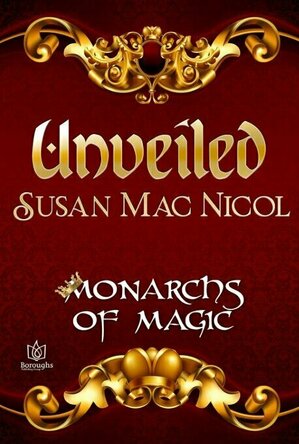

UNVEILED is the first book in the Monarchs of Magic series, set in the Scottish Highlands. Connor is King of his pack, with roots deep in the Scottish soil. Adrian, on the other hand, has inherited his pack and comes from France. When a whole village turns up overnight on Connor's land, they have to work together to find out just what is going on.
I am so glad Brigadoon was mentioned in here! It's what sprung to my mind as soon as I read the blurb, and it only got stronger as I got into the story. The village is full of amazing characters that I can't wait to learn more about. However, for me, that came at the expense of the packs, the land, and where they lived. It never felt very clear to me just what their lodgings looked like. I know one was a castle and the other wasn't, but we only get a paragraph or so describing them. I also found the characters of the packs almost interchangeable and had to consciously think about who was whom and which pack they belonged to when they were speaking.
Connor and Adrian are both announced as protectors, dual guardians, but Connor spends most of his time protecting Adrian. The Veil and the Council were intriguing, but you don't learn that much about them here. That just means that I'm looking forward to reading more about them in future books.
This is a fast-paced story that just doesn't stop, so hold onto your hats! This is a great new world that I am invested in, and can't wait to see what comes next. 3.5 very good stars, rounded up to 4 where necessary.
** The same worded review will appear elsewhere. **
* A copy of this book was provided to me with no requirements for a review. I voluntarily read this book; the comments here are my honest opinion. *
Merissa
Archaeolibrarian
Sep 29, 2026
I am so glad Brigadoon was mentioned in here! It's what sprung to my mind as soon as I read the blurb, and it only got stronger as I got into the story. The village is full of amazing characters that I can't wait to learn more about. However, for me, that came at the expense of the packs, the land, and where they lived. It never felt very clear to me just what their lodgings looked like. I know one was a castle and the other wasn't, but we only get a paragraph or so describing them. I also found the characters of the packs almost interchangeable and had to consciously think about who was whom and which pack they belonged to when they were speaking.
Connor and Adrian are both announced as protectors, dual guardians, but Connor spends most of his time protecting Adrian. The Veil and the Council were intriguing, but you don't learn that much about them here. That just means that I'm looking forward to reading more about them in future books.
This is a fast-paced story that just doesn't stop, so hold onto your hats! This is a great new world that I am invested in, and can't wait to see what comes next. 3.5 very good stars, rounded up to 4 where necessary.
** The same worded review will appear elsewhere. **
* A copy of this book was provided to me with no requirements for a review. I voluntarily read this book; the comments here are my honest opinion. *
Merissa
Archaeolibrarian
Sep 29, 2026
Merissa (14188 KP) rated Lady of Thorns (Two Thrones #3) in Books
Dec 13, 2017
Lady of Thorns (Two Thrones #3) by Nicola M. Cameron
Lady of Thorns is the third book in the Two Thrones series, and we focus on two characters we met in the previous book. Amelie and Alain are about as opposite as you can get - noble-born and street rat who has worked hard and got himself a career. However, their births play no part as the sparks fly between these two. They are evenly matched in intelligence, wit, and humour. And then, through Amelie's courage, they find out they are matched in other areas too. With the Harvest Ball coming up, her mother to contend with, and a husband to find, Amelie is happy to take her chances whilst she can. And of course, it doesn't hurt to have a Queen as your best friend!
It was wonderful returning to this world. It is easy to read, and the characters are all superb. It is smoothly written, with no editing or grammatical errors that I found. I would have loved to have heard more about Matthias and Danae, but then I am greedy where they are concerned. All in all, this book was thoroughly enjoyable, and completely un-put-downable. Palace of Scoundrels is still my favourite so far, but Lady of Thorns is absolutely recommended in every way.
* A copy of this book was provided to me with no requirements for a review. I voluntarily read this book, and my comments here are my honest opinion. *
Merissa
Archaeolibrarian - I Dig Good Books!
It was wonderful returning to this world. It is easy to read, and the characters are all superb. It is smoothly written, with no editing or grammatical errors that I found. I would have loved to have heard more about Matthias and Danae, but then I am greedy where they are concerned. All in all, this book was thoroughly enjoyable, and completely un-put-downable. Palace of Scoundrels is still my favourite so far, but Lady of Thorns is absolutely recommended in every way.
* A copy of this book was provided to me with no requirements for a review. I voluntarily read this book, and my comments here are my honest opinion. *
Merissa
Archaeolibrarian - I Dig Good Books!

Whatchareadin (174 KP) rated Triptych (Will Trent, #1) in Books
May 10, 2018


It goes show, you should really read the first book in a series before heading to the next. I was trying to prepare myself for a Q&A session with the author and so I grabbed the first book that was available to me and that was her third Will Trent novel, Undone. I really enjoyed that book as well. And while I enjoyed Triptych as well, it seemed to move a bit slower for me. There was a lot of character development, which of course I expected and was looking for in the other book. Now, I've got it.
Will Trent is an orphan and a bit illiterate. He is a detective with the Georgia Bureau of Investigation and he has just been assigned a new case. When a hooker is found dead, raped, and with her tongue cut out, questions start to arise. There have been other cases like this one, but the girls were much younger, so why the change in M.O.? Will is working with Dekalp County police officer Michael Ormewood on the case. And when Ormewood's neighbor becomes one of the victims, the story takes and unusual turn.
Angie Pulaski and Will Trent go way back. Angie is also a police officer, but she is undercover as a hooker. Helping Will with this case, she meets someone who has an interesting connection. John Shelly, recently released from prison, his rap sheet looks a lot like these recent murders.
Will John Shelly be heading back to jail?
Will Trent is an orphan and a bit illiterate. He is a detective with the Georgia Bureau of Investigation and he has just been assigned a new case. When a hooker is found dead, raped, and with her tongue cut out, questions start to arise. There have been other cases like this one, but the girls were much younger, so why the change in M.O.? Will is working with Dekalp County police officer Michael Ormewood on the case. And when Ormewood's neighbor becomes one of the victims, the story takes and unusual turn.
Angie Pulaski and Will Trent go way back. Angie is also a police officer, but she is undercover as a hooker. Helping Will with this case, she meets someone who has an interesting connection. John Shelly, recently released from prison, his rap sheet looks a lot like these recent murders.
Will John Shelly be heading back to jail?

Mark @ Carstairs Considers (2658 KP) rated Word to the Wise in Books
Mar 26, 2021 (Updated Mar 26, 2021)

Stalking Lindsey
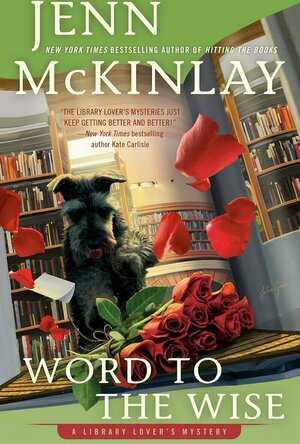
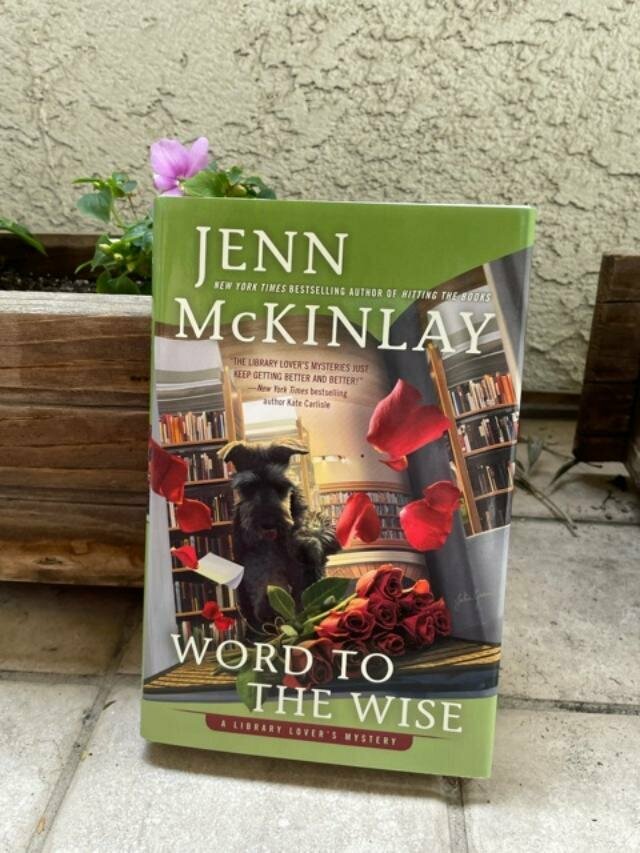
It all starts innocently enough. Lindsey Norris is more than happy to help out Aaron Grady when he walks into the library asking for help with his roses. But when he begins to show up with roses to offer to her as a thank you, she begins to grow concerned. Despite repeated confrontations, Aaron doesn’t take no for an answer and shows up in places he doesn’t belong. Until he turns up dead behind the library. Lindsey’s fiancé, Sully, quickly becomes the prime suspect. Lindsey knows that Sully wouldn’t have killed Aaron despite the growing evidence. So, what is really going on?
This book is definitely a cozy with a thriller edge to it. It worked for this fan, and kept me glued to the book until I reached the very end. I did have a problem with how a couple of minor characters reacted to Lindsey’s situation, mainly because I found it unbelievable given their position. Then again, maybe it’s just wishful thinking that they’d react like I would in that situation. I did feel things were slowing down a tad at one point, but then the plot kicked into high gear and didn’t slow down again. All the series characters are here and are just as charming as usual. The new characters fit in well. We have the usual assortment of extras at the end of the book. This may be a more serious book, but we get some humor, and the two were balanced perfectly. Once again, this is a book that fans will enjoy.
This book is definitely a cozy with a thriller edge to it. It worked for this fan, and kept me glued to the book until I reached the very end. I did have a problem with how a couple of minor characters reacted to Lindsey’s situation, mainly because I found it unbelievable given their position. Then again, maybe it’s just wishful thinking that they’d react like I would in that situation. I did feel things were slowing down a tad at one point, but then the plot kicked into high gear and didn’t slow down again. All the series characters are here and are just as charming as usual. The new characters fit in well. We have the usual assortment of extras at the end of the book. This may be a more serious book, but we get some humor, and the two were balanced perfectly. Once again, this is a book that fans will enjoy.
Mark @ Carstairs Considers (2658 KP) rated Finn and the Intergalactic Lunchbox in Books
Feb 16, 2021 (Updated Feb 16, 2021)
Traveling the Galaxy via…a Lunchbox?
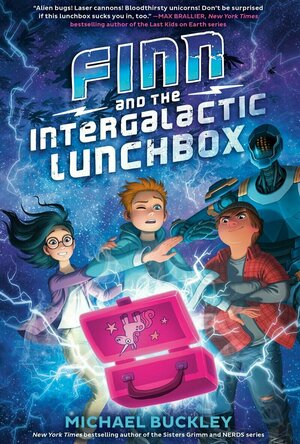
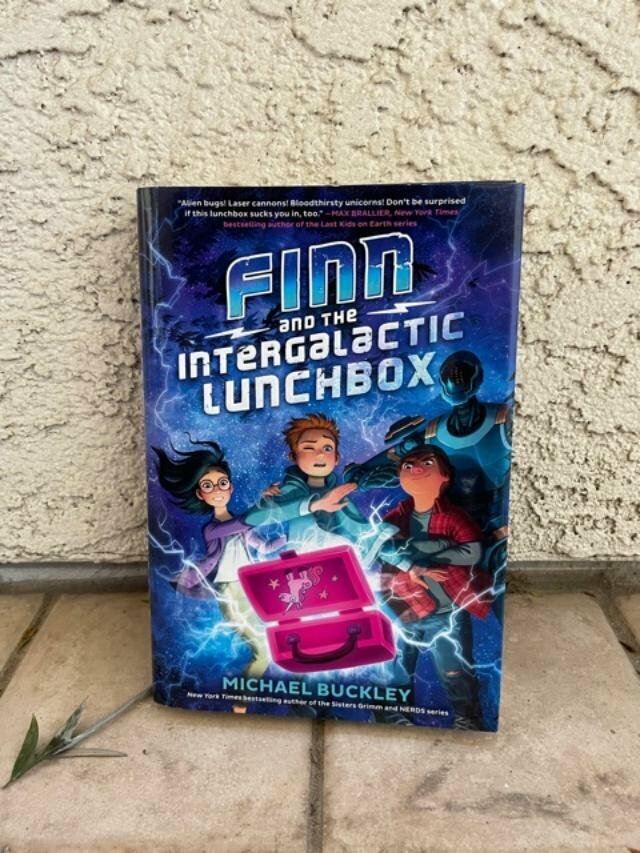
Finn is a typical almost twelve-year-old. He’s got a younger sister who annoys him, he’s struggling to make friends at his new school, he’s being picked on by a bully, and he has a crush on a classmate. His life changes when he accidentally takes his sister’s lunchbox to school one day. When it starts to glow, he discovers that it’s become a portal to another part of our galaxy. On, and this portal is the key to a battle against a race called The Plague that destroys planets. With The Plague now looking at Earth as their next target, Finn is going to have to come up with some kind of plan to save the world.
It’s been a few years since I picked up one of Michael Buckley’s books, so I was thrilled to see he had a new series out. As you might suspect from the description, this is a wild, fast-paced right that I found hard to put down. And I haven’t even mentioned the seven-foot-tall robot yet. I did feel it got a little too apocalyptic for me at times, but that’s a matter of personal taste. The characters are good, although the one that got the most development here was a cliché. The creativity that went into this book is outstanding with lots of details that are fun. Kids will eat this book up and be anxious for the next one when they are done.
It’s been a few years since I picked up one of Michael Buckley’s books, so I was thrilled to see he had a new series out. As you might suspect from the description, this is a wild, fast-paced right that I found hard to put down. And I haven’t even mentioned the seven-foot-tall robot yet. I did feel it got a little too apocalyptic for me at times, but that’s a matter of personal taste. The characters are good, although the one that got the most development here was a cliché. The creativity that went into this book is outstanding with lots of details that are fun. Kids will eat this book up and be anxious for the next one when they are done.

Christine A. (965 KP) rated The Night Swim: A Novel in Books
Aug 4, 2020
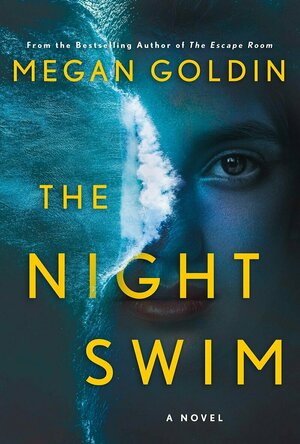
I was provided with a complimentary copy of this book so I could give an honest review. The opinions are entirely my own, and any quotes are taken from the ARC and may be different in the final published copy.
Having worked in the criminal court system for years, I was looking forward to The Night Swim by Megan Goldin. The premise that you follow along with a podcast to reach your own verdict of a current and controversial trial sounded intriguing. I found myself angry by the main character's obvious slant on her podcast. If her role was to present an unbiased reporting of the events in court, she failed at her job. Her reporting of the case proceedings and the investigation taken are accurate, detailed, and complete. Goldin successfully captures the emotions involved in sensitive cases such as the one podcaster Rachel Krall covers for the third season of her podcast, Guilty or Not Guilty.
Goldin's story of the trial, the people involved, and the overlapping, interconnected tale from the past are woven into a clever novel narrated by Bailey Carr, January LaVoy, and Samantha Desz. All three narrators are accomplished voice actors. LaVoy narrated books by Patterson, Deaver, Grisham, and Goldin's New York Times Bestseller, The Escape Room.
The narrators' voices matched the story well, but the speed in which they spoke was too slow for me, and I listened to the story at a faster rate.
This 200-word review was published on Philomathinphila.com on 8/3/20.
Having worked in the criminal court system for years, I was looking forward to The Night Swim by Megan Goldin. The premise that you follow along with a podcast to reach your own verdict of a current and controversial trial sounded intriguing. I found myself angry by the main character's obvious slant on her podcast. If her role was to present an unbiased reporting of the events in court, she failed at her job. Her reporting of the case proceedings and the investigation taken are accurate, detailed, and complete. Goldin successfully captures the emotions involved in sensitive cases such as the one podcaster Rachel Krall covers for the third season of her podcast, Guilty or Not Guilty.
Goldin's story of the trial, the people involved, and the overlapping, interconnected tale from the past are woven into a clever novel narrated by Bailey Carr, January LaVoy, and Samantha Desz. All three narrators are accomplished voice actors. LaVoy narrated books by Patterson, Deaver, Grisham, and Goldin's New York Times Bestseller, The Escape Room.
The narrators' voices matched the story well, but the speed in which they spoke was too slow for me, and I listened to the story at a faster rate.
This 200-word review was published on Philomathinphila.com on 8/3/20.
Merissa (14188 KP) rated Fire in the Rain (Wraidd Elfennol #4) in Books
Aug 27, 2020
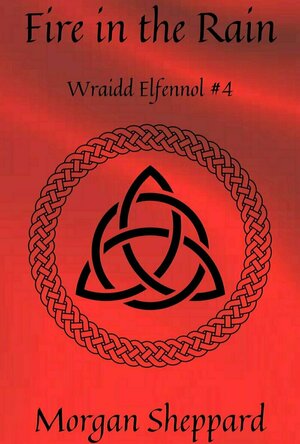
Fire in the Rain is the fourth and final book in the Wraidd Elfennol series and brings this fantastical series to a fitting end.
Afon and Necia are a married couple, which makes a nice change, who have been together for five years. They are both Chosen to bring back the balance once more although Necia copes with it easier than Afon does.
Just the same as with Of Land and Sky, time has moved on and we meet the great-grandchildren of Bran and Shyla, Rhosyn and Opal. I love how past characters are brought into the story whilst each story stands by itself, although I would recommend reading them as a series as there is an overall story arc.
This book has a faster pace than the others but it is just as nail-biting in places. Packed full of emotions, this story deals with self-confidence and self-worth as well as other subjects.
This has been a full-on fantasy series that I have thoroughly enjoyed and highly recommend to all fantasy lovers, especially if you have a love of Welsh mythology.
"The one thing that always remained true, no matter what other change occurred, was the love to be found within the silence of beats of the heart of Wraidd Elfennol."
* A copy of this book was provided to me with no requirements for a review. I voluntarily read this book, and the comments here are my honest opinion. *
Merissa
Archaeolibrarian - I Dig Good Books!
Afon and Necia are a married couple, which makes a nice change, who have been together for five years. They are both Chosen to bring back the balance once more although Necia copes with it easier than Afon does.
Just the same as with Of Land and Sky, time has moved on and we meet the great-grandchildren of Bran and Shyla, Rhosyn and Opal. I love how past characters are brought into the story whilst each story stands by itself, although I would recommend reading them as a series as there is an overall story arc.
This book has a faster pace than the others but it is just as nail-biting in places. Packed full of emotions, this story deals with self-confidence and self-worth as well as other subjects.
This has been a full-on fantasy series that I have thoroughly enjoyed and highly recommend to all fantasy lovers, especially if you have a love of Welsh mythology.
"The one thing that always remained true, no matter what other change occurred, was the love to be found within the silence of beats of the heart of Wraidd Elfennol."
* A copy of this book was provided to me with no requirements for a review. I voluntarily read this book, and the comments here are my honest opinion. *
Merissa
Archaeolibrarian - I Dig Good Books!

Phil Leader (619 KP) rated The Magicians' Guild (Black Magician Trilogy, #1) in Books
Nov 20, 2019
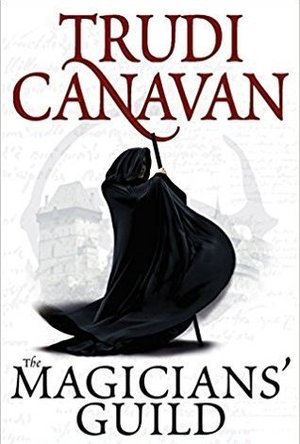
Trudi Canavan has been on my 'to read' list for a long time (far too long really). I finally found the time to read The Magicians' Guild - book one of the Black Magician trilogy.
The story revolves around Sonea, a girl living amongst the poor and near-poor of Imardin. The city is home to the titular guild, where the greatest magicians in the world learn and teach.
Those showing magical talent only come from the ruling classes. But Sonea has magical talent so the guild need to either break tradition and train her or block her powers as unless she is trained they will unleash themselves and kill her. The problem is that Sonea (along with the rest of the less privileged city dwellers) distrusts and fears the guild.
The book is in two parts - the first involves Sonea hiding from the guild and their attempts to find her. This is quite a clever strategy from a story telling point of view since the world and characters can be gradually introduced. We meet Sonea and her friends, and also the Thieves that control the slums. On the magicians' side we find some are sympathetic towards Sonea while others are outraged at the thought of training a slum girl - some for more personal reasons than others.
The second half involves Sonea's initial training at the guild. I do try not to give away major plot direction in these reviews, but I don't think it's much of a spoiler that she does end up in the guild, given the name of the book. In this part we find out more about magic and the guild, plus the plot that forms the core of this book moves forward and is resolved in a satisfactory - and dramatic - style.
Canavan's writing is focused firmly on character, although the world around them is fully realised, with the slums suitably dingy and grubby and the guild grand and opulent. The characters are allowed to develop through the pages. I found the start a little slow going, but I think that was mostly because the previous book I read was for more action based. There is also very little dramatic tension about Sonea ending up in the guild, but I don't think that is the purpose of the first half of the book anyway.
This story is clearly there to set up the characters for the trilogy as a whole - and as the plot progresses Sonea discovers some things that are clearly going to be important in her future. The way the ending is left is therefore very finely balanced between the resolution of the main plot and leaving the threads for the next book, and Canavan is spot on in delivering this.
Overall I really liked this book and will read the other installments as time allows without hesitation. If you are looking for some brutal anti-hero cutting a swathe of destruction through his enemies this is not the book for you. If you want some careful characterisation and a personality driven and human-scale plot, pick up this book. It is also refreshing to have a female main protagonist in the traditionally macho world of fantasy. Recommended.
The story revolves around Sonea, a girl living amongst the poor and near-poor of Imardin. The city is home to the titular guild, where the greatest magicians in the world learn and teach.
Those showing magical talent only come from the ruling classes. But Sonea has magical talent so the guild need to either break tradition and train her or block her powers as unless she is trained they will unleash themselves and kill her. The problem is that Sonea (along with the rest of the less privileged city dwellers) distrusts and fears the guild.
The book is in two parts - the first involves Sonea hiding from the guild and their attempts to find her. This is quite a clever strategy from a story telling point of view since the world and characters can be gradually introduced. We meet Sonea and her friends, and also the Thieves that control the slums. On the magicians' side we find some are sympathetic towards Sonea while others are outraged at the thought of training a slum girl - some for more personal reasons than others.
The second half involves Sonea's initial training at the guild. I do try not to give away major plot direction in these reviews, but I don't think it's much of a spoiler that she does end up in the guild, given the name of the book. In this part we find out more about magic and the guild, plus the plot that forms the core of this book moves forward and is resolved in a satisfactory - and dramatic - style.
Canavan's writing is focused firmly on character, although the world around them is fully realised, with the slums suitably dingy and grubby and the guild grand and opulent. The characters are allowed to develop through the pages. I found the start a little slow going, but I think that was mostly because the previous book I read was for more action based. There is also very little dramatic tension about Sonea ending up in the guild, but I don't think that is the purpose of the first half of the book anyway.
This story is clearly there to set up the characters for the trilogy as a whole - and as the plot progresses Sonea discovers some things that are clearly going to be important in her future. The way the ending is left is therefore very finely balanced between the resolution of the main plot and leaving the threads for the next book, and Canavan is spot on in delivering this.
Overall I really liked this book and will read the other installments as time allows without hesitation. If you are looking for some brutal anti-hero cutting a swathe of destruction through his enemies this is not the book for you. If you want some careful characterisation and a personality driven and human-scale plot, pick up this book. It is also refreshing to have a female main protagonist in the traditionally macho world of fantasy. Recommended.