
Rachel King (13 KP) rated Redemption in Books
Feb 11, 2019


One of the first things I noticed about the main character of Jane Perry is both her seemingly-abrasive personality, complete with a foul mouth, and her battle with alcoholism. Throughout the book, her strong personality is both her greatest strength and her biggest weakness. Her daily battle to remain sober - pushing six months - is also a prominent theme, complete with AA meetings, sobriety chips, and the 12-step program. I found these details interesting from the educational standpoint, since I have known a few alcoholics, both recovering and not, but nothing about the process of recovery from this horrible addiction.
The woman that hires Jane Perry, Katherine Clark (better known as Kit), is in many ways the very opposite of Jane. A woman in her 60's, she describes her personality as that of an "earth mother". Dealing with stage 4 cancer, she is a strict adherent of New Age philosophies and herbal medicine to treat both her cancer and her particular brand of spirituality. In addition, several of the plot's "bad guys" were followers of a particular sect of Fundamentalist Christianity that Kit spends an overt amount of time condemning, despite her many lectures of tolerance, love, and forgiveness. This in turn incites Jane to regularly mock Fundamentalist Christianity by proxy.
While I realize that radicals of any religion are easy fodder for mainstream literature, the personal beliefs of the author completely overpower the actual plot of the book. It is patently obvious that Dewey is a major supporter of all things New Age, with a penchant for Buddhism, and is completely against a literal translation of the Bible. As I have said in previous reviews, a good author is invisible to the reader, but in this book, the author often felt more present in the plot than the actual characters the book was intended to be about - some sort of amalgamation of Jane and Kit. Despite the good intentions that I am sure Dewey harbors in writing in this fashion, I became rather depressed by the end of the book by the over-saturation of Dewey's agenda of New Ageism versus Christianity, as the book became less and less about the heroics of Jane Perry and more about the beliefs of Laurel Dewey.
While I acknowledge that I do not agree with everything within the particular doctrines of the character of Dr. John Bartosh, I do consider myself a Fundamentalist Christian, a person who believes in both the literal and figurative translation of the Bible. For the author to expect me, the reader, to not even be slightly offended by the condemnation and open mockery of what I consider to be the foundation of my morality and how I live my life on a daily basis is both presumptuous and insensitive.
Despite this, the book was well-written from a literary approach, with unique characters, an unpredictable plot, and no loose ends.
Collins-Robert Concise French Dictionary
Reference and Education
App
57,000 headwords and more than 190,000 translations • more than 90,000 phrases • full...
Aeschylus I: The Persians, Seven Against Thebes, the Suppliant Maidens, Prometheus Bound
Glenn W. Most, David Grene, Richmond Lattimore and Mark Griffith
Book
Sixty years ago, the University of Chicago Press undertook a momentous project: a new translation of...
Euripides I: Alcestis, Medea, the Children of Heracles, Hippolytus
Glenn W. Most, David Grene, Richmond Lattimore and Mark Griffith
Book
Sixty years ago, the University of Chicago Press undertook a momentous project: a new translation of...
Euripides III: Heracles, the Trojan Women, Iphigenia Among the Taurians, Ion
Glenn W. Most, David Grene, Richmond Lattimore and Mark Griffith
Book
Sixty years ago, the University of Chicago Press undertook a momentous project: a new translation of...
Euripides IV: Helen, the Phoenician Women, Orestes
Glenn W. Most, David Grene, Richmond Lattimore and Mark Griffith
Book
Sixty years ago, the University of Chicago Press undertook a momentous project: a new translation of...

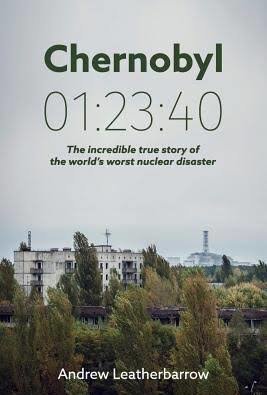


In between chapters, the narrator simultaneously includes his own first-person account of his visit to Chernobyl and the neighbouring ghost town of Pripyat, some 32 years after the fallout which killed, injured and displaced so many people in the Ukraine.
Included in the text are photographs of the sarcophagus, the ghost town of Pripyat and documentation from the official enquiry (in translation from the original Cyrillic text). One of the most enthralling chapters is a very stomach-churning, matter-of-fact detail of what actually happens to a human body when affected by radiation poisoning. This chapter is seriously not for the faint-hearted!!
Leatherbarrow has done an absolutely fantastic job here, over 5 years of research to build an account of something I have heard of all my life but no writing has quite enthralled me like this book did. The juxtaposition of the historical and the modern help to transform this text from the dryly historical account that it could have been into a thoroughly readable and dare I say unputdownable account of one the the worlds biggest nuclear disasters.

Patricia Johanson and the Re-Invention of Public Environmental Art, 1958-2010
Book
Impeccably researched and richly detailed, this book addresses the issue of translation between...
Steppenwolf
Hermann Hesse and David Horrocks
Book
A modernist work of profound wisdom that continues to enthral readers with its subtle blend of...