
Search
Search results

Passion Wears Pearls (The Jaded Gentlemen, #4)
Book
After the darkness of a dungeon in India, artist Josiah Hastings dreamt of returning to a world lush...

Bob Mann (459 KP) rated Lion (2016) in Movies
Sep 29, 2021



Lost in Train-station.
As January progresses, the quality Oscar films just keep on coming! India’s vibrant and teeming tapestry of life is a natural gift for film-makers, without a word needing to be spoken, and director Garth Davis – in an impressive feature film debut – utilizes that backdrop to the max.
In a true life story, five-year-old Saroo (Sunny Pawar, in an astonishingly adept child performance) is accidentally separated from his family in the Madhya Pradesh region of Western India and goes on a journey by train of hundreds of miles to Calcutta: a city full of people who don’t even speak his language.
Lost, alone and facing the perils of a street child in a dangerous city, Saroo is eventually adopted by a kindly Australian couple (played by Nicole Kidman (“Before I Go To Sleep“) and David Wenham (Faramir in “The Lord of the Rings”)).
Growing up in a comfortable, loving, but not – ultimately – idyllic home environment, Saroo (now Dev Patel, “The Best Exotic Marigold Hotel”) grows up and in his late teens goes to Melbourne University to study Hotel Management (Dev Patel? Hotel Management? What were the odds?!). While there, memories of the past resurface and an obsessive need to trace his Indian origins takes hold, disrupting both his career plans and his relationship with the love of his life Lucy (Rooney Mara, “Carol“). But with a remembered home-town name that doesn’t exist, only hazy memories of the train station he departed from, and thousands and thousands of train stations across India, how could he ever succeed?
India is enormously photogenic and cinematographer Greig Fraser (“Rogue One“, “Foxcatcher“) takes the maximum advantage of that with some memorable and dramatic landscapes: work that has been Oscar nominated. Also Oscar nominated and contributing strongly to the look and feel of the film is a well-judged and effectively used piano score by Volker Bertelmann and Dustin O’Halloran.
In the acting stakes, Dev Patel gives his best ever performance and his Oscar nomination – curiously for Best Supporting actor since, I presume, Sunny Pawar has the most screen time – is very well deserved. A moving performance, particularly at the tearful end of the movie, for which a box of tissues is recommended.
Nicole Kidman, not an actress I have ever hugely warmed to, is excellent here as the fragile adoptive mother, despite having to sport a crazy red curly wig. Another Oscar nomination.
Also worthy of note is young Abhishek Bharate as Saroo’s brother Guddu: the touching chemistry between the thieving young rascals at the start of the movie grounds the whole family relationship that’s sets up the emotional heart of the subsequent quest.
Luke Davies’ adapted screenplay is also Oscar nominated, although perhaps not as deserving to win as some of the other nominees. I would (naively perhaps) assume that adapting a screenplay from a true-life story must be an easier task, since the facts have to speak for themselves. But besides that, while the first half of the film, with the scenes in India, is exceptionally good, the Australian section became a more patchy with the motivations of Saroo’s actions and the impact they have on his adoptive family not feeling completely fleshed out.
While I’m sure being a street urchin in Calcutta in the mid-80’s was a horribly difficult and perilous existence, the screenplay paints the sense that that almost EVERY male in the city is either a pedophile or hopelessly corrupt: something that if I was a Calcutta resident I would likely take offence to.
However, this is a hugely involving and enjoyable movie, and a “Best Film” rounds off the impressive haul of six Oscar nominations. You might be cynical and view the subject matter as being comfortable Oscar-bait… but you can hardly argue about the absolute quality of the film-making on show here.
By the way, if you are curious as to where the title of the film comes from, you need to wait until the end titles: a masterly touch that I really liked!
The end titles also lay out the fact that the perils of street kids in India is still real and present, and the film is supporting charitable work to help. If you were moved by the film (as I was) you can make a donation at http://lionmovie.com (as I did)!
Highly recommended.
In a true life story, five-year-old Saroo (Sunny Pawar, in an astonishingly adept child performance) is accidentally separated from his family in the Madhya Pradesh region of Western India and goes on a journey by train of hundreds of miles to Calcutta: a city full of people who don’t even speak his language.
Lost, alone and facing the perils of a street child in a dangerous city, Saroo is eventually adopted by a kindly Australian couple (played by Nicole Kidman (“Before I Go To Sleep“) and David Wenham (Faramir in “The Lord of the Rings”)).
Growing up in a comfortable, loving, but not – ultimately – idyllic home environment, Saroo (now Dev Patel, “The Best Exotic Marigold Hotel”) grows up and in his late teens goes to Melbourne University to study Hotel Management (Dev Patel? Hotel Management? What were the odds?!). While there, memories of the past resurface and an obsessive need to trace his Indian origins takes hold, disrupting both his career plans and his relationship with the love of his life Lucy (Rooney Mara, “Carol“). But with a remembered home-town name that doesn’t exist, only hazy memories of the train station he departed from, and thousands and thousands of train stations across India, how could he ever succeed?
India is enormously photogenic and cinematographer Greig Fraser (“Rogue One“, “Foxcatcher“) takes the maximum advantage of that with some memorable and dramatic landscapes: work that has been Oscar nominated. Also Oscar nominated and contributing strongly to the look and feel of the film is a well-judged and effectively used piano score by Volker Bertelmann and Dustin O’Halloran.
In the acting stakes, Dev Patel gives his best ever performance and his Oscar nomination – curiously for Best Supporting actor since, I presume, Sunny Pawar has the most screen time – is very well deserved. A moving performance, particularly at the tearful end of the movie, for which a box of tissues is recommended.
Nicole Kidman, not an actress I have ever hugely warmed to, is excellent here as the fragile adoptive mother, despite having to sport a crazy red curly wig. Another Oscar nomination.
Also worthy of note is young Abhishek Bharate as Saroo’s brother Guddu: the touching chemistry between the thieving young rascals at the start of the movie grounds the whole family relationship that’s sets up the emotional heart of the subsequent quest.
Luke Davies’ adapted screenplay is also Oscar nominated, although perhaps not as deserving to win as some of the other nominees. I would (naively perhaps) assume that adapting a screenplay from a true-life story must be an easier task, since the facts have to speak for themselves. But besides that, while the first half of the film, with the scenes in India, is exceptionally good, the Australian section became a more patchy with the motivations of Saroo’s actions and the impact they have on his adoptive family not feeling completely fleshed out.
While I’m sure being a street urchin in Calcutta in the mid-80’s was a horribly difficult and perilous existence, the screenplay paints the sense that that almost EVERY male in the city is either a pedophile or hopelessly corrupt: something that if I was a Calcutta resident I would likely take offence to.
However, this is a hugely involving and enjoyable movie, and a “Best Film” rounds off the impressive haul of six Oscar nominations. You might be cynical and view the subject matter as being comfortable Oscar-bait… but you can hardly argue about the absolute quality of the film-making on show here.
By the way, if you are curious as to where the title of the film comes from, you need to wait until the end titles: a masterly touch that I really liked!
The end titles also lay out the fact that the perils of street kids in India is still real and present, and the film is supporting charitable work to help. If you were moved by the film (as I was) you can make a donation at http://lionmovie.com (as I did)!
Highly recommended.


Happy Deepavali Diwali Greeting Cards Wish
Lifestyle and Social Networking
App
Celebrate the Festivals of lights and express your love to your loved ones by using and sending...

Suswatibasu (1703 KP) rated The Inheritance of Loss in Books
Jul 29, 2017
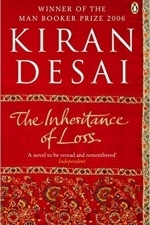
The tragic consequences of colonialism and class
Kiran Desai's vivid writing of the northern mountainous regions of Kalimpong was well captured in this desperate novel of the aftermath of British colonialism and the caste system in India.
The events are quite accurate as my own family who resided there during this time can substantiate. The violence that ensued the nation following independence was one of many tragic consequences of a country attempting to repair itself after massive divisions were sown.
At the same time, the experiences of an immigrant abroad is a good reflection of how imperialism allowed people to make the journey while still being treated as a second class citizen.
The story itself surrounding a small community of elites in the northern regions is interesting as many of them attempt to face their own demons and find an identity. Poignant, quite long, and well written.
The events are quite accurate as my own family who resided there during this time can substantiate. The violence that ensued the nation following independence was one of many tragic consequences of a country attempting to repair itself after massive divisions were sown.
At the same time, the experiences of an immigrant abroad is a good reflection of how imperialism allowed people to make the journey while still being treated as a second class citizen.
The story itself surrounding a small community of elites in the northern regions is interesting as many of them attempt to face their own demons and find an identity. Poignant, quite long, and well written.

Aasiyah Sidat (34 KP) rated If you look for me, I am not here in Books
Jul 6, 2018


micro-presses are small publishing houses with usually with a very small number of people. They don't have all the bells and whistles of the giant publishing houses but, these smaller publishing houses have an eye for finding the diamonds in the rough.
This book was more of a cubic zirconia than a diamond but still very shiny.
Let me explain.
This book tells the story of Siva, a small boy growing up in southern India who craves for the love and attention of his mother. Alas, she is unable to because she is mourning the loss of Siva's twin, Tara who dies at birth. Throughout the book, Siva struggles with his identity, to try and find a place where he fits in but also who he can be so that his mum loves him.
Continue reading my review at: https://www.readsandrecipes.co.uk/2017/09/read-harder-micropress.html
This book was more of a cubic zirconia than a diamond but still very shiny.
Let me explain.
This book tells the story of Siva, a small boy growing up in southern India who craves for the love and attention of his mother. Alas, she is unable to because she is mourning the loss of Siva's twin, Tara who dies at birth. Throughout the book, Siva struggles with his identity, to try and find a place where he fits in but also who he can be so that his mum loves him.
Continue reading my review at: https://www.readsandrecipes.co.uk/2017/09/read-harder-micropress.html

MissCagey (2652 KP) rated Victoria and Abdul (2017) in Movies
Jan 25, 2019
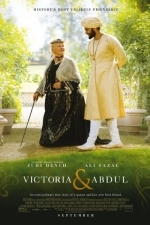

Judi Dench is of course faultless as the acerbic Queen Victoria. This (mainly) true story is about the Queen's friendship with Abdul, an Indian muslim. I was taken aback at what would have been considered open mindedness at the time and this was refreshing to see, this redeemed her in my eyes as she appears to have been generally quite rude otherwise (I'm guessing you're allowed to be when you're queen!). This was compared to the out and out racism and disgust shown by her staff. These parts were difficult and upsetting to watch.
Their friendship was very sweet although when Abdul was found to have lied about a mutiny in India the film does not explain whether he deliberately lied or was mistaken.
This film prompted me to research the relationship further and it is general consensus that Abdul was an opportunistic and rather dislikable man!
Their friendship was very sweet although when Abdul was found to have lied about a mutiny in India the film does not explain whether he deliberately lied or was mistaken.
This film prompted me to research the relationship further and it is general consensus that Abdul was an opportunistic and rather dislikable man!

Awix (3310 KP) rated Indiana Jones and the Temple of Doom (1984) in Movies
Apr 11, 2020
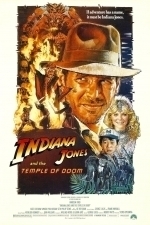
Action-adventure sequel from Lucas and Spielberg. Indiana Jones and his friends find themselves in India where they discover an ancient cult with plans on world domination.
Not quite the perfect, gleaming classic that the first film is, nor as much fun as the third, but if you want a knockabout adventure film that goes boom-boom-boom from one classic set-piece to the next virtually non-stop, then you could do very much worse than this. Watching closely you can tell there's a chunk in the middle where a subplot has been cut to keep up the pace and shorten the film, but apart from this it's a virtually perfect thrill-ride: not as subtle, thoughtful, or textured as Raiders, but then I'm not sure it was ever supposed to be. Still very reliable comfort viewing for those of us who grew up in the 80s.
Not quite the perfect, gleaming classic that the first film is, nor as much fun as the third, but if you want a knockabout adventure film that goes boom-boom-boom from one classic set-piece to the next virtually non-stop, then you could do very much worse than this. Watching closely you can tell there's a chunk in the middle where a subplot has been cut to keep up the pace and shorten the film, but apart from this it's a virtually perfect thrill-ride: not as subtle, thoughtful, or textured as Raiders, but then I'm not sure it was ever supposed to be. Still very reliable comfort viewing for those of us who grew up in the 80s.
The Messenger: The World War 1 Diary of a Wireless Operator Compiled and Edited by Russell Early
Book
Oswald S. Early was a First World War wireless operator with the 1/9th Battalion Territorial Force...

Wellington
Book
The archetype of the stern, silent Englishman dedicated to his duty, the Duke of Wellington had all...