

Lucy Buglass (45 KP) rated Bohemian Rhapsody (2018) in Movies
Jun 20, 2019
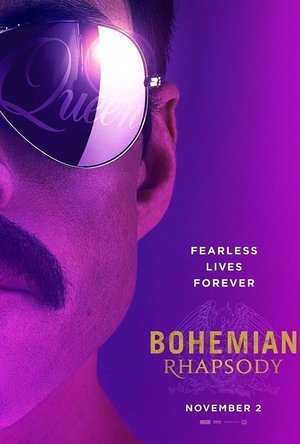

Rami Malek was an excellent choice to portray Freddie, to the point where I found myself believing I was watching the man himself. His stage presence especially was spot on and the live performances were simply stunning to watch, especially with surround sound. I felt transported, part of the crowd, and it was such a special moment to share with the rest of the cinema. We become part of different times and places in a matter of minutes, giving you an idea of just how globally successful and adored Queen were. Despite the film’s main focus being Freddie, the supporting roles of the rest of the band were fantastic too, and I have so much praise for Gwilym Lee, Ben Hardy and Joseph Mazzello for their performances.
Freddie dealt with a lot of discrimination during his career, particularly due to his race, sexuality and flamboyant personality. The film chose to portray these issues honestly, because pretending they didn’t exist would be an insult. When Freddie first starts performing with the rest of Queen, he’s greeted with questions such as “Who’s the P***?”, which for a modern audience is a terrible racial slur that I don’t even feel comfortable writing here. But for a Indian-British Parsi musician performing to a largely white audience in the ’70s, this word would have been used a lot. I feel it was important for the filmmakers to shed light on this as it provides context into Freddie’s upbringing and life that some may not have known about, including his real name: Farrokh Bulsara.
In terms of his sexuality, the film uses the role of the press to exploit and make a big deal about his personal relationships. The press conference scene was particularly uncomfortable as he’s bombarded with inappropriate questions instead of focusing on Queen and their music. He was constantly criticised in papers and magazines for simply being himself, and that’s a heartbreaking truth that Bohemian Rhapsody really hammers home. His long-term relationship with Mary Austin is also focused on throughout, and how that broke down but they still remained in touch. It’s a complex part of his life that the film does well to explore in just over 2 hours.
It’s not all bleak, and although these dark truths are explored, the film is fundamentally a celebration of Freddie’s life and extraordinary talent. Several Queen songs are present throughout the film and we even see the writing process behind some of them, my favourite being the creation of We Will Rock You in which they wanted the audience to play along with them through stomps and claps. The birth of Bohemian Rhapsody is comical in nature and received a lot of backlash at the time, but as we know, has since gone on to become an iconic song we all know the lyrics to.
Even in Freddie’s final days, after he was diagnosed with AIDS, the film encourages us to celebrate their music and make the most of the time Freddie has left, which is exactly what he himself wanted to do. I can’t think of a more respectful and considerate way to show it than that.
I could probably write an entire essay about just how much I thought Bohemian Rhapsody got right, but hopefully I’ve managed to condense my thoughts somewhat. This is a film you simply must experience for yourself, at least once.
https://lucygoestohollywood.com/2018/11/14/bohemian-rhapsody-an-honest-captivating-and-respectful-biopic/

Simple Home Health Exercises: Easy fitness workout
Health & Fitness and Photo & Video
App
Home exercises will give you simple and easy fitness workouts videos which you can try at home. We...

Tracks4Africa Guide
Reference and Travel
App
Welcome to the most detailed travel guide for overland travel in Africa. This offline app offers a...

Ultimate Teen Patti — UTP
Games
App
Teen Patti is the most thrilling card game and Ultimate Teen Patti is the number one Teen Patti app...


FreshMenu: Food Ordering App
Food & Drink
App
Craving for a meal without the hassles of cooking or stepping out? The FreshMenu food delivery app...

Talabat: Food Delivery
Food & Drink and Lifestyle
App
Hungry? The biggest Online Food Delivery App is Now in Your Pocket! Ordering food online made...

RəX Regent (349 KP) rated The Big Trail (1930) in Movies
Feb 19, 2019

And The Big Trail is where it really begins for Wayne, but this 1930’s classic was a box office failure, coming not only at the dawn of sound film, but at the time of The Great Depression. It would be another decade by the time “The Duke” wold be born and John Wayne would take his crown as the western superstar which we all know today.
But The Big Trail, originally entitled The Oregon Trail, is not really a John Wayne vehicle. He was a relative unknown actor alongside stage talent, many of whom were drafted into Hollywood at this time simply because they could give a decent vocal performance, as many a silent star was falling, failing to adapt the talkies.
But again, sound is not the selling point of this movie. This was one of a handful of films which pioneered the 70mm film format, in this case, Fox Grandeur, or Grandeur 70. A none anamorphic widescreen format, which whilst not the first attempt, nor the first 70mm film format, it was the nearest to which would succeed later.
2oth Century Fox would change cinema in 1953 with the release of the first CinemaScope film, The Robe, a year after the debut of Cinerama, but Grandeur more closest resembles Todd AO, a format which is still technically used today though in a somewhat different way. The secret to CinemaScope’s later success was in many ways the reason for the failure of Grandeur and that was the fact that CinemaScope was an anamorphic process, screening the image from a regular 35mm film and expanding with the lens, therefore making it a lot cheaper to adapt existing projectors and auditoriums.
Grandeur on the other hand was a larger film format and required a complete upgrade to theatres and therefore, especially at the dawn of the depression era, was financially untenable. Only two theatres in the U.S. would ever show this film in its widescreen glory, with rest showing the alternate 35mm Academy version.
And this film, had SIX versions shot simultaneously, in four different languages, 35mm and 70mm, each requiring different takes with different cameras or casts. This was an incredible feet but one which would soon be reduced with the use of audio dubbing, subtitles and ability to pan and scan.
The problem with this film is simple. It has a loose plot but no real twists and turns. This is almost a documentary following the wagon train trail across the west as group of pioneers make their way to the better life and building the United States, or at least personifying the romantic version of it.
But the film’s pacing and visual style works best through the widescreen lens, a beautiful journey with the untamed west as backdrop, but this is not the the version that most people have seen. The majority only saw the 35mm version which is 20 minutes shorter, edited more quickly and simply doesn’t have the visual flare of the Grandeur version. And without this vast visual canvas, the thousands of extras and props are almost cut from the film, a film with now feels a bit pointless and bit wayward.
Starring an unknown, though despite his hammy acting, Wayne manages to hold his own, the pacing is rushed and the fact that this is an epic journey which we are embarking on with them is somewhat lost.
The widescreen version’s main failing is the sound, which is inferior and poorly mixed in comparison to the 35mm cut, which is crisper and louder, but sound was never going to this movie’s strength and it was still rudimentary at this point. But on a visual level, considering the age of the print, the cinematography is up there as being some of the best, with scale and dare I say, “grandeur” about it.
This is an interesting film to watch now, though unless you are a strong western fan, I would say that it will not thrill, though as a peace of cinematic history, it is littered with footnotes and it very watchable.
Learning from Delhi: Dispersed Initiatives in Changing Urban Landscapes
Maurice Mitchell, Bo Tang and Shamoon Patwari
Book
The inflexibility of modern urban planning, which seeks to determine the activities of urban...

Bob Mann (459 KP) rated The Magnificent Seven (2016) in Movies
Sep 29, 2021
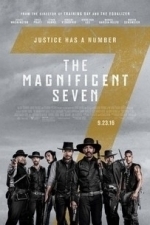
Possibly on the basis that Trump has been given the Mexican’s a good bashing lately, the villain of the piece in this film is updated from Mexican bandit Calvera to Sacremento based land-snatcher and all round bad-egg Bartholomew Bogue (an expressionless Peter Sarsgaard). After ripping through some of the inhabitants of Rose Creek in a brutal pre-title sequence, widowed sharp-shooter Emma Cullen (Haley Bennett, “The Equalizer”) heads into the West on a recruiting mission for hired guns. She first recruits the bounty hunter Chisholm (sing “Chisum, John Chisum…”… no, sorry different Western) played by Denzel Washington. Washington matches Yul Brynner’s famous black outfit, and unlike Brynner is obviously able to finish off the ensemble naturally!
They recruit another six (who’d have thought it?) including wise-guy gambler Faraday (Chris “Guardians of the Galaxy” Pratt); famed confederate sniper Goodnight Robicheaux (Ethan Hawke); his nifty knife throwing Asian sidekick (but good for the Far East box office) Billy Rocks (Bjung-hun Lee, from Terminator: Genisys); and religious bear-of-a-man Indian-hunter Jack Horne (Vincent D’Onofrio, “Jurassic World”). After trying to whip the incompetent townsfolk into shape, and setting some Home-Alone style surprises, the stage is set for a showdown as Bogue whips up an army to re-take “his” town.
I like classic Westerns, with John Ford’s Rio Bravo being a particular favourite. In my view the problem with many modern Westerns is that they try too hard to shock (Tarentino’s recent “Hateful 8” was a case in point: a promising start ruined by gratuitous over-the-top violence). “The Magnificent Seven” doesn’t make that mistake, and while the squib-master and blood-bag boy are heavily employed throughout, nothing is too excessive: in fact, my view – and I don’t often tend in this direction – is that the censors rather over-egged the UK 12A rating on this one and could have gone with a 12. Director Antoine Fuqua has produced a film that is highly respectful of its heritage: perhaps to the point where many scenes might be deemed to be clichéd. But I personally warmed to that.
Denzel Washington was born to be in a Western like this and the emerging Chris Pratt does his star potential no harm by turning in a stellar performance adding both levity – with some whip-sharp lines – and screen presence in the role made famous by Steve McQueen. (Although no one comes close to the screen presence of McQueen…. Look up “real man” in the dictionary and his picture is there!) Also effective is Ethan Hawke in the nearest thing to the Robert Vaughan character in this film.
Where the adapted script by Richard Wenk and Nik Pizzolatto falters somewhat is in the motivations of the characters, which come across as superficial and unconvincing. (Perhaps “selling” was a whole lot easier in the Old West?) It is even unclear at the end of the film whether the survivors (and I hate to be the bearer of bad news, but the seven don’t all make it!) actually take their payment, or even a “share of the gold” that the town is sitting on. It makes for an unsatisfactory closure. The degree of racial harmony present in the film is also difficult to buy into, and the script could have made something more of this.
The film soundtrack marks the swan-song of the late James Horner, so tragically killed in a plane crash last year at the age of just 61. As the natural successor to the great John Williams and the late Jerry Goldsmith, Horner’s loss was a terrible one. The film is dedicated to him. Although the soundtrack was completed by Simon Franglen, there are flourishes of classic Horner, most notably in the first Rose Creek showdown scene. There is also a treat to the ears over the closing credits which is very welcome.
Although the film draws natural comparison with its 5* classic predecessor, this is a good film in its own right – a genuinely pleasant surprise. Perhaps its done well enough that we might get to now see a remake of “The Return of the Seven”. I hope so… “the Western is dead… long live the Western”!