Search

Search only in certain items:

40x40

Mark @ Carstairs Considers (2603 KP) rated The Tell-Tale Tarte in Books

Apr 9, 2021 (Updated Apr 9, 2021)  
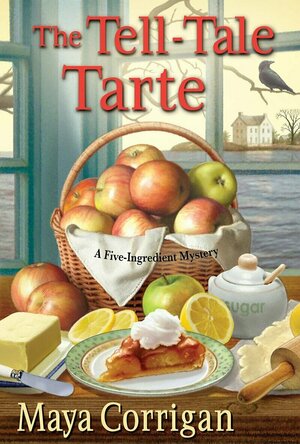
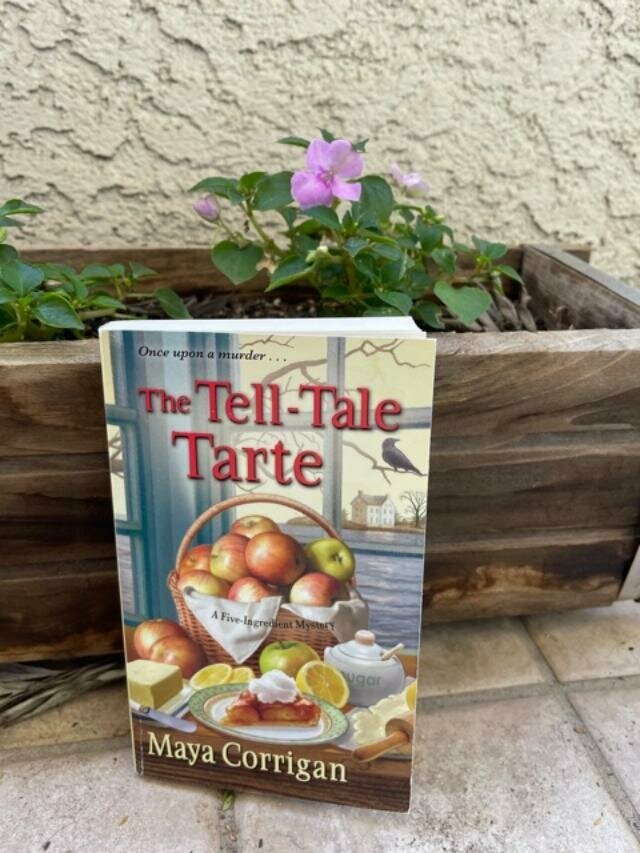
The Tell-Tale Tarte
The Tell-Tale Tarte
Maya Corrigan | 2021 | Mystery
8
8.0 (1 Ratings)
Book Rating
Impersonating Danger
A new year has started, and Val Deniston’s grandfather appears to be making some changes in his life. He’s updated his look, including a new haircut and new outfit. He claims it is for a new job he’s landed for his investigations business. Then Val is on the scene when a man dies at a nearby shopping center – a man who looks just like Grandfather does now thanks to his new look. The case soon points to Rick Usher, a local author who has made a career writing tales inspired by Edgar Allan Poe. Is Grandfather the next target of the killer? How does Rick play into the mystery?

I must confess, I know little about Poe (I feel like I should know more considering how much I love mysteries), but that wasn’t a hamper to enjoying this book. Poe lore is certainly a big part of the inspiration of the story, and bits and pieces of his life weave their way into the book. Even without that, we get a strong mystery with plenty of intrigue. I did feel the ending was a little weak, but it did wrap everything up. The characters are fun and continue to grow here. I’m especially interested to see where some of those relationships go in the future. We get six more five-ingredient recipes at the end. Whether you are a fan of Poe or not, this book will keep you guessing until the end.
  
La Dolce Vita  (1960)
La Dolce Vita (1960)
1960 | Comedy, Drama

"I’ve never been very fond of Fellini—too baroque for me. But La dolce vita is an amazing film, summing up an era, a culture, a city; in its own way it is of historical importance. Maybe it is the great Italian film of that period, in the same way that The Mother and the Whore, by Jean Eustache, is the ultimate nouvelle vague film made ten years later, by someone who had been a marginal figure of the movement, and embodying a city, a time, a culture now all gone. My admiration for Jean-Pierre Melville has only been growing through the years. He is a minimalist, like Bresson, but not so much in the sense of emptying the frame—it’s more about getting rid of a lot of the visible to replace it with the invisible. I haven’t been filming a lot of gangsters, but I can understand his fascination for both outlaws and cops, for their world haunted by betrayal and death. In Army of Shadows, he adapts a semi-autobiographical novel by Joseph Kessel and makes the ultimate film of the French Resistance. Both Kessel and Melville had been involved with the Free French, and here cinema meets history. A great artist carried by historical circumstances transcends not just his own inspiration but the medium. Army of Shadows is not only one of the most important French films, it is also a national treasure."

Source
  
Army of Shadows (L'Armée des ombres) (1969)
1969 | International, Drama
(0 Ratings)
Movie Favorite

"I’ve never been very fond of Fellini—too baroque for me. But La dolce vita is an amazing film, summing up an era, a culture, a city; in its own way it is of historical importance. Maybe it is the great Italian film of that period, in the same way that The Mother and the Whore, by Jean Eustache, is the ultimate nouvelle vague film made ten years later, by someone who had been a marginal figure of the movement, and embodying a city, a time, a culture now all gone. My admiration for Jean-Pierre Melville has only been growing through the years. He is a minimalist, like Bresson, but not so much in the sense of emptying the frame—it’s more about getting rid of a lot of the visible to replace it with the invisible. I haven’t been filming a lot of gangsters, but I can understand his fascination for both outlaws and cops, for their world haunted by betrayal and death. In Army of Shadows, he adapts a semi-autobiographical novel by Joseph Kessel and makes the ultimate film of the French Resistance. Both Kessel and Melville had been involved with the Free French, and here cinema meets history. A great artist carried by historical circumstances transcends not just his own inspiration but the medium. Army of Shadows is not only one of the most important French films, it is also a national treasure."

Source