Search

Search only in certain items:

40x40

Mayhawke (97 KP) rated I am No One in Books

Feb 13, 2018  
I am No One
I am No One
Patrick Flanery | 2017 | Fiction & Poetry
4
4.0 (1 Ratings)
Book Rating
Intriguing but ultimately disappointing
Written in the first person I Am No One is the account of recent events in the life of the fictional NY academic, Jeremy O'Keefe. O'Keefe, ironically an expert in surveillance, finds himself the subject of apparent scrutiny by unknown observers, a discovery that propels him into paranoia and pushes him to the boundaries of sanity. As the story is unpacked, page by page, it becomes clear that O'Keefe's paranoia is not unfounded, and that his initial confusion as to why anyone would want to bother observing the behaviour of a mundane and only moderately successful Professor actually belies a deeper understanding of the cause and his actions that precipitated it.

O'Keefe is a difficult character to really sympathise with. Whilst his ideology is admirably egalitarian he falls into that bracket of slightly stuffy, middle-class liberals who take themselves too seriously and fail to practise what they preach. In fairness to O'Keefe he largely has the grace and self-awareness to question the rationality of his fears and accidental moments of prejudice (though he is of the very typical male Liberal variety that doesn't seem to recognise the contradiction of professing himself feminist whilst watching porn): slightly pompous, slightly too much self-regard slightly too much sense of victimhood, he is not unlikeable just a bit of a non-entity. Whilst this is clearly intentional it makes his narrative stodgy. Not unreadable, but at the same time easy to put down for a week whilst a more engaging book is read. This is either a spectacularly adept piece of characterisation or an unfortunate reflection of the author, Patrick Flanery. I do hope it is the writing because if not then all the peculiar, inaccurate and unlikely observations made by O'Keefe onbehalf of his character regarding differences between the British and Americans are likely also Flanery's:. For example the breath-taking assertion that socio-economic failure is treated more harshly in the UK than in the US, when any basic knowledge of sociology in the two countries shows that the criteria for failure is a) much broader in the US and b) responded to far more harshly, e.g.: "if you don't earn enough from your three jobs to afford medical insurance to pay for your cancer treatment, you clearly haven't worked hard enough. The fault is yours , you are a failure and the punishment is premature death.". It is also difficult to accept that Flanery is regularly treated with distrust and dislike by bank cashiers for his Irish name. Quite aside from anything else most bank cashiers in this country now aren't old enough to remember the Irish troubles, and the bigots-for-bigotry's-sake have long since transferred their angst from the Irish to the Poles and the Muslims.

Flanery is also an academic, something that is abundantly obvious from the highly structured writing method he employs in this book. The reader is left with the impression that where other novelists write books to be read as stories Flanery has written a text with an eye to future deconstruction by English Lit students. That is not necessarily a bad thing, of course, but occasionally one wishes he could have been a little less concerned with construction in the minutiae and more concerned with crafting a story with a complete beginning, middle and end. And therein lies one of the greatest failings of this book: it has no real conclusion. Questions are raised that go unanswered. In particular, there are issues with characters, whose true identity may never be elaborated upon or, in the case of his girlfriend who makes a sudden, poorly explained behavioural volte-face that is entirely out of character but provides Flanery with a device to enable his protagonist take the critical closing step to the tale.

It seems that Flanery has written this book as a parable on the dangers of unfettered digital surveillance: how easy it is for those who wish to to access all our personal data and how very quickly and efficiently lives can be subverted. Whilst this may be a revelation to a few it has to be said that there is nothing revealed in this book about the scope and methods of data collection that anyone who has even a small amount of technical savvy won't already know, which rather undermines it as an expose. The book also attempts to portray how easy it is to suddenly and unintentionally find oneself on the wrong side of the law. Unfortunately in this story the actions which purport to have landed O'Keefe in possible criminality are so ridiculous and far-fetched that only the most paranoid would ever see an offence in them. Contrary to highlighting the ease with which the well intentioned can unwittingly find themselves in need of lawyers it suggests that all the peripheral characters are actually far more paranoid and delusional than O'Keefe will ever be.

All that aside this was an intriguing and mildly engaging story. Largely well-written but let down by a an unsatisfactory conclusion and a failure to induce the kind of fear that was intended.
  
The Mersey Girls
The Mersey Girls
Katie Flynn | 1994 | History & Politics, Romance, Young Adult (YA)
8
8.0 (1 Ratings)
Book Rating
The story is sweet, a nice escape from reality. (0 more)
It's abrupt end in my opinion. (0 more)
Soul Warming
Now, I don't want to spoil anything as I really hope other avid readers will have a read of this book.
One of the main characters in the beginning sort of, fizzles out which is a shame as, it was that character that started the story.
The chapters are so long and I like to stop at a chapter as it's a good stopping point but the whole 394 pages is split into a mere 13 chapters.
The book involves two sides that run concurrently quite well, similarities and differences are seen easily but the timeline is difficult to keep up with.
Although it's lovely that it includes some traditional Irish names, it's hard to read as someone who isn't familiar with them. I also had to google some words and phrases to just make sure I know what it is. For example: Clodagh is a name of a character and I am still not 100% how that is pronounced and what a curragh is.
The plot is very serene - meaning theres no massive things happening just lots of little ones. Not massive drama and although it is slightly romantic, it's quite bland in that, a love story is intruded and that's sort of it, it doesn't seem to cook up it goes from raw to cooked so to speak. The stories core plot is ended sweetly yet kind of anti-climactic. Made me smile but it wasn't as wonderful as I feel it could have been.
Despite this I found the read pleasant, certainly something someone should read if they are a fan of Historical Romances.
  
40x40

David McK (3649 KP) rated Excavation in Books

Jan 28, 2019  
E
Excavation
2
6.3 (3 Ratings)
Book Rating
I normally quite like James Rollins' novels, but this one? Not so much.

Although it is in his usual pseudo sci-fi style of writing which I have no problem with, I don't know whether the reason I wasn't really that sold on this one is due to the rather ridiculous (even for him) plot devices used, that fact that it's not one of his Sigma Force novels (best described as scientists with guns) and so lacks that over-reaching plot strands that connects all those novels, or (more likely) that he seems to share the common American misconception of my home town of Belfast as being (almost) a bombed out Beirout. Choice lines include:

"Surviving among the constant gunfire and bombings between the warring Irish factions and the British military had taught Maggie O'Donnell the vlaue of a good hiding place"

"Maggie knew that expression. A childhood friend ... had worn that same shocked face when caught by a stray bullet during a firefight back in Belfast"

"Henry crossed in front of the man and knocked the rifle towards Maggie. 'You know how to use that?' / 'I'm from Belfast' she said, retreiving the gun"

I mean, really? I could understand it a bit better if the book was set during the 70s, or if she was described as being older, but for somebody who I got the impression was meant to be in her 30s?

If this had been the first James Rollins book I had read I don't think I would have bothered with any others! Thankfully, I had the good fortune to read one of his far-superior Sigma Force novels first instead and hope that this is just a momentary blip on his track record - I also read somewhere that this is one of his earlier novels which, perhaps, excuses some of the flimsy plot devices used.
  
TL
The Lone Warrior (Jack Lark, #4)
10
10.0 (1 Ratings)
Book Rating
Fourth entry in [a: Paul Fraser Collard|7024929|Paul Fraser Collard|https://d.gr-assets.com/authors/1368086413p2/7024929.jpg]'s 'Jack Lark' series (that started with [b: The Scarlet Thief|18752323|The Scarlet Thief (Jack Lark, #1)|Paul Fraser Collard|https://d.gr-assets.com/books/1383577532s/18752323.jpg|24752025]), this sees Jack Lark caught up in the Indian Mutiny (or First War of Independence, depending upon your point of view!) of 1857, and is my pick for the best of the series so far.

The novel starts out pretty much as it means to go on, with Jack rescuing someone from her indentured lifestyle, then agreeing to accompany her home to Delhi, arriving just in time to get caught up in the mutiny.

Despite holding a British passport myself (well, Northern Irish ...) this is actually a subject that I don't think we were ever taught anything about while I was at school. Sure, I'd heard of it, but only through word-of-mouth, and only ever forming a general impression of it rather than having any real knowledge of the cause, or the effects. As such, and (I.M.O.) like all the best kinds of historical fiction, I actually learned something while simultaneously being entertained (by the general story, NOT by the rather graphic depictions of some of the more harrowing events).

Talking of that story, I also feel that the book could (almost) be split into at least three distinct sections: Jacks journey to Delhi, his involvement in the siege of the British magazine while within it, and the final - and longest - part his involvement in the siege and (partial) recapture of the city.

Like the best of the Sharpe books (a hackneyed comparison, I know, but apt), I also read through this one in only a matter of days - always the sign of a good book!
  
40x40

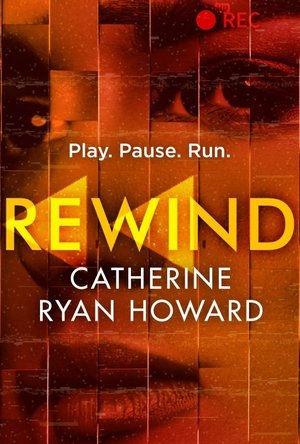
Eleanor (1463 KP) rated Rewind in Books

Jul 20, 2019  
Rewind
Rewind
Catherine Ryan Howard | 2019 | Mystery, Thriller
7
8.0 (3 Ratings)
Book Rating
Enjoyable thriller
This is a page turner of a thriller. It takes a little to get to grips with the time jumping but it helps that it uses rewind, pause and fast forward as chapters to give you some baring and once you get it it’s fine and kinda fun in a novel way. This book lends itself to being a great easy read with enough going on to keep you engaged but without being too taxing on the old noggin - perfect for holiday reading.

Natalie is a social media influencer and I did find the beginning of the book was throwing a bit too much jargon about this area at us; along with describing click bait journalist Audery’s world it felt like a real push to be “with it”. It is however a great area to explore as opening yourself up to the world like that gives a whole huge potential for weirdo exposure. When Natalie visits the remote Irish village of Shanamore she gets to meet even more odd characters in the form of holiday cottage manager Andrew with a real Norman Bates feel to him and other locals. There is definitely an air of creepy, in a skin crawling fashion, about them.

I didn’t find there to be much mystery in this book with it all being too evident who was responsible as soon as they began to appear. The multitude of POVs and the moving around in time did hamper any real development of feeling invested in the characters. All in all an enjoyable quick thriller read without too much thought required.

My thanks to the author, publisher Atlantic Books and NetGalley for the ARC of this book in exchange for an honest review.
  
A Certain Threat (Merriman Chronicles #1)
Roger Burnage | 2012 | History & Politics, Thriller
9
9.0 (1 Ratings)
Book Rating
Set at the end of the 18th Century just before the Napoleonic Wars, this follows the exploits of Lietenant Merriman. Injured in a battle with Barbary pirates he is given leave and returns to his family's home near Chester. He learns of a gang of smuggers who have taken a Customs ship. Before long he is summoned back to London and given command of his own ship to investigate this theft and also rumours of Irish and French involvement.

What follows is a cracking story that combines Naval adventure in the age of sail with investigation into the mystery around the loss of the Custom ship. Merriman is a strong lead character, a capable officer who looks after his men as best he can at a time when the navy was hard and brutal work, with many seamen ending up dead or injured on even the most routine missions. He is also relentless and imaginative, using the information and resources at his disposal to maximum effect to uncover the true purpose of the smugglers.

Burnage shows tremendous ability in his writing. The tone and dialogue feel very authentic, the characters well drawn and memorable. Every scene drives the plot forward or builds Merriman's character and there is a real sense of momentum and drama in the story. The descriptions of the naval encounters are a real highlight, exciting but clearly showing the danger that existed at the time, as well as the skill required by every member of the crew to ensure victory in any engagement.

Overall this was a terrific book and I would recommend it to readers of any age as a thrilling story. An easy 5 stars and an introduction to what promises to be a thrilling series.