
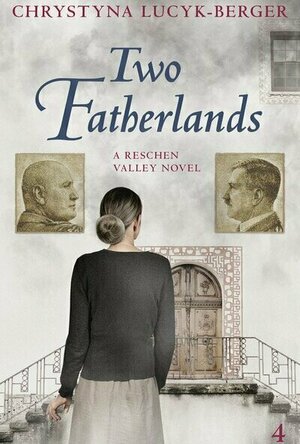
Two Fatherlands (Reschen Valley #4)
Book
It's a dangerous time to be a dissident... 1938. Northern Italy. Since saving Angelo Grimani's...
Historical Fiction WW2
Equity Capital: From Ancient Partnerships to Modern Exchange Traded Funds
Book
Capitalism is historically pervasive. Despite attempts through the centuries to suppress or control...
Martin Scorsese recommended The Leopard (1963) in Movies (curated)

Hazel (1853 KP) rated The Ice-Cream Makers in Books
Dec 14, 2018


An intriguing blurb promises an incredible story about an Italian ice-cream making family, however the story is nothing like you expect. Ernest van der Kwast’s <i>The Ice-Cream Makers</i> is set between a small village in Italy and the busy summer streets of Rotterdam. The Talamini family has been creating innovative ice-cream flavours for over a century, running a successful and hard-working parlour in the Netherlands. The business is handed down from father to son throughout the years, but now eldest son Giovanni has broken the tradition.
Giovanni Talamini has no interest in making ice-cream and would much rather spend the day reading poetry. After pursuing a literary career, Giovanni is now the director of the World Poetry Festival. Younger brother Luca has been left to pick up the <i>spatula</i> of the family business, but he has a problem of his own. Giovanni faces a dilemma: cut himself of from his family entirely or help his brother out with his peculiar request.
The highly unusual request mentioned in the blurb of <i>The Ice-Cream Makers</i> does not actually surface until the latter stages of the book. For the majority of the narrative there is no clear storyline, however the detail and information van der Kwast provides about ice-cream making, poetry and European culture makes the novel entirely worth reading. The request itself is entirely unexpected and not at all possible to guess, but it is an oddly brilliant way of reuniting two estranged brothers.
It takes a while for the narrative to start flowing as it constantly changes time periods. Giovanni, the narrator, rarely speaks in the present tense and is constantly relating events from his childhood and adulthood interspersed with family history and historical knowledge. On occasion the book takes on the air of an autobiography as Giovanni gives an in depth insight to the life of his family and his break from tradition. There is also the odd chapter that becomes almost a work of non-fiction, providing the reader with highbrow literary references and factual information about the history of ice-cream.
Once the scenes caused by the male sexual mind have been glossed over, <i>The Ice-Cream Makers</i> becomes a beautifully written, almost poetical story that compels and engages the reader despite the lack of a clear-cut storyline. The literary references will appeal to the intellectual, scholar, philosopher or culture enthusiast, for this novel teaches and inspires as well as entertains.
The amount of research van der Kwast conducted is phenomenal. The accuracy (or so is presumed) of the historical factors implies the author had thoroughly investigated the subject matter prior to writing. It is almost as though van der Kwast lived the life of Giovanni; it is entirely believable – hence the sense of an autobiography. Although the nature of the novel’s theme suggests a serious tone, van der Kwast has included a great deal of humour in the form of Giovanni and Luca’s father and his questionable mental health.
The lack of a climax prevents <i>The Ice-Cream Makers</i> from being described as an exciting book, however its beautifully poetic prose makes up for this absence. The philosophical insight into poetry will make you think about life and admire Giovanni for insisting on making his own way in the world. Likewise, Luca’s quiet acceptance and perseverance in the family business is also an admirable feat. Readers with a dislike for descriptive sexual scenarios may feel uncomfortable in a few of the resulting scenes, however the general story compensates for these distasteful passages. All in all, a high-quality work of fiction.
Man of Steel and Honour: General Stanislaw Maczek: Soldier of Poland, Commander of the 1st Polish Armoured Division in North-West Europe 1944-45
Book
This is a biography of one of the most undervalued commanders of the Second World War, General...

iCurrency Pad ~ Currency Converter
Finance and Travel
App
iCurrencyPad is not just a simple and elegant currency convertor and calculator. iCurrencyPad also...

Bible Study Tools
Lifestyle and Education
App
The BibleStudyTools.com Bible app gives you free access to the largest library of study Bible...

Audio guide Rome Crazy4Art
Travel and Entertainment
App
Audio guide awarded by Facebook! Our app has been selected for the start-up program FB "Bootstrap...

BMO Snaps - Adventure Time Photo Game
Games and Entertainment
App
It’s Adventure Time! Help BMO on an epic quest to save the Land of Ooo from hologram clones of...

Bob Mann (459 KP) rated All the Money in the World (2017) in Movies
Sep 29, 2021

But actually on watching the film I take it all back. Plummer’s role is not, like Dench’s, a mere eight minutes of screen time, but extensive and pivotal. Not only was his nomination richly deserved (his performance is cold, eerie and magnificent!) but Ridley Scott deserved an award for getting so much great footage in the can in such a short space of time.
The film tells the true story of the feckless John Paul Getty III (Charlie Plummer, no relation), grandson to the richest man in the world John Paul Getty I. While in the Piazza Farnese in Rome, JPGIII is kidnapped and a $17 million reward is sought for his release. Whilst claiming to love his offspring, the tycoon is basically a ‘tight git’ and the film concerns the battle of the young heir’s mother Gail (Michelle Williams, “Manchester By The Sea”; “The Greatest Showman”) to persuade JPG1 and his right-hand negotiator Fletcher Chase (Mark Wahlberg, “Patriot’s Day”, “Deep Water Horizon“) to shake the money tree* and get JPGIII released.
*To be fair, JPGIII hasn’t exactly helped his case as it emerges he had previously joked about getting himself kidnapped to get his grandfather’s ransom money!
As I didn’t remember the historical outcome of this, I was in a suitable amount of suspense as to where it would go. It is clear though, from the wiki version of the story, that the ending was significantly ‘sexed-up’ for the movie.
Ridley Scott sensibly balances the views of the Getty’s with the views of the kidnappers, with a semi-sympathetic Italian (Romain Duris) being the focus of those scenes in rural Calabria.
But it’s the scenes with Plummer that really engage. The man as portrayed is an enigma, eccentrically washing his own clothes to save a few pennies and always (ALWAYS) trying to get 20% more on even the most personal of decisions. It makes me really intrigued to see Spacey’s portrayal now… I wonder if the alternate cut might make it onto the Blu-ray? I actually think though that Plummer was the better choice for this: I could see Spacey bringing far too much of Frank Underwood to the role.
Elsewhere in the cast, I think Michelle Williams and Mark Wahlberg are both solid without ever being spectacular and it’s nice to see the talented Andrew Buchan (“The Mercy“; “Broadchurch”) in a more memorable big screen outing as JPG2: his drug-addled son (and JPG3’s father).
Overall, it’s an interesting watch and had me sufficiently engaged to want to watch it again. But without Plummer’s role it wouldn’t really amount to nearly as much.