
Search
Search results

Bob Mann (459 KP) rated Tomb Raider (2018) in Movies
Sep 29, 2021
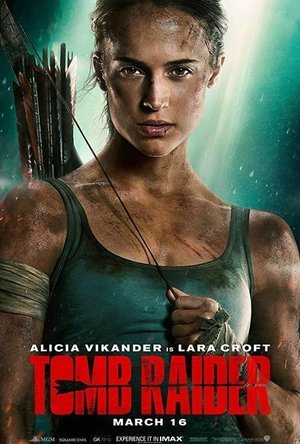


A tremendously energetic and fun video game spin-off.
In this #TimesUp year, reviewing a film like “Tomb Raider” is just asking for trouble! So where shall I start digging my shallow grave?
Let’s start with the video game… “Tomb Raider” is of course the original video game phenomenon that started in 1993, featuring Lara Croft: someone that teenagers across the land mastur…. did their homework alongside in bedrooms up and down the land. Beauty; athleticism; a fierce independence; unfeasibly large breasts; ridiculously impossible leaps: in this film reboot, Alicia Vikander’s Lara differs from this ideal in just one respect. And before the Dora Milaje smash through my windows and drag me off for incarceration on Mysogeny Island, I’ll point out that this is OBVIOUSLY the least important omission! 🙂
For this film is good… very good.
“I’M SORRY….? WHAT DID YOU SAY DR BOB??” “But this is a film about a VIDEO GAME! … They are all uniformly s****e!”
Beauty, brains and talent: the GB Olympic team will likely be calling.
I know – I can barely bring myself to admit it. But this one really is good. Most of this is down to the reason I was looking forward so much to this one. Alicia Vikander (“Ex Machina“; “The Danish Girl“; “The Light Between Oceans“) is such a class act, and here she is so much more than just a one-dimensional action hero. She hurts, she mourns, she feels guilt, she’s vulnerable. And it’s all there on her face. Great acting skill. She also kicks ass like no woman on film since Emily Blunt in “Edge of Tomorrow“!
Don’t you just hate it when you drop a bag of flour in your kitchen?
The story by Evan Daugherty and Geneva Robertson-Dworet (with Alastair Siddons adding to the screenplay) rockets off in great style with a “fox and hounds” bike chase around the City of London which is brilliantly done and sets up Croft’s character with the minimum of tedious back story. Switch to the main story and Lara is struggling to face the fact that her father (Dominic West, “Money Monster“), seen in flashback, is finally dead after going off to Japan seven years previously in search of the legendary tomb of ancient sorceress Queen Himiko. The Croft corp. COO (Kristin Scott Thomas, “Darkest Hour“) persuades Lara its time to sign the necessary papers, but on the verge of this act the lawyer Mr Yaffe (Derek Jacobi, “Murder on the Orient Express“) lets a significant cat out of the bag and sets Lara off on the trail of her long-dead father’s original mission.
In happier times. Daddy (Dominic West) goes off on yet another trip from Croft Manor.
It’s a rollercoaster ride that’s really well done. But I reckon the writers should have named Jeffrey Boam, George Lucas and Menno Meyjes as co-collaborators, for the film plagerises terribly from “Indiana Jones and the Last Crusade”. In two or three places, the similarities are shocking! As in the best of Lucas traditions though there are some breathtaking set-pieces, with the best of them staged at the top of a raging waterfall that’s just plane ridiculous! (Even if it plagerises blatantly from “The Lost World”!).
English and patient. Kristin Scott Thomas as the guiding hand at the Croft corporation.
The movie’s tremendous to look at too, with cinematography by George Richmond (“Kingsman“; “Eddie the Eagle“) and (aside from a dodgy helicopter effect) good special effect by Max Poolman (“District 9”) and his team.
My one criticism would be that Vogel – the chief villain, played by Walton Goggins (“The Hateful Eight“) – is rather too unremittingly evil to have two sweetly smiling young children in his desk photo. One can only hope he faces a nasty demise!
Never trust a guy with a beard. Walton Goggins, a bit over the top as the villain of the piece.
The film is directed by Norwegian director Roar Uthaug, in what looks to be his first “non-Norwegian” film. Roar by name; roar by nature! He does a great job. An early “summer blockbuster” actioner that gets two thumbs up from me. What a pleasant surprise!
Let’s start with the video game… “Tomb Raider” is of course the original video game phenomenon that started in 1993, featuring Lara Croft: someone that teenagers across the land mastur…. did their homework alongside in bedrooms up and down the land. Beauty; athleticism; a fierce independence; unfeasibly large breasts; ridiculously impossible leaps: in this film reboot, Alicia Vikander’s Lara differs from this ideal in just one respect. And before the Dora Milaje smash through my windows and drag me off for incarceration on Mysogeny Island, I’ll point out that this is OBVIOUSLY the least important omission! 🙂
For this film is good… very good.
“I’M SORRY….? WHAT DID YOU SAY DR BOB??” “But this is a film about a VIDEO GAME! … They are all uniformly s****e!”
Beauty, brains and talent: the GB Olympic team will likely be calling.
I know – I can barely bring myself to admit it. But this one really is good. Most of this is down to the reason I was looking forward so much to this one. Alicia Vikander (“Ex Machina“; “The Danish Girl“; “The Light Between Oceans“) is such a class act, and here she is so much more than just a one-dimensional action hero. She hurts, she mourns, she feels guilt, she’s vulnerable. And it’s all there on her face. Great acting skill. She also kicks ass like no woman on film since Emily Blunt in “Edge of Tomorrow“!
Don’t you just hate it when you drop a bag of flour in your kitchen?
The story by Evan Daugherty and Geneva Robertson-Dworet (with Alastair Siddons adding to the screenplay) rockets off in great style with a “fox and hounds” bike chase around the City of London which is brilliantly done and sets up Croft’s character with the minimum of tedious back story. Switch to the main story and Lara is struggling to face the fact that her father (Dominic West, “Money Monster“), seen in flashback, is finally dead after going off to Japan seven years previously in search of the legendary tomb of ancient sorceress Queen Himiko. The Croft corp. COO (Kristin Scott Thomas, “Darkest Hour“) persuades Lara its time to sign the necessary papers, but on the verge of this act the lawyer Mr Yaffe (Derek Jacobi, “Murder on the Orient Express“) lets a significant cat out of the bag and sets Lara off on the trail of her long-dead father’s original mission.
In happier times. Daddy (Dominic West) goes off on yet another trip from Croft Manor.
It’s a rollercoaster ride that’s really well done. But I reckon the writers should have named Jeffrey Boam, George Lucas and Menno Meyjes as co-collaborators, for the film plagerises terribly from “Indiana Jones and the Last Crusade”. In two or three places, the similarities are shocking! As in the best of Lucas traditions though there are some breathtaking set-pieces, with the best of them staged at the top of a raging waterfall that’s just plane ridiculous! (Even if it plagerises blatantly from “The Lost World”!).
English and patient. Kristin Scott Thomas as the guiding hand at the Croft corporation.
The movie’s tremendous to look at too, with cinematography by George Richmond (“Kingsman“; “Eddie the Eagle“) and (aside from a dodgy helicopter effect) good special effect by Max Poolman (“District 9”) and his team.
My one criticism would be that Vogel – the chief villain, played by Walton Goggins (“The Hateful Eight“) – is rather too unremittingly evil to have two sweetly smiling young children in his desk photo. One can only hope he faces a nasty demise!
Never trust a guy with a beard. Walton Goggins, a bit over the top as the villain of the piece.
The film is directed by Norwegian director Roar Uthaug, in what looks to be his first “non-Norwegian” film. Roar by name; roar by nature! He does a great job. An early “summer blockbuster” actioner that gets two thumbs up from me. What a pleasant surprise!

Chris Sawin (602 KP) rated Warlords (Tau ming chong) (2010) in Movies
Jun 19, 2019
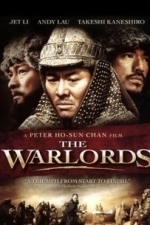

General Pang Qing Yun is the sole survivor of his entire battalion. The Ching army was taken out against Taiping rebels in Hechuan. Pang meets a woman and spends the night with her while she leaves before he wakes up the next morning. Some bandits ride into the town Pang is in. One of them, Jiang Wuyang, notices Pang and challenges him. Pang makes short work of Jiang. Jiang, impressed with Pang, introduces Pang to Zhao Er Hu. Pang follows Jiang and Er Hu back to their village where he notices that same woman he spent the night with. Her name is Lian and she's Er Hu's wife.
The village is very poor and in desperate need of food, so they decide to attack a passing food convoy. In the midst of the battle, Pang saves Jiang from certain death. The bandits successful, they bring food back to their families. Kui troops, the imperial army, invade the village and usurps the food that they stole. Now without food or money, the bandits are starving and unsure of what lies ahead for them. Pang suggests to Er Hu that they should join Lord Chen's army as they could earn wages for their families and actually have something to be proud of. Questioning Pang's reasoning since he abandoned his army once before, Jiang suggests that Pang, himself, and Er Hu take a blood oath. The pact made them blood brothers on that day.
After joining the army, their 800 soldiers go after Shu City, which has an army of 5,000. They somehow manage to get the upper hand and with the help of 1,500 imperial soldiers, they get a victory. It'll be the first of many for them as they move up in rank rapidly. With plans to overthrow Suzhou and then Nanjing, the capital, they have their work set out for them. The brothers soon begin to fall apart on their rise to the top though. Er Hu tends to be loyal with his word and his brothers no matter what as Pang will sacrifice anyone and even make deals with his enemies just to win while Jiang is stuck between them.
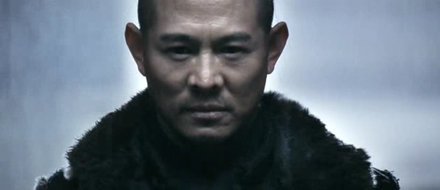
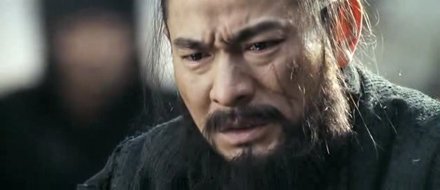
Let me just start this by saying, I loved this movie. The battle sequences are stunning, the cinematography was brilliant, and the acting was pretty much right on the money. The Warlords took everything I loved about Mongol and made it just a little bit better. Jet Li deserves a mention. After seeing Unleashed and Fearless, it was nice to see him actually show his acting chops. So I've wanted to see him show those off again. Luckily, he did a great job in this as he showed just about every emotion in this film at some time or another. His fight scenes were also incredible, but that comes to be expected with just about any film he's involved in. I think Andy Lau deserves a nod, as well. His character is just so passionate about being honorable and loyal that when things go wrong, his reaction is just explosive. He has some really powerful scenes where he's fighting for what he thinks is right, but I can't really mention with spoiling anything. There is a scene where he's having dinner and there's play going on that's mocking him, Pang, and Jiang. He begins to laugh, which leads to him crying uncontrollably, and then he begins laughing again. He just managed to pull it off flawlessly and I was incredibly impressed.
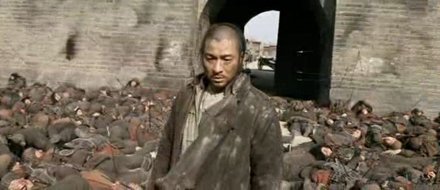
The battle scenes didn't pull any punches either. Blood flies across the screen as limbs roll on the ground. It's truly fantastic. They were truly the highlight of the film for me as the first half of the film doesn't seem to let up from the battlefield. The film is also extremely colorful. Every scene is stunningly vibrant. There are also so many memorable scenes from the film and half of that is due to how they were shot. There's a scene where Er Hu runs into this coliseum where there are just hundreds of dead bodies lying on the ground and the camera kind of spins around him capturing his emotions and the devastation that lies around him. It's truly something worth seeing for yourself.
The Warlords is one of the best feudal Japan films I've ever seen. If you were a fan of films like Mongol: The Rise of Genghis Khan, The Last Samurai, or Seven Samurai, then I highly recommend this.
The village is very poor and in desperate need of food, so they decide to attack a passing food convoy. In the midst of the battle, Pang saves Jiang from certain death. The bandits successful, they bring food back to their families. Kui troops, the imperial army, invade the village and usurps the food that they stole. Now without food or money, the bandits are starving and unsure of what lies ahead for them. Pang suggests to Er Hu that they should join Lord Chen's army as they could earn wages for their families and actually have something to be proud of. Questioning Pang's reasoning since he abandoned his army once before, Jiang suggests that Pang, himself, and Er Hu take a blood oath. The pact made them blood brothers on that day.
After joining the army, their 800 soldiers go after Shu City, which has an army of 5,000. They somehow manage to get the upper hand and with the help of 1,500 imperial soldiers, they get a victory. It'll be the first of many for them as they move up in rank rapidly. With plans to overthrow Suzhou and then Nanjing, the capital, they have their work set out for them. The brothers soon begin to fall apart on their rise to the top though. Er Hu tends to be loyal with his word and his brothers no matter what as Pang will sacrifice anyone and even make deals with his enemies just to win while Jiang is stuck between them.
Let me just start this by saying, I loved this movie. The battle sequences are stunning, the cinematography was brilliant, and the acting was pretty much right on the money. The Warlords took everything I loved about Mongol and made it just a little bit better. Jet Li deserves a mention. After seeing Unleashed and Fearless, it was nice to see him actually show his acting chops. So I've wanted to see him show those off again. Luckily, he did a great job in this as he showed just about every emotion in this film at some time or another. His fight scenes were also incredible, but that comes to be expected with just about any film he's involved in. I think Andy Lau deserves a nod, as well. His character is just so passionate about being honorable and loyal that when things go wrong, his reaction is just explosive. He has some really powerful scenes where he's fighting for what he thinks is right, but I can't really mention with spoiling anything. There is a scene where he's having dinner and there's play going on that's mocking him, Pang, and Jiang. He begins to laugh, which leads to him crying uncontrollably, and then he begins laughing again. He just managed to pull it off flawlessly and I was incredibly impressed.
The battle scenes didn't pull any punches either. Blood flies across the screen as limbs roll on the ground. It's truly fantastic. They were truly the highlight of the film for me as the first half of the film doesn't seem to let up from the battlefield. The film is also extremely colorful. Every scene is stunningly vibrant. There are also so many memorable scenes from the film and half of that is due to how they were shot. There's a scene where Er Hu runs into this coliseum where there are just hundreds of dead bodies lying on the ground and the camera kind of spins around him capturing his emotions and the devastation that lies around him. It's truly something worth seeing for yourself.
The Warlords is one of the best feudal Japan films I've ever seen. If you were a fan of films like Mongol: The Rise of Genghis Khan, The Last Samurai, or Seven Samurai, then I highly recommend this.


Ivana A. | Diary of Difference (1171 KP) rated Death in the Dojo in Books
Feb 3, 2020

<a href="https://amzn.to/2Wi7amb">Wishlist</a>; | <a
<a href="https://diaryofdifference.com/">Blog</a>; | <a href="https://www.facebook.com/diaryofdifference/">Facebook</a>; | <a href="https://twitter.com/DiaryDifference">Twitter</a>; | <a href="https://www.instagram.com/diaryofdifference/">Instagram</a>; | <a href="https://www.pinterest.co.uk/diaryofdifference/pins/">Pinterest</a>;
<img src="https://diaryofdifference.com/wp-content/uploads/2019/11/Book-Review-Banner-30.png"/>;
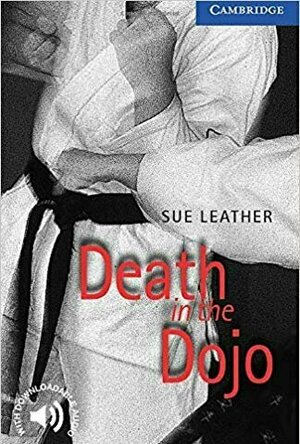
I remember reading The Death in the Dojo a few years ago. I still remember the story and the feelings it brought me. This is a story about a mystery, about karate and the love between a daughter and her dad. I need to just say that this book has and always will have a special place in my heart.
I have been in a dojo since I remember myself. And the sensei is no one else, but my dad. From the very first kata and my first wins and losses, till the days when I started becoming a national champion and travelling across countries, my dad was always the person beside me. The one to guide me and show me the right way. The one to pick me when I fall, and the one who believed in me, when everyone else didn’t.
<a href="https://www.instagram.com/p/BjcxJkkHvqM/?utm_source=ig_embed&utm_campaign=loading">View this post on Instagram</a>
<img src="https://scontent.flhr4-2.fna.fbcdn.net/v/t1.0-9/69274792_10218442591163314_2586922513925668864_n.jpg?_nc_cat=111&_nc_ohc=eAIbM8tluQsAQkJbY13yqjMs4qIoY3HOETTDejocPqnuBjqe2LvSD-gFg&_nc_ht=scontent.flhr4-2.fna&oh=d67564d709a3f04aa23cab0d245d4732&oe=5E79F277"/>;
<b><i>“I went over to the Asano dojo for the last half hour of training and saw a good fight among six black belts. I stood and watched the white gi’s moving quickly round the wooden floor, black belts flying. There was something beautiful about this, more like a dance rather than a fight. It made me feel sad, not to be there doing it. "</i></b>
Even though this book is not the best mystery you will ever read, I doubt that was its real purpose.
I believe that the purpose of this book was to show us a glimpse of what karate really means, to show us the honour, the respect, the persistence we all share in unison.
<b><i>“It was true that the great masters seemed to have an unusual sense of peace around them.”</i></b>
Death in the Dojo starts off when Kate, a journalist, is tasked to investigate the recent murder of the famous karateka Kawaguchi. It is a complete mystery how he would be killed with just one punch called gyaku zuki and die. The mystery is not behind whether it’s possible for him to die from one punch, but the mystery is why he allowed for this to happen. As a master, he is very well able to defend himself against just one punch.
On this note, I have to mention that in the book, the punch is spelled as “yaku-zuki”, which is incorrect.
When this mystery is connected to another mystery that happened many years ago, Kate is determined to find the full truth once and for all.
Even though it is quite a short book, it contains a lot of information and a couple of unexpected plot twists. It captures perfectly the cultural differences between England and Japan, which is shown through the love and relationships between daughters and their dads.
<b><i>“It was my Dad who taught me how to fight. He never treated me any differently than my brother. He showed me how to fight with my fists up when I was five and to get up quickly if I fell down. I was never allowed to give up. … It was a lesson that would be useful to me many times over the years. Whenever something bad happens in my life and I feel like giving up, I hear dad’s voice in my ears, telling me to get up off the floor.”</i></b>
I truly loved this book. It will always stay in my heart. I will keep coming to it when I miss my karate days. I recommend it if you like mysteries and martial arts. Also if you are a fan of the Japanese culture. The ending wasn't the best mystery ending ever, as the story went sort of unfinished, and we didn't truly solve one of the mysteries, but it was still a lovely read for me.
<b><i>This blog post is dedicated to my amazing and one and only dad! I love you! </i></b>
<a href="https://amzn.to/2Wi7amb">Wishlist</a>; | <a
<a href="https://diaryofdifference.com/">Blog</a>; | <a href="https://www.facebook.com/diaryofdifference/">Facebook</a>; | <a href="https://twitter.com/DiaryDifference">Twitter</a>; | <a href="https://www.instagram.com/diaryofdifference/">Instagram</a>; | <a href="https://www.pinterest.co.uk/diaryofdifference/pins/">Pinterest</a>;
<a href="https://diaryofdifference.com/">Blog</a>; | <a href="https://www.facebook.com/diaryofdifference/">Facebook</a>; | <a href="https://twitter.com/DiaryDifference">Twitter</a>; | <a href="https://www.instagram.com/diaryofdifference/">Instagram</a>; | <a href="https://www.pinterest.co.uk/diaryofdifference/pins/">Pinterest</a>;
<img src="https://diaryofdifference.com/wp-content/uploads/2019/11/Book-Review-Banner-30.png"/>;
I remember reading The Death in the Dojo a few years ago. I still remember the story and the feelings it brought me. This is a story about a mystery, about karate and the love between a daughter and her dad. I need to just say that this book has and always will have a special place in my heart.
I have been in a dojo since I remember myself. And the sensei is no one else, but my dad. From the very first kata and my first wins and losses, till the days when I started becoming a national champion and travelling across countries, my dad was always the person beside me. The one to guide me and show me the right way. The one to pick me when I fall, and the one who believed in me, when everyone else didn’t.
<a href="https://www.instagram.com/p/BjcxJkkHvqM/?utm_source=ig_embed&utm_campaign=loading">View this post on Instagram</a>
<img src="https://scontent.flhr4-2.fna.fbcdn.net/v/t1.0-9/69274792_10218442591163314_2586922513925668864_n.jpg?_nc_cat=111&_nc_ohc=eAIbM8tluQsAQkJbY13yqjMs4qIoY3HOETTDejocPqnuBjqe2LvSD-gFg&_nc_ht=scontent.flhr4-2.fna&oh=d67564d709a3f04aa23cab0d245d4732&oe=5E79F277"/>;
<b><i>“I went over to the Asano dojo for the last half hour of training and saw a good fight among six black belts. I stood and watched the white gi’s moving quickly round the wooden floor, black belts flying. There was something beautiful about this, more like a dance rather than a fight. It made me feel sad, not to be there doing it. "</i></b>
Even though this book is not the best mystery you will ever read, I doubt that was its real purpose.
I believe that the purpose of this book was to show us a glimpse of what karate really means, to show us the honour, the respect, the persistence we all share in unison.
<b><i>“It was true that the great masters seemed to have an unusual sense of peace around them.”</i></b>
Death in the Dojo starts off when Kate, a journalist, is tasked to investigate the recent murder of the famous karateka Kawaguchi. It is a complete mystery how he would be killed with just one punch called gyaku zuki and die. The mystery is not behind whether it’s possible for him to die from one punch, but the mystery is why he allowed for this to happen. As a master, he is very well able to defend himself against just one punch.
On this note, I have to mention that in the book, the punch is spelled as “yaku-zuki”, which is incorrect.
When this mystery is connected to another mystery that happened many years ago, Kate is determined to find the full truth once and for all.
Even though it is quite a short book, it contains a lot of information and a couple of unexpected plot twists. It captures perfectly the cultural differences between England and Japan, which is shown through the love and relationships between daughters and their dads.
<b><i>“It was my Dad who taught me how to fight. He never treated me any differently than my brother. He showed me how to fight with my fists up when I was five and to get up quickly if I fell down. I was never allowed to give up. … It was a lesson that would be useful to me many times over the years. Whenever something bad happens in my life and I feel like giving up, I hear dad’s voice in my ears, telling me to get up off the floor.”</i></b>
I truly loved this book. It will always stay in my heart. I will keep coming to it when I miss my karate days. I recommend it if you like mysteries and martial arts. Also if you are a fan of the Japanese culture. The ending wasn't the best mystery ending ever, as the story went sort of unfinished, and we didn't truly solve one of the mysteries, but it was still a lovely read for me.
<b><i>This blog post is dedicated to my amazing and one and only dad! I love you! </i></b>
<a href="https://amzn.to/2Wi7amb">Wishlist</a>; | <a
<a href="https://diaryofdifference.com/">Blog</a>; | <a href="https://www.facebook.com/diaryofdifference/">Facebook</a>; | <a href="https://twitter.com/DiaryDifference">Twitter</a>; | <a href="https://www.instagram.com/diaryofdifference/">Instagram</a>; | <a href="https://www.pinterest.co.uk/diaryofdifference/pins/">Pinterest</a>;

Charlie Cobra Reviews (1840 KP) rated I Am a Hero (2015) in Movies
Jul 7, 2020 (Updated Oct 29, 2020)


The Hero's Journey In The Zombie Apocalypse Is As Serious As It Is Funny
Contains spoilers, click to show
I have to say that this movie is one of the best zombie movies I've seen lately. From the beginning I like the way that the main character Hideo has these little moments where he zones out and has these little fantasies where he imagines himself as being more outgoing or heroic. Even if its just something small like the first one where he's at work and get's everyone cheering about being proud to work there when in reality he was just muttering to himself quietly. I really like how he's this kind of everyday regular guy who's just kind of down on his luck doubting himself. He's not where he thought he would be career wise which is hindering his relationship with his girlfriend and his co-workers. His girlfriend even kicks him out because of this and throws out some of his stuff. He really has bad luck because as he tries to make up for the fight with his girlfriend Tekko, he goes back to the apartment to find out that she has been infected by the ZQN virus and she attacks him and nearly infects him too. The ZQN's were pretty cool by the way. At first I thought that the whole cross-eyed look to them looked a little too silly but as it became a signature visualization that marked when someone had become a zombie. When his girlfriend turned it was quite horrifying as she contorted all over the place and did everything in her power to try and eat him. She even bit the door so violently she broke off all of her teeth, which was quite lucky for Hideo because when she bit him she didn't break the skin infecting him. The scene when he is running through the city and everything is in chaos was one of the more memorable scenes for me because so much was going on. There were ZQN's and regular people running all over the place in all directions and cars hitting people, but the car scene with the business man, the school girl Hiromi, and the taxi driver was spectacular. In fact one of the coolest things I've seen in a zombie movie is the school girl Hiromi who becomes a abnormal ZQN. She says that she was bit by a baby who was probably infected from breast milk if the mother was a ZQN. She didn't exhibit any symptoms for like 2 days and when she turns she doesn't attack Hideo but instead saves him by killing a ZQN that was trying to kill him. She has one eye that looks like a ZQN and has crazy superhuman strength but for some reason sleeps a lot. Most of the time in these survival zombie movies the story suffers from a lack of plot structure but a news report stating that the virus can't sustain itself at higher elevations make traveling to Mt. Fuji a destination propelling the plot further in a direction that makes sense. I also like how they used foreshadowing in certain scenes like when he finds a shopping basket with a logo of a marketplace, you can tell that place is more than likely the next destination. I also thought it was pretty cool how Hiromi wasn't the only abnormal and there was a weird "grudge" spider walking girl and then the infamous track star zombie with the crushed head. That one ran super fast and jumped really high and was pretty cool. One of the things I kind of didn't like was that Hideo had a gun for a lot of the movie but never even shot it until close to the end but it did go with the characters personality and make the story more interesting. It's just a little hard to believe. Also why weren't there anybody using any samurais swords on the zombies. I mean with the ZQN's being hard to kill because you need to destroy the whole brain, cutting their heads off would have been really efficient and machetes or swords would have been perfect. And just because it's Japan, I don't expect there to be swords everywhere but I'm surprised there wasn't even one. This movie was just so unexpectedly good it's hard for me to nitpick at things with it and I'm sure there's more that bothered me with it but I really enjoyed and liked this movie. I give this movie a 8/10 and my "Must See Seal of Approval"

Heather Cranmer (2721 KP) rated The Exalted Gate in Books
Jun 7, 2018

(This review can be found on my blog <a href="http://themisadventuresofatwentysomething.blogspot.com/">The (Mis)Adventures of a Twenty-Something Year Old Girl</a>.
I absolutely love the cover of this book. It is gorgeous!! Anyway, this book has ten stories in it, so I will review and rate each one individually.
*
Boots
Judith (of an undisclosed age) is a girl that hates wearing shoes. However, she is in a play where she has to play a Polish tramp. She doesn't want to wear shoes, but the director says even tramps wear shoes. She finds some beat up looking boots in the prop room and puts them on. As soon as they are on her feet, it's like they have a mind of their own. They take Judith where they want to go. What ensues in an adventure that Judith won't soon forget.
I thought the story of Boots was a really cute and interesting read. I definitely think this will appeal to children of all ages. The only slight problem was with punctuation, but that's nothing that major. Judith is an interesting girl. I'd recommend this story.
I'd give Boots a 4.5 out of 5.
*
Five Gifts
Lonia is a thirteen year old girl whose parents are already nagging her to get married. (Yeah, it's a bit much, but it does say in the story that this was way back in the day). She'd rather spend her days in the children's glade talking to her elf friend, Pintak. One day, Pintak is kidnapped by a mean old wizard, and Lonia decides that she must go rescue him. She is given five gifts from different creatures of the forest to help her on her quest.
I was impressed with this story, and I found it quite interesting. There's also a lesson to be learned about experimenting on animals. Lonia was definitely a brave little girl and was willing to risk everything to save her friend. There are a few punctuation mistakes and a mispelt word, but other than that, this story was a good one.
I'd give Five Gifts a 5 out of 5.
*
Sintinko
Sintinko is a story set in Japan back when it was all emperors and generals. The emperor is jealous of Sintinko and wants to have him killed. It's only because of Ilyo, Sintinko's love interest, that the emperor spares his life. However, Sintinko is banished from Japan until he can find a maple tree that can sit in the hand of the emperor. Ilyo and Sintinko know that they will most likely never see each other. Unbeknownst to Sintinko and everyone else, Ilyo disguises herself as a geisha to help Sintinko on his journey. Love and loss are the themes of this story.
This was such a bittersweet love story. I felt sorry for both Sintinko and Ilyo. Sintinko thought he would never see his beloved again and swore off any type of relationship. Ilyo had her beloved right there in front of her, yet she couldn't do anything about it.
The names, being Japanese, were a bit hard to pronounce, but it's easy to get past that since the story is so strong. Speaking of names, this story even lets us know how the Bonsai tree got its name.
There's a few punctuation mistakes, but nothing that takes away from the story.
I think this story would be better suited for ages 11+. Personally, I found the story a bit slow, but not painfully slow.
I'd give Sintinko a 3.5 out of 5.
*
Tivurambhat
Tivurambhat is the story of a ghost by the same name of the title who helps people out in times of need in India. A mean man forces people to work for him by letting them borrow money, putting the interest up, and paying them such low wages they can never afford to pay him pack. One man decides to do something about it and goes to Tivurambhat for help.
I loved the message behind the story. Towards the ending, it even had me smiling. I couldn't pronounce the names since they were all Indian names, so I just shortened them so my American self could pronounce them. I loved the character of Tiv. He kind of reminded me of an American version of Casper for some reason. I really enjoyed the conversation between Pradesh and Tiv the most. This was such a happy story!
Again, there's some punctuation mistakes and a few grammar ones as well, but the story itself was excellent.
I'd give Tivurambhat a 5 out of 5.
*
St. Penalyn's Well
St Penalyn's Well tells the story of Rebecca (of an undisclosed age) who ventures into an overgrown garden with her dog. She stumbles across a well with an inscription. It is while reading this inscription that she becomes trapped in the well. Lucky for her, she meets an elf named Opickle who keeps her company and gives her the inspiration she needs to find her way out.
This was definitely an interesting story. I was hooked all the way through. It's a story about friendship amongst diversity and not giving up. I found Opickle to be just a tad bit of a snob but not enough to put me off the story.
A few punctuation mistakes throughout the story but not enough to be distracting.
St. Penalyn's Well gets a 5 out of 5 from me.
*
Quint and Trout's Mistake
Quint and Trout's Mistake is a story I didn't finish because of the name calling and making fun of someone who is overweight. It starts out innocently enough. A lake is being overrun by a white smelly substance. Two brothers, Quint and Trout, talk their friend Ned into investigating why this is happening. Ned swims down to the bottom of the lake and finds an overweight creature living in a cave who has been kicked out of his house. This is when the name calling starts, and I stopped reading.
I do not like stories aimed at children that condone name calling of any sort whether it be because of weight, disabilities, race, etc. Children do not need to read something like this and feel bad about themselves or view it as an excuse to tease others. I was very disappointed something like this was in a children's book.
Quint and Trout's Mistake gets a 0 out of 5 from me. What a vile story!
*
Densus
Densus is a boy who was born with blue fingernails and blue streaks in his hair. This is because he has a destiny to fulfill. When a crab named Arnold asks him if he'd go tell a giant that he has found a perfect wife for him, Densus agrees because it's his destiny even if there's a possibility the giant could kill him.
This is a story about destinies. It lets us know that we all have destinies if only we weren't too busy trying to find out what they are. This is a fun story which I think children would love! I loved Arnold the crab!! I think a majority of children would love him.
Again, there's a few punctuation and grammar mistakes but nothing major.
I'd give Densus a 5 out of 5.
*
Alice's Granddaughter
Alice's Granddaughter takes place years after Alice in Wonderland. Alice's granddaughter, Alicia, is recruited by a thief named Cheng to go down into a rabbit hole to get him a yellow dragon. Alicia discovers that things in Wonderland haven't changed much.
I thoroughly enjoyed this story! I'm a sucker for everything Alice in Wonderland-esque, and this was no exception! I loved how the author still managed to preserve the original Wonderland in his tale and how he even managed to keep the style of writing similar to that of Lewis Carroll. My favorite character was definitely the talking table. My only gripe is that I wish this story would've been longer!
As like with the previous story, there are some punctuation and grammar mistakes that can be overlooked.
Alice's Granddaughter gets a bit 5 out of 5.
*
The Dragon
The Dragon is a story about death. In this story, we follow a dragon in her very last moments as she dies of what I assume to be old age. We get to see her memories of when she was her prime and when she takes her last breath.
This is a sad story and probably one for the older children unless younger children can handle the topic of death. It's not written in a morbid way though. It's actually written quite beautifully especially when we get to see the memory of the dragon in her prime. I think this story can show that death is not always bad.
There are grammar and punctuation mistakes but nothing that deters from the story.
The Dragon gets a 3.75 out of 5.
*
The Wisdom of a Dog
The Wisdom of a Dog is about a man named Keith and his dog who go on an adventure and wind up in a crystal city. Keith must found out who is destroying the city and save it.
This story was a good read, and I think most children would enjoy it especially as it involves a talking dog. I enjoyed how the author even placed his own dialogue in the story. This is a good versus bad story that shows that bad people never win.
Again, there are grammar and punctuation mistakes, but it doesn't take away from the story.
The Wisdom of a Dog gets a 3.5 out of 5.
*
The Exalted Gate by Daniel Nanavati averages out to a 3.5 out of 5. I'd definitely recommend this book to old and young alike!
(I received a free physical copy of this title from the publisher in exchange for a fair and honest review).
I absolutely love the cover of this book. It is gorgeous!! Anyway, this book has ten stories in it, so I will review and rate each one individually.
*
Boots
Judith (of an undisclosed age) is a girl that hates wearing shoes. However, she is in a play where she has to play a Polish tramp. She doesn't want to wear shoes, but the director says even tramps wear shoes. She finds some beat up looking boots in the prop room and puts them on. As soon as they are on her feet, it's like they have a mind of their own. They take Judith where they want to go. What ensues in an adventure that Judith won't soon forget.
I thought the story of Boots was a really cute and interesting read. I definitely think this will appeal to children of all ages. The only slight problem was with punctuation, but that's nothing that major. Judith is an interesting girl. I'd recommend this story.
I'd give Boots a 4.5 out of 5.
*
Five Gifts
Lonia is a thirteen year old girl whose parents are already nagging her to get married. (Yeah, it's a bit much, but it does say in the story that this was way back in the day). She'd rather spend her days in the children's glade talking to her elf friend, Pintak. One day, Pintak is kidnapped by a mean old wizard, and Lonia decides that she must go rescue him. She is given five gifts from different creatures of the forest to help her on her quest.
I was impressed with this story, and I found it quite interesting. There's also a lesson to be learned about experimenting on animals. Lonia was definitely a brave little girl and was willing to risk everything to save her friend. There are a few punctuation mistakes and a mispelt word, but other than that, this story was a good one.
I'd give Five Gifts a 5 out of 5.
*
Sintinko
Sintinko is a story set in Japan back when it was all emperors and generals. The emperor is jealous of Sintinko and wants to have him killed. It's only because of Ilyo, Sintinko's love interest, that the emperor spares his life. However, Sintinko is banished from Japan until he can find a maple tree that can sit in the hand of the emperor. Ilyo and Sintinko know that they will most likely never see each other. Unbeknownst to Sintinko and everyone else, Ilyo disguises herself as a geisha to help Sintinko on his journey. Love and loss are the themes of this story.
This was such a bittersweet love story. I felt sorry for both Sintinko and Ilyo. Sintinko thought he would never see his beloved again and swore off any type of relationship. Ilyo had her beloved right there in front of her, yet she couldn't do anything about it.
The names, being Japanese, were a bit hard to pronounce, but it's easy to get past that since the story is so strong. Speaking of names, this story even lets us know how the Bonsai tree got its name.
There's a few punctuation mistakes, but nothing that takes away from the story.
I think this story would be better suited for ages 11+. Personally, I found the story a bit slow, but not painfully slow.
I'd give Sintinko a 3.5 out of 5.
*
Tivurambhat
Tivurambhat is the story of a ghost by the same name of the title who helps people out in times of need in India. A mean man forces people to work for him by letting them borrow money, putting the interest up, and paying them such low wages they can never afford to pay him pack. One man decides to do something about it and goes to Tivurambhat for help.
I loved the message behind the story. Towards the ending, it even had me smiling. I couldn't pronounce the names since they were all Indian names, so I just shortened them so my American self could pronounce them. I loved the character of Tiv. He kind of reminded me of an American version of Casper for some reason. I really enjoyed the conversation between Pradesh and Tiv the most. This was such a happy story!
Again, there's some punctuation mistakes and a few grammar ones as well, but the story itself was excellent.
I'd give Tivurambhat a 5 out of 5.
*
St. Penalyn's Well
St Penalyn's Well tells the story of Rebecca (of an undisclosed age) who ventures into an overgrown garden with her dog. She stumbles across a well with an inscription. It is while reading this inscription that she becomes trapped in the well. Lucky for her, she meets an elf named Opickle who keeps her company and gives her the inspiration she needs to find her way out.
This was definitely an interesting story. I was hooked all the way through. It's a story about friendship amongst diversity and not giving up. I found Opickle to be just a tad bit of a snob but not enough to put me off the story.
A few punctuation mistakes throughout the story but not enough to be distracting.
St. Penalyn's Well gets a 5 out of 5 from me.
*
Quint and Trout's Mistake
Quint and Trout's Mistake is a story I didn't finish because of the name calling and making fun of someone who is overweight. It starts out innocently enough. A lake is being overrun by a white smelly substance. Two brothers, Quint and Trout, talk their friend Ned into investigating why this is happening. Ned swims down to the bottom of the lake and finds an overweight creature living in a cave who has been kicked out of his house. This is when the name calling starts, and I stopped reading.
I do not like stories aimed at children that condone name calling of any sort whether it be because of weight, disabilities, race, etc. Children do not need to read something like this and feel bad about themselves or view it as an excuse to tease others. I was very disappointed something like this was in a children's book.
Quint and Trout's Mistake gets a 0 out of 5 from me. What a vile story!
*
Densus
Densus is a boy who was born with blue fingernails and blue streaks in his hair. This is because he has a destiny to fulfill. When a crab named Arnold asks him if he'd go tell a giant that he has found a perfect wife for him, Densus agrees because it's his destiny even if there's a possibility the giant could kill him.
This is a story about destinies. It lets us know that we all have destinies if only we weren't too busy trying to find out what they are. This is a fun story which I think children would love! I loved Arnold the crab!! I think a majority of children would love him.
Again, there's a few punctuation and grammar mistakes but nothing major.
I'd give Densus a 5 out of 5.
*
Alice's Granddaughter
Alice's Granddaughter takes place years after Alice in Wonderland. Alice's granddaughter, Alicia, is recruited by a thief named Cheng to go down into a rabbit hole to get him a yellow dragon. Alicia discovers that things in Wonderland haven't changed much.
I thoroughly enjoyed this story! I'm a sucker for everything Alice in Wonderland-esque, and this was no exception! I loved how the author still managed to preserve the original Wonderland in his tale and how he even managed to keep the style of writing similar to that of Lewis Carroll. My favorite character was definitely the talking table. My only gripe is that I wish this story would've been longer!
As like with the previous story, there are some punctuation and grammar mistakes that can be overlooked.
Alice's Granddaughter gets a bit 5 out of 5.
*
The Dragon
The Dragon is a story about death. In this story, we follow a dragon in her very last moments as she dies of what I assume to be old age. We get to see her memories of when she was her prime and when she takes her last breath.
This is a sad story and probably one for the older children unless younger children can handle the topic of death. It's not written in a morbid way though. It's actually written quite beautifully especially when we get to see the memory of the dragon in her prime. I think this story can show that death is not always bad.
There are grammar and punctuation mistakes but nothing that deters from the story.
The Dragon gets a 3.75 out of 5.
*
The Wisdom of a Dog
The Wisdom of a Dog is about a man named Keith and his dog who go on an adventure and wind up in a crystal city. Keith must found out who is destroying the city and save it.
This story was a good read, and I think most children would enjoy it especially as it involves a talking dog. I enjoyed how the author even placed his own dialogue in the story. This is a good versus bad story that shows that bad people never win.
Again, there are grammar and punctuation mistakes, but it doesn't take away from the story.
The Wisdom of a Dog gets a 3.5 out of 5.
*
The Exalted Gate by Daniel Nanavati averages out to a 3.5 out of 5. I'd definitely recommend this book to old and young alike!
(I received a free physical copy of this title from the publisher in exchange for a fair and honest review).

Movie Metropolis (309 KP) rated Pacific Rim: Uprising (2018) in Movies
Jun 10, 2019
Absolutely Bonkers
2013’s Pacific Rim was one of the most underrated films of the year. Lumbered in the same category as the Transformers series for its seemingly simple premise about robots fighting giant monsters, it had a lukewarm performance at the box office.
For those movie buffs reading this, you’ll of course know the film was directed by the Oscar-winning Guillermo Del Toro and with that came his signature quirks and visual sense of style. Oh yes, Pacific Rim was much more than a mish-mash of action.
A sequel looked very unlikely given the mediocre reception it received and then Del Toro passed on the idea altogether, instead focusing on the film that earned him a Best Director award at this year’s Oscars, The Shape of Water. I’m not going to pretend that was the wrong decision because it clearly wasn’t.
Nevertheless, Universal and Legendary pictures, with help from Del Toro handpicked little-known director Steven S. DeKnight to helm this second instalment in the new series, Pacific Rim: Uprising. It’s taken five years and $150million to get here. Was it worth it?
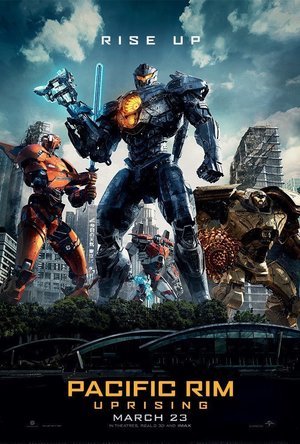
Jake Pentecost (John Boyega) is a once-promising Jaeger pilot whose legendary father gave his life to secure humanity’s victory against the monstrous Kaiju. Jake has since abandoned his training only to become caught up in a criminal underworld. But when an even more unstoppable threat is unleashed to tear through cities and bring the world to its knees, Jake is given one last chance by his estranged sister, Mako Mori (Rinko Kikuchi), to live up to his father’s legacy.
Coming hot off the heels of his performance in Star Wars: The Last Jedi, John Boyega channels his franchise father, Idris Elba, reasonably well and his estranged relationship with the former jaeger pilot is discussed, albeit briefly. Boyega is still discovering himself as a leading star and it’s films like Pacific Rim and Star Wars that he continues to impress in.
Here, he plays a cocky, arrogant young man who has lost his way until he’s given a second chance by returnee Mako (Kikuchi). It’s nice to see her and both Charlie Day’s Newton Geiszler and Burn Gorman’s Hermann Gottlieb return to this new series.
The inclusion of the film’s previous stars doesn’t feel unnecessarily shoe-horned in and this is a welcome change to many other films that try the same trick. Gorman and Day in particular provide some decent comic relief throughout. The weakest link over the course of the film is Scott Eastwood’s Ranger Lambert. His forced backstory with Boyega’s Pentecost isn’t particularly engaging.
The finale is punch-the-air fun and beautifully filmed in and around Tokyo
Setting the action a decade after the events of the first film is a good way to freshen things up and Uprising feels all the better for it. The world is continuing to recover from the previous war and this change in atmosphere lends a new dynamic to the film. It certainly looks and sounds a lot like its predecessor, but Uprising is a very different beast, both in storytelling and the way it presents that story.
Where Pacific Rimwas a paint-by-numbers adventure transformed by Del Toro’s stunning visual acuity, Uprising is a well-plotted movie that lacks its previous director’s soft touch. Director Steven S. DeKnight rightly carves his own path with the visuals but sometimes this is at the cost of the charm that made the original such an unexpected delight. The plot is actually much better than that of its predecessor with numerous twists and turns that create a fun atmosphere for the audience, but with four writers working on it, you’d expect nothing less.
There are some Del-Toro-isms still present however and these remind us that this is very much more than a Michael Bay Transformers film. The special effects are excellent and with De Knight’s decision to film as much as possible during the day (a stark contrast to Del Toro) there really is nowhere to hide. The jaegers and Kaiju are all as detailed as you would expect from a movie costing $150million.
At 111 minutes, Pacific Rim: Uprising zips along briskly and rarely leaves you wanting. The finale is punch-the-air fun and beautifully filmed in and around Tokyo. It may be a cynical marketing ploy to set portions of the film in Japan and China in order to appease international audiences, but it does lend itself to some lovely scenery.
Overall, Pacific Rim: Uprising is a film that manages to build upon its predecessor’s strong foundations, yet still manages to feel very much part of its universe. Sequels, especially to films that don’t perform well are risky business as movie studios try to save as much cash as possible, but thankfully Uprising is a fully-realised and confidently filmed second instalment. It’s loud, brash and completely unashamed of what it tries to be, but sometimes that’s all you want from a visit to the cinema. Call it Classy Transformers and you won’t be far from spot on.
https://moviemetropolis.net/2018/03/24/pacific-rim-uprising-absolutely-bonkers/
For those movie buffs reading this, you’ll of course know the film was directed by the Oscar-winning Guillermo Del Toro and with that came his signature quirks and visual sense of style. Oh yes, Pacific Rim was much more than a mish-mash of action.
A sequel looked very unlikely given the mediocre reception it received and then Del Toro passed on the idea altogether, instead focusing on the film that earned him a Best Director award at this year’s Oscars, The Shape of Water. I’m not going to pretend that was the wrong decision because it clearly wasn’t.
Nevertheless, Universal and Legendary pictures, with help from Del Toro handpicked little-known director Steven S. DeKnight to helm this second instalment in the new series, Pacific Rim: Uprising. It’s taken five years and $150million to get here. Was it worth it?
Jake Pentecost (John Boyega) is a once-promising Jaeger pilot whose legendary father gave his life to secure humanity’s victory against the monstrous Kaiju. Jake has since abandoned his training only to become caught up in a criminal underworld. But when an even more unstoppable threat is unleashed to tear through cities and bring the world to its knees, Jake is given one last chance by his estranged sister, Mako Mori (Rinko Kikuchi), to live up to his father’s legacy.
Coming hot off the heels of his performance in Star Wars: The Last Jedi, John Boyega channels his franchise father, Idris Elba, reasonably well and his estranged relationship with the former jaeger pilot is discussed, albeit briefly. Boyega is still discovering himself as a leading star and it’s films like Pacific Rim and Star Wars that he continues to impress in.
Here, he plays a cocky, arrogant young man who has lost his way until he’s given a second chance by returnee Mako (Kikuchi). It’s nice to see her and both Charlie Day’s Newton Geiszler and Burn Gorman’s Hermann Gottlieb return to this new series.
The inclusion of the film’s previous stars doesn’t feel unnecessarily shoe-horned in and this is a welcome change to many other films that try the same trick. Gorman and Day in particular provide some decent comic relief throughout. The weakest link over the course of the film is Scott Eastwood’s Ranger Lambert. His forced backstory with Boyega’s Pentecost isn’t particularly engaging.
The finale is punch-the-air fun and beautifully filmed in and around Tokyo
Setting the action a decade after the events of the first film is a good way to freshen things up and Uprising feels all the better for it. The world is continuing to recover from the previous war and this change in atmosphere lends a new dynamic to the film. It certainly looks and sounds a lot like its predecessor, but Uprising is a very different beast, both in storytelling and the way it presents that story.
Where Pacific Rimwas a paint-by-numbers adventure transformed by Del Toro’s stunning visual acuity, Uprising is a well-plotted movie that lacks its previous director’s soft touch. Director Steven S. DeKnight rightly carves his own path with the visuals but sometimes this is at the cost of the charm that made the original such an unexpected delight. The plot is actually much better than that of its predecessor with numerous twists and turns that create a fun atmosphere for the audience, but with four writers working on it, you’d expect nothing less.
There are some Del-Toro-isms still present however and these remind us that this is very much more than a Michael Bay Transformers film. The special effects are excellent and with De Knight’s decision to film as much as possible during the day (a stark contrast to Del Toro) there really is nowhere to hide. The jaegers and Kaiju are all as detailed as you would expect from a movie costing $150million.
At 111 minutes, Pacific Rim: Uprising zips along briskly and rarely leaves you wanting. The finale is punch-the-air fun and beautifully filmed in and around Tokyo. It may be a cynical marketing ploy to set portions of the film in Japan and China in order to appease international audiences, but it does lend itself to some lovely scenery.
Overall, Pacific Rim: Uprising is a film that manages to build upon its predecessor’s strong foundations, yet still manages to feel very much part of its universe. Sequels, especially to films that don’t perform well are risky business as movie studios try to save as much cash as possible, but thankfully Uprising is a fully-realised and confidently filmed second instalment. It’s loud, brash and completely unashamed of what it tries to be, but sometimes that’s all you want from a visit to the cinema. Call it Classy Transformers and you won’t be far from spot on.
https://moviemetropolis.net/2018/03/24/pacific-rim-uprising-absolutely-bonkers/

Gareth von Kallenbach (980 KP) rated Call of Duty: Black Ops II - Uprising in Video Games
Jun 19, 2019
With the recent announcement of Call of Duty: Ghosts speculation has run rampant as to what the series has in store especially with the promise of the new gaming engine and new consoles on the horizon. However Call of Duty: Black Ops II shows that there’s still plenty of life left in the game with the release of Uprising, the second of four planned map packs for the game. Uprising is available for the Xbox 360, PlayStation 3, and PC versions of the game and does require the original game in order to play. Players can purchase the map pack individually or as part of a season pass that allows all past and future content for the game to be acquired at a discounted price.
The pack offers for new maps as well as a new zombie mode called Mob of the Dead, which casts players as inmates at Alcatraz which is being overrun by the undead. Gameplay wise it is similar to pass on the modes in net weapons, power ups, ammunition, and access to other areas of the maps can be obtained through purchase using the in game currency accrued from dispatching the undead.
There is also a nice surprise to this that in addition to trying to locate and assemble parts to make your escape, the voice talents of Michael Madsen, Joe Pantoliano, Chazz Palminteri, and Ray Liotta, provide a very nice depth to the game as they helped bring an infusion of personality to the characters which really makes you care about their outcome.
There is an afterlife mode as well which is necessary for accessing certain areas and gathering components needed for survival. It is also very satisfying to shock some of the undead minions while in this gameplay mode. Players were one and make sure to avoid the new boss Brutus who gives out a solid amount of damage every time he appears.
The four maps are available for play in various modes such as Team Death Match and Mosh Pit but do not offer the number of online modes that are available for the standard version of the game.
Vertigo is set in a futuristic high-rise in India and requires gamers to be very careful about where they step if they wish to avoid plummeting several stories to their doom. With a circular outside platform and limited indoor areas the emphasis is on using cover as much as possible especially from the abundant cargo and air-conditioning units that litter the map. I found this to be the least satisfying for my style of play as not being able to run, and constantly being at the mercy of snipers did make it very frustrating for me.
Encore is set in London at a music festival and offers a nice mix of options for players of all gaming styles. From the backstage area which is ideal for setting mines and other traps, to the grandstand boxes which offer numerous opportunities for snipers to ply their craft. Since neither these are my style of play, I was content to work my way under the stage, and through the clubs, restrooms, and park areas as well as on stage to catch enemy units transitioning from one point of the map to the other. The key is not stay in one place too long as I start to the run and gun mode and had solid success.
Magma is set in Japan following a volcanic eruption. Having to avoid lava and make your way over cooling areas through the village is definitely a nice visual touch. Everything from fish markets to subway stations and trains are on hand, but players have to be quick on the trigger as there are numerous areas for enemies to hide and blend into the shadows. Once I learned some of the nuances of the map, I did find myself having better luck and have racked up scores closer to my average on this one.
Studio is a reworking of the classic Firing Line map and is set at a Hollywood film studio. From the long areas of the lot which are ideal for snipers as well as the ample rooftop spaces, players must be on their toes because death can come from anywhere at any time. From a T Rex to a crashed alien ship this map has plenty of variety. One moment you are moving through a medieval castle, the next moment you are walking through a saloon and then stomping a miniaturized city like Godzilla. There are also plenty of other great locales and it would be fun just to run through and sightsee if there was not so much mayhem going on around you.
I find it best to avoid snipers zones and make your way through the areas that offer plenty of cover and make great use of the trailers as they certainly provide cover and great areas of transition as well as ambush.
While uprising does not offer anything new in terms of weaponry, equipment, or rewards, what it does offer is several hours of new gameplay enjoyment for friends of the series who are in need of effects while they wait for the next release in the series. With two more map scheduled between now and November, you’ll want to check this out and as long as you are moderate in your expectations understanding these are simply new maps to enhance your gameplay, then you might find yourself really enjoying what is being offered with this diverse yet enjoyable collection.
http://sknr.net/2013/05/19/call-of-duty-black-ops-2-uprising/
The pack offers for new maps as well as a new zombie mode called Mob of the Dead, which casts players as inmates at Alcatraz which is being overrun by the undead. Gameplay wise it is similar to pass on the modes in net weapons, power ups, ammunition, and access to other areas of the maps can be obtained through purchase using the in game currency accrued from dispatching the undead.
There is also a nice surprise to this that in addition to trying to locate and assemble parts to make your escape, the voice talents of Michael Madsen, Joe Pantoliano, Chazz Palminteri, and Ray Liotta, provide a very nice depth to the game as they helped bring an infusion of personality to the characters which really makes you care about their outcome.
There is an afterlife mode as well which is necessary for accessing certain areas and gathering components needed for survival. It is also very satisfying to shock some of the undead minions while in this gameplay mode. Players were one and make sure to avoid the new boss Brutus who gives out a solid amount of damage every time he appears.
The four maps are available for play in various modes such as Team Death Match and Mosh Pit but do not offer the number of online modes that are available for the standard version of the game.
Vertigo is set in a futuristic high-rise in India and requires gamers to be very careful about where they step if they wish to avoid plummeting several stories to their doom. With a circular outside platform and limited indoor areas the emphasis is on using cover as much as possible especially from the abundant cargo and air-conditioning units that litter the map. I found this to be the least satisfying for my style of play as not being able to run, and constantly being at the mercy of snipers did make it very frustrating for me.
Encore is set in London at a music festival and offers a nice mix of options for players of all gaming styles. From the backstage area which is ideal for setting mines and other traps, to the grandstand boxes which offer numerous opportunities for snipers to ply their craft. Since neither these are my style of play, I was content to work my way under the stage, and through the clubs, restrooms, and park areas as well as on stage to catch enemy units transitioning from one point of the map to the other. The key is not stay in one place too long as I start to the run and gun mode and had solid success.
Magma is set in Japan following a volcanic eruption. Having to avoid lava and make your way over cooling areas through the village is definitely a nice visual touch. Everything from fish markets to subway stations and trains are on hand, but players have to be quick on the trigger as there are numerous areas for enemies to hide and blend into the shadows. Once I learned some of the nuances of the map, I did find myself having better luck and have racked up scores closer to my average on this one.
Studio is a reworking of the classic Firing Line map and is set at a Hollywood film studio. From the long areas of the lot which are ideal for snipers as well as the ample rooftop spaces, players must be on their toes because death can come from anywhere at any time. From a T Rex to a crashed alien ship this map has plenty of variety. One moment you are moving through a medieval castle, the next moment you are walking through a saloon and then stomping a miniaturized city like Godzilla. There are also plenty of other great locales and it would be fun just to run through and sightsee if there was not so much mayhem going on around you.
I find it best to avoid snipers zones and make your way through the areas that offer plenty of cover and make great use of the trailers as they certainly provide cover and great areas of transition as well as ambush.
While uprising does not offer anything new in terms of weaponry, equipment, or rewards, what it does offer is several hours of new gameplay enjoyment for friends of the series who are in need of effects while they wait for the next release in the series. With two more map scheduled between now and November, you’ll want to check this out and as long as you are moderate in your expectations understanding these are simply new maps to enhance your gameplay, then you might find yourself really enjoying what is being offered with this diverse yet enjoyable collection.
http://sknr.net/2013/05/19/call-of-duty-black-ops-2-uprising/
Ryan Hill (152 KP) rated Godzilla (2014) in Movies
Jun 28, 2019
"let them fight"
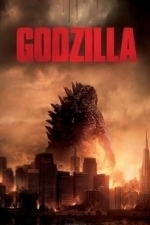
This film is an absolute masterpiece. Not once did I find myself getting bored or losing track of the plot - something that happens commonly when I watch longer movies - and I was gutted when it was over. Not because I was disappointed, but because I desperately wanted more. Gareth Edwards' film takes monster movies to a whole new level, with some nice twists to the usual "Godzilla" story lines, a fantastic cast and some of the best action sequences I have ever had the pleasure of seeing.
The first thing to mention about this film is its cast and its focus on the human characters, played mainly by Aaron Taylor-Johnson (Lieutenant Ford Brody), Elizabeth Olsen (Elle Brody, Ford's wife), and Bryan Cranston (Joe Brody, Ford's estranged father). Bryan Cranston is only really in the first half, portraying his character as a very outcast, yet very determined former nuclear engineer who is searching for the truth about his wife's tragic death. He was fantastic in the role delivering each line with emotion and conviction he was the best character in the film and I wish he was in the film longer. His theories beautifully foreshadow the events to come, and he drags his son, Ford, right into the heart of the trouble. Thankfully, this means that we get to see lots of the brilliant Aaron Taylor- Johnson, a courageous explosive ordnance disposal technician who comes face-to-face with Godzilla several times. Literally. Aaron Taylor-Johnson really is the star here, and the scenes with his wife, Elle, and son, Sam, before any of the action starts makes his actions later on all the more respectable and courageous as he risks his life to save them and the entire city. Elizabeth Olsen isn't used as much as I would have liked, as she is fantastic in the scenes in which we see her. Having said that, she does appear a fair amount, as the strong wife and mother holding back her terror in order to stay and help. Her scenes with Aaron Taylor- Johnson are great too, and make for some very believable characters. The other main character is Dr Serizawa (played by Ken Watanabe), a scientist monitoring Godzilla and the MUTOs. He doesn't really do much apart from look very worried in every shot and say tense or shocking one-liners, but Ken Watanabe makes sure that it's never cringe-worthy or boring.
Secondly we have Gareth Edwards' directing - wow! I need to see more of this guy! Every shot looks as good as it could possibly be, and the first reveal of Godzilla is brilliant. There's a MUTO smashing up an airport. Cue plane exploding, followed by the one to the right, and then the one to the right, and then… a foot. Silence. Another foot. Cut to a shot of the MUTO roaring, and then back to the feet. Up the camera pans (for quite a long time!), leaving us with a beautiful high-angle shot of the beast himself. And then comes the roar. There's another great shot of Godzilla making his way across the Pacific to San Francisco, and another in the city itself of… well, there's no other way of putting it – Godzilla and a MUTO having a good old' fashioned fistfight, which culminates in a pretty fantastic and well-timed tail slam from the big guy. The skyscrapers don't really bother them. It's just a long shot, and in it we see two giant monsters ripping each other to shreds and obliviously destroying the city below. Another great shot (or shots) is during the HALO jump, as we see the city in flames, the men falling through the clouds and the burning skyline and a close-up of a Godzilla vs MUTO fight.
Now I'll move on to the plot and the headline acts – the MUTOs and the big guy himself, Godzilla. The plot is very straightforward. A MUTO hatches in Japan, one hatches in Nevada next to Las Vegas, and this is all because they've been feeding on humanity's nuclear waste and radiation. Oh, and by the way, the MUTOs look brilliant. Imagine a metal praying mantis crossed with a four-legged spider, as tall as a skyscraper. That's a MUTO. Anyway, Ford joins the fight to stop the creatures, and as they make their way to San Francisco the military plan to destroy them with their most powerful nuclear weapon. Godzilla is closing in too, and when the pesky MUTOs steal the nuke and build their nest around it, Ford and a group of soldiers must go into the city to detonate it. However, Godzilla and the MUTOs are also in the city, smashing everything (including each other) to bits. It's very odd that, for once, we end up cheering Godzilla on, as the two MUTOs begin to overwhelm him as he is seemingly hurt. And then he is actually made out to be the good guy (a twist I enjoyed), as he saves Ford in a spectacular way from a MUTO and the media call him " the saviour of our city?". 'Zilla looks amazing too. "Massive" is probably an understatement, but the spikes on his back, the battle scars on his body and his terrifying face make him look awesome. Also, his roar had me jumping up and down with excitement, as did his surprise for the MUTOs: his atomic fire breath.
All in all, "Godzilla" is one fantastic movie. No longer a mockery, but terrifying, tense, and, unlike many monster movies, it is complex. Complex in that it has multiple characters with interesting back-stories (that are all explored) and gives Godzilla a new personality and purpose. Everything looks great, it feels epic, and I enjoyed every moment. This is a movie that would appeal to anyone.
The first thing to mention about this film is its cast and its focus on the human characters, played mainly by Aaron Taylor-Johnson (Lieutenant Ford Brody), Elizabeth Olsen (Elle Brody, Ford's wife), and Bryan Cranston (Joe Brody, Ford's estranged father). Bryan Cranston is only really in the first half, portraying his character as a very outcast, yet very determined former nuclear engineer who is searching for the truth about his wife's tragic death. He was fantastic in the role delivering each line with emotion and conviction he was the best character in the film and I wish he was in the film longer. His theories beautifully foreshadow the events to come, and he drags his son, Ford, right into the heart of the trouble. Thankfully, this means that we get to see lots of the brilliant Aaron Taylor- Johnson, a courageous explosive ordnance disposal technician who comes face-to-face with Godzilla several times. Literally. Aaron Taylor-Johnson really is the star here, and the scenes with his wife, Elle, and son, Sam, before any of the action starts makes his actions later on all the more respectable and courageous as he risks his life to save them and the entire city. Elizabeth Olsen isn't used as much as I would have liked, as she is fantastic in the scenes in which we see her. Having said that, she does appear a fair amount, as the strong wife and mother holding back her terror in order to stay and help. Her scenes with Aaron Taylor- Johnson are great too, and make for some very believable characters. The other main character is Dr Serizawa (played by Ken Watanabe), a scientist monitoring Godzilla and the MUTOs. He doesn't really do much apart from look very worried in every shot and say tense or shocking one-liners, but Ken Watanabe makes sure that it's never cringe-worthy or boring.
Secondly we have Gareth Edwards' directing - wow! I need to see more of this guy! Every shot looks as good as it could possibly be, and the first reveal of Godzilla is brilliant. There's a MUTO smashing up an airport. Cue plane exploding, followed by the one to the right, and then the one to the right, and then… a foot. Silence. Another foot. Cut to a shot of the MUTO roaring, and then back to the feet. Up the camera pans (for quite a long time!), leaving us with a beautiful high-angle shot of the beast himself. And then comes the roar. There's another great shot of Godzilla making his way across the Pacific to San Francisco, and another in the city itself of… well, there's no other way of putting it – Godzilla and a MUTO having a good old' fashioned fistfight, which culminates in a pretty fantastic and well-timed tail slam from the big guy. The skyscrapers don't really bother them. It's just a long shot, and in it we see two giant monsters ripping each other to shreds and obliviously destroying the city below. Another great shot (or shots) is during the HALO jump, as we see the city in flames, the men falling through the clouds and the burning skyline and a close-up of a Godzilla vs MUTO fight.
Now I'll move on to the plot and the headline acts – the MUTOs and the big guy himself, Godzilla. The plot is very straightforward. A MUTO hatches in Japan, one hatches in Nevada next to Las Vegas, and this is all because they've been feeding on humanity's nuclear waste and radiation. Oh, and by the way, the MUTOs look brilliant. Imagine a metal praying mantis crossed with a four-legged spider, as tall as a skyscraper. That's a MUTO. Anyway, Ford joins the fight to stop the creatures, and as they make their way to San Francisco the military plan to destroy them with their most powerful nuclear weapon. Godzilla is closing in too, and when the pesky MUTOs steal the nuke and build their nest around it, Ford and a group of soldiers must go into the city to detonate it. However, Godzilla and the MUTOs are also in the city, smashing everything (including each other) to bits. It's very odd that, for once, we end up cheering Godzilla on, as the two MUTOs begin to overwhelm him as he is seemingly hurt. And then he is actually made out to be the good guy (a twist I enjoyed), as he saves Ford in a spectacular way from a MUTO and the media call him " the saviour of our city?". 'Zilla looks amazing too. "Massive" is probably an understatement, but the spikes on his back, the battle scars on his body and his terrifying face make him look awesome. Also, his roar had me jumping up and down with excitement, as did his surprise for the MUTOs: his atomic fire breath.
All in all, "Godzilla" is one fantastic movie. No longer a mockery, but terrifying, tense, and, unlike many monster movies, it is complex. Complex in that it has multiple characters with interesting back-stories (that are all explored) and gives Godzilla a new personality and purpose. Everything looks great, it feels epic, and I enjoyed every moment. This is a movie that would appeal to anyone.
Gareth von Kallenbach (980 KP) rated Shining Resonance Refrain in Video Games
Aug 14, 2019
I’ll be the first to admit that I’ve never been a huge fan of JRPG’s, but I really don’t have any reasons why. Growing up I loved watching the Shogun Warrior feature length cartoons and I’m a huge fan of RPG’s in general, so you’d think they’d be right up my alley. I’ve tried and tried to figure out why I have such a hard time sinking into them, and while I have never completed a Final Fantasy game, I continue to buy them in the hopes that one of these days I’ll just get it. So, I’m probably not the first person that would come to mind to review a game like Shining Resonance Refrain, a game that was released exclusively in Japan on PS3 back in 2014. Yet here we are, 4 years later, with a version released for the PS4, Xbox One, PC, and Nintendo Switch, with updated graphics and English voice acting.
Shining Resonance Refrain has you take on the role of a young man named Yuma who has been held captive and experimented on by the main antagonists of the game, the Lombardian Empire. Yuma possesses the soul of the Shining Dragon, the most powerful dragon in the land of Alfheim. The Lombardian Empire is attempting to gather all the souls of the long-forgotten dragons in an effort to break a stalemate between the waring countries of Astoria and the Lombardian Empire. The only thing standing in their way are Yuma, his dragon soul and a powerful set of weapons known as the Armonics.
Quests and exploration are key to moving the story along, with the main quests involving attempts to hinder the Lombardian Empire’s search for the remaining dragon souls. There are also side quests that help you earn money and experience for your characters. The quests are either your typical fetch type quests or the type where you go to this area, fight this major boss, and then return to the castle. The world is broken up into much smaller zones, representing numerous landmarks on the map. Traveling to a particular spot on the map means going from zone to zone until you reach your final destination. The zones are very small, so traveling between them isn’t a huge problem, but not being able to use fast-travel between the zones you have already explored means you will spend a lot of time going back and forth between your castle and your next quest. It isn’t a huge deal breaker in the game, but the areas aren’t always very interesting, and going back and forth amongst the same areas over and over can get old the further you get in the game.
Combat is a mixed bag as well. During your quests, you will encounter various creatures wandering the zones. The battles take place in real time and each character has a set of action points that are used for physical attacks and magic points used for your special abilities and “breaker” moves. As your character levels up, you gain access to different magical attacks, which you can swap out as you choose, but most of the time your battles are simply button mashing your way through them with little strategy involved. The battles are also extremely inconsistent, as battling the various creatures is almost too easy (even at standard difficulty) but battling the boss monsters is almost entirely too hard. There is a HUGE difficulty curve when fighting the boss monsters, to a point where I sometimes had to drop the difficulty to casual and still had to fight a boss 3-4 times to beat them. On standard difficulty, I’d typically give up after succumbing to the same boss repeatedly. Even in the later stages of the games the boss battles do not let up, but the normal battles are practically a cake walk.
In addition to your standard and magical attacks there is also a B.A.N.D special attack where you get additional powers depending on the character who initiates it. Some B.A.N.D attacks provide guaranteed hits, while others increase the damage of your magical attacks. On the left-hand side of the screen there is a bar with three levels that fills while you battle your way through the enemies. Each level increases the longevity that the B.A.N.D lasts, so it’s almost always preferable to save these special attacks for the boss battles. Yuma also has the ability to turn into the Shining Dragon who can release devastating attacks, however if your magic points drop too low the dragon goes into a berserker attack and will throw damage at friends and enemies alike. This is never good, so when playing as the Shining Dragon it’s key to turn back into Yuma before losing control.
Graphically the game is beautiful, and if anime or JRPG’s are your thing you will definitely appreciate the update to the original graphics. The graphics do stick closely to the standard JRPG tropes of ridiculously large weapons and warriors in short skirts, etc. so it looks like many of the other JRPGs on the market today. That’s not necessarily bad, it has just worn out its originality over the years. The sound can get extremely repetitive as well, especially in battle where your characters repeat the same catch phrases over and over again. Once again, that’s not to say that the sound is bad, but it gets old quickly. There are some other technical idiosyncrasies that were also particularly jarring. For example, if Yuma is killed in combat, you can run back to town with whichever character has taken over the “leader” role, but the minute you enter town, Yuma reappears as the controlling character. I get that he’s the main character and it doesn’t make much sense for the other characters to run around asking for quests, but his sudden reappearance even though you know he’s dead takes some getting used to.
So, is Shining Resonance Refrain a game that made me take another look at JRPGs? Well, yes and no if I’m being completely honest. It’s around 30+ hours for the main story and side quests and I’ll admit that the more time I spent with the game the more I enjoyed it. After about an hour of my mental block on JRPG games in general, I was able to get into the groove of things and power my way through it. That being said, I still felt the story was a little bit ridiculous and some of the characters really started to grate on my nerves. Even the main character Yuma tended to be a bit too wimpy for me. He can turn himself into the mightiest of dragons but doesn’t know if he can handle it, I often had the feeling that he should get over himself and embrace this incredible power. In the end, I really did enjoy it, once I overlooked a lot of it, and it actually did put me in the mood to go back and try one of the Final Fantasy games. I can’t say that Shining Resonance Refrain converted me to a diehard JRPG fan, but it certainly made me want to give them another try and that is a win in my book.
What I liked: Unique Characters, General feel of combat
What I liked less: Inconsistent difficulty, Repetitive phrases and sound effects
Shining Resonance Refrain has you take on the role of a young man named Yuma who has been held captive and experimented on by the main antagonists of the game, the Lombardian Empire. Yuma possesses the soul of the Shining Dragon, the most powerful dragon in the land of Alfheim. The Lombardian Empire is attempting to gather all the souls of the long-forgotten dragons in an effort to break a stalemate between the waring countries of Astoria and the Lombardian Empire. The only thing standing in their way are Yuma, his dragon soul and a powerful set of weapons known as the Armonics.
Quests and exploration are key to moving the story along, with the main quests involving attempts to hinder the Lombardian Empire’s search for the remaining dragon souls. There are also side quests that help you earn money and experience for your characters. The quests are either your typical fetch type quests or the type where you go to this area, fight this major boss, and then return to the castle. The world is broken up into much smaller zones, representing numerous landmarks on the map. Traveling to a particular spot on the map means going from zone to zone until you reach your final destination. The zones are very small, so traveling between them isn’t a huge problem, but not being able to use fast-travel between the zones you have already explored means you will spend a lot of time going back and forth between your castle and your next quest. It isn’t a huge deal breaker in the game, but the areas aren’t always very interesting, and going back and forth amongst the same areas over and over can get old the further you get in the game.
Combat is a mixed bag as well. During your quests, you will encounter various creatures wandering the zones. The battles take place in real time and each character has a set of action points that are used for physical attacks and magic points used for your special abilities and “breaker” moves. As your character levels up, you gain access to different magical attacks, which you can swap out as you choose, but most of the time your battles are simply button mashing your way through them with little strategy involved. The battles are also extremely inconsistent, as battling the various creatures is almost too easy (even at standard difficulty) but battling the boss monsters is almost entirely too hard. There is a HUGE difficulty curve when fighting the boss monsters, to a point where I sometimes had to drop the difficulty to casual and still had to fight a boss 3-4 times to beat them. On standard difficulty, I’d typically give up after succumbing to the same boss repeatedly. Even in the later stages of the games the boss battles do not let up, but the normal battles are practically a cake walk.
In addition to your standard and magical attacks there is also a B.A.N.D special attack where you get additional powers depending on the character who initiates it. Some B.A.N.D attacks provide guaranteed hits, while others increase the damage of your magical attacks. On the left-hand side of the screen there is a bar with three levels that fills while you battle your way through the enemies. Each level increases the longevity that the B.A.N.D lasts, so it’s almost always preferable to save these special attacks for the boss battles. Yuma also has the ability to turn into the Shining Dragon who can release devastating attacks, however if your magic points drop too low the dragon goes into a berserker attack and will throw damage at friends and enemies alike. This is never good, so when playing as the Shining Dragon it’s key to turn back into Yuma before losing control.
Graphically the game is beautiful, and if anime or JRPG’s are your thing you will definitely appreciate the update to the original graphics. The graphics do stick closely to the standard JRPG tropes of ridiculously large weapons and warriors in short skirts, etc. so it looks like many of the other JRPGs on the market today. That’s not necessarily bad, it has just worn out its originality over the years. The sound can get extremely repetitive as well, especially in battle where your characters repeat the same catch phrases over and over again. Once again, that’s not to say that the sound is bad, but it gets old quickly. There are some other technical idiosyncrasies that were also particularly jarring. For example, if Yuma is killed in combat, you can run back to town with whichever character has taken over the “leader” role, but the minute you enter town, Yuma reappears as the controlling character. I get that he’s the main character and it doesn’t make much sense for the other characters to run around asking for quests, but his sudden reappearance even though you know he’s dead takes some getting used to.
So, is Shining Resonance Refrain a game that made me take another look at JRPGs? Well, yes and no if I’m being completely honest. It’s around 30+ hours for the main story and side quests and I’ll admit that the more time I spent with the game the more I enjoyed it. After about an hour of my mental block on JRPG games in general, I was able to get into the groove of things and power my way through it. That being said, I still felt the story was a little bit ridiculous and some of the characters really started to grate on my nerves. Even the main character Yuma tended to be a bit too wimpy for me. He can turn himself into the mightiest of dragons but doesn’t know if he can handle it, I often had the feeling that he should get over himself and embrace this incredible power. In the end, I really did enjoy it, once I overlooked a lot of it, and it actually did put me in the mood to go back and try one of the Final Fantasy games. I can’t say that Shining Resonance Refrain converted me to a diehard JRPG fan, but it certainly made me want to give them another try and that is a win in my book.
What I liked: Unique Characters, General feel of combat
What I liked less: Inconsistent difficulty, Repetitive phrases and sound effects

EmersonRose (320 KP) rated The Buried Giant in Books
Nov 20, 2019
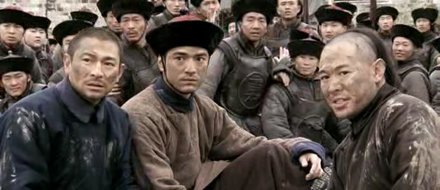
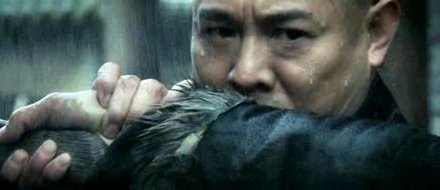
The winner of the 2017 Nobel Prize for Literature, Kazuo Ishiguro was born in 1954 in Nagasaki Japan, but he and his family moved in England in 1960. These two places and cultures have profoundly affected Ishiguro’s writing throughout his career. His first book, A Pale View of Hills, was published in 1982 and won the Winifred Holtby Memorial Prize, and he has since written seven novels and numerous short stories. His most recent book was The Buried Giant in 2015.
It is hard to pinpoint a genre to which Kazuo Ishiguro sticks to as he writes in fantasy, science-fiction, and historical. It can be said that all of his novels have the feeling of being set in the past even when the time period is not explicitly described, but the core theme that connects all of his writing together is memory. In each of his stories, Ishiguro examines how people use memory, how memory affects people, and who we are with or without memory.
Ishiguro explores many different ways in which memory affects people throughout his books ranging from memory loss to dream like memory distortion. In his books Never Let Me Go and The Remains of the Day the stories are told by narrators looking back at crucial moments in their lives. In letting us know that they are remembering their own pasts they admit that they are saying their perspective and their memory might be lacking. In this way letting the reader know that they are unreliable narrators. In The Remains of the Day the narrator, the butler Mr. Stevens decides to go on a journey to visit an old friend and along the way shows his unreliability in several ways. First in acknowledging how memory can change and fade over time.
“It occurs to me that elsewhere in attempting to gather such recollections, I may well have asserted that this memory derived from the minute immediately after Miss Kenton receiving news of her aunt’s death….But now, having thought further, I believed I may have been a little confused about this matter; that in fact, this fragment of memory derives from events that took place on an evening at least a few months after the death of Miss Kenton’s aunt” (212).
In this way, Steven’s is acknowledging human error which both shows his unreliability but gives a level of trust in the acknowledgment that he is doing his best to be truthful. This, however, is challenged because Steven’s informs us that he lies, at the very least through omission, to other characters. A clear case of this is when he allows himself to be considered a gentleman rather than a butler on several occasions throughout his journey. This becomes complex because he is allowing the reader in on the truth, but the very fact of admitting that he can lie further reveals his unreliability.
In Ishiguro’s most recent book, The Buried Giant, he looks at memory in a way that is similar to these previous stories but takes a new approach. His central two characters in this book, Axle, and Beatrice are an elderly couple setting out on a journey with almost no memory of who they are. Throughout the story, they remember or think they remember pieces of their pasts and in the process making them question who they really are. This uncertainty in themselves creates interesting questions of whether or not they want to remember their lives if they are happier not knowing, and if they can continue to live their lives the way they are with their new/old information?
“Yet are you so certain, good mistress, you wish to be free of this mist? Is it not better some things remain hidden from our minds?”
“It may be for some, father, but not for us. Axl and I wish to have again the happy moments we shared together. To be robbed of them is as if a thief came in the night and took what’s most precious from us.”
“Yet the mist covers all memories, the bad as well as the good. Isn’t that so, mistress?”
“We’ll have the bad ones come back too, even if they make us weep or shake with anger. For isn’t it the life we’ve shared?” (172).
In some of Ishiguro’s other work, he chooses to explore memory through the lens of a dreamlike state or surreal views, such as his short story A Village After Dark and the novel The Unconsoled. In these stories, the narrator enters into a new place and finds that they have slowly emerging memories connected to the places and people they meet. The Unconsoled creates a strange dynamic where the lead character Mr. Ryder has never been to this town before but finds himself confronted by childhood acquaintances as well as meeting a woman and child who treat him like husband and father and memories that support this begin to come back to him. In an interview Ishiguro did on the book in 1995, he summarizes the story as “an anxiety dream” as Mr. Ryder continually finds himself confronted with the expectation of him without being told anything in advance. At the beginning of the story, Mr. Ryder arrives at his hotel knowing that he will be playing at a concert in few days and is told he has a busy schedule up till then. At this point in the story, the anxiety dream state sets in Mr. Ryder continuously finds himself late to engagements, leaving people behind by accident and being dragged around town. As the story progresses, Mr. Ryder begins to have memories of a past associated with some of the people he has met, despite being introduced as completely new to the town. Some of these can be explained by the fact that as a reader we are dropped into a story after it has started but the memories of these instances only come back to Ryder after he has been told things have happened. This means that throughout the story it impossible to know whether or not the narrator has forgotten and is remembering or if the town is merely a dream limbo and nothing he is being told is real, to begin with.
Whether taking the more fantastical approach or the those that fall closer to realism, Ishiguro’s play with memory remains relatable to the readers. Each journey Ishiguro writes is designed to tackle something different about memory. The stories ask us questions about what memory and how much it affects who we are and our ability to live in our world. From whether or not we can know who we are without memory to how trustworthy our memories actually are. These questions, however fantastically asked, offer something to the reader that they can relate to. For memory is almost a fanatical force on its own that we all share and try to understand. It can play with us when we take it for granted and offer vulnerability and connection when shared with others. Ishiguro delves into these ideas in each of his works, ever exploring its uncertainty and power.
It is hard to pinpoint a genre to which Kazuo Ishiguro sticks to as he writes in fantasy, science-fiction, and historical. It can be said that all of his novels have the feeling of being set in the past even when the time period is not explicitly described, but the core theme that connects all of his writing together is memory. In each of his stories, Ishiguro examines how people use memory, how memory affects people, and who we are with or without memory.
Ishiguro explores many different ways in which memory affects people throughout his books ranging from memory loss to dream like memory distortion. In his books Never Let Me Go and The Remains of the Day the stories are told by narrators looking back at crucial moments in their lives. In letting us know that they are remembering their own pasts they admit that they are saying their perspective and their memory might be lacking. In this way letting the reader know that they are unreliable narrators. In The Remains of the Day the narrator, the butler Mr. Stevens decides to go on a journey to visit an old friend and along the way shows his unreliability in several ways. First in acknowledging how memory can change and fade over time.
“It occurs to me that elsewhere in attempting to gather such recollections, I may well have asserted that this memory derived from the minute immediately after Miss Kenton receiving news of her aunt’s death….But now, having thought further, I believed I may have been a little confused about this matter; that in fact, this fragment of memory derives from events that took place on an evening at least a few months after the death of Miss Kenton’s aunt” (212).
In this way, Steven’s is acknowledging human error which both shows his unreliability but gives a level of trust in the acknowledgment that he is doing his best to be truthful. This, however, is challenged because Steven’s informs us that he lies, at the very least through omission, to other characters. A clear case of this is when he allows himself to be considered a gentleman rather than a butler on several occasions throughout his journey. This becomes complex because he is allowing the reader in on the truth, but the very fact of admitting that he can lie further reveals his unreliability.
In Ishiguro’s most recent book, The Buried Giant, he looks at memory in a way that is similar to these previous stories but takes a new approach. His central two characters in this book, Axle, and Beatrice are an elderly couple setting out on a journey with almost no memory of who they are. Throughout the story, they remember or think they remember pieces of their pasts and in the process making them question who they really are. This uncertainty in themselves creates interesting questions of whether or not they want to remember their lives if they are happier not knowing, and if they can continue to live their lives the way they are with their new/old information?
“Yet are you so certain, good mistress, you wish to be free of this mist? Is it not better some things remain hidden from our minds?”
“It may be for some, father, but not for us. Axl and I wish to have again the happy moments we shared together. To be robbed of them is as if a thief came in the night and took what’s most precious from us.”
“Yet the mist covers all memories, the bad as well as the good. Isn’t that so, mistress?”
“We’ll have the bad ones come back too, even if they make us weep or shake with anger. For isn’t it the life we’ve shared?” (172).
In some of Ishiguro’s other work, he chooses to explore memory through the lens of a dreamlike state or surreal views, such as his short story A Village After Dark and the novel The Unconsoled. In these stories, the narrator enters into a new place and finds that they have slowly emerging memories connected to the places and people they meet. The Unconsoled creates a strange dynamic where the lead character Mr. Ryder has never been to this town before but finds himself confronted by childhood acquaintances as well as meeting a woman and child who treat him like husband and father and memories that support this begin to come back to him. In an interview Ishiguro did on the book in 1995, he summarizes the story as “an anxiety dream” as Mr. Ryder continually finds himself confronted with the expectation of him without being told anything in advance. At the beginning of the story, Mr. Ryder arrives at his hotel knowing that he will be playing at a concert in few days and is told he has a busy schedule up till then. At this point in the story, the anxiety dream state sets in Mr. Ryder continuously finds himself late to engagements, leaving people behind by accident and being dragged around town. As the story progresses, Mr. Ryder begins to have memories of a past associated with some of the people he has met, despite being introduced as completely new to the town. Some of these can be explained by the fact that as a reader we are dropped into a story after it has started but the memories of these instances only come back to Ryder after he has been told things have happened. This means that throughout the story it impossible to know whether or not the narrator has forgotten and is remembering or if the town is merely a dream limbo and nothing he is being told is real, to begin with.
Whether taking the more fantastical approach or the those that fall closer to realism, Ishiguro’s play with memory remains relatable to the readers. Each journey Ishiguro writes is designed to tackle something different about memory. The stories ask us questions about what memory and how much it affects who we are and our ability to live in our world. From whether or not we can know who we are without memory to how trustworthy our memories actually are. These questions, however fantastically asked, offer something to the reader that they can relate to. For memory is almost a fanatical force on its own that we all share and try to understand. It can play with us when we take it for granted and offer vulnerability and connection when shared with others. Ishiguro delves into these ideas in each of his works, ever exploring its uncertainty and power.