

The Bandersnatch (199 KP) rated A Little Princess in Books
Nov 7, 2019
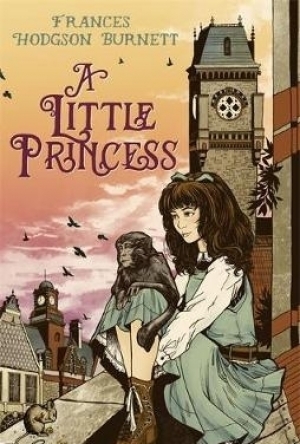


There are six film adaptions having been released in 1917, 1939, two in 1995 (One version being Filipino) with the most recent being a Russian film released in 1997. the most well known being the 1995 version being directed by Alfonso Cuaron. There have been seven TV shows based on A Little Princess with the 1973 and 1986 (Maureen Lipton was Miss Minchin) versions being particularly faithful to the books, the 1985, 2006 and 2009 versions were various Japanese anime and another Filipino remake happened in 2007. an episode of Veggietales in 2012 was another version of A little Princess. From 2002 to 2014 there have been several musical adaptions of a little princess as well.
Francis Eliza Hodgson Burnett was born in England on the 24th November 1849 in Cheetham, Manchester, England. When her father died in 1852 her family fell on hard times and Francis was looked after by her grandmother who fuelled her love of reading whilst her mother dealt with the family finances. The family eventually emigrated to the states in 1865 but remained somewhat poor thanks to the end of the American Civil war. Francis started writing in fever trying to help her family get out of the financial hole they were in and did so with her first story being published in the Godey's Lady's book in 1868 eventually being published regularly in its pages alongside Scribner's Monthly, Peterson's Magazine and Harper's Bazaar.
In 1872 Francis agreed to and married family friend Swan Burnett. She continued to write which supported them as they moved to Paris to allow Swan to train as an eye and ear doctor. Francis economised by making clothes for both their sons and for herself. The family returned to the US a few years later where swan managed to set up a doctoring business despite being in debt. For several years afterwards Francis wrote several short stories which were continuously published, Francis eventually turned to children's novels after a meeting with Mary Mapes Dodge the editor of children's magazine St Nicholas. In 1884 Francis set to work on Little Lord Fauntleroy which was serialised in 1885 and published in book form in 1886.
In 1887 Francis returned to England for Queen Victoria's golden jubilee which triggered yearly transatlantic trips between the US and England with her sons. She had fallen ill during this time and had spent time confined to bed, she did however managed to write both The Fortunes of Phillipa Fairfax (only published in the UK) and Sara Crewe or what happened at Miss Minchin's which was rewritten as A Little Princess. In December 1890 Francis and Swans eldest son Lionel died of consumption which spurred his mother into a depression and turn away form the Protestant faith and embrace spiritualism.
In 1898 After their youngest son Vivian finished school, Francis and Swan had divorced (though they had begun to drift apart and were living separate lives several years earlier) and two years later Francis had moved back to England and lived at Great Maytham Hall and married Stephan Townsend, which proved to be a terrible marriage and it ended in 1902. In 1907 Francis returned to the states and spent the next seventeen years in Plandome manor writing several more stories and editing for the Children's Magazine upon the insistence of her Son Vivian. Francis died on October 29th 1924 at the age of 72, she's buried in Roslyn Cemetery and her son Vivian is burred nearby having died in 1937.
I knew of the book as a child but didn't read it until I was a teenager, by then I did know of and had seen the 1995 movie directed by Alfonso Cuaron. The books theme of rising above and succeeding in the face of terrible times is a good thing to reed about. I definitely recommend the book to children and teenagers alike and I give it 9/10.

Purple Phoenix Games (2266 KP) rated The Seals of Cthulhu in Tabletop Games
Jun 9, 2021
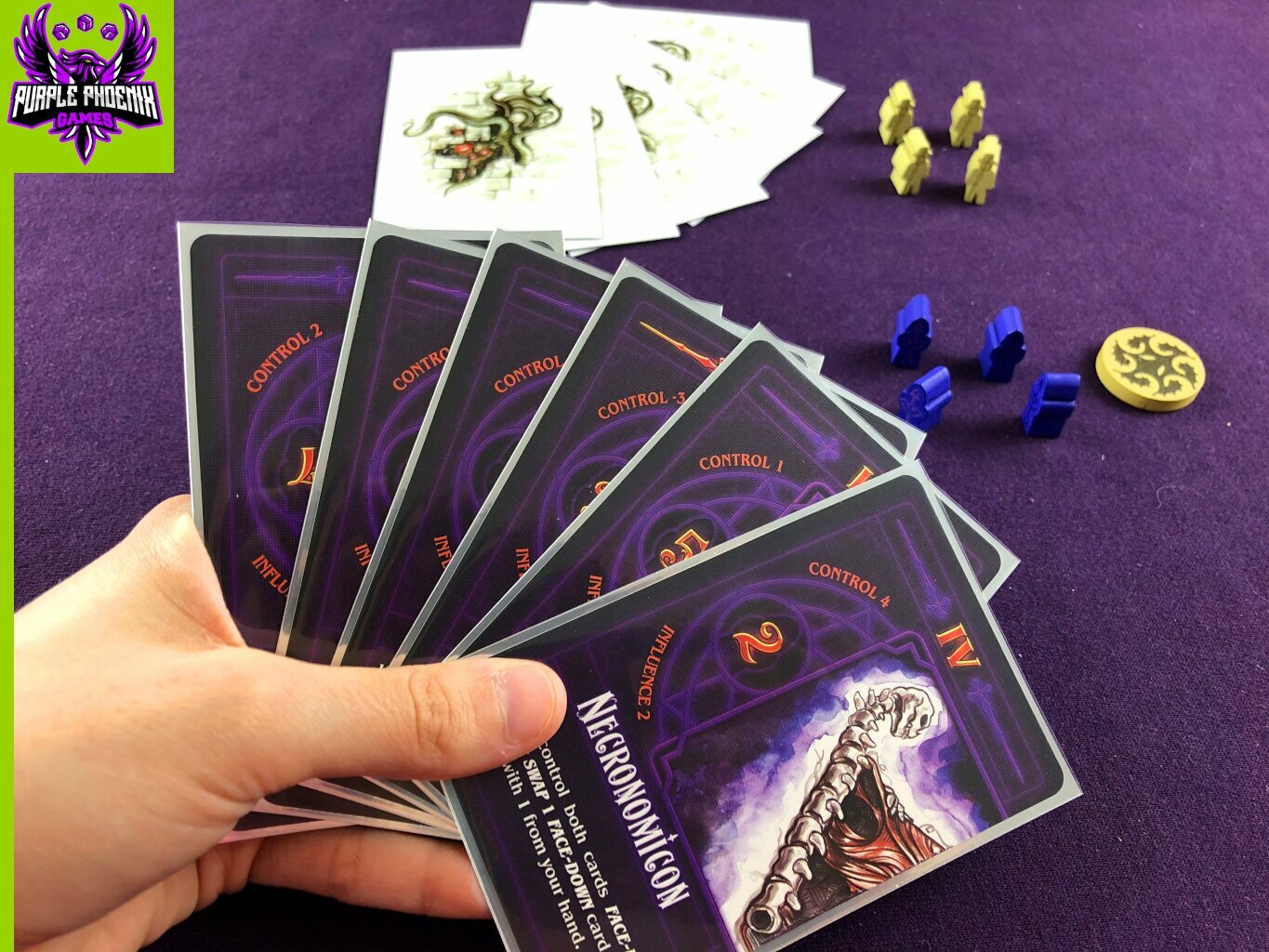
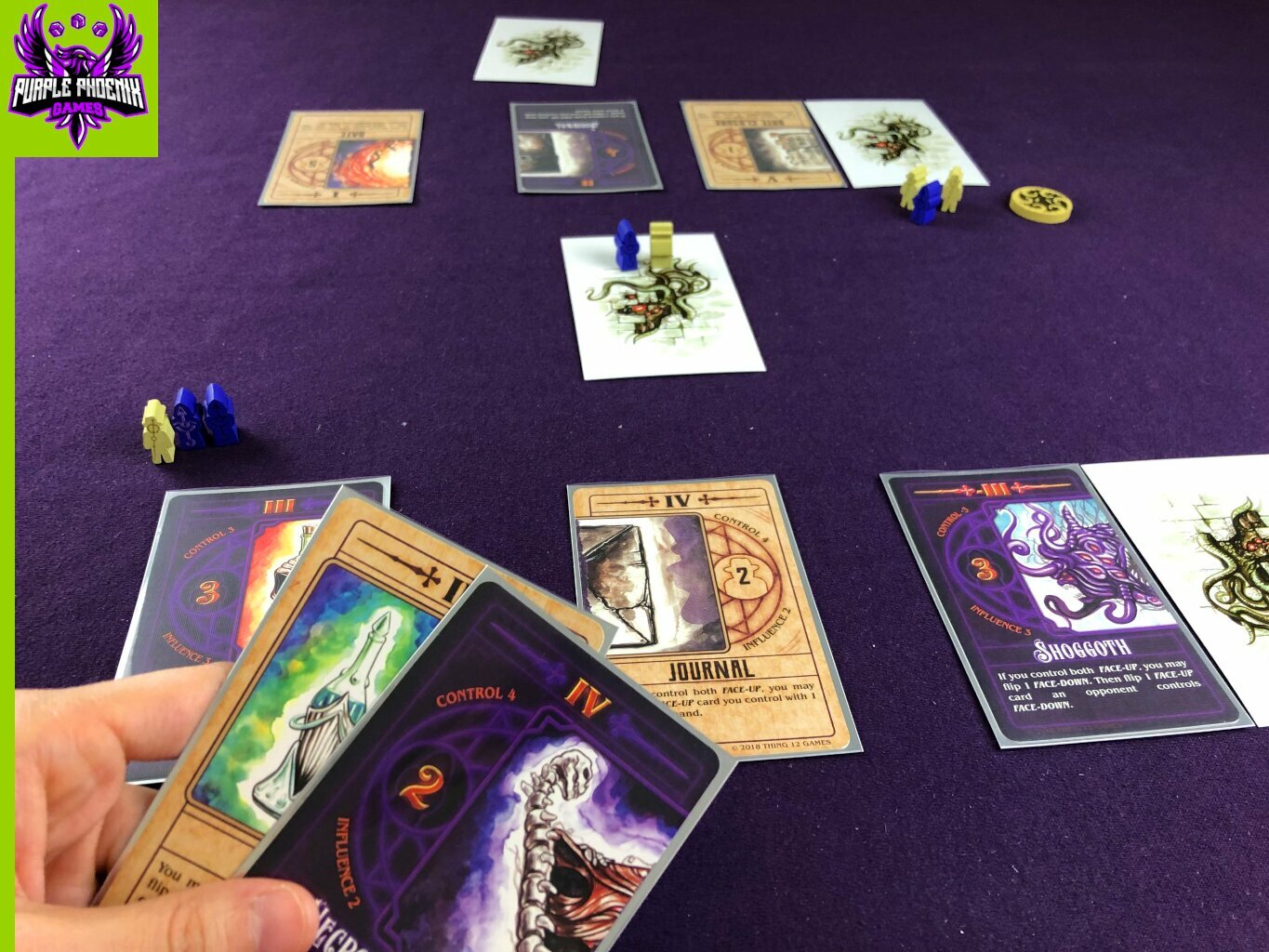
The Seals of Cthulhu is a 2-player game of bluffing and betting in which players are trying to amass the most Control points at the end of 5 rounds. To setup for a game, each player decides which role they will take on: Cultist or Investigator. Each player will receive the 4 Influence markers and 5 Artifact cards corresponding to their chosen role for the game. Players decide on which of the 7 Elder Gods they would like to play with, and takes that card into their hand as well. Select a starting player, who will receive the Active Player Marker, and the game is ready to begin!
On your turn, you will select 1 card from your hand and place it face-down between yourself and your opponent. After selecting a card, you will place a number of Influence markers that you control next to the card, serving as your bid for control of this card. Once you have made your initial bid, your opponent has two choices: accept your bid (taking the Influence markers for themselves) and allowing you to gain control of the card, or they may make their own bid with Influence markers in their control. When bidding against your opponent, you must always bid at least 1 more Influence than what was just bid. This bidding war continues back and forth until one player decides to take the entire Influence bid, letting the other player gain the card. Once a bid has been accepted, the card in question is placed face-up in front of the winning bidder.
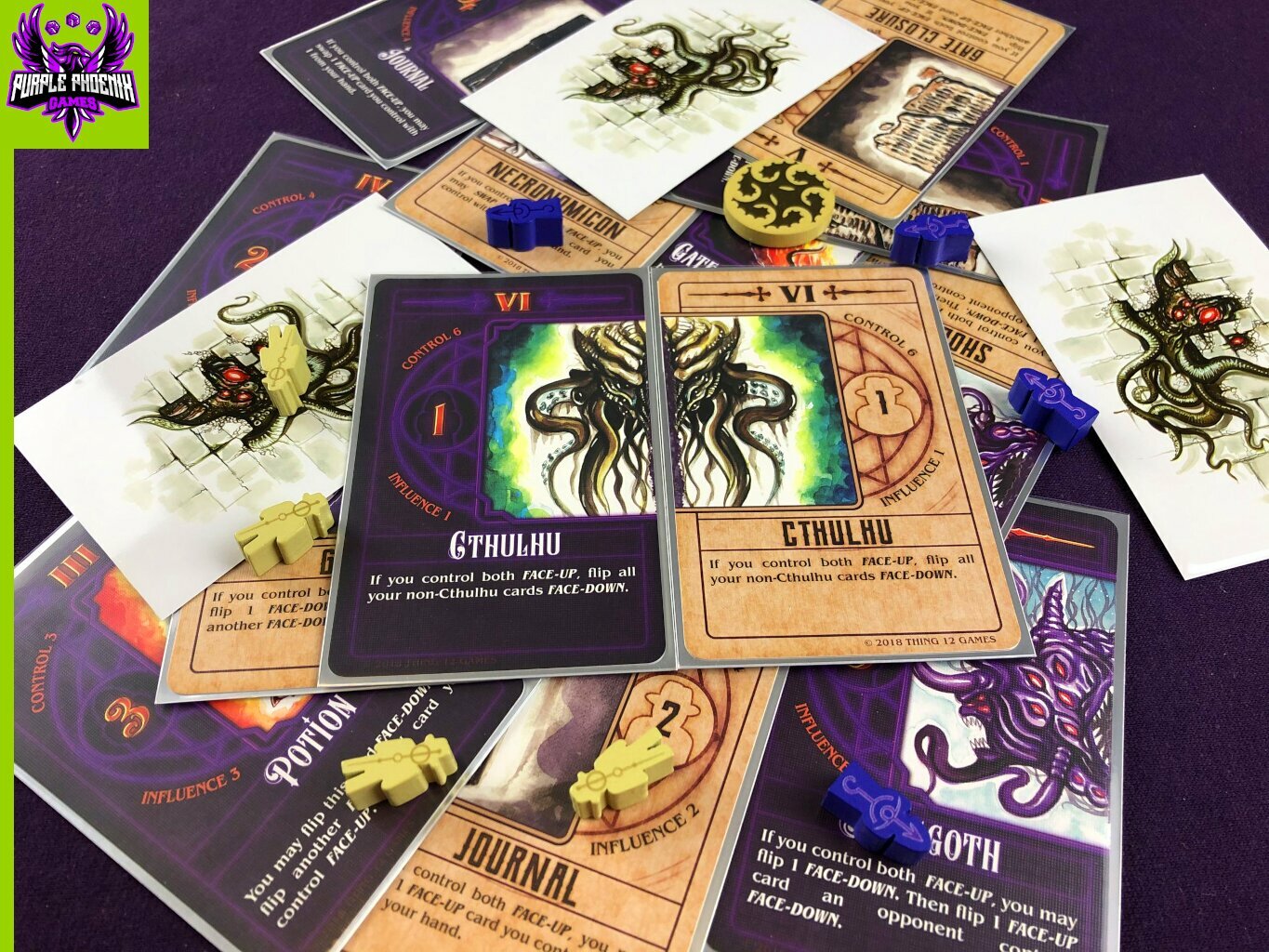
Here’s the neat part – each Artifact card is broken in half. At the start of the game, each player each has only half of each Artifact card in hand. So in the bidding process, you may be able to acquire the other half, and thus complete an Artifact. Each Artifact has a special ability that can only be used when completed. Having only half of the Journal isn’t doing you any good! Each special ability may only be used once per game, so choose your opportunities wisely. The game continues in this fashion, with players taking turns bidding and gathering artifacts, until each player has taken 5 turns. Players will then add up the total Control value of their face-up cards, and the player with the highest Control value is the winner!
At its core, the physical gameplay of The Seals of Cthulhu is pretty simple and straightforward. Pick a card, and bid on it. That’s where the simplicity ends, though, and strategy takes over. Both players start with the exact same cards in hand, but how and when you decide to play those cards is what drives the strategy of this game. If you seem too eager when making a bid, perhaps your opponent will vastly outbid you to keep you from getting that card. You can even start the bidding at zero, at the risk of letting your opponent control your bidding round. Are you able to balance the risk/reward of the bidding process in order to maximize your tableau?
And, as stated above, each complete artifact has a special ability that can be used to either benefit you or hinder your opponent. The game also comes with Cultist/Investigator cards that you may choose to use in a game. Both players select one of the characters to become for the game, and each character provides a special ability during the game. At the end of the game, the only cards that are scored from your tableau are the ones that are face-up. Certain abilities, from both Artifacts and characters, allow you to flip cards face-down, thus depriving the player of those end-game points. Another neat thing about this game is that even if a player runs out of Influence tokens, they can bid with cards they already control in their tableau. Every card has a certain Influence value, and can be added to bids. If your opponent chooses to accept the bid, however, you have to give up that card! It’s important to keep an eye on the cards your opponent already controls, so you don’t just accidentally help them complete an Artifact. The strategic options of this game are vast and variable, and keep both players actively engaged the entire game. The only downside of this game for me is that I wish there were more cards/Artifact options for each play. Perhaps, like the Elder Gods cards, sets that can be interchanged between games as long as both players agree on the cards. Just a little something that can change every game in small ways.
Components. Probably the first thing that drew me to this game on Kickstarter was the color scheme and art style. It looked spooky and vibrant, and it really adds to the immersion in the game. The cards themselves are all large and sturdy, and are clear to read. I did go for the custom sleeve add-on, and those are some high quality sleeves as well. The Cultist and Investigator tokens are shaped and screen printed, and just plain fun to have in hand, as well as the Active Player Marker. The game box itself is designed to look like a creepy old book, and closes magnetically on the side – all of which just makes the theme come more alive!
In general, I am not a fan of bluffing games, but to me, The Seals of Cthulhu feels more like a bidding game than bluffing. Is it my favorite 2-player game? No, but it’s one that I am happy to have in my collection. The gameplay itself feels fresh but fast, and the strategy can be as simple or as complicated as you want it to be. The inclusion of optional character roles adds to the variability of the gameplay, and the requirement to have both halves of an Artifact in order to use its ability adds an extra layer to your strategy. The color scheme and artwork is what originally drew me in to the Kickstarter campaign for this game, but the gameplay is what keeps me coming back. Purple Phoenix Games gives this one a ritualistic 8 / 12. Check it out if you’re on the lookout for more 2-player games!

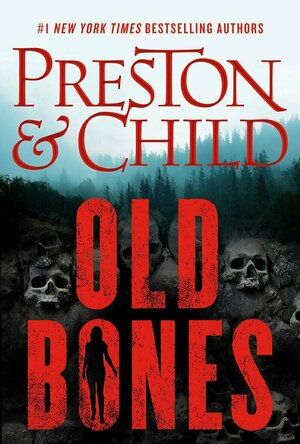
'Old Bones' follows two women, Nora Kelly and Corrie Swanson, with a small segment following a man named Clive Benton, all of who end up being intertwined within this one novel. The entire story revolves around the dark history of the cannibalistic Donner Party, while bringing in fictitious elements to give the readers a well-rounded adventure.
The story gets rolling after Benton visits Kelly with a historical diary that belonged to a member of the Donner Party- - - Kelly is a well-known archaeologist, while Benton is an accredited historian - - - Benton tells Kelly that the journal revealed a lost camp which had never been discovered by anyone, and that this camp could be one of the biggest archaeological finds of the century. While Kelly has to convince the director of the Archaeology Institute to fund the expedition, Benton springs on her and the director that there is a possibility of twenty million dollars worth of gold coins that belonged to a member of the Donner Party could still be located at this lost camp, and, of course, the director quickly agrees to fund the expedition.
Before this, I have never read a book by Preston and Child, but after reading 'Old Bones,' I am anxious to read their other works. The writing is fluid, and keeps the pace going quite well, and the transition between the two main characters is done flawlessly without any confusion as to whose view point you are viewing. The fictitious take on the historical Donner Party is done masterfully enough that even I had to go back to actual historic documents to see what was true and what was not. In one book, readers get dark history, paranormal elements, archaeology, thriller moments, mystery and suspense.
Although the story is a well-written one, there is one scene that could have had great potential, but nothing ever came of it: "Taking a few more steps, she passed through a particularly dense stand of trees and suddenly emerged into a roughly circular clearing. Odd: there was no reason for a break like this in such thick forest. She shone her light around, but there was nothing: just a soft bed of green moss, undisturbed by tracks, and a few scattered boulders." The way this scene is written leaves readers to believe that this may be important later on, but the area is unfortunately never mentioned again.
The story brings FBI agent Swanson into the lives of Benton and Kelly after a string of grave robberies and one presumed murder takes place; the former and latter have one thing in common: they are descendants of a member belonging to the Donner Party.
" 'So where do we fit into this?' asked Nora.
'The commonality I referred to. All four individuals were descended from a single person: a man named Parkin.'
Nora saw Clive start in surprise. 'Albert Parkin?' he asked. 'Of the Donner Party?'
'Exactly. And I've been led to understand he's one of the individuals in the camp you're excavating.' " Agent Swanson isn't exactly welcomed with open arms at the expedition.
The amount of archaeological understanding that was put into this novel is astounding. Preston and Child relay a lot of terms and devices used in the career field such as when Benton uses a bamboo pick to loosen the surface of a quad area and a whisk to gently work dirt away from findings. But this story isn't all archaeological terms, there's also a lot of great development among the characters.
These characters are written differently just enough that the reader should be able to tell them apart easily. Kelly is a leading archaeologist, who has led many different expeditions, but she is also still dealing with the grief of losing her husband years before. Benton is a historian that is a descendant of a member belonging to the Donner Party,and Swanson is a junior FBI agent that is eager to work on her first active case. Even minor characters are distinct among themselves.
Yet, the story is not flawless, there are quite a few inconsistencies, but the major problem I have found with the novel is the changing of characters' names in which they are addressed by. One scene, Nora would be referred to as Kelly - her last name - then more than usually the next paragraph, she would be called Nora. This happens with the main characters too often than it should, that it can confuse the reader and upset the flow of the story itself.
And unfortunately, the paranormal and horror elements are few and far between. We get an amazing retelling of the Donner Party tragedy not once, but throughout the story, reliving the cannibalism that took place, as well as the fictional element of gold leading to murder:
" 'Then you'll recall that when Wolfinger's wagon became stuck while crossing the Great Salt Lake Desert, two men - - - Reinhardt and Spitzer- - - volunteered to go back and help dig it out. Those two men returned, claiming Indians had killed Wolfinger.'
' Yes, yes, ' Dr. Fugit said, concealing a growing impatience.
'Well, that was a lie. Even at the time the members of the party were suspicious that something untoward had happened to Wolfinger. Reinhardt and Spitzer were viewed with a great deal if suspicion, and the two men afterwards kept to themselves and were somewhat ostracized by the rest. When Reinhardt was dying of starvation in the Lost Camp, he made a deathbed confession: Wolfinger had not been killed by Indians. Reinhardt and Spitzer had gone back, murdered Wolfinger, and taken his gold.' He paused. ' This information has been known to historians for over a century, but nobody, incredibly enough, thought to ask the next question: what happened to the gold? ' "
I highly recommend this book to fans of Thomas Harris; the writing is very similar and the character Swanson reminds me a lot of Harris' character Clarice Starling (refer to 'Silence of the Lambs' and 'Hannibal'). I also recommend this book to anyone who enjoys history, especially that of dark history, such as the Donner Party tale.

Gareth von Kallenbach (980 KP) rated Cloud Atlas (2012) in Movies
Aug 7, 2019
Allow me to explain. About an hour into the film I had a young film reviewer to my left and I noticed he started to nod his head in approval at each new developing story throughout the film. To my right was a friend of mine, I would consider as an average film viewer, who at this same time I could tell was counting the minutes till the lights came up but felt trapped with nowhere to go but forward. And for me, I can see both sides of these reactions.
The plot is comprised of a multi-narrative of six stories, each with a complete beginning, middle and end. These stories are told from different timelines following a group of souls throughout the ages to show how everything is woven together and the connection between them; From the 1849 slave trader, to a young composer in 1936 Britain, to a 1973 journalist attempting to uncover corruption of the big business ruling class, to a 2012 literary publisher who’s life becomes a daring escape from a geriatric home, to a 2144 Neo-Soul synthetic learning to become human, to a post-apocalyptic tribesman trying to save his world and family… Lost yet? Believe me you will want to focus during the first hour of this film as we are introduced to the sudden shift of timelines. All of the main actors appear as varying characters of significance in every narrative, each with different accents and types of language. It is a bit of an unexpected bother to keep everything straight at first, however if you pay attention it is fairly easy to follow. This first hour is where I feel the film becomes a make or break for those actively thinking about what they are watching and the average movie viewer who is just there to be entertained and see the new Tom Hanks (Extremely Loud and Incredibly Close) or Halle Berry (Perfect Stanger) movie. For those who make it through that first hour still engaged, the film moves along at a steady pace and provides everything from romance to action that keeps you guessing and intrigued at what is next to come.
The Wachowskis and Tykwer do an outstanding job of visually fleshing out each timeline in its own visual style, especially the futuristic ones, which subtlety organize each narrative for the viewer. Additionally, there are so many talented actors in this film and it is somewhat fascinating to try and pick them out throughout the film. It is almost like a giant game of Where’s Waldo on screen as the makeup and special effects artists do a fantastic job of making the actors fit each character in every timeline. In fact, during the fourth or fifth timeline a lady in my row asked her partner if the man on screen was Forrest Gump, which was surprising because Hanks was the easiest character to pick out among them all.
Tom Hanks delivers one of his better performances in years. We watch his character’s soul transition from a sinister and vile doctor to a tribesman making the righteous choice while struggling with that inkling of evil that is the devil within us all. It was refreshing to see Hanks play parts that were not just an “everyman” that he has played in recent years.
Halle Berry’s performance is mostly average in her parts with the exception of 1973 journalist role where she is the main protagonist. Hugo Weaving channels a bit of his Agent Smith role from The Matrix as he plays a villain throughout the timelines. Hugh Grant (Love Actually) makes unexpected soild appearances throughout the timelines. With Jim Sturgess (One Day), James D’Arcy (Mansfield Park) and Ben Whishaw (who is the new Q in the upcoming James Bond film Skyfall) rounding out the cast with a young contrast to the already heavy acting handled by the bigger names of this film. Each of these young actors hold’s their own against their older more notable counterparts. Whishaw’s performance as the lead in the 1936 composer role is especially noteworthy.
The other stand out performance in the film comes from Jim Broadbent best known in the states as Professor Slughorn in the Harry Potter Films. His performance in the 1936 composer and 2012 literary publisher are excellent. The Publisher story was my favorite timeline throughout the film. Not only did it deliver some much needed comic relief to an emotionally engaging and heavy film, but it also made me care the most about the elderly characters trying to escape the clutches of the geriatric prison of a nursing home. Unfortunately, other than the aforementioned comic relief this timeline seemed the most unnecessary to the overarching story at hand.
When I left the film and talked it over with my friend I was indifferent to the film. It was not great, it was not bad either. As my friend described it, it was a movie that was trying too hard. We agreed that somewhere in the six storylines there may be a great film, but we were not sure if we watched it.
However as the days have passed I have found myself thinking about the stories constantly. More specifically about how the main protagonist played by a different actor in each narrative has the same birthmark of a shooting star that in some way symbolizes some universal soul encompassing a new shell of a body in each timeline. Like some kind of reincarnation of that soul is fighting the same revolution throughout the ages against the powerful class and illusion of natural order. Additionally how each of the central characters found themselves connected with the main characters in the stories that preceded them through some kind of medium; whether it was by an old journal, or love letters, or a written story, or film, or message of hope. These subtle insights of growth and change for this main soul leaping into a new life in each timeline has caused me to examine our world and how we as people can be truly connected to one another not only today, but throughout the ages. I want to view the film again and am inspired to read the novel in some sort of effort to better understand these concepts.
Nevertheless as a film that is almost three hours long it does its best to be an epic sci-fi film and give something for everyone. And while it succeeds in many aspects of feel, it also falls short in aspects that are probably best accomplished in a literary form. As I said above, somewhere in the six storylines there may be a great film, but I am not sure if I watched it. Or maybe I am not intelligent enough to comprehend it. Because of that I can only give it an average score. Though I believe if you ask me after a second viewing, I may be inclined to raise it.
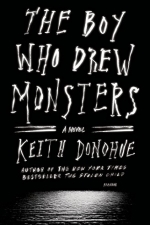
The Boy Who Drew Monsters
7.0 Rate It
Book
From the New York Times bestselling author of The Stolen Child comes a hypnotic literary horror...
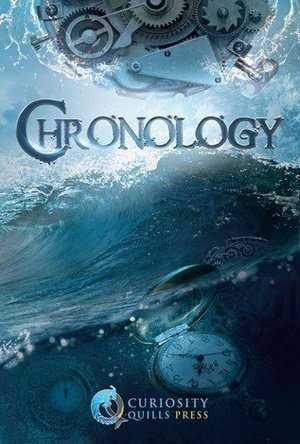
Curiosity Quills: Chronology
Richard Roberts, Tony Healey, Piers Anthony, J.R. Rain, Jordan Elizabeth Mierek, James Wymore, Stan Swanson, Darin Kennedy , Julie Frost , Andrew Buckley , J.P. Moynahan, B. C. Johnson, J. P. Sloan, Andrew J. Rausch, Katie Young , Scott Nicholson, Wilbert Stanton, Tara Tyler, Mark W. Woodring, J. E. Anckorn, Nathan L. Yocum, G. Miki Hayden, Matthew S. Cox and Matthew Graybosch
6.0 Rate It
Book
It's time... for time! Embark on a literary journey through the ages with Curiosity Quills Press in...

Rest by Charlotte Gainsbourg
7.0
Rate It
Album Watch
Sometimes it takes a personal tragedy to catalyse an artist’s practise, a crack in everything, to...
Pop